Jim Capers Eutaw Springs
History Along The Trail

The Liberty Trail Story Tellers

The American Revolution was decisively influenced by The Liberty Trail’s diverse terrain, spanning swamps, fields, woods, and mountains. Delve into the narrative of American Independence with blog posts surrounding The Liberty Trail.

States of Interest:
The Blog |

In 1786, only a few years after the end of the Revolutionary War, the new United States had to confront a crisis: a rebellion was brewing in the very same state where the war for American independence...

The Blog |

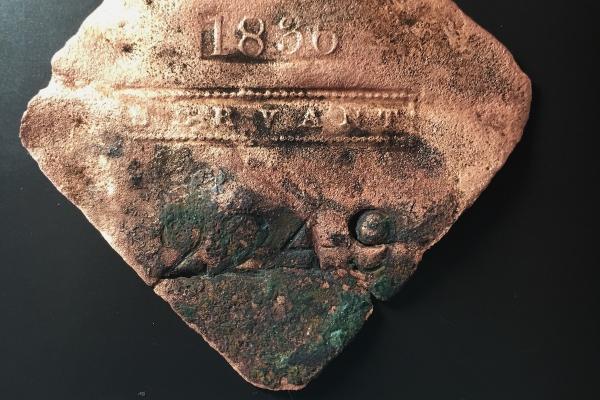
Beginning with the reign King Louis XIV, cannons produced for the French army had a Latin motto engraved on their barrels: “Ultima Ratio Regum,” or “The Last Argument of Kings.” In the American...

The Blog |

In 1774, Great Britain decided to use brute force to deal with the rebellious American colonies, particularly the colony of Massachusetts. Following the blatant insubordination of the Boston Tea Party...

The Blog |

The Sons of Liberty was a secret underground society created due to the social and political fallout of the French and Indian War. The war, which took place throughout the world, was just one part of...

The Blog |

On June 29, 1767, the British Parliament passed an act that began as follows:

The Blog |

It is one of the most iconic scenes in the American epoch—defiant colonists dumping crates of tea into Boston Harbor. The Boston Tea Party is known as a central event in the American Revolution. But...

We invite you to visit the preserved locations along the Liberty Trail and to immerse yourself in the extraordinary events that determined the fate of a nation.
National Park | Historic House
Quincy, MA

This home, now known as the "John Quincy Adams Birthplace," was John and Abigail Adams' residence during the Revolutionary War. While John served as a delegate to the Second Continental Congress in Philadelphia, Abigail managed this home and served as an advisor to her husband in his public role.

Historic Site |
Somerville, NJ

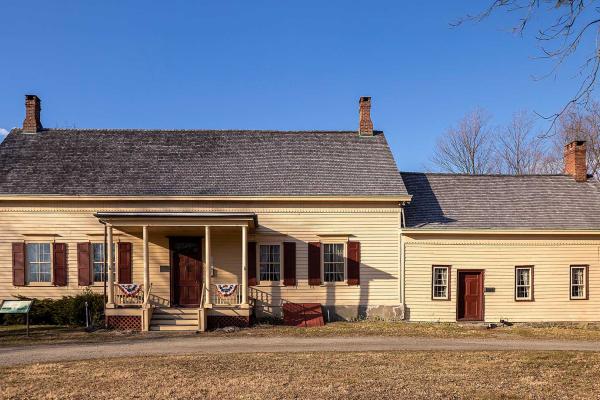
This parsonage was constructed in the 1750s and housed the reverend of the Dutch congregation in what is now modern-day Somerville.

State/County Park
Lancaster, SC

Andrew Jackson State Park combines history, art and community activities into a setting that has made it one of the state’s most popular parks.

Historic Site |
Edenton, NC

Built in 1767, the Chowan County Courthouse is one of the oldest operating courthouses in the country and still serves the North Carolina Supreme Court to this day.

Historic Site | State/County Park
Titusville, NJ

Built in the 1740s, this building acted as a ferry house for those wishing to cross the Delaware, including the likes of George Washington and his men on Christmas night of 1776.

Historic Site | Battlefield
Princeton, NJ

Nassau Hall, once the largest stone building in the colonies, housed the College of New Jersey, now known as Princeton. During the Battle of Princeton in 1777, British troops fortified the building as a last stand defense.

Historic Site | Historic House
Charleston, SC

Visit Historic Drayton Hall — Tour the nation’s oldest preserved plantation house in America still open to the public. Explore Drayton Hall's 18th-century architecture, landscapes & the people who lived here.

Historic Site | Gardens & Grounds
Charlestown, SC

Middleton Place is America’s Oldest Landscaped Gardens and home to a signer of the Declaration of Independence.

Historic Site | State/County Park
Boston, MA

Once the training ground for British troops in Boston, it was from here that Regulars marched toward Lexington & Concord, sparking the American Revolution.

Historic Site | Historic House
Charleston, SC

This historic house museum was the home of Thomas Heyward, Jr., one of four South Carolina signers of the Declaration of Independence.

Battlefield | Historic Site
Camden, SC

A former British headquarters, explore the reconstructed Kershaw/Cornwallis House, British redoubts, and programs about colonial life.

Historic Site | Historic House
Clemson, SC

Built in 1716 for Paul de St. Julien in Berkeley County. The house was later dismantled and moved to Clemson University and functions as a house museum.