Jim Capers Eutaw Springs
History Along The Trail

The Liberty Trail Story Tellers

The American Revolution was decisively influenced by The Liberty Trail’s diverse terrain, spanning swamps, fields, woods, and mountains. Delve into the narrative of American Independence with blog posts surrounding The Liberty Trail.

States of Interest:
The Blog |

Archaeologist Mike Yianopoulos, based in Charleston, South Carolina, uses LiDAR technology to study the Battle of Stono Ferry site, which holds both Revolutionary War and Civil War history. LiDAR...

The Blog |

After the stunning victory at Trenton on December 26, 1776, Washington expected a British counterattack in force. He immediately crossed his men and prisoners back across the Delaware River into...

The Blog |

As night fell on January 2, 1777 both armies took a breath after the daylong fighting on the King’s Highway and at Assunpink Creek. Washington had a critical decision to make, and called a council of...

The Blog |

On June 28, 1778, a vicious battle raged several miles west of present-day Freehold, New Jersey. It included some of the longest sustained combat of the Revolutionary War and also witnessed the...

The Blog |

History has not been kind to Charles Lee, the man whom George Washington referred to as “The first officer in Military knowledge and experience we have in the whole army….” He was a conundrum of a man...

The Blog |
Revolutionary War scholars and history buffs often lament, “If only photography had been invented a century earlier!” While there is a vast photo archive of the Civil War, there is a scant amount of...
Exploring History
We invite you to visit the preserved locations along the Liberty Trail and to immerse yourself in the extraordinary events that determined the fate of a nation.
Historic Site |
Edenton, NC

Built in 1767, the Chowan County Courthouse is one of the oldest operating courthouses in the country and still serves the North Carolina Supreme Court to this day.

National Park | Historic Site
Morristown, NJ

Morristown National Historical Park marks the site of the Continental Army’s 1779-80 encampment under George Washington. It symbolizes America’s fight for independence and Washington’s leadership in uniting the army, remaining a lasting symbol of resilience and patriotism.

Historic Site | Historic House
Roebuck, SC

Established in 1767 by the Patriot supporting Moore family. Local militia gathered at Walnut Grove prior to the Battle of Cowpens. Visitors may take guided tours of the house and grounds.

Historic Site |
Richmond, VA

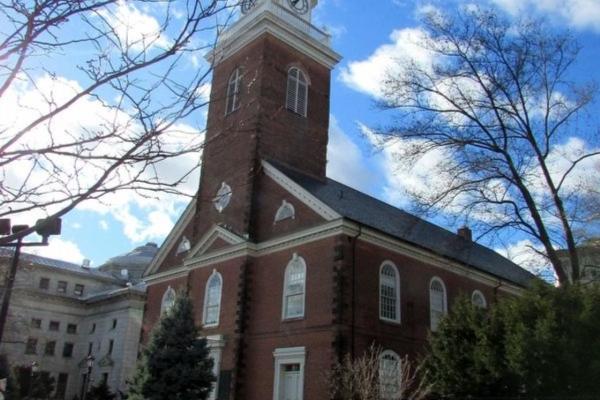
Site of the Second Viriginia Convention and Patrick Henry's famous words, "Give me liberty or give me death!"

Historic Site | Historic House
Union, NJ

Liberty Hall was home to trailblazing governors, congressmen, senators, assembly persons, philanthropists, and entrepreneurs. Inhabited by William Livingston, New Jersey’s first elected governor and a signer of the United States Constitution, the 14-room Georgian-style home evolved over time into a 50-room Victorian mansion.

Battlefield
Princeton, NJ

After crossing the Delaware, George Washington's ten-day campaign culminated in a decisive victory at the Battle of Princeton on January 3, 1777, proving his army could defeat the British. The battle saw Washington's forces overcome initial setbacks to rout the British and shift the momentum of the war

Battlefield
Manning, SC

Now under the man-made Lake Marion, British Lieutenant Colonel John Watson and Patriot Brigadier General Francis Marion, the “Swamp Fox,” skirmished in Wyboo Swamp near Santee Road.

Historic Site
Abingdon, VA

The Abingdon Muster Grounds is a 9-acre park is the site where, in 1780, 400 Virginians joined other patriot militia from the western frontier in a two-week campaign that ended with a critical victory at the Battle of Kings Mountain. The Abingdon Muster Grounds is a partner site of the Overmountain Victory National Historic Trail.

Battlefield | Fort/Outpost
Gaffney, SC

A station constructed during high tensions with the Cherokee, this fortification was utilized by Loyalists until July of 1780.

Historic Site
Charleston, SC

Francis Salvador, the first Jewish person to die in the Revolutionary War, was a London-born pioneer who moved to South Carolina in 1773. A vocal supporter of independence, he became the first Jewish person to hold political office in the state. Known as the "Southern Paul Revere," Salvador warned of attacks during the war but tragically died in an ambush in 1776 at just 29 years old, leaving behind a legacy of courage and commitment to freedom.

State/County Park | Historic House
Titusville, NJ

The location of George Washington's famous crossing of the Delaware, the site is now a state park that offers historical interpretation and several recreational activities.

National Park | Historic Site
Morristown, NJ

Jockey Hollow, the site of General Washington’s winter encampment in 1779-1780, played a key role in forging the Continental Army's strength and unity. The nearby Wick House, once home to Major General Arthur St. Clair, now stands as a historic landmark, offering a glimpse into the hardships and strategies of that fateful winter.