Woman finding a geocache in the woods
Travel Inspirations

Geocaching

Participate in a worldwide treasure hunt that has gained significant traction, with over tens of thousands of concealed caches now scattered throughout the eastern seaboard.

States of Interest:
South Carolina
Geocaching
Lancaster, SC

Join the hunt! Andrew Jackson State Park boasts several geocaches located throughout the park.

South Carolina
Geocaching
McClellanville, SC

Explore the history of Hampton Plantation State Historic Site while searching for hidden 'treasure'. For more information visit the official geocaching website.

South Carolina
Geocaching
Blacksburg, SC

Geocaching is permitted. Several geocaches are located on the park. For more information visit the official geocaching website.

South Carolina
Geocaching
Catawba, SC

Geocaching is permitted. Several geocaches are located on the park. For more information visit the official geocaching website.

South Carolina
Geocaching
Clinton, SC

Cache hunters can explore the many geocaches located within and around the park. For more information visit the official geocaching website.

Filter By:
States of Interest:

Exploring History

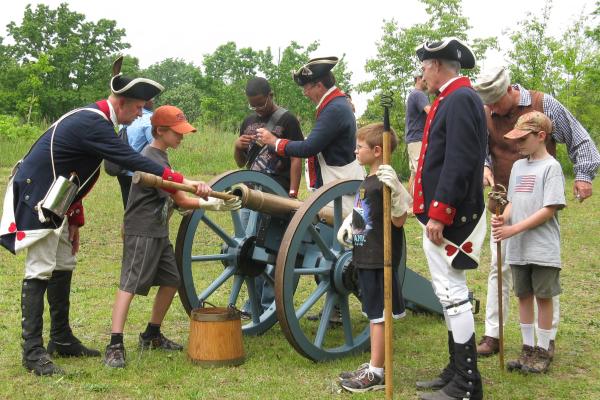
We invite you to visit the preserved locations along the Liberty Trail and to immerse yourself in the extraordinary events that determined the fate of a nation.
Battlefield
Summerton, SC

Located within the Santee Wildlife Refuge, this was the last major battle of the war in South Carolina.

Historic Site
Charleston, SC

Francis Salvador, the first Jewish person to die in the Revolutionary War, was a London-born pioneer who moved to South Carolina in 1773. A vocal supporter of independence, he became the first Jewish person to hold political office in the state. Known as the "Southern Paul Revere," Salvador warned of attacks during the war but tragically died in an ambush in 1776 at just 29 years old, leaving behind a legacy of courage and commitment to freedom.

State/County Park
Catawba, SC

This park features the Lands Ford crossing, used during the Revolutionary War by both British and American troops under Cornwallis and Sumter before and after pivotal battles.

Historic Site |
Charleston, SC

An architectural treasure in its own right, the South Carolina Historical Society Museum is housed in a National Historic Landmark building and features interactive exhibits on the people, places, and movements that shaped the state and nation.

Historic Site | Gardens & Grounds
Charlestown, SC

Middleton Place is America’s Oldest Landscaped Gardens and home to a signer of the Declaration of Independence.

Historic Site | Fort/Outpost
Charleston, SC

One of the many forts that dotted the landscape around Charleston, Patriots seized this fortification and raised the Moultrie flag, which bears resemblance to the modern standard of South Carolina.

Battlefield | Historic Site
Moncks Corner, SC

Eighteenth-century Moncks Corner was a crossroads settlement of stores and taverns at the intersection of the Cherokee Path (the Indian traders’ path) and the road from Charleston to Santee. A powder magazine was established in 1760 and the village was occupied as a store depot by the British during the Revolutionary War.

Historic Site |
Gaffney, SC

With a rotating collection of artifacts and interactive exhibits, the Cherokee County Museum has something for all ages and interests.

Battlefield
Lancaster, SC

On May 29, 1780, British commander Banastre Tarleton engaged and overwhelmed a Patriot force under the command of Abraham Buford in a dreadful defeat for the Patriots.

Historic Site | Historic House
Camden, SC

After the Siege of Charleston in 1780, the British established a headquarters at the Kershaw/Cornwallis House. Today the house and grounds are open to tours.

Historic Site
Gaffney, SC
On this site lie the bodies of three, unknown British soldiers who perished at the Battle of Cowpens, which was fought around 14 miles away from here on January 17, 1781. These three men were brought...
State/County Park | Historic House
McClellanville, SC

This 18th-century plantation home, on the grounds of the Hampton Plantation State Historic Site, served as a place of refuge for Francis Marion who hid here from when British troops.