Jim Capers Eutaw Springs
History Along The Trail

The Liberty Trail Story Tellers

The American Revolution was decisively influenced by The Liberty Trail’s diverse terrain, spanning swamps, fields, woods, and mountains. Delve into the narrative of American Independence with blog posts surrounding The Liberty Trail.

States of Interest:
The Blog |

Reposted with permission from the Journal of the American Revolution. Written and researched by Jim Piecuch on September 12, 2024.

The Blog |

Losing items like buttons or keys can be frustrating, even for soldiers during the Revolutionary War. At Fort Fair Lawn, a British outpost in South Carolina, archaeologists found many objects...

The Blog |

The rediscovery of a long-lost portrait of Charleston merchant Richard Lushington sheds light on lesser-known Revolutionary War heroes. Lushington, a Quaker, led a diverse militia called the Free...

The Blog |

John Howland, Benjamin Tainter, Stephen Tainter, and Lewis Hurd, all from the same extended family, contributed to American history across generations. Stephen Tainter, who served as a drummer boy in...

The Blog |

The British strategy for winning the rebellion in North America had changed by 1779. After the defeat of General John Burgoyne’s forces at Saratoga in October 1777, and a stalemate of engagements in...

The Blog |

The Colleton family was the only one of all the province’s original proprietors to cast their lot and fortune in South Carolina by establishing a family seat and actual residence within the borders of...

Exploring History
We invite you to visit the preserved locations along the Liberty Trail and to immerse yourself in the extraordinary events that determined the fate of a nation.
State/County Park | Historic House
Wayne, NJ

The Dey Mansion, built around 1770, served as General George Washington’s headquarters in 1780 during a pivotal time in the American Revolution. As one of his surviving field headquarters, it offers a lasting connection to the strategic decisions, military challenges, and historic events that shaped the fight for independence.

Historic Site |
Charleston, SC

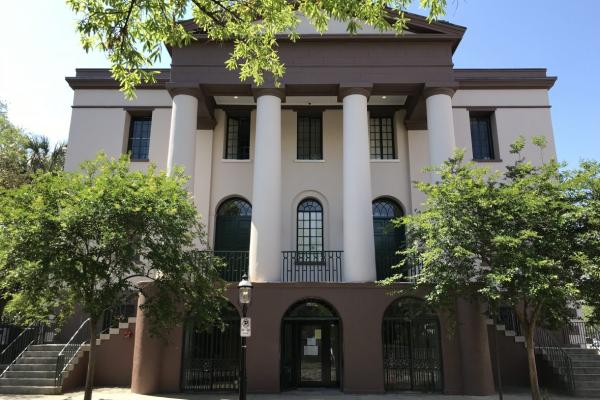
An architectural treasure in its own right, the South Carolina Historical Society Museum is housed in a National Historic Landmark building and features interactive exhibits on the people, places, and movements that shaped the state and nation.

State/County Park | Historic House
McClellanville, SC

This 18th-century plantation home, on the grounds of the Hampton Plantation State Historic Site, served as a place of refuge for Francis Marion who hid here from when British troops.

Battlefield | Historic Site
Moncks Corner, SC

Fort Fair Lawn was a British outpost in 1780–1781 and was the target of a daring Patriot raid on November 17, 1781, and abandoned by the British a week later.

Historic Site | Historic House
Arlington, MA

One of the bloodiest sites during the Battle of Lexington and Concord, this house saw extensive combat and still bears the scars left behind by the engagement.

National Park | Historic Site
Morristown, NJ

Jockey Hollow, the site of General Washington’s winter encampment in 1779-1780, played a key role in forging the Continental Army's strength and unity. The nearby Wick House, once home to Major General Arthur St. Clair, now stands as a historic landmark, offering a glimpse into the hardships and strategies of that fateful winter.

State/County Park | Historic Site

Marion Square, named in honor of Francis Marion, is greenspace in downtown Charleston, South Carolina and features remnants of The Hornwork, a large fortification built in 1758 that played a major role in the fight for independence.

Historic Site | Historic House
Charleston, SC

In 1780, after the British occupied Charleston during the American Revolutionary War, the Brewton house was used as the British headquarters for Henry Clinton.

Battlefield | National Park
Gaffney, SC

The Cowpens Battlefield commemorates Daniel Morgan’s victory over Banastre Tarleton on January 17, 1781.

Historic Site | Historic House
South Bound Brook, NJ

Constructed in the early 1740s, this home acted as the headquarters of Baron Von Steuben during the Continental Army's cantonment in 1779. Today, it stands as one of the few remaining Dutch structures in central New Jersey.

Battlefield
Sullivan's Island, SC

Treacherous waters and Patriot fire foil a British attack on Charleston Harbor

Historic Site |
Gresham, SC

Loyalists ambush a contingent of Patriot militia at a tavern in December of 1780, leading to a massacre