-
The BlogBiographies
-
Videos


“Here we are at last … before Yorktown, and our operations will soon be noisy.” - Marquis de Lafayette, September 30, 1781
In 1781, British General Charles Cornwallis had had a rough summer. After failing to defeat Nathanael Greene in the Carolinas earlier in the year, he marched into Virginia in spring 1781. He reached Petersburg on May 20, hoping to sever Greene’s supply lines. Though he spent the summer clashing with patriot forces under the Marquis de Lafayette, Cornwallis couldn’t strike a meaningful blow.
But his cat-and-mouse chase? with Lafayette ended when British General Henry Clinton ordered Cornwallis to set up a deep-water naval base and sit tight for the Royal Navy. He chose to set up shop here, in Yorktown, a small tobacco village 14 miles outside of Virginia’s former capital at Williamsburg. On August 2, Cornwallis dug in. Soon, the rest of his army followed, and began fortifying the town.
Lafayette had been shadowing the British movements and reported General George Washington that conditions in Yorktown looked primed for a fight to end all fights. Lafayette wrote that the British army would be theirs f they could only get some extra assistance from his French countrymen’s own naval power. Washington agreed. After moving the French and Continental armies from New York, the Allies opened fire on the British on October 9.
What happened next is history. It’s time to begin your tour of the Siege of Yorktown.
The Yorktown Battlefield Tour is a seven-mile drive covering the British Inner Defense Line, the Allied siege lines, the Moore House, and Surrender Field. Allow at least 45 minutes for this tour.
Remember: Portions of the tour roads are major thoroughfares. Be alert for slow-moving traffic, busy intersections, stop signs, joggers, and cyclists. Also, please help us preserve the earthworks on the battlefield. They are important historic resources that help us understand both the Revolutionary War and the Civil War. Do not climb or walk on them, for they are subject to erosion and can be easily damaged; use only authorized trails.
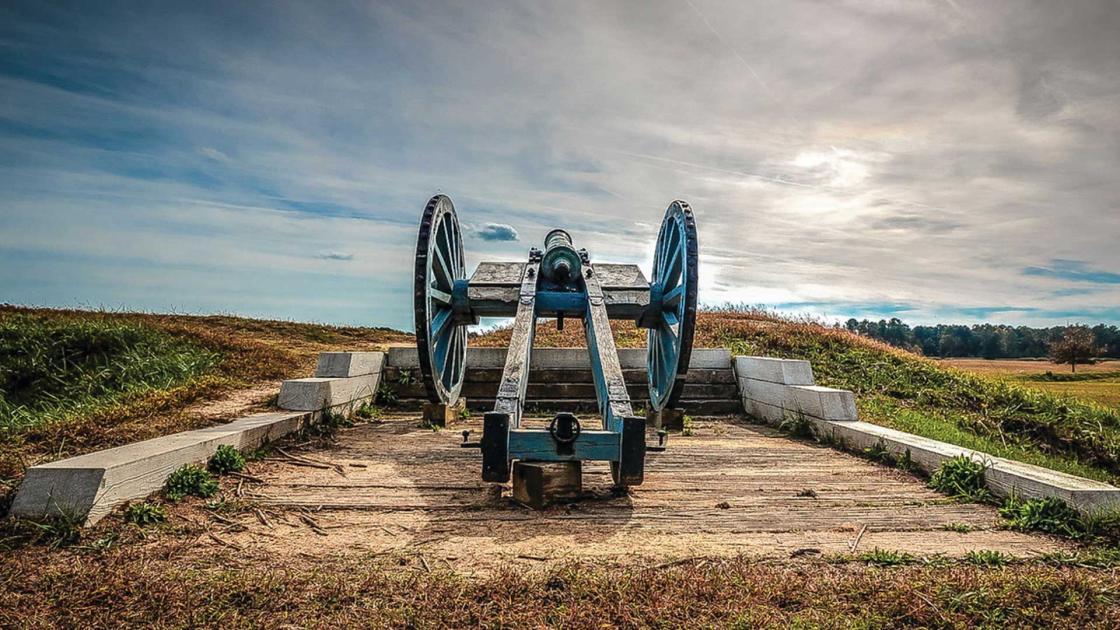
You’re standing at the inner defense line of the British works here. Many of the redoubts and siege lines you see here today were reconstructed by the National Park Service or no longer exist.
In 1781, British engineers utilized the rough terrain below the village to their advantage when constructing their inner and outer defense lines.
Their series of batteries and redoubts incorporated the town and contained a water battery. The British began construction of the entrenchments by throwing dirt up to build a parapet. Engineers then set firing steps inside the work and dug a ditch directly in front of the trenches. Abatis - or fallen trees with the branches sharpened - lay beyond the ditch faced towards enemy.
Individual redoubts made up the outer line. These small, enclosed forts stood at various intervals several hundred yards from the inner entrenchments. The British built a star shaped redoubt on their right flank. It was called the Fusiliers Redoubt for the 23rd Regiment of Foot, also known as the Royal Welch Fusiliers, who built and occupied it during the siege. You can visit this redoubt across the street from the American Revolution Museum at Yorktown.
Cornwallis also positioned a small garrison across from Yorktown at Gloucester Point to protect ships on the York River.
Gen. Charles, Lord Cornwallis had 5,500 soldiers to defend Yorktown. Would it be enough?
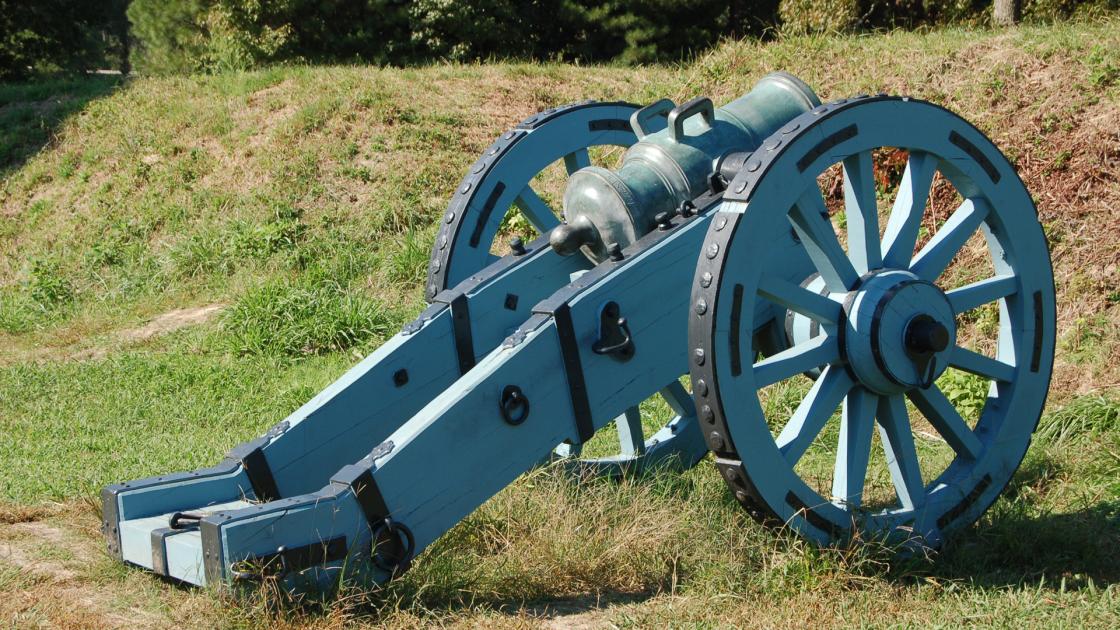
On his way to Yorktown, General George Washington traveled ahead of his command and reached Williamsburg on September 14. The remainder of the American and French armies, commanded by the Comte de Rochambeau, filtered in to Williamsburg over the next two weeks. Washington and Rochambeau marched together toward Yorktown on September 28. British General Charles Cornwallis evacuated his outer line the following night. Rochambeau formed on the west, the Americans to the east. Washington had 18,000 men at his disposal--Cornwallis had just 5,500.
For the next six days, the Allies brought up their artillery. This allowed time for the engineers to select locations for the earthworks and batteries. Since the Continental Army was inexperienced in siege warfare, Washington depended on the French.
Washington dug in—literally—to his plan to conduct a siege in the classic European style. The story goes that in the driving rain on the night of October 6, Washington himself joined his men, picked up a spade, and drove it into the earth to dig the first American trench at Yorktown.
It was hard work. Imagine the landscape here completely altered by parallel trenches and grand batteries like the one you are standing in. This was the Grand French Battery. Made up of other batteries and a redoubt which stretched across the road to your left, it held around 30 guns, the largest artillery complex built by the Allies during the siege. The battery was armed with mortars which lobbed shells over the British works along with larger 16 and 24 pound cannons.
The Allies’ plan was that artillery, firing behind fortifications, would steadily wear down the British garrison. While the guns battered away, French and American soldiers could build trenches or parallels that gradually closed in on Cornwallis. Weakened by the constant bombardment and choked off from the outside world, the British commander would then have no other choice but surrender or face a massive assault which was likely to succeed.
French artillery opened at 3 p.m. on October 9. Two hours later, in the Grand American Battery, once located near the York River farther to your right, but no longer standing, Washington himself fired an 18 pounder which commenced the American barrage—he seemed to like being the first one to do things.
The artillery in the Grand French Battery finally opened the next day. The shelling wreaked havoc along the British position. Emboldened by the effect, Washington decided to start construction of a second siege line closer to Cornwallis’s works. The Allies were slowly inching their way to victory.
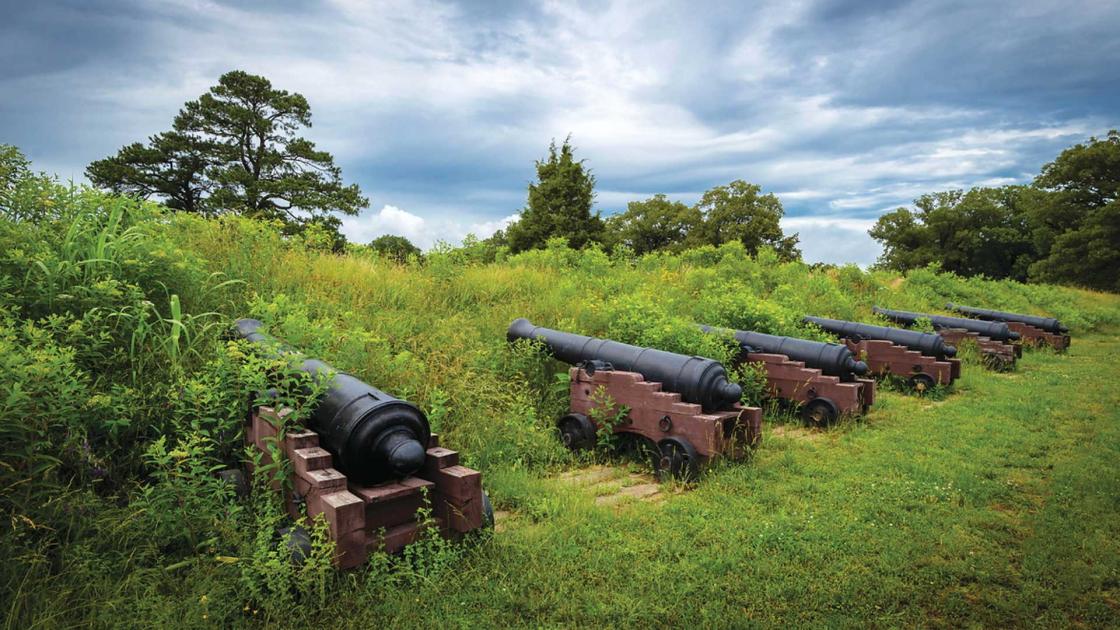
On the night of October 11, after two days of pounding the British defenses, construction began on the Second Allied Siege Line. Given its proximity to the British defenses, only 400 yards distant, engineers place gabions, or woven baskets filled with rocks and dirt, along the trench - or additional protection. The line was 750 yards in length. It stretched from the French sector on your left to within 300 yards of Redoubt 9 on your right but there it stopped. In order to complete the line to the York River, the Allies would need to capture Redoubts 9 and 10. If you’ve seen the 2015 musical Hamilton, you know what’s about to happen next.
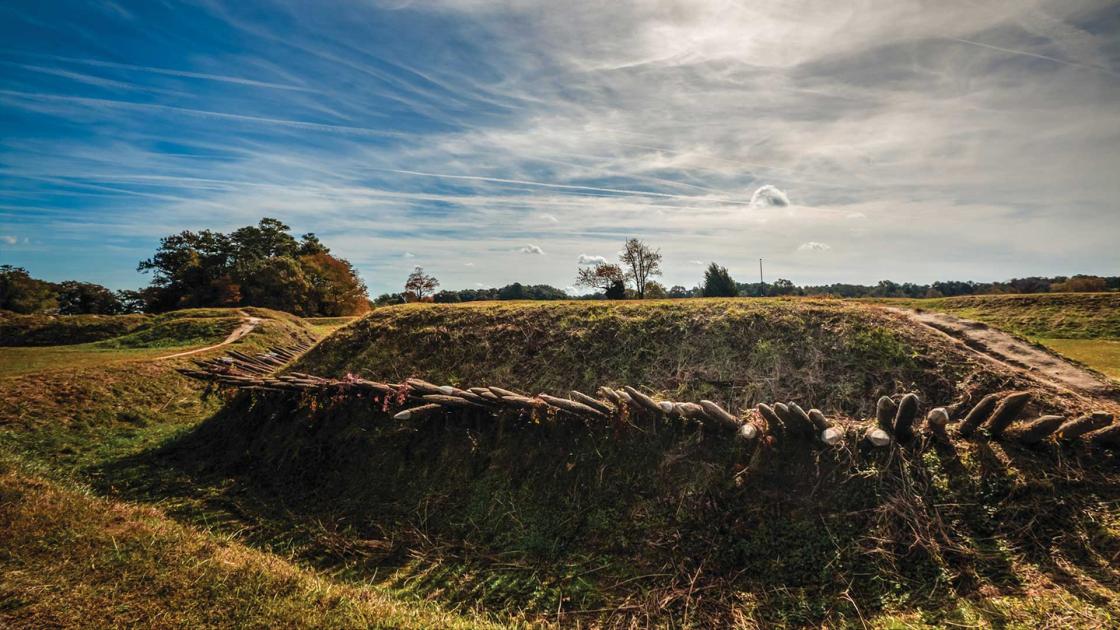
The two redoubts that once stood here might have been the key to the Allied Army’s victory at Yorktown.
Completion of the Second Allied Siege Line hinged on the capture of these British redoubts. If the Allies could occupy these redoubts, their artillery could pound Cornwallis’s inner line at point blank range. An Allied council met on the afternoon of October 14 to plan the assault.
Here’s what the patriots were up against—and why they needed a plan. Redoubt 9 is to your left. And you’re going to have to use your imagination to picture redoubt 10, which stood on your right. They anchored the southeastern stretch of British General Charles Cornwallis’ defenses. Both stood outside the British inner line. Redoubt 9 was a pentagonal fortification that had an exterior ditch with abatis or felled trees facing the enemy and was defended by two howitzers. Redoubt 10 covered the York River. Square shaped and protected by abatis, it mounted four guns. Oh, and between the two redoubts, 208 British and German soldiers wait inside.
So here’s the Allies’ plan-- attack at nightfall. Continentals under the Marquis de Lafayette would storm Redoubt 10. Lafayette picked the light infantry under Lieutenant Colonels Alexander Hamilton, John Laurens, and Jean Joseph de Gimat. These soldiers came from New England and New York, among them were African Americans from the 1st Rhode Island.
French General Baron De Viomenil directed the effort against Redoubt 9. De Viomenil assigned the task to Count Guillaume de Deux-Ponts and his regiment along with Regiment Gatenois, about 400 men.
But to increase their odds of success, the allies had to raise the stakes. The troops unloaded their muskets and fixed their bayonets. They would wage a secret, silent, and swift advance.
Allied artillery ceased around sunset as they prepared their attack. The silence must have been deafening. The French infantry silently left their entrenchments and made their way across the open ground toward the redoubt.
Then--A sudden volley erupted from redoubt 9 and the French soldiers rushed ahead, spilling into the fortification and overwhelming the defenders in hand-to-hand combat. Redoubt 9 fell in about thirty minutes.
Hamilton’s battalions stepped off at the same time. The British soon spotted them and unleashed a fusillade from their artillery. The Americans broke into a charge, bolstered by the rallying cry, “Rush on, boys!” Gimat and Hamilton’s battalion, led by Major Nicholas Fish, surged straight ahead while Laurens circled to the rear to cut off any retreat. Like their French comrades, the Americans scaled the walls and engaged in brief close order fighting. Soon the fortification was under American control. With both redoubts in Allied hands, Cornwallis’s position was untenable.
British General Charles Cornwallis’s situation grew dire with the fall of Redoubts 9 and 10 and the completion of the Second Allied Siege Line. The Allies placed at least 58 cannons in this new position to pummel Cornwallis into submission at close range.
Cornwallis knew he was treading water. Could he reclaim his ground? Before dawn on October 16, he launched an unsuccessful sortie against the American Second Line, but French infantry drove him back.
He then tried to evacuate via the York River to Gloucester that night. While the first wave made it safely across, a storm struck, blowing boats off course and foundering others. Without hope of resupply or reinforcement, Cornwallis had no other choice but to admit defeat.
Around 10 a.m. on October 17, the allied army saw something emerge from the British works—a white handkerchief. A drummer beat out a call for the two sides to meet as an officer carried a dispatch for General George Washington. Cornwallis wanted to talk surrender.
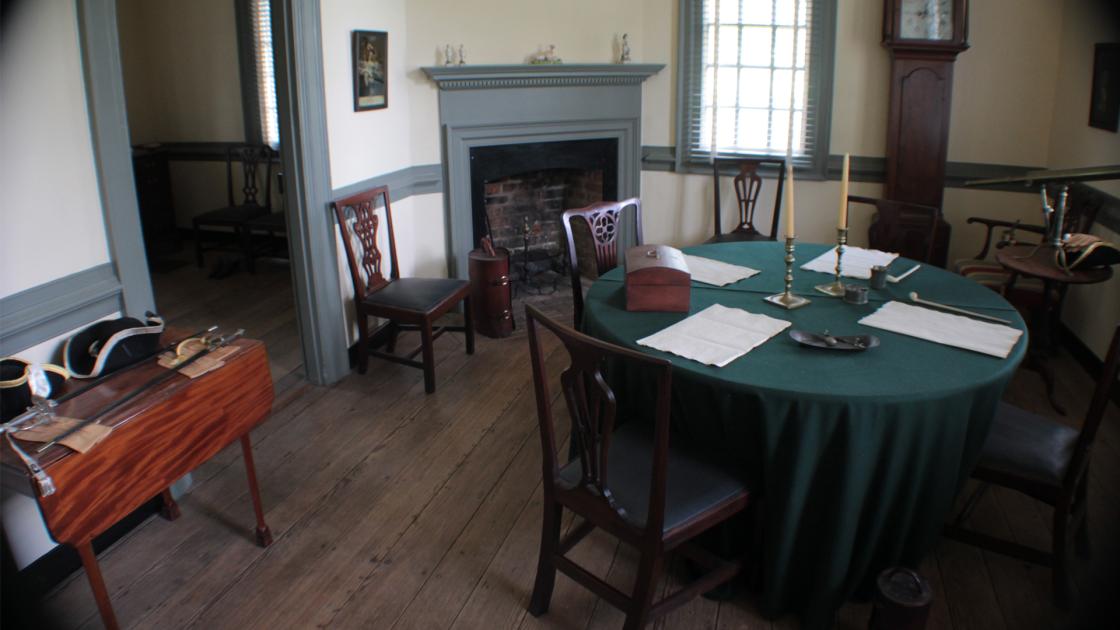
And here at the Moore House is where those talks went down, on October 18, 1781.
In one corner for the allies, Lieutenant Colonel John Laurens and French Viscount de Noailles. And in the other corner for the British, Major Alexander Ross of Cornwallis’s staff and Lieutenant Colonel Thomas Dundas.
The talks went on all day and into the night. They finally agreed to terms early on the morning of October 19. Cornwallis and Captain Thomas Symonds of the British navy formally signed the articles of capitulation at 11 a.m. Cornwallis sent a copy through the lines to Washington, who added his signature with Rochambeau and French Admiral Louis de Barras.
With those signatures on a simple piece of paper, signed right here at Yorktown, the United States had effectively won its independence.
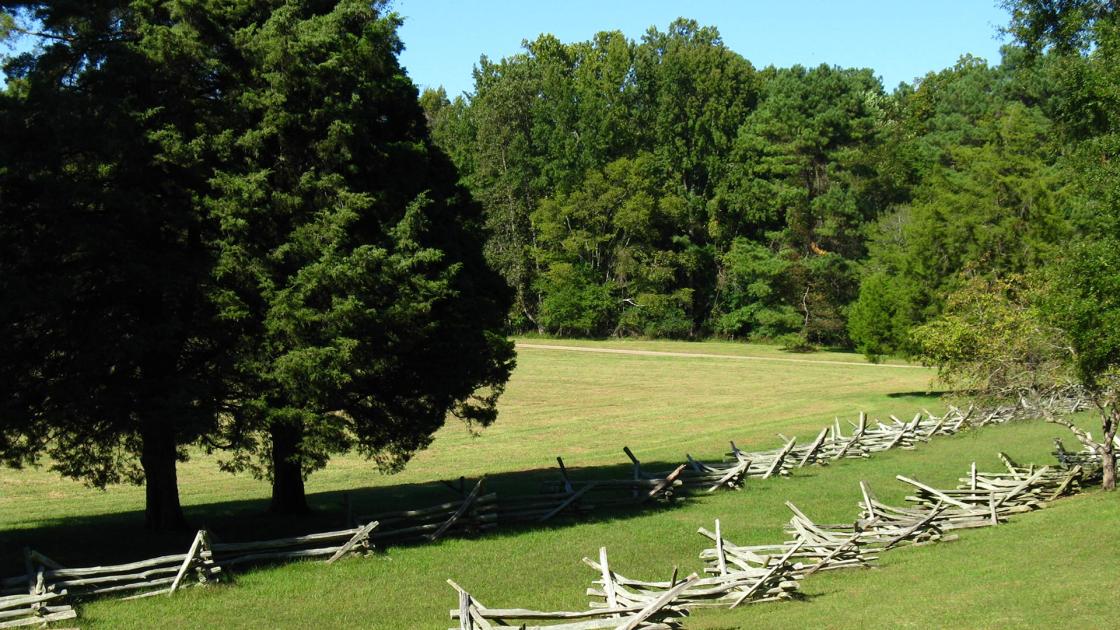
After seven long years of fighting, the end of the Revolutionary War was in sight right here on Surrender Field.
Surrender ceremonies were big deals in the gentlemanly art of war. And what happened here on the morning of October 19, 1781 was carefully planned to every detail. Well, with one exception. As the British and German troops in the Yorktown defenses trudged out of their works and marched down Hampton Road to meet the French and American victors in this field, someone was missing. A pretty important someone, too. British General Charles Cornwallis was nowhere to be found. He reportedly was too sick to appear.
The allies awaited the defeated troops’ approach here. The Comte de Rochambeau’s French army stood on the west side of the road, General Washington and the Continentals opposite them. Brigadier General Charles O’Hara, Cornwallis’s second in command, rode at the head of the column. It was immediately clear the day would not be without drama.
A French staff officer rode out to meet O’Hara. Rather than address Washington, O’Hara asked for Rochambeau. When O’Hara approached him to turn over Cornwallis’s sword, a symbolic gesture of surrender, Rochambeau rebuffed him and pointed across the road to the Allied commander. Washington was furious with O’Hara’s slight and Cornwallis’s absence. Still, he maintained his composure but would only accept the sword from Cornwallis himself. Washington politely directed O’Hara to his own second in command, Major General Benjamin Lincoln. O’Hara calmly walked over to Lincoln and handed him the sword.
The procession resumed until it reached the area where you stand, now known as Surrender Field. French cavalry formed a circle around the perimeter and in the center stood several Continental sergeants. As Cornwallis’s army entered the field, regimental commanders approached the sergeants to surrender their colors. When they refused to relinquish the standards to soldiers of a lesser rank, Lieutenant Colonel Alexander Hamilton directed an ensign to receive them and the flags were turned over to the Americans.
The defeated British passed through the field for the next hour. The still-proud soldiers turned over their muskets and accoutrements, though rumor has it they tossed their guns in heaps with such force as to render them useless. Across the York River, a similar ceremony took place for the British garrison at Gloucester.
The Siege of Yorktown wasn’t just an effective end to the Revolutionary War. It was a beginning, too. Because when the British Army laid down their arms on this field, they set a new chapter of American history in motion.