The Liberty Trail—New York

​​Your Path on The Liberty Trail N.Y.

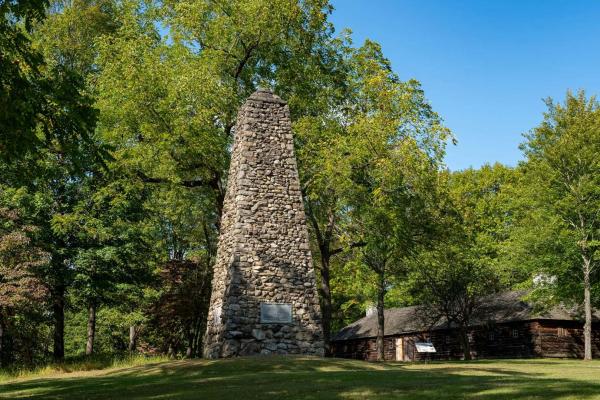
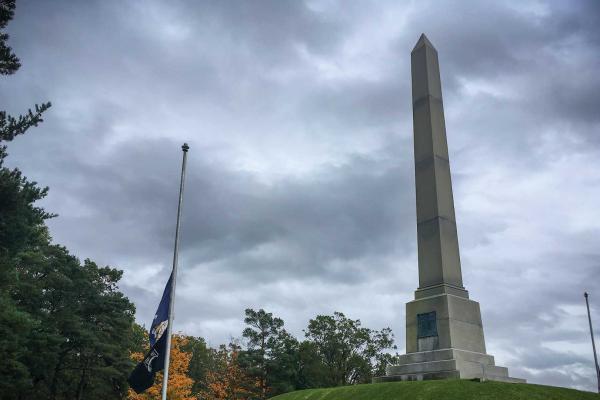
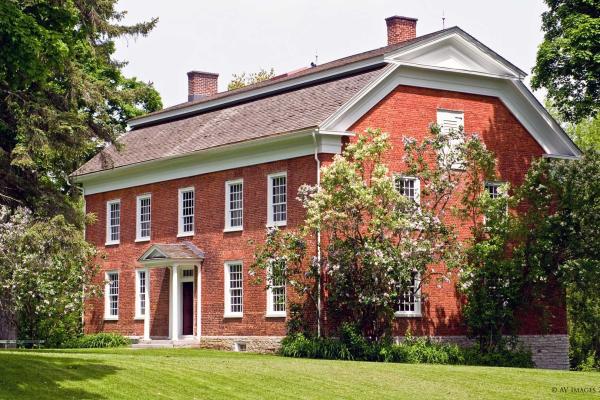
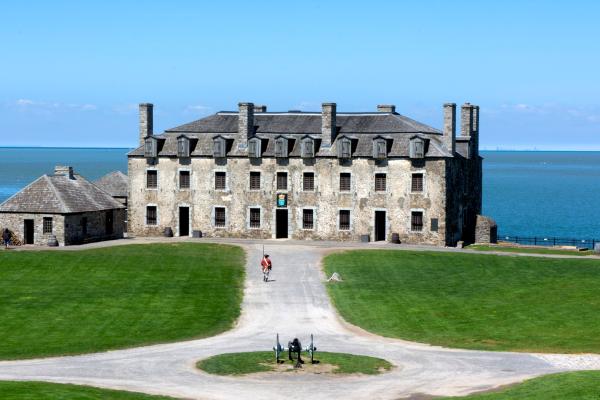
New York stood at the heart of the Revolution. Communities were divided between Loyalist and Patriot allegiances. Indigenous nations, fighting for their own sovereignty, chose sides. Patriots' desperate early stand at the Battle of Long Island fell apart and led to the longest British occupation of any major American city.  Yet, their later victory at Saratoga secured the French alliance that completely turned the tide of the war. Throughout revolutionary New York, the fate of a nation hung in the balance.

The Liberty Trail

Plan Your Visit
States of Interest:
States
Filter by Location Type
Hessian Hill at Bennington by Brandon L. Hull
Battlefield | State/County Park
Bennington

5231 Route 67
Wallomsac, NY 12090

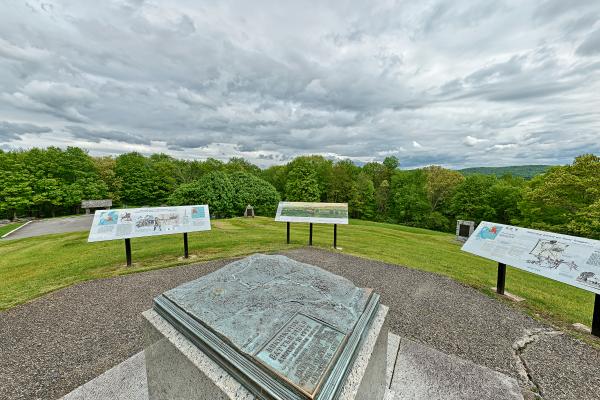
The Battle of Bennington delivered a sharp blow to British plans as American forces overwhelmed a detachment sent to seize vital supplies. This unexpected victory crippled British logistics and boosted Patriot morale, helping set the stage for the larger triumph at Saratoga.

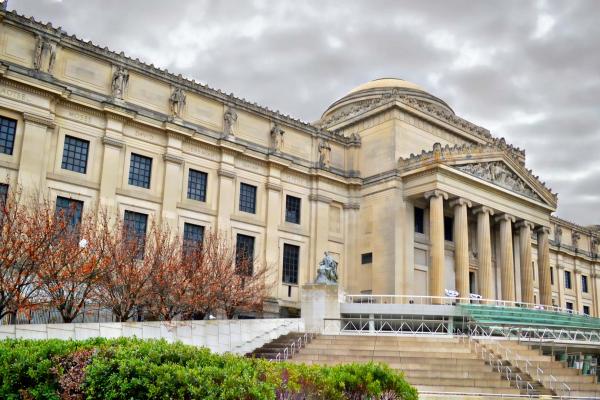
Photograph of the front of the Brooklyn Museum
Historic Site | Museum
Brooklyn Museum

200 Easter Parkway
Brooklyn, NY 11238

Art museum in Brooklyn that possesses paintings, prints, and collections related to the Revolutionary War and the Battle of Brooklyn.

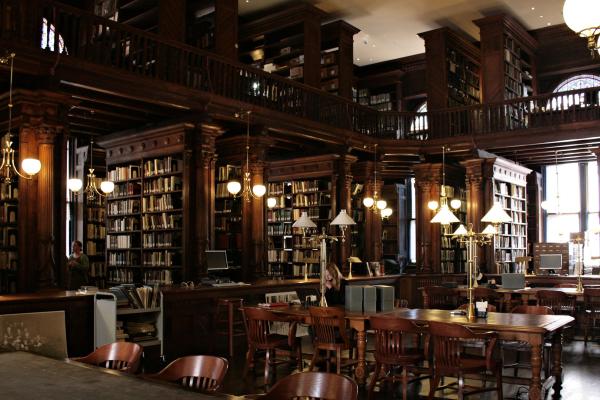
Library found inside of the Center for Brooklyn History
Historic Site | Museum
Center for Brooklyn History

128 Pierrepont Street
Brooklyn, NY 11201

Formerly known as the Brooklyn Historical Society, the Center for Brooklyn History became part of Brooklyn Public Library in 2020 and is now free and accessible to all for research, education, culture and more.

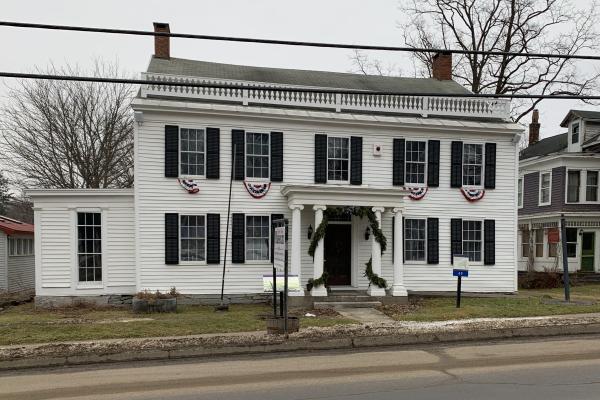
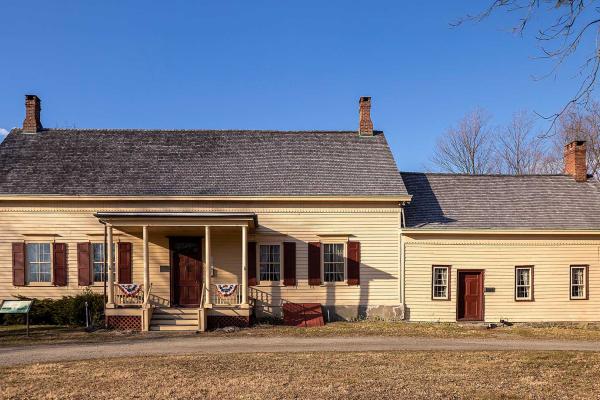
Facade of the Cherry Valley Museum in New York
Historic Site | Museum
Cherry Valley Museum

49 Main Street
Cherry Valley, NY 13320

New York State Revolutionary War Heritage Trail Site

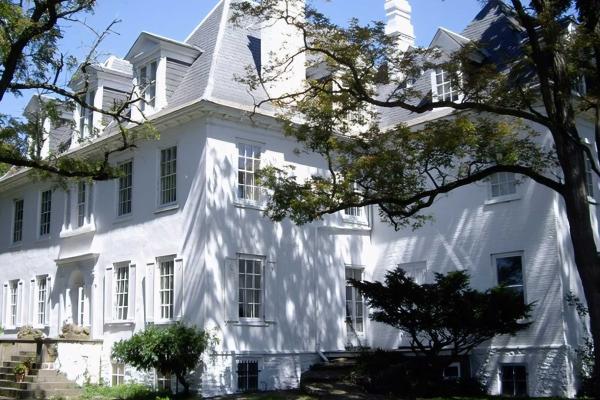
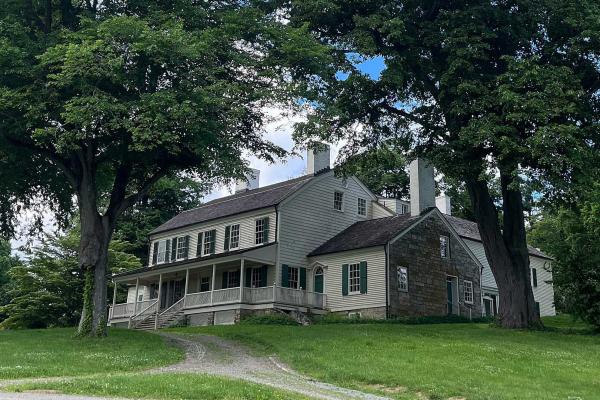
Photo of the corner of Clermont Manor
Historic Site | Historic House
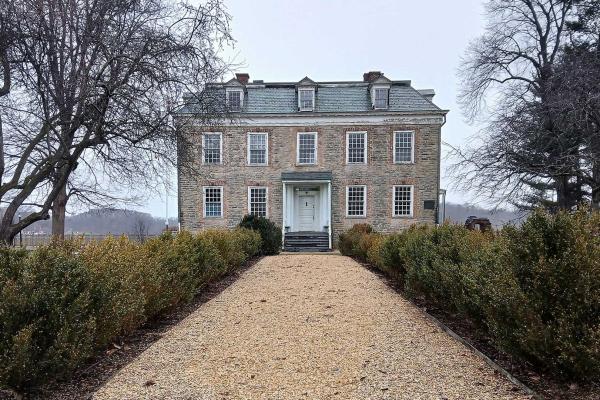
Clermont Home

1 Clermont Avenue
Germantown, NY 12526

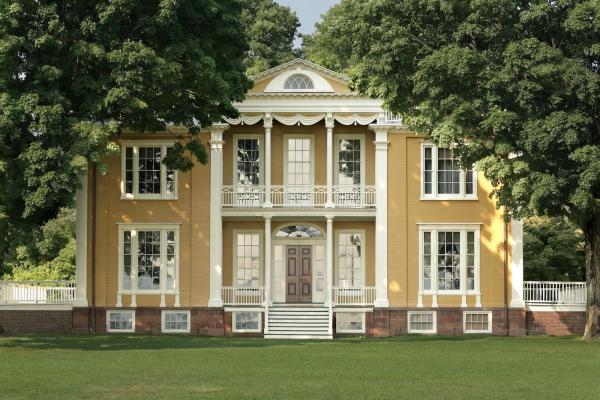
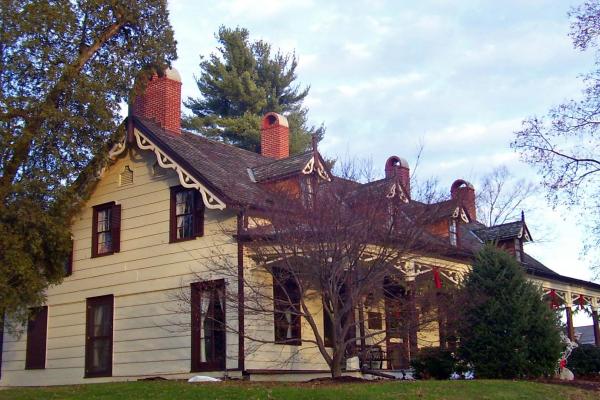
Historic home of the Robert Livingston family.

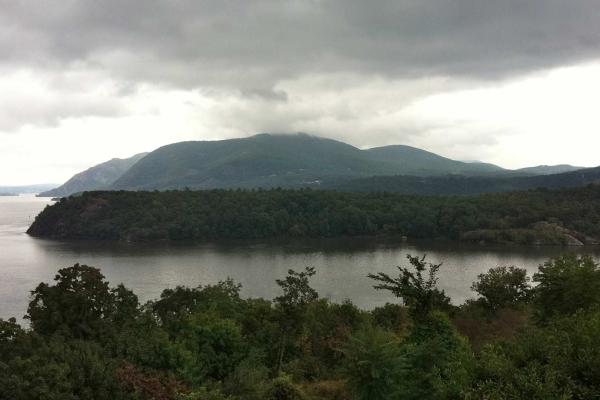
Constitution Island as seen from Sherburne Battery in West Point
Historic Site
Constitution Island

South Dock
West Point, NY 10996

Constitution Island was strategically vital during the Revolutionary War. It anchored the earliest American fortifications in the Hudson Highlands and helped secure Patriot control of the Hudson River.

Photo of the facade of Crailo Historic Site
State/County Park | Historic House
Crailo Historic Site

9 1/2 Riverside Avenue
Rensselaer, NY 12144

Historic home of Henry K. Van Rensselaer, Lieutenant Colonel, 6th Regiment of the Albany County militia at the Battle of Fort Anne.

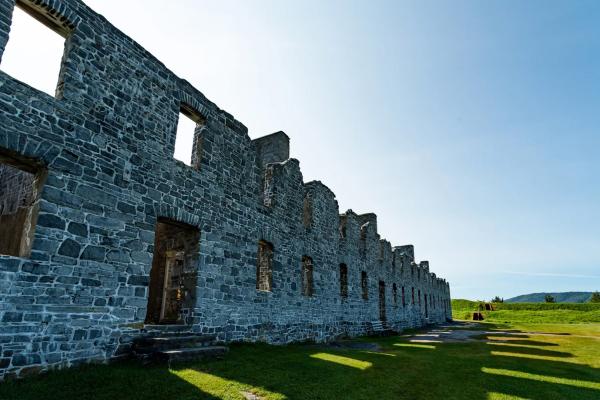
Stone wall ruins of Crown Point
State/County Park | Fort/Outpost
Crown Point Historic Site

21 Grandview Drive
Crown Point, NY 12928

In 1775, at the outbreak of the Revolutionary War, the American colonists captured this fort from the British and secured sorely needed cannons and heavy ordnance.

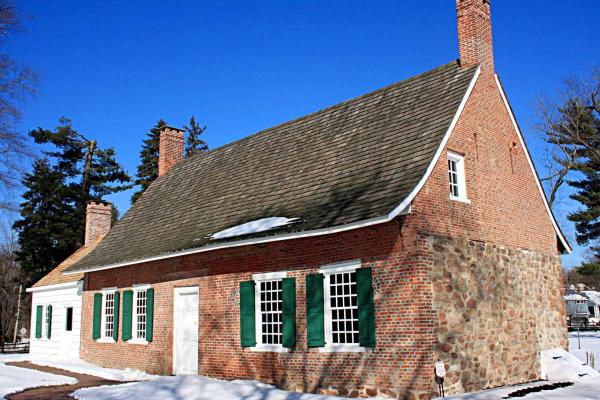
DeWint House in winter
Historic Site | Historic House
DeWint House

20 Livingston Avenue
Tappan, NY 10983

Temporary headquarters for George Washington on several occasions while he was Commander-in-Chief during the American Revolution.

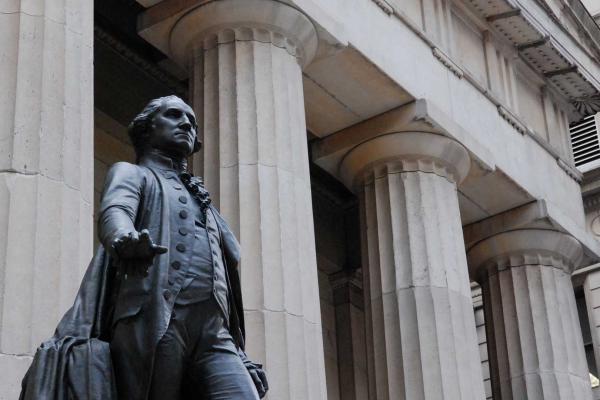
Federal Hall in New York City
National Park | Historic Site
Federal Hall

26 Wall Street
New York, NY 10005

Site where Washington took the first oath of office.

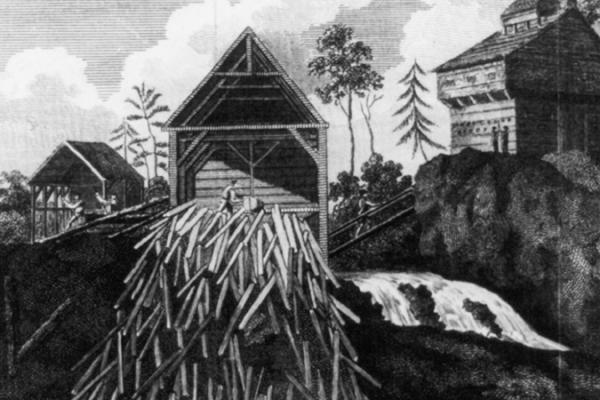
Fort Ann Saw Mill Depiction
Battlefield
Fort Ann

Fort Ann, NY 12827

At the Battle of Fort Ann, American forces mounted a fierce resistance against advancing British troops during the Saratoga campaign. Though forced to withdraw, the determined defense slowed the British advance and contributed to the growing strain on their northern army.

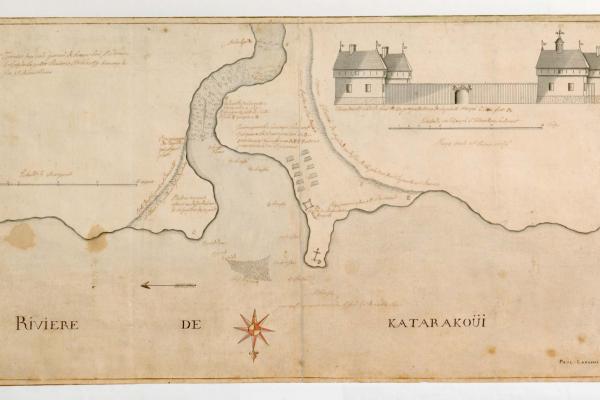
Map depicting the location of Fort de la Presentation
Historic Site | Fort/Outpost
Fort de La Presentation

22 Albany Ave
Ogdensburg, NY 13669

An historic fort established in 1749 that played a meaningful supporting role in both the Revolutionary War and the War of 1812.

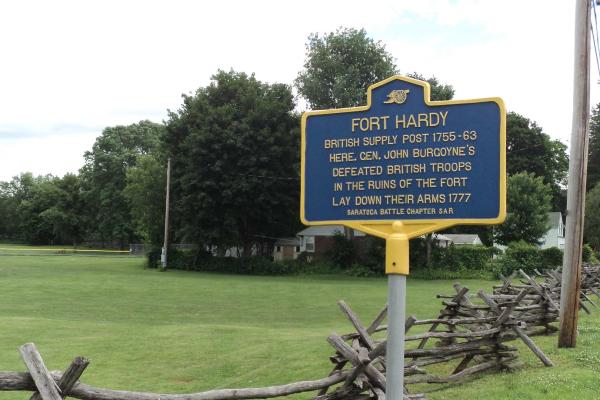
Photograph of the sign describing the events at Fort Hardy
Historic Site | Fort/Outpost
Fort Hardy Park

1 Reds Street
Schuylerville, NY 12871

The site of the British surrender to the Americans on October 17, 1777.

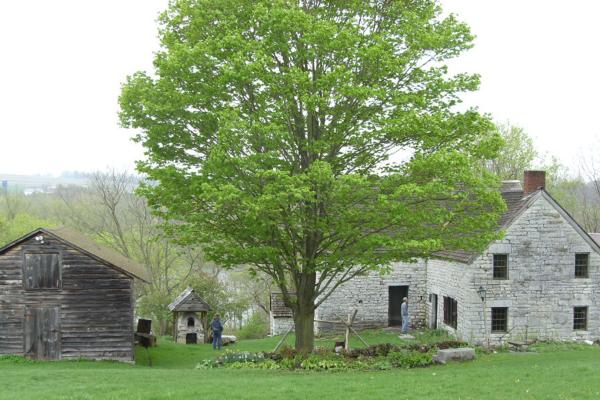
Picture displaying the entirety of Fort Klock in NY
Historic Site | Fort/Outpost
Fort Klock

7214 NY-5
St. Johnsville, NY 13452

Built in 1750, Fort Klock is one of the Mohawk Valley's best-preserved fortified homes, serving as a refuge for local families during both the French and Indian War and the American Revolution.

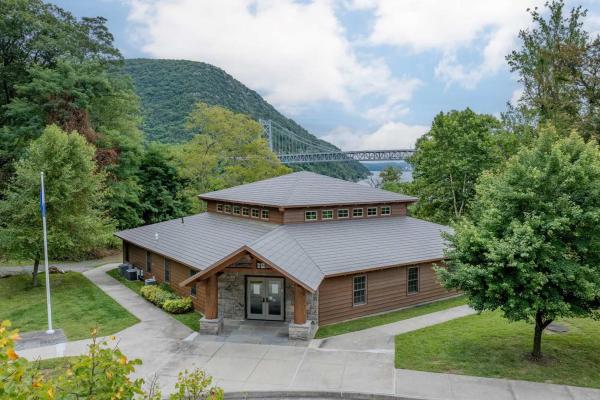
Drone shot of the visitor center at Fort Montgomery in New York
State/County Park | Historic Site
Fort Montgomery

690 Route 9W
Fort Montgomery, NY 10922

Historic fort attacked on October 6, 1777, as part of the British army’s three-pronged invasion of New York.

Aerial shot of Fort Ontario in New York
State/County Park | Fort/Outpost
Fort Ontario

1 E Fourth Street
Oswego, NY 13126

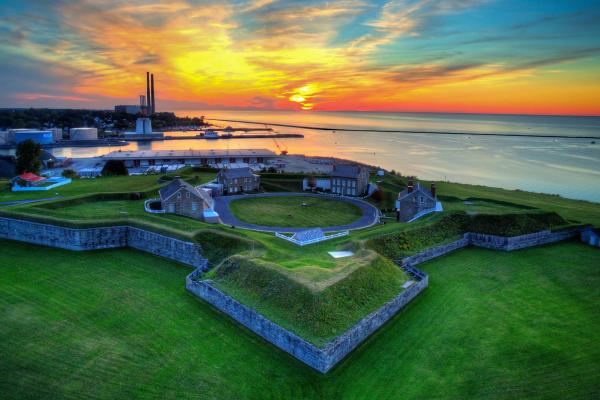
Fort Ontario was a staging ground for the British’s 1777 invasion of New York. It served as a base of operations for British, Native, and Loyalist raiding parties targeting upstate New York. In 1782, the British committed a full-time garrison to the fort.

Image of the Fort Plain Museum
Historic Site | Fort/Outpost
Fort Plain

389 Canal Street
Fort Plain, NY 13339

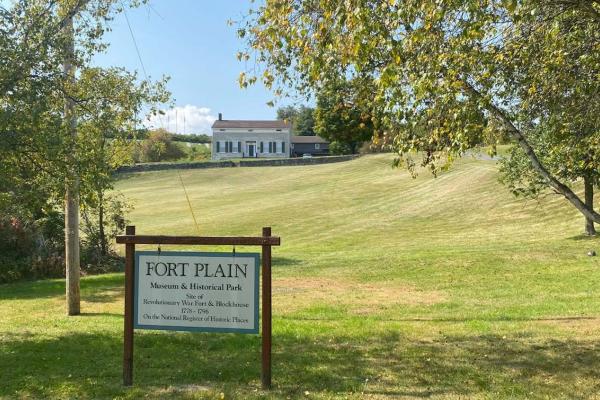
Perched high above the Mohawk Valley, Fort Plain stood as one of New York's most important frontier strongholds during the American Revolution, protecting settlers from raids and serving as the headquarters of famed patriot commander Marinus Willett.

View of the walls of Fort Stanwix
Battlefield | Fort/Outpost
Fort Stanwix

200 N James St
Rome, NY 13440

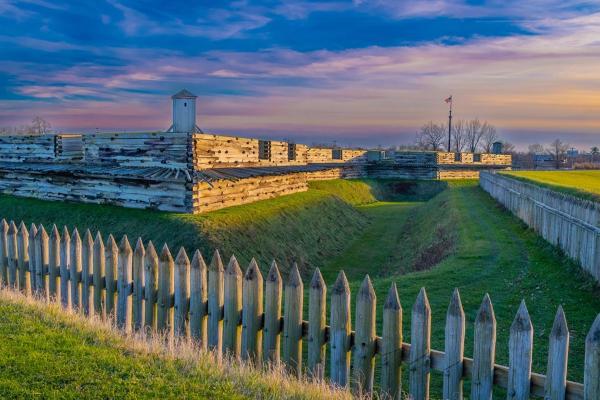
Originally constructed during the French & Indian War, this bastion served as a focal point Burgoyne's campaign to squash Patriot resistance in New York

Guns positioned at Fort Ticonderoga
Battlefield | Fort/Outpost
Fort Ticonderoga

102 Fort Ti Rd
Ticonderoga, NY 12883

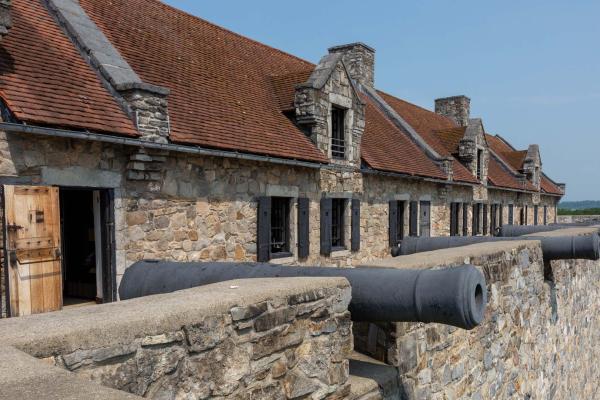
A formidable fortress on the banks of the Hudson and Lake Champlain, this stone bastion was the source of Henry Knox's artillery in the opening years of the Revolution. Today, it's a hallmark of living history with interpreters being found at every corner.

Shot of Fort Wadsworth overlooking the waters of New York
Historic Site
Fort Wadsworth

210 New York Ave.
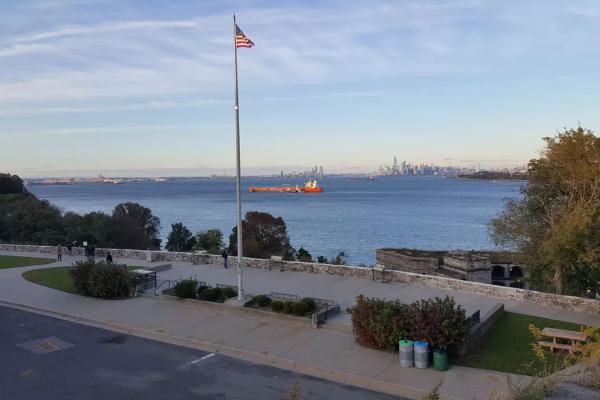
Staten Island, NY 10305

American fort captured by the British in 1776.

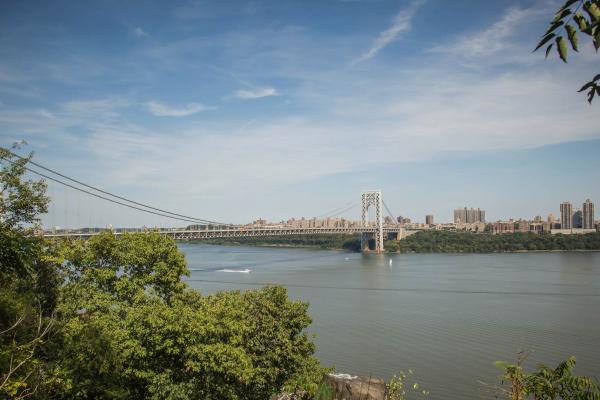
View towards former location of Fort Washington
Battlefield
Fort Washington

Bennett Park
New York, NY 10033

Fought on November 16, 1776, the Battle of Fort Washington marked the collapse of the last American stronghold on Manhattan during the New York Campaign. Surrounded and overwhelmed, the outnumbered garrison was forced into a surrender that dealt a heavy blow to the Continental Army’s position in the region.

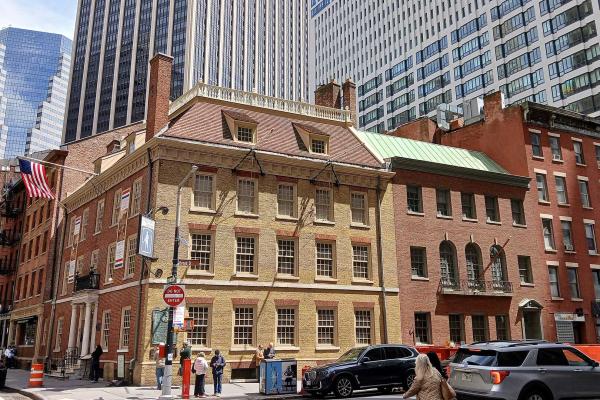
Fraunces Tavern in Manhattan
Historic Site | Museum
Fraunces Tavern Museum

54 Pearl Street
New York, NY 10004

The Fraunces Tavern Museum is Manhattan’s oldest building and the site of meetings of the Sons of Liberty.

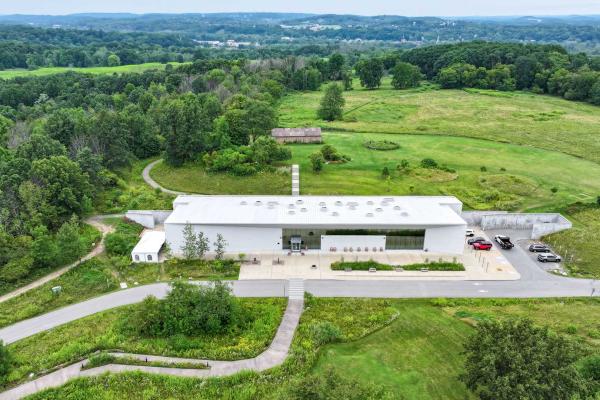
Aerial shot of Ganondaga State Historic Site with museum and longhouse in view
Historic Site | Museum
Ganondagan

7000 County Road 41
Victor, NY 14564

Historic Seneca town featuring a fully reconstructed longhouse and state-of-the-art interpretive museum.

Historic Site | Marker
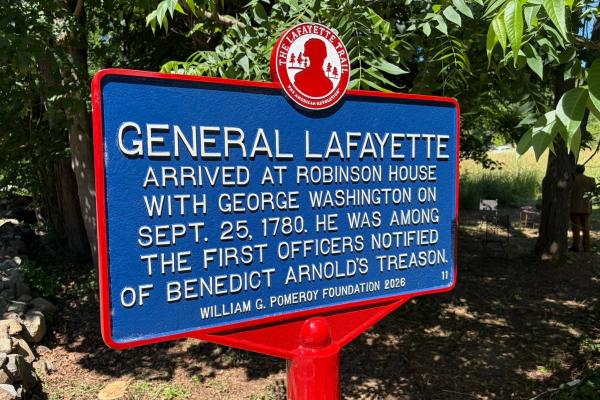
General Lafayette Marker, Garrison, New York (NY-11)

832 NY-9D
Garrison, NY 10524

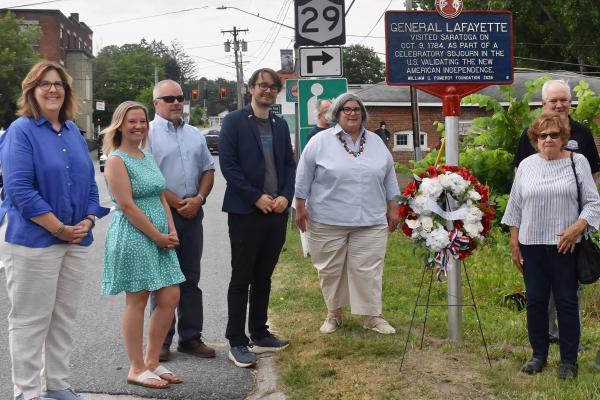
On September 25, 1780, Generals George Washington and the Marquis de Lafayette traveled toward the Beverly Robinson House, across the Hudson River from West Point, New York. The Robinson House, formerly owned by a British Loyalist, served as the headquarters for Benedict Arnold, the American commander at West Point. Although Major John André had been captured days earlier, exposing Arnold’s treason, Washington and Lafayette remained unaware of the plot. After returning from inspecting West Point’s fortifications, they were informed of the evidence against Arnold. 

Washington ordered Arnold’s immediate arrest, but the effort, led by Colonel Alexander Hamilton, failed to capture him. Washington and Lafayette established their headquarters at the Robinson House, where Washington began refortifying West Point. He discovered that Arnold had intentionally weakened the garrison by sending troops elsewhere under various pretexts. Orders from this period were formally issued from “Headquarters at Robinson’s House.”

Learn about Revolutionary War Combat Strategy. Watch the Revolutionary War Animated Map. For a summary, read An Overview of the American Revolution.

Historic Site | Marker
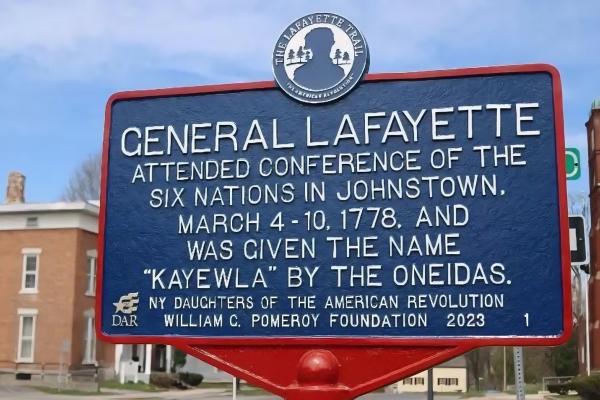
General Lafayette Marker, Johnstown, New York (NY-1)

3 North William Street
Fulton County Courthouse
Johnstown, NY 12095

The Johnstown conference was held during a critical moment in the American Revolution. The Continental Congress and New York officials were attempting to secure the allegiance—or at least the neutrality—of the Haudenosaunee (Iroquois Confederacy). The Six Nations were divided: Oneida and Tuscarora leaned toward the American cause. Mohawk, Seneca, Cayuga, and Onondaga leaned toward or allied with the British. Lafayette, then a young major general serving under George Washington, was sent to the Mohawk Valley to help stabilize the frontier and strengthen alliances.

Lafayette attended the March 1778 Johnstown conference of the Six Nations as a representative of the Continental Army. His presence symbolized America's commitment to diplomacy with Native nations. The Oneida, in particular, viewed Lafayette favorably because of his reputation for fairness and his advocacy for Native allies. The Mohawk Valley was a volatile frontier. Securing Oneida support helped protect American settlements from raids. His meeting with the tribal officials at then-Fort Johnstown had mixed results, with two of the six nations joining his side.

Learn about Revolutionary War Combat Strategy. Watch the Revolutionary War Animated Map. For a summary, read An Overview of the American Revolution.

Historic Site | Marker
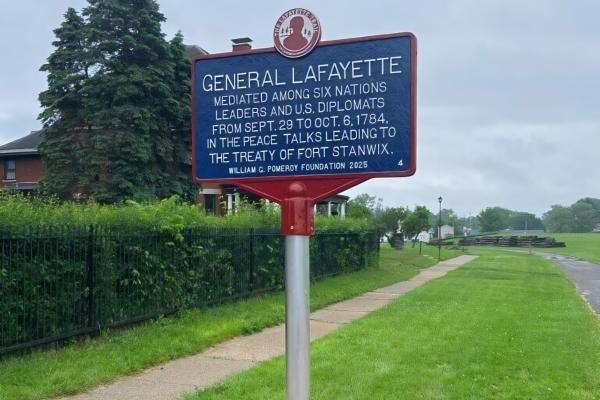
General Lafayette Marker, Rome, New York (NY-4)

201 North James Street
Rome, NY 13440

General Lafayette’s participation in the negotiations that led to the Treaty of Fort Stanwix is central to confirming his public identity as a friend of Native Americans. Lafayette arrived at Fort Stanwix on September 29, 1784. Although now a private citizen, Lafayette was held in high regard by representatives of the Six Nations. Rev. Samuel Kirkland recommended that Lafayette attend as he felt his influence was “…of essential consequence to the treaty.” The Treaty of Fort Stanwix was intended to establish peace between the United States and the Iroquois while securing land for American settlers. The treaty was signed on October 22, 1784, at Fort Stanwix, located in present-day Rome, New York.

Learn about Revolutionary War Combat Strategy. Watch the Revolutionary War Animated Map. For a summary, read An Overview of the American Revolution.

Historic Site | Marker
General Lafayette Marker, Schuylerville, NY (NY-6)

30 Ferry Street
Schuylerville, NY 12871

Following the Revolutionary War, Lafayette accepted an invitation from George Washington and returned to America. The Marquis de Lafayette departed France in mid-June 1784 and arrived in New York City on August 4. The five‑month goodwill visit reconnected him with George Washington, celebrated his role in American independence, and strengthened political and commercial ties between the United States and France. He would return again in 1824-1825.

His visit to Schuylerville on October 9, 1784, placed him in a region central to his Revolutionary War legacy, where the 1777 American victory had helped secure French support.

Learn about Revolutionary War Combat Strategy. Watch the Revolutionary War Animated Map. For a summary, read An Overview of the American Revolution.

Facade of Hamilton Grange
Historic Site | Historic House
Hamilton Grange

414 West 141st Street
New York, NY 10005

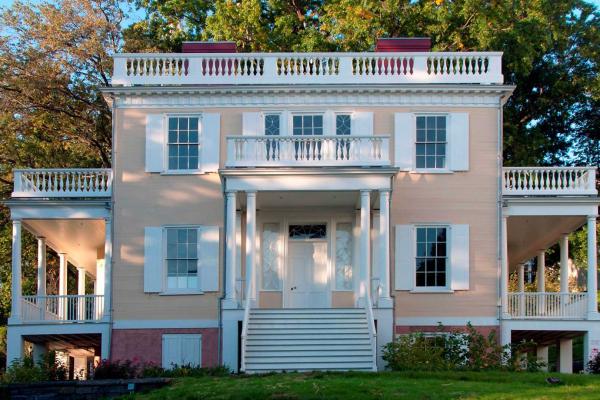
Relocated Mansion of Founding Father, Alexander Hamilton.

Detail from an engraving of the Battle of Harlem Heights
Battlefield
Harlem Heights

2990 Broadway
New York, NY 10027

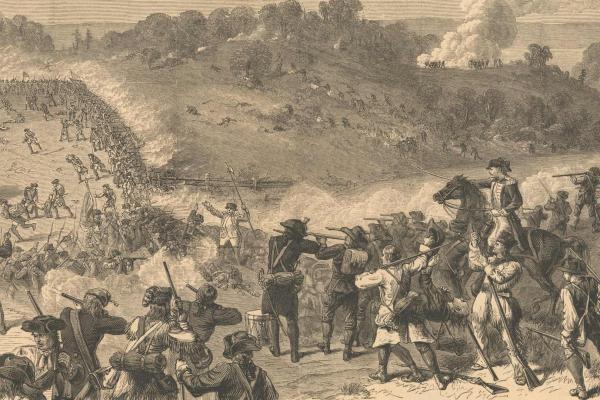
At the Battle of Harlem Heights, American forces rallied after earlier defeats and struck back against advancing British troops on northern Manhattan. The clash restored much-needed confidence to the Continental Army and proved the Patriots could stand against Britain’s professional soldiers.

Knox's Headquarters at Newburgh
Historic Site | Historic House
Henry Knox Headquarters

289 Forge Hill Road
Vails Gate, NY 12584

Historic headquarters of Major General Henry Knox during the winter of 1780-1781.

Historic Site
Henry Knox Trail Crown Point Marker at Crown Point, NY (NY-0)

21 Grandview Drive
Crown Point, NY 12928

The Henry Knox Trail, also known as the Knox Cannon Trail, is a network of roads and paths that traces the route of Colonel Henry Knox's "noble train of artillery" from Crown Point, New York, to the Continental Army camp outside Boston, Massachusetts, in the American Revolutionary War.

George Washington commanded Henry Knox in 1775 to transport 59 cannons (weighing over 60 tons) from captured forts on Lake Champlain, 30 from Fort Ticonderoga, and 29 from Crown Point to the army camp outside Boston to aid the war effort against British forces. They included forty-three heavy brass and iron cannons, six coehorns, eight mortars, and two howitzers.

This marker is in Crown Point, New York, in Essex County. It can be reached from Grandview Drive, on the left when traveling west. Marker is located in front of the museum at Crown Point State Historic Site.

Learn about Revolutionary War Combat Strategy. Watch the Revolutionary War Animated Map.

Historic Site
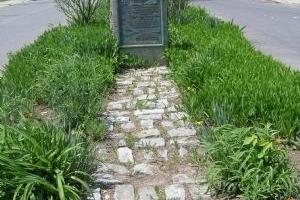
Henry Knox Trail Marker at Rensselaer, NY (NY-23)

35 Aiken Avenue
Rensselaer, NY 12144

The Henry Knox Trail, also known as the Knox Cannon Trail, is a network of roads and paths that traces the route of Colonel Henry Knox's "noble train of artillery" from Crown Point, New York, to the Continental Army camp outside Boston, Massachusetts, in the American Revolutionary War.

George Washington commanded Henry Knox in 1775 to transport 59 cannons (weighing over 60 tons) from captured forts on Lake Champlain, 30 from Fort Ticonderoga, and 29 from Crown Point to the army camp outside Boston to aid the war effort against British forces. They included forty-three heavy brass and iron cannons, six coehorns, eight mortars, and two howitzers.

When traveling south on Aiken Avenue, the marker is on the left at the intersection of Aiken Ave. and Columbia Turnpike (U.S. 9 & 20). The Gen. Henry Knox Trail Marker is in the median garden between opposing lanes of Aiken Avenue in Rensselaer, NY. It marks the spot where Knox began their journey on land towards Massachusetts.

Learn about Revolutionary War Combat Strategy. Watch the Revolutionary War Animated Map.

John Jay Homestead photographed by J. Passepartout
Historic Site | Historic House
John Jay Homestead

400 Jay Street
Katonah, NY 10536

The home and farm of John Jay, one of America's Founding Fathers.

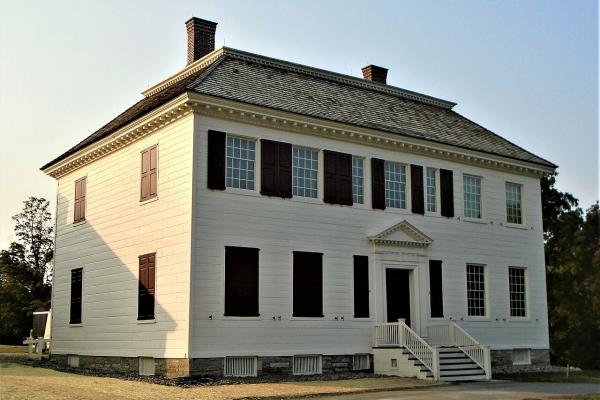
Johnson Hall State Historic Site
State/County Park | Historic House
Johnson Hall

139 Hall Avenue
Johnstown, NY 12095

The Johnson Hall State Historic Site was the home of Sir William Johnson, the British Superintendent of Indian Affairs in the Province of New York and a Major General who fought in King George’s War and the French and Indian War.

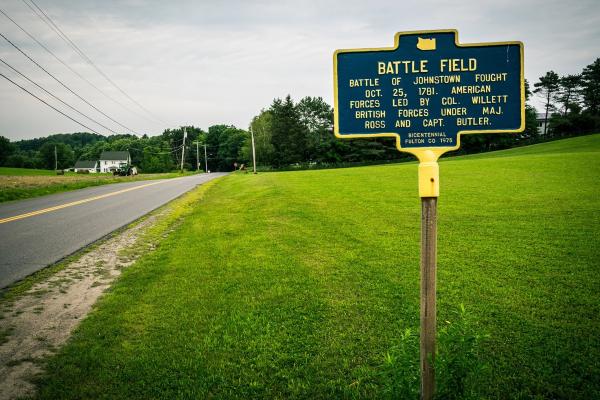
Sign at Johnstown NY
Battlefield | State/County Park
Johnstown

139 Hall Avenue
Johnstown, NY 12095

Patriot forces under Marinus Willett struck a decisive blow against Loyalist troops led by John Butler in one of the war’s final northern engagements. Though the enemy slipped away under cover of darkness, the clash shattered Loyalist strength in the Mohawk Valley and effectively ended organized resistance on that frontier.

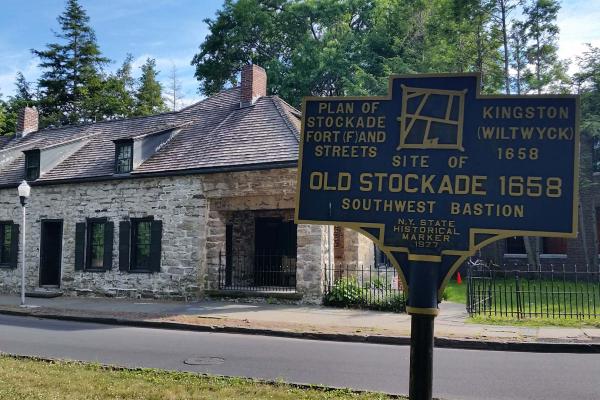
Old Stockade Kingston
Historic Site
Kingston

296 Fair St
Kingston, NY 12401

On October 16, 1777, British forces under John Vaughan attacked and burned much of Kingston, New York, then the state’s first capital. Though the raid caused widespread destruction and forced the New York government to flee, it ultimately did little to alter the course of the Revolutionary War.

Historic Site
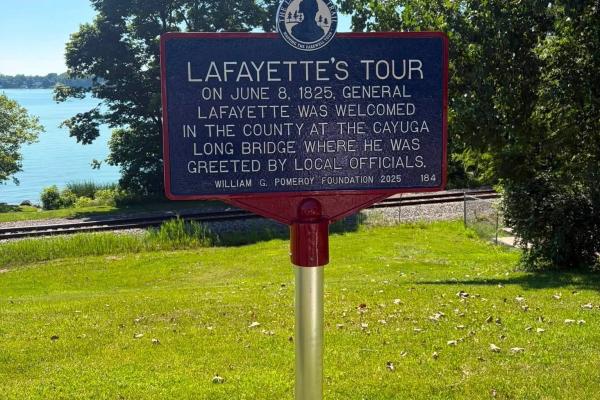
Lafayette Tour Marker, Cayuga, New York (NY-184)

6199 Railroad Street
Cayuga Harris Park
Cayuga, NY 13034

President James Monroe invited the Marquis de Lafayette to visit the United States, his adopted country. Lafayette’s tour of all 24 states in 1824 and 1825 drew large crowds and sparked a renewal of patriotism. During the American Revolution, Lafayette’s intense advocacy of the American cause convinced King Louis XVI of France to send troops and ships, which proved crucial to the American victory at Yorktown. 

On June 8, 1825, General Lafayette was moving east from Geneva and Waterloo, towards Auburn and Syracuse. He crossed the Cayuga Long Bridge, arriving in the Village of Cayuga around 4 p.m., where he was met by the Committee of Arrangements. Many local citizens then had the opportunity to meet him. After about an hour, the General proceeded on towards Auburn via Genesee Street, in a barouche pulled by six chestnut horses. He was escorted by a procession, including the Deputy Marshal, a Dragoon unit, mounted military officers, the city Marshal General Brinkerhoff, and the Committee of Arrangements members.

Learn about Revolutionary War Combat Strategy. Watch the Revolutionary War Animated Map. For a summary, read An Overview of the American Revolution.

Historic Site
Lafayette Tour Marker, Germantown, New York (NY-211)

1 Clermont Avenue
Clermont State Historic Site
Clermont, NY 12526

President James Monroe invited the Marquis de Lafayette to visit the United States, his adopted country. Lafayette’s tour of all 24 states in 1824 and 1825 drew large crowds and sparked a renewal of patriotism. During the American Revolution, Lafayette’s intense advocacy of the American cause convinced King Louis XVI of France to send troops and ships, which proved crucial to the American victory at Yorktown.

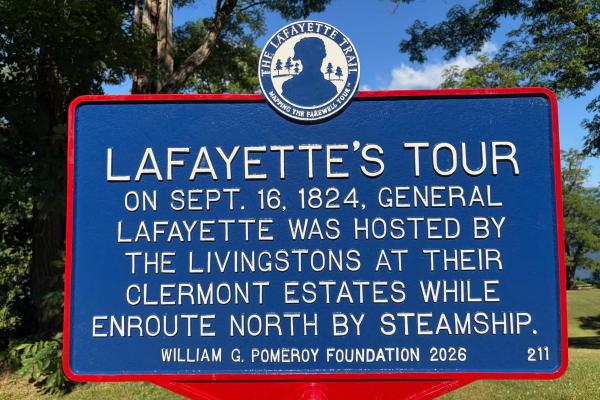
Lafayette left Hudson, New York, after a public reception and arrived in Germantown around midday on September 16, 1824. Upon arrival, Lafayette and his party were escorted up the hill to Clermont by a group of riflemen. At the summit, they were greeted by a regiment of well-disciplined soldiers in uniform, arranged in formation. Meanwhile, the grounds were lined with spectators eager to see the general. A sloop on the river fired a cannon salute, quickly returned by a shot from a nearby cannon hidden among the trees. Lafayette then reviewed the troops, who saluted by firing their guns in succession in his honor. Afterward, he was addressed by the local Masons.

Learn about Revolutionary War Combat Strategy. Watch the Revolutionary War Animated Map. For a summary, read An Overview of the American Revolution.

Historic Site
Lafayette Tour Marker, Niagara Falls, New York (NY-25)

Goat Island
Niagara Falls State Park
Niagara Falls, NY 14303

President James Monroe invited the Marquis de Lafayette to visit the United States, his adopted country. Lafayette’s tour of all 24 states in 1824 and 1825 drew large crowds and sparked a renewal of patriotism. During the American Revolution, Lafayette’s intense advocacy of the American cause convinced King Louis XVI of France to send troops and ships, which proved crucial to the American victory at Yorktown. 

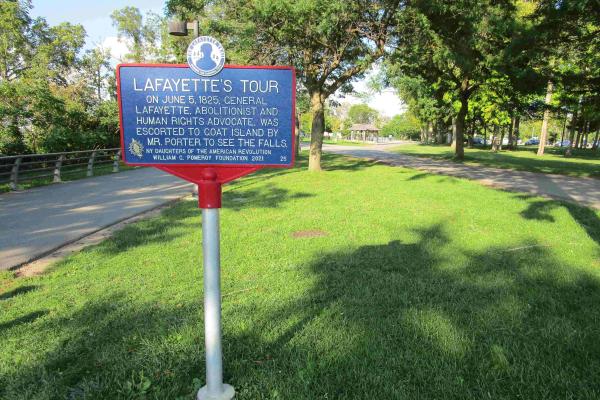
On June 5, 1825, Lafayette visited Niagara Falls, New York. He was escorted to Goat Island by Judge Augustus Porter, where he spent over two hours marveling at the natural wonder and was deeply moved by its power and grandeur. His secretary, Auguste Levasseur, recorded that they remained “nearly half an hour on the edge of the gulf, contemplating the rapid fall of the water in silence and as if dumbfounded by the sound of its terrible water…whose noise makes itself heard during the calm of the night, they say, for 20 miles." 

Learn about Revolutionary War Combat Strategy. Watch the Revolutionary War Animated Map. For a summary, read An Overview of the American Revolution.

Historic Site
Lafayette Tour Marker, Onondago, New York (NY-206)

4840 W. Seneca Turnpike
Syracuse, NY 13215

President James Monroe invited the Marquis de Lafayette to visit the United States, his adopted country. Lafayette’s tour of all 24 states in 1824 and 1825 drew large crowds and sparked a renewal of patriotism. During the American Revolution, Lafayette’s intense advocacy of the American cause convinced King Louis XVI of France to send troops and ships, which proved crucial to the American victory at Yorktown. 

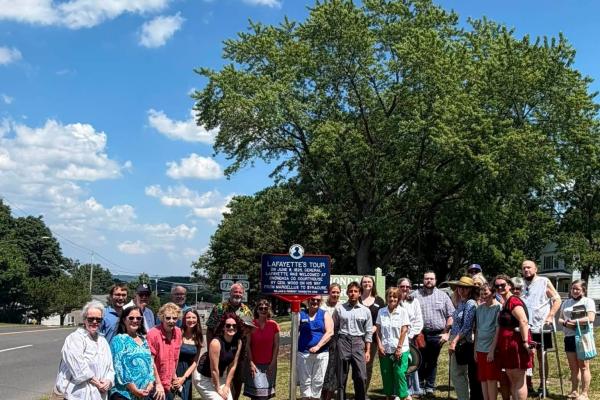
In June of 1825, General Lafayette was moving east across Central New York and passed through Marcellus and Onondaga Hill on his way to Syracuse. On June 9th, he was met in Marcellus by the Committee of Arrangements from Syracuse, as well as a company of cavalry commanded by Lieutenant Toogood. He arrived at approximately 4:30 am while traveling eastward from Skaneateles. Following an address by General Wood, Lafayette resumed his journey eastward to Syracuse. They escorted him along Seneca Turnpike to the Onondaga Hill area, where they stopped at the county courthouse, where he was welcomed by General Thaddeus M. Wood, a War of 1812 veteran.

Learn about Revolutionary War Combat Strategy. Watch the Revolutionary War Animated Map. For a summary, read An Overview of the American Revolution.

Historic Site
Lafayette Tour Marker, Rensselaer, New York (NY-150)

M 747 and RWC
Rensselaer, NY 12144

President James Monroe invited the Marquis de Lafayette to visit the United States, his adopted country. Lafayette’s tour of all 24 states in 1824 and 1825 drew large crowds and sparked a renewal of patriotism. During the American Revolution, Lafayette’s intense advocacy of the American cause convinced King Louis XVI of France to send troops and ships, which proved crucial to the American victory at Yorktown. 

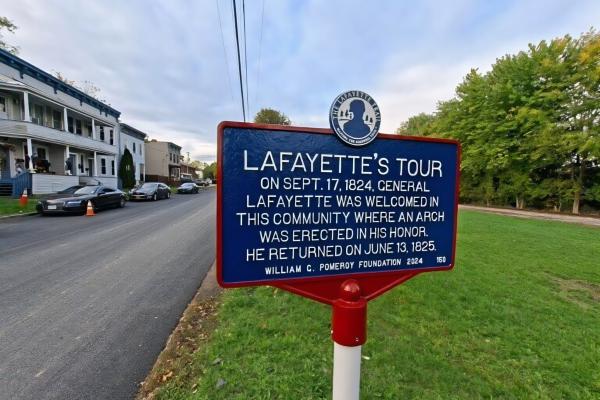
Going up the Hudson River from New York City, Lafayette was forced to disembark a few miles south of Albany because of the Overslaugh, a sand bar making steamer navigation difficult in shallower waters. From there, Lafayette proceeded north in a carriage and arrived in Greenbush (today's Rensselaer is part of it), accompanied by Maj. Gen. Solomon Van Rensselaer. An arch was erected in Greenbush in honor of Lafayette, bearing the inscriptions "Freedom's Volunteer, LA FAYETTE - One Republic not ungrateful" and "Yorktown, 19th October, 1781 - "The Boy did escape."

Learn about Revolutionary War Combat Strategy. Watch the Revolutionary War Animated Map. For a summary, read An Overview of the American Revolution.

Historic Site | Marker
Lafayette Tour Marker, Rochester, New York (NY-186)

51 East Main Street
Rochester, NY 14614

President James Monroe invited the Marquis de Lafayette to visit the United States, his adopted country. Lafayette’s tour of all 24 states in 1824 and 1825 drew large crowds and sparked a renewal of patriotism. During the American Revolution, Lafayette’s intense advocacy of the American cause convinced King Louis XVI of France to send troops and ships, which proved crucial to the American victory at Yorktown. 

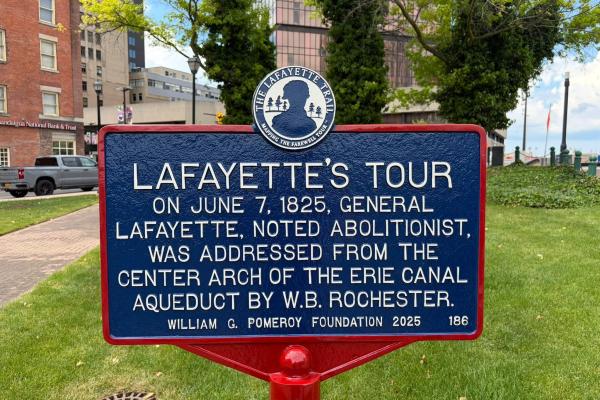
On June 7, 1825, his arrival in Rochester was announced with cannon and gunfire, as well as drums. At 6 p.m., he arrived and was met by a flotilla of twelve boats, each carrying flags, with a band playing on one. The General visited each boat, greeting them with individual salutations. The boats then fell into a line, with the General in the middle, and then proceeded through Rochester. Citizens gathered on bridges to watch him pass by, and they had built a stage on the aqueduct. The General was received by a delegation, and a speech was given by the Hon. W. B. Rochester, at the time an Eighth Circuit Court Judge and son of Nathaniel Rochester, the founder of the city. The General continued on to Canandaigua later that evening.

Learn about Revolutionary War Combat Strategy. Watch the Revolutionary War Animated Map. For a summary, read An Overview of the American Revolution.

Historic Site
Lafayette Tour Marker, Saugherties, NY (NY-211)

33 MJ +79
Clermont State Park
Saugerties, NY 12477

President James Monroe invited the Marquis de Lafayette to visit the United States, his adopted country. Lafayette’s tour of all 24 states in 1824 and 1825 drew large crowds and sparked a renewal of patriotism. During the American Revolution, Lafayette’s intense advocacy of the American cause convinced King Louis XVI of France to send troops and ships, which proved crucial to the American victory at Yorktown.

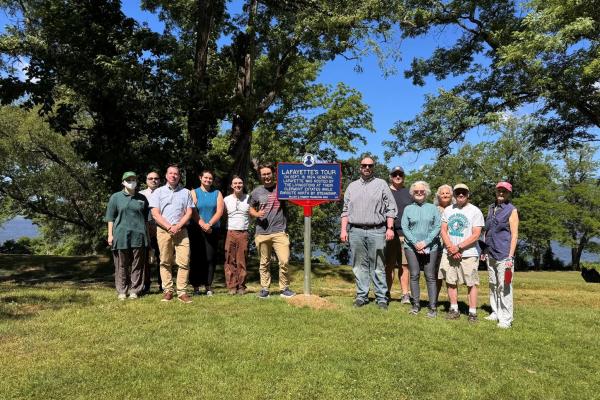
Lafayette arrived in Saugerties on September 16, 1824, at 4:00 p.m., Lafayette’s steamboat docked at Clermont, where Robert L. Livingston awaited him. He and his party were escorted up the hill to the Livingston residence (Arryl House) by a troop of riflemen. Lafayette had arrived at Clermont by steamboat, reunited unexpectedly with a former comrade from Valley Forge, was greeted by riflemen and a regiment of uniformed soldiers, reviewed the troops amid cannon salutes, and was honored by local Masons before being hosted at the Livingston estate for an evening reception. Lafayette spent the evening and overnight at the Livingston estate before continuing his Hudson Valley tour.

Learn about Revolutionary War Combat Strategy. Watch the Revolutionary War Animated Map. For a summary, read An Overview of the American Revolution.

Historic Site
Lafayette Tour Marker, Staten Island, New York (NY-120)

54 Port Richmond Avenue
Reformed Protestant Dutch Church
Staten Island, NY 10302

President James Monroe invited the Marquis de Lafayette to visit the United States, his adopted country. Lafayette’s tour of all 24 states in 1824 and 1825 drew large crowds and sparked a renewal of patriotism. During the American Revolution, Lafayette’s intense advocacy of the American cause convinced King Louis XVI of France to send troops and ships, which proved crucial to the American victory at Yorktown.

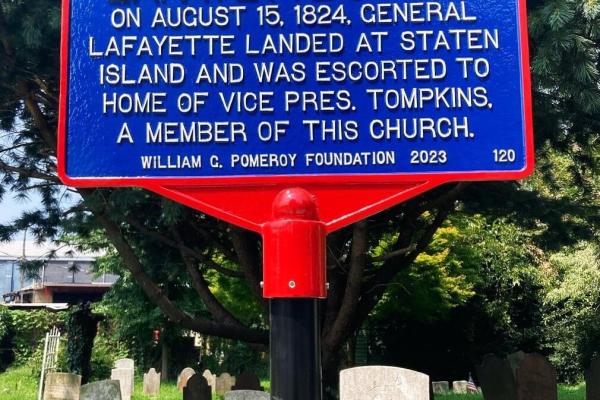
Lafayette’s arrival in the United States began on Staten Island, and his brief stop there on August 15, 1824 (the morning after his ship anchored) set the tone for the enormous celebrations that followed. He was greeted immediately by a 13‑gun salute from Fort Diamond (later renamed Fort Lafayette), and a flotilla of naval and merchant vessels welcoming him as “The Nation’s Guest.”

Learn about Revolutionary War Combat Strategy. Watch the Revolutionary War Animated Map. For a summary, read An Overview of the American Revolution.

Historic Site | Marker
Lafayette Tour Marker, Tonawanda, New York (NY-209)

125 East Main Street
Empire State Trail
Tonawanda, NY 14150

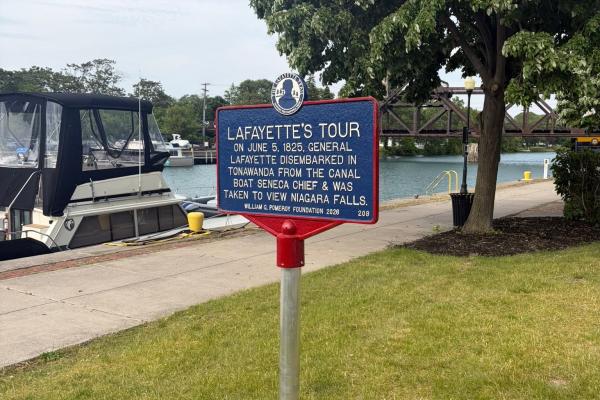
President James Monroe invited the Marquis de Lafayette to visit the United States, his adopted country. Lafayette’s tour of all 24 states in 1824 and 1825 drew large crowds and sparked a renewal of patriotism. During the American Revolution, Lafayette’s intense advocacy of the American cause convinced King Louis XVI of France to send troops and ships, which proved crucial to the American victory at Yorktown.

On June 5, 1825, Lafayette boarded a canal boat called the Seneca Chief. The boat was towed through the harbor in front of the Village of Buffalo and up the Niagara River to the western terminus of the Erie Canal. Many boats filled with citizens followed in a procession. They proceeded to Tonawanda, where Lafayette disembarked and was received by the Committee of Niagara County. They escorted Lafayette in a carriage up to Niagara Falls, where he viewed the falls, then returned to Tonawanda, and spent the night at Lewiston before reboarding the Seneca Chief the next day to continue traveling east. 

Learn about Revolutionary War Combat Strategy. Watch the Revolutionary War Animated Map. For a summary, read An Overview of the American Revolution.

Mesier Homestead as photographed by Daniel Case
Historic Site | Historic House
Mesier Homestead and Museum

2 Spring Street
Wappingers Falls, NY 12590

Built around 1741 by Adolphus and Nicholas Brower, who settled here and built this homestead along Wappingers Creek. Nicholas and his sons were active Patriots, supplying wheat, corn, and more to Washington's Army and building a shipyard along the creek from which supplies were sent to the Army at West Point.

Monument to Silas Towne on Mexico Point
State/County Park | Historic Site
Mexico Point, Spy Island

120 Mexico Point Drive
Mexico, NY 13114

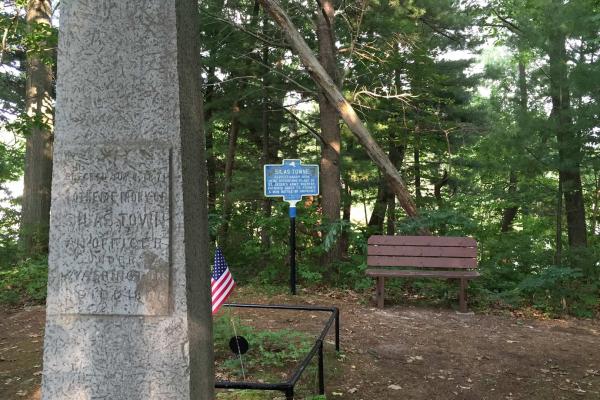
Patriot spy named Silas Towne hid on this island and observed British General Barry St. Ledger’s troop movements during the 1777 three-pronged invasion of New York.

Facade of the Morris Jumel Mansion
Historic Site | Historic House
Morris Jumel Mansion

65 Jumel Terrace
New York, NY 10032

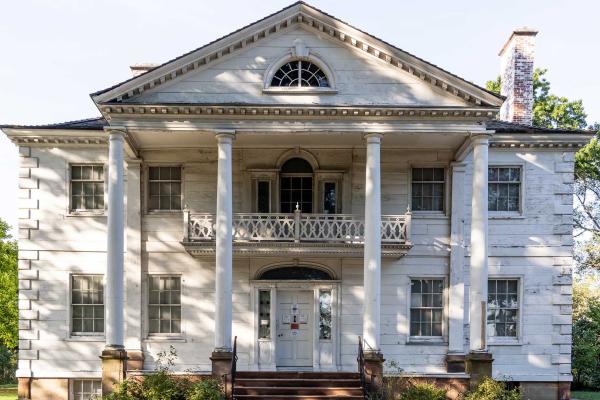
Constructed by a Loyalist prior to the Revolution, this home saw the likes of officers from both sides of the American Revolution.

Monument and reconstructed structure of the New Windsor Cantonment
State/County Park | Historic Site
New Windsor Cantonment Site

374 Temple Hill Road
New Windsor, NY 12553

The New Windsor Cantonment Site preserves the final winter encampment of George Washington’s Continental Army, where nearly 7,500 soldiers awaited the war’s end in 1783.

Monument at Newtown photographed by Jennifer Goellnitz
Battlefield | State/County Park
Newtown

2346 County Rd 60
Elmira, NY 14901

At the Battle of Newtown, American forces under John Sullivan crushed Loyalist and Haudenosaunee Confederacy resistance in a decisive campaign of destruction. The victory shattered organized opposition in the region, paving the way for the systematic devastation of Indigenous towns that reshaped the frontier during the war.

Home of Nicholas Herkimer (AI Expanded Left/Right)
State/County Park | Historic House
Nicholas Herkimer Home

200 State Route 169
Little Falls, NY 13365

Home of Brigadier General Nicholas Herkimer, who died of wounds at the Battle of Oriskany, one of the bloodiest of the war.

Stone central fortification of Fort Niagara
Historic Site | Fort/Outpost
Old Fort Niagara

1 Scott Avenue
Youngstown, NY 14174

Site of a British command center during the Revolutionary War.

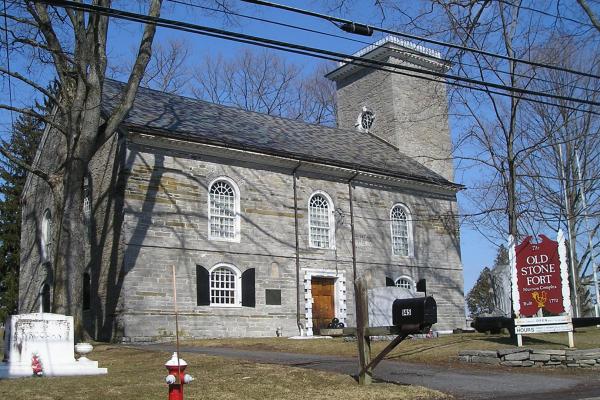
Street view of the Old Stone Fort in Schoharie
Historic Site | Fort/Outpost
Old Stone Fort

145 Fort Road
Schoharie, NY 12157

The Old Stone Fort was originally built as a Reformed Dutch Church in 1772. During the American Revolutionary War, the church was enclosed by a log stockade in 1777 and attacked by the British in 1780.

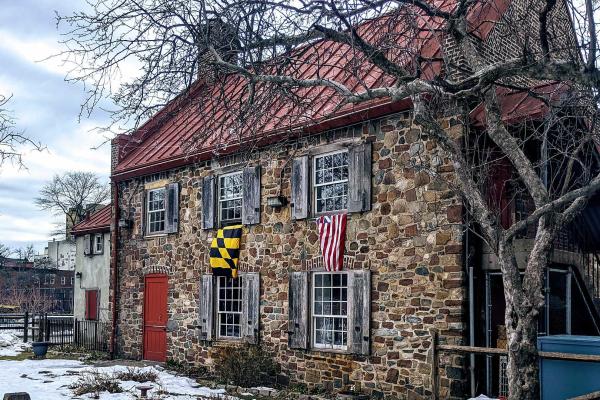
Old Stone House photographed by Jay Ruffins
Historic Site | Historic House
Old Stone House

336 3rd Street
Brooklyn, NY 11215

Reconstructed Dutch farmstead and site of the 1776 Battle of Brooklyn, with local history displays.

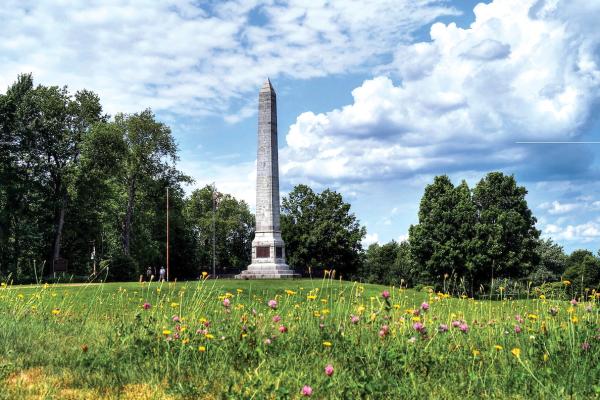
Oriskany Battle Monument photographed by Cliff Oran
Battlefield | State/County Park
Oriskany

7801 NY-69
Oriskany, NY 13424

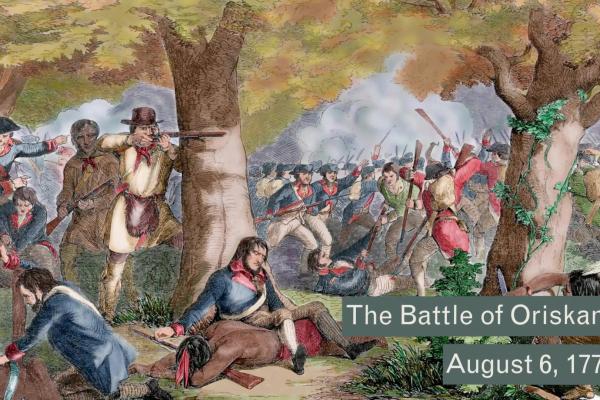
On August 6, 1777, British forces under the command of Sir John Johnson engaged American forces under Nicholas Herkimer in the Battle of Oriskany, resulting in one of the few battles of the war where all the participants were North American.

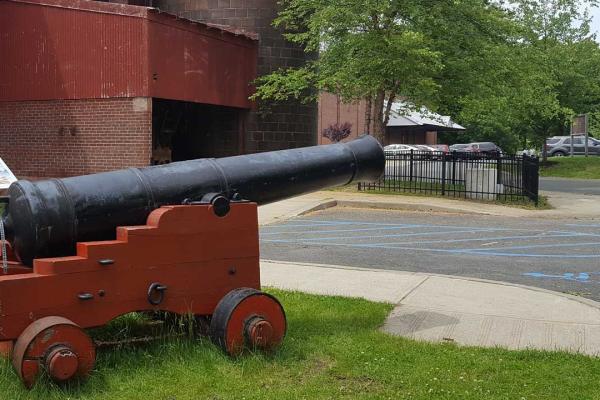
Peebles Island Cannon photographed by Henry Bellagnome of Troy
State/County Park | Fort/Outpost
Peebles Island

1 Delaware Avenue
Cohoes, NY 12047

On August 17, 1777, American forces retreated south to this place as they prepared defenses to make a final stand against the British, who intended to capture Albany.

Pelham Bay
Battlefield | State/County Park
Pell's Point

Pelham Bay Park
Orchard Beach Rd
New York, NY 10464

At the Battle of Pell’s Point, a small American force under John Glover held firm against a powerful British advance. Their stand proved pivotal in shaping the course of the New York campaign.

General Philip Schuyler House
National Park | Historic House
Schuyler House

4 Broad Street
Schuylerville, NY 12871

This property is located in the "Old Saratoga" unit of Saratoga National Historical Park.

Philipse Manor Hall State Historic Site photographed by Ajay Suresh
State/County Park | Historic House
Philipse Manor Hall

29 Warburton Ave.
Yonkers, NY 10701

Historic home of the Philipse family, staunch Loyalists during the Revolutionary War.

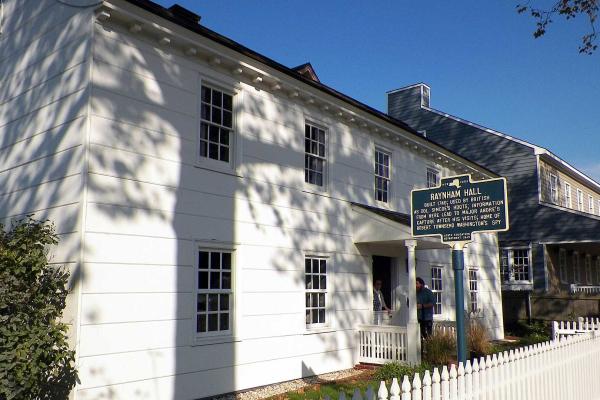
Photograph of Raynham Hall Oyster Bay, NY by Rhonda McCloughan
Historic Site | Historic House
Raynham Hall Museum

30 West Main Street
Oyster Bay, NY 11771

Raynham Hall was the home of the Townsend family, one of the founding families of Oyster Bay, on Long Island, New York, and a member of George Washington's Culper Spy Ring.

Monument depicting Rogers' Rangers at Rogers Island Visitor Center
Historic Site
Rogers Island

11 Rogers Island Drive
Fort Edward, NY 12828

Visitor Center and Museum dedicated to the history of Rogers Island and Fort Edward.

Photograph of the facade of Sagtikos manor
Historic Site | Historic House
Sagtikos Manor

677 Montauk Highway
Bay Shore, NY 11706

The manor served as a local headquarters for British forces during the American Revolution.

St. Paul's Church in the fall
Historic Site
Saint Paul's Church

897 S. Columbus Ave.
Mt. Vernon, NY 10550-5018

Historic church used as a military hospital after the Battle of Pell's Point.

Great Redoubt at Saratoga photographed by Doug Menuez
Battlefield | National Park
Saratoga

648 Route 32 Stillwater, NY 12170
Stillwater, NY 12170

The Battles of Saratoga marked a decisive turning point in the American Revolution, where Patriot forces achieved a stunning victory over a major British army. This triumph not only shattered British momentum but convinced France that the American cause was worth backing, transforming a colonial rebellion into an international war.

Photograph of the facade of the Senate House in New York
State/County Park | Historic Site
Senate House

296 Fair Street
Kingston, NY 12401

Site of New York's First Constitutional Convention, where the first state Constitution was adopted on April 20, 1777.

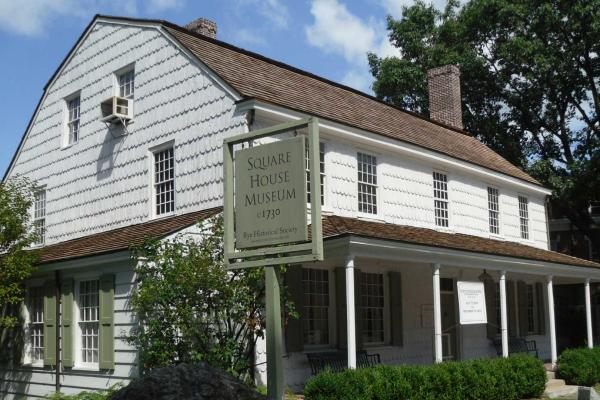
Photograph of the facade of the Square House Museum by Doug Kerr
Historic Site | Historic House
Square House Museum

1 Purchase Street
Rye, NY 10580

Historic inn and meeting place for Patriots and the Continental Army during the 1770s-1780s.

Summer cabin of Baron von Steuben
Historic Site | Historic House
Steuben Historic Site

9941 Starr Hill Road
Remsen, NY 13438

Historic home of Baron Von Steuben, Drillmaster of the American Revolution.

Stone Church located in Stone Arabia, New York
Battlefield | Historic Site
Stone Arabia

5407 Ephratah Rd
Fort Plain, NY 13339

At the Battle of Stone Arabia, Patriot militia under John Brown made a desperate stand against a swift raid led by Sir John Johnson. Though Brown was killed and the raiders escaped, the clash galvanized local resistance.

Scenic photograph of the Stony Brook Grist Mill alongside a creek
Historic Site
Stony Brook Grist Mill

100 Harbor Road
Stony Brook, NY 11790

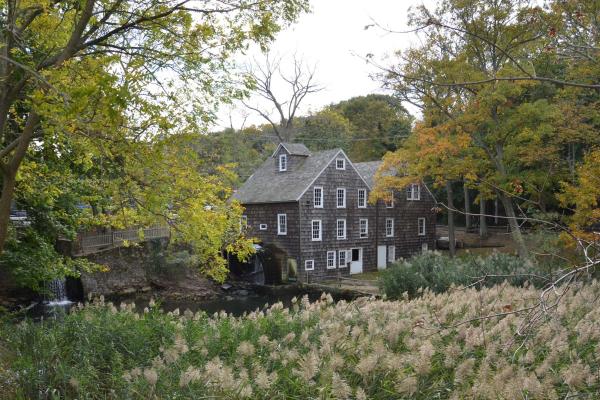
The Revolutionary War arrived on Long Island in a way that felt very close to home, with British forces taking control directly after their victory at the Battle of Long Island in August 1776. They held onto the island for the entire duration of the war. During this time, the mill at Stony Brook was busy, grinding grains that helped feed the British soldiers.

Stony Point Lighthouse
Battlefield | State/County Park
Stony Point

44 Battlefield Rd
Stony Point, NY 10980

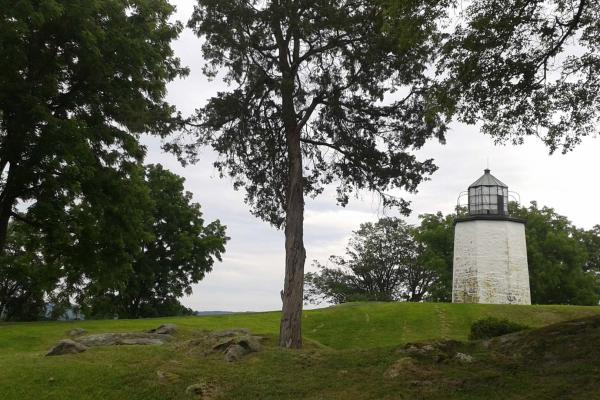
Now a state park in New York, Stony Point once served as British defensive position along the Hudson River during the New York campaign. Thanks to cunning actions of "Mad" Anthony Wayne, British forces were swiftly pushed from their defenses.

Brick Facade of the Ten Broeck Mansion
Historic Site | Historic House
Ten Broeck Mansion

9 Ten Broeck Place
Albany, NY 12210

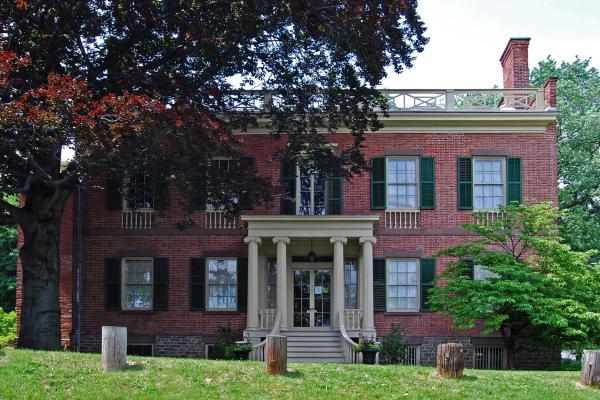
Historic home of Revolutionary War Colonel Abraham Ten Broeck, and member of the New York Provincial Congress.

Front gate of the Green Wood Cemetery
Historic Site | Battlefield
The Green-Wood Cemetery

500 25th Street
Brooklyn, NY 11232

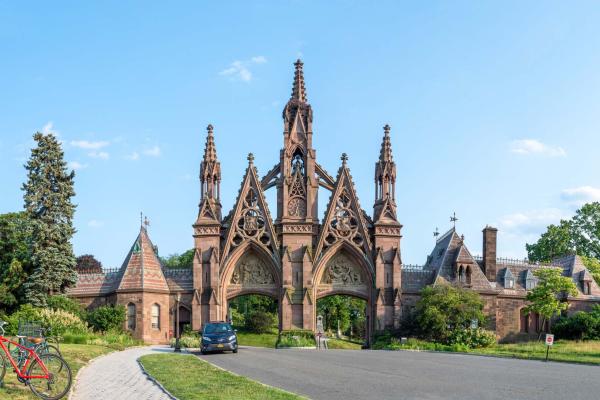
Now one of the largest cemeteries in New York, this was once the location where Patriot forces attempted to thwart the British Invasion of New York.

Front door of the Valentine-Varian House
State/County Park | Historic House
Valentine-Varian House

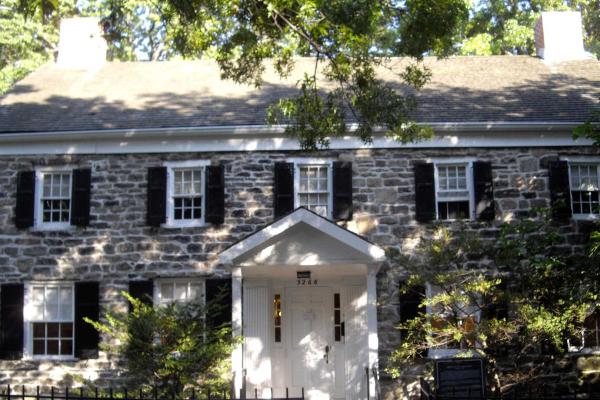
3266 Bainbridge Ave.
Bronx, NY 10458

The Valentine–Varian House is a historic home located in the Norwood neighborhood of the Bronx. Site of skirmishes between British and American forces because of its commanding position over the Boston Post Road.

Front yard of the Van Cortlandt Mansion photographed by Ryan Ng
Historic Site | Historic House
Van Cortlandt House

Van Cortlandt Park, Broadway at W. 246th St.
Bronx, NY 10471

Occupied by both sides during the American Revolution, this home has seen the likes of both George Washington and William Howe

Vertically AI Expanded photograph of the Van Wyck Homestead
Historic Site | Museum
Van Wyck Museum

504 Route 9
Fishkill, NY 12524

A colonial-era home built in 1732. The Continental Army used the house during the Revolutionary War as the Officers' Headquarters for the Fishkill Supply Depot.

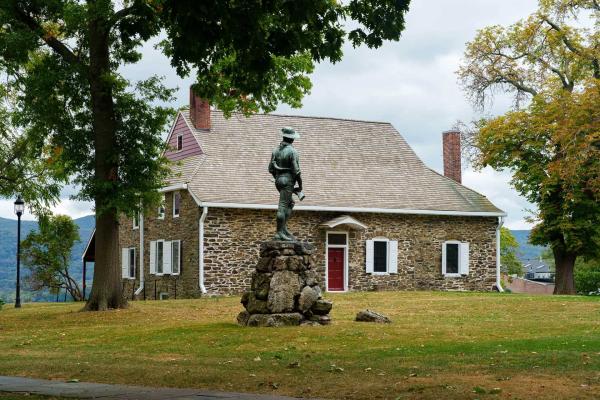
Photograph of Washington's Headquarters in Newburgh, NY with a monument in the foreground
State/County Park | Historic House
Newburgh Headquarters

84 Liberty Street
Newburgh, NY 12551

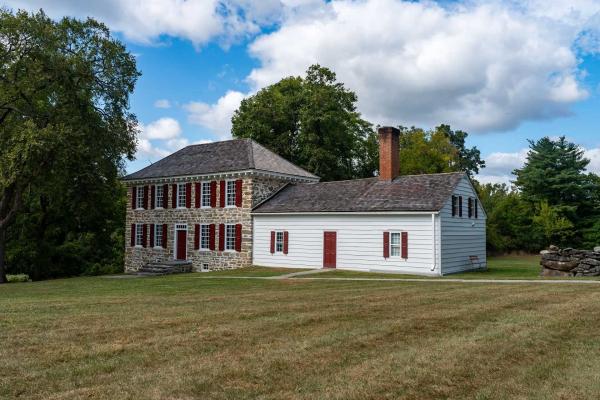
General Washington established his Newburgh headquarters at Jonathan and Tryntje Hasbrouck's fieldstone farmhouse from 1782 to 1783, issuing an order for a "cessation of hostilities" from the house.

New York Tours Along the Trail

Explore the many guided tours of The Liberty Trail

Filter by
New York
Tour
Oriskany, NY
New York
Tour
Brooklyn, NY
New York
Tour
Stillwater, NY
New York Videos Along The Liberty Trail
Exploring the history and stories of the American Revolution.
Liberty Trail History Makers

The Revolutionary War was a war unlike any other — one of ideas and ideals, that shaped “the course of human events. Explore the history and personalities from this pivotal time in American history.
Biography

Once a supporter of the British Crown and friend of New Hampshire's royal governor, John Sullivan's revolutionary sympathies led him to the Continental Army and a lengthy career in early American politics.

Biography

One of the many spies Washington left in New York following its capitulation, Nathan Hale is famously known for his last words.

Biography

Sarah Osborn Benjamin experienced the American Revolution from inside the Continental Army’s camps, witnessing hardship, battle, and the victory at Yorktown firsthand. Her remarkable story reveals the resilience of a woman who proved she was far more than “an idle spectator of events.”

Biography

A native of New York, Sir John Johnson served under the British Crown and became a staunch ally of many of the northern Native American tribes before and after the American Revolution.