-
The BlogBiographies
-
Videos

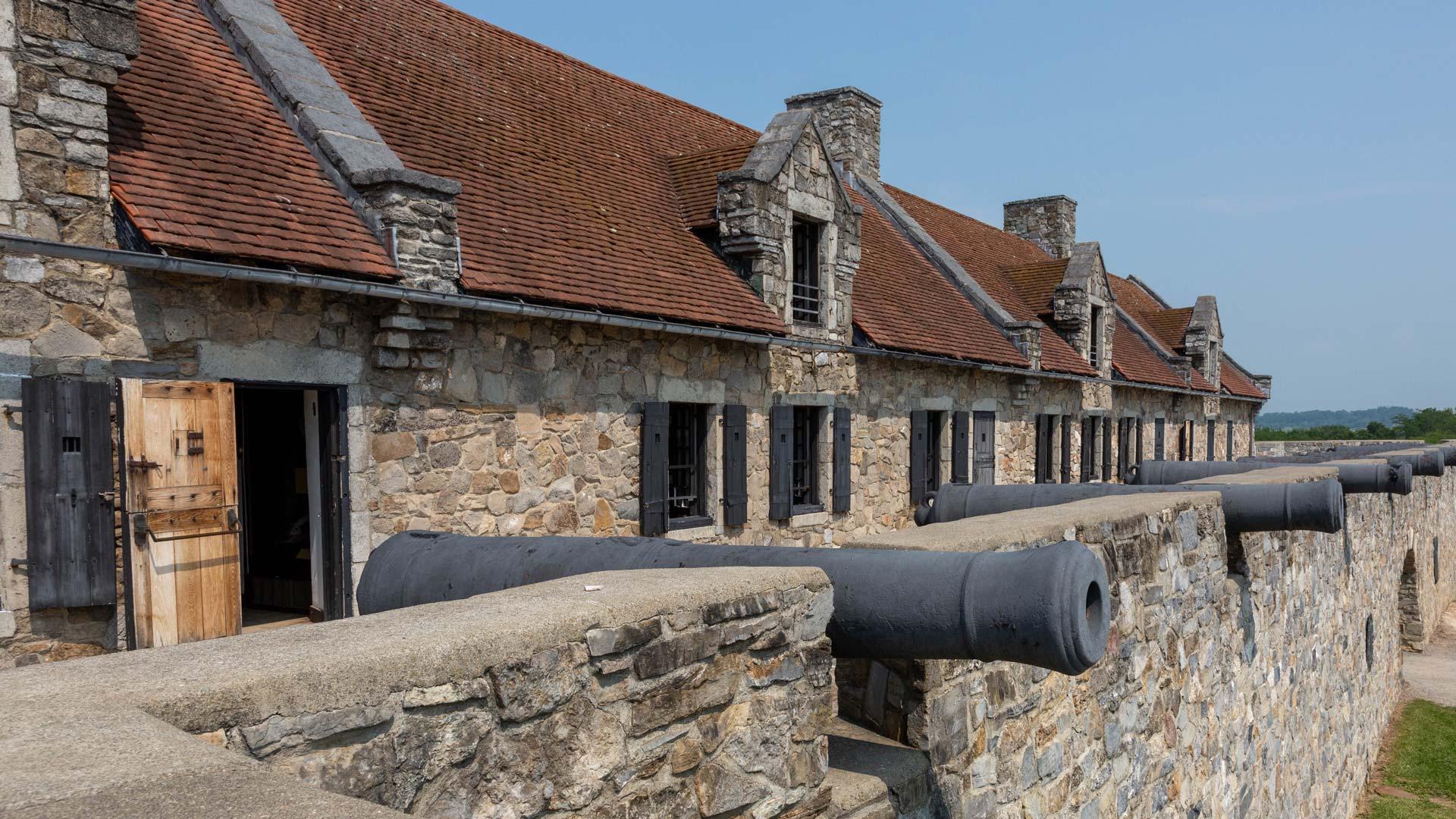
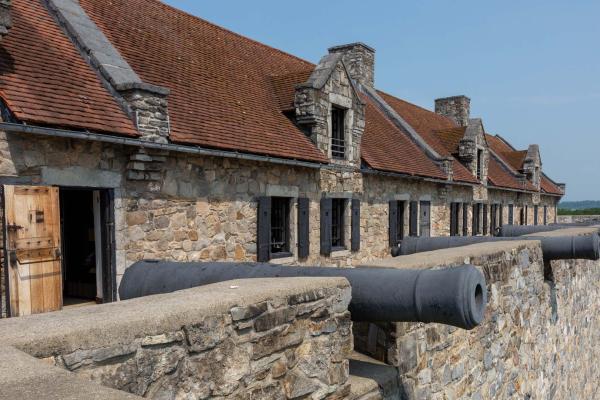
A formidable fortress on the banks of the Hudson and Lake Champlain, this stone bastion was the source of Henry Knox's artillery in the opening years of the Revolution. Today, it's a hallmark of living history with interpreters being found at every corner.

Fort Ticonderoga, referred to as the Gibraltar of North America and strategically located at the confluence of Lake Champlain and Lake George, controlled the site of portage between the two bodies of water. Originally built by the French from 1755 - 1758, it was captured by the British during the French and Indian War. By 1775 it had become a backwater post in the British command and was falling into disrepair. But with a full-blown war on the horizon between England and her rebellious colonies, the English high command recognized its strategic significance, since the fort controlled routes of communication and travel between New York City and the Hudson River with British-held Canada.
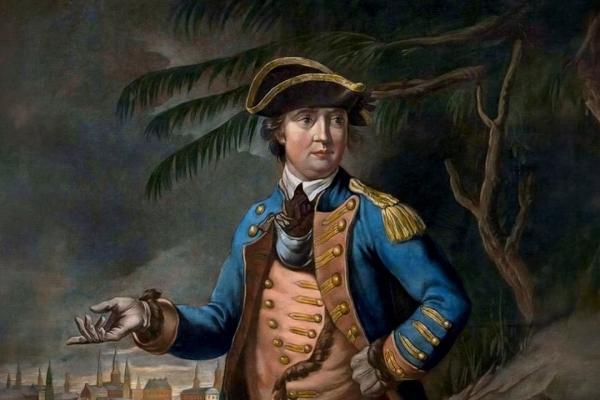
During the American War for Independence, several engagements were fought at the five-pointed star fort. The most famous of these occurred on May 10, 1775, when Ethan Allen and his band of Green Mountain Boys, accompanied by Benedict Arnold, who held a commission from Massachusetts, silently rowed across Lake Champlain from present-day Vermont and stormed the fort in a swift, late-night sneak attack. The lone sentry posted was quickly pushed aside. Less than 50 British soldiers made up the garrison. When the British commander asked under whose authority he was acting, Allen is alleged to have replied, “In the name of the Great Jehovah and the Continental Congress,” demanding the British surrender the fort.
Allen and Arnold, each with a powerful ego, clashed from the moment they met, arguing over who was to lead the attack. Arnold was placated when he was told he could lead alongside Allen. However, their squabble continued after the fort was taken as to who remained the de facto commander. Horrified that Allen’s men plundered in the wake of their victory and celebrated by getting drunk, Arnold insisted order be restored. Allen and his men eventually left and Arnold remained behind until he was relieved of command in June 1775, after 1,000 patriots from Connecticut arrived to reinforce the fort and brought with them another General who held a commission from Congress. Taking umbrage, Arnold left and resigned his commission, beginning the long, sour story of his disgruntled relations with Congress and the hierarchy of the Continental Army.
The great prize for the American cause was not the fort itself, but rather the vast trove of artillery that was located at the fort.
During the winter of 1775-1776, Henry Knox and his men marched to Fort Ticonderoga and gathered the necessary artillery and other supplies. They built special sleds to haul them over the frozen rivers and snow-covered Berkshire Mountains of Western Massachusetts. It was an arduous and heroic task which Knox completed with great alacrity, arriving with the first elements of his train in March 1776. The newly-arrived guns, now aimed at the British, turned the tide in New England and forced the British to evacuate Boston. The future of the American cause looked bright.
Fort Ticonderoga remained firmly in American hands until the Saratoga Campaign of 1777, when the British Army under the command of General John Burgoyne recaptured the fort as they moved south from Canada towards Albany, New York. Seizing the unoccupied high ground of nearby Mount Defiance, Burgoyne’s engineers hauled their cannons to the top of the mountain and aimed them at Fort Ticonderoga. Seeing their plight, the American garrison abandoned the fort without a fight on July 5, 1777.
After the fighting began to move to the Southern Theater, the strategic importance of the fort rapidly declined, and so it saw a great deal of neglect from its British occupiers. This neglect continued well after the war, as ownership of the fort passed from the State of New York to private hands, with the fort falling into ruin. But in 1909, the Pell family, which had owned the fort and surrounding land since 1820, began to invest in its restoration, reopening the fort as a museum and adding the so-called “King’s Garden” to the grounds. The museum, a founding member of the American Alliance of Museums, remains open today and hosts frequent special exhibition and special living history programs.
Explore more of The Liberty Trail by visiting these nearby attractions.
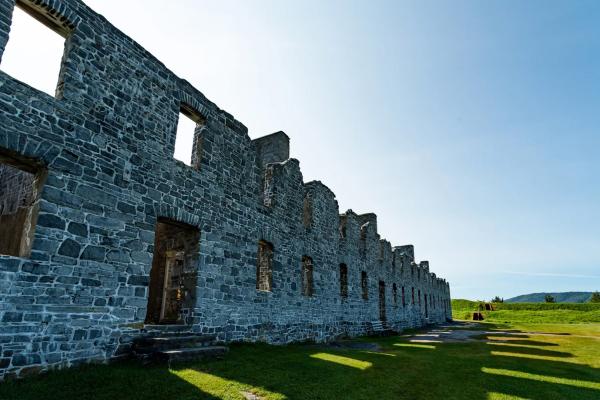
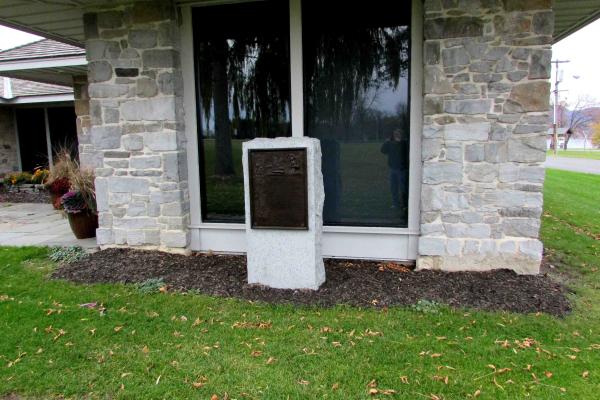
Crown Point, NY 12928