-
The BlogBiographies
-
Videos

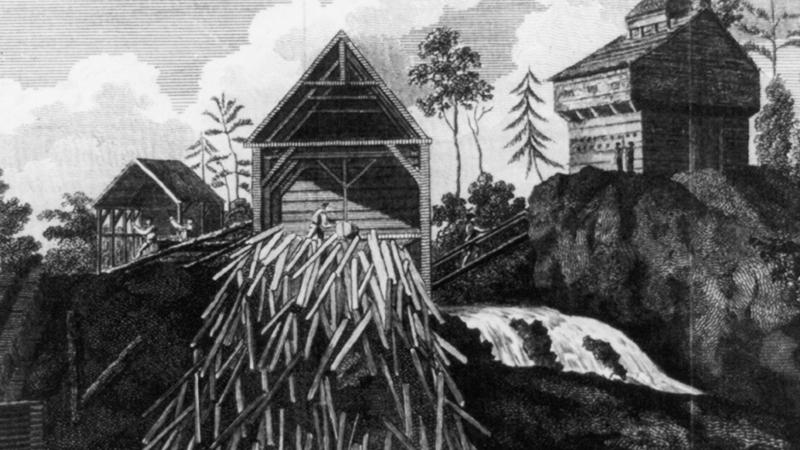
At the Battle of Fort Ann, American forces mounted a fierce resistance against advancing British troops during the Saratoga campaign. Though forced to withdraw, the determined defense slowed the British advance and contributed to the growing strain on their northern army.

On July 6, 1777, British troops forced a group of outnumbered Patriots to retreat from Fort Ticonderoga without firing a shot. The evacuated Continentals then divided into two groups, each group fighting against the pursuing British over the following two days. One group fought in the Battle of Skenesborough near Lake Champlain on July 8, and the other fought in the Battle of Hubbardton, a land battle, on July 7. After these subsequent battles and the division of troops, Capt. James Gray reorganized 220 Patriots and led them south, through the forest towards Fort Ann, located in the mountains of New York.
The British 9th Regiment of Foot, led by Capt. John Hill, followed the reorganized Continentals with orders to defeat them and capture Fort Ann. On the morning of July 7, Gray and his men formed a defensive line to the north of Fort Ann. Although the Continentals were exhausted and hungry after leaving their supplies at Fort Ticonderoga, their morale was boosted when 400 Patriot reinforcements arrived, led by Col. Henry Van Rensselaer, joining the effort to defend the Fort.
On the morning of July 8, the battle for Fort Ann began. This battle, in its entirety, lasted 4 hours. When the British forces arrived, the Continental troops greatly outnumbered the British due to their reinforcements, courtesy of Col. Van Rensselaer. The battle was fought in thick woods, which hindered both mobility and visibility on both sides. The Patriot troops were successful in maneuvering throughout the landscape and surrounding the British flanks, leading the British to send out for reinforcements. The British, still led by Capt. John Hill, saw some improvement in their outlook when they moved onto a wooded hill.
Although the British were outnumbered and the Patriots had high morale, the tide turned in favor of the British after the success of a deception tactic. British Capt. John Money attempted to rally a strong group of Native American reinforcements but was only successful in organizing a small group. Regardless, Money and his group rushed ahead and began shouting war cries. The outbursts were heard by the Patriots, who, upon hearing these shouts, retreated to Fort Ann, believing that they were going to be outnumbered.
When the Patriot forces arrived at Fort Ann, they were convinced that they had been victorious in the battle, despite their retreat. However, they discovered that they were running extremely low on ammunition and saw that a large group of British reinforcements were incoming. Determining that they could not maintain a defense, the Patriots abandoned Fort Ann and retreated to Fort Edward nearby. Although it was tactically a British victory, the Battle of Fort Ann was beneficial to the Patriots, as it delayed Gen. John Burgoyne in his march toward Saratoga, which contributed to an American victory there. After the victory at Saratoga on October 17, Patriot morale was revitalized, and French intervention was secured.
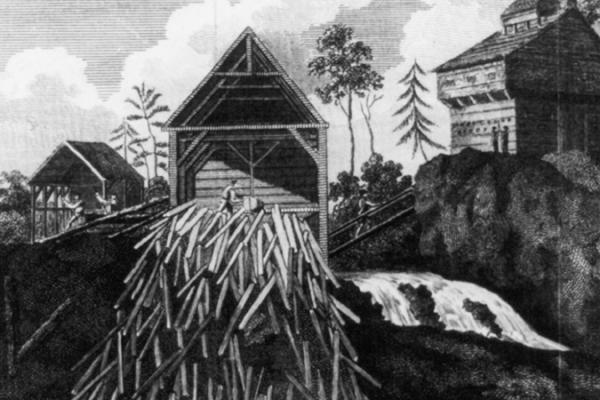
Situated in the mountains of Washington County, New York, Fort Ann is located along the historic route linking French and English colonies in North America, making it an important outpost both before and during the Revolutionary War. During the 19th Century, the Champlain Canal and the Delaware & Hudson Railroad also came to the town. Today, Fort Ann retains much of its small town character with a number of historic sites and structures within its borders.
Explore more of The Liberty Trail by visiting these nearby attractions.