-
The BlogBiographies
-
Videos

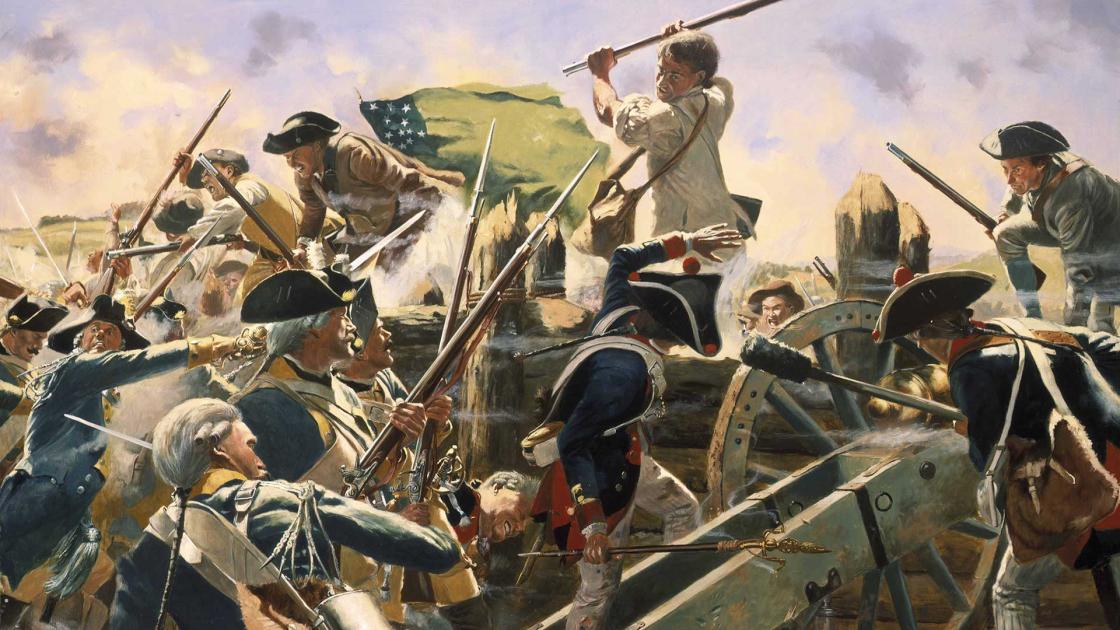
Bennington Battlefield preserves the site of a Revolutionary War battle fought in Walloomsac, NY.
In the summer of 1777, British General John Burgoyne's army, attempting to divide New England from the rest of the American colonies, was slowed by difficult terrain and stretched supply lines. Burgoyne sent Lt. Col. Friedrich Baum's forces to Bennington, Vermont, to seize supplies, but local American militias, led by General John Stark, prepared to defend the area. On August 16, Baum’s troops were ambushed by over 1,000 American fighters in a fierce battle near Walloomsac, New York. Baum was mortally wounded, and his forces were overwhelmed, suffering heavy casualties. The American victory weakened Burgoyne’s army and led to a loss of support from Native American allies, contributing to his eventual defeat at Saratoga on October 17, 1777.
Visitors to the battlefield will find a series of interpretive signs, 2.7 mile trail system, picnic area, and information building. Guided tours are offered frequently during the operating season and by appointment. Join us in this nine-stop self-guided tour of the battleground.
IMAGE CREDIT: The Battle of Bennington, a National Guard Heritage Painting by Don Troiani. Courtesy the National Guard Bureau
The American Revolutionary War was entering a critical phase in 1777 as it dragged into its third year. British forces had taken New York City in 1776, but were still separated from their counterparts in Quebec, and many colonists were in open rebellion against King George III. The time was right, suggested British General John Burgoyne, for the British army to take control of New York state— especially the Hudson River. The ambitious plan would subdue the most populous areas of the state and allow coordination between the two British armies in New York City and Quebec.
In June, Burgoyne left Canada with 11,500 soldiers, marching south toward Lake Champlain. The army — a mix of British and German soldiers, loyalist militias, and Indigenous allies — forced the Americans to abandon several fortifications along the way. However, as they reached farther south, their supply lines were badly stretched and Burgoyne needed to look at local sources for food and other necessities. He hoped to stockpile a month’s worth of rations before making the final push to Albany.
Burgoyne dispatched German Lieutenant Colonel Friedrich Baum on what was expected to be a two-week expedition through Vermont. Baum’s lengthy orders were to subdue the inhabitants, confuse them with disinformation, steal horses, and recruit loyalists all while regularly forwarding supplies. Reports indicated a weakly-guarded storehouse in Bennington, which became the expedition’s primary target. Baum would then rejoin Burgoyne’s army on the road to Albany.
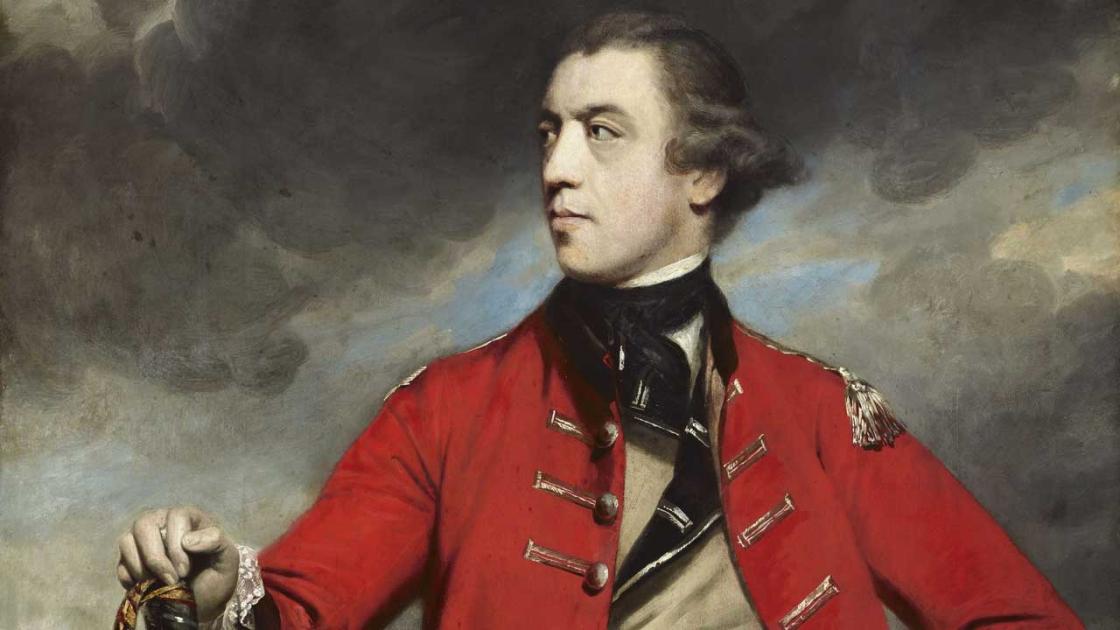
When British General John Burgoyne ordered German Lieutenant Friedrich Baum out from Fort Miller to acquire supplies for the British Army on August 11, patriot forces were already in place in Bennington about 30 miles away and a number of days zigzagging through the landscape. The march was difficult, hot, muddy, and buggy. Neither side was aware, but the two were headed for a crucial collision.
Baum faced difficulties from the start. Although he set out with 650 men and two 3-pounder cannons, the German native was forced to rely heavily on translators to communicate with his English, French, and Mohawk-speaking troops. Though he was a veteran of the Seven Years’ War, Baum had never commanded a force of this size and was not experienced in the North American wilderness.
After two days of marching, Baum learned that 1,800 patriots were already gathered at Bennington, still ten miles ahead. Baum reported this to Burgoyne, and on August 14 advanced cautiously toward Walloomsac, New York.
The patriot troops under Brigadier General John Stark of New Hampshire had arrived at Bennington ahead of Baum’s on August 8. Stark was a veteran of the French and Indian War and early battles of the American Revolution. He had a falling out with the Continental Army after he was overlooked for a promotion and, in his opinion, was operating solely under the authority of the New Hampshire Council.
At this time, Major General Philip Schuyler ordered Stark to rejoin the Northern Continental Army, which he commanded in Stillwater, NY, near Saratoga. But Stark refused, a choice that proved to be a stroke of good luck. When Stark learned of the approaching forces, he sent 200 of his own men out to meet them. The detachment exchanged fire with Baum’s troops at the Sancoick Mill, two miles west of the modern battlefield site, before falling back.
Baum raided the mill for provisions and continued east, halting within visual range of Stark’s men. Outnumbered, he quickly began fortifying his own positions on either side of a bridge crossing the Walloomsac River. Baum relayed through a messenger these developments to Burgoyne, and in response, Burgoyne dispatched more troops. Baum continued to shore up his position as he was ordered and waited for the promised reinforcements.
The fighting began August 14 with extensive skirmishing and resulted in casualties for Indigenous soldiers, loyalists, and Canadians. Both the patriots and British army forces remained in Walloomsac that night while reinforcements for both sides raced to their aid.
Lieutenant Colonel Heinrich Breymann was dispatched to support Lieutenant Colonel Friedrich Baum, and Colonel Seth Warner’s Continental regiment of Green Mountain Boys marched to join Brigadier General John Stark. Heavy summer rain slowed them all and prevented a general battle. But the delay favored Brigadier General John Stark, whose numbers were increased significantly by the arrival of Berkshire County militia.
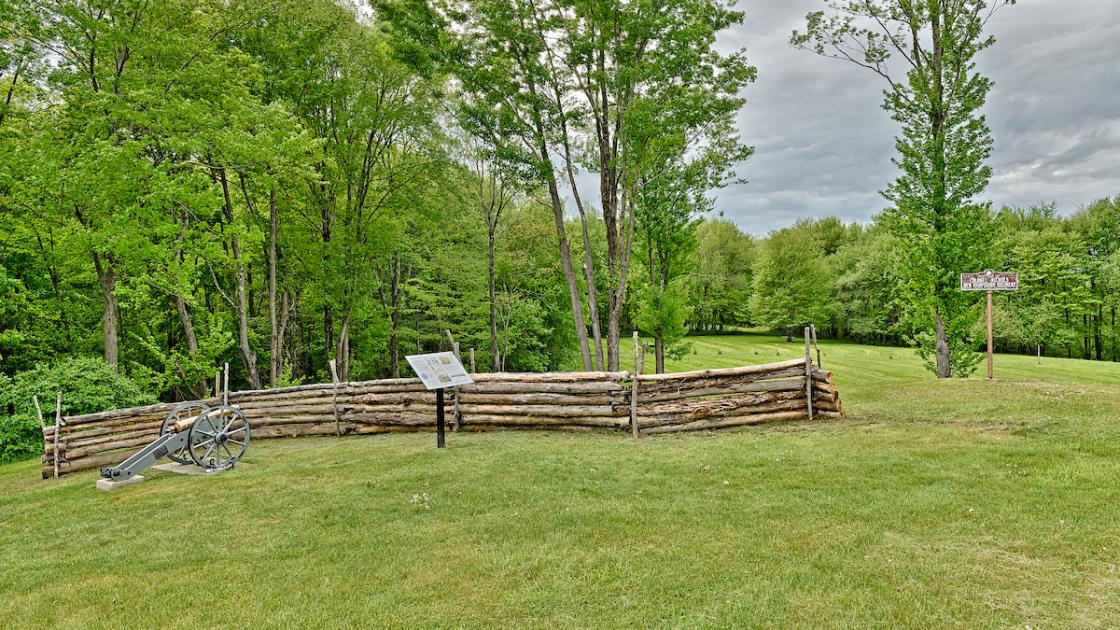
Baum still held the high ground, but Stark developed a bold plan of attack. He would divide his men into four groups to attack the hill from the north and west (near the present-day location of the cannons) and the nearby Tory Fort, to cut off any hope of retreat. Stark would lead the remaining forces to distract and then attack Baum’s center at the bridge position.
The sky cleared two days later and on August 16 a sweltering heat set in. By that morning, Stark led a force of 2,000 men, as a stream of reinforcements joined his command. While his soldiers prepared to advance, Stark famously pointed toward Baum’s fortifications and addressed his men: “There they are, boys, the redcoats and the Tories! We beat them today, or this night Molly Stark sleeps a widow.”
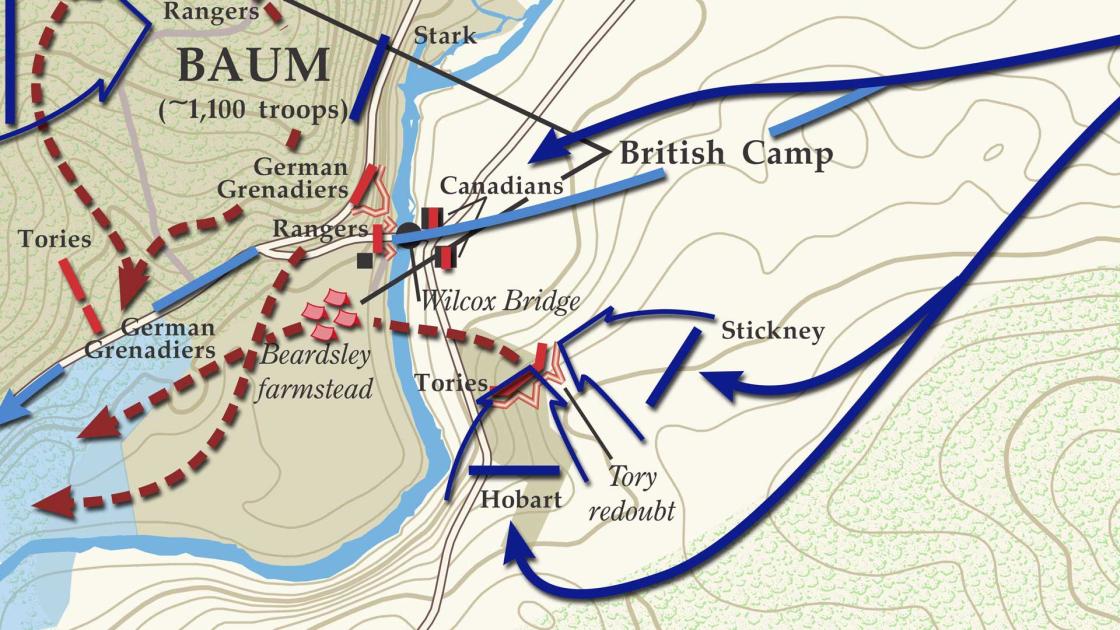
The American loyalists built breastworks — chest-high temporary fortifications made of stacked logs — for the Germans here on August 15. Any physical trace of these walls has long since vanished.
Germans from the Dragoon Regiment of Prinz Ludwig, leased by the British crown to strengthen their forces in their war with the American patriots, would man the works. They were professional soldiers from the Duchy of Brunswick, trained on horseback, but now fighting on foot. Roughly 200 dragoons defended this hilltop during the battle.
On August 16, the day after they built the breastworks, the Germans observed movement in the woods but were unaware that the men were patriot forces moving into position for an attack. At 3:00 p.m., the patriots fired two shots, the cue to begin their assault. American Brigadier General John Stark later reported, “it lasted two hours, the hottest [engagement] I ever saw in my life—it represented one continued clap of thunder…”
Protected somewhat by the tree cover, the Americans fired with their muskets on the hilltop until they killed or wounded all the artillerymen. When the British army’s 3-pounder cannon went silent, the Americans rushed forward and crossed inside the breastwork walls.
The fighting then turned to hand-to-hand combat, as patriots raised the odd sword, bayonet, or hatchet. The dragoons could not hold the fortification and retreated down the hill. In the confusion, some men were killed and others were taken prisoner. Those who avoided capture hoped to rejoin what was left of Lieutenant Colonel Friedrich Baum’s forces at the bridge position, while the patriots followed in hot pursuit.
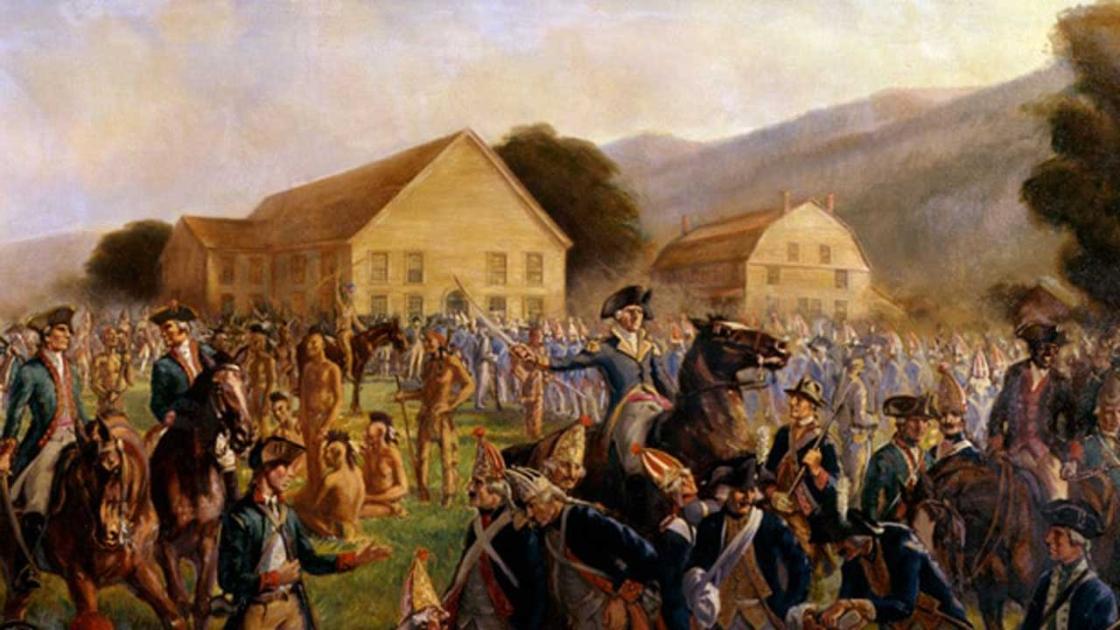
Members of the Seven Nations of Canada—an alliance of seven Indigenous communities living in the St. Lawrence River valley beginning in the 18th century—were an important part of British General John Burgoyne’s army, serving as scouts and skirmishers in his Advanced Corps. Burgoyne used their presence as a threat in a proclamation to the inhabitants of New York, aware of the prejudice Europeans and colonists had of Indigenous people.
Lieutenant Colonel Friedrich Baum had about 150 Indigenous allies of the Kanienʼkehá:ka(Mohawk), meaning “People of the Flint,” with him at Bennington. They were led by European officers of the Quebec Indian Department organized in Canada. When the Mohawk heard support was on the way on August 15, they suggested falling back on these reinforcements in the night to establish a stronger position and confuse the Americans. This sound advice was ignored as Baum felt his orders did not grant him the freedom to make such a decision on his own.
According to the journal of their commanding officer and that of another eyewitness, on August 16 the Mohawk attempted a counterattack forward of the dragoon breastworks after men were seen moving through the woods. American fire drove many of them to flee downhill toward an open pasture where livestock, military wagons, and supplies had been collected thus far, known as a baggage park. A portion of this unit later informed Lieutenant Colonel Heinrich Breymannof the events of the first engagement when he arrived at the Sancoick Mill.
Following defeat at Bennington, many Indigenous soldiers abandoned Burgoyne. They believed Burgoyne had displayed indifference toward them, and they considered their losses here unacceptable. This was the continuation of a disastrous trend as many had already left earlier in the month citing a need to bring in the harvest at home. Their absence was keenly felt.
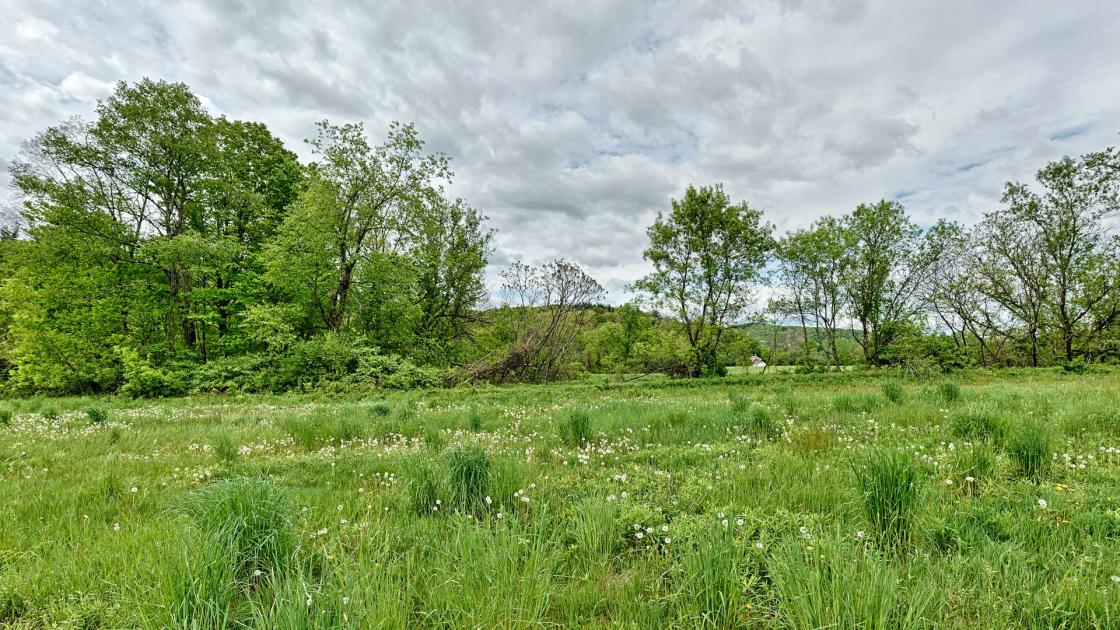
The brick house you see here today was built in the 19th century, many decades after the battle. But in 1777, this was the location of the Beardsley farm. The family’s cabin was located not far from where you stand. Like many other colonists, Obadiah Beardsley did not take a side during the war. As Lieutenant Colonel Friedrich Baum approached, the Beardsleys were preparing to flee in violation of General John Burgoyne’s proclamation to civilians. His home was fortified by Baum over his objections. Their farm was damaged in the battle but afterward the family recovered.
Not all farmers were so fortunate. Hazard Wilcox, a prominent loyalist, lived on the other side of the bridge. At the time of the battle, his family was prosperous. Wilcox joined Baum and retreated with other loyalists after the Battle of Bennington. He later died during a skirmish in 1780, leaving “a disconsolate widow and five children, lately escaped from rebel oppression.”
Baum commanded from a rise overlooking an 18th-century bridge crossing the Walloomsac River. He made his camp in the Beardsley family garden. On the afternoon of August 16, a single cannon remained positioned above the bridge. The defenses here gave the British control over the road between Bennington and Saratoga.
Brigadier General John Stark remained in plain view on the opposite bank of the river to distract Baum as patriots got into position. As the dragoon and Tory breastworks fell, Stark committed the remainder of his soldiers to an attack here, cutting off any possibility of retreat for the enemy.
The patriot assault was relentless as British forces were pushed off the hill, back from the bridge, and into the fields to the south. Brigadier General John Stark “pushed forward the Remainder” of his forces not committed elsewhere.
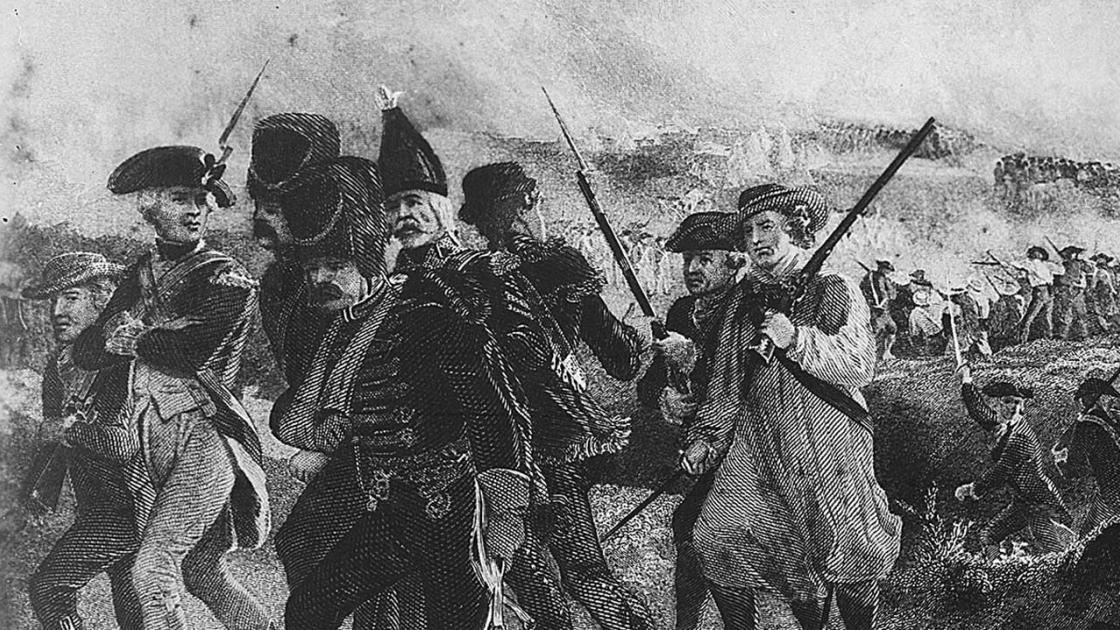
Having run out of ammunition, Lieutenant Colonel Friedrich Baum ordered his dragoons to draw their swords and cut a path of retreat through the American lines but was ultimately unsuccessful. He was shot in the abdomen and what was left of his detachment was pinned against the riverbank and surrendered.
Julius Friedrich Wasmus, a surgeon’s mate attached to the dragoons recalled:
We came to the bridge where Lieut. Colonel Baum had stood; our men had taken this route for their retreat and some of them had run through the water. Many had been killed or wounded in their flight; all the rest had been taken prisoner. . .. The unfortunate Tories who were not killed also fell into the hands of their countrymen. Like cattle, they were tied to each other with cords and ropes and led away. . . .
As Wasmus was led off the field with the other captives, he encountered Baum, who was alive but mortally wounded. Baum was transported to a cabin about a mile and a half from here where he died two days later.
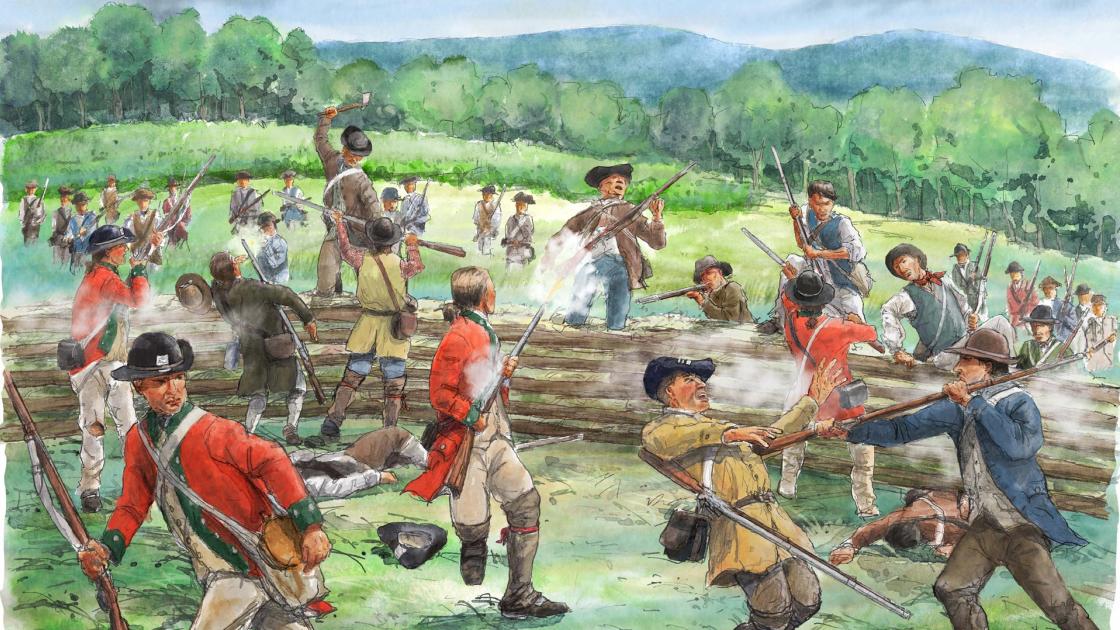
The loyalist breastworks located here, traditionally referred to as the Tory Fort, was defended by the men of the Queens Loyal Rangers serving under Lieutenant Colonel John Peters. They were one of many American units who fought for the King during the Revolutionary War.
The Tory Fort was attacked at the same time as the dragoon breastworks in accordance with Brigadier General John Stark’s plan. Colonels David Hobart from New Hampshire and Thomas Stickney from Massachusetts led 200 patriots in an attack on the structure made of stacked fence rails.
The placement of the breastworks was flawed as the uneven terrain — a field of flax and high corn stalks — concealed the patriots from the loyalist defenders. Entering a ravine without knowing its course, patriot Captain Joab Stafford flanked the loyalists in a stroke of luck. A soldier stationed in the Tory Fort that day later recalled his surprise:
"We were all ready when we saw the Rebels coming to attack us, and were on such a hill, and behind such a bank that we felt perfectly safe and thought we could kill any troops sent against us before they could reach the place upon which we stood. We had not expected, however, that they would approach us under cover, but supposed we should see them on the way."
The fighting at this location was tinged with personal animosity. Some patriots and loyalists recognized each other, and tempers ran hot. In the aftermath of the battle, General John Burgoyne complained that loyalists who had offered their surrender were killed on the spot. Peters’ corps was decimated here and never recruited to full strength.
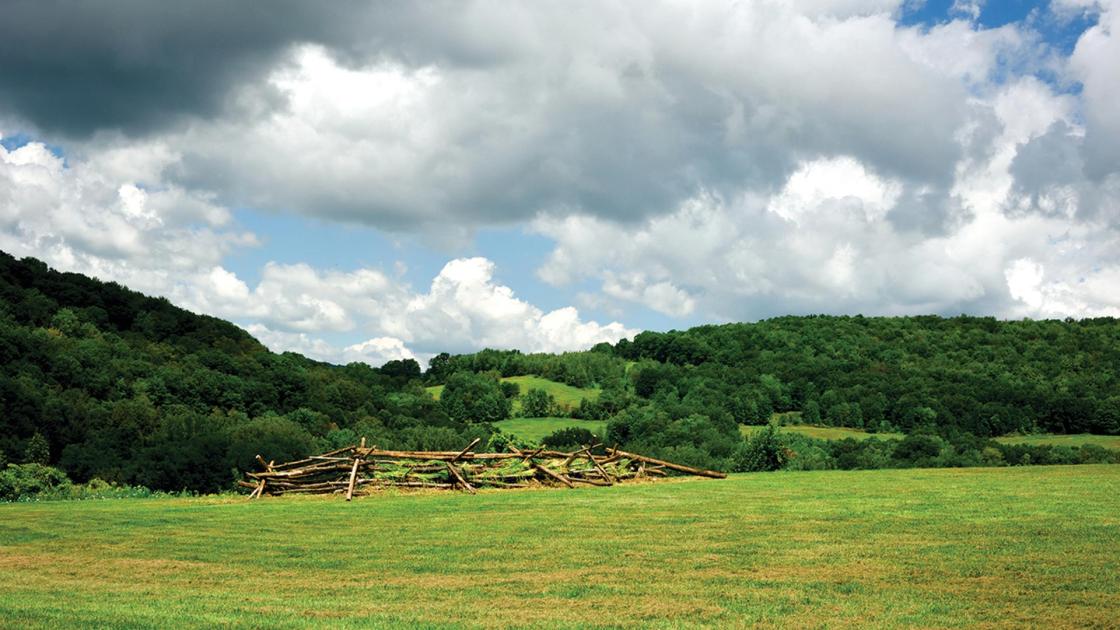
Lieutenant Colonel Heinrich Breymann arrived with reinforcements for Lieutenant Colonel Friedrich Baum an hour after the start of the battle. The arrival of more than 600 German soldiers and two additional cannons began a second engagement about two miles to the west of today’s historic site.
The patriots were buoyed by the timely arrival of Colonel Seth Warner’s Green Mountain Boys. Warner led his regiment in a decisive bayonet charge against Breymann, forcing the British to leave their cannons behind. The American patriots were victorious.
Exhausted from the battle, New Hampshire militiaman Thomas Mellen fell asleep in a cornfield on the night of August 16, 1777. The next day, he witnessed a somber mass burial of the dead near this spot and the parading of prisoners in the town of Bennington:
I saw thirteen Tories, mostly shot through the head, buried in one hole. We saw many of the wounded who had lain out all night. Afterward we went to Bennington and saw the prisoners paraded. They were drawn up in one long line, the British foremost, then the Waldeckers[Germans], next the Indians, and hindmost the Tories.
Elsewhere, open pits used for the storage of potatoes over the winter were used to bury the fallen. Bodies were dragged into these makeshift graves by civilians the day after the battle. Some men were buried in single graves, though this was less common. Most of the enemy soldiers injured in the battle were housed in the meeting house in Bennington. Some of the prisoners died from their wounds and a plot for them was set aside as a common grave in the Bennington Centre Cemetery, which is one of the oldest cemeteries in Vermont today. It is located nine miles west of the battlefield on route 67A. A marker in the churchyard lists the names of the deceased. Thirteen patriots were buried in the same area.
Americans took more than 700 prisoners and killed more than 200 of the British forces in the battle. This represented a loss of 13-15 percent of General John Burgoyne’s total force. The patriots only suffered about 70 casualties, or 3.5 percent. The British, not only failed to gather supplies, but lost a considerable amount of supplies in the attempt. The Battle of Bennington helped shatter the perception of British dominance and this much needed victory boosted patriot morale and drew new recruits to the cause of independence.