-
The BlogBiographies
-
Videos

September 8, 1781
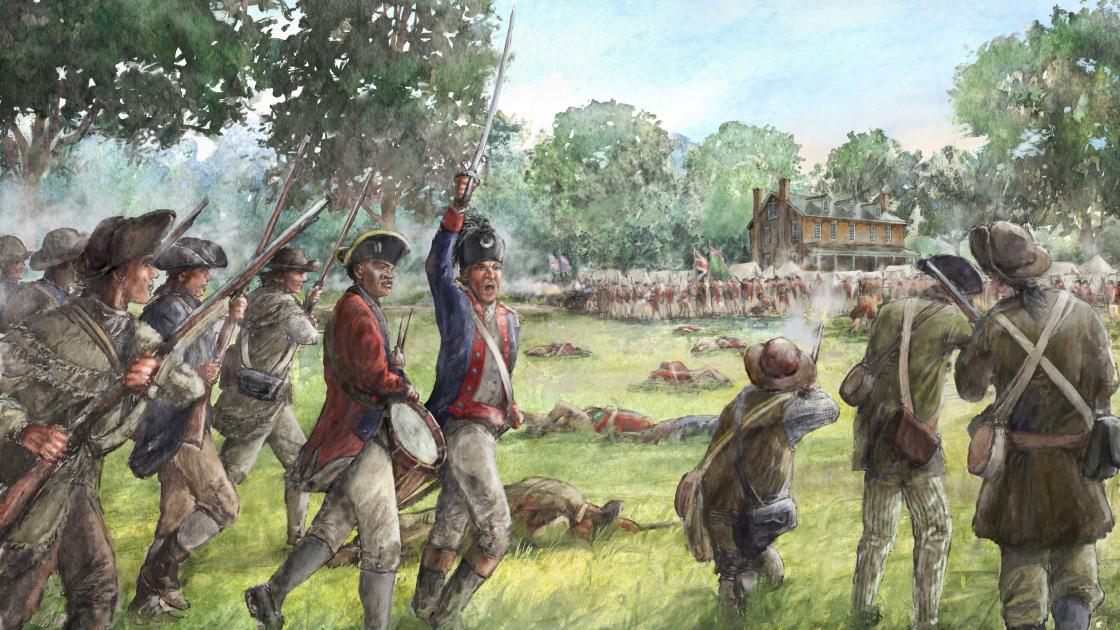
Follow the unfolding drama as Major General Nathanael Greene leads a hard-fought attack on British Lieutenant Colonel Alexander Stewart’s forces at Eutaw Springs. In just over 6 weeks, the Revolutionary War would be effectively over--but here at Eutaw Springs, the bloodiest day was about to begin.
Before You Go
This section of the Eutaw Springs tour covers the main engagement of the battle. This section of the tour is entirely walkable. To learn more about the start of the battle and Nathanael Greene's approach, please select Greene's Approach section of the Eutaw Springs Collection.
Located near modern day Eutawville, South Carolina, the Eutaw Springs battlefield preserves a portion of the site of the last Revolutionary War battle in the Carolinas. Visitors can also see the grave of British officer Major John Majoribanks.
Parking at the site is currently limited, so expect to park along the road near the fence of the property line and watch for oncoming vehicles. With the witness tree across the street from the site, please be on the lookout for speeding vehicles before crossing the street.
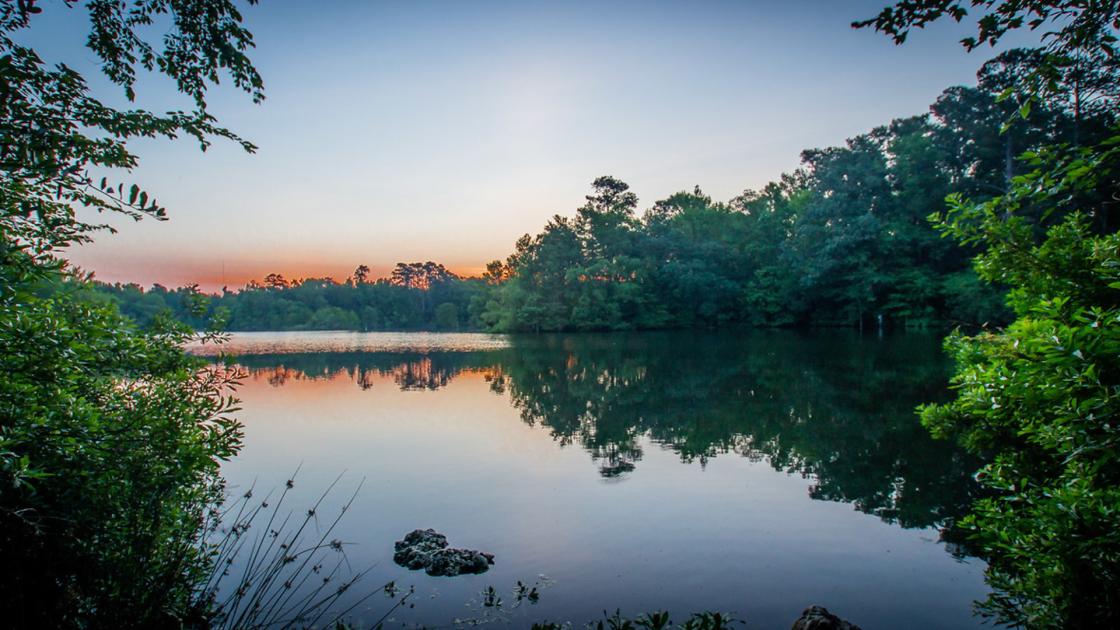
Lake Marion is named for Patriot General Francis Marion, known as “The Swamp Fox,” who fought throughout the South Carolina countryside and here in the Battle of Eutaw Springs. The lake was formed in the 1940s as part of a New Deal-era hydroelectric project intended to bring power to rural South Carolinians. This massive body of water covers what were wooded expanses, the steep banks of Eutaw Creek, and clear limestone springs during the Revolutionary War.
The hard life of a soldier seems remote as one strolls the beaches, swims, or boats here today, but on September 8, 1781, this side of the lake housed Stewart’s weary troops, who established their camp in an eight-acre farm field. Stewart camped near the refreshing springs to await supplies from Charleston and tend to his many sick soldiers. The wool-clad men, battle-fatigued and starving, marched here through the oppressive heat and humidity of the South Carolina swamps.
As Greene’s Patriot militia engaged Stewart’s forces after the troops ate breakfast on September 8, this camp became a scene of terror and confusion. Patriots and British traded frightening volleys of fire in a contest that see-sawed between opponents. Eventually the Americans rallied and drove the British through a maze of tents and into a brick house that once stood between the modern road and the shore of Lake Marion within this park.
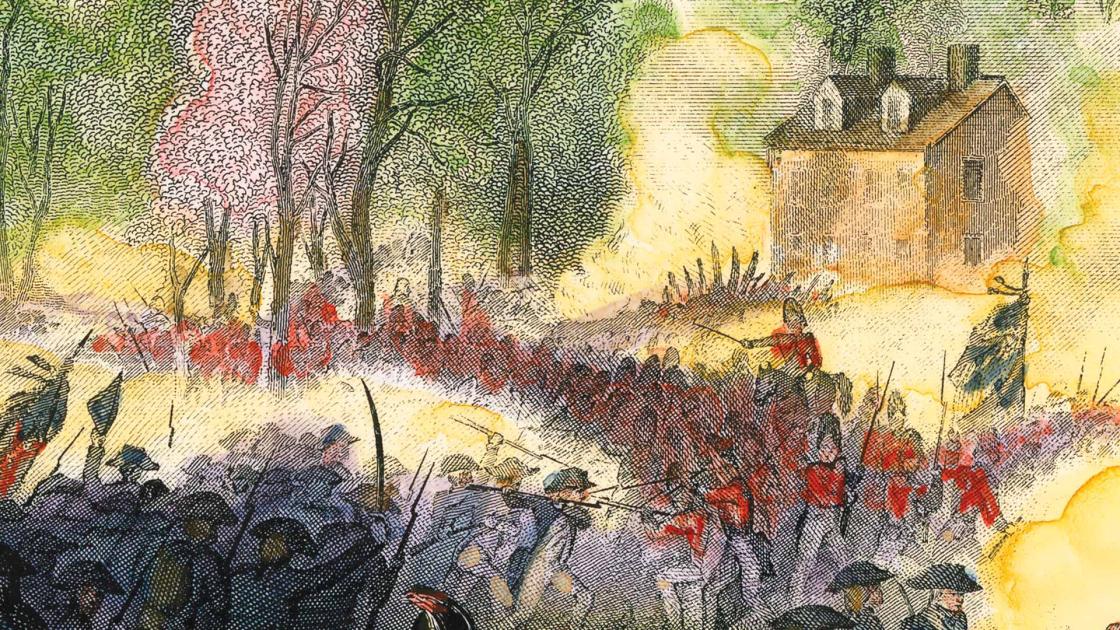
In his report to British Command after the Battle of Eutaw Springs, Stewart called the intense fight between well-trained and well-matched armies an “obstinate engagement.” Both sides had their most capable veterans on this field, and both employed extensive and repeated tactical use of cavalry, artillery, and infantry. Foot soldiers carrying single-shot, muzzle-loading muskets maneuvered in tight ranks. They fired in short-ranged volleys and then charged with bayonets. Several small cannon supported both armies in the front lines. Reserves of cavalry forces waited to exploit breakthroughs or cover retreats. While mounted, the cavalrymen fought mostly with heavy sabers. The clash was close and deadly.
The Patriots eventually seized the advantage and drove the British through their tented camp to the three-story brick house, which was defended by British Major Henry Sheridan and his New York Loyalist Volunteers. Then, Greene’s troops lost momentum. Unable to breach the blackjack thickets along the creek and dislodge the enemy from their fortified position, Greene broke off the attack, “We collected all our Wounded, . . . and retired to ground from which we marched in the morning, there being no Water nearer, and the Troops ready to faint with the heat, and want of refreshment, the Action having continued near four Hours.”
Both sides claimed victory.
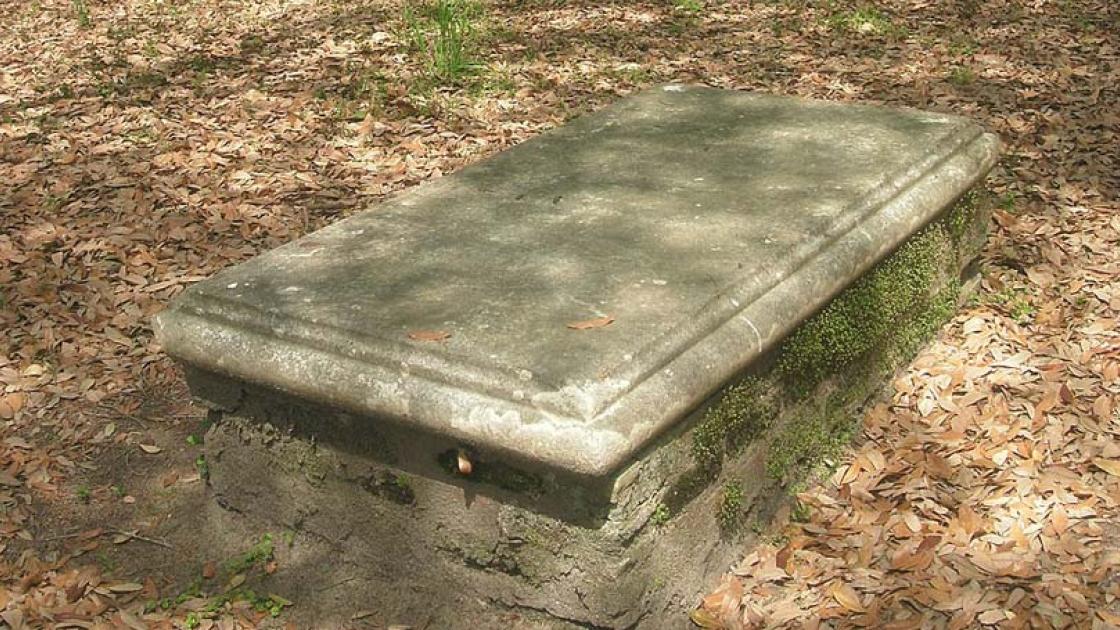
On September 8, 1781, 49-year-old Major John Marjoribanks, an Irish officer, led a flank battalion of elite British Army troops against the Patriot attack at Eutaw Springs. From the blackjack, a scrub oak thicket, he and his men held the right flank against repeated Patriot assaults until they were driven back to a palisade fence around the brick house. From there, they continued to inflict heavy casualties on the Patriot forces. When the Patriots became entangled in the British camp and could no longer hold battle lines, Marjoribanks led his battalion in a counterattack that helped turn the tide of battle and prompted Greene to withdraw.
More than a month after the carnage at Eutaw Springs, Marjoribanks died of a fever. He was originally buried at Wantoot Plantation, 20 miles away, where the waters of Lake Moultrie now cover the fields and woods that once flourished in this area. Erected in 1941 on the site of his last military triumph, this marker pays tribute to the veteran soldier to whom, as Stewart acknowledged after claiming victory at Eutaw Springs, “the honor of the day is greatly due.”
After the battle Stewart wrote to his commander, Lord Charles Cornwallis, with good news: “With particular satisfaction I have the honor to inform your lordship that on the 8th inst. I was attacked by the rebel Gen. Greene with all the force he could collect in this province and North Carolina and after an obstinate engagement . . . I totally defeated him. . . .”
Greene was equally upbeat in his report to South Carolina governor John Rutledge: “Victory was ours. We drove the Enemy, more than four Miles. We took between three and four hundred prisoners, and had it not been for the large Brick Building, at the Eutaw Spring, and the peculiar kind of Brush that surrounds it, we should have taken the whole Army prisoners.”
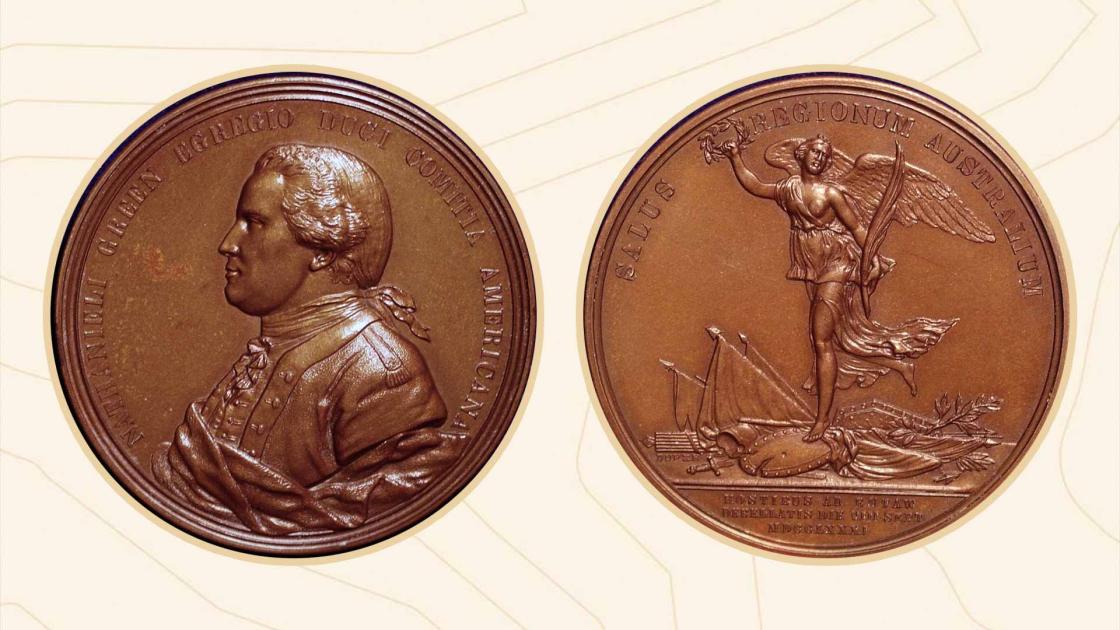
The outcome of the Battle of Eutaw Springs is still hotly debated by historians and seems to be a matter of interpretation. Some support the British, who held the brick house, defended their ground, and forced the enemy to retire. Others credit the Patriots for pursuing the enemy through their camp, depleting their ranks, and ultimately driving them back to Charleston. In fact, the Continental Congress considered the battle “a most signal victory,” awarding Greene the Congressional Gold Medal, their highest honor, and one of only seven such medals issued by Congress in the Revolutionary War. When viewed as part of Greene’s overall strategy to wear down the enemy until the war was won, Eutaw Springs was a stunning success.
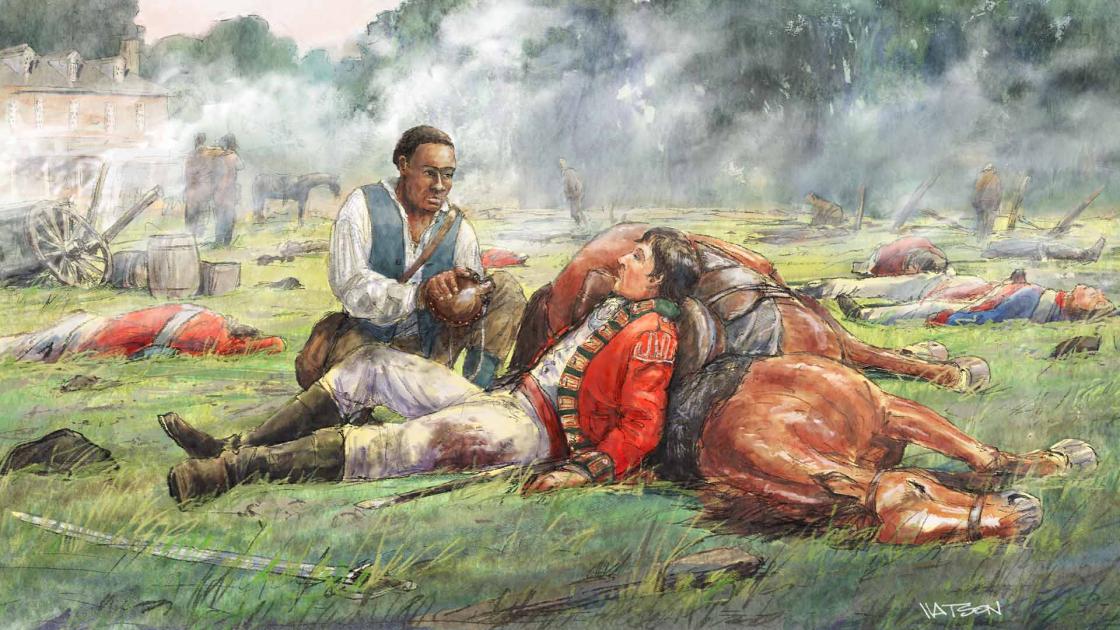
On September 9, 1781, the day after the battle, both Stewart and Greene assessed the damage. Stewart listed 84 dead, 351 wounded, and 406 missing — more than 45 percent casualties. Greene reported to Congress 139 killed, 375 wounded, eight missing, including 16 officers killed and 43 wounded — or about 28 percent casualties. While the numbers may not be exact, and vary in different historical accounts, the Battle of Eutaw Springs took an enormous toll on both armies. It was one of the bloodiest battles of the Southern Campaign.
Stewart destroyed a cache of arms, abandoned supplies, and withdrew toward Charleston, marching along the road you see just past the battlefield. “Light Horse Harry” Lee and Francis Marion chased the retreating British army to Ferguson’s Swamp and on to Fort Fair Lawn in Moncks Corner. Greene followed with his forces all the way to Four Hole Swamp, six miles northwest of Moncks Corner. Once the British were safely pushed back toward Charleston, the Patriot army returned to their backcountry position in the High Hills of the Santee to recoup, rest, and reorganize.
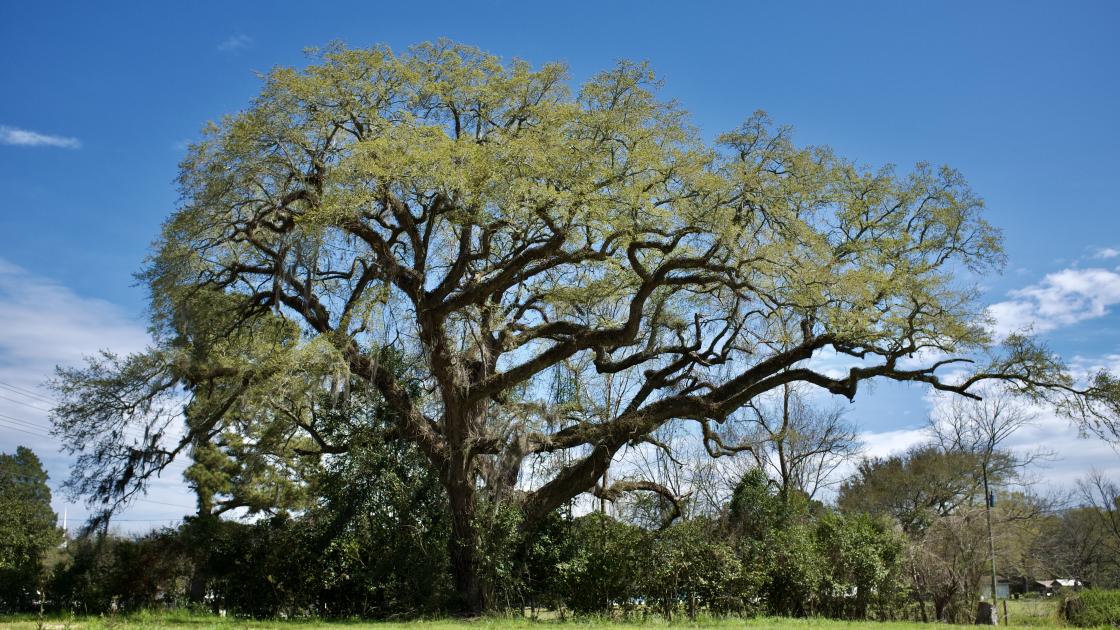
For this last stop, we'll stand near the entrance to the park and look across the busy road (please be careful if attempting to cross).
If trees could talk, we might know much more about the early history of our nation. Standing across this modern road from the Eutaw Springs Battlefield Park is a Southern Live Oak, estimated to be 300–400 years old. It's a “witness tree,” that remains here as a testament to the combat that took place over two centuries ago. Rooted on this spot for centuries, it is a silent survivor of the American Revolution and the bloody conflict that unfolded on this battlefield. It may have been just a sapling when Greene’s men charged and Stewart’s men rallied, but now it stands as a poignant reminder of the tragic consequences of war.
Felled by men for shelter and heat, or ravaged by storms and disease, witness trees dating to the Revolutionary War are rare, although a few are said to exist at National Park sites. The Park Service established a Witness Tree Protection Program years ago to safeguard the precious few that have been identified. As these almost-sacred trees die out, cuttings are sometimes made and planted, so that their successors can continue to provide a link between the past and present.