-
The BlogBiographies
-
Videos

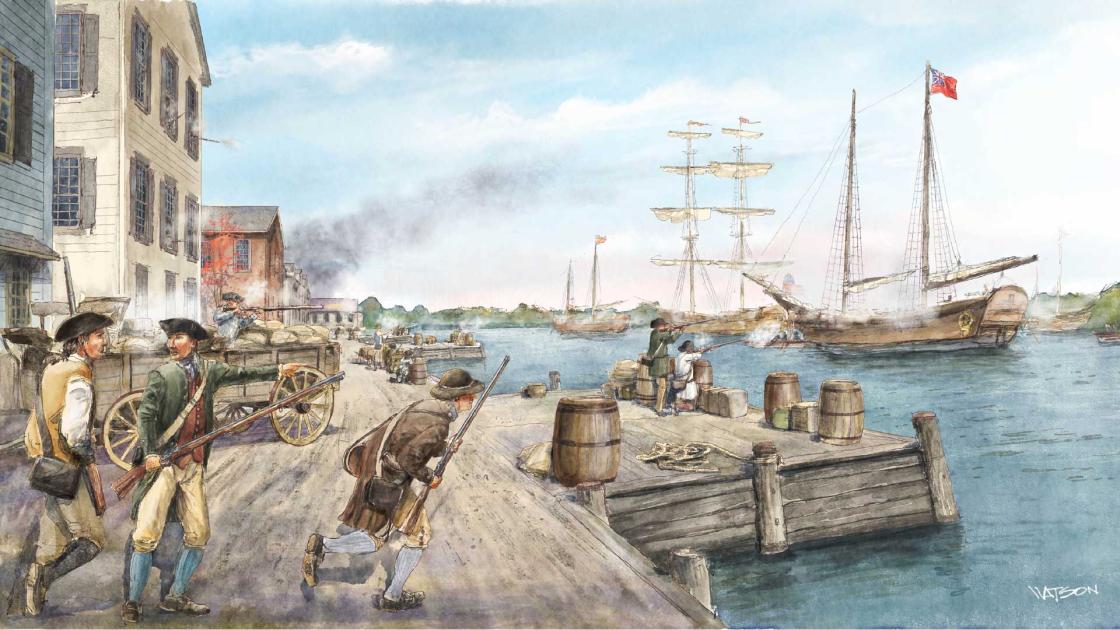
The Battle of Hampton: The Revolution Awakens
“Lord Dunmore may now see he has not cowards to deal with.” - Virginia Gazette, October 16, 1775
It’s late summer, 1775 in Virginia. Talk of revolution against Parliament is in the salty air. Word spreads that men have declared give me liberty, or give me death. There’s a rumor that the now hated royal governor, Lord Dunmore, will give freedom to enslaved people who will join him in his fight against the patriots. But running away would be risky. And rebelling against royal authority doesn’t have a good track record, either. But here, many people – free and enslaved - are starting to feel that for individual liberty, and for political freedom, the risks are worth it. And one night, a hurricane blew in, and with it, the winds of change.
18th Century Hampton
Look out over the water in front of you, and imagine tensions brewing like an incoming hurricane—a series of events is about to bring the Revolution to Virginia. Welcome to Hampton--where the first shots of the Southern theater of the American Revolution are about to be heard.
September 2, 1775. Picture it: it’s a dark a stormy night—waves crash along the harbor of the Hampton River. Ships tussle against the winds of a blowing hurricane. The tender – or support vessel – Liberty is attached to the HMS Otter, part of Lord Dunmore’s fleet. The winds send the Liberty into the muddy Back River. She’s trapped in the mud--and she has important cargo. On board is the fleet commander Matthew Squire, along with a formerly enslaved boat pilot named Joseph Harris, a handful of crew, and a treasure trove of arms and ammunition. They are now sitting ducks for the patriot militia keeping an eye on them from the riverbank. Clambering ashore, Joseph finds a canoe and ferries Captain Squire back to the Otter and out of reach.
Patriot militia descended upon the stranded Liberty and carried ashore the contents and crewmen that remained onboard including over a dozen formerly enslaved men who had run away to fight alongside Dunmore. Then, Patriots set the Liberty ablaze.
In exchange for the return of the goods from the Liberty, patriots demanded that Squire return all the formerly enslaved people to their owners in Hampton. He refused. Instead, Squire prepared to unleash a fleet of vessels upon Hampton, to teach the patriots a lesson once and for all.
But on the night of October 26, Squire was thwarted as he realized the patriots scuttled boats beneath the waves of this water highway, creating an underwater traffic jam that prevented his fleet from entering the Hampton River from the Chesapeake Bay. To make matters worse, patriot militia began firing from land on both sides as he entered the channel. Floating only about 300 yards from patriot fire, he was surrounded—but he did the only thing he could do: he set his swivel guns’ sights and fired.
Word got around that Squire and his fleet were trying to blast their way into Hampton. Patriot militia reinforcements under Colonel William Woodford braved a driving rainstorm in an all-night journey from Williamsburg to Hampton—some 30 miles—and arrived at first light on October 27 to see that Squire’s tenders had breached the harbor, though Squire himself, safely onboard the Otter, still floated just out of reach.
Patriot militia flung open the 2nd story windows of private homes facing harbor-side. Taking advantage of the height, they took aim at the British tenders and sailors below. The shore-to-sea battle lasted just about an hour. While there were only a few Loyalist casualties, they were the first of the war in the south. The American Revolution had come to Virginia, and a hurricane-level of patriot support was about to change the world forever. As the Virginia Gazette printed in the aftermath of the Battle of Hampton, “Lord Dunmore may now see he has not cowards to deal with.”
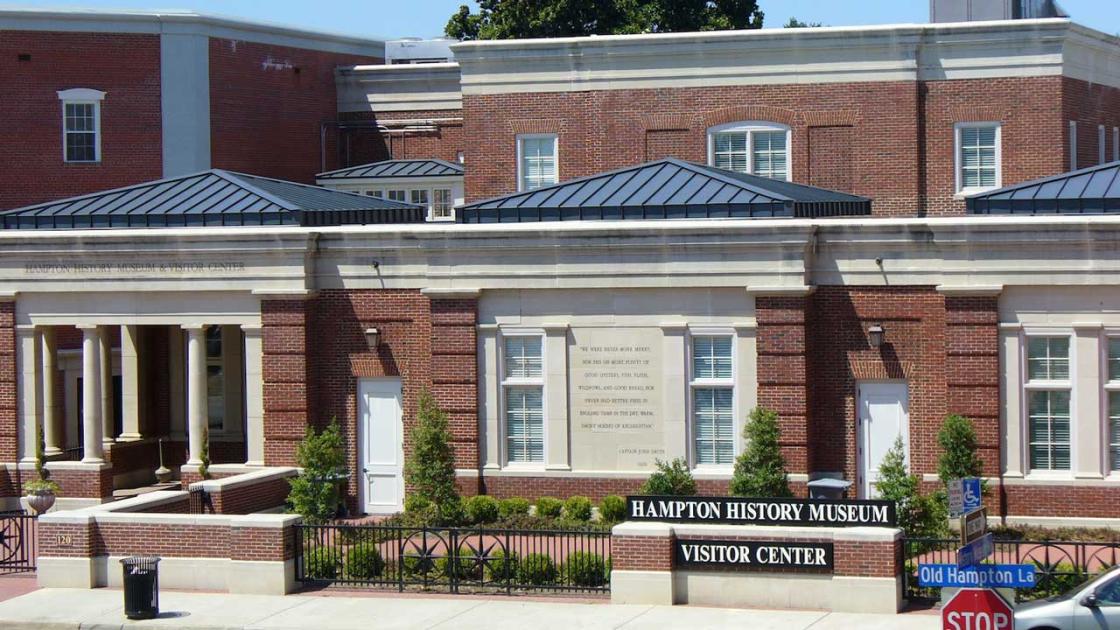
Hampton History Museum
For Virginia’s enslaved people, the American Revolution offered a chance at freedom that hadn’t existed before. One of them, Joseph Harris, took that chance—he fled his owner and offered his services as a boat pilot to the loyalists beginning to assemble here in the harbor. Enslaved men like Joseph had important knowledge of the waterways that the British needed as tensions rose here in Virginia. You may have used GPS and paved freeways to get here today, but 250 years ago, waterways were the transportation networks of communities like this.
Step inside the Hampton History Museum to learn more about how waterways here shaped the course of history. Don’t miss the exciting, special exhibit Revolutionary Hampton: Journeys of Freedom, to explore the Battle of Hampton through the eyes of people like Joseph Harris. The exhibit is open through December 31, 2026.
The Hampton History Museum is located at 120 Old Hampton Lane in Downtown Hampton. There is plenty of free parking in the garage across from the museum. Open Monday-Saturday, 9 a.m.-5 p.m., Sunday 1-5 p.m.