-
The BlogBiographies
-
Videos

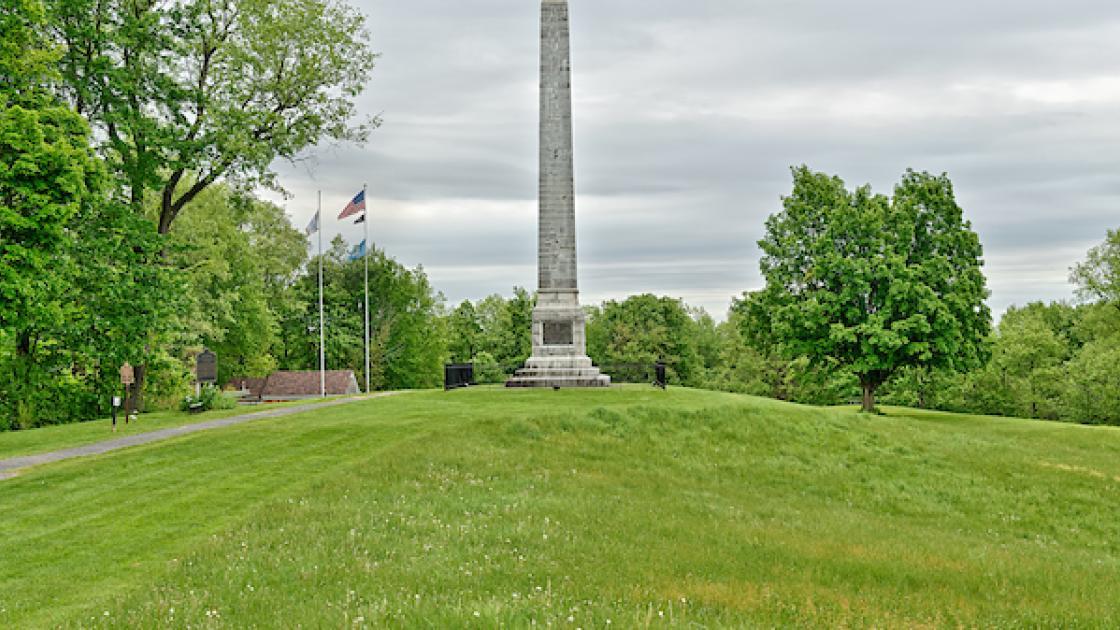
On August 6, 1777, British forces under the command of Sir John Johnson engaged American forces under Nicholas Herkimer in the Battle of Oriskany, resulting in one of the few battles of the war where all the participants were North American. Join us on a eight stop tour of this hallowed ground.
Note: This walking tour begins in the parking lot of the Oriskany Battlefield State Historic Site and leads you to the Visitor’s Center (with restrooms), monuments associated with the battle, and through the ravine where the bloodiest fighting took place. It is the easiest route to follow, given the layout of the park. However, if you wish to experience the battle chronologically—like the ill-fated Patriot soldiers who arrived here on August 6, 1777—read or listen to Stop 1, then walk to the east end of the ravine (Stop 7—see map). From there, follow the stops in reverse order. Both tours end with Stop 8—No Glory—which takes you back toward the parking area.
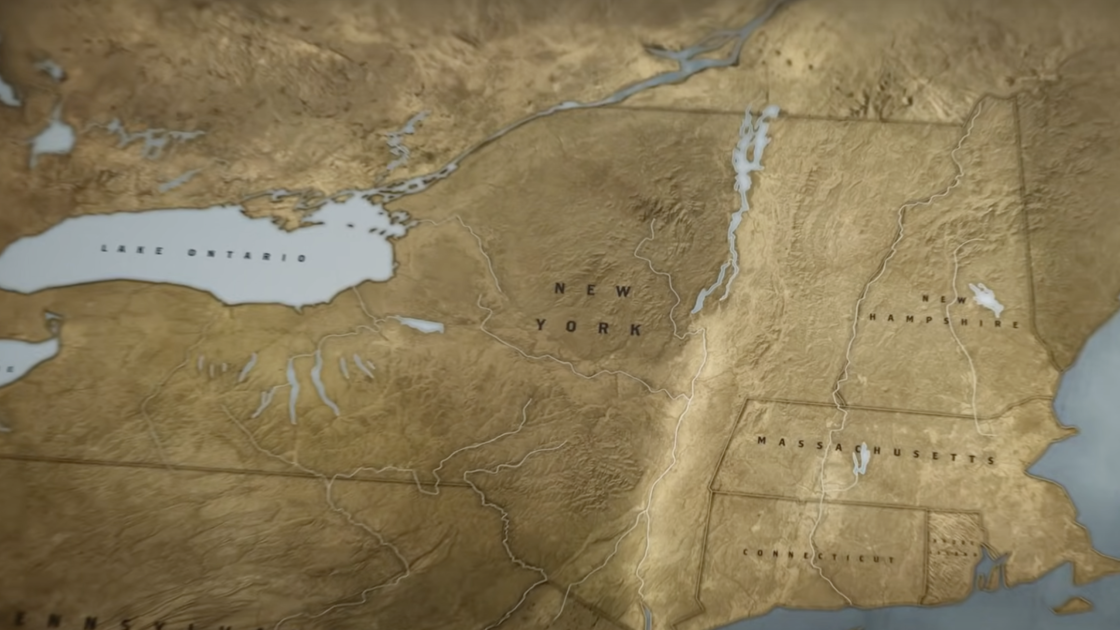
As you pull onto the paved drive of the Oriskany Battlefield State Historic Site, try to “un-see” the mowed fields, monuments, and paths. Envision the countryside on August 6, 1777, during the Revolutionary War, when this area was densely forested with beech, hemlock, birch, and maple trees and divided by a deep ravine and a swift-moving creek. The ravine and creek are much the same as they were centuries ago, but the water that summer was rising in its banks after rainy weather and the sole route over it—a “corduroy” road of hewn logs—was muddy and barely passable.
What drew Patriot and British forces to engage in fierce battle at this remote spot? It began with a carefully coordinated British plan conceived by General John Burgoyne to control valuable trade routes and rich farmland between the Great Lakes and the Atlantic Ocean. This strategy, which would effectively cut off New England from the other colonies and weaken the rebellion, required three forces to connect in Albany: Burgoyne’s army would move south from Canada; General William Howe’s troops would travel north from New York City; and General Barry St. Leger’s forces would move down from Lake Ontario and head east through the Mohawk Valley. But as St. Leger advanced with 750 British regulars, 300 Loyalist troops, and between 800-1,000 Native warriors, he encountered unexpected resistance from the Patriots at Fort Stanwix, located six miles from these grounds.
Believing Fort Stanwix too strong to attack, St. Leger demanded surrender of the garrison. When his demand was rejected by Patriot Colonel Peter Gansevoort, St. Leger prepared to conduct a siege. Hoping to reinforce Gansevoort and break up the siege, Patriot General Nicholas Herkimer assembled approximately 800 militia troops including about 100 Oneida scouts. They set out on August 4 from Fort Dayton, about 30 miles east of Fort Stanwix. Two days later, they were ambushed in the ravine here at Oriskany.
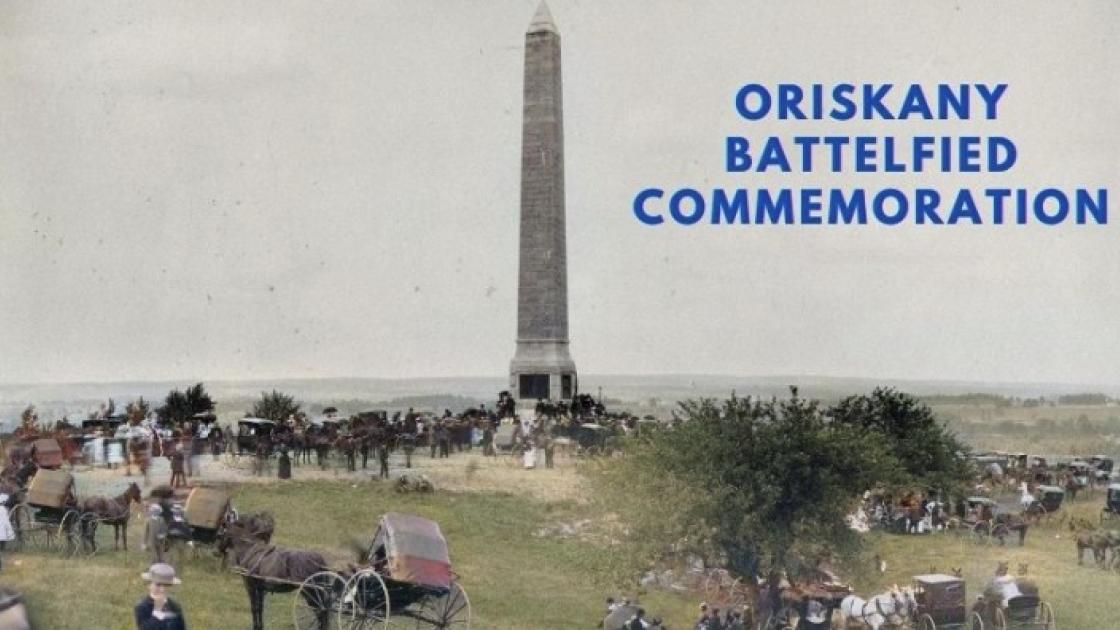
At the centennial commemoration of the Battle of Oriskany in 1877—which drew over 40,000 people— there was a call to create a memorial on this hallowed ground. In 1880, the Oneida County Historical Society purchased almost five acres to create a park. Construction of the obelisk you see before you began in 1883. It rises 66 feet on a pedestal 19 feet high.
The monument was finally dedicated on August 6, 1884, 107 years after the Battle of Oriskany. By then, the impenetrable forests that grew here in Revolutionary times had been cleared to make way for pastures, growing towns, canals, and railroads. The landscape may have changed over a century but the impact of what happened on this site was not forgotten. More than 6,000 people turned out on that warm August day to remember Patriot General Nicholas Herkimer’s heroism and the sacrifices of those who died serving the cause of independence.
Reflecting on the new monument, a member of the planning committee conveyed the public spirit of the time and eloquently summarized the importance of such tributes.
“The contemplation of this work animates anew the interest we all feel, in the memory of the fathers of the Revolution. We can never tire of the story which gave us our freedom, and established a government which challenges the admiration of the world. We love to think of the eight hundred who braved the dangers and endured the sufferings which make the spot we stand upon so sacred to us all. We will not sit in judgment upon their military skill nor criticize mistakes. . . but look back of all that, to the patriotism which prompted, and the impetuous chivalry of the commander who moved onward regardless of consequences. . . . “
-- S. G. Visscher, member of the monument committee, published in the Roman Citizen

When you tour the historic Oriskany Battlefield today you are visiting the sacred homeland of the Oneida people. The Oneida Indian Nation is a federally recognized Indian nation in Central New York. It is a member of the Haudenosaunee, known in English as the Six Nations or Iroquois Confederacy. The word Haudenosaunee means “people of the longhouse.” The Oneida are called the “people of the standing stone.”
Oneida Indian Nation territory originally consisted of more than six million acres stretching from the St. Lawrence River to the Susquehanna River. Oneida villages thrived in and around the present-day communities of Stockbridge, Oneida Castle, Canastota, Oriskany, the city of Oneida, and other locations in Oneida and Madison counties.
In 1777, the Oneidas broke with most other Haudenosaunee and supported the Patriot cause in the American Revolution. They played a critical role in the Battle of Oriskany as well as at Saratoga and other key engagements. Oneida villages were destroyed by British allies after the Battle of Oriskany, and the years after the Patriots victory in the war were difficult. But in 1794, the Treaty of Canandaigua secured Oneida land. It stated: “The United States acknowledges the lands reserved to the Oneida…to be their property; and the United States will never claim the same, nor disturb them….” This covenant granted federal protection of 300,000 acres.
The government’s assurances were short lived. By the early 1900s, illegal state treaties nearly depleted the Oneida Indian Nation of its homeland. The Oneidas had to fight to recover the last 32 acres granted to them. In 1919 the federal government filed suit in US District Court to help the Oneida Indian Nation reclaim this land. Today, the Oneida Indian Nation has regained more than 18,000 acres of their ancestral ground.
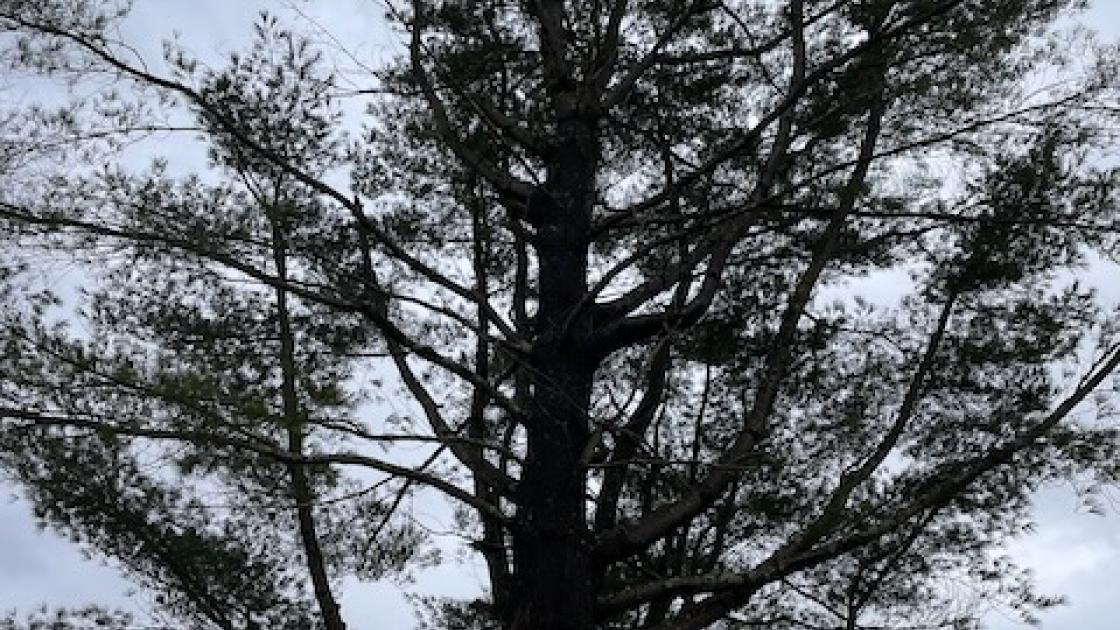
There are two poignant memorials to the Battle of Oriskany on this site. As you look from the towering white marble obelisk behind you to this this glorious evergreen, you might reflect on how different cultures interpret and commemorate events of the past.
Planted on the battlefield by the Oneida Indian Nation in 1983, this white pine is a symbol of peace. The tree is central to the story of how five separate, warring nations—the Mohawk, Oneida, Onondaga, Cayuga, and Seneca—were united under one law and formed the Haudenosaunee Confederacy (called Iroquois Confederacy by Europeans). Later, in about 1722, the Tuscarora joined the alliance. The Haudenosaunee narrative says that a man named the Peacemaker saw a vision of a Great White Pine reaching into the sky. The weapons of war were buried beneath the pine, and four white roots extended to the corners of the earth. Those who followed the roots found shelter beneath the pine’s branches.
European encroachment on Native territory in the 1600s and 1700s weakened the centuries-old Haudenosaunee Confederacy, dividing the nations into factions as foreign powers vied for their land and trade. The American Revolution drove a deeper wedge among them. The Great Peace between the nations was over. The horrific Battle of Oriskany, where the Oneida died for the Patriot cause, while the Mohawks, Senecas, and other Haudenosaunee bled for the British, bears this out. But the peace tree remains an important Haudenosaunee symbol of hope for humanity and conveys the beauty and wonder of the natural world. In this landscape marked by violence and death, it is an expression of life.
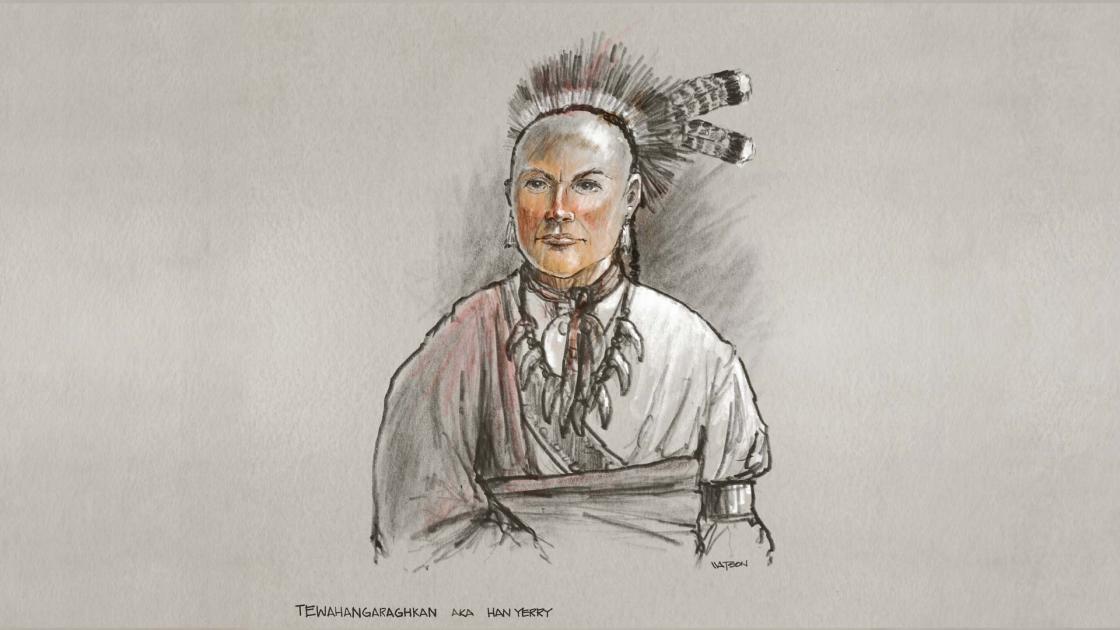
When revolution came to the colonies, Han Yerry Tewahangarahken (“He Who Takes Up the Snow Shoe”), an Oneida chief of the Wolf Clan, was living in the Oneida village of Oriska, just a few miles from here. He was prosperous among the Oneida. He owned a house, barn, wagon, farmland, and numerous animals. Han Yerry was married to Tyonajanagen (“Two Kettles Together”), and they had three sons and a daughter. A British Treaty of 1768 that coerced the Oneida to cede some of their ancestral grounds to the British angered Han Yerry and his neighbors and threatened their way of life. As the war spread to their territory, Han Yerry and others in Oriska decided to side with the Patriots against the Crown. They took up arms in the Battle of Oriskany.
Han Yerry, Two Kettles, and one of his sons—Cornelius—were among the Oneida warriors riding with General Nicholas Herkimer and the Patriot militia to relieve Fort Stanwix when they were ambushed in a steep ravine on August 6, 1777. Han Yerry was shot in the wrist during the attack, but he continued to fight, with Two Kettles reloading his weapon as well as firing her own pistol. In addition to their wounds, Han Yerry and his fellow warriors suffered retribution for their participation at Oriskany. Mohawk leader Joseph Brant and his British allies burned the village of Oriska and destroyed Han Yerry’s home and possessions.
Committed to vanquishing the British, Han Yerry helped the Patriots defeat them at Saratoga in the fall of 1777 and spent time with the Continental Army at Valley Forge in the winter of 1778, where he was a dinner guest of General George Washington. After the war, the esteemed Oneida leader represented his people in treaty negotiations with Congress.
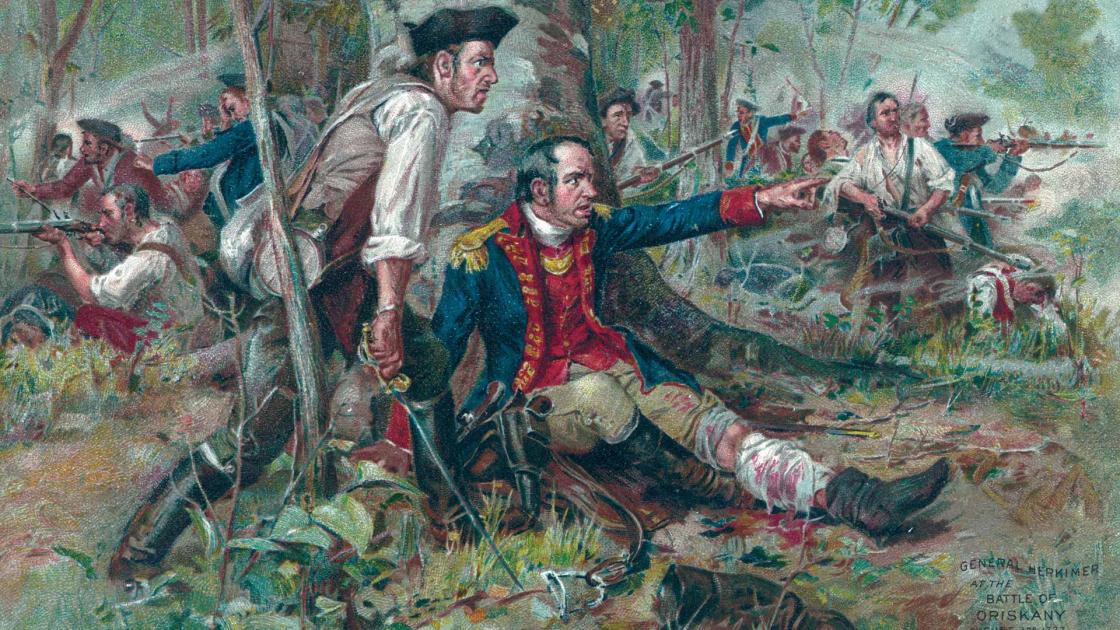
Herkimer at the Battle of Oriskany | Frederick Coffay Yohn (1901) | Utica Public Library
Patriot General Nicholas Herkimer sheltered near this spot after being wounded in the ambush at Oriskany. The eldest son of German immigrants, Herkimer was a native of New York’s Mohawk Valley and served in the French and Indian War. In 1775, he was made head of the Tryon County Committee of Safety and attained the rank of colonel within the district militia. With the coming of the Revolution, Loyalist members of the militia withdrew to Canada and Herkimer’s hometown—and family—was fiercely divided between Loyalists and Patriots. In June of 1776, Herkimer, now a brigadier general, led a delegation to meet with Mohawk leader Joseph Brant to request his neutrality in the war, but Brant sided firmly with the British.
Herkimer was riding toward the front of his mile-long column of troops on the morning of August 6, 1777, when he was shot in the leg and his horse was killed. His men moved him to this rise in the thick woods. Though in great pain, the Patriot commander sat on his saddle under a tree. As bullets rained around him, Herkimer declared, "I will face the enemy."
While Native warriors serving the Loyalists charged them with tomahawks, Herkimer’s Tyron Militia fought in pairs, so one soldier could fire while the other reloaded. A heavy rain shower temporarily halted the bloodshed and allowed the militia to regroup. Herkimer calmly ordered his men to form a circle so they could defend themselves from all sides.
After the battle, Herkimer returned to his home along the Mohawk River, which is in the present town of Danube just outside of the City of Little Falls, where his shattered leg was amputated. He died of an infection on August 16. His younger brother, Johan, a Loyalist who fled to Canada and served under British General Barry St. Leger, fought here as well. The two brothers were enemies on this battlefield, but only Johan survived the war.
General Herkimer’s Mohawk Valley militia were mainly Americans of German and Dutch heritage and Oneida warriors under the leadership of Han Yerry Tewahangarahken. The force of 800 marched from Fort Dayton on August 4, 1777, in a mile-long column, with the regiments followed by 15 supply wagons that contained provisions to last the duration of their attempt to end the siege.
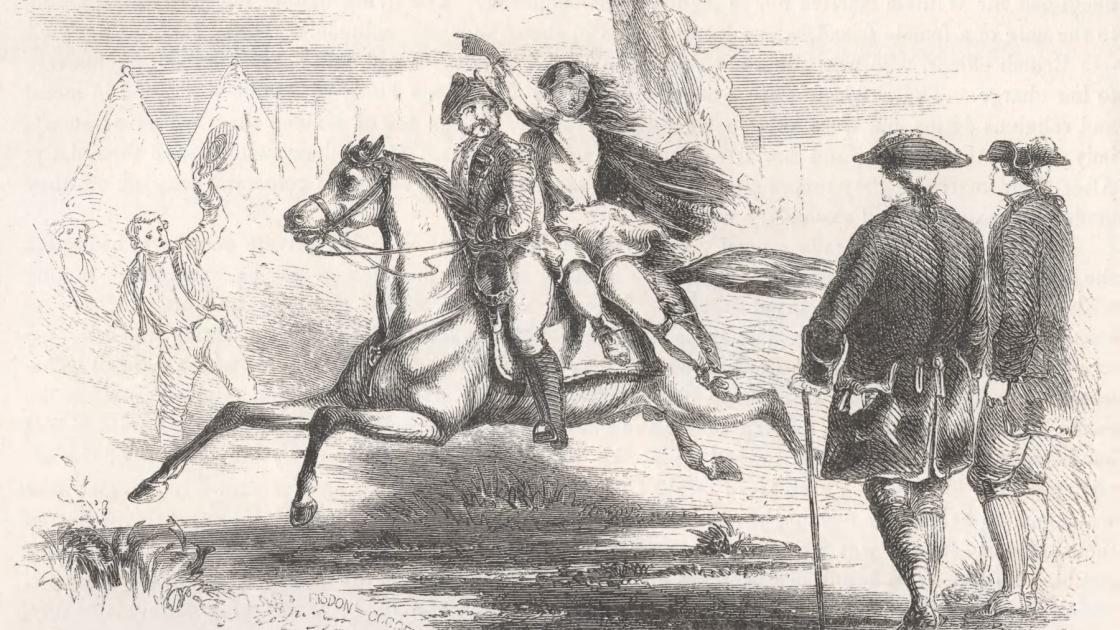
On August 5, 1777, Molly Brant sent a secret message to her brother, Joseph Brant, a Mohawk leader allied with the British. Molly warned him that the Patriots were on their way to end the siege at Fort Stanwix. Brant informed General St. Leger, who immediately dispatched Native warriors under Brant, Colonel John Butler’s Loyalist Rangers, and Sir John Johnson’s Loyalist “Greens,” to stop them.
By the morning of August 6, Herkimer stopped only a few miles from Fort Stanwix. He sent couriers ahead to alert garrison commander Colonel Gansevoort and coordinate the Patriot attack against the British siege camp. The signal to advance was to be three cannon shots. But the shots never came, and Herkimer’s men grew impatient. They accused him of cowardice and being a Tory sympathizer. Feeling pressured, Herkimer led his column forward.
Herkimer’s men arrived here from the east on the military road, which was flanked by thick woods on both sides. The road was made of hewn logs—a corduroy road—and in poor condition. In fact, it was Herkimer’s job to maintain the road, but the militia had not been able to repair it prior to relieving Fort Stanwix. The tangle of vegetation on either side made visibility poor. Two miles from the Native village of Oriska the road descended steeply into a deep ravine, crossed a wetland with a small creek, and rose again to level land. You can see it from where you now stand. It was the perfect place for an ambush.
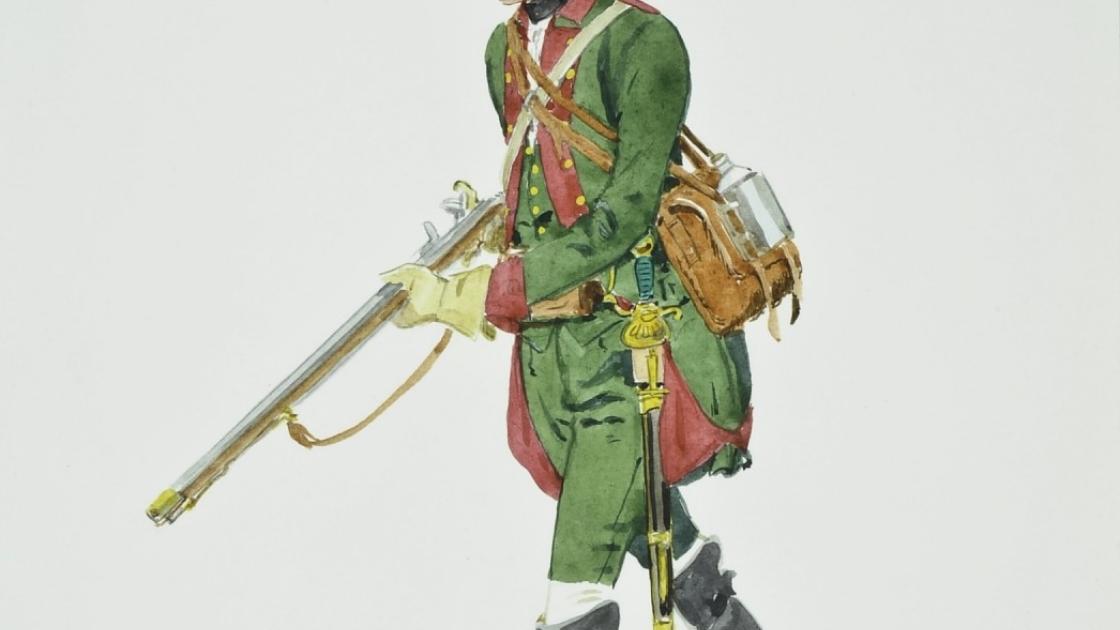
As the battle progressed on August 6, 1777, General Barry St. Leger sent reinforcements from Fort Stanwix to assist the ambushers. Native and Loyalist troops were joined by a company of Yaegers, professional German troops hired by the British. St. Leger also dispatched Major Stephen Watts with Johnson’s remaining “Greens.” Watts came up with a clever scheme to trick the Patriots. He had his men turn their coats inside out, hiding the forest-like color so that only the light-colored interior was visible. At first glance they appeared to be wearing the traditional hunting shirts of the militia, but Patriot Captain Jacob Gardiner was not fooled. He recognized one of his Loyalist neighbors among the men and charged furiously into their ranks.
Colonel Peter Gansevoort eventually sent out a team under Colonel Marinus Willet to create a diversion to help General Nicholas Herkimer’s desperate force. Willet’s men plundered the Native and Loyalist camps outside Fort Stanwix, taking supplies and prisoners back to the fort. On learning of the raids, the Native fighters left the field of battle. Without their support, the Loyalist troops withdrew as well. The battle ended at about 4 p.m. Nearly 500 of the 800 Patriots were killed or wounded.
Demoralized and diminished, St. Leger’s Native forces abandoned him. Without their help, St. Leger called off the siege and retreated to Canada. Both sides claimed victory at Oriskany, but there was no winner and certainly no glory. Herkimer failed to relieve Fort Stanwix, and St. Leger failed in his mission. Without St. Leger’s support, General John Burgoyne lost the Battle of Saratoga that October, which foiled the British plan to take New York. Joseph Brant’s warriors destroyed the Oneida village of Oriska after the battle. In retaliation, the Oneida looted some Mohawk houses. Violence between the Haudenosaunee people would devastate this region for years to come.