-
The BlogBiographies
-
Videos

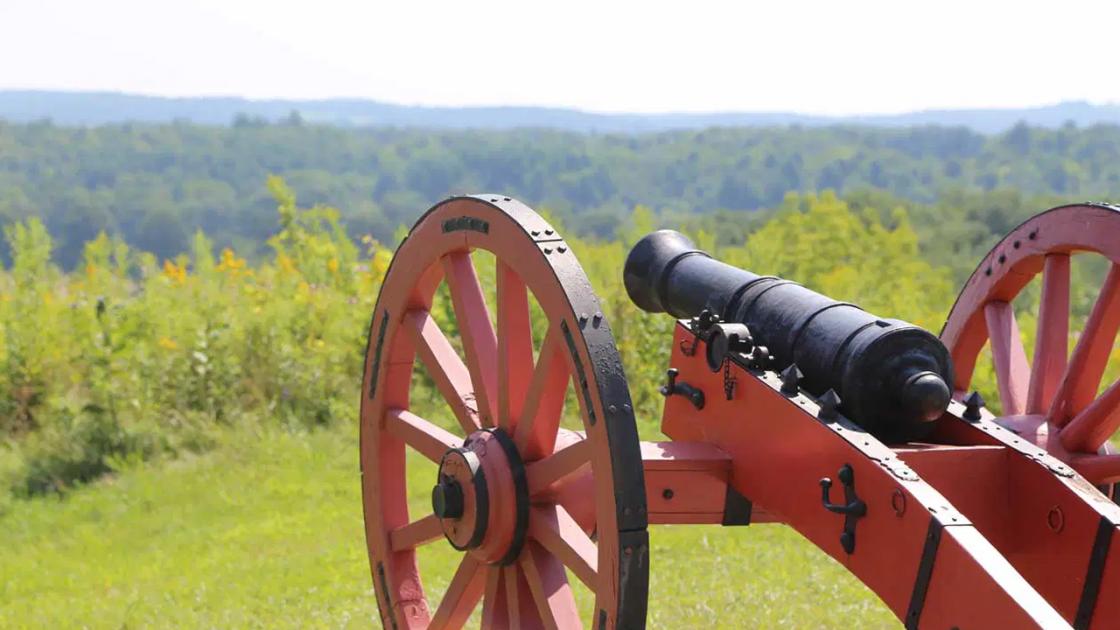
On September 19, 1777, the first battle of Saratoga—known as the Battle of Freeman’s Farm—marked the culmination of a long British campaign to advance on Albany and split New England from the rest of the colonies. Only one of the planned British invasion forces, under General John Burgoyne, had reached this far after hard fighting and a slow, contested march south from Canada.
As Burgoyne’s army moved into position just north of the American defenses at Bemis Heights, he ordered a reconnaissance in force to probe the enemy line and potentially turn its flank. American forces under General Horatio Gates met the advance aggressively. Fighting erupted around Freeman’s Farm, where Daniel Morgan’s riflemen and supporting Continental troops clashed repeatedly with British regulars in sustained, close-range combat that stretched across the field and into the surrounding woods.
Throughout the afternoon, neither side could gain a decisive advantage. British and German units pressed forward, only to be driven back by concentrated American fire, while reinforcements extended the fighting in all directions. As darkness fell, the British still held the ground, but at a severe cost. The engagement halted Burgoyne’s advance on Bemis Heights and set the stage for the continued standoff that would define the Saratoga campaign.
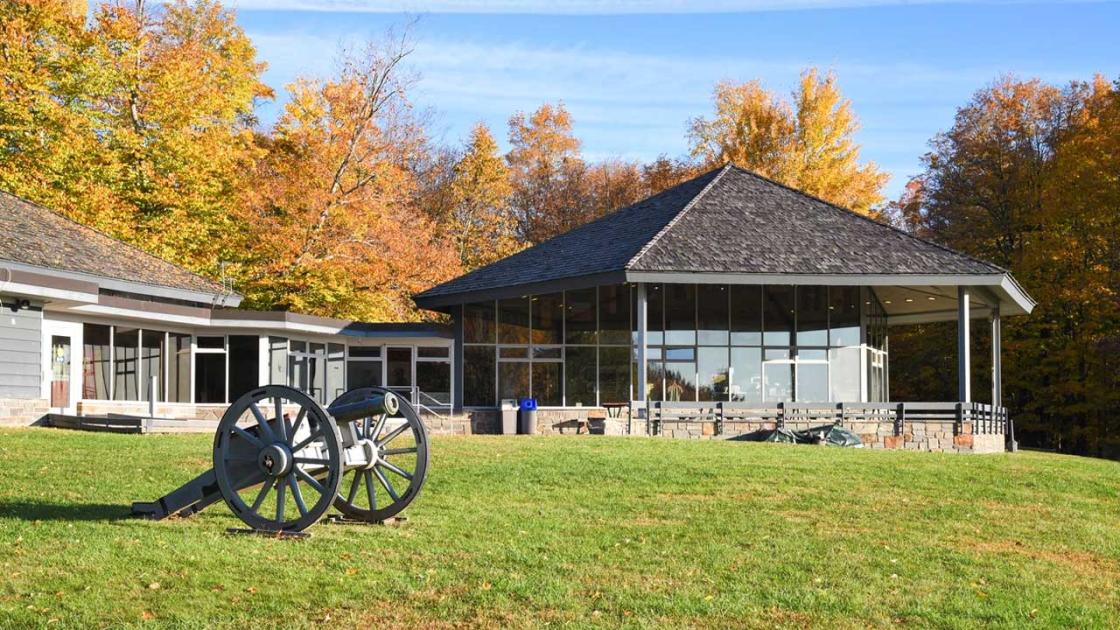
In 1777, the British attempted to crush the American rebellion by launching a series of offenses into Pennsylvania and New York. The latter campaign, which targeted Albany and was led by Lieutenant General John Burgoyne, culminated here along the west bank of the Hudson River in September and October of that year. In a pair of battles, Burgoyne’s men, and the American Northern Army, commanded by Major General Horatio Gates, slugged it out with each other until the British and German forces retreated north. In the end, the American victory and Burgoyne’s subsequent surrender, had far-reaching consequences for the American Revolution.
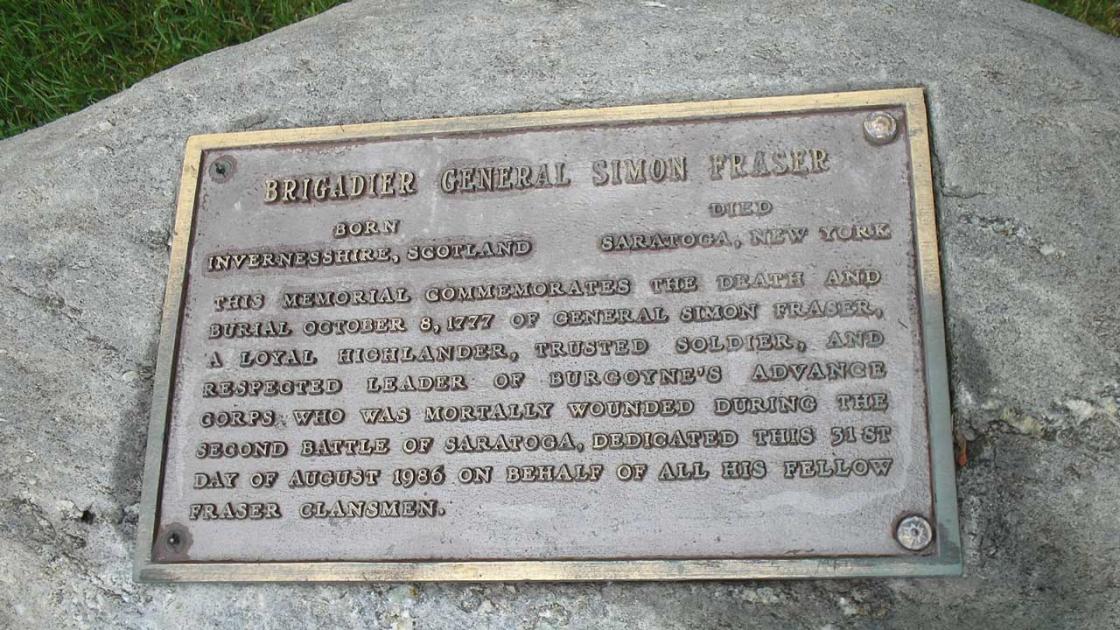
This tablet was dedicated in 1986 by descendants of Brigadier General Simon Fraser, commander of the right column of the British army at Saratoga. Born in Scotland in 1729, Fraser’s military career began with the Dutch Army, but by the French and Indian War he was serving with the British forces in North America. He commanded the 24th Regiment of Foot in Canada in 1776 and was promoted to brigadier general before the Saratoga Campaign commenced. He played a key role in both battles here and was mortally wounded during the fighting on October 7th.
Colonel Daniel Morgan (1736-1802), the “Old Wagoner,” commanded a corps of Pennsylvania and Virginia riflemen and light infantry that had been detached from General George Washington’s Main Army and sent to bolster the Northern Department in the summer of 1777. Morgan’s men were ordered forward by Gates around noontime on September 19 to confront the British advance and opened the Battle of Freeman’s Farm. Throughout the afternoon and into early evening, Morgan’s Corps and Brigadier General Enoch Poor’s brigade bore the brunt of the fight against Brigadier General James Hamilton’s column. At the end of the day, Morgan and the rest of the Americans fell back to Bemis Heights.
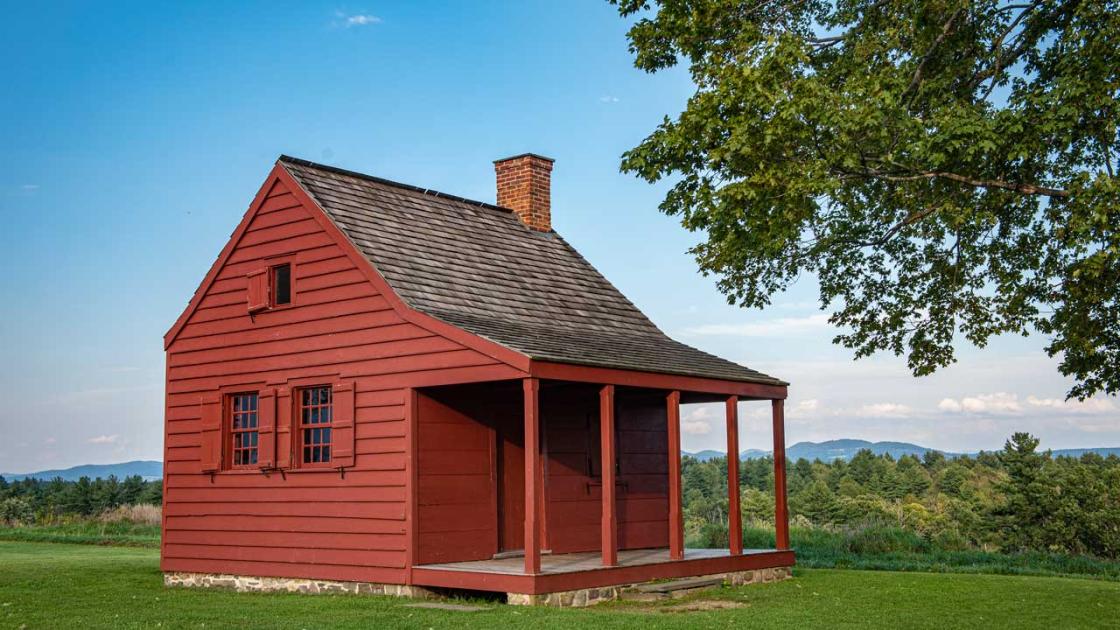
John and Lydia Neilson lived on this 150-acre farm when the war came to their front doorstep. Centrally located behind the American line on Bemis Heights, the house was used as a headquarters by wing commander Major General Benedict Arnold and Brigadier General Enoch Poor. The surrounding high ground was crowned with a long line of fortifications, cannons, and American infantry. A strong position, Burgoyne’s army never reached or directly assaulted Bemis Heights.
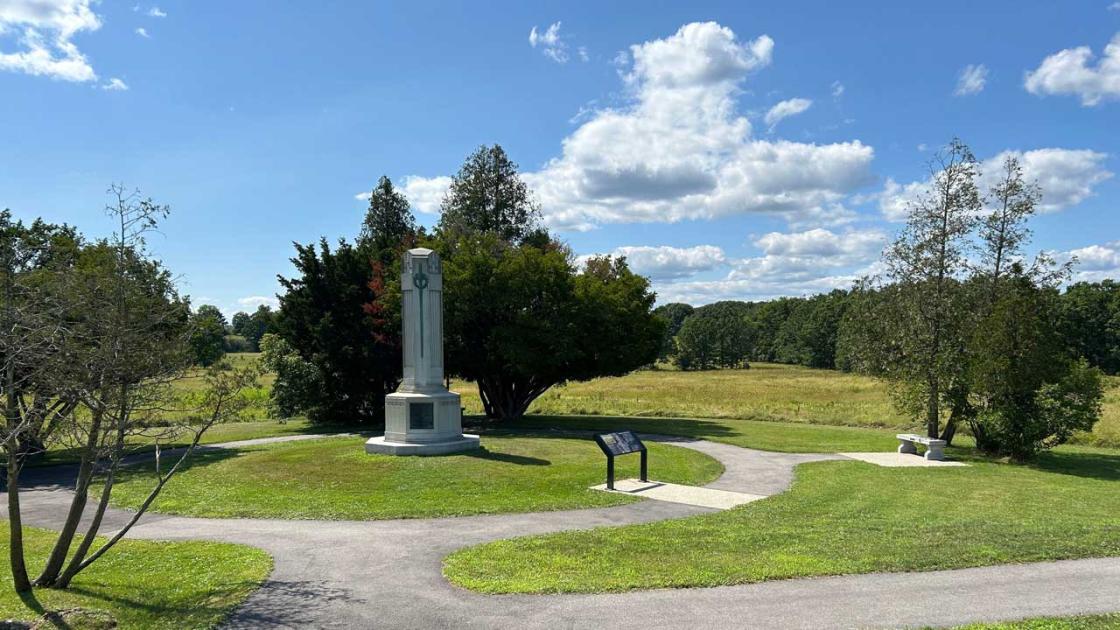
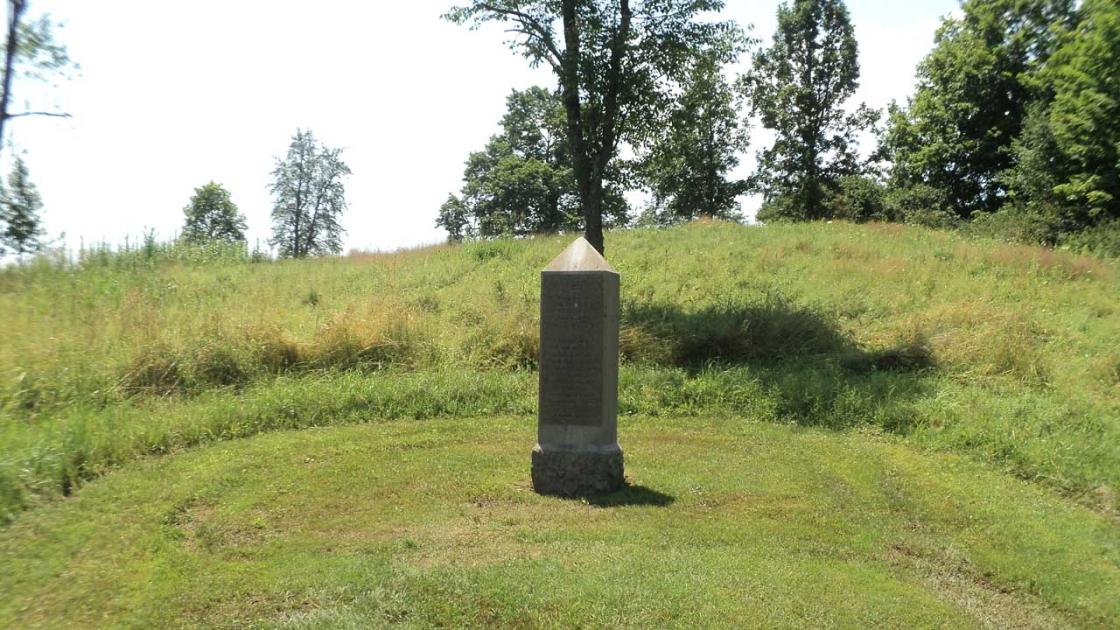
Erected in 1931 by the Daughters of the American Revolution, the Unknown American Soldiers Memorial pays tribute to the “Unknown American Soldiers who perished in the Battles of Saratoga September 19 and October 7, 1777 and were here buried in unmarked graves [who] helped to assure the triumph of the War of Independence, to create the Republic of the United States of America and to establish Liberty throughout the world.” The Battle of Freeman’s Farm cost the Americans 300 men killed, wounded, or captured. The British suffered a staggering 600 casualties.
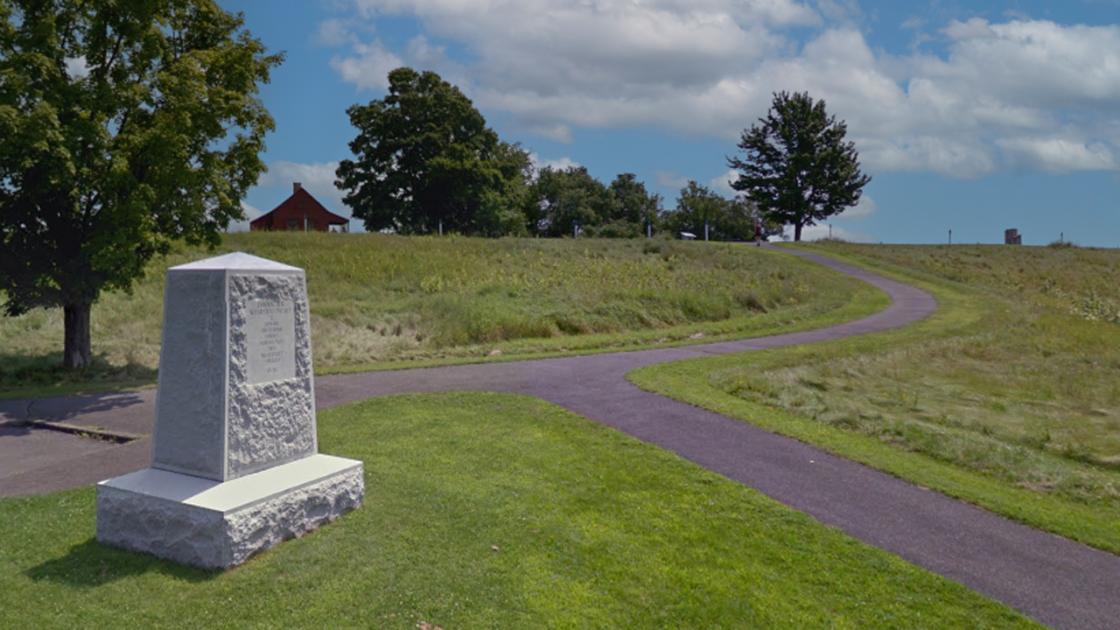
Erected in 1936, the monument honors Thaddeus Kosciuszko, a Polish soldier who journeyed to America in 1776 to serve in the Revolutionary War as an engineer. In the spring of 1777, he was attached to the Northern Department and assigned to Fort Ticonderoga, where the American commanders refused to listen to his suggestions about fortifying Mount Defiance before the British could capture it. At Saratoga, he oversaw the layout and construction of the American fortifications on Bemis Heights.
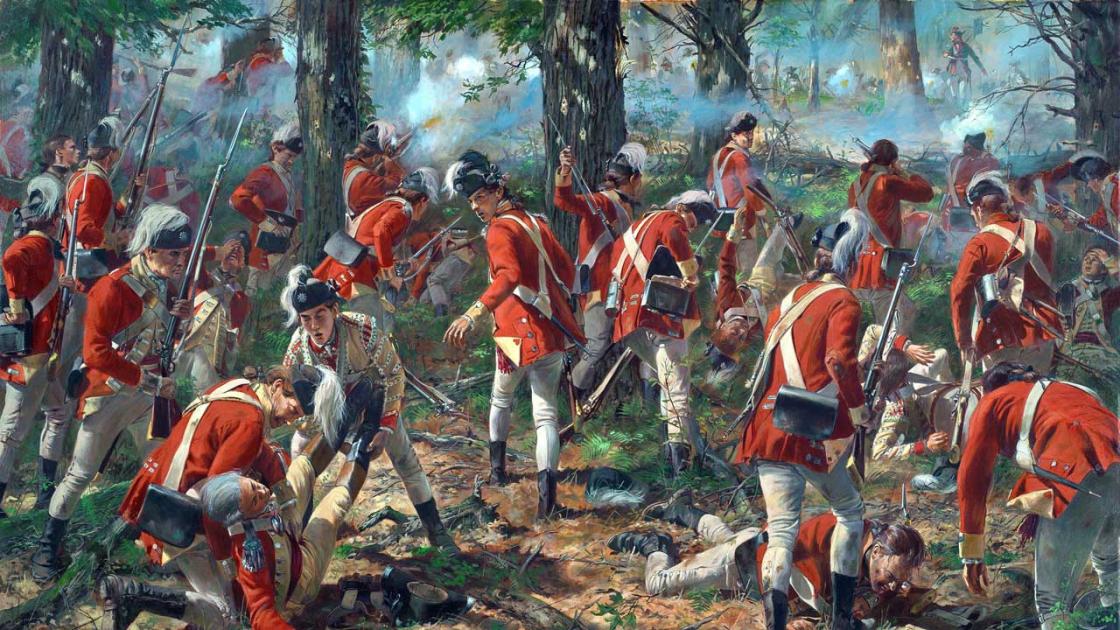
This is the site of the main action on September 19, 1777. Following a reconnaissance in force by General Burgoyne against the American positions on Bemis Heights, fighting swirled back and forth through loyalist John Freeman’s stump-studded fields. The British held the ground as night fell, but at a great cost. The 62nd Regiment of Foot, alone, suffered over 200 casualties. The British subsequently erected the Balcarres Redoubt on this site, which held off multiple American attempts to overrun it during the October 7th battle.