-
The BlogBiographies
-
Videos

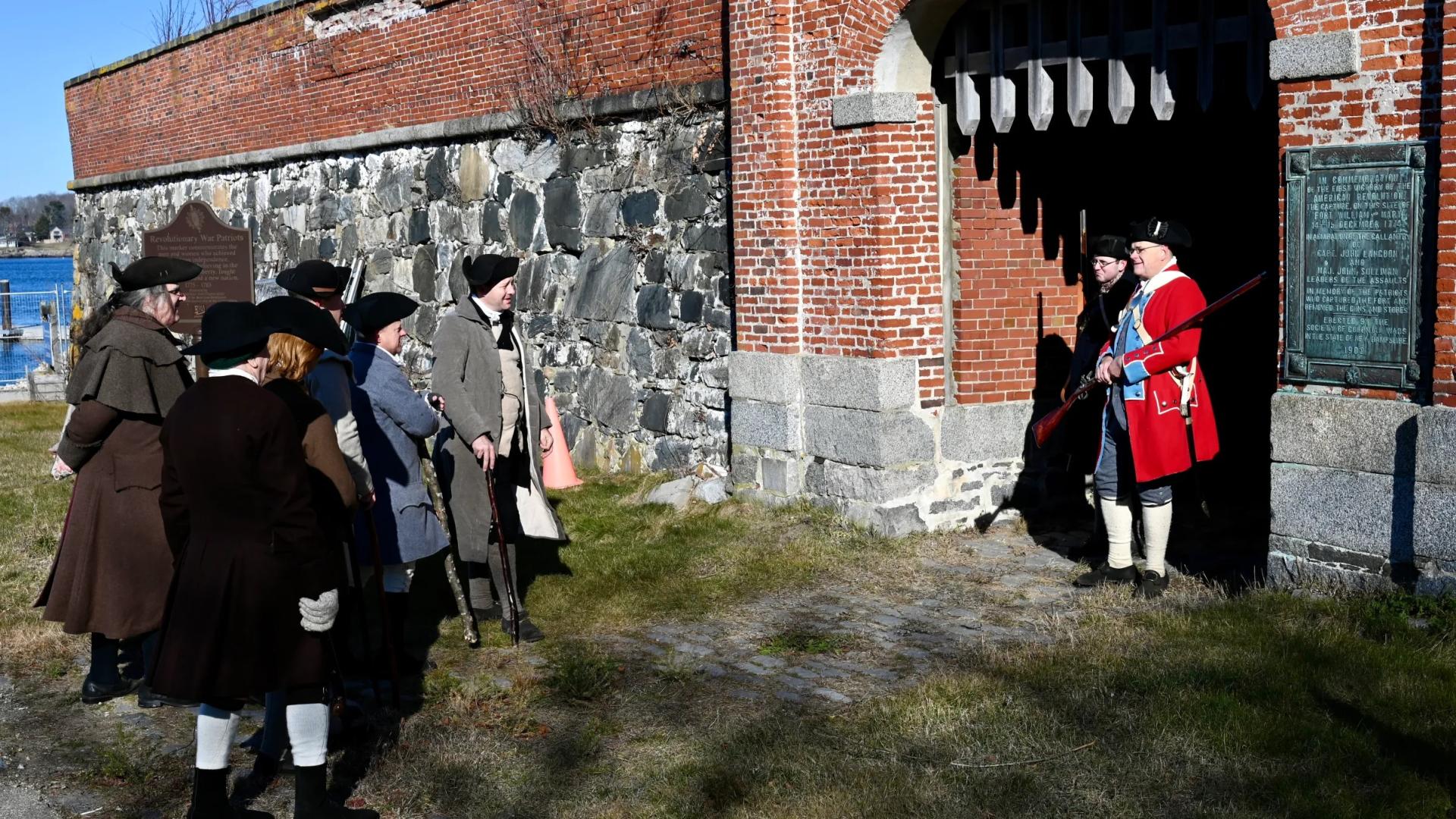
In this post, guest blogger George Weghorst shares a deceptively familiar story from the earliest days of the American Revolution. Welcome, George, to The Liberty Trail!
I will start with a story that may sound familiar.
Paul Revere rode out of Boston with an urgent message that British military troops were to be dispatched to seize gun powder and supplies to keep them out of Patriot hands. The local Patriot militia in this distant town confronted the British, preventing the precious powder from being confiscated. In their direct clash with Royal rule, they fired the first shots of American independence! Months later the British military and Royal Governor were expelled from the colony and one of the first of many American independent states was born.
This is the story of New Hampshire. Surprised? Four months before the events at Lexington and Concord in Massachusetts, these described events took place in Portsmouth and New Castle, New Hampshire.
On December 13, 1774, Paul Revere rode into Portsmouth with the message that the British military governor of the Massachusetts Bay Colony was planning to send ships to seize the gun powder and supplies in Fort William and Mary at the entrance to Portsmouth harbor. The next day, the drums beat to call out the Sons of Liberty. Four hundred men from Portsmouth, New Castle, and Rye raided the fort, then guarded by six British Soldiers. After a long standoff, the two sides met briefly before British defenders fired three cannon shots followed by a volley of musket fire. The Patriots, who did not suffer any serious injuries, poured over the fort walls and overwhelmed the guard.
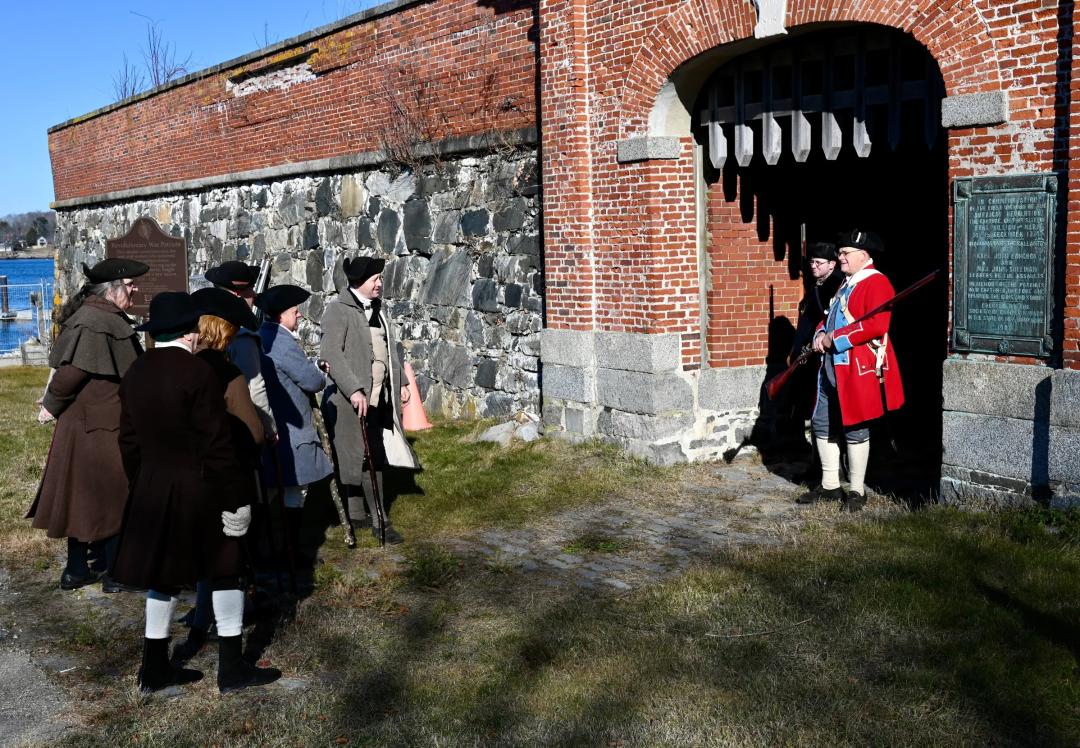
Patriot militiamen confront Captain John Cochran at the gate of the fort during a 2024 reenactment of the capture of Fort William and Mary (Photo Courtesy of First New Hampshire Regiment)
The loyalist Captain of the Guard, John Cochran, put up resistance before the Patriots ultimately knocked him to the ground. As he was taken into confinement, the Patriots hauled the King's Colours down to cheers of “Huzzar!” They broke the powder magazine open and took away 98 kegs of gunpowder after the Captain refused to surrender any keys. They left just one keg for the fort and loaded the remaining powder onto boats to be distributed to over a dozen towns throughout New Hampshire. Exeter, which would soon become the Patriotic capital of the fledgling state, received a larger share of kegs. The next day, a smaller group of militiamen from farther outside Portsmouth arrived and attacked the fort again. They met with no resistance and were able to remove 16 cannons and most other military supplies.
This historic cheer of “Huzzar!” from these independent Patriots was “the shout heard round the world.” These events were the first overt military actions against British rule in the colonies resulting in the capture of a Royal Fortress. Later reports back from London indicated that British authorities were more concerned with the lowering and disrespect for the King’s Colours than the attack on the fort. These colonists no longer considered themselves to be subjects of the King.
Though two British warships arrived from Boston with 100 Royal Marines to secure the fort a few days later, the legacy of the Patriot victory lived on. The New Hampshire Patriot militias likely used gun powder from the fort at the Battle of Bunker Hill and the Siege of Boston. In early summer 1775, Patriots expelled the Royal Governor John Wentworth from his mansion in Portsmouth and set up a cannon in the street aimed at his front door. The cannon was no doubt previously taken from the fort. He and his family took refuge in Fort William and Mary for two months before sailing for Boston, as the British military abandoned New Hampshire.
Today, the site of the fort is a state historic site on the grounds of the active Portsmouth Harbor Coast Guard Station. In 1808, the fort was rebuilt and renamed Fort Constitution, the ruins of which can still be seen today at the entrance to Portsmouth harbor. It is possible that some of the earlier walls were included in some of the existing walls. The fort is currently closed (2025) and not accessible to the public. The state needs to do a lot of work to stabilize the old walls before the site can be opened to the public again, and there is no date yet on when this work may be done.
Explore these historic documents to learn more about the history of the fort:
1774 Report of the Attack on Fort William and Mary
This is written in the hand of Captain John Cochran. This would have been submitted to New Hampshire’s Royal Governor John Wentworth in Portsmouth and then forwarded to Great Britain. This link is to the National Archives of the United Kingdom. Note: The transcript states that the Patriots demanded the “keys to the prisoner house” but, as written in the Captain's hand, it is the “Powderhouse.”
1903 History of the Capture of Fort William and Mary
This link is to a historical analysis of the attack on the fort and aftermath written in 1903 by Prof. Charles L. Parsons for the New Hampshire Historical Society. He wrote this in-depth analysis when there were still a few grandchildren alive with firsthand knowledge from some of the participants in the attack. This link is to the U.S. Library of Congress.
About the Author
I have always had an interest in history. When my son was in Cub Scouts, about 30 years ago, we visited the U.S. Coast Guard Station (USCG) in New Castle, New Hampshire which is next to the fort. I grew up in Massachusetts and had never heard of this fort. At the site were small pamphlets with a brief history of the fort, and I was surprised at the story of the Patriot actions here, so I started to search and read about it. A few years earlier, my wife inherited a replica Continental Army uniform that was her father's. He was a member of the 1st New Hampshire Regiment, a reenactment group that formed just before the U.S. bicentennial, 50 years ago. So, the following summer our Scouts revisited the USCG and the fort. I wore the colonial uniform and presented the history of the fort to the Scouts. I am still a member of the Scouts and have returned with them every year since.
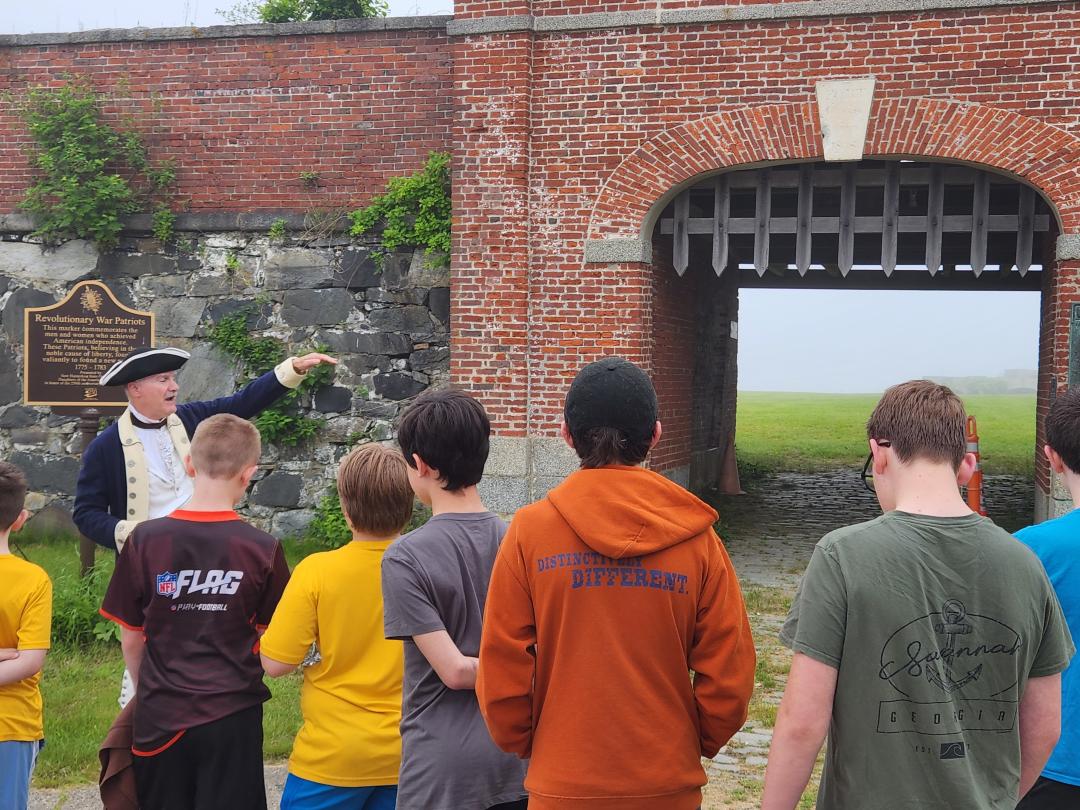
The author, in uniform, visits the fort with his Scout troop (Photo Courtesy of Jeffrey McLean)
The 1st NH Regiment is still going strong, and last December (2024) they were the coordinators of a full-scale two-day reenactment of the Capture of the Fort at New Castle. As in 1774, the action was first in Portsmouth where the Patriots rallied and then proceeded to the fort to attack and remove the military supplies.
I retired a few years ago after a career as an information systems analyst. I have really enjoyed over this past year an inspiring schedule of 250th anniversary reenactments including Fort William and Mary, Leslie's Retreat (Salem, MA), Lexington and Concord, and a spectacular recreation of the Battle of Bunker Hill. I attend these events in colonial garb with a few other folks and am looking forward to Col. Knox's Noble Train of Artillery and the Evacuation of Boston this winter.
We invite you to visit the preserved locations along the Liberty Trail and to immerse
yourself in the extraordinary events that determined the fate of a nation.