Jim Capers Eutaw Springs
History Along The Trail

The Liberty Trail Story Tellers

The American Revolution was decisively influenced by The Liberty Trail’s diverse terrain, spanning swamps, fields, woods, and mountains. Delve into the narrative of American Independence with blog posts surrounding The Liberty Trail.

States of Interest:
The Blog |

By the mid-eighteenth century, Great Britain began strategizing how to respond to the rebellious North American colonies. One key element of that strategy detailed how the British empire could...

The Blog |

Of all the colonies that suffered during the War for Independence, few endured the brunt of the constant bloodshed in its final years as South Carolina. Contrary to popular convention, much of the...

The Blog |

With a common enemy, backwoods hunters and fighters united to chase down Redcoat Major Patrick Ferguson and his Loyalist army. Trekking more than 300 miles over mountains and rugged terrain, this...

The Blog |

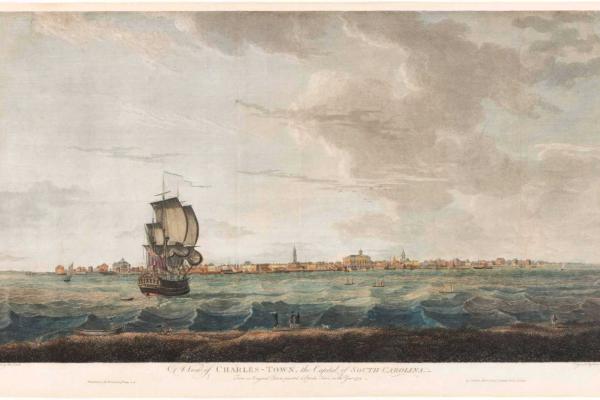
The first President of the United States, George Washington, made his first and only visit to Charleston in May 1791. Although he spent little more than a week in the city, it was a well-remembered...

The Blog |

With more than 200 Revolutionary War battles and skirmishes having taken place in South Carolina, it would be difficult to visit every historical marker and battlefield in the state. For most visitors...

The Blog |

By the time of the Revolutionary War, Francis Marion, best known to history as the Swamp Fox, was acquainted with both conventional and irregular warfare. By then a trained Continental officer who had...

We invite you to visit the preserved locations along the Liberty Trail and to immerse yourself in the extraordinary events that determined the fate of a nation.
Battlefield |
Chelsea, MA

The second engagement of the Boston Campaign, the Battle of Chelsea Creek marked a stunning defeat for the British as their resources began to dwindle in Boston.

Historic Site | Historic House
Boston, MA

One of the oldest residential buildings in Boston, this structure was once the home of one-and-only Paul Revere, an avid member of the Sons of Liberty.

Battlefield | State/County Park
Millburn, NJ

Site of one of the last contested battles of the Revolution's northern theater that protected Washington's encampment at Morristown.

State/County Park | Historic House
Basking Ridge, NJ

Once a sprawling manor complex in the New Jersey countryside belonging to Major General William Alexander, all that remains are two extant structures and the cellar of the original home.

Historic Site | Historic House
Charleston, SC

This historic house museum was the home of Thomas Heyward, Jr., one of four South Carolina signers of the Declaration of Independence.

Battlefield
Enoree, SC

British Lieutenant Colonel Banastre Tarleton pushed up the Enoree River hot on the trail of Patriot Brigadier General Thomas Sumter.

Battlefield | National Park
Stillwater, NY

The Battles of Saratoga marked a decisive turning point in the American Revolution, where Patriot forces achieved a stunning victory over a major British army. This triumph not only shattered British momentum but convinced France that the American cause was worth backing, transforming a colonial rebellion into an international war.

Historic Site | Battlefield
Spartanburg, SC

When Jane Black Thomas overheard Loyalists plotting a surprise attack on her son's militia camp, she rode nearly 60 miles through dangerous territory to warn him. Her daring ride gave Colonel John Thomas Jr. and his Spartan Regiment time to prepare an ambush that repelled the attackers — fueling Patriot momentum toward the war-changing Battle of King's Mountain just three months later.

Battlefield
Pinewood, SC

McLeroth and his 64th Regiment were escorting 200 recruits from Charleston to Camden when Marion, with about 700 men, surprised them at Halfway Swamp.

State/County Park | Historic Site
Hewitt, NJ

Owned and operated by German immigrants, this site once housed one of the largest ironworks in the colonies that supplied the Continental Army. Started in 1766, it was in operation for over a century.

National Park | Historic House
Concord, MA

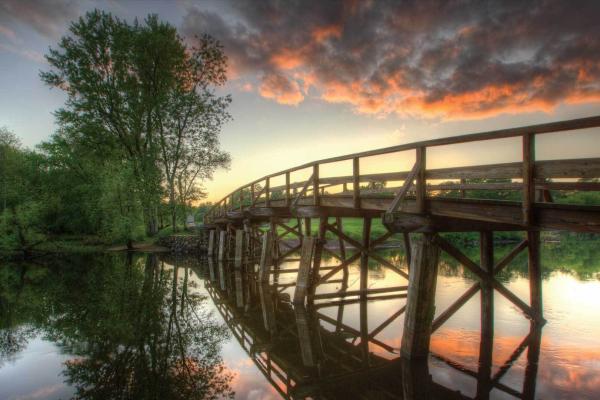
Major John Buttrick, whose name is now the sake of this homestead, was a fourth generation American whose great-grandfather, William Buttrick, helped establish Concord in 1635. During and after the war, John Buttrick held positions in the military and upheld civic posts during the early days of the American Republic.

Historic Site | Historic House
Arlington, MA

One of the bloodiest sites during the Battle of Lexington and Concord, this house saw extensive combat and still bears the scars left behind by the engagement.