-
The BlogBiographies
-
Videos

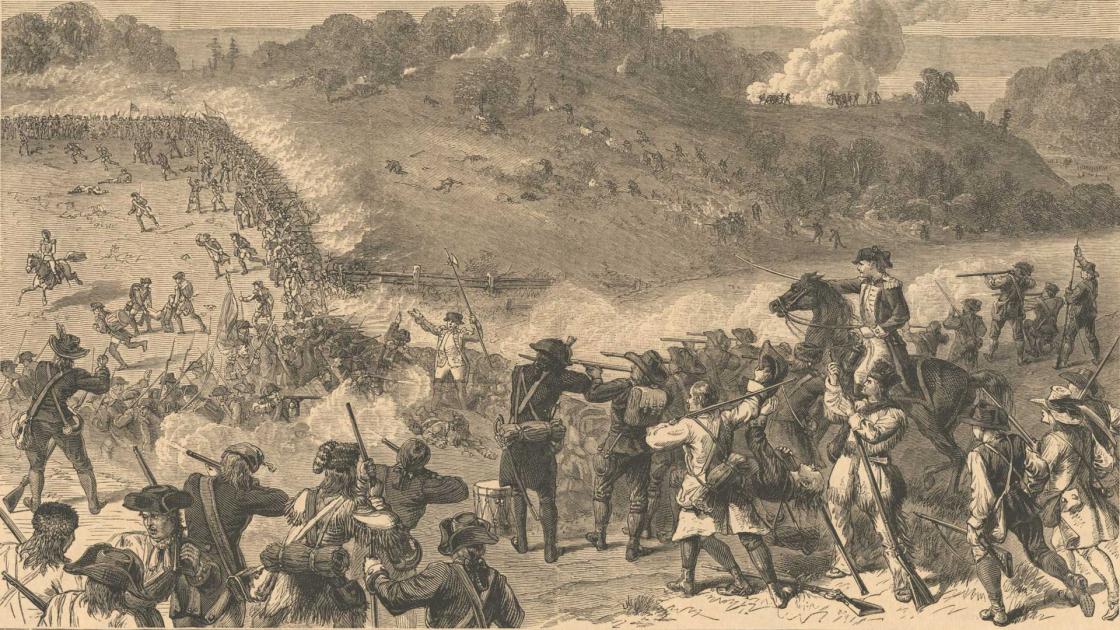
“The Behaviour of Yesterday was such a Contrast, to that of some Troops the day before, as must shew what may be done, where Officers & soldiers will exert themselves—Once more therefore, the General calls upon officers, and men, to act up to the noble cause in which they are engaged, and to support the Honor and Liberties of their Country.”
- General George Washington, September 17, 1776
General George Washington’s satisfaction with the performance of the patriot troops at the Battle of Harlem Heights redeemed them after the previous day’s defeat at the Battle of Kip’s Bay. The Connecticut Militia had – to Washington’s disappointment - fled in the face of British General William Howe’s advance into Manhattan, but the majority of the Patriots were able to regroup on Harlem Heights. On September 16, Washington wrote to Congress, “We are now encamped with the main body of the army on the Heights of Harlem, where I should hope the enemy would meet with a defeat in case of an attack.”
In the words of Patriot General William Heath, the Americans knew that the British aimed to “make themselves masters of the whole of New-York Island.” For Washington, holding the line at Harlem Heights was critical to New York’s fate. As you follow what happens next, remember that, though you’re treading modern landscapes, you’re still on hallowed ground. You’re on the Liberty Trail.
Find out what happens next on this 5-stop tour of the Battle of Harlem Heights, which takes you to different locations across Manhattan. Public transportation like the subway is your easiest way to navigate, but tour stops are located near street parking and parking garages.
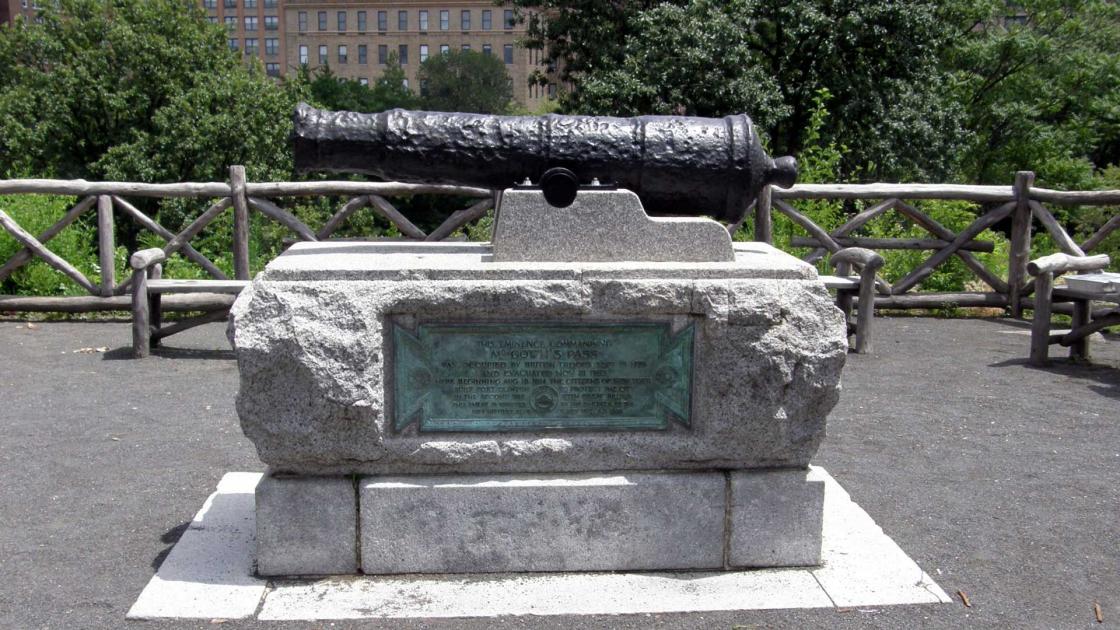
Located in northern Central Park, this was the site of the British main lines. American forces built Fort Clinton in this location during the War of 1812 and today there is an artillery piece and a plaque denoting the site’s importance.
Let’s get one thing out of the way. The cannon and mortar that form part of the memorial plaque here are not from the Battle of Harlem Heights, but they are originally from a British warship that sunk in the East River sometime during the Revolutionary War. Anonymously donated to Central Park in 1865, they were erected here in 1906. Another century passed before modern park employees got a surprise during a routine cleaning: the cannon had been loaded with ball and gunpowder the whole time!
Planning to continue their dominance of the island, the British advanced on Harlem Heights from this location on September 16, the day after landing at Kip’s Bay and capturing New York City. Aware of the British advance north to the patriot main line, General George Washington sent Colonel Thomas Knowlton and 120 men to decipher the situation before dawn. The men rode west of McGowan’s Pass here, and by sunrise the patriots encountered an advance force of the British army near the Nicholas Jones House.
Knowlton’s Patriots fell back, but forces under British General Alexander Leslie gave chase.
Your next stop follows what happened when Colonel Knowlton’s men met the British advance. Take in the panoramic views here and don’t let the cannon scare you off too soon, unless you don’t want to be late for class. The next stop on your tour takes you to Columbia University.
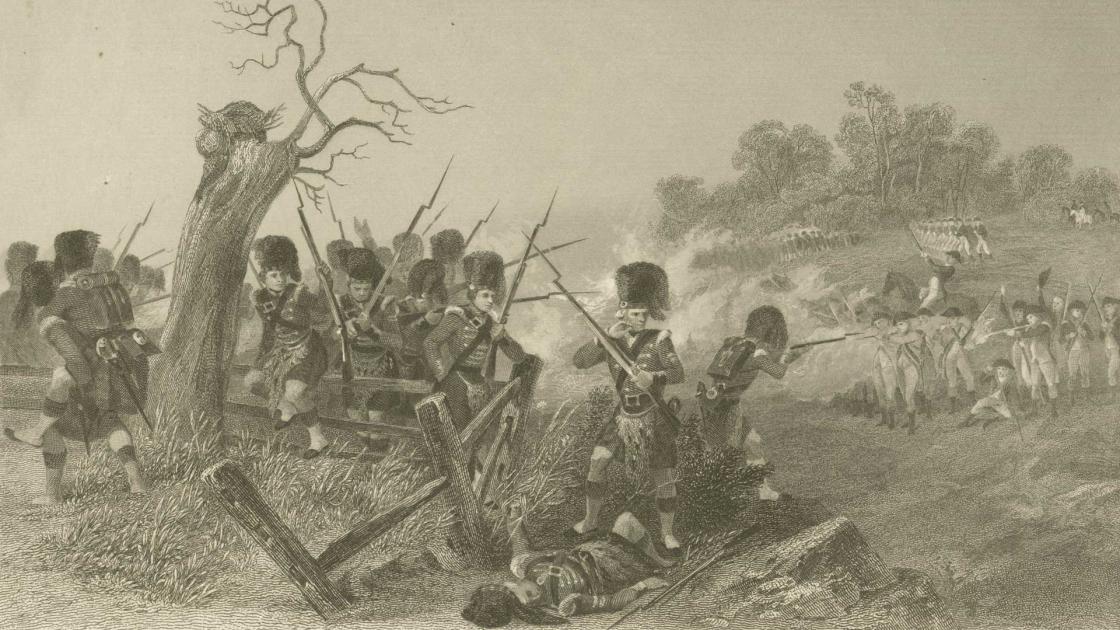
Founded in 1754 as King’s College, Columbia University is one of the oldest universities in the United States. Yet, like everything else around you, it wasn’t here during the Battle of Harlem Heights on September 16, 1776. In fact, the land behind you was a buckwheat field. Broadway, however, was the main north-south road in this area during the Revolutionary War but of course, looked quite different. The plaque in front of you helps you visualize the rural landscape and the severe fighting that took place here, which claimed the lives of both Colonel Thomas Knowlton and Major Andrew Leitch.
After falling back from encountering the British near the Jones House less than a mile south of here off of Broadway, Colonel Knowlton and his troops fell back across the Hollow Way. The Hollow Way is still visible as a dip in the ground near where 125th Street intersects with Broadway. As they did, the British blared their bugles, bellowing out “Gone Away,” a fox-hunting tune used to signal that the chase is on. Patriot Colonel Joseph Reed, who heard the bugle calls, considered it a “crown to our disgrace.”
But the Patriots didn’t back down. Your next step takes you to where the Patriots stood their ground.
Listen to “Gone Away,” a traditional fox-hunting call, here: Foxhunting Horn Calls -- Gone Away
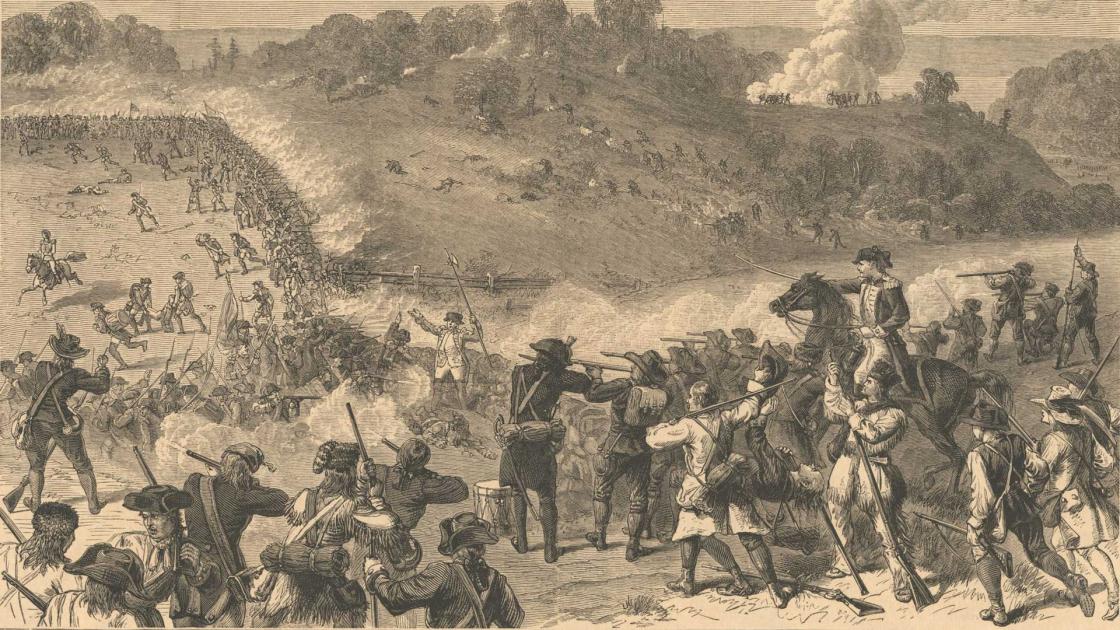
You are now standing in the middle of a housing cooperative, but you can still see the area from which Colonel Thomas Knowlton, accompanied by Virginia Major Andrew Leitch’s troops, launched their flanking attack on the British. This proved to be a severe but a quick clash. While the British engaged the main Patriot line, a few hundred riflemen tried to encircle the British and attack their rear. As the Patriots came around these rocks, they unleashed rifle fire into the British right flank. In response, the British turned and pummeled the Patriots on the rocky ledge.
Early in the fighting, both Knowlton and Leitch were hit, and these rocks here are the ones frequently described as where Knowlton and Leitch were mortally wounded. Patriot Colonel William Reed recalled the scene, “Major Leitch fell near me, in a few minutes, with three balls through him…Colonel Knowlton, a brave Connecticut officer, also fell mortally wounded. I mounted him on my horse, and brought him off.”
Two heroes have fallen, but it wasn’t the end of the battle. Your next stop takes you to a small patch of land that saw the fiercest fighting before it was all over at Harlem Heights.
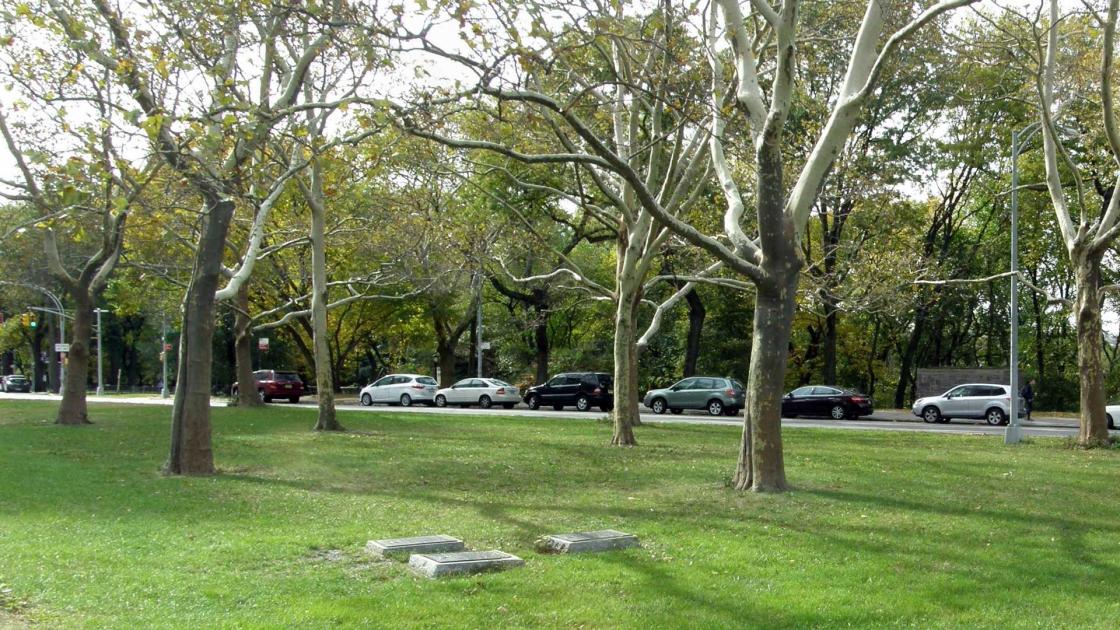
Right next to General Grant’s Tomb, and across from the Riverside Church is a little plaque on the ground denoting the area as the Harlem Heights battlefield.
It may look serene and pleasant today but, on September 16, 1776, the buckwheat field that once covered this ground saw the heaviest fighting of the Battle of Harlem Heights. While Patriot Colonel Thomas Knowlton and Major Andrew Leitch received mortal wounds in the earliest moments of the fight, the battle waged here for two hours. The Patriots finally managed to drive the British back towards their main lines at the Jones House. All said and done, the Patriots suffered 30 killed, and 100 wounded, while the British lost at least 14 killed and 154 wounded—but no clear victor emerged.
In the days following, both sides claimed victory at the Battle of Harlem Heights. But perhaps it was sweetest for the Patriots who, for the first time, witnessed a British retreat. Patriot Colonel William Reed later wrote, “ The pursuit of a flying enemy was so new a scene that it was will difficulty our men could be brought to retreat…The men have recovered their spirits and feel a confidence which before they had quite lost. I hope the effects will be lasting.”
This small patch of land might not seem like much, but your next and final stop takes you to one of the oldest houses still standing in Manhattan, from where General George Washington commanded his troops.
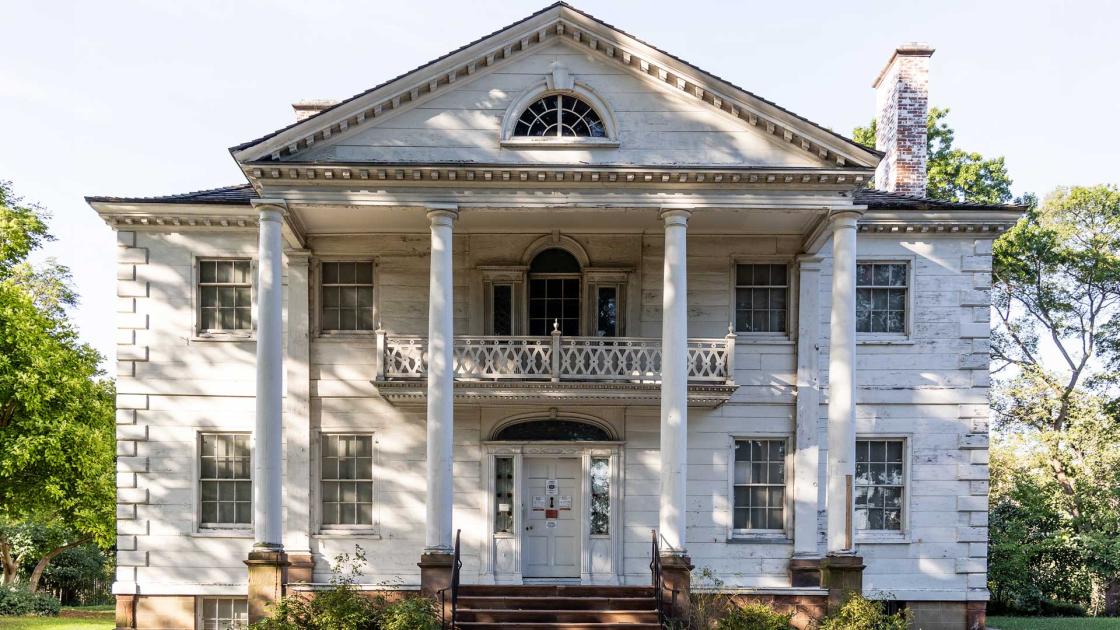
As of September 2026, the mansion is currently closed for tours due to a roof replacement. However, the park is open, with weekend walking tours and some community programming available. Please check https://morrisjumel.org or call 212-923-8008 for more information prior to your visit.
Welcome to the oldest surviving home still standing in Manhattan, the Morris-Jumel Mansion. Built in 1765 on what’s known as Coogan’s Bluff, from here you could see all of lower Manhattan, the Hudson River, the Palisades, and more. It’s safe to say this house has seen it all. Its owner, English loyalist Roger Morris lived here until 1775 when the outbreak of the Revolution prompted him to temporarily move back to England. This left the mansion vacant and available for General George Washington to move in on September 14, 1776, just days before the Battle of Harlem Heights. This mansion served as Washington’s headquarters through late October.
After the battle, the patriots retired here on these grounds, and prepared an unmarked grave somewhere near here to bury a fallen, unknown comrade. Young Connecticut militiaman Joseph Plumb Martin witnessed an extraordinary moment when, after laying the gentleman in his grave, two young women came out of the house. In Joseph’s words:
“Upon arriving at the head of the grave, they stopped, and, with their arms around each other’s neck, stooped forward, and looked into it and…asked if we were going to put earth upon his naked face; be answered in the affirmative, one of them took a fine white gauze handkerchief from her neck and desired that it might be spread upon his face, tears, at the same time, flowing down their cheeks. After the grave was filled up they retired to the house in the same manner they came. Although the dead soldier no acquittance present…he had mourners.”
After the Battle of Harlem Heights, Washington’s troops had a month-long lull in their fight with the British over control of New York.