-
The BlogBiographies
-
Videos

The Battle of Kemp's Landing: Dunmore Strikes Back
"I do hereby declare the inhabitants of this colony to be in a state of rebellion, and do declare martial law within the same." - Dunmore’s Proclamation, November 7, 1775
Residents around Virginia’s colonial capital in Williamsburg once celebrated Royal Governor Lord Dunmore. But by November 1775, all of that must have felt like it was in a whole other timeline. Because Dunmore had just spent months scavenging the coastal towns of Hampton Roads from a floating command center—raiding the coast for everything from food and military stores to the services and skills of enslaved men who would choose to join his Ethiopian Regiment of soldiers. Dunmore was determined to regain control of the colony from rascal patriots before things got too out of hand. But a brief land-to-sea battle in Hampton at the end of October saw patriot militia firing on British loyalists—and winning the day. Dunmore was livid. He issued a proclamation declaring Virginia in open rebellion against the Crown, and he offered freedom to enslaved people who would take up arms against patriots. Virginians were living in unprecedented times—their own governor was waging war against them. And no one knew what would happen next.
Kemp's Landing
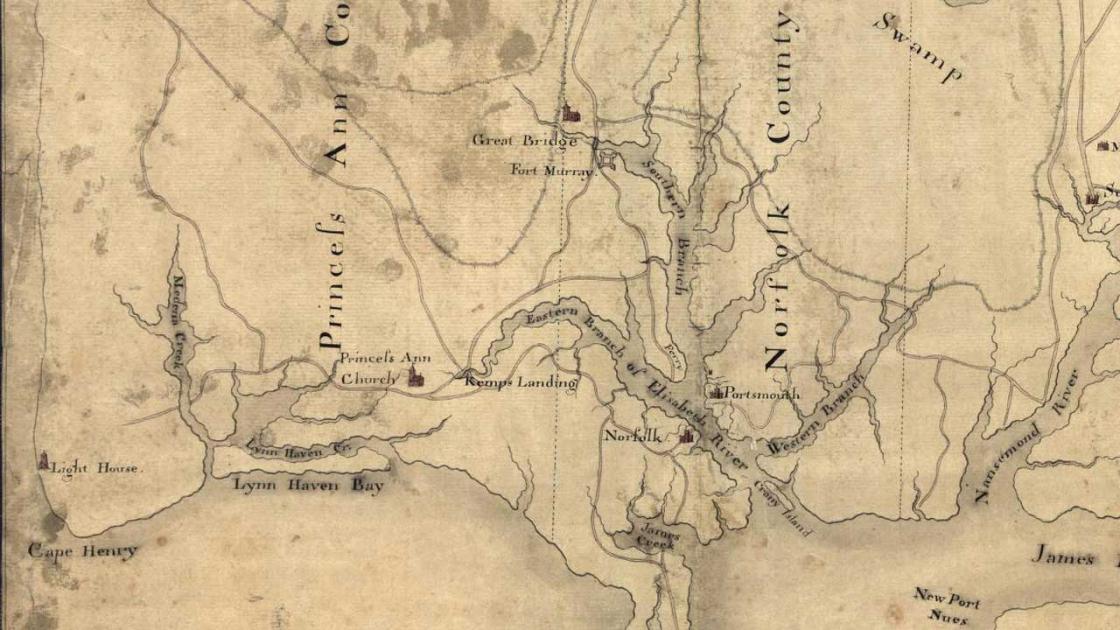
You’re standing near the eastern branch of the Elizabeth River, just inside the modern limits of Virginia Beach. But strip away the pavement and buildings here and take yourself back 250 years. If you were standing here in 1775, you’d see low marshes and narrow carriage paths winding through what was a very important colonial port town. There’s a wood line and some brush nearby, and a dock and some warehouses support the colony’s tobacco trade. Ships bob in the harbor, connecting this small village to the rest of the Atlantic world. You’re not in the middle of nowhere, you’re not even in a beachy tourist town. You are in the epicenter of Revolutionary Virginia, and on November 15, a brief but important skirmish erupted near this spot.
Dunmore was on the warpath. From his position around Norfolk, he set out for Great Bridge, just ten miles south from here, where he heard patriot militias were gathering in strength. But on November 14, Dunmore found no one at Great Bridge. Instead, about 170 Patriots, including the Princess Anne Militia, mobilized here at Kemp’s Landing under patriot leader Colonel Joseph Hutchings.
Dunmore left some of his men to fortify a position at Great Bridge, but took about 120 on the road to Kemp’s Landing. Here, they met a patriot ambush. Hidden in the brush and the woods around this spot, patriot militiamen fired into Dunmore’s contingent of loyalists and members of the British 14th Regiment of Foot who were seasoned career soldiers. But the excited, anxious, and inexperienced patriots had fired too early, and their volley did little more than give away their position. As the British and loyalists returned fire, patriots scattered out of the woods and into the hands of the enemy. When the smoke cleared, a number of patriots lay dead. Colonel Hutchings and others were taken prisoner. And in the aftermath, many patriots signed their allegiance back over to the British crown. Whatever leverage over patriots Dunmore had lost weeks ago in Hampton, he regained ten-fold now.
Seven militiamen died here at the Battle of Kemp’s Landing—the first patriot casualties of the Revolution in Virginia. But they wouldn’t be the last.