-
The BlogBiographies
-
Videos

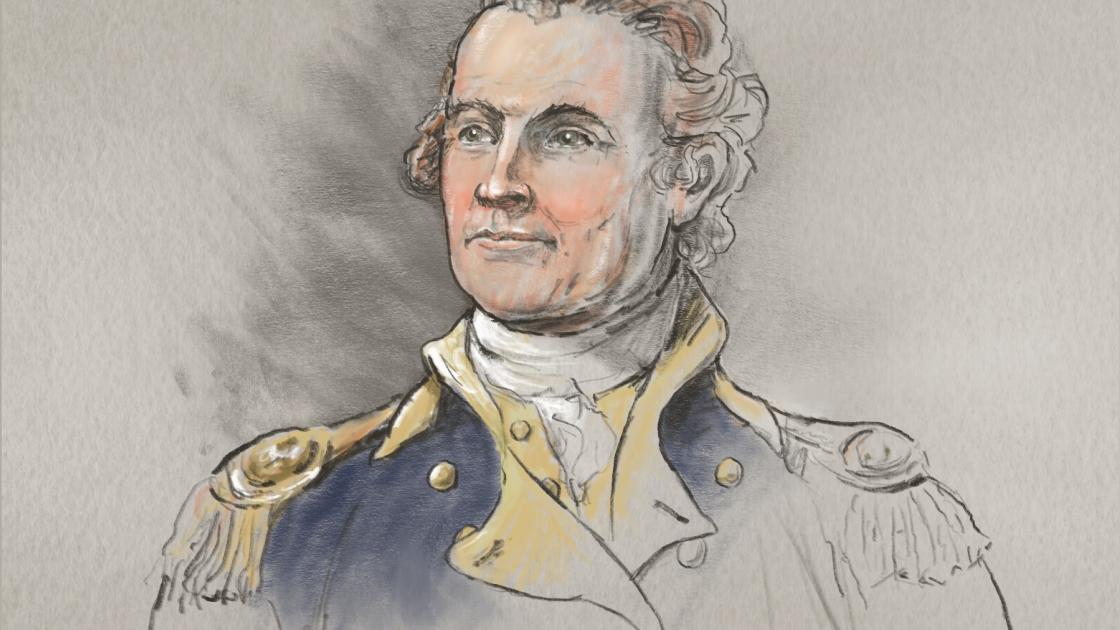
“Oh! The anxiety of mind I was then in for the fate of the day—the lives of seven hundred and fifty men immediately at hazard…besides this, my country, my honor, my own life, and everything that was dear, appeared at that critical moment to be at stake.”
- Continental Army Colonel John Glover, October 22, 1776
On September 16, 1776, General George Washington’s Continental Army witnessed something incredible: a British retreat at the Battle of Harlem Heights. In the aftermath of his defeat, British General William Howe sailed his troops further north up the East River to attempt an amphibious attack on the patriots as Washington began moving his army out of Manhattan towards White Plains, protecting further escape routes, his army, and supplies. On October 12, Howe landed at Throg’s Neck but was thwarted by a few dozen American riflemen. Forced to look for another landing site, Howe headed for Pell’s Point. Meanwhile, Washington’s troops were vulnerable to attack while they were on the move, and Washington knew it. He sent out Colonel John Glover—who would later help the Continental Army cross the Delaware River--and 750 of his Massachusetts Continentals to guard the patriot eastern flank so the army could march safely. When morning broke on October 18, Colonel Glover spied something astonishing while keeping watch over the Long Island Sound: flatboats ferrying upwards of 4,000 British and Hessian troops making their landing at Pell’s Point.
This tour explores the Battle of Pell’s Point, waged in the Bronx on October 18, 1776. Though patriots were outnumbered here and forced to retreat, Colonel John Glover and his Marblehead men delayed British and Hessian forces just enough to give Washington time to secure his army at White Plains and not risk further losses. Patriots suffered just 21 casualties compared to the British and Hessians, who may have lost well over 200.
Though much of the area looks completely different now than it did during the American Revolution, many of the landmarks you’ll encounter on this tour were also known to the men who fought, bled, and died here.
The Bronx is best navigated by public transportation, though some of our tour stops are a bit off-the-beaten path. Your journey starts at Glover’s Rock.
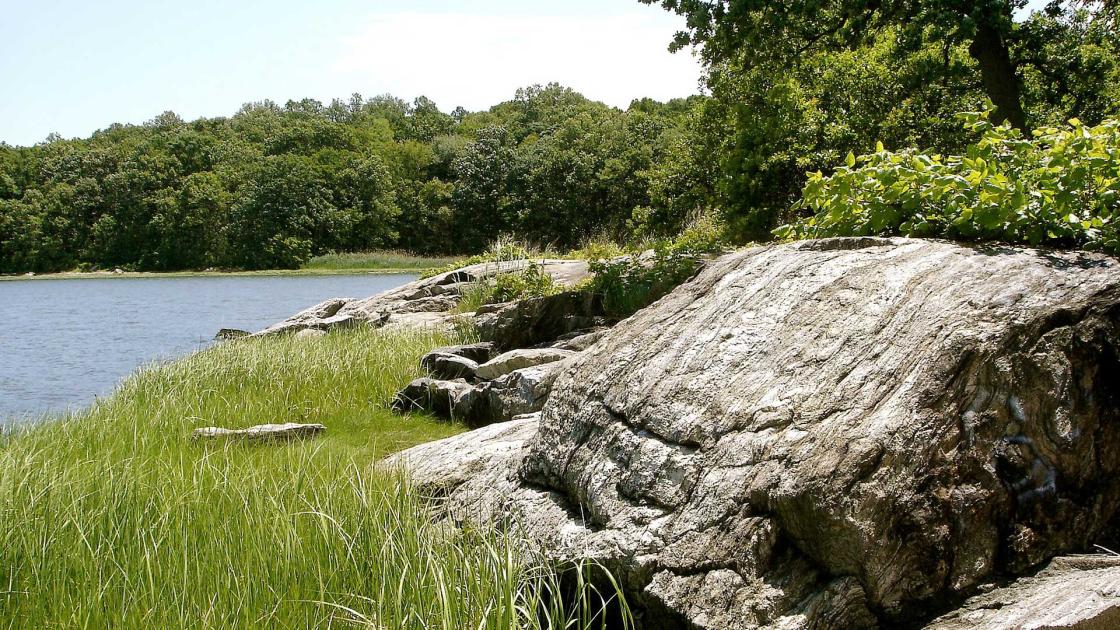
Parking is available in the small pull-off next to the boulder, which has been a known rallying location since colonial days. The plaque honors patriot Colonel John Glover, who was at the Battle of Pell’s Point, but likely not present here at the boulder. Nearby signage tells you more about Glover and his troops at the Battle of Pell’s Point.
On the morning of October 18, British General William Howe landed his troops just west of here on Pell’s Point. Patriot Colonel John Glover saw the whole thing from his spy glass: “I arose early in the morning and went on the hill with my glass, and discovered a number of ships in the Sound, under way; in a short time saw the boats, upwards of two hundred sail, all manned and formed in four grand divisions.”
Glover, the patriot responsible for commanding Massachusetts troops here, had no time to wait for reinforcements. He immediately rallied his 750 men and their three cannon, and turned out to meet the British. He first ordered a small group of about 40 men to engage the British advance guard, which may have happened near here. Glover placed his main force along a road that no longer survives but today would have gone through the modern Pelham Bay and Split Rock Golf Courses. Howe was not deterred by the initial small skirmish, and marched his 4,000 British and Hessian troops up the Split Rock Road.
This boulder was a well-known landmark to local Indigenous populations long before the Revolution, and is one of few remnants of earlier times that still exist on this modern landscape. Today this boulder is named for Colonel John Glover and this area is traditionally believed to be where the fighting began on October 18, 1776. While historians have questioned the validity of the location, a local historian found evidence to suggest that local patriot militia did engage British troops in the area on October 18.
Your next stop requires a short hike, but is worth the trouble to see a landmark steeped in layers of local history.
Limited street parking is available for this stop, which is difficult to access but worth the trouble via a short hiking trail. The Split Rock is located about 15 minutes down the trail. The rock today sits in the middle of two busy highways, a reminder that layers of history exist on our everyday, modern landscapes.
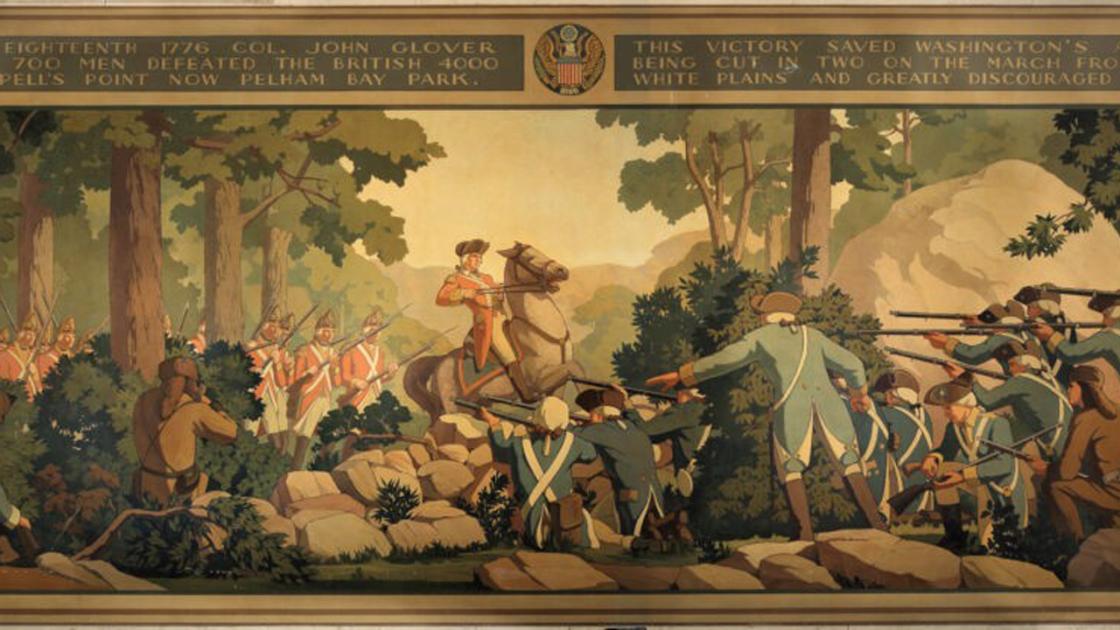
During the Battle at Pell’s Point, Patriot Colonel John Glover’s troops attacked British forces along the roadbed that used to be visible here. The Split Rock Road, taking its name from the glacial boulder here, ran from around Glover’s Rock here to Split Rock. It now runs through the modern-day Pelham Golf Course. A bridle path that goes through the golf course follows some of the original road paths. The road no longer exists, but this rock stands as a silent witness to some of the heaviest fighting in the battle that took place here during the American Revolution. Today this rock stands between two busy highways. It might be hard to picture Glover’s small regiments seeking cover here against 4,000 of the enemy.
On October 18, Glover stationed three of his regiments behind the stone walls that once lined the road near here. The walls provided cover for the outnumbered patriots against the advancing British and Hessians troops, who took considerable fire from Glover’s concealed men. Recalling the action here, Glover later wrote “the enemy gave a shout and advanced, Colonel Reed’s (regiment) laying under cover of a stone wall undiscovered till they came within thirty yards, then rose up and gave them the whole charge; the enemy broke and retreated for the main body to come up. In this situation we remained about an hour and half, when they appeared about four thousand, with seven pieces of artillery; we kept our post under cover of the stone wall...till they came up within fifty yards of us; rose up and gave the whole charge of the battalion.” This patriot barrage slowed and demoralized the British and Hessian troops.
Your next stop takes you to where some of the fighting occurred on Prospect Hill. There is limited street parking available.
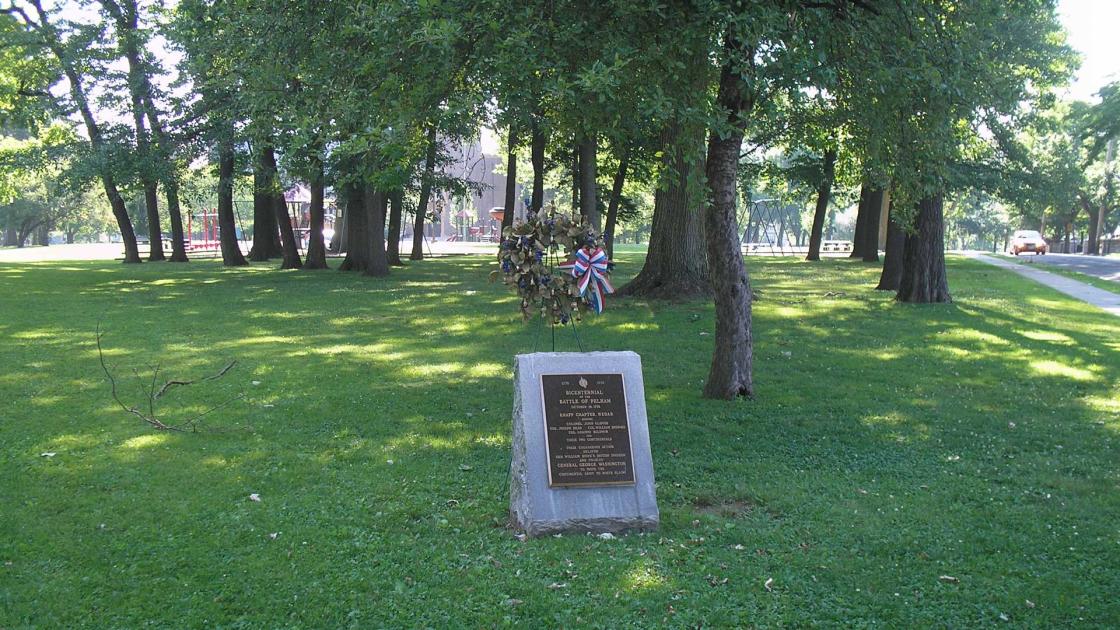
There is limited street parking in the area. You are looking for a small plaque in clearing, near the intersection of Washington Avenue and Peace Street.
Erected by the Daughters of the American Revolution during the Bicentennial, this marker commemorates the actions of Colonel John Glover’s 750 men at the Battle of Pell’s Point, which delayed the British army long enough for General George Washington to transport his troops from Manhattan to White Plains without further attack. Some of the fighting occurred near here on Prospect Hill.
Just a quarter mile west, the modern Split Rock Road follows closely the old Split Rock Road from the 18th century where Glover’s men took their stand against the British and Hessian army. A mile and a half north of here, near the intersection of Wolf’s Lane and Colonial Avenue, stood a bridge over the Hutchinson River. After exchanging fire with the British and Hessians armies, Colonel John Glover ordered his men to retreat but they had to find a way cross the Hutchinson River. There had been a bridge a mile and a half north of here, near the intersection of Wolf’s Lane and Colonial Avenue, but,earlier that morning Glover ordered the bridge to be taken up. The patriots waded in deep mud to traverse the river. After crossing, Glover ordered his artillery to fire into the combined British forces. After a duel of artillery, the British declined to pursue the patriots over the river.
Continue your tour to a modern stadium, where in 1776 the American Revolution wasn’t fun and games!
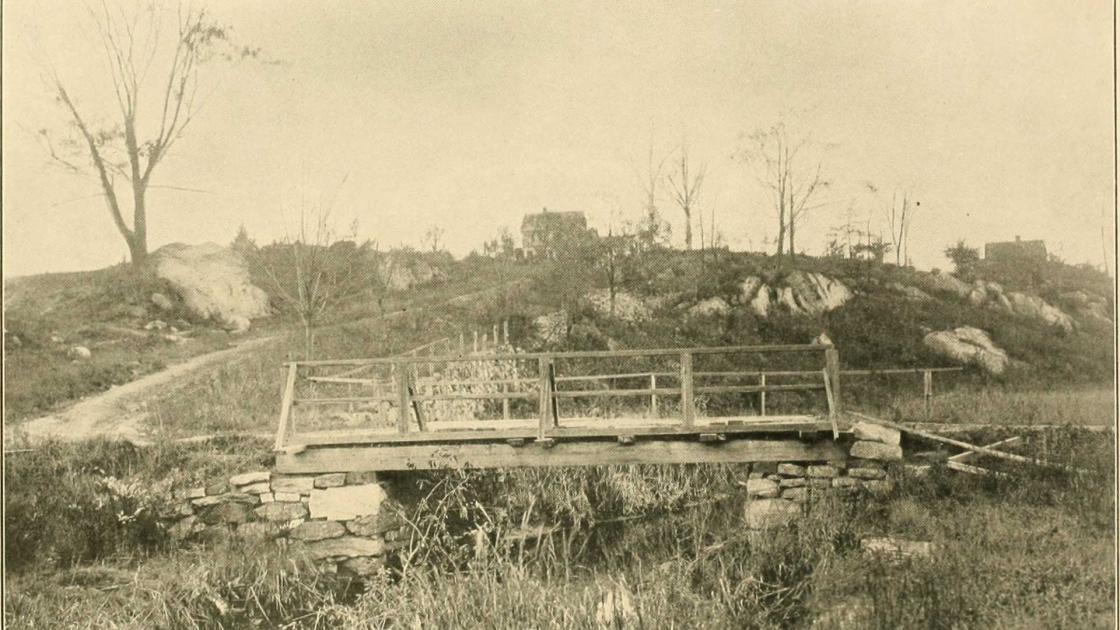
Look for the historical marker near the entrance of this sports stadium, which denotes the area where patriot Colonel John Glover’s men camped overnight on October 17, 1776, the night before the Battle of Pell’s Point. Back then, it wasn’t fun and games. On the morning of October 18, Glover awoke and from the large bluffs behind you, peered through his spyglass and witnessed the British and Hessian army landing and forming for attack. Though the patriots were far outnumbered, Glover knew he had to deploy his troops to distract the enemy away from the rest of the Continental Army and General George Washington’s movement to White Plains. Glover and 750 men, many from Massachusetts, held their own against 4,000 British and Hessian soldiers under the command of General William Howe.
Glover’s men finally retreated across the Hutchinson River, crossing near where the modern Colonial Avenue crosses today. Glover noted later that because the fighting had begun so quickly that morning, his men had fought all day without food or drink.
The British stopped for the night just a half mile from here. From here, you can visit that site, now known as Ingalls Field, where a marker denoting the site where the British stopped on the evening of October 18. The marker is located at the corner of Wolfs Lane and Colonial Avenue. Next, your tour takes you to a historic church to explore the aftermath of the battle.
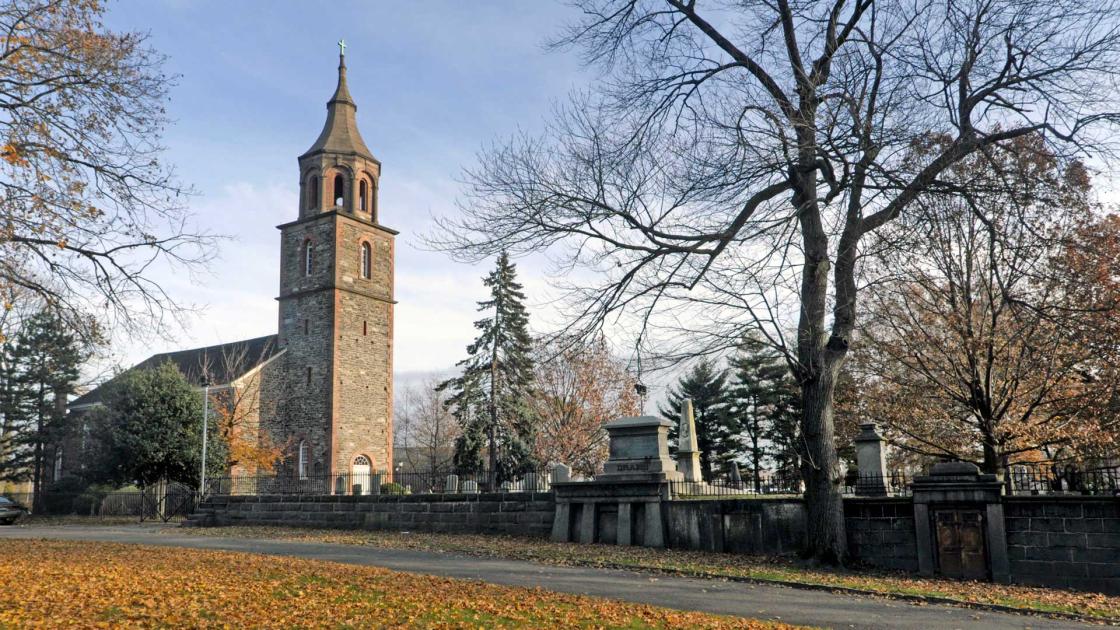
There is limited street parking in the area. Today the church is part of the National Park Service, and the site interprets the history of this significant Revolutionary War battle. Be sure to visit the visitor’s center for exhibitions about the battle and the American Revolution. From early January through late June, the site is open Monday to Friday, 10:00 AM to 5:00 PM. During those months of January through June, the site is also open the second Saturday of each month, noon to 4 PM. From early July through late-December, the site is open Tuesday through Saturday, 10:00 AM to 5:00 PM. Call 914 667-4116 or visit https://www.nps.gov/sapa/index.htm for more information.
The Revolutionary War-era church in front of you was still under construction in October 1776, but the patriots used it as hospital for sick and wounded soldiers before the Battle of Pell’s Point. Shortly after the battle, the British treated their wounded here, while the patriots evacuated their wounded to the main American line. The day of fighting at Pell’s Point was bloody, with close-quarters combat and artillery fire. The British reported 3 men killed and 20 wounded, but the Hessians did not report their official casualty numbers, making it difficult now to understand the toll the battle took on the British and Hessian side. Some historians believe they may have suffered as many as 200 men killed in the battle. Patriot Colonel John Glover reported 8 men killed and 13 wounded.
The Revolutionary War-era church in front of you was still under construction in October 1776, but the patriots used it as hospital for sick and wounded soldiers before the Battle of Pell’s Point. Shortly after the battle, the British treated their wounded here, while the patriots evacuated their wounded to the main American line. The day of fighting at Pell’s Point was bloody, with close-quarters combat and artillery fire. The British reported 3 men killed and 20 wounded, but the Hessians did not report their official casualty numbers, making it difficult now to understand the toll the battle took on the British and Hessian side. Some historians believe they may have suffered as many as 200 men killed in the battle. Patriot Colonel John Glover reported 8 men killed and 13 wounded.
Glover’s victory at the Battle of Pell’s Point ensured that the Continental Army continued their retreat to White Plains without further harassment from the British. General George Washington chose to leave a small force behind to defend Fort Washington, but the rest of the army made it to White Plains by October 25, with the British army in hot pursuit. Glover’s victory at the Battle of Pell’s Point ensured that the Continental Army continued their retreat to White Plains without further harassment from the British. General George Washington chose to leave a small force behind to defend Fort Washington, but the rest of the army made it to White Plains by October 25, with the British army in hot pursuit.
