-
The BlogBiographies
-
Videos

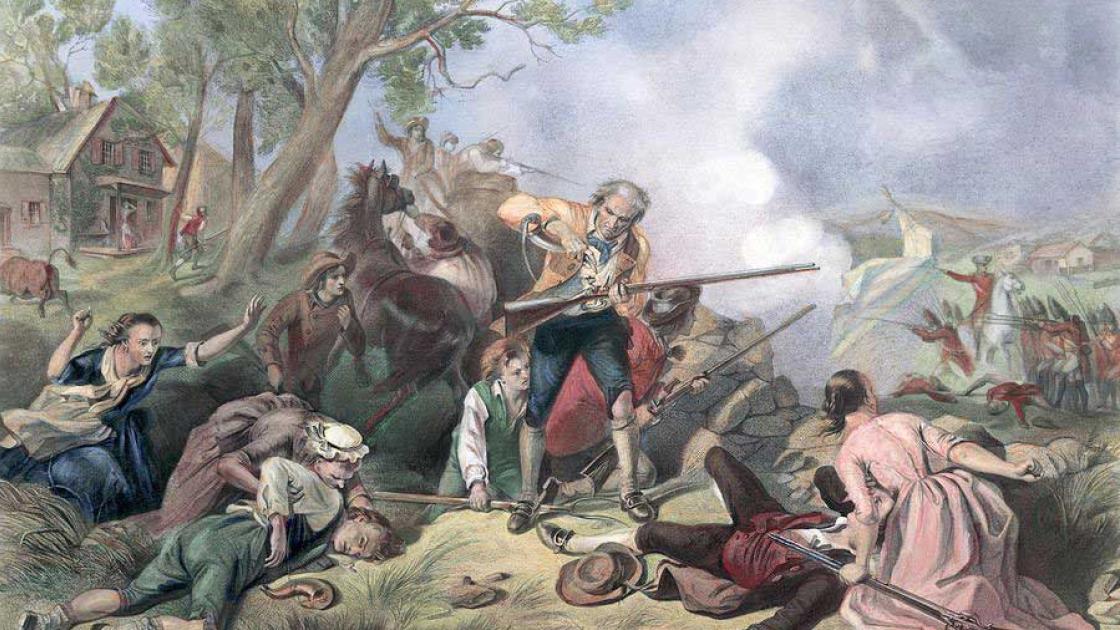
April 19, 1775
April 19, 1775, didn’t end at Lexington Green. This tour uncovers the lesser-known but pivotal moments of the battle, from hidden ambushes to full-scale street fighting that left both sides bloodied and determined. Begin your journey at the Minute Man National Historical Park Visitor Center, where you can gain important context through exhibits and films before heading out to key sites that tell the broader story of the Battle of Lexington and Concord.
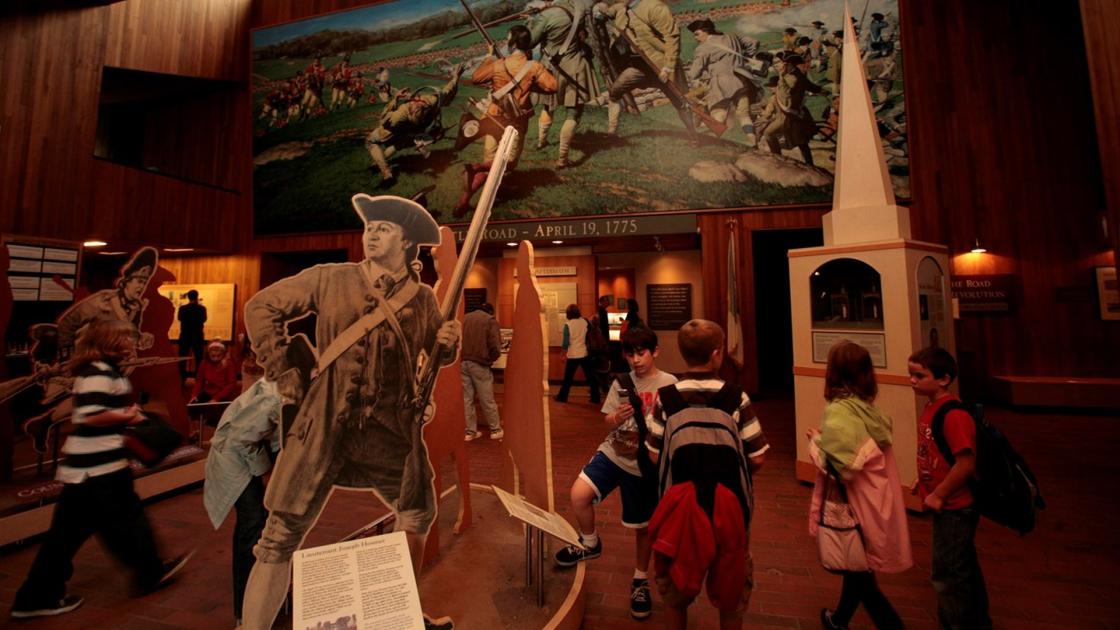
Minute Man Visitor Center
The Minute Man Visitor Center, located near the eastern entrance of Minute Man National Historical Park, is easily accessible just off I-95 on Route 2A. This center has many exhibits to aid in understanding the events of April 19, 1775, and their lasting impact on the American Revolution. Visitors can explore a range of exhibits that bring this pivotal day in history to life. One of the center's highlights is a stunning forty-foot mural, which vividly portrays the dramatic clash between colonists and British regulars, capturing the intensity and significance of the battle.
Additionally, the Visitor Center showcases artifacts discovered through the Parker's Revenge Archaeological investigation, offering a closer look at the personal items and weapons left behind during the conflict. These relics provide tangible connections to the men and women who fought for their ideals that fateful day.
The center also features a multimedia theater program, The Road to Revolution, which runs every 30 minutes during the center's open season of May - October each year. This immersive experience transports visitors back in time, providing an engaging overview of the events leading up to the Revolution. Whether you're a history enthusiast or a first-time visitor, the Minute Man Visitor Center offers a comprehensive introduction to the Battle of Lexington and Concord and the broader struggle for American independence.
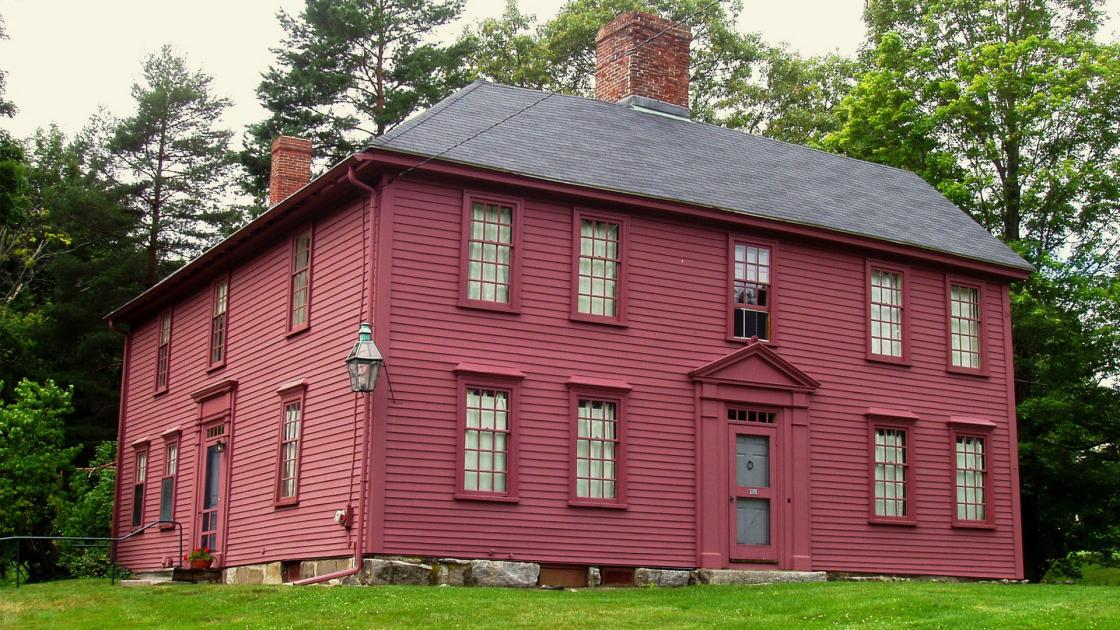
Munroe Tavern
The Munroe Tavern was originally built in 1735 by David Comee. William Munroe acquired the building in the 1770s, and in October 1774 he received permission to operate a tavern.
When word of the engagement between the British troops and colonial militia reached Boston, Lord Percy led a relief force of one thousand British soldiers out of the city to reinforce the column retreating from Concord. Percy and his officers occupied the Munroe Tavern and used it as a headquarters, and a field hospital for the British troops who had been wounded in the day’s fighting. After more than an hour, the British withdrew back towards Boston.
In 1789, newly elected President George Washington visited the Munroe Tavern while on a trip to see the Lexington battlefield.
Today, the Lexington Historical Society uses the Munroe Tavern to tell the story of the battles of Lexington and Concord from the perspective of the British troops who participated. It also displays objects used by President Washington during his visit.
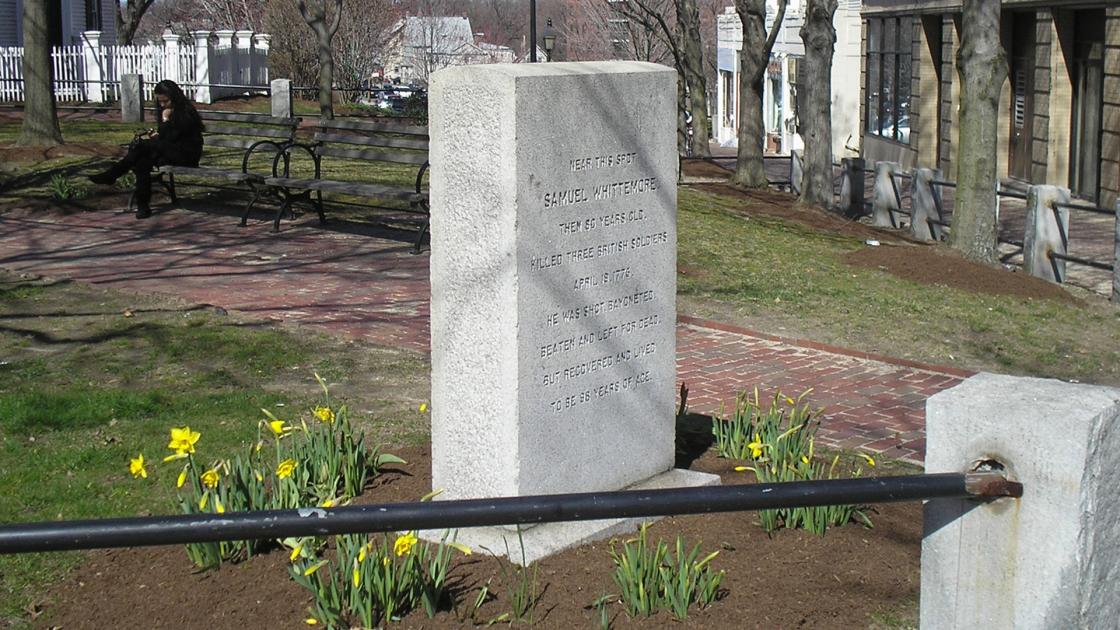
Whittemore Marker
This marker commemorates the heroism of Samuel Whittemore, who was 78 years old when he confronted British troops retreating from Concord.
Whittemore was born in 1696. He moved to the town of Menotomy, which is modern Arlington, Massachusetts. When he was in his mid-forties, he joined a regiment of provincial soldiers and took part in the Siege of Louisbourg in 1745. He may have also served in the French and Indian War. In his seventies, Samuel Whittemore was chosen to serve on various committees organizing opposition to British policies.
When the British troops retreated through Menotomy on their way back to Boston, Samuel Whittemore took up arms once again. He attacked British troops with a musket, pistols, and a sword he had taken as a trophy during his service in Canada. He killed three British soldiers before he was shot, bayoneted, and clubbed. Amazingly, he survived his wounds and lived into his nineties.
Samuel Whittemore’s stand occurred somewhere in the vicinity of this marker, but it has been moved several times since it was first erected.
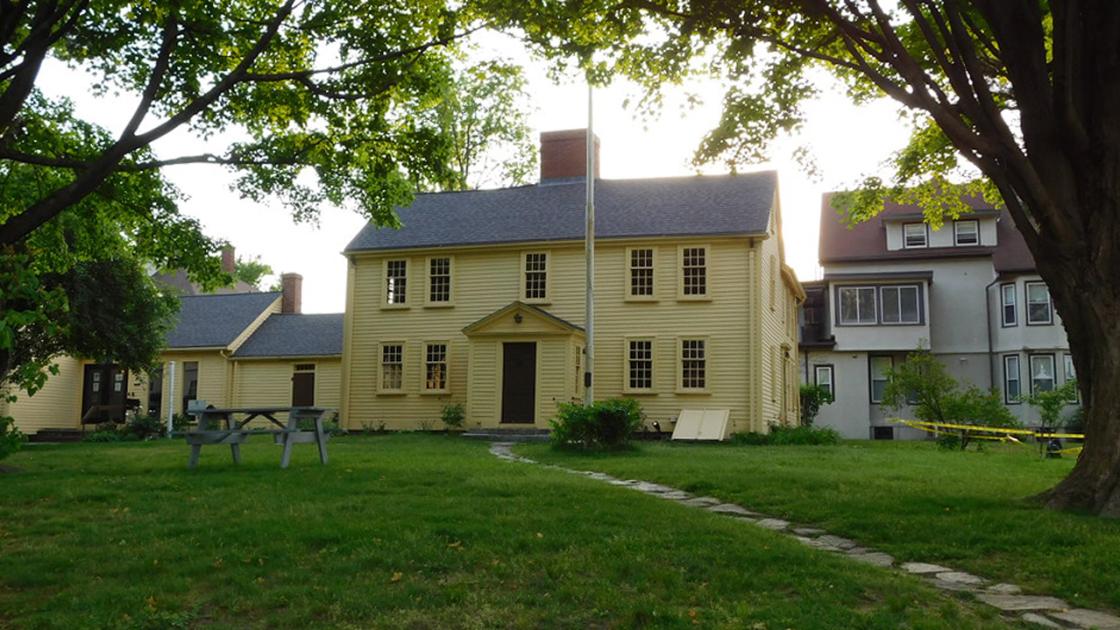
Jason Russell House
Based on analysis of the timbers that make up the structure of the building, the current Jason Russell House was likely built in the 1740s, recycling timbers from an earlier house built on the property in the 1680s.
On April 19, 1775, this home was part of the village of Menotomy, which today is the village of Arlington. British troops marched past the home on their way to Concord in the early hours of the morning, and then returned later that afternoon on their retreat to Boston. Militia from towns around Boston converged on the road the British were using on their march, firing at the redcoats from concealed positions. The British commander, Lord Percy, ordered his troops to clear out colonial militia who were using the buildings of the village as cover. Around a dozen men were killed in and around Jason Russell’s house, including Jason Russell.
The house was altered in the mid-1800s, but much of the eighteenth century structure remained intact. In 1923 the house was purchased by the Arlington Historical Society to save it from demolition.
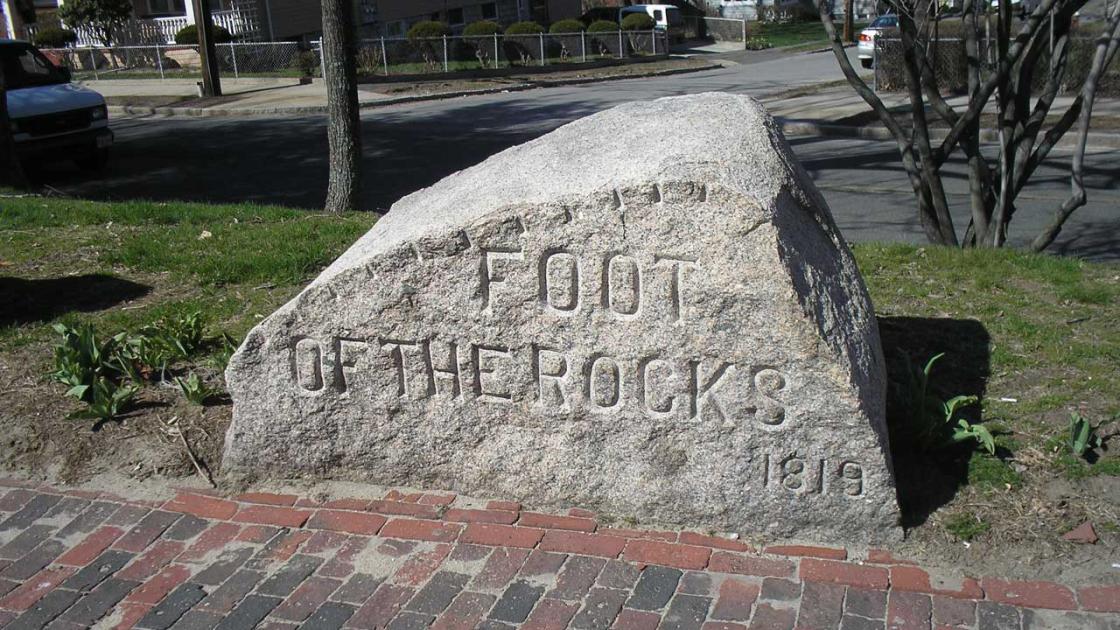
Foot of the Rocks
Since the first shots at the North Bridge, the British troops had been harassed by colonial militia all along the route of their march back from Concord to Boston. The colonists grew in numbers until, by the time the British reached the Foot of the Rocks, they were being confronted by militia from thirty different towns.
The combat from the Foot of the Rocks to Charlestown, where the British finally reached the safety of their fortifications and the support of the warships in the harbor, was the bloodiest part of the day’s fighting. About half of all the men killed on each side died along this section of the Battle Road. British soldiers, exhausted and frustrated, began to attack civilians and loot and burn homes along the route of their march. These outrages only fueled the colonists’ determination to exact revenge on the British.