-
The BlogBiographies
-
Videos

July 12, 1780
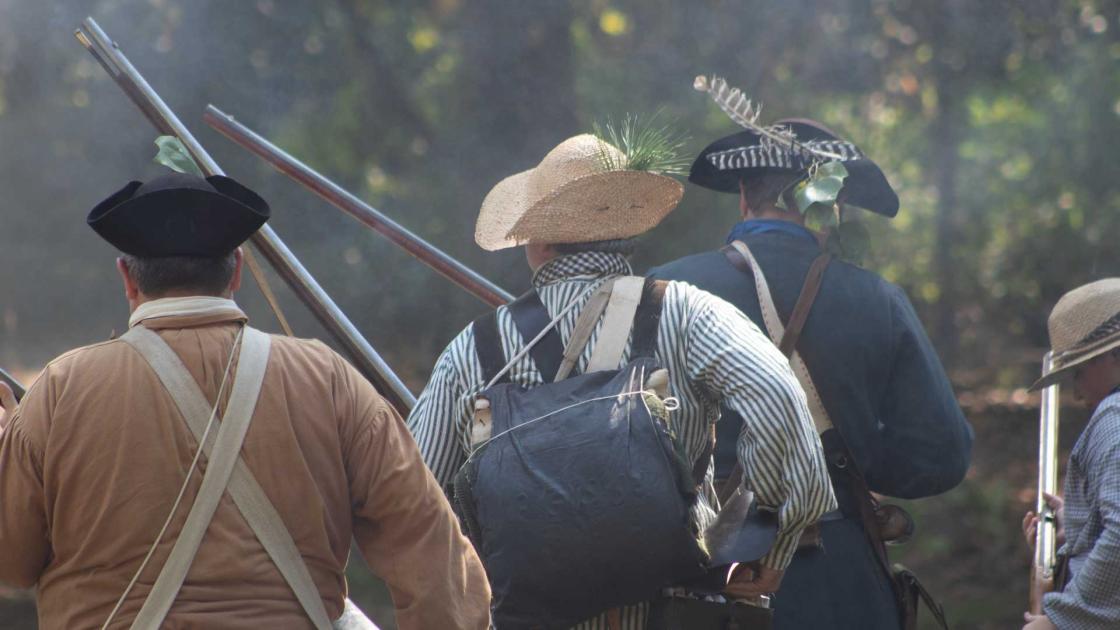
In the summer of 1780, the woods and creeks near present-day Spartanburg were the backdrop for a dramatic episode in the American Revolution — one driven not by grand armies, but by a determined mother, a small band of frontier militiamen, and the fierce loyalties of neighbors turned enemies. This trail follows the story of the Spartan Regiment and the Thomas family, tracing the events of July 12, 1780, when a timely warning and a well-laid ambush at Cedar Springs helped turn the tide against Loyalist forces — setting in motion a chain of events that would lead to the decisive Patriot victory at King's Mountain and hasten the end of the war itself.
John Thomas Sr. and the Spartan Regiment
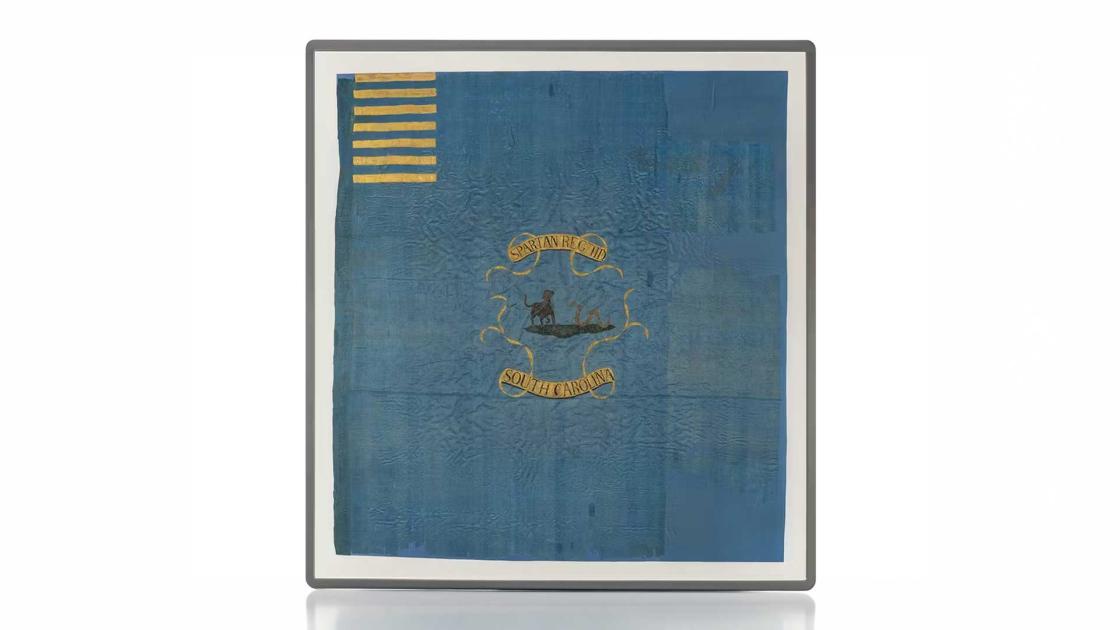
The Battle of Cedar Springs took place on July 12, 1780, near the modern-day grounds of the South Carolina School for the Deaf and Blind, where you now stand. The details of that engagement are entwined with the history of the Thomas family, who lived along a nearby creek, and the Spartan Regiment, a Patriot militia founded by John Thomas Sr.
John Thomas Sr., a native of Wales who immigrated to Pennsylvania, married Jane Black in 1740, served in the French and Indian War, and, when land grew scarce due to the influx of new immigrants, left Pennsylvania for South Carolina. The couple settled at Fairforest Creek, not far from this spot, where they raised nine children. When war came to the colonies in 1775, Thomas chose to defend his land against the British. He formed a new militia unit, the Spartan Regiment, on August 2, 1775. The regiment held its first muster at Thomas’s house.
The Spartan Regiment was composed of farmers who trained to become soldiers for the Patriot cause. Their immediate enemy was not the British Army but their Loyalist neighbors who supported Crown rule. In this region and across South Carolina, the Revolutionary War was a relentless and bloody civil war, with Patriot and Loyalist militias pursuing one another across the remote fields, swamps, and forests of South Carolina.
When John Thomas Sr. was captured by the British after the fall of Charleston in the spring of 1780, his son John Thomas Jr. was promoted to colonel and given his father’s command. Thomas was recruiting local sympathizers to the Patriot cause before joining larger Patriot forces under Colonel Thomas Sumter. In July 1780, he and about 60 militiamen were camped at Cedar Springs, unaware that Major Patrick Ferguson had dispatched a Loyalist force of 150 to destroy the Regiment before it could muster and support Sumter’s brigade.
Jane Black Thomas' Ride
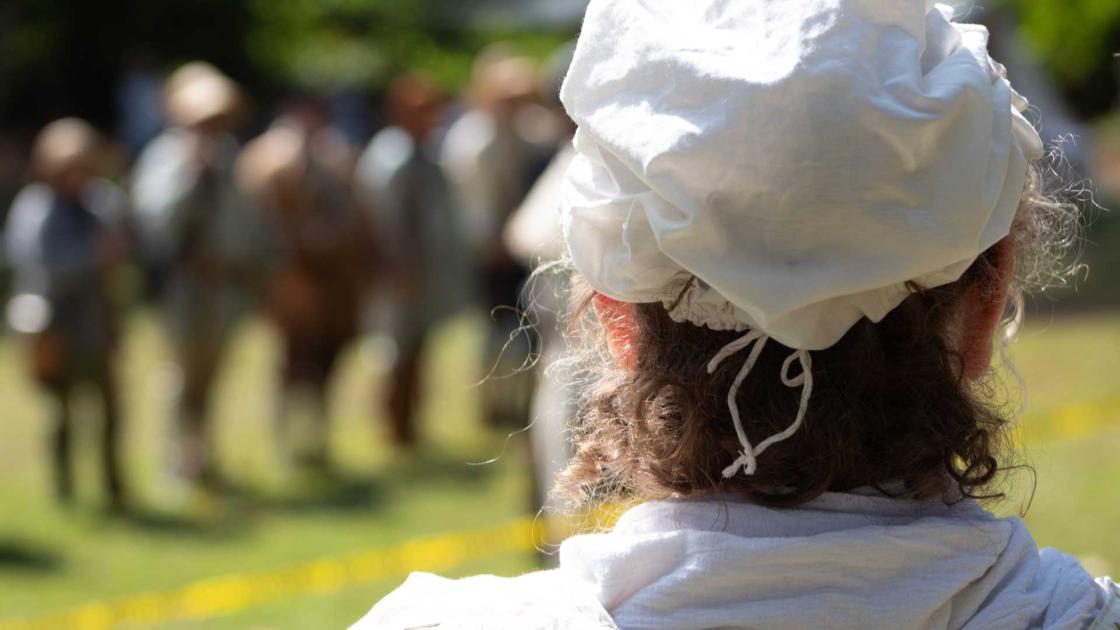
Among the many women who aided the Patriots’ efforts during the American Revolution was Jane Black Thomas, wife of Spartan Regiment commander John Thomas Sr. In 1779, Jane helped defend their home on Fairforest Creek, in today’s Spartanburg County, from a Loyalist attack. But her bravery did not end there. She also played a critical role in thwarting the July 12, 1780, Loyalist ambush at Cedar Springs.
After Charleston fell to the British in the spring of 1780, Jane’s husband was captured. By June, he and one of his sons were being held prisoner in the jail at Ninety Six, South Carolina, a British base of operations in the Backcountry. In July, during a visit to her husband and son, who were incarcerated there, Jane overheard some wives of Loyalist soldiers discussing a surprise attack the following morning on the Patriot camp at Cedar Springs. The news was alarming. Not only was that camp a base for the men of the Spartan Regiment, but it was now under the command of her son, Colonel John Thomas Jr.
What happened next is unclear because fact and legend begin to blur, but one thing is certain: Jane set out to warn her son of the imminent danger. Some accounts say she saddled her horse, or perhaps even rode bareback, and made the 60-mile journey overnight, arriving at Cedar Springs the next morning. Other versions report that she waited until the next morning to depart and rode all day. In either scenario, Jane had to cross perilous territory alone to reach her son before the attack. Quick action by a determined frontier mother and Patriot gave the Spartan Regiment time to prepare an ambush that successfully repelled the Loyalists at Cedar Springs.
Ambush at Cedar Springs & Aftermath
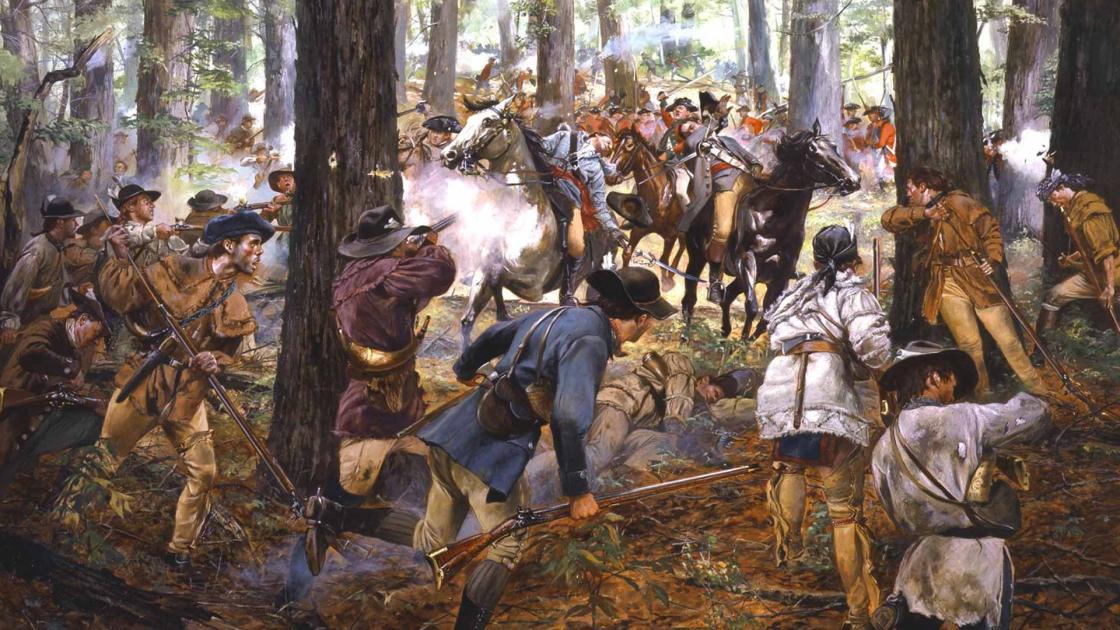
On July 12, 1780, Colonel John Thomas Jr. and 60 militiamen of the Spartan Regiment were camped near these woods at Cedar Springs. John’s mother, Jane Black Thomas, had arrived earlier to warn her son of an imminent attack by Loyalists acting on orders from Major Patrick Ferguson. After dark, Thomas ordered his men to leave their campfires burning and move to the rear of the camp. There they concealed themselves and waited. When Ferguson’s detachment of 150 Loyalists approached, the hidden Patriots fired from the cover of the woods, killing one Loyalist, wounding dozens, and startling the rest, who fled in a panic. The entire engagement lasted a few minutes.
Though brief, this incident had lasting repercussions. Following the skirmish at Cedar Springs, Thomas’s Spartan Regiment joined Colonel Thomas Sumter’s brigade and fought in many battles for independence, including Hanging Rock, Musgrove Mill, and Blackstock’s Plantation. The Regiment also rallied support for the Patriot cause, persuading local men to take up arms against their Loyalist neighbors. These recruits later turned out in force at the Battle of King’s Mountain on October 7, 1780, an overwhelming Patriot victory in which Loyalist commander Major Patrick Ferguson was killed. Not only did the battle defeat Ferguson’s force of 1,100 Loyalists, but it also cost the British Army’s southern commander, Lieutenant General Lord Cornwallis, any hope of future Loyalist reinforcements. This was a major turning point in the Revolution, ultimately leading Cornwallis to abandon South Carolina with his main army, paving the way for the critical American victory at Yorktown in October 1781, which hastened the end of the war.