-
The BlogBiographies
-
Videos

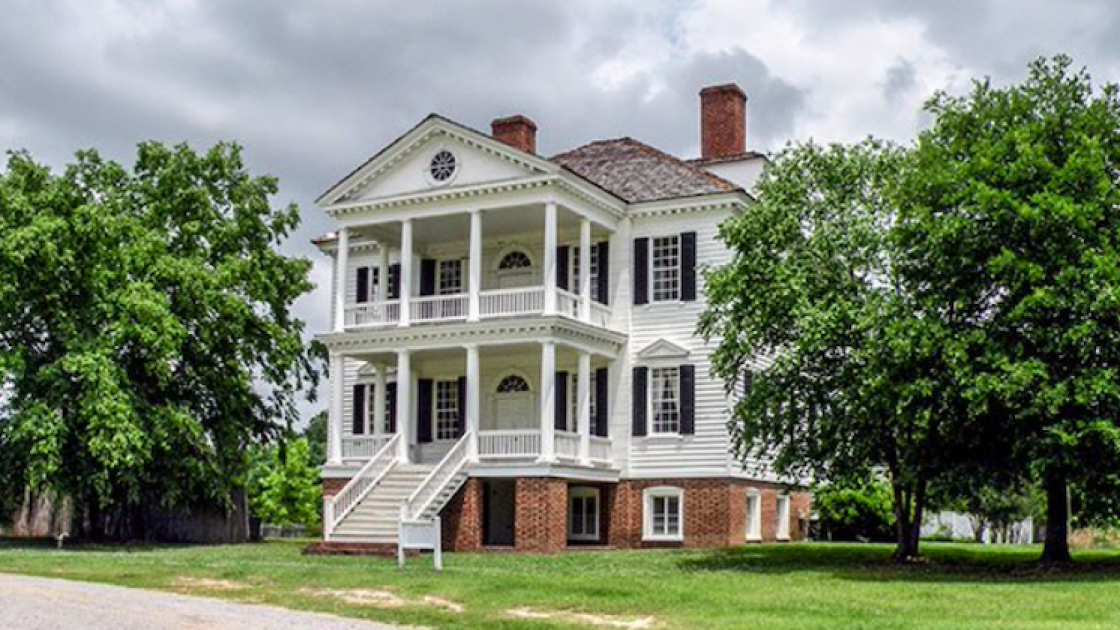
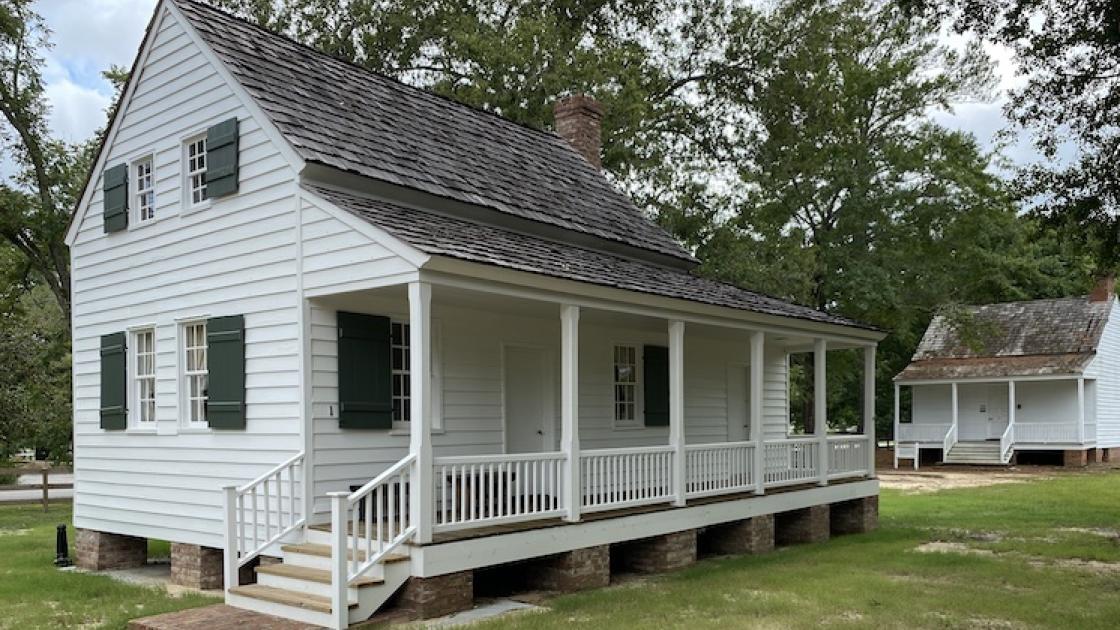
After the Siege of Charleston in 1780, the British established a headquarters at Camden, which was situated at what is now called Historic Camden, off U.S. Highway 521. There, you can explore the reconstructed Kershaw/Cornwallis House, the ruins of British redoubts, and outbuildings, many of which feature interpretive programs about colonial life. A short drive away are related sites in the modern town of Camden, as well as the Camden and Hobkirk Hill Revolutionary War battlefields.
Before You Go
Please note that you must check in and pay admission at the gift shop before touring the site. Guided tours are available for a slightly higher fee and we recommend consulting Historic Camden's official website for tour times and pricing. The site takes about an hour to complete the whole tour.
When you drive to Historic Camden on Broad Street (also U.S. Highway 521) today it is easy to understand why this colonial town was so prominent. The road through this settlement connected the South Carolina interior with Charleston on the coast. It was a prized location. No wonder the British chose the site for their inland headquarters after defeating the Patriots in the Siege of Charleston in May 1780. Camden was also the largest settlement in the Carolina backcountry at that time. When British Army commander Lieutenant General Charles Cornwallis arrived here, he took up residence in the Kershaw mansion, a reconstruction of which you can tour today. Cornwallis’ men built fortifications and enclosed the town in a stockade. The troops pitched their tents inside the defenses, close to where U.S. Highway 521 runs now. This critical military base was occupied by the British from June 1, 1780, until May 9, 1781.
Although the town of Camden eventually moved a few miles north of here in the 1800s, the 107-acre area called Historic Camden is the site of the original village, which was established in the mid-1730s. In 1768, the village was named Camden in honor of Charles Pratt, Lord Camden, a British parliamentary champion of colonial rights. Listed in the National Register of Historic Places and preserved by the Historic Camden Foundation, it not only features the reconstructed Kershaw/Cornwallis House but has seven restored or reconstructed structures containing exhibits and demonstrations about colonial life, reconstructions of some of the fortifications and powder magazine, and the archeological remains of the town and British occupation site. Adjacent to Historic Camden, you will also find the Revolutionary War Visitor Center.
The white Georgian mansion that dominates the grounds of Historic Camden today is the reconstructed home of local businessman and patriot Joseph Kershaw. A native of Yorkshire, England, Kershaw came to the colonies before 1748 and worked for a merchant in Charleston. Within a decade, he moved to this settlement — then known as Pine Tree Hill — where proximity to the Great Wagon Road and the Wateree River made for easy distribution of goods traveling between coastal Charleston and the backcountry frontier. Ambitious and enterprising, Kershaw established a store called Kershaw and Company and, in time, built flour and grist mills, indigo works, a tobacco warehouse, a distillery, and a brewery. His efforts helped turn the town into a commercial hub. The wealthy merchant was also instrumental in creating a plan of streets and lots in Pine Hill, which became the village of Camden.
With the onset of the war, Kershaw was elected to the First (1775) and Second (1775–1776) Provincial Congresses and the first five General Assemblies (1776–1784). As a legislator, he worked to win the support of interior settlers and Catawba Indians for the Patriot cause. He also served as an officer in the local militia and saw action at Purrysburg and Stono Ferry. He and his brother, Ely, were captured by the British after the Siege of Charleston and sent back to Camden, but Cornwallis had them imprisoned and exiled, first to British Honduras and then Bermuda. From captivity, Kershaw somehow managed to mortgage his Carolina lands to secure badly needed supplies for American forces. Unfortunately, the vessel carrying the cargo was seized. He was eventually released in a prisoner exchange and returned to South Carolina. His grandson, Major General Joseph Brevard Kershaw, served in Robert E. Lee’s Army of Northern Virginia during the Civil War.
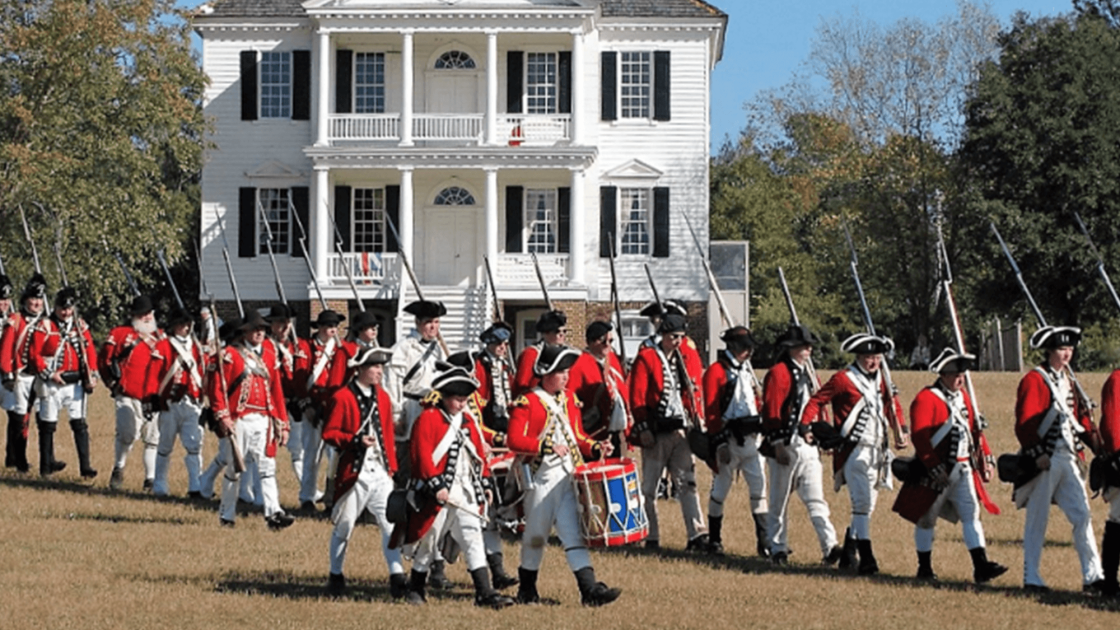
When Cornwallis marched his 2,500 troops into Camden in June 1780, his army encountered no opposition. The British promptly confiscated any property of value, including Joseph Kershaw’s opulent house, his mills, and his store. Cornwallis’s men fortified these grounds with a stockade wall and five redoubts (outer defensive works). They also constructed barracks and a hospital and shored up the defenses of the town’s powder magazine, the courthouse and jail complex, and Kershaw’s house, where Cornwallis and Lieutenant Colonel Francis Lord Rawdon, the British commandant at Camden, made their headquarters.
Turning a rural town into a garrison for such a large force required a great effort, as Lord Rawdon reported: “This village is by no means capable of holding the number of persons who require quarters in it. I have therefore sent for a quantity of plank and boards, with which I hope we shall speedily fit up some kind of barracks and some huts for officers…By degrees we shall get into order and cleanliness….” Rawdon had the burden of overseeing the welfare of the men in camp. Smallpox and sickness were a constant threat, as were desertions. Keeping thousands fed was a full-time job, and Camden residents, whether Patriots or Loyalists, were pressed to contribute. Rawdon explained to Cornwallis, “I have taken care to lay up here a sufficient stock of provisions to support the garrison for many days in case I should at any time be reduced to the necessity of keeping close within the works, and I am continually adding to that hoard by collecting from the country much more than is necessary for our ordinary consumption.”
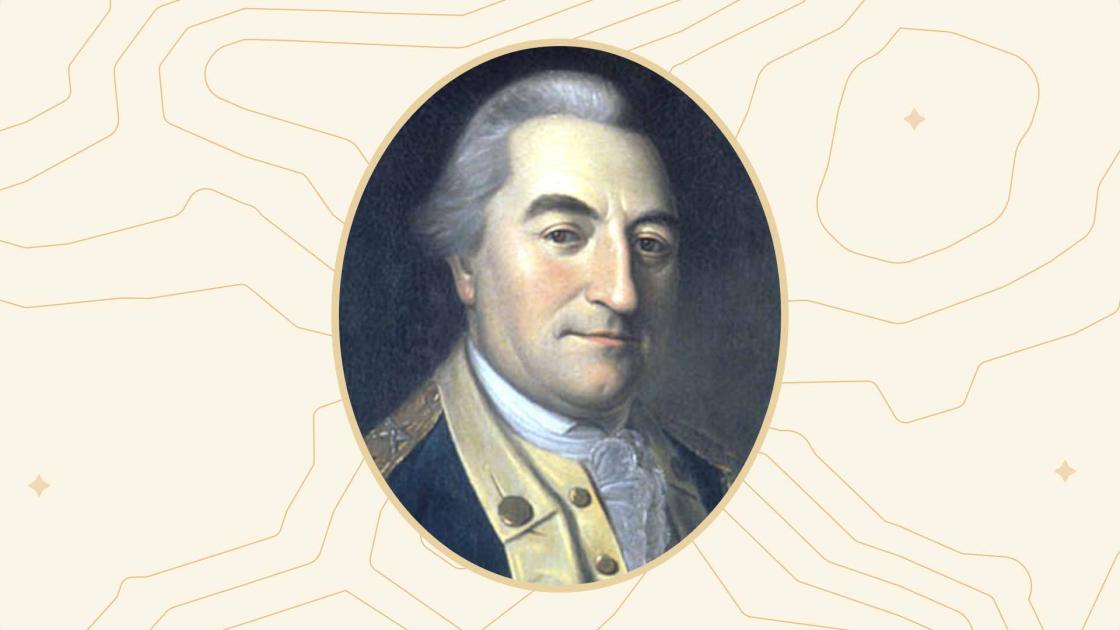
There were no direct attacks on the British garrison here. The fortifications were solid. Patriot Major General Nathanael Greene, who took command of the Southern Continental Army in late 1780, wrote that he found it “impossible to attempt to storm the town with any hopes of success.” The first major engagement between the Patriots and British near Camden occurred beyond the town, about eight miles north of here, on August 16, 1780. During the engagement, British forces charged Patriot militia, who fled the field, leaving Continental troops to carry on the fight. Led by Major General Baron Johann de Kalb, they made a valiant but failed counterattack, during which de Kalb was mortally wounded. He died three days later.
De Kalb was an accomplished German officer who offered his services to the United States during the American Revolution. He was inspired by the ideals of liberty that fueled the American fight for independence, and arrived with his protégé, the Marquis de Lafayette, in America in 1777. Granted a major general’s commission in the Continental Army, he commanded a division at Valley Forge before he was ordered south to lead a division of Maryland and Delaware Continentals. Visit the statue of this hero, unveiled in 2021, which stands outside the Revolutionary War Visitor Center, next door to Historic Camden.
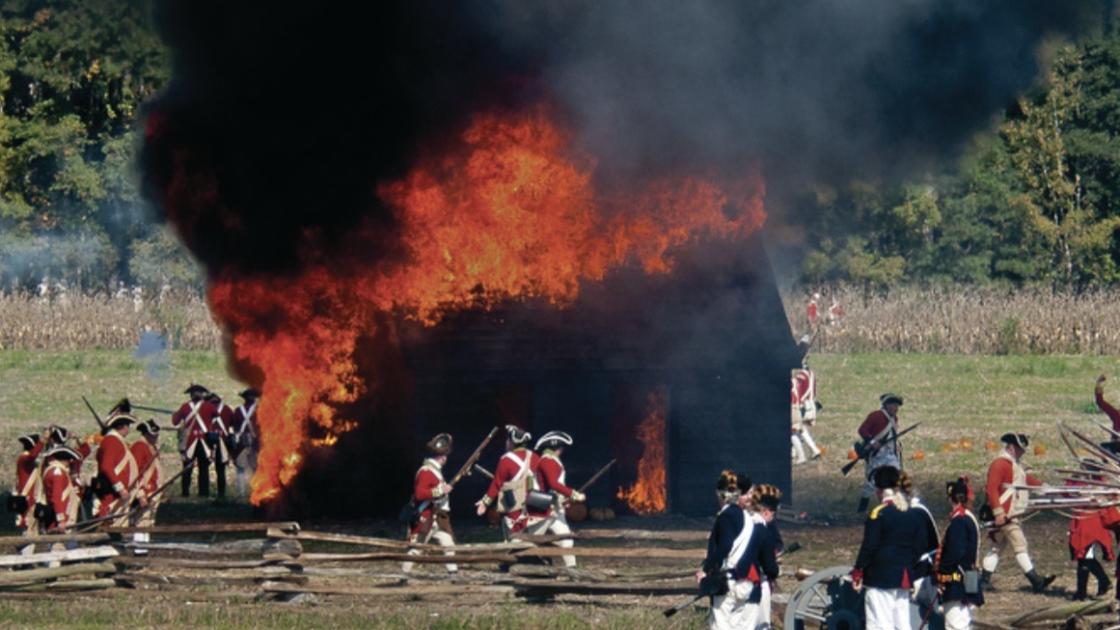
In April 1781, the Patriots made a second attempt to take Camden. Greene camped with his army on nearby Hobkirk Hill. Rawdon’s forces advanced from their base at Camden and engaged the Americans in a brief battle there on April 25, 1781. Although Rawdon held the field, the British soon decided to abandon Camden, as their rural outposts were increasingly threatened by the guerilla tactics of Patriot militia. They left this garrison on May 9, 1781.
The British withdrew down the Santee River toward the coast after burning the garrison’s barracks, several public buildings, and much of their own supplies so they would not fall into Patriot hands. As Greene and his army entered the town of Camden a day later, he declared it “little better than a heap of rubbish,” but the Kershaw mansion, the hospital, and many residences survived. By the fall of 1781, following heavy losses in the Battle of Eutaw Springs, the British deserted their entire chain of inland fortifications and the war in South Carolina started to wane as Cornwallis met defeat at Yorktown.
Camden was slowly rebuilt following the war and continued as a regional economic hub — the center of farming, milling, and mercantile trade in the South Carolina backcountry. The town continued to grow in the early 1800s, stretching northward from the site of Historic Camden to where it is today. Residents gradually moved to higher and healthier ground, and the old town became farmland. By the middle of the 19th century, the city of Columbia and its rail line eclipsed the former frontier village. Today, Historic Camden preserves and interprets the past, so that the importance of the colonial town and its critical role in the Revolutionary War is not forgotten.