-
The BlogBiographies
-
Videos

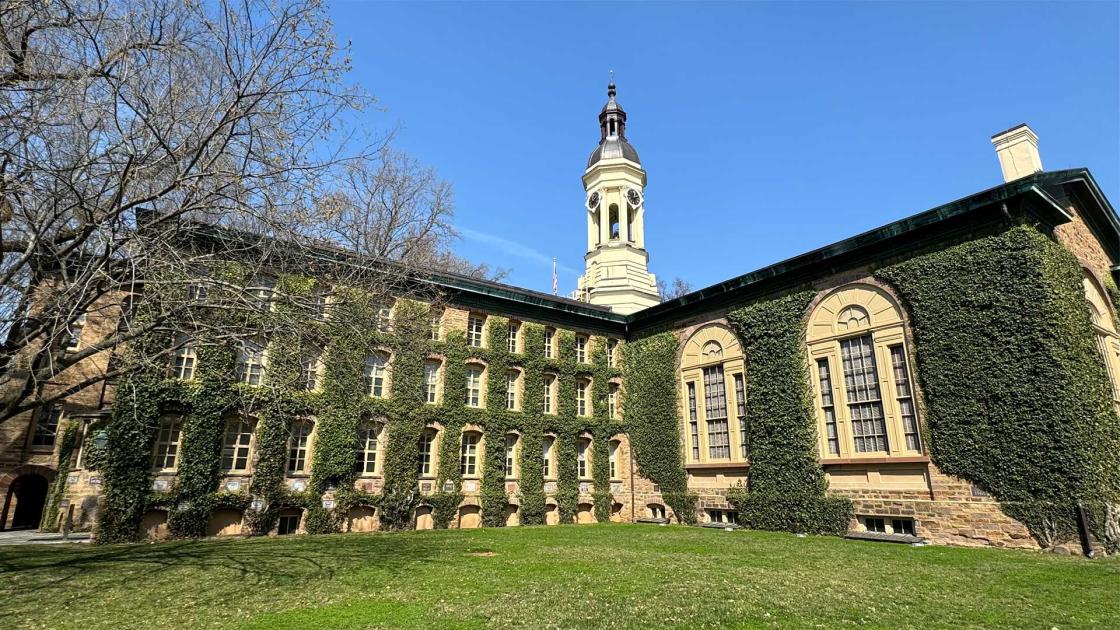
Long before it became a landmark of revolution and scholarship, Princeton was a modest colonial crossroads shaped by farms, taverns, and the growing influence of the College of New Jersey. Its strategic position and vibrant community life made it a hub of activity in the 18th century—and set the stage for the pivotal events that would soon unfold there.
The sites on this tour are in downtown Princeton and can be easily reached on foot. Parking lots are available in town and there are many restaurants and cafés for those needing a break and a bite to eat.
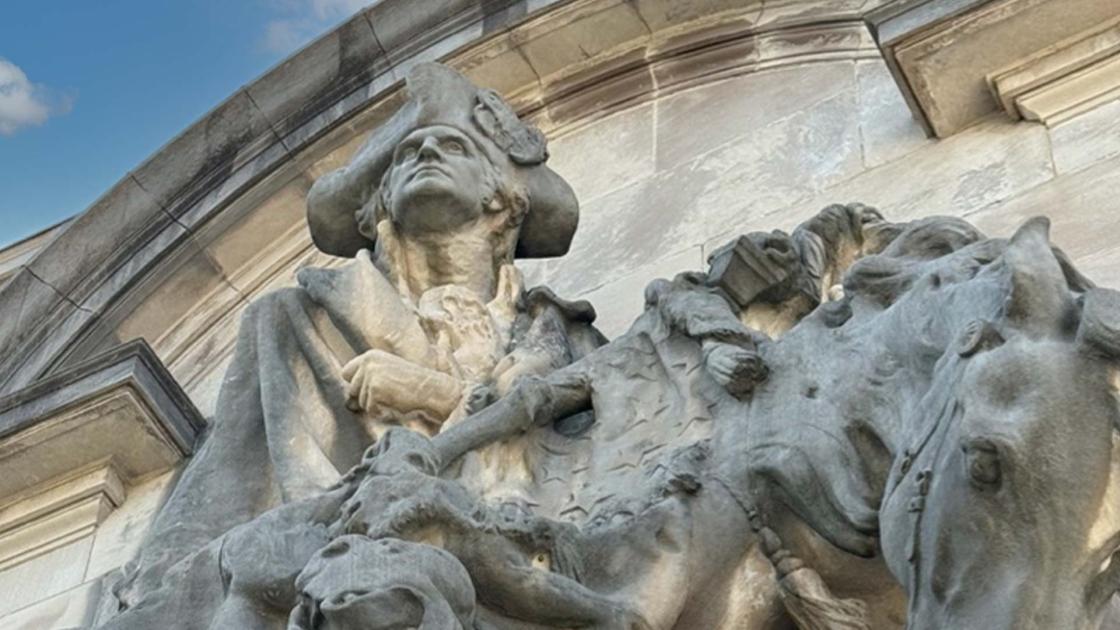
Princeton Battle Monument
Located less than two miles from the battlefield, the monument before you is a poignant testament to the courage and sacrifice of General George Washington and his soldiers, who revived the struggle for independence on January 3, 1777, at the Battle of Princeton.
Plans began for a Princeton Battle Monument in 1887 — more than 100 years after the battle — but the project encountered several delays involving fundraising efforts, issues with the design, difficulty finding a prominent site for the monument, and the onset of World War I. Beaux-Arts sculptor Frederick MacMonnies was chosen to design the monument. Finally, in 1917, the Monument Committee selected a site adjacent to the Morven estate, and MacMonnies and New York architect Thomas Hastings traveled to Princeton to work on location. The completed monument—a 50-foot carved limestone memorial, inspired by the Arc de Triomphe in Paris—was dedicated on June 9, 1922. It depicts George Washington leading his troops to victory and the death of Washington’s close friend, Brigadier General Hugh Mercer.
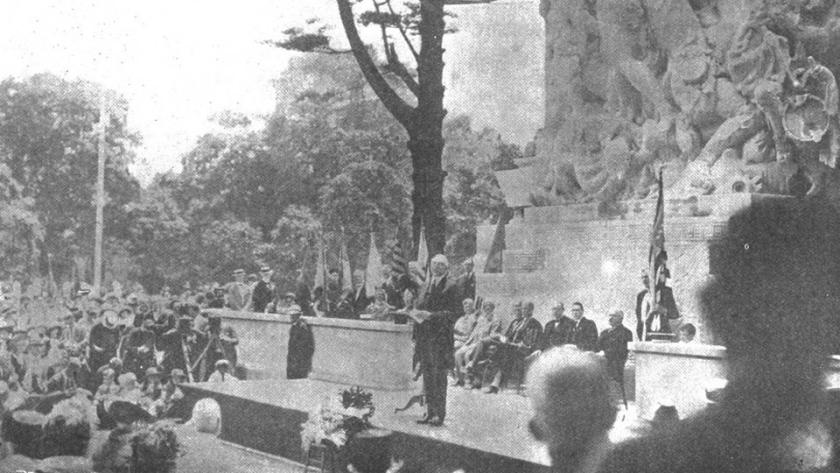
President Warren G. Harding at the Princeton Battle Monument dedication, June 9, 1922.
President Warren G. Harding attended the monument’s dedication ceremony, accompanied by the two U.S. Senators from New Jersey, the Speaker of the House of Representatives, three New Jersey Members of the U.S. House of Representatives, the New Jersey Governor, and a group of local New Jersey politicians and officials, including Princeton’s mayor. The 5th Maryland Regiment and First Troop, Philadelphia Light Cavalry, units that traced their lineage to the battle, served as honor guards. Nine-year-old Richard Stockton III, a descendent of Richard Stockton, who was a native of Princeton and a signer of the Declaration of Independence, had the honor of unveiling the long-awaited tribute.
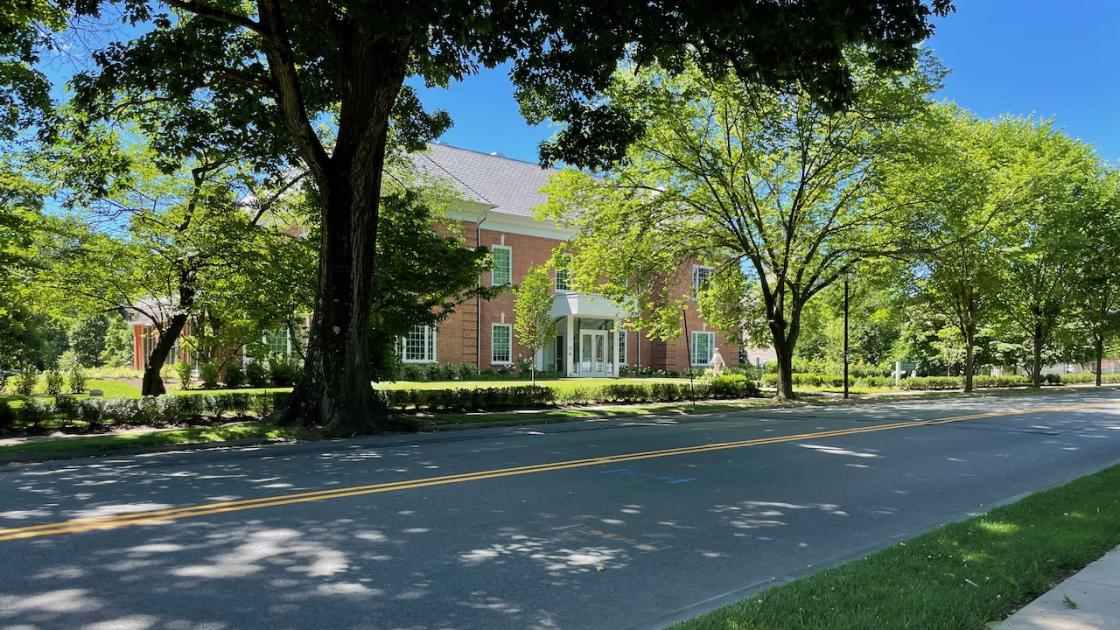
Washingtion-Rochambeau Camp
On their long trek to confront the British at Yorktown in 1781, the combined Franco-American force of General George Washington and Jean-Baptiste Donatien de Vimeur, comte de Rochambeau, commander-in-chief of the French expeditionary force, camped near this site, which lies across the street from the Princeton Battle Monument and to your right towards the Center of Theological Study.
Nine months after Washington’s victory at Princeton, British Lieutenant General John Burgoyne surrendered his army at Saratoga, New York. Like Princeton, Saratoga changed the trajectory of the war. It prompted France, as well as other European nations, to enter the conflict on the side of the United States, forcing Great Britain to reassess its strategy. The British decided to defend their coastal holdings in North America and then shift their focus to the Southern colonies. A grueling campaign was waged in Georgia and the Carolinas until Washington’s old foe, Lieutenant General Charles, Lord Cornwallis entered Virginia in the spring of 1781.
For the next few months, Cornwallis engaged in a series of maneuvers with a Continental force under the Marquis de Lafayette. Acting on orders from his superior, Lieutenant General Sir Henry Clinton, Cornwallis established a naval base at Yorktown, Virginia, in August. Lafayette reported the British movements to General Washington in New York. The commander-in-chief planned a joint offensive against New York City in cooperation with a French army under the Comte de Rochambeau and a fleet led by the Comte de Grasse. When Washington learned that de Grasse was operating off the Virginia coast and blocking Cornwallis’s escape route to the sea, he saw an opportunity to trap the British at Yorktown. He and Rochambeau immediately marched their troops south, passing through Princeton on their way.
Morven Museum & Gardens
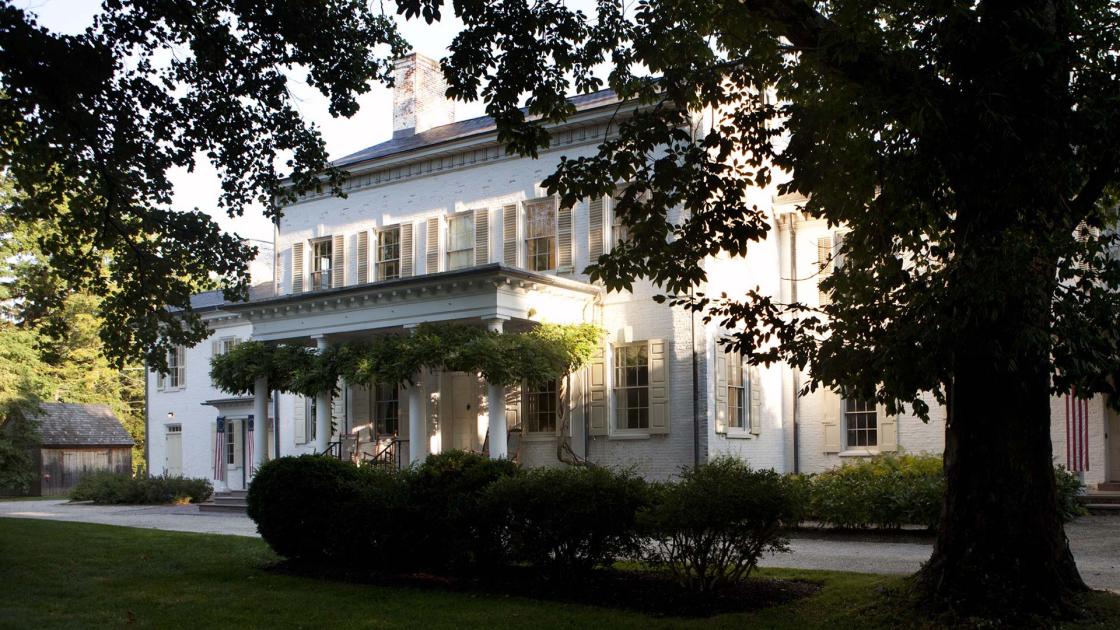
A National Historic Landmark and museum, Morven has a history deeply entwined with the struggle for independence and the Battle of Princeton. Built in the 1750s and named for the fictional castle of King Fingal from the Scottish epic Poems of Ossian, the Georgian brick mansion was the home of Richard and Annis Boudinot Stockton. An attorney and graduate of the College of New Jersey, Richard served on New Jersey’s Provincial Council. As a member of the Second Continental Congress, he signed the Declaration of Independence, along with his son-in-law and Continental Army surgeon, Benjamin Rush. While Richard distinguished himself in politics, his wife Annis became an accomplished poet.
After pursuing the Continental Army across New Jersey, British Lieutenant General Sir William Howe decided to go into winter quarters in the middle of December 1776. A cantonment, or fortified camp, was established at Princeton. The distance between Princeton and headquarters in New York City put a strain on the flow of supplies, forcing the British to rely on the local population. Howe authorized payment for crops and livestock taken by the soldiers but the line soon blurred between foraging and outright pillaging. Both Patriots and Loyalists found their entire harvests, along with their household items, confiscated. Any form of wood was appropriated for fuel. British occupiers set several buildings on fire. The opulent mansion of Morven, however, managed to escape the torch.
Richard evacuated his family to nearby Monmouth County during the Continental retreat across New Jersey. While there, he was captured and imprisoned in New York, where his British captors forced him to sign an amnesty proclamation, renouncing his association with the Continental Army and pledging loyalty to the Crown. Lieutenant Colonel William Harcourt, the commander of the 16th Light Dragoons, used Morven as his headquarters during the occupation. The British inflicted more than 5,000 £ in damage on Richard’s property. Lieutenant General Charles, Lord Cornwallis also used Morven as his headquarters before the battles of Assunpink Creek and Princeton.
Richard Stockton was eventually released in a prisoner exchange, but his health was broken by his confinement and he died in February 1781. The following year, Annis published a poem commemorating the victory at Yorktown. She lived another 23 years. Although they were Quakers, the Stocktons owned at least three enslaved laborers at Morven. One enslaved man, Marcus Marsh, was born on April 1, 1765. He was freed upon Richard’s death, assisted Dr. Rush during Philadelphia’s 1793 yellow fever epidemic, and became a sailor. Details of the lives of the other enslaved laborers are not known.
Today Morven is a historic house and museum that features exhibitions, educational programs, docent tours, special events, and access to its beautiful gardens. See their website (morven.org) for more information.
Remains of British Artillery Defenses
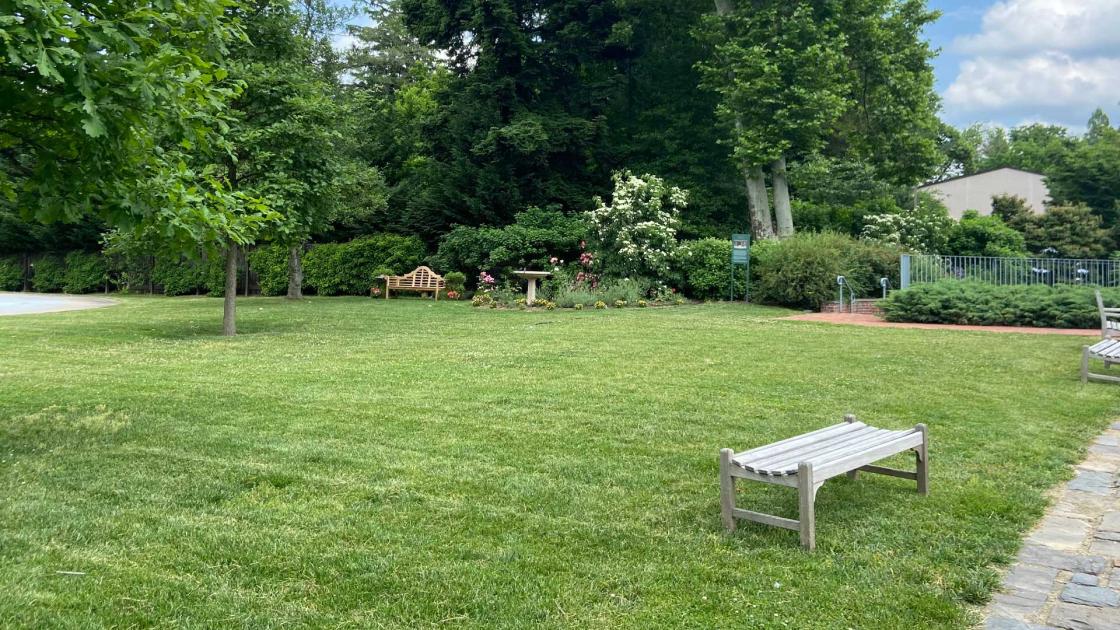
When the British occupied Princeton in the middle of December 1776, they turned the town into a fortified camp. Engineers oversaw the construction of defenses on the college campus, including at Nassau Hall, which played a role in the latter stages of the Battle of Princeton. To protect the approaches to the town, the British constructed emplacements, or positions, for their artillery along what is now Chambers Street and near Rockefeller College on the Princeton campus. Generally, these consisted of earthen walls with ditches in front. Embrasures, or small openings, were cut at the top of the walls to allow cannon muzzles to aim and fire. Platforms were often constructed inside the walls for the artillery carriages to rest on and were long enough to allow for recoil, the backward movement of the gun after it is fired. On the exterior of the walls, abatis, sharpened stakes or branches, were placed facing the enemy. Although there are no traces of these defenses today, you can imagine what the town might have looked like then as you walk down Stockton Street.
Nassau Inn
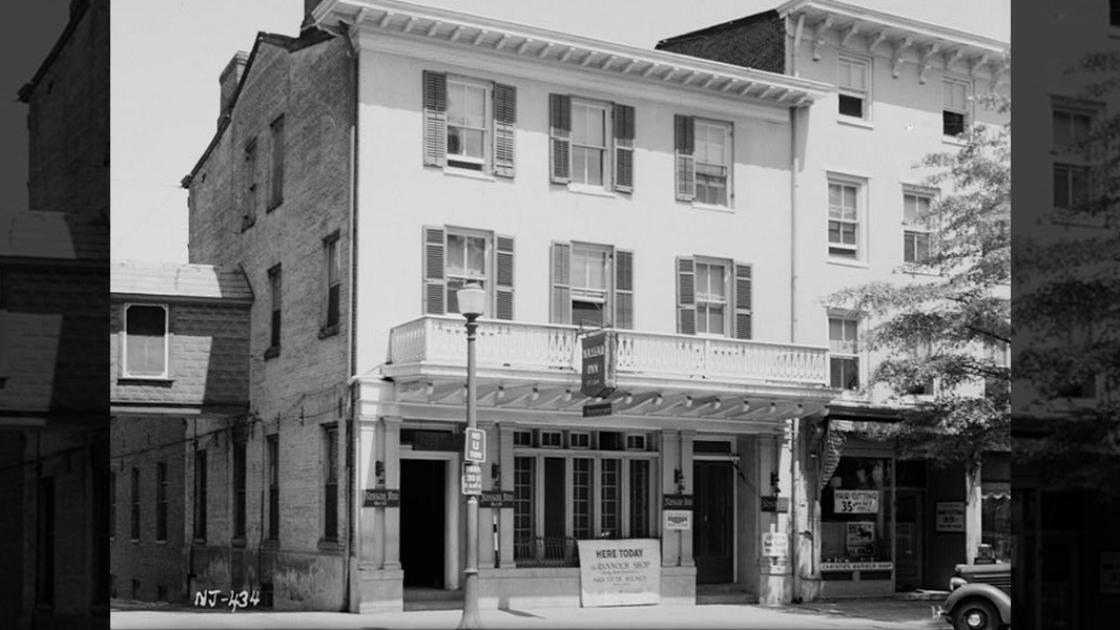
The ancestor of today’s Nassau Inn stood here on the present site of the Princeton University Book Store. It survived both the British occupation of the town and the Battle of Princeton. Judge Thomas Leonard built the original structure as his home in 1756. When he died in 1769, the property came into the hands of tavern keeper Christopher Beekman.
Beekman converted the house into the Sign of the College Tavern which was one of the more prominent establishments in Princeton. The famous silversmith Paul Revere, pamphleteer Thomas Paine, and financier of the American Revolution Robert Morris all stayed at the tavern in the years leading up to the war with Great Britain. The New Jersey Medical Society often met at the tavern, and Beekman hosted celebrations there after the Patriot victory at Yorktown in 1781 and the signing of the Treaty of Paris in 1783, which ended the war between the United States and Britain. Beekman retired and sold the property around 1800. The original inn closed in 1937.
First Presbyterian Church of Princeton
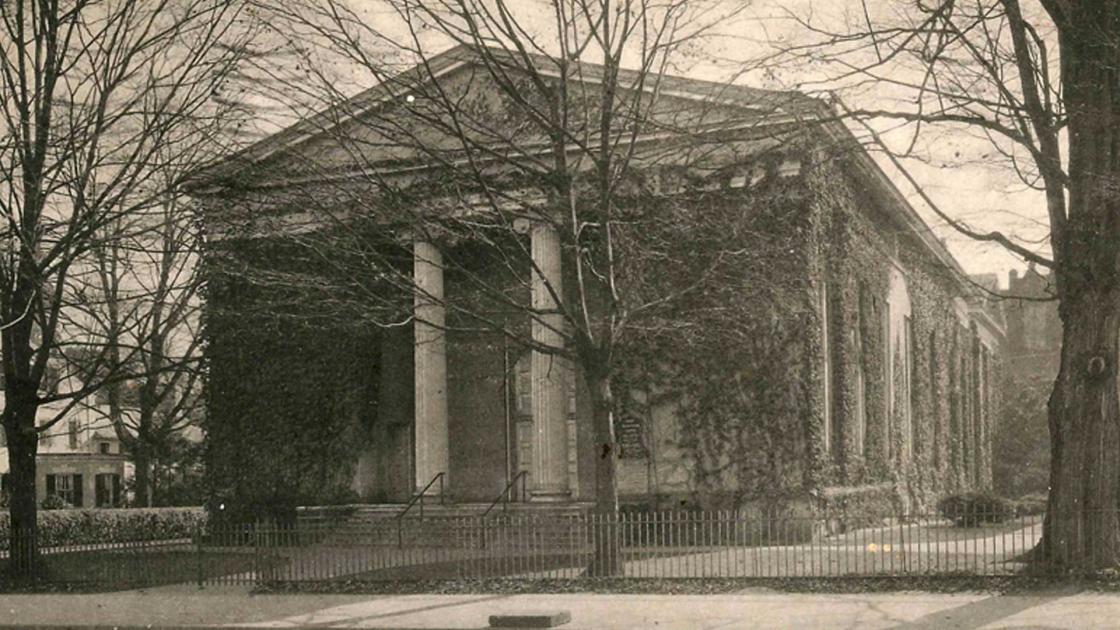
In addition to the Quakers, the Presbyterians were another major religious group that settled in Princeton. Some came as converts from New England and Long Island, while most came from Northern Ireland between 1730 and 1769. Residents here received permission to build a Presbyterian church from the New Brunswick Presbytery in 1755. During the 11 years it took to finish construction, the congregation met at the college chapel.
Once completed in 1766, the building had two entrances facing Nassau Hall. A gallery ran along three sides of the interior. But like other buildings during the British occupation of Princeton, the church suffered damage. Soldiers dragged the pews out to their camps to be burned as firewood. After the war, a fire consumed the original church. The present building, Nassau Presbyterian Church, was dedicated in 1836.
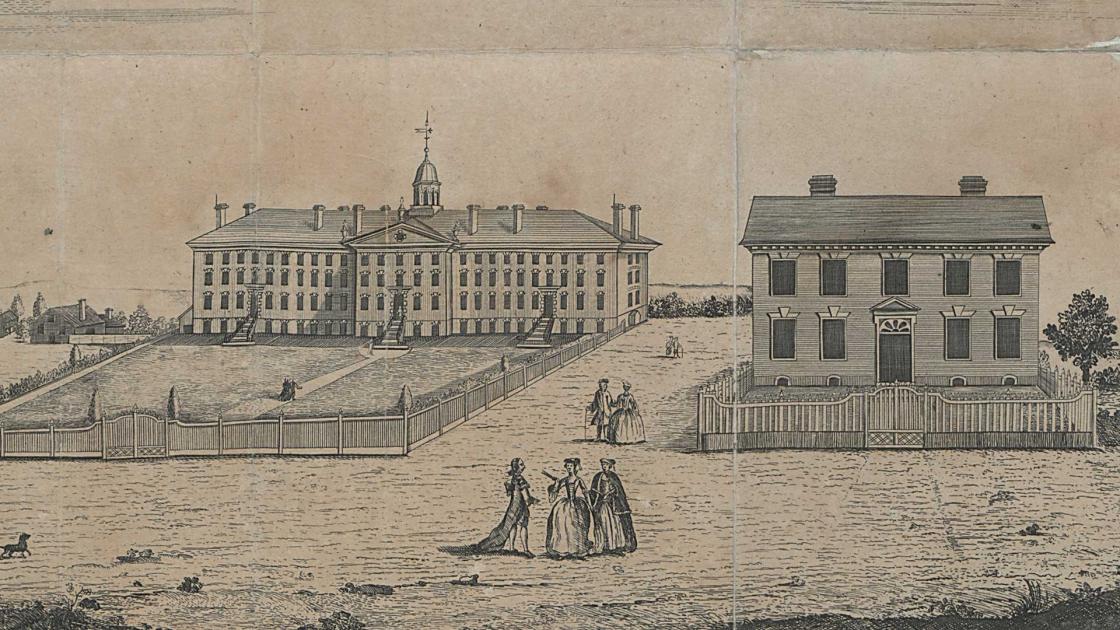
MacLean House
Chartered in 1746, the College of New Jersey, now Princeton University, first met in Elizabethtown before moving to Newark. Five years after its formation, the college trustees decided to relocate again. At the behest of several prominent citizens, including John Stockton, the father of Morven’s Richard Stockton, the institution moved to Princeton in 1756. The MacLean House became not only the president’s house but also a home to the presidents’ enslaved laborers.
Eight of the first nine presidents of Princeton owned slaves. Caesar and Rodney, owned by Aaron Burr, Sr. were the first enslaved people to work here. The enslaved laborers cooked and cared for the house and grounds. In the summer of 1766, MacLean House was the site of an auction that included the sale of former college president Samuel Finley’s enslaved workers. Today, the MacLean House is the headquarters of Princeton’s Alumni Association.
Nassau Hall
As the fighting of the Battle of Princeton neared town, the fleeing soldiers of the British 40th and 55th Regiments of Foot sought shelter here in Nassau Hall. At the time the building was the center of the College of New Jersey, now known as Princeton University. At the final stage of the battle, Nassau Hall served as a last-ditch defense against the oncoming Americans. The Continentals surrounded the building and rather than risk casualties from a direct attack, Patriot Brigadier General Henry Knox ordered artillery to deploy and fire along the southern façade of the building. One of the shots shattered a portrait of King George II. Other rounds tore through the walls. The British soldiers inside quickly surrendered. General George Washington, however, had little time to savor the victory. He knew Lieutenant General Charles, Lord Cornwallis would arrive from Trenton soon.
After fighting two battles in two days and enduring an all-night march, Washington’s men were exhausted. Bloodied but triumphant, the Continentals were in no shape to take on Cornwallis again, let alone attack the British garrison at New Brunswick as they originally planned. As his men abandoned Princeton, Washington called another council of war. The officers elected to march to Somerset Court House, about 20 miles away, and then to Morristown, another 30 miles north. There Washington put his army into winter quarters where he was well-defended by the Wachtung Mountains and could keep a close eye on British Lieutenant General Sir William Howe. His victories at Trenton and Princeton forced the British to abandon much of New Jersey and consolidate their efforts around New York City. Most importantly, they ensured that the war would go on for at least another year and breathed life back into the cause of independence.
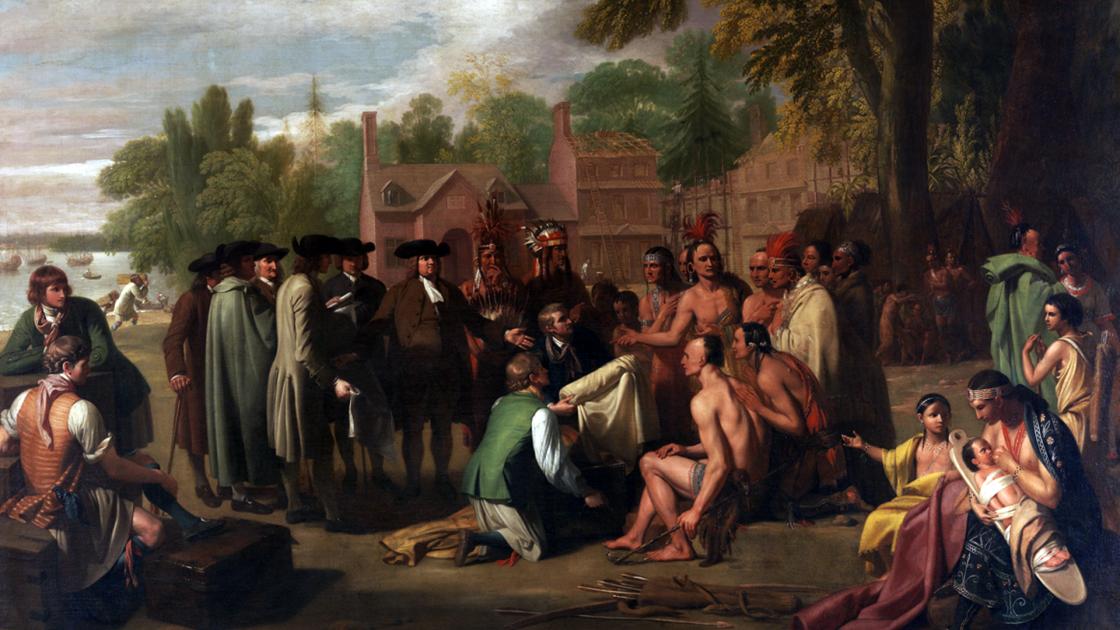
Lenape
As you walk through Princeton today, you can envision the town’s colonial past. But there is no evidence of the Lenape people, who farmed and hunted this land thousands of years before Europeans arrived in the early 1600s. The Lenape (also known as the “Delaware,” the term given to them by Europeans) were caretakers of their homelands for millennia in what is now New Jersey, eastern Pennsylvania, Delaware, and parts of New York and Maryland.
Princeton University’s Nassau Hall, built in 1758, was erected on Lenape ground without the permission of the Lenape community. As white residents encroached on their land, some Lenape chose to leave the area, but those who stayed were forced by the New Jersey Assembly to resettle in Burlington County on what became the first and only Indian reservation in New Jersey. There, the health and traditions of the Lenape declined. The reservation was eventually closed in 1802, and the Lenape remaining there moved north at the invitation of other tribal nations.
During the American Revolution, the Lenape encountered new challenges. The Continental Army planned to march west and attack British forces at Detroit. The route, however, crossed Lenape territory in the Ohio Valley. In September 1778, U.S. diplomats met with Lenape Chief White Eyes at Fort Pitt in western Pennsylvania to sign a treaty that would give the Continentals access to and protection in Lenape land. In return, the Lenape would be permitted to form their own state and earn representation in Congress. It was the first U.S. treaty with a tribal nation, but the agreement fell apart just two months later due to White Eyes’s sudden death and the failure of the U.S. government to live up to the treaty’s terms.
White Eyes passed away in November 1778 while accompanying American troops on their westward journey. The army insisted he perished of smallpox, but evidence later revealed that he was murdered by an American militia officer. In 1779, a delegation of Lenape protested their mistreatment by the U.S. government at Prospect Farm, which later became part of the Princeton campus. They cited the failure of the U.S. to uphold promises made in the Fort Pitt Treaty and pressed the U.S. to acknowledge the death of White Eyes as a murder. However, the Lenape chiefs failed to get justice. Instead, some of White Eyes’s descendants were offered admission to Princeton University.
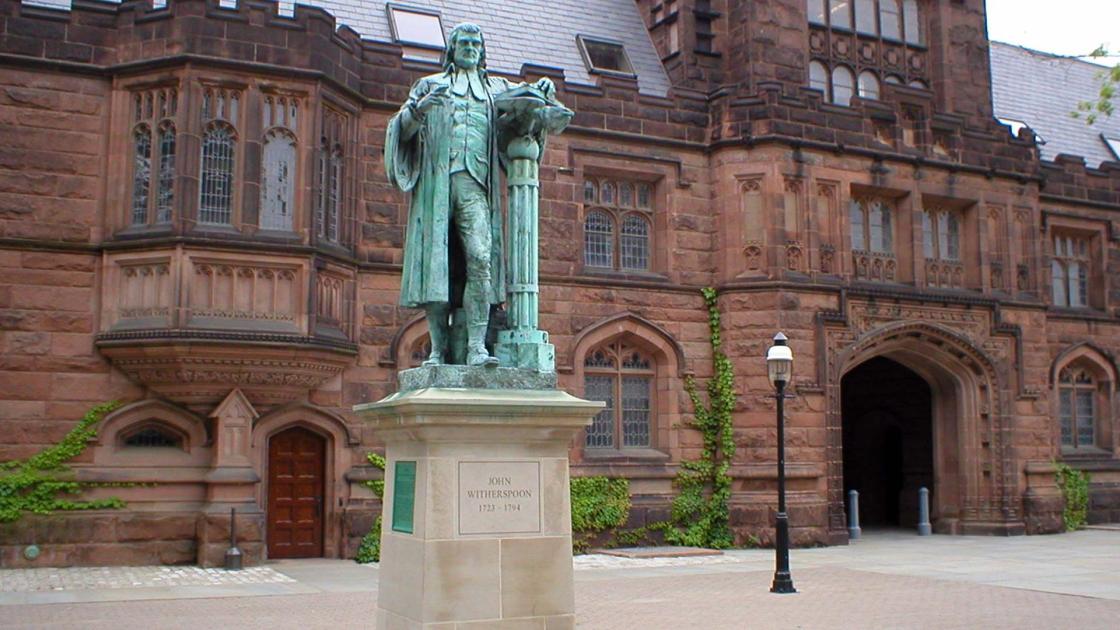
John Witherspoon Marker
On November 10, 2001, a monument was dedicated to Patriot and college president John Witherspoon on the campus of Princeton University. Made in his native Scotland, it stands just north of Nassau Hall.
Born in 1723, John Witherspoon attended the University of Edinburgh and became a Presbyterian minister. When the College of New Jersey, now Princeton University, needed a new president in 1766, Benjamin Rush, then a medical student in Edinburgh, and attorney Richard Stockton, on business in London, approached Witherspoon—a strong academic and theologian—with a job offer. Witherspoon accepted, and brought his wife and five children to settle in Princeton in 1768. The family lived at an estate called Tusculum, north of town. As the cause of independence created instability in the 1770s, Witherspoon not only held a firm hand over the college but became involved in politics, siding with the Patriots. He served in the New Jersey Provincial Congress and on the Committee of Correspondence. As a delegate to the Second Continental Congress, Witherspoon signed the Declaration of Independence.
When the British army approached Princeton in late November 1776, Witherspoon decided to close the college and evacuate his family to Pequea, Pennsylvania. British soldiers plundered Tusculum in his absence and burned his personal library. Despite the hardship, Witherspoon continued in his role as delegate to Congress. He later served on the Board of War and maintained his responsibilities as president of the college. In 1779, he retired from Congress and turned control of the college over to Samuel Stanhope Smith, his son-in-law. Witherspoon died in 1794.
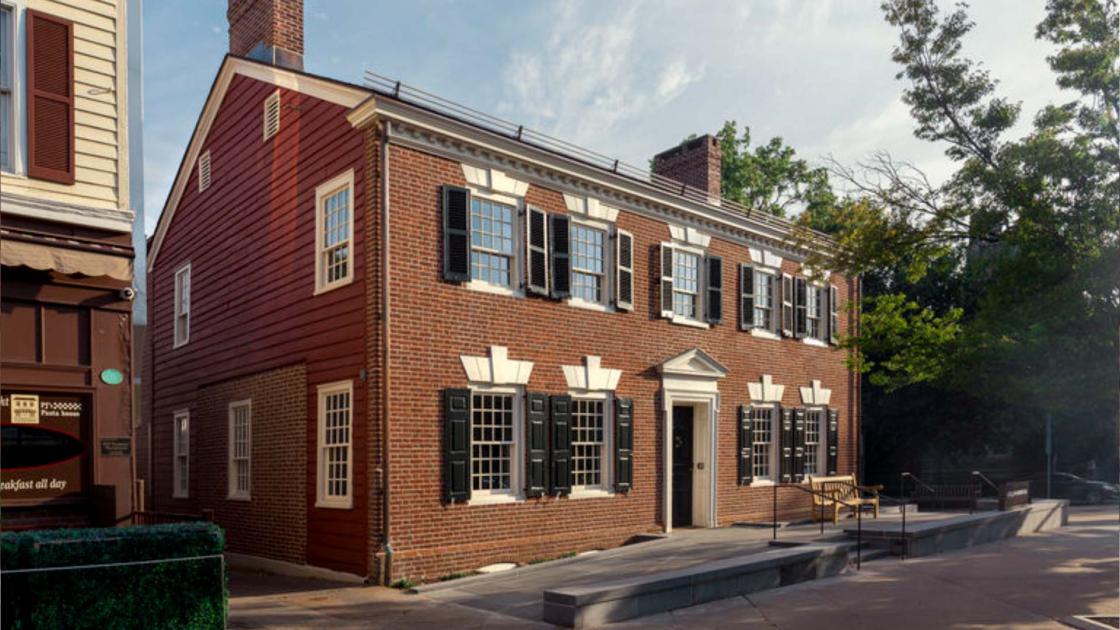
Bainbridge House
In 1766, Job Stockton, a cousin of Richard Stockton, constructed a Georgian-style brick home—which survives and stands before you today—at the corner of Nassau and Washington Streets. Ownership of the home passed to Richard’s brother Robert, who rented it to Dr. Absalom Bainbridge. The doctor, a member of the College of New Jersey’s Class of 1762, set up his medical office in the home in the summer of 1774. After briefly supporting the Patriot cause, Bainbridge switched his allegiance. He fled with Lieutenant Colonel Charles Mawhood’s British command following the Battle of Princeton and became a surgeon in the Loyalist New Jersey Volunteers. Bainbridge’s enslaved worker, Prime, however, joined the Continental Army. Prime was one of three enslaved New Jersey men who received their freedom from the state legislature as a reward for their military service.
Years later, the house became home for the Continental Congress. Throughout the course of the American Revolution, Congress struggled to pay the army. Even as the conflict came to an end, the men who fought for independence were due a vast amount of back pay. On June 21, 1783, a group of disgruntled soldiers arrived at Congress’s doorstep in Philadelphia to air their grievances. They threatened the delegates. President of the Congress and brother-in-law to Richard Stockton, Elias Boudinot, decided to relocate to Princeton for safety, briefly turning the town into the young nation’s capital. Some members took up temporary residence in the Bainbridge House and met at the college’s Nassau Hall. The original 18th-century building has been restored by Princeton University and the Princeton University Art Museum. Today it is known as Art@Bainbridge, where visitors can explore galleries maintained by the Art Museum.
Beatty House
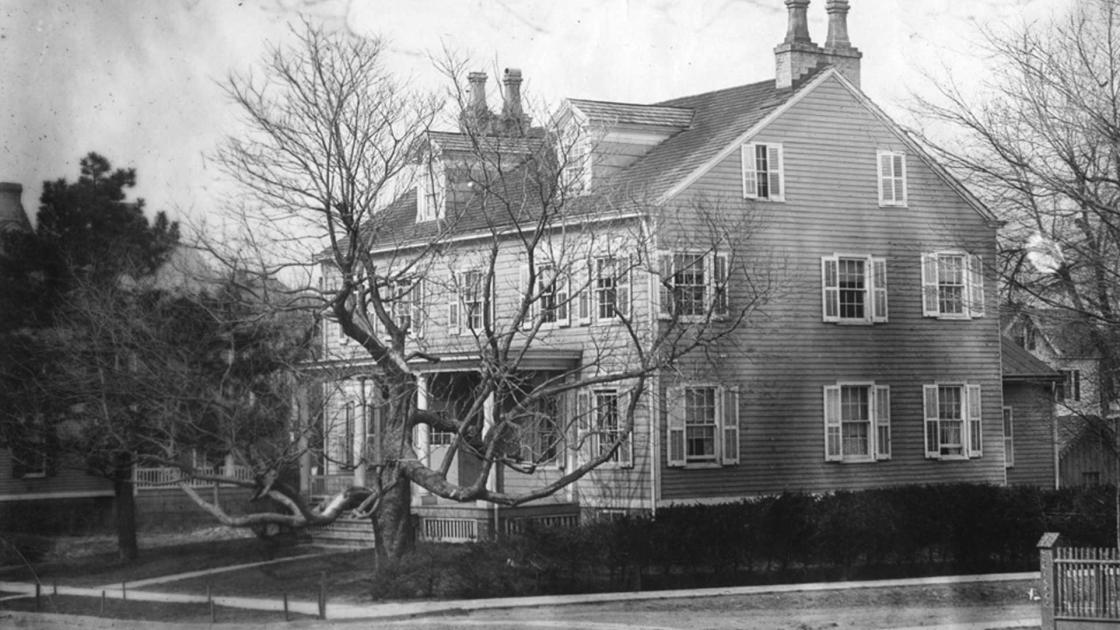
In 1780, Princeton tavern owner Jacob Hyer constructed what is now known as the Beatty House on Nassau Street. It is one of the only wooden 18th-century houses standing in Princeton today. Hyer served as a colonel and deputy quartermaster in the New Jersey militia during the American Revolution. In the fall of 1824, the Marquis de Lafayette “stopped for a few moments at Princeton, where the president of the College, at the head of the professors, presented him with a diploma of membership,” wrote Lafayette’s secretary, Auguste Levasseur. Lafayette purportedly returned the following summer and spent the night in this home. Named for Princeton mayor and member of the state legislature Erkuries Beatty, the house was moved in 1877 to this location on Vandeventer Avenue.
Princeton Cemetery
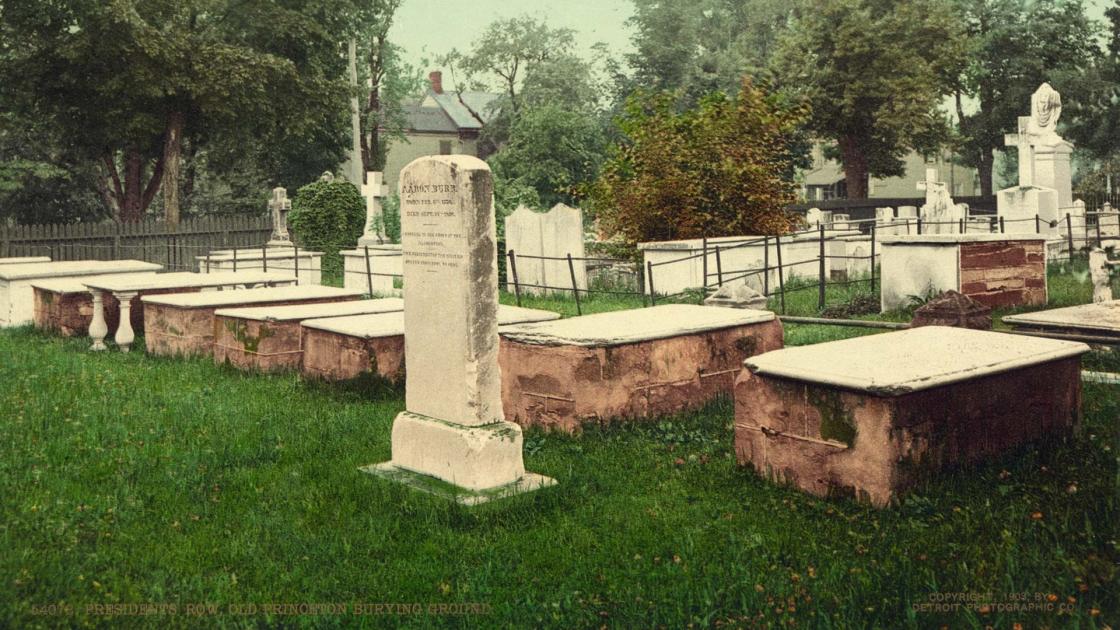
In 1757 the College of New Jersey, now Princeton University, acquired the initial one-acre parcel on which Princeton Cemetery was established from local tavern owner and judge Thomas Leonard. It soon became part of the newly established Presbyterian Church. Today the cemetery covers almost 19 acres.
As you walk the grounds, visit the graves of presidents of the College of New Jersey in the Presidents Plot, located in the Old Graveyard section. Within the second set of cemetery gates, in the area known as the Witherspoon Jackson Community, is the Colored Cemetery, established in 1807. There you will find generations of Princeton’s African American families.
Among the prominent figures buried here are John Witherspoon, a signer of the Declaration of Independence, and Aaron Burr, Sr., an educator and founder of the college, whose monument is the oldest in the cemetery. Burr was the father of the infamous Aaron Burr, also buried here, who served in the Continental Army during the American Revolution. Burr fought at Quebec in 1775 and at the Battle of Monmouth, now a New Jersey State Park. Aaron Jr. later became Vice President of the new nation but is better known for mortally wounding Alexander Hamilton in a duel fought on July 11, 1804. He later conspired to seize the western part of America and create an independent country, but was acquitted of treason.
The cemetery is unique in that both Union and Confederate generals are buried here, including Union General David Hunter, a grandson of Morven’s Richard Stockton, who was also a signer of the Declaration of Independence; George D. Bayard, a rising star in the Army of the Potomac, who died at the Battle of Fredericksburg; and Joseph Kargé, who later taught at Princeton. Confederate General Roger Pryor also rests here. Arguably the most prominent figure interred on these grounds, however, is New Jersey native President Grover Cleveland. Cleveland served two non-consecutive terms and retired to Princeton after leaving the White House. Each year on his birthday, a wreath-laying ceremony is held at his grave.
Betsey Stockton Marker
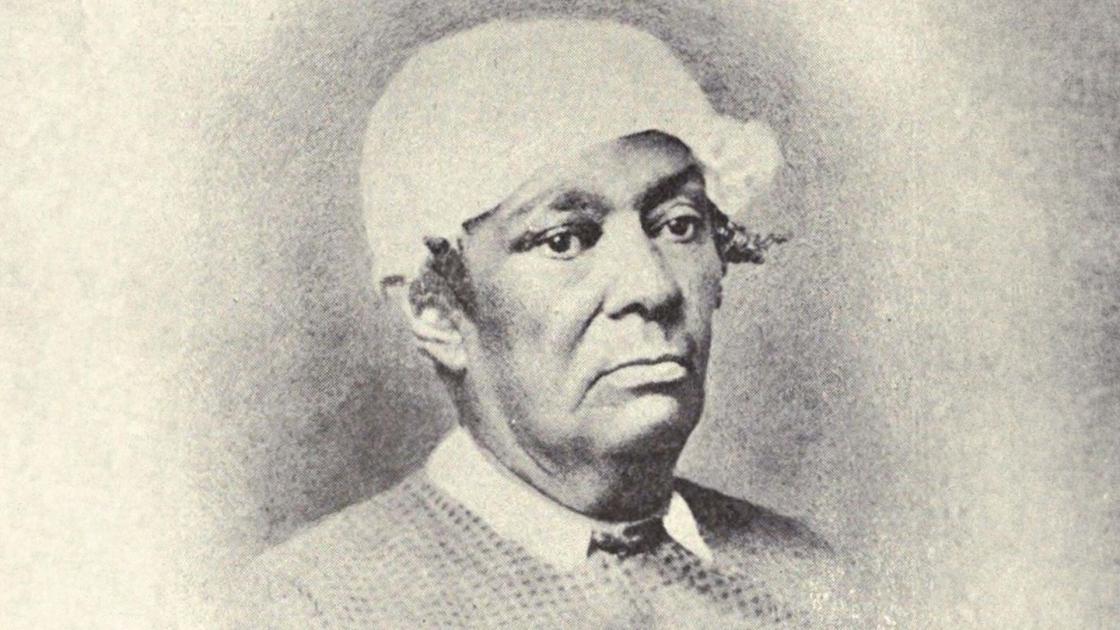
If you are near the Princeton University Campus, make time to stop at the garden between the Firestone Library and Nassau Street. Planted by the University in 2018, it honors Princeton native and formerly enslaved laborer Betsey Stockton, who became an important Black missionary and educator.
Born to a white father and enslaved mother in 1798, Betsey was enslaved in the Robert Stockton household, the family that owned Princeton’s Morven estate. As a child she was sent to Philadelphia, where she was enslaved by the Ashbel Green family. Green became the president of Princeton in 1812, but Betsey did not accompany the Greens back to her birthplace. Instead she was sold to Nathaniel Todd in Woodbury, New Jersey, but after four years with the Todds, she rejoined the Greens in 1816 and lived on the University campus at the President’s House. Sometime after her return to Princeton, she became a member of the First Presbyterian Church.
The Witherspoon School for Colored Children, Princeton, N.J.
Ashbel Green granted Betsey her freedom at age 20. In the fall of 1822, she became a missionary and traveled to the present state of Hawaii (then the Sandwich Islands), where she worked as a teacher for local children. She returned to the United States in August 1826, moved to Philadelphia, and became a teacher to Black children there. In the spring of 1829 she journeyed to Canada to establish schools near Lake Ontario.
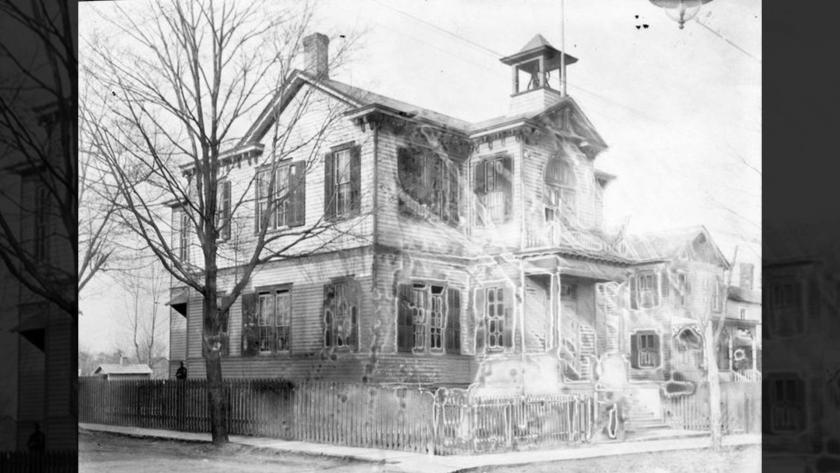
Betsey returned to Princeton in 1833, where she taught at the only school then available to Black children, located on Witherspoon Street. She remained a stalwart in the Black community through the Civil War and passed away on October 24, 1865. In addition to this garden and marker, a stained-glass window in the Witherspoon Street Presbyterian Church, donated by her former students, commemorates her life.
Rockingham Historic Site
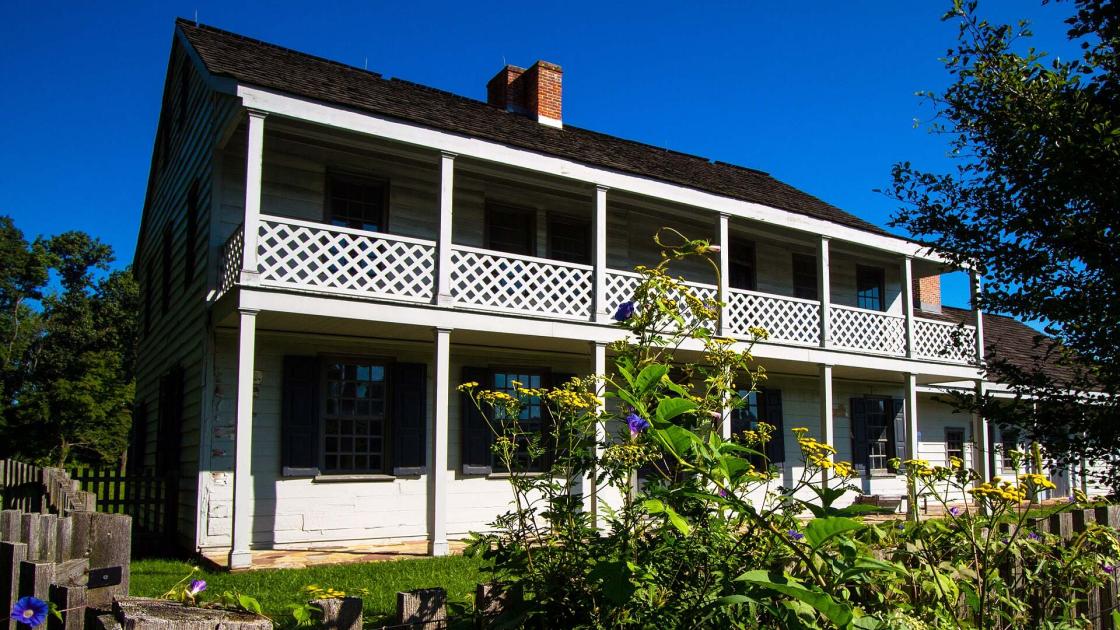
The problems of disbanding the Continental Army in the summer of 1783 prompted Congress to summon General George Washington to assist them in Princeton, where they had relocated for protection from angry veterans demanding back pay. The commander-in-chief left Newburgh, New York, on August 18 and headed south with his escort. The journey lasted five days. Upon his arrival, Washington established his headquarters here at Rockingham, a 320-acre estate owned by Margaret Berrien, the widow of Judge John Berrien, a former Trustee of Princeton and New Jersey Supreme Court justice. With more than 20 rooms, the house had ample space for meetings and entertaining guests. Once recovered from a fever, Martha Washington joined her husband there.
When not occupied with Congress, Washington enjoyed horseback riding through the countryside here. He befriended a young artist, William Dunlap, who painted portraits of the Washingtons along with a full-length rendering of the general. At the end of October, news arrived that the United States and Great Britain had signed the Treaty of Paris, bringing the war to a formal close. Congress adjourned a few days later, on November 4. Soldiers returned home to their families and focused on resuming ordinary life in a new nation.
Washington left Rockingham at that time and returned to New York. However, about a month later, he passed through Princeton again. He had one more task to perform in the service of his country. Washington was on his way to visit Congress, which was in session in Annapolis, Maryland. After securing victory in the Revolution, he was the most powerful man in the United States. But rather than dissolving Congress and setting himself up as a military dictator, he returned his officer’s commission to Congress, ensuring civilian control of the new government. He then rode south toward his home at Mount Vernon, Virginia.
Today, visitors come to Rockingham Historic Site to learn about Washington’s final wartime headquarters and explore aspects of colonial life. The house has a fine collection of 18th-century furnishings, a children’s museum, and a kitchen garden.