-
The BlogBiographies
-
Videos

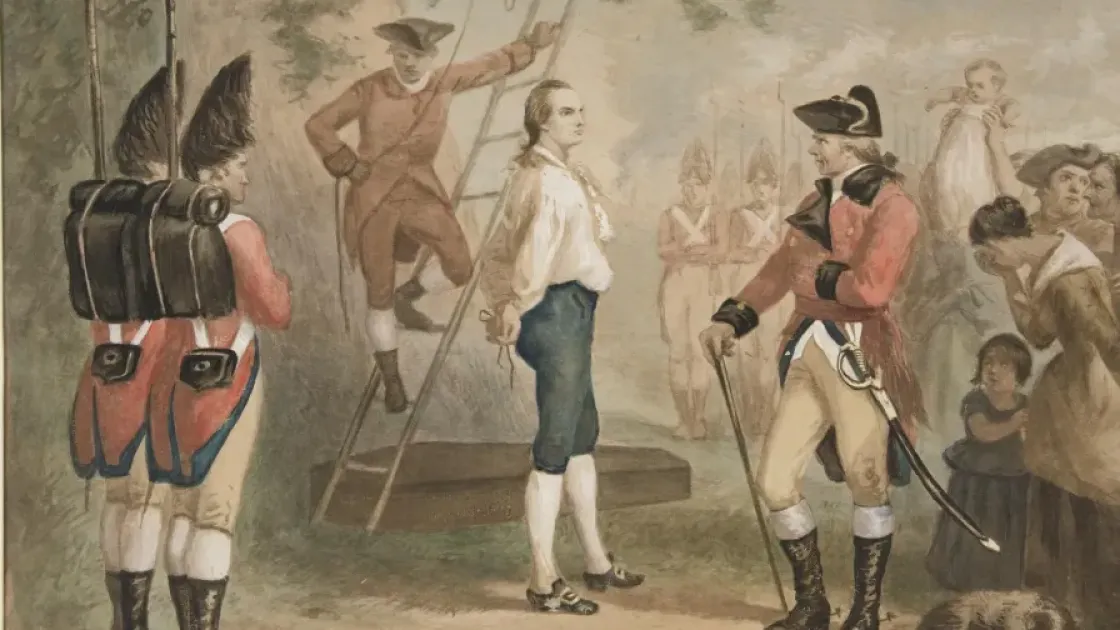
Secret codes. Invisible ink. Spies operating behind enemy lines. The threat of death by hanging. What sounds like scenes from a James Bond movie was real life in New York during the American Revolution. From everyday shopkeepers to enslaved men and women, spies could be lurking everywhere:
You may have heard of a shopkeeper named Robert Townsend of the Culper Spy Ring and a tailor named Hercules Mulligan from plays and TV shows. New research has illuminated others whose stories were largely forgotten or ignored, like African Americans Liss and Cato. Their stories shed light on the struggle for personal liberty in a country fighting for its own. And you know all about the Patriot spy Nathan Hale, but David Maltbie—a spy who didn't get caught—is a story worth knowing, too.
This walkable tour through the Revolutionary city puts you on the trail of espionage in New York through the eyes of Robert Townsend, Hercules Mulligan, Cato, Liss, and David Maltbie.
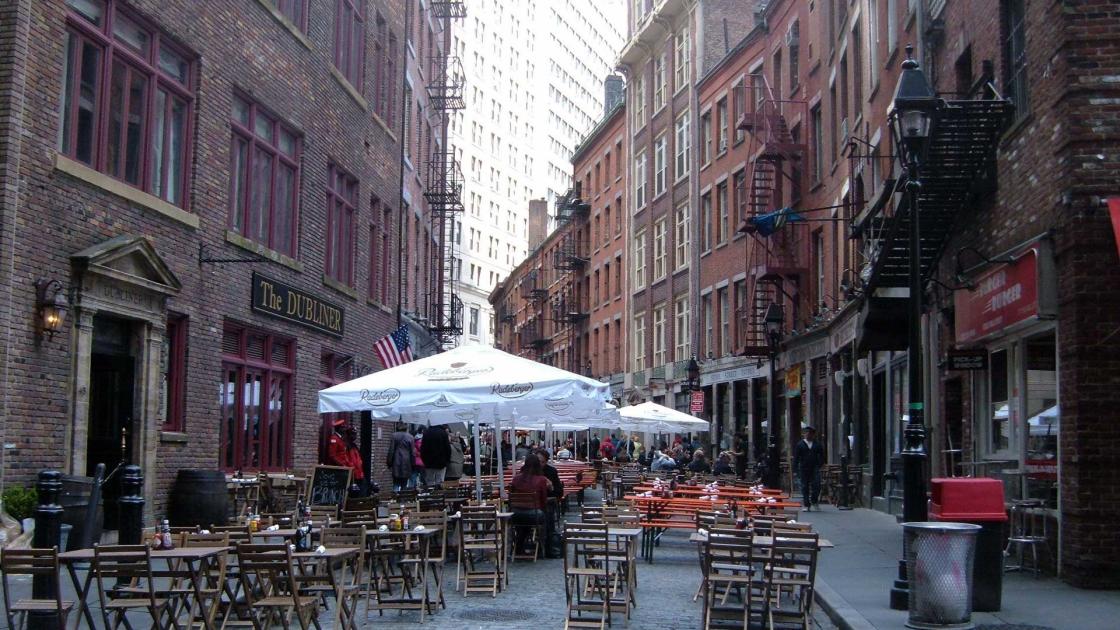
Stone Street Historic District is a pedestrian-only street located between 85 Broad Street and Hanover Square. It runs parallel to Pearl Street and S. Williams Street. Need help getting here? Visit https://www.stonestreetnyc.com/visit for more.
It was everyday people - those you might not suspect - who served as spies during the American Revolution. They walked hidden among the crowds on the very cobblestones you stand on today along Stone Street, New York’s earliest paved street, established in 1658 back when this city was called New Amsterdam.
When the British occupied New York City in September 1776, they made the city their headquarters in the colonies. Patriot General George Washington needed eyes and ears on the ground to learn about British plans. Who would be willing to risk their life for the Patriot cause? A young man named Nathan Hale stepped up for a spy mission on Huntington, Long Island that proved fatal. The British captured Hale and brought him to Manhattan where he was hanged. His legendary last words still echo today: “I only regret that I have but one life to lose for my country.” But who were the other spies that may have walked these very streets?
Continue the tour to learn about lesser-known spies of British-occupied New York.
Walk in their footsteps up historic Stone Street to Hanover Square, a quiet park in the heart of lower Manhattan.
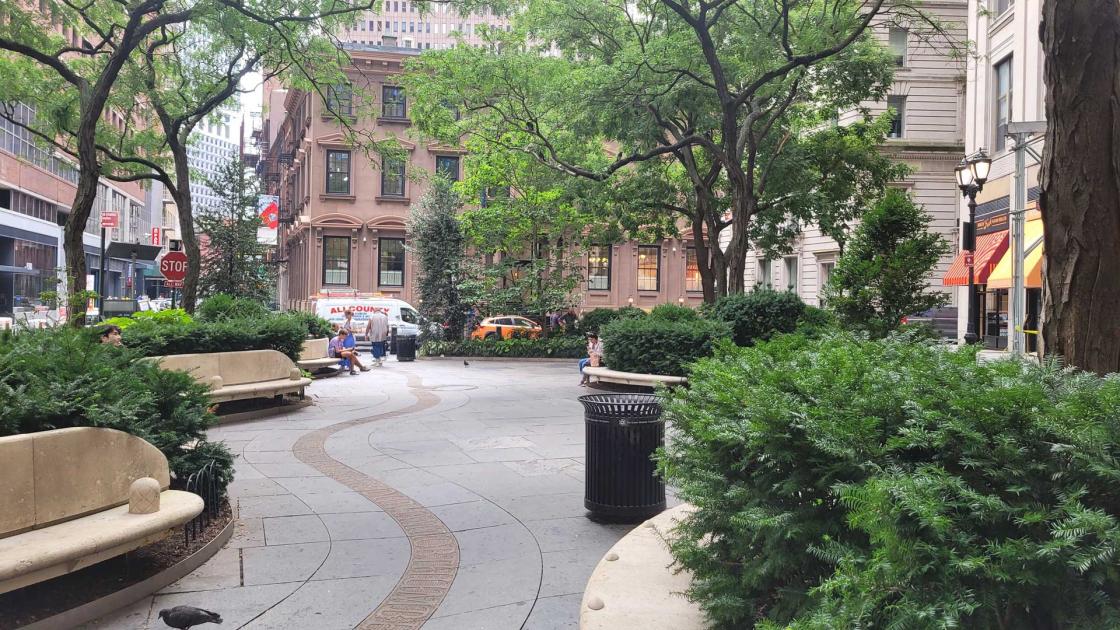
Hanover Square, which is actually triangular, was named for the royal British House of Hanover, which included King George III. It was the central marketplace of Manhattan during the Revolutionary War and was home to numerous newspaper printers, coffeehouses, and shops.
What better place to gather intel than in the busiest shopping hub in the city, located just steps from the waterfront? Today this sleepy park offers a shady spot to enjoy a bagel and coffee, and the East River is now several blocks away due to the growth of Manhattan’s footprint over the years. But in 1779, this was a crowded commercial center and home to spy Robert Townsend’s shop. From here Robert, known under the code name “Culper, Jr.” could easily gather intelligence from his customers, visit with ship’s captains, and eavesdrop on top British officers without suspicion.
Close your eyes and imagine the sound of bustling crowds, horses, and carriages – passing by busy coffeehouses, print shops, and storefronts offering fine fabrics, jewelry, spices, rum, medicines, watches, perfume, and even ice cream and chocolates!
Robert’s shop, which he ran with a partner named Henry Oakman, was probably located on the corner of Stone Street and William Street. A newspaper advertisement described the shop as “opposite Mr. Rivington’s” referring to the printery and popular coffeehouse of James Rivington. Robert sold an assortment of housewares and foods including candles, glassware, tea, rum, wine, sugar, pickles, mustard, lavender water, hair powder, shirts, breeches, and copper tea kettles. When he wasn’t making sales, Robert was writing secret letters to General Washington either by using an invisible ink called “the Stain” or by replacing key words with a numeric code called the “Dictionary.” In concert with his fellow Culper spy, Abraham Woodhull, he conveyed almost 400 pages of information from Manhattan to Setauket, Long Island, then across Long Island Sound to Connecticut – and ultimately delivered to Washington.
Robert abandoned this central location when General Benedict Arnold- a former Patriot general who defected to the British army - came to town in 1780. Robert moved his shop and apartment to a place called Peck Slip hoping to escape detection. We will catch up with him at Peck Slip, along with an enslaved woman named Liss, later in this tour.
Next walk to an address which served as British Headquarters in America – One Broadway.
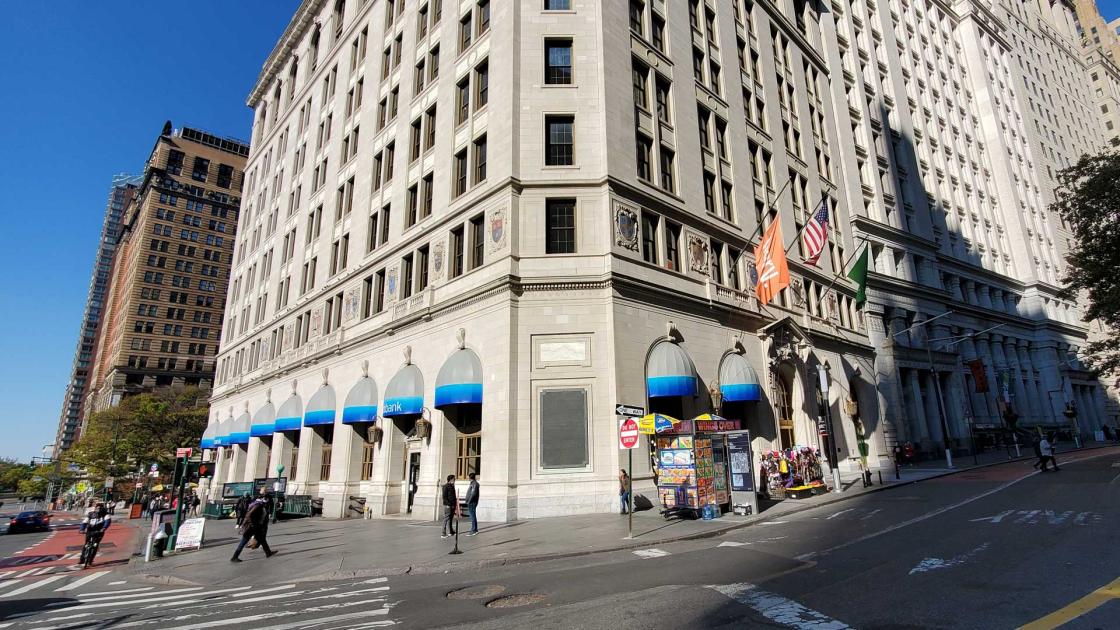
This was previously the site of Kennedy House, built by Captain Archibald Kennedy of the British Navy in 1745. Both the Patriots and the British used the mansion as headquarters during the Revolutionary War. The current building on the site is privately owned.
The building that once stood here at One Broadway began as a beautiful mansion built in 1745. During the war it became a military headquarters, first for the Patriots, and then for the British. How could Robert Townsend, the Patriot spy known as “Culper, Jr.," observe the comings and goings at British Headquarters without looking suspicious? Sign up as a volunteer guard, of course! In fact, Robert helped organize a Loyalist “Volunteer Company” with the “purpose of co-operating with his Majesty’s Troops in the defense and protection of the City.” In his service as a volunteer, he donned a homemade red coat and “stood Sentinel” here at the door of One Broadway. And what a busy door it was! When Robert stood here as a guard, he could have eavesdropped on the top British leadership as they entered and exited the building, including Sir Henry Clinton, Lieutenant-General James Robertson, Sir Guy Carleton, and even the British spy master Major John André.
One of the other members of the Culper Spy Ring mentioned an agent 355 who was helping the spies to “outwit them all." In spy code, the number meant the word “lady.” Was this Liss, an enslaved woman who knew John André and had known Robert her entire life? Liss had been enslaved by the Townsend family until she briefly escaped New York City with the British army. She later returned enslaved by the British, potentially giving her access to high-level information. Could Liss have served as a key informant in Robert’s spy network? Would she have smuggled intelligence to him, right under the noses of the most important British officers?
Whether or not Liss was the mysterious female spy 355, she had deep connections to Robert Townsend and was also described as being “too fond of the British officers.” Unfortunately, no other mention of the spy 355 has been found.
For our next stop, walk across the street to the park called Bowling Green, where another famous New York spy took a stand against the King.
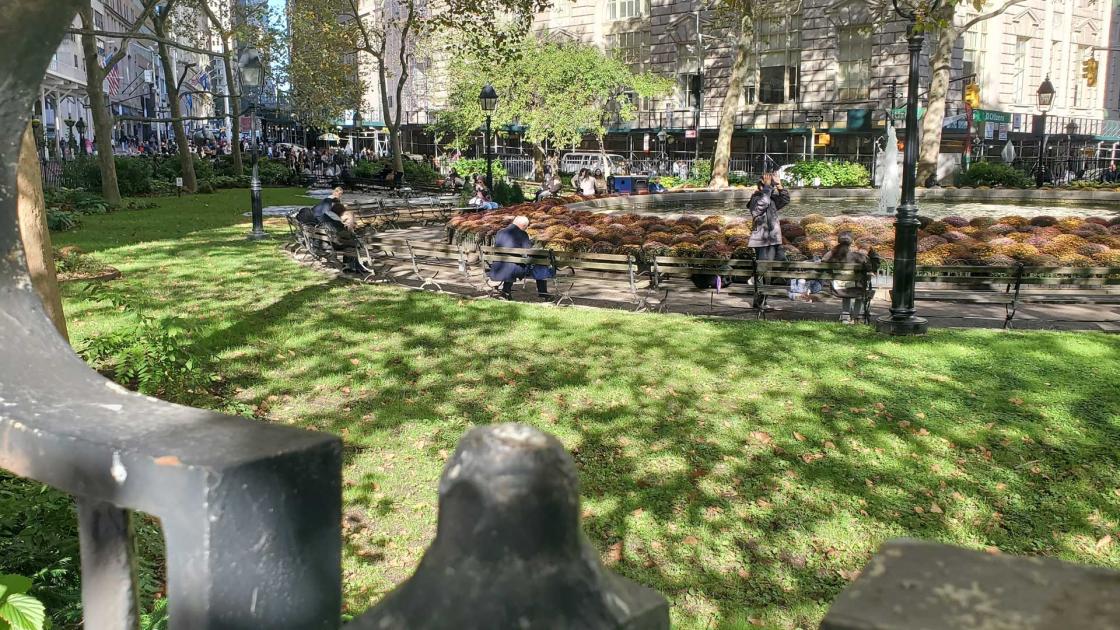
Established as a park in 1733, Bowling Green is the oldest public park in New York City and is still encircled by its original cast iron fence. The Alexander Hamilton U.S. Custom House, opened in 1907, is adjacent to Bowling Green. The Charging Bull sculpture by Arturo Di Modica, installed in 1989, is located on the northern tip of the park.
“We hold these truths to be self-evident, that all men are created equal…” All our lives we have heard the famous opening words to the Declaration of Independence but imagine hearing it read aloud in New York for the very first time! That’s what happened on July 9, 1776, inspiring at least one future spy. Hercules Mulligan, a leading member of the Sons of Liberty and a good friend of Alexander Hamilton, would become a trusted spy for General George Washington during the war. But on that July day, Mulligan joined the crowd of civilians and soldiers who rushed down Broadway to this park after hearing the Declaration. While today this park has a simple fountain in the center, the crowd that gathered here that day here stood before a 4,000-pound gold-gilt lead statue of King George III on a horse. In a symbolic gesture of defiance against royal tyranny, Mulligan joined the crowd to tear down the massive statue. Afterwards, Patriots melted down the lead to create thousands of musket balls for the Continental Army. In another act of rebellion, the crowd also sawed off crown-shaped finials topping the fence posts surrounding the park. If you touch the tops of the fence posts today, you can still feel the rough edges where the crowns used to be.
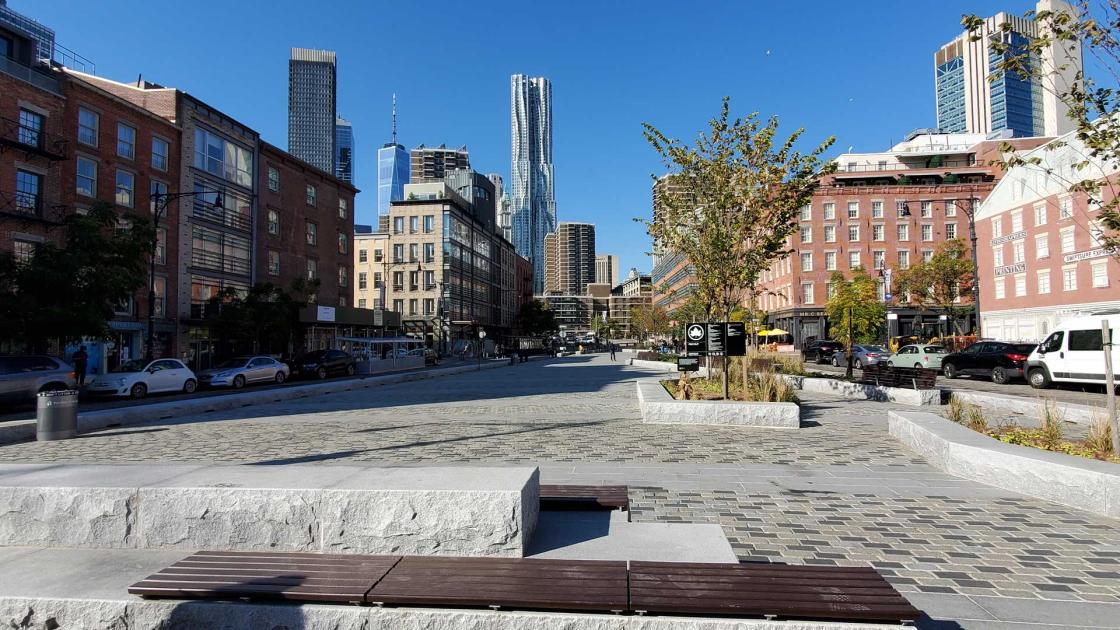
Peck Slip was a busy 18th century dock where merchant vessels unloaded produce and livestock. Buildings here were used as markets, warehouses, and homes of shopkeepers and ship owners.
“I am happy to think that Arnold does not know my name.” Robert Townsend wrote this anxious message to General George Washington about the notorious traitor Benedict Arnold, just after the capture and hanging of the British spymaster and Arnold collaborator, Major John André in 1780. Robert was terrified that Arnold, who was now in New York City serving as a British general, would discover his identity and have him arrested and hanged as well. His fear was well founded. Arnold had already rounded up forty suspected American spies, many of whom worked as informants in Robert’s intelligence network.
After fleeing the city and living in hiding for three months, Robert returned and hastily moved from busy Hanover Square to this more out-of-the-way location in early 1781, where he reopened his dry goods shop and established his living quarters above. But his fear of being caught was still overwhelming, and he refused to write any more spy letters, not even in invisible ink. From that point on, he would only meet with Abraham Woodhull, also known as “Culper, Sr.” outside the city and would only give him audible reports to pass on to Washington.
At that time, Peck Slip was a working dock where merchant vessels unloaded produce and livestock, and was home to warehouses, shopkeepers, and ship owners. Robert’s shop, located in the end of Peck Slip near Pearl Street, had an apartment above jokingly referred to as “Bachelor’s Hall,” because Robert now lived with his unmarried younger
brother William and teenaged cousin John, who worked as his clerks.
As the war began to wind down in the summer of 1782, many British soldiers began to leave the city, heading to England, the Caribbean, or north to Canada. That’s why Liss came here to Peck Slip with a surprising request. The British officer who enslaved Liss had packed up and was about to evacuate, likely to Nova Scotia, and Liss did not want to go with him. So that she could stay in New York, she came up with a surprising plan – she asked Robert to buy her. Robert would soon join an anti-slavery society, and did not own any enslaved people, but it’s clear he wanted to help Liss. He purchased her, paid his father (who was her original enslaver) £70 for her value, hired a white maid, and brought Liss to live here at Bachelor’s Hall. Why did Liss want to stay in New York, even though the British were offering formerly enslaved people freedom in Canada? The fact that she was three months pregnant with her first child may have influenced her. In February 1783, she gave birth to a son named Harry, who was described later in life as bi-racial. Peck Slip was Liss and Harry’s home until he was six months old.
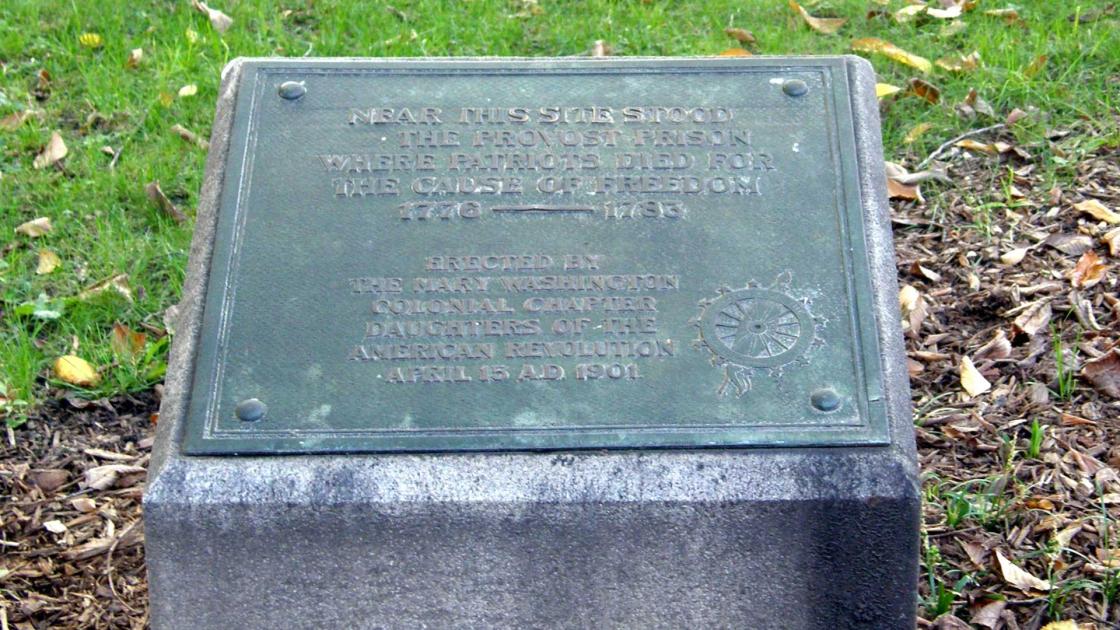
The Provost, built around 1756–1759, was a large British prison used to confine American officers and other Patriots, infamous for its brutal conditions. After the war, it served as a debtor's prison and later as the Hall of Records before being demolished in 1903. The marker is visible from the path that separates City Hall from the Tweed Courthouse.
Further uptown on the steps of City Hall is a large bronze statue commemorating the ill-fated Patriot from Connecticut Nathan Hale, whom the British executed as a spy on September 22, 1776. Some people believed that Hale was hanged near here, but the actual site was more likely in today’s Upper East Side, near 77th and 3rd Avenue.
Here you’ll learn about another spy from Connecticut named David Maltbie, who arrived on Long Island about the same time as Hale. David managed to work as a spy throughout the conflict, until fate caught up with him near the end of the war. That’s when he was brought to a notorious prison that once stood here.
Walking through City Hall Park, with its lovely fountain, shaded walkways, park benches, and grassy lawns, it’s hard to believe that during the Revolution this space was home to two prisons: The Bridewell, built in 1775, located near Broadway, and the one which stood here, called The Provost. The British used the Provost prison to hold American officers and spies, and on New Year’s Day 1783, a Patriot spy named David Maltie was captured and imprisoned here, charged with "robbery, and on suspicion of being a spy."
The cramped airless prison cells were crowded and disgustingly dirty. Prisoners like David were beaten, shackled with iron chains, often suffering from illnesses, and forced to survive on scraps of spoiled food and filthy water.
This wasn’t David’s first brush with imprisonment. At the beginning of the war in the fall of 1776, the British captured David in Oyster Bay, Long Island, and found him guilty of being a spy. Back then he was held prisoner inside a private house and brought home-cooked meals by a ten-year-old girl named Elizabeth Wooden. Though he was sentenced to death by hanging in 1776, David broke of the house and successfully escaped before the day of his execution.
Seven years later, with the end of the war in sight, David likely knew trying to escape from the notorious Provost was impossible. If he was going to cheat the gallows a second time, he would have talk his way out!
On February 21, 1783 David did just that, by testifying in court on his own behalf. Though his words are not recorded, he must have done an impressive job, because the court record shows that “having considered the Evidence for and against the Prisoner David Maltbie, together with what he had to offer in his own defense, is of the opinion that he is not guilty of the Crime laid at his Charge…” Once again David Maltbie, the Patriot spy from Connecticut, escaped death! He must have been incredibly relieved to walk out of The Provost a free man, fill his lungs with fresh air, and go to a tavern for a tankard of ale and a decent meal!
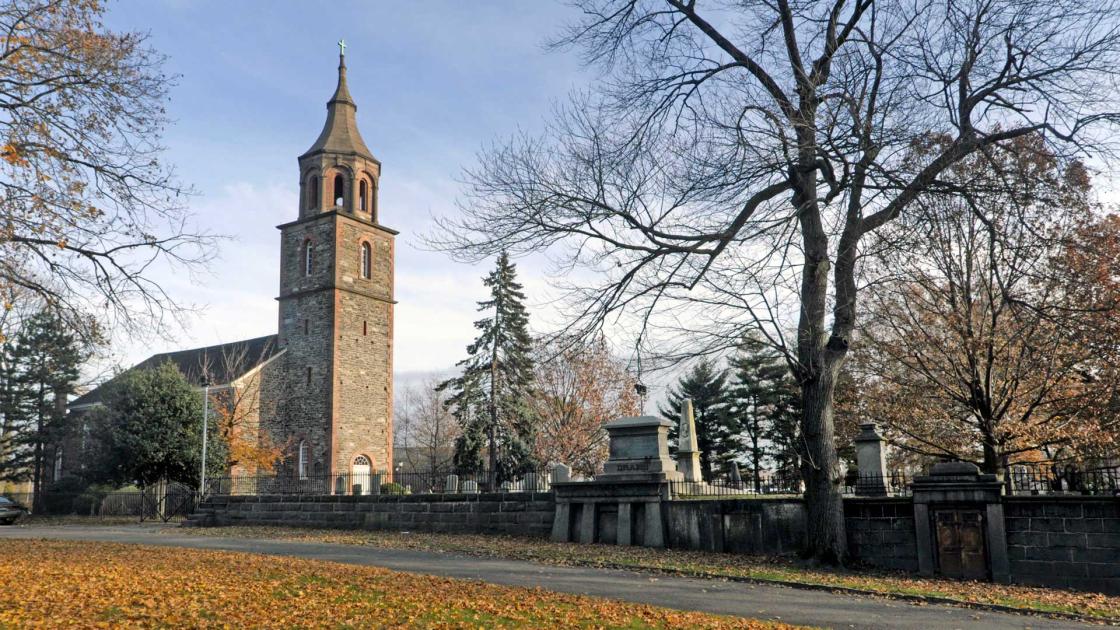
St. Paul's Chapel, built in 1766, is Manhattan's oldest standing church building and the oldest continuously used public building in New York City. St. Paul’s Chapel and Churchyard are open to the public 8:30am-4pm, Monday to Saturday, and 8:30am-5:30pm on Sunday. A security and safety check is required for entry.
As you wind through the churchyard of St. Paul's Chapel, now nestled in the shadow of One World Trade Center, it’s hard to imagine it was the tallest building in New York City when it was built in 1766.
Today St. Paul’s is Manhattan's oldest standing church building and the oldest continuously used public building anywhere in New York City. Because Trinity Church burned down in the fall of 1776, this church served as the primary place of worship for Trinity’s members during the war, as well as other congregations whose church buildings were repurposed by the British for uses such as barracks, stables, or warehouses.
One well-known parishioner was Patriot spy Hercules Mulligan who we met earlier on the Bowling Green. Hercules was such a prominent member of the parish that for several years he served as a vestryman. When he wasn’t selling overcoats or keeping church records, Hercules, along with an enslaved Black man named Cato, smuggled vital intelligence to the Patriots. In March 1779, Hercules and Cato even thwarted a British assassination plot on George Washington’s life.
While it’s no surprise that there are records of Hercules Mulligan sitting in his pew box here at St. Paul’s, recent research shows that Cato also sat in an expensive pew box here, even though enslaved people were typically made to stand in the balcony. A 1782 church ledger records Cato sitting by himself in the pew box paid by his enslaver, a widow named Ann Mary Schuyler, who enslaved Cato in the family's chocolate-making business located nearby on Maiden Lane.
Hercules Mulligan and Cato practiced their faith within these walls and risked their lives for the Patriot cause in the streets of New York.
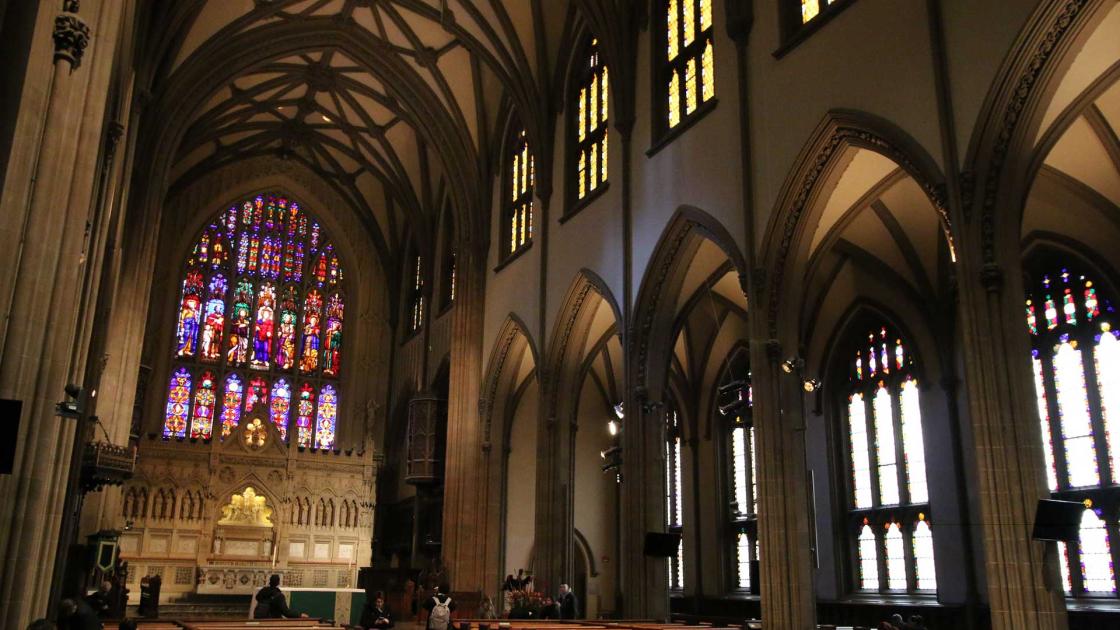
Trinity Church, founded in 1697, is a parish in the Episcopal Diocese of New York. On September 21, 1776, a huge fire destroyed the original Trinity Church building shortly after the British occupied the city. A second building was completed in 1790 but was demolished due to structural damage in 1839. The current Gothic Revival church building was completed in 1846. Trinity Church is an active parish today and features a churchyard where many historic figures are buried including Alexander Hamilton, his wife Eliza Schuyler, and the Patriot spy Hercules Mulligan.
Trinity Church is open to the public daily from 8:30am-6pm, and the Trinity Churchyard is open from 8:30am-4pm.
Today, many visitors come to this house of worship to step back in time as they walk through the historic churchyard, but the church building that stands here today is actually the third structure built on the site. The earliest Trinity Church was completed in 1698, and featured a 172-foot steeple, the tallest in the city. By the beginning of 1776, this iconic faith community became a place of political upheaval. The clergy of Trinity were staunchly Loyalist, preaching that loyalty to King George III was a religious duty. Not all of the worshipers were on the British side, however, including George Washington, Alexander Hamilton, John Jay, and Patriot tailor-spy Hercules Mulligan.
The British invasion of New York City spelled disaster for Trinity Church. On September 21, 1776, a fire began at a tavern at Whitehall Slip and strong winds soon engulfed over 500 buildings. Trinity was destroyed. For the remainder of the war, the congregation moved to St. Paul’s Chapel – our previous stop located several blocks up Broadway which a bucket brigade of parishioners saved from the flames.
Mulligan was laid to rest here in this churchyard, still open to the public. He passed away in 1825, when the second church had been built on this site.
But there is one more espionage connection in this graveyard, hidden in plain sight. Near the resting place of Mulligan’s friend, Alexander Hamilton, is a grave belonging to a Loyalist saddler named Richard Sharwin who died suddenly in 1783 at age 44.
Shortly after his death, Richard’s widow Ann Sharwin approached the Patriot spy Robert Townsend at his home in Peck Slip to ask if he would sell her an enslaved Black woman named Liss and her infant son Harry. Robert purchased Liss (at her request) the year before from a British officer who was evacuating New York. Now a young mother, Liss, who was friendly with Ann, agreed to the arrangement. Before selling Liss and her baby to Ann, Robert made the widow promise not to move away from New York City or sell the mother and child to anyone else. But it wasn’t long before Ann and her next husband sold Liss south to Charleston, South Carolina, and kept two-year-old Harry here in New York without his mother.
The church you see today was completed in 1846 after the second church was demolished. Trinity Church remains an active parish today, and with its 281-foot steeple is considered one of the earliest and best examples of Gothic Revival architecture in America.
Head towards Wall Street and turn left. Turn right onto Pearl Street. Your next stop takes you back to Hanover Square, where you’ll learn about the post-war lives of Liss and her son, Harry.
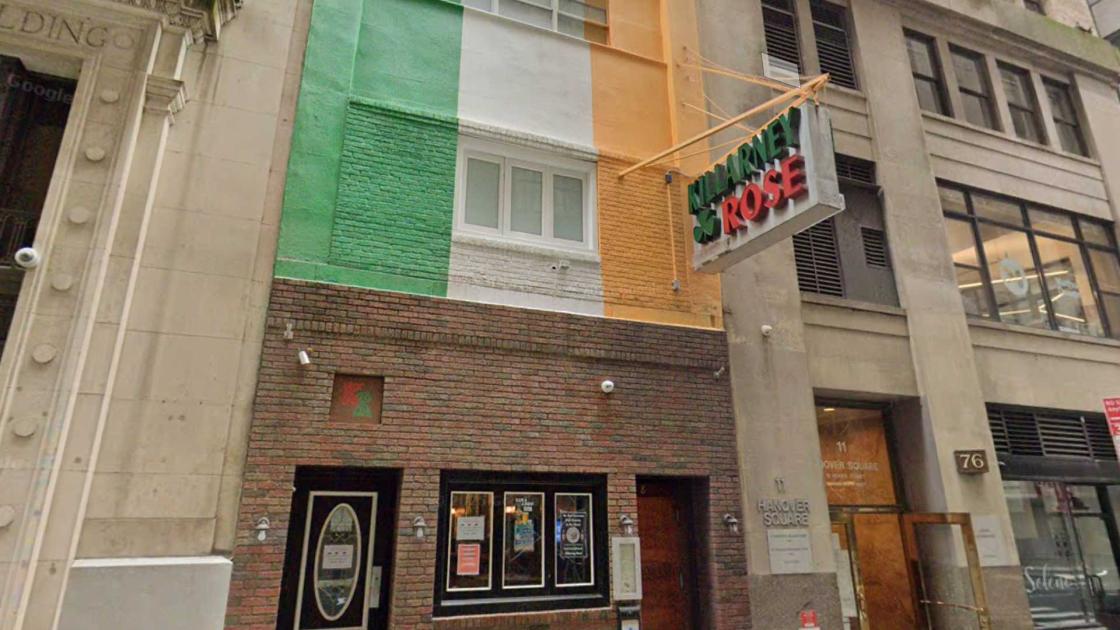
After the Revolutionary War Liss, an enslaved woman who may have worked as a Patriot spy, lived in the buildings that stood here at 11 and 12 Hanover Square. These two side-by-side buildings were three stories high, made of red brick. This location is now the neighborhood pub, Killarney Rose, and part of the building next door - now called the Cocoa Exchange.
It was here that Liss experienced life on Hanover Square in a much different way after the war, from 1783 to 1785. At her request, Robert had helped her stay in New York by purchasing her from the British as they were evacuating. Why did Liss want to stay? She was three months pregnant, expecting her first child in the newly formed United States. Her son, who was biracial, was born at Peck Slip in February of 1783. She named him Harry.
When Harry was six months old, in an arrangement that Liss agreed with, Robert re-sold them both to a mutual friend named Ann Sharwin who lived here on Hanover Square. Ann was recently widowed after the death of her husband Richard, who had operated a saddle shop on the square. Robert made Ann promise never to move away or sell Liss and Harry to anyone else, but those promises faded away when Ann remarried a wealthy widower, a linen merchant named Alexander Robertson. Ann, Liss, and Harry moved into Robertson’s home and business here.
Shortly after they were married Ann and Alexander fought about Liss who caused a “derangement” and “separation” in the marriage. Out of spite, greed, or both, Robertson sold Liss south to Charleston, South Carolina, and kept two-year-old Harry here at Hanover Square without his mother. In Charleston, Liss was sold to a former Continental Marine named Richard Palmes, best known for his involvement in the Boston Massacre of 1770 and the trials that followed.
Two years later in 1787 Robert discovered what had happened, confronted Robertson, and physically stole Harry, now four years old, from this location. He brought Harry to his parents’ house in Oyster Bay, Long Island, where Liss had originally been enslaved, and started writing letters to men in Charleston in the hopes of located Liss and bringing her back to New York.
Just a few months later in 1787 Alexander Roberston sold his buildings at 11 and 12 Hanover Square to become the new home of the Bank of New York, founded just a few years before by Alexander Hamilton. The Bank of New York remained in this location for the next ten years before moving to Wall Street.
This concludes the walking section of the tour. From here, explore Manhattan on your own or finish your tour at Raynham Hall Museum in Oyster Bay, Long Island, about 33 miles and and 11/2 hours away. It is accessible via subway, train, or driving yourself.
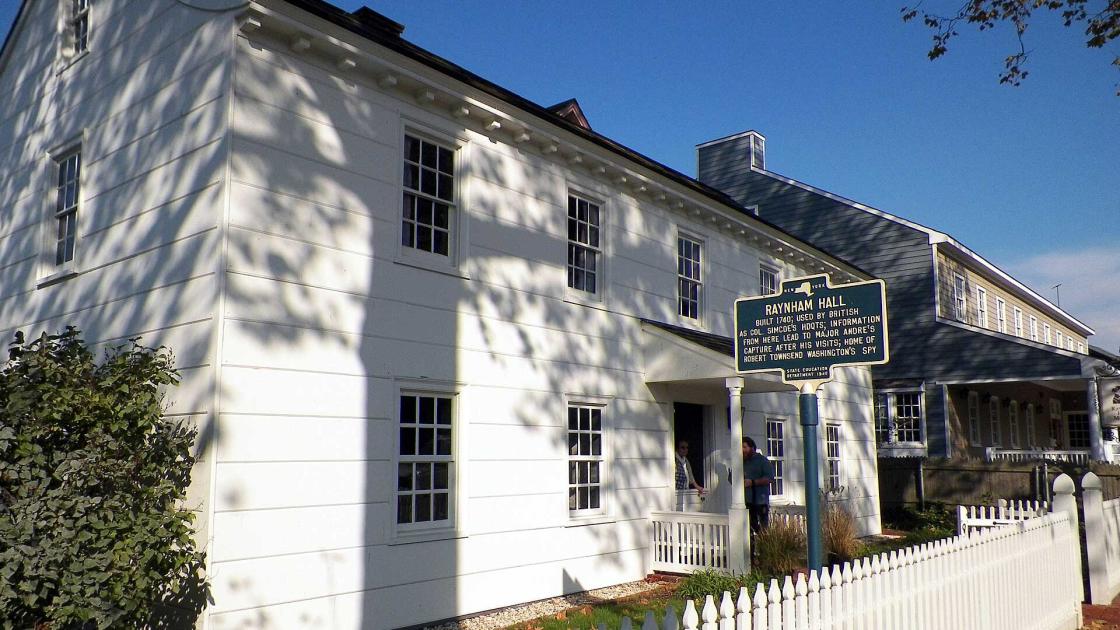
Raynham Hall Museum interprets the life of the Townsend family who owned the house for nearly two hundred years, as well as those then enslaved there and the Townsends’ connections to Revolutionary espionage. Tickets are $10.60 for children and seniors, and $15.60 for adults. Check https://raynhamhallmuseum.org/ for more information. Municipal parking lots sit directly across the street and just west of the building.
When you walk through the Dutch front door with its bulls-eye glass windows, you’ll enter the 18th-century world of a Patriot spy and a freedom seeker.
The front section of this house was the childhood home of Robert Townsend, who was born here on November 25, 1753. His father Samuel was a local politician and civic leader. The Townsends were a wealthy family of shipping merchants, and Robert would grow up here with his family of 7 siblings and 20 enslaved people. A young girl named Liss, or Elizabeth, was one of the individuals the Townsends enslaved.
When the Revolutionary War broke out, Samuel staunchly supported the Patriot case though he forcibly signed an oath of allegiance to King George in 1776.
Robert went even further. For years, Robert, now living in present-day Manhattan - risked his life as the spy “Samuel Culper, Jr.” of the Culper Spy Ring.
For Liss, the war provided her an opportunity to seek freedom from bondage. The home became the town’s British Headquarters, where at least five British officers billeted alongside the family including Colonel John Graves Simcoe and British spymaster John André. On May 18, 1779, at about age 16, Liss escaped with a British regiment called the Queen’s Rangers, aided by the regiment’s commander, Col. Simcoe, who believed slavery was morally wrong. After her escape, Liss was re-enslaved in Manhattan by the British, where she interacted with Robert during the years when he operated as a spy.
After the war, Robert returned here and managed the family estate, unmarried, until his death at the age of 85 in 1838.
Be sure to visit the education center next door to the historic house and see documents related to both the Townsend family and Liss, including a large diorama depicting the day Liss escaped with the British in 1779, and the letter Robert wrote to his father about her escape just eight days later.
