-
The BlogBiographies
-
Videos

November 17, 1781
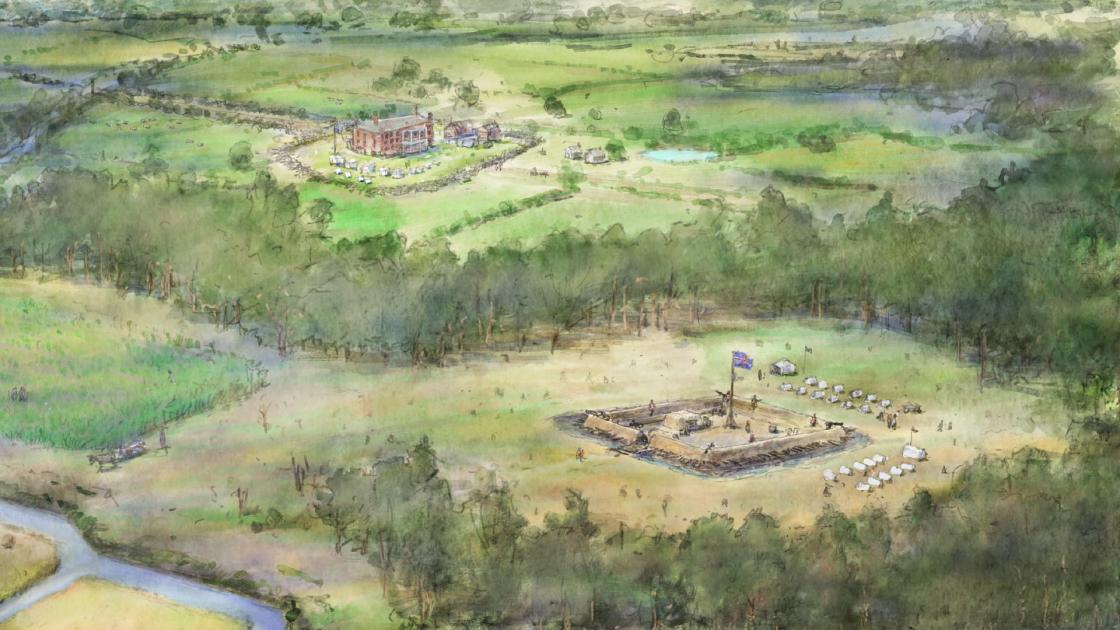
Fort Fair Lawn was a vital British outpost during the occupation of Charleston in 1780–1781. This site preserves one of only two Revolutionary War-era forts in South Carolina that survived intact. Built on property belonging to the Colleton family, descendants of the original eight Lords Proprietor of the Carolina colony, Fair Lawn Barony was the target of a daring Patriot raid on November 17, 1781, and abandoned by the British a week later.
Before You Go
Located in Berkeley County, Fort Fair Lawn is regarded as one of the few remaining, and most well-preserved, British earthwork fortifications in North America. The park that it has been incorporated into is frequented by locals and tourists alike to get away from the hustle bustle of Charleston. Take advantage of the picnicking amenities and networks of trails to enjoy some of the natural landscape of the lowcountry.
Please note that the fort and the site stops are located along a network of trails spanning 1.75 miles and the paths are mainly composed of gravel, which may prove difficult to traverse for someone with walking aids or a wheelchair. The site also charges a small fee to enter the park. The tour takes about an hour and a half to complete, but it also offers interpretive signage, an interpretation center, and picnicking amenities.
When you walk the 80 acres of Fort Fair Lawn, you traverse centuries of American history. On these grounds — once dense with cedars, rich with deer, and flooded by the tidal waters of the Cooper River — early tribal lands gave way to a grand British plantation, with miles of rice fields and a village of enslaved laborers. During the Revolutionary War, this site served as a vital British outpost, defended by an earthen fort that stands here today and is remarkably preserved. Of the more than 30 provisional forts used by the British in South Carolina during the War for Independence, only two — Fort Fair Lawn and the Star Fort at Ninety-Six National Historic Site — remain intact.
A direct route to and from Charleston and a gateway to the backcountry, Fort Fair Lawn was a critical link in a supply and communications chain that served British and Loyalist troops during the Southern Campaign. It was also a target of local Patriot militias, who led a brazen attack here on November 17, 1781. Today it is a place to rediscover and reflect on the people and events that form our complex past.
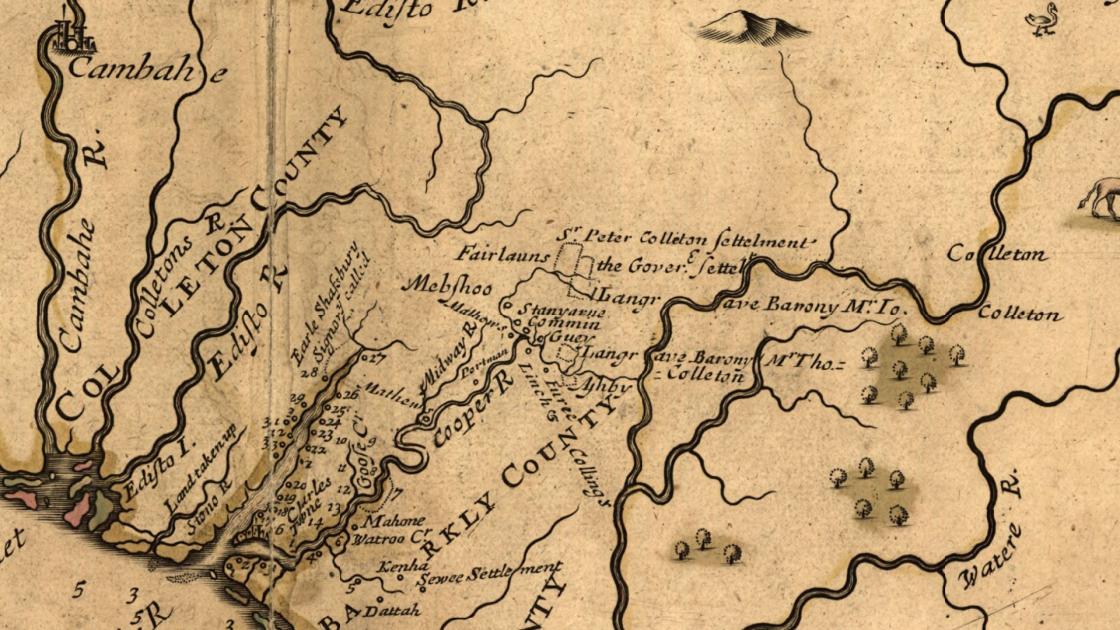
In 1663, King Charles II of England granted a charter for the Province of Carolina to eight Lords Proprietor. The descendants of seven of the lords never came to know the wetlands, wilderness, and oppressive heat of this area firsthand. Only one family — the Colletons — eventually sailed to these shores and established a home.
On 12,000 unspoiled acres, surveyed in 1678 and known as Fair Lawn Barony, the Colletons built a plantation and developed a thriving trade in rice and other cash crops. Their wealth depended on the toil of hundreds of enslaved workers. The last Colleton heir to reside at this site — a loyal subject of the Crown — died in 1777, one year after Patriot forces successfully repulsed a British assault on Charleston. Had he lived longer, he would have seen the British eventually capture the city in 1780 and appropriate his property as a strategic base for its defense. He might have fled before the bold Patriot raid on his home in 1781, and mourned when departing troops — perhaps Patriots, perhaps Loyalists — burned his estate to the ground.
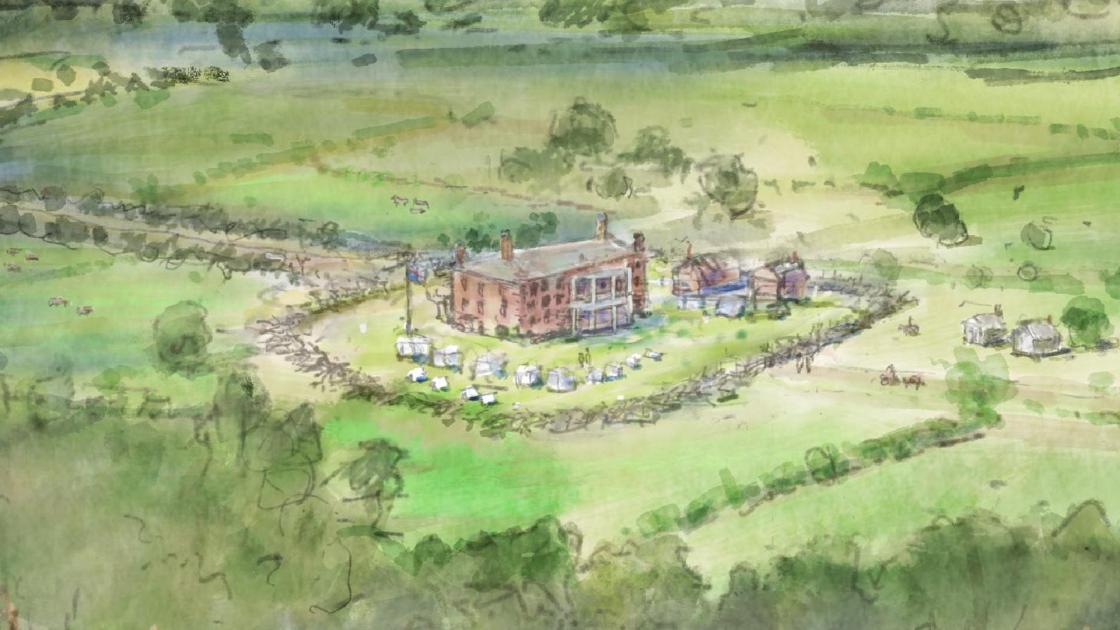
Before it was destroyed in November 1781, a grand brick mansion known as Colleton Castle stood near this site. It was built on land originally bestowed by a king and passed down through generations from father to sons and grandsons, most of whom were named John. The first John — Sir John Colleton — was one of the eight original Lords Proprietor granted a charter for Carolina by King Charles II in 1663. In 1678, his son, Sir Peter Colleton, received a grant for a Barony of 12,000 acres called Fair-Lawn on the western branch of the Cooper River. Sir Peter Colleton’s son, the Honorable John Colleton, erected Colleton Castle at Fair Lawn in 1726. Before the Revolutionary War, the Castle became the home of his son and yet another John, Sir John Colleton of Fair Lawn.
When the last John died in 1777, his widow, Lady Jane Colleton, was left alone to manage the sprawling estate, which was the size of a rural town. With the War for Independence raging just miles from her doorstep, she managed hundreds of enslaved workers and their overseers, supervised the planting and harvesting of crops, and saw to the maintenance of the main house, which, according to her stepdaughter, Louisa, was “very magnificent.”
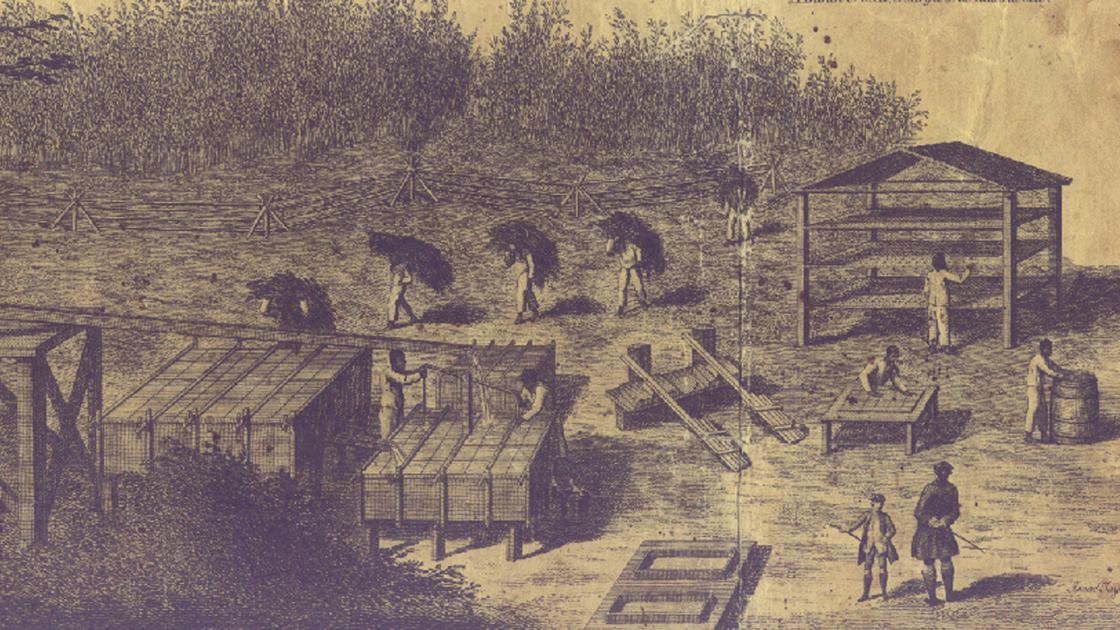
Between May and October, the South Carolina Lowcountry can be brutal — hot, humid, and ridden with mosquitos. In this unforgiving climate, approximately 200 enslaved men performed the back-breaking toil of cultivating rice here at Fair Lawn plantation in the mid-18th century. Enslaved workers diverted low-lying swamps into fresh pools and planted, flooded, harvested, and winnowed the grains. Small, unventilated cabins perched on mounds near the fields offered them little relief from the sweltering sun and the threat of disease. During lulls in the rice farming cycle, these enslaved laborers may have grown indigo, a plant used to make blue dye for clothing, which would have allowed their enslavers to further exploit both untapped land and free labor.
Many enslaved people acquired the knowledge and skills necessary for rice cultivation in their native countries — Senegal, Gambia, Sierra Leone, and Cape Verde. This made them the ideal labor force for southern plantations. Enslaved workers also had a significantly higher resistance to mosquito-borne malaria, making them more resilient and productive than American Indians or people of European descent. By the 1700s, South Carolina dominated in rice production and exports, increasing the wealth of nearby Charleston, boosting the economy of the colony, and leading to the rapid growth of the enslaved population. Fair Lawn’s contribution to this lucrative business was brief. After Fort Fair Lawn was destroyed during the Revolutionary War, its enslaved population scattered, and the rice fields lay fallow.
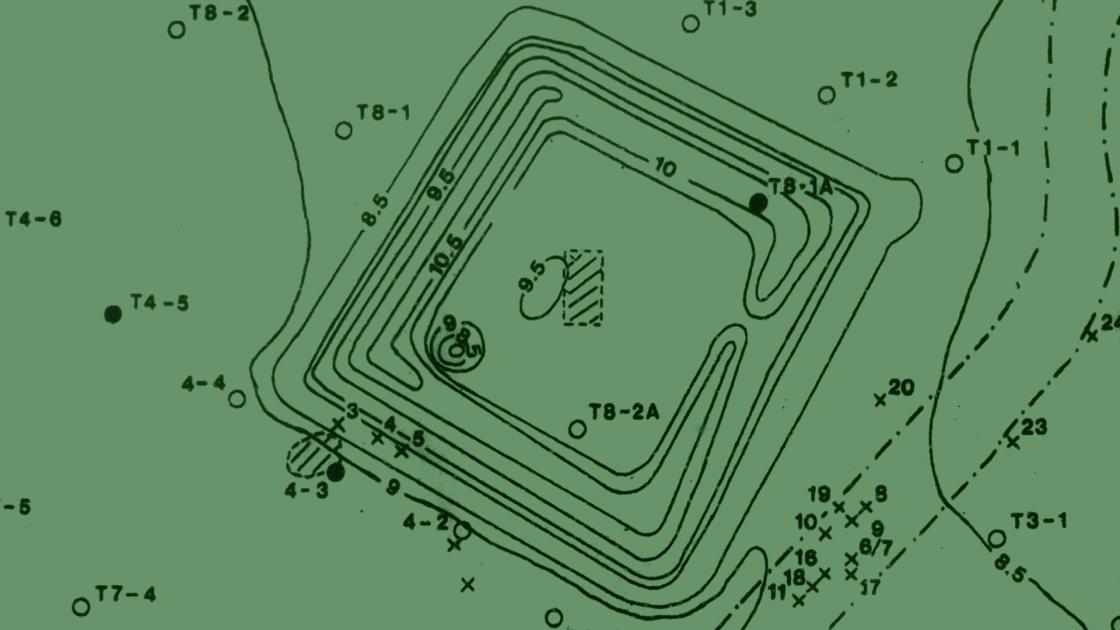
In 1780, the British laid siege to the wealthy port of Charleston, just 30 miles from here, and Fair Lawn took on a starring role in the dramatic battle for the southern colonies during the War for Independence. For the British, the estate’s location at the headwaters of the Cooper River made it a vital conduit between the coast and the interior roads of the Carolina backcountry.
British and Loyalist forces created a network of strategic outposts in this area to block the Patriot escape route from Charleston, gather intelligence, and contain the rebellion. They sometimes co-opted the lands of local planters to house the wounded, store munitions, and access food. When they seized Fair Lawn in April 1780, British soldiers assaulted widow Jane Colleton and plundered her house, despite her Loyalist sympathies. The grounds of her mansion, Colleton Castle, were fortified with swivel guns and ringed with abatis (sharpened logs). The property was used as a supply depot, an infirmary, and a jail for prisoners of war. Some of her enslaved workers may have been pressed into service to dig the foundation of the earthen fortress you see here today. Although the offending troops were disciplined, Lady Jane fled for her safety. After the British abandoned Fair Lawn in November 1781, the Castle and outbuildings were found in ashes. We do not know for certain if the British or the Patriots were responsible for the devastation, but in any event, Lady Jane never returned home.
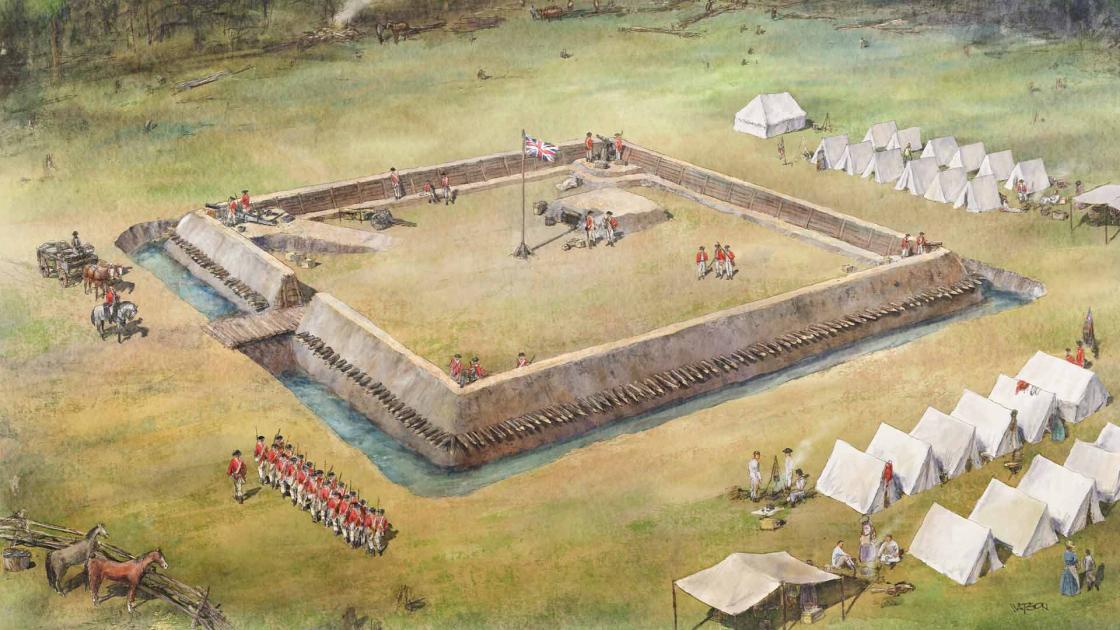
Constructing an earthen fortress — sometimes called a redoubt — on a tract choked with vegetation and teeming with mosquitos was daunting. However, Fort Fair Lawn was an essential way station to British outposts throughout South Carolina and it had to be protected. Amazingly, a team of field engineers, soldiers, and possibly enslaved workers, completed the structure — from ditch to parapet — in less than a week. The ground was cleared and leveled, the site was laid out, the ditch was dug, soil was hauled, and parapets and walls were formed. The British embedded menacing abatis around the exterior to slow an attacker’s advance. A 6--pounder gun, brought up the river by row galley and possibly hauled to the site by wagon, was positioned on a platform facing south to guard the vulnerable landing at Biggin Creek.
Fort Fair Lawn is an example of precise English military engineering, with corners aligning north, south, east, and west. The base is made of dirt sitting on sturdy limestone foundations. Each wall measures 100 feet long and is composed mostly of clay, which was effective at stopping artillery. Built at an angle, the walls once rose to about six feet and spanned at least two feet in width at the top to deter musket fire. Troops climbed a dirt step — or banquette — inside the parapet to fire down on the enemy. However, aside from some minor skirmishes with local Patriots, the imposing fort saw no major combat.
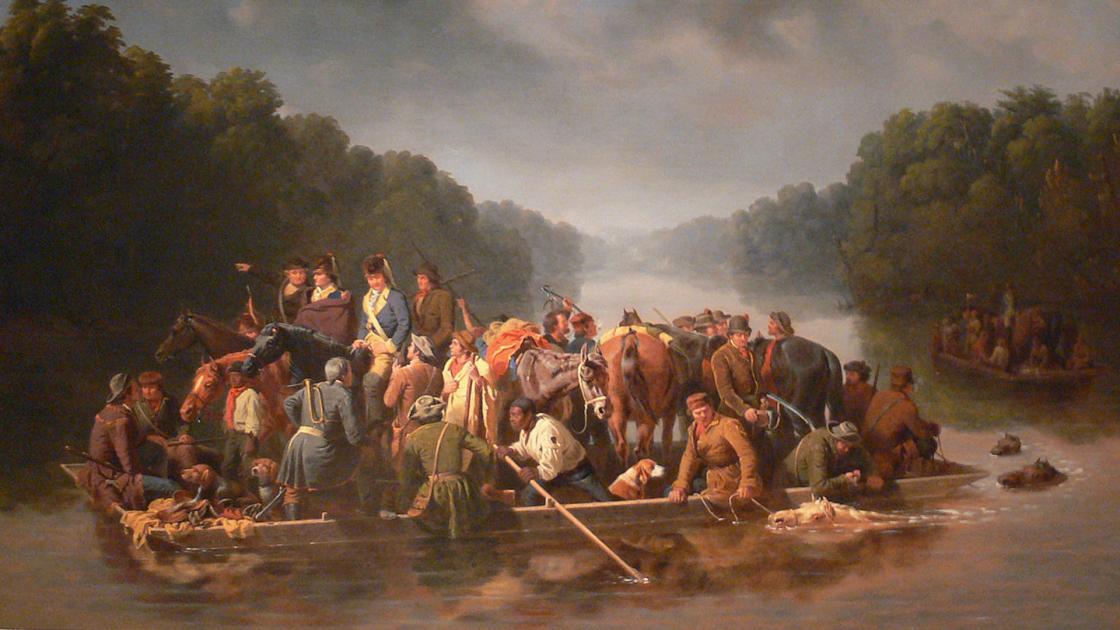
When failing to find and neutralize the elusive Lowcountry Patriot Francis Marion, British Lieutenant Colonel Banastre Tarleton is said to have despaired, “as for this old fox, the Devil himself could not catch him.” Thereafter, the colonial militia officer was affectionately known by local supporters as “The Swamp Fox.” With his Partisan troops,” The Swamp Fox” fought a guerilla-style war against British and Loyalist forces throughout this area, which earned him hero-like status in America’s War for Independence. Unlike icons George Washington or Nathanael Greene, who are credited with orchestrating victory in the war, Marion’s reputation was not won through major military battles. Rather he is known for a series of successful rural raids that kept the British on alert, foiled their communications network, made shambles of their supply lines, and inspired patriotism among colonists favoring the rebellion. Marion's actions mirrored those of Major Robert Rogers' Rangers, known for their innovative frontier tactics during the French and Indian War. His tactics and operations are still studied and applied by Special Forces soldiers today.
“The Swamp Fox” often harassed the British at Fair Lawn but failed to penetrate the well-guarded outpost. Feeling the time was right, he dispatched Colonel Hezekiah Maham and Colonel Isaac Shelby with their militias to attack British defenses here on November 17, 1781. While the men did not seize the fort, they stormed the infirmary and jail at Colleton Castle nearby, audaciously demanded its surrender, and made off with prisoners, arms, and other valuable stores.
Marion continued concealing himself in the swamps and conducting surprise assaults on the British until independence was won. He then retired to his plantation and became a South Carolina state senator.
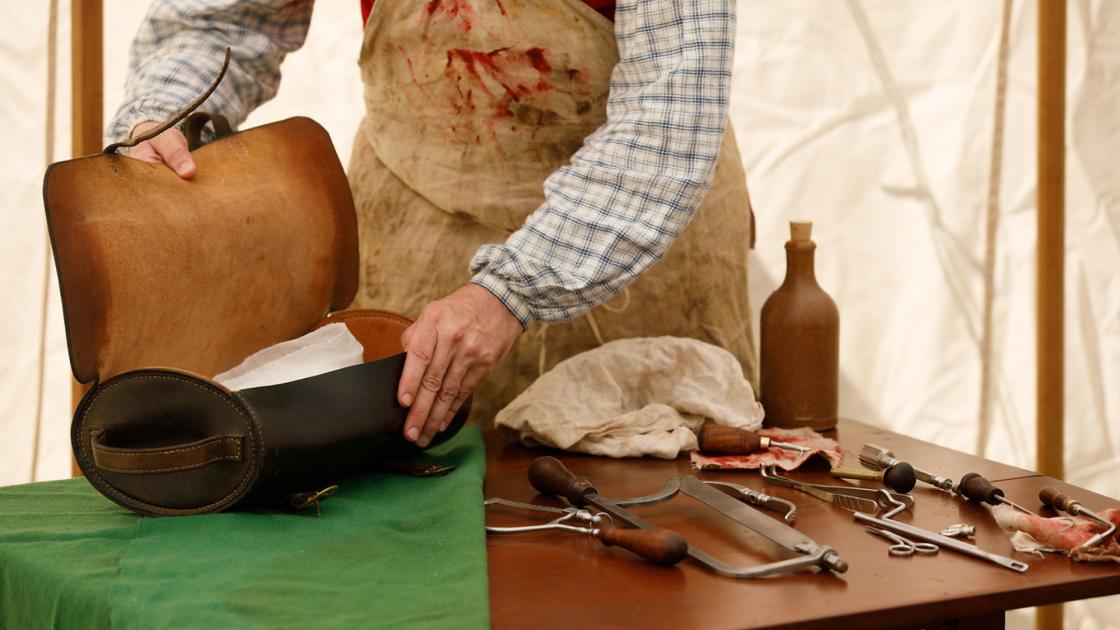
Fort Fair Lawn served as a staging area for nearby battles as well as a place of retreat from the fray. During the transformation from plantation to garrison, the once-magnificent Colleton Castle was fortified by abatis and converted to a British field hospital and prison. The Battle of Eutaw Springs occurred northwest of here in September 1781 and proved to be one of the most calamitous of the war in terms of casualties, with hundreds injured on both sides. Afterward, Fair Lawn’s infirmary received the wounded from both sides. The mansion would have been packed to capacity with suffering and sweltering patients. Those pierced by bayonets, struck by sabers, or shot by muskets were most likely carted here to endure amputation, receive laudanum (a tincture of opium) for pain, or simply to die.
During the British occupation of Fair Lawn, the hospital would have also treated patients who had not seen combat. Medical staff may have administered remedies to British and Loyalist troops who were overcome by the intense South Carolina heat and afflicted by a local diet that was unlike anything they ate at home. In Revolutionary War-era military camps, diseases such as malaria, diphtheria, dysentery, measles, and smallpox were rampant. With crude medical techniques like bloodletting, as well as poor sanitary practices and no effective way to treat infection, the chances of surviving an illness were poor.
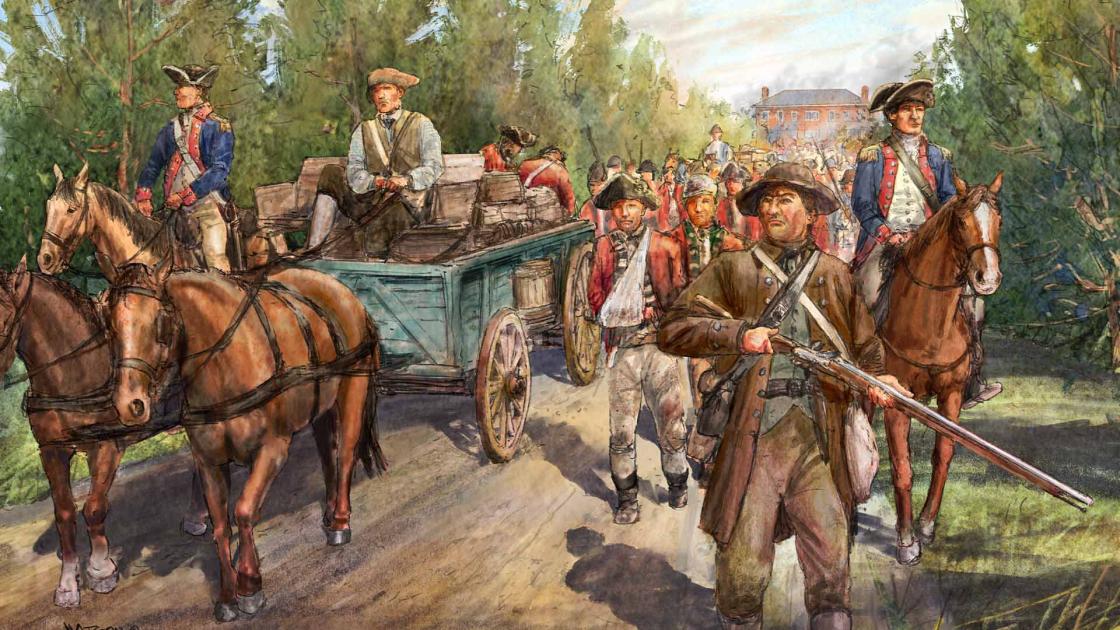
On November 7, 1781, a British detachment of 50 men under Captain Murdock MacLaine was sent to relieve 150 Hessian soldiers — German troops hired to fight for Britain — here at Fort Fair Lawn. MacLaine received orders to defend the fort, the river landing, the blockhouse, the infirmary, and the jail at Colleton Castle, as well as nearby Biggin Bridge. But the departing Hessian commander told MacLaine that he did not need to worry about the infirmary and jail. Perplexed, MacLaine wrote to his superiors for clarification and to request more troop support. MacLaine received only a vague response and a mere 20 men. Knowing he had little hope of protecting the Colleton Castle as well as the fort and bridge with so few resources, he sent 50 convalescents to safety in Charleston.
Marion, “The Swamp Fox,” was on the lookout for an opportunity to loosen the British hold on the Lowcountry. The confusion caused by the recent change in command at Fort Fair Lawn gave him his chance. Marion sent Maham’s legion with Shelby’s frontiersmen — some 300 troops — to attack Fair Lawn on November 17. After a reconnaissance, the Patriots deemed the Fort Fair Lawn redoubt too formidable to take, so they set upon Colleton Castle and demanded its surrender. They encountered no resistance. About 150 patients and staff were taken prisoner. MacLaine's small garrison observed the raid helplessly from the fort but did nothing to intervene. Just a week later, MacLaine’s regiment was recalled to Charleston. Colleton Castle was razed, although it is not known who inflicted the damage.
Lady Jane Colleton sent her stepdaughter, Louisa, to England to escape the “civil war” in which countrymen fought countrymen — Loyalists against Patriots — for independence. Louisa was away when her childhood home was overrun by the British, the estate cleared of 500 cedars to expose the enemy’s advance, the mansion turned into a field hospital and jail, and the grounds and outbuildings set on fire. Upon Louisa’s return to the United States, she recalled how seeing the ruins here “overwhelmed me with affliction.” Louisa did not rebuild the plantation. She moved abroad and married a British admiral, Richard Graves.
Fair Lawn was eventually sold. Enslaved workers planted rice for the plantation’s new owner. Years later, the land was logged for timber and the abandoned old fort was used as a cattle pen. The role of this redoubt in the British Campaign in the South and the battle for South Carolina was a very distant memory.
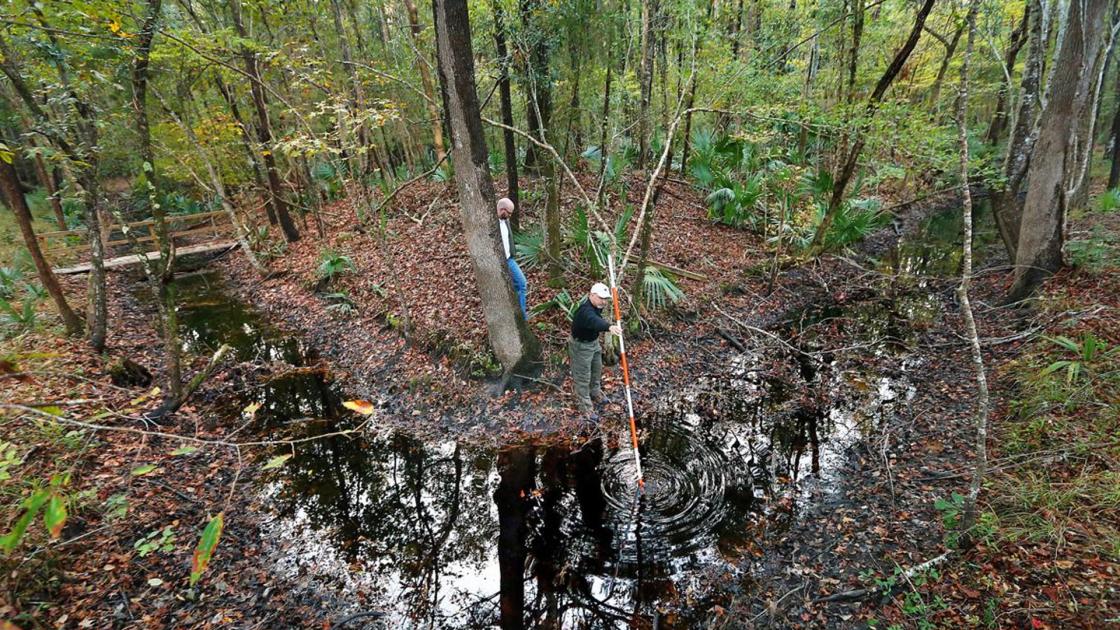
In 2012, historians uncovered the original earthen redoubt, the fortress that a British engineer paced out on this soil in 1780. Remarkably untouched, with ditch, parapets, and sally port (entryway) mostly intact, its presence ensures that the rich and diverse history of what happened here will be remembered and appreciated.