-
The BlogBiographies
-
Videos

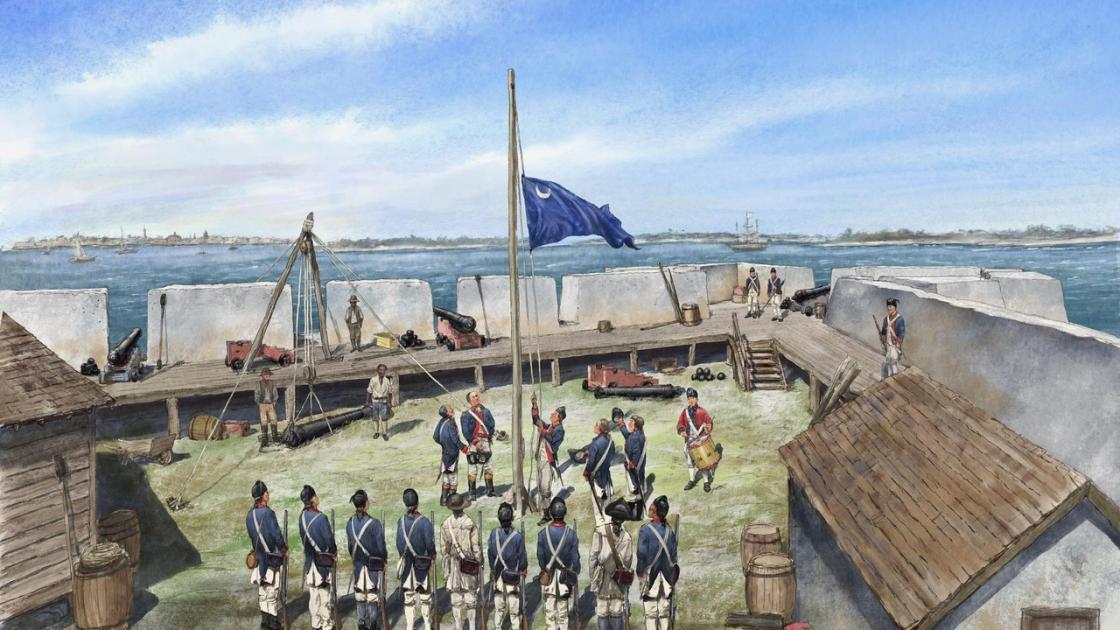
September 1775
Fort Johnson, located on James Island overlooking Charleston Harbor, played a strategic role in South Carolina during the American Revolution. Originally built in the early 18th century to guard against foreign attack, it became an important defensive point for controlling access to Charleston. In September 1775, Patriot forces seized Fort Johnson from its small British garrison, raising the Liberty Flag—the first flag to fly over South Carolina in defiance of British rule. Though later overshadowed by other fortifications such as Fort Sullivan (Fort Moultrie), Fort Johnson remained a key site for harbor defense and a symbol of early Patriot resistance.
Know Before You Go
Fort Johnson is a part of a South Carolina Department of Natural Resources complex. Expect to see government marked vehicles as you pass through the open gate alongside structures that once belonged to the Medical University of South Carolina. Fort Johnson, itself, is now marked by a large flag pole on the property.
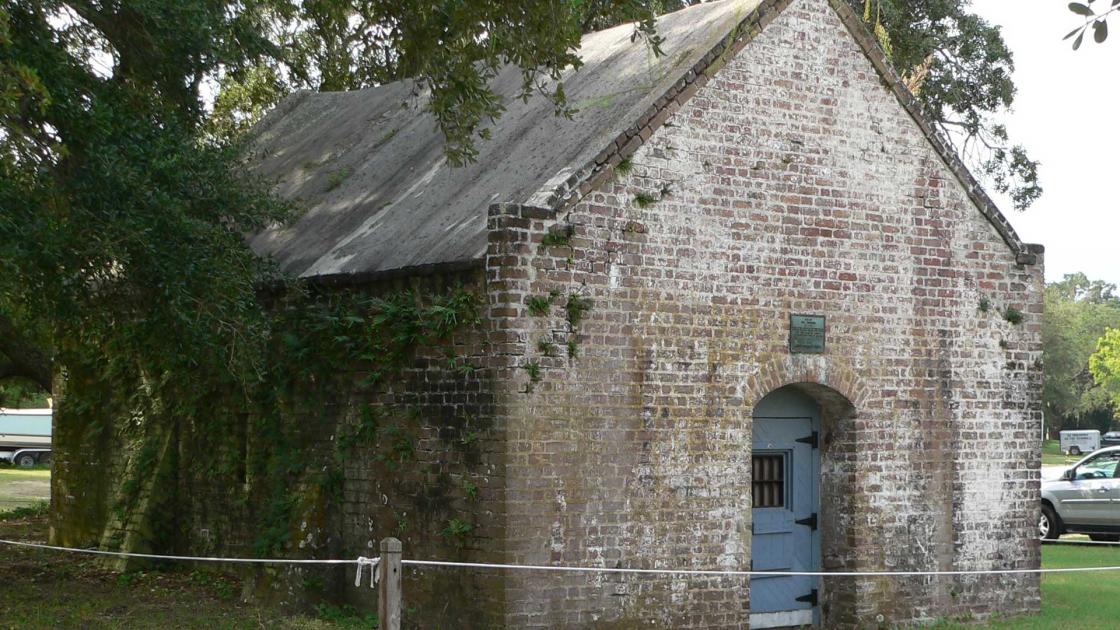
You are standing next to a rare remnant from one of the early fortifications in South Carolina, the powder magazine at Fort Johnson. Named for South Carolina’s Proprietary Governor, Nathaniel Johnson, the fort was constructed in the early 1700s by the British to defend Charleston from attacks by the French during Queen Anne’s War, one of several struggles between France and Britain for power in North America. The magazine was constructed in 1765. The British continued to maintain it through the colonial wars and into the early months of the American Revolution.
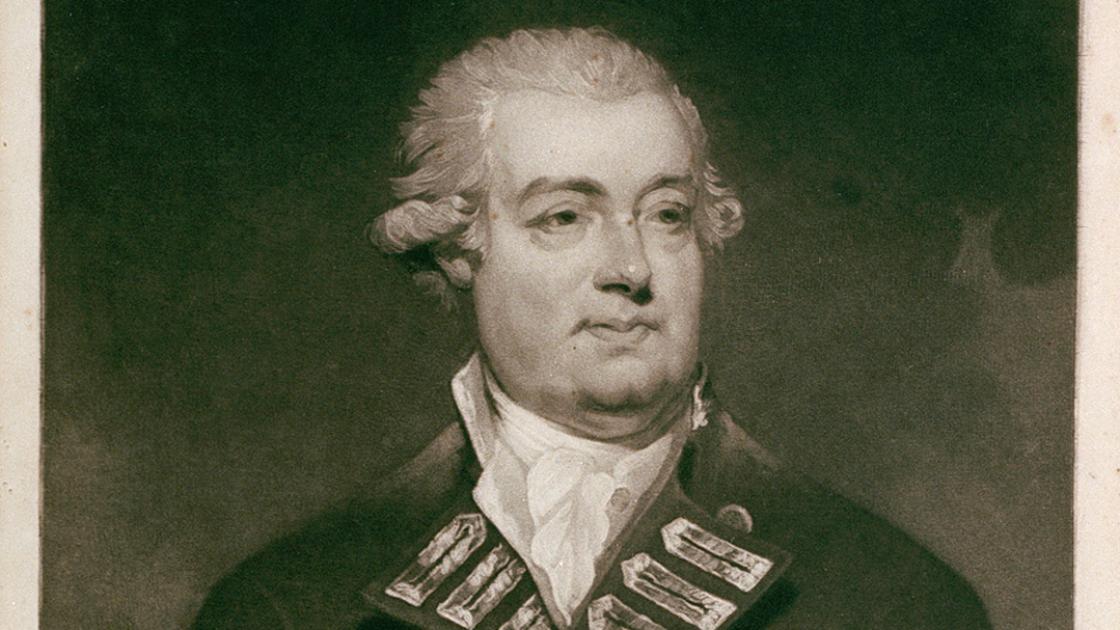
William Campbell, South Carolina’s new Royal Governor, arrived in Charleston on June 18, 1775. Campbell was greeted with the news that the Provincial Congress and the Council of Safety were raising troops in response to the Battles of Lexington and Concord. With few forces of his own on hand and supported by few ships, Campbell could do little to oppose the South Carolinians organizing in preparation to fight for American independence.
On the night of September 14, sailors from the British ship Tamar began the process of evacuating the artillery and gunpowder from Fort Johnson. That same evening, Henry Laurens, the President of the Council of Safety, ordered troops to Fort Johnson. Lieutenant Colonel Isaac Motte embarked from Gadsden’s Wharf with Captain Francis Marion and three infantry companies. In a bloodless affair, Motte occupied the fort early the next morning. His force managed to capture around 20 cannons before the British took them away. After taking possession of the fort, Motte raised the newly designed Liberty flag featuring a white crescent moon on an indigo blue background. A version of this banner with palmetto trees still serves as the state flag of South Carolina.
Campbell considered the capture of Fort Johnson an overt act of aggression. He dissolved the Royal government and took refuge on the Tamar. He eventually departed Charleston Harbor in early January 1776.
Turn around, walk back to Fort Johnson Road, and follow it to the end. You will have a panoramic view of Charleston Harbor.
The surrender of British Lieutenant General John Burgoyne at Saratoga in October 1777 forced the British to reevaluate their strategy in North America. They decided to consolidate their forces in New York and refocus their efforts on the Southern Colonies. Savannah fell in December 1778, and a British army under Major General Augustine Prévost marched on Charleston in May 1779. As Prévost approached the city, the South Carolinian Patriots destroyed and abandoned Fort Johnson.
On December 26, 1779, Lieutenant General Sir Henry Clinton and Admiral Mariot Arbuthnot departed New York on a joint expedition against Charleston. After rendezvousing off Tybee Island, Georgia, on February 1, Clinton moved up the coast and landed on Simmons, now Seabrook Island, southwest of Charleston. Clinton planned to move over the islands, cross the Ashley River north of the city and take the port by land. At the end of the month, Clinton reached James Island. The 71st Regiment of Foot occupied Fort Johnson.
A critical element of Clinton’s plan rested with Arbuthnot. Clinton wanted Arbuthnot to push his ships into Charleston Harbor to provide support to the army farther up the Ashley. On March 20, Arbuthnot sailed over the sandbar at the entrance to the harbor. The Continental navy under Commodore Abraham Whipple pulled back to the cover of Fort Moultrie, then eventually to the mouth of the Cooper River. Rather than engage the guns at Moultrie, Arbuthnot ran his ships past it and anchored here under the safety of Fort Johnson on April 8. The Patriots surrendered the garrison at Charleston on May 12, 1780.
If you were standing here after the city fell, you would have seen British prison hulks anchored in the harbor to receive Continental prisoners. Rather than accept parole and pledge allegiance to Britain, many Patriot soldiers suffered and perished in the squalid conditions aboard the ships. Among those treating the prisoners was Elizabeth Jackson, the mother of future President Andrew Jackson, who eventually contracted cholera, or “ship’s fever,” and died.
Walk back to Stop 1 and continue past the magazine to the Civil War monument. Carefully follow the path to the beach. Fort Sumter will come into view on your left and to your right is Morris Island.
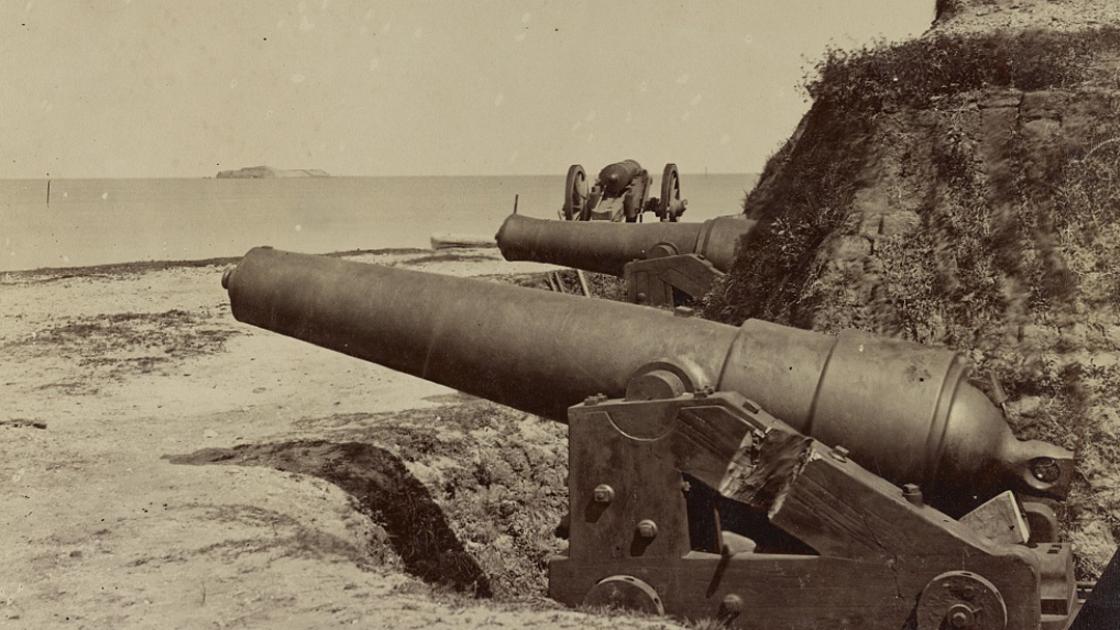
The United States struggled with the question of slavery in the years following the American Revolution. Shortly after the election of 1860, South Carolina seceded from the Union and later joined with other Southern states to form the Confederacy. On December 27, U.S. forces under Major Robert Anderson abandoned Fort Moultrie and moved to Fort Sumter in Charleston Harbor. Anderson maintained a tense relationship with the surrounding Confederate forces. On March 1, 1861, Brigadier General Pierre G.T. Beauregard assumed command of the Confederates in Charleston. When Anderson refused a demand to surrender, Beauregard opened a bombardment on April 12. At about 4:30 a.m., 67-year- old Virginian, Edmund Ruffin purportedly fired the first shot against Sumter – and of the Civil War – from the guns at Fort Johnson. At approximately 1:30 p.m. on April 13, Anderson surrendered.
Fort Johnson then became part of the Confederate defenses protecting Charleston. On July 18, 1863, on Morris Island, one of the most famous events of the war occurred when the first Black regiment raised in the North, the 54th Massachusetts, attacked Battery Wagner. The Confederates evacuated the city and its defenses in February 1865.