-
The BlogBiographies
-
Videos

June 28, 1776
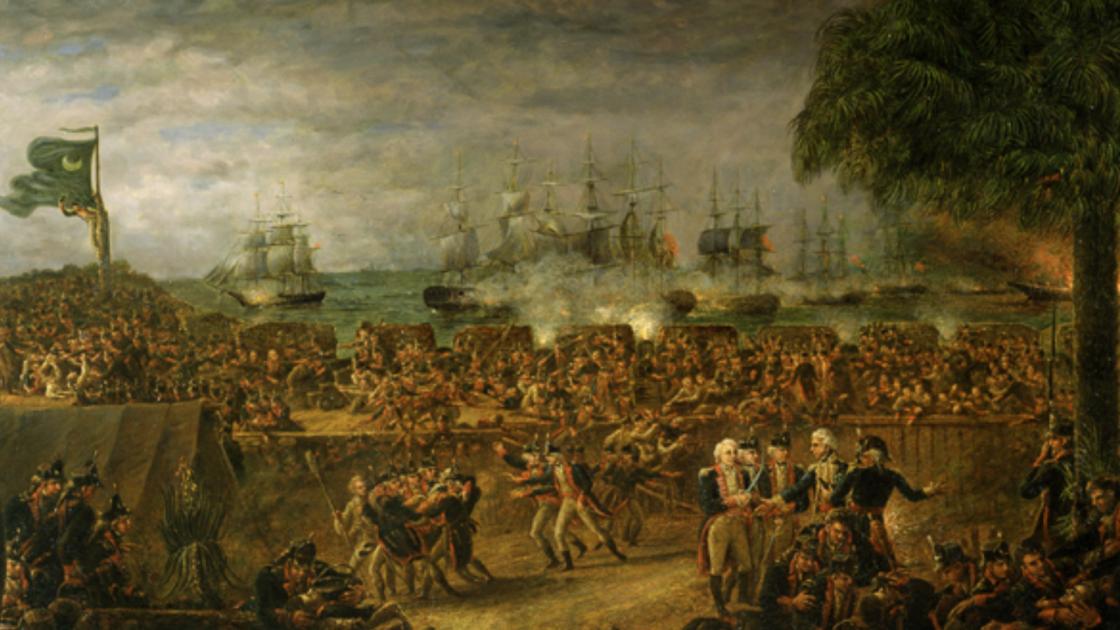
The Battle of Sullivan’s Island, fought near the site of today’s Fort Moultrie in June 1776, was the first significant Patriot victory of the Revolutionary War. America’s defeat of the elite and powerful British Navy shocked the world. A miscalculation by British Commodore Sir Peter Parker and the surprising resilience of the Patriots’ still-unfinished palmetto-tree fort both worked in the Patriots’ favor and saved the port of Charleston from invasion — at least temporarily.
Before You Go
Fort Moultrie represents the entire history of static seacoast defenses in the United States, from the American Revolution through World War II. The site includes a visitor center with museum exhibits. The Fort Moultrie Visitor Center is open daily 9:00 am-4:30 pm. The fort itself is open until 4:30 pm all year. There is an entrance fee for the park.
The British Target Charleston
It is hard to miss Fort Moultrie, located in the popular coastal community of Sullivan’s Island. Instrumental in defending Charleston from the Revolutionary era through the Civil War and World Wars I and II, the site is large and layered with history. What you see today are primarily the remains of a military base that lowered its flag in 1947.
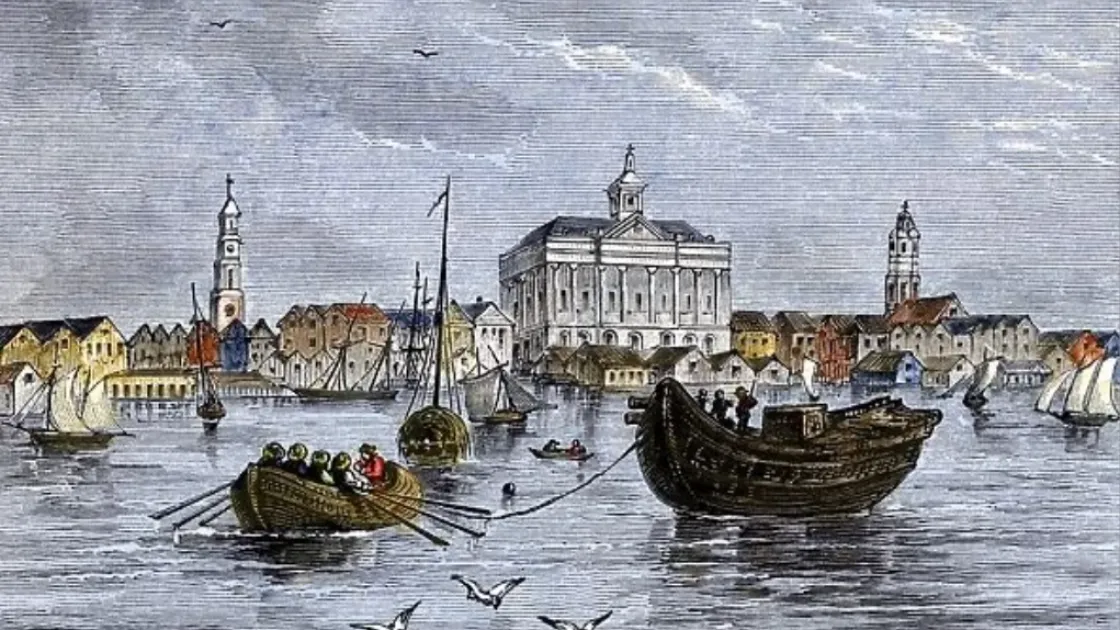
But in June 1776, when a famous battle was fought here during America’s War for Independence, Fort Moultrie was called Fort Sullivan. The Patriots erected a structure of palmetto logs to defend the harbor. It was located where you stand now, outside today’s fort and close to the water, and it was unfinished at the time of the British attack. That exposed but resilient fortress, made of palmetto logs and sand, later inspired South Carolina’s nickname — the Palmetto State.
In the spring of 1776 Charleston became the target of a combined British army and navy attack. In the months leading up to the battle, British General Sir Henry Clinton was sent south from Boston to shore up support for the Loyalists in this region and reestablish the rule of the Crown.
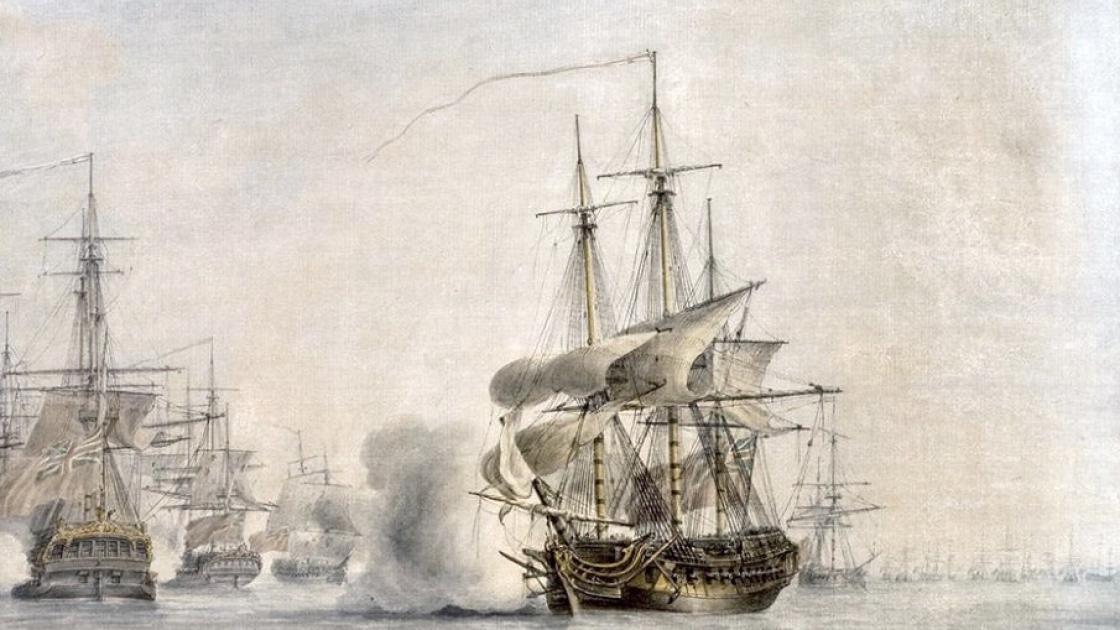
That winter, he rendezvoused with Lord Charles Cornwallis off the Cape Fear River in North Carolina. Cornwallis had just arrived in the colonies with Commodore Sir Peter Parker, whose regiments sailed from Cork, Ireland. Clinton’s goal was to land in North Carolina and link up with a force of American Loyalists, but he discovered that the Cape Fear River would not support naval vessels far inland, making a landing in North Carolina unfeasible. Clinton favored moving the fleet to the Chesapeake instead, but Parker lobbied hard for taking Charleston. Intelligence about the unfinished palmetto-log fort on Sullivan’s Island, which guarded the narrow entrance channels through the sandbar at the mouth of Charleston Harbor, persuaded the Commodore that the Patriot defenses could be easily taken, opening the valuable port to British ships.
A Palmetto Log Fort
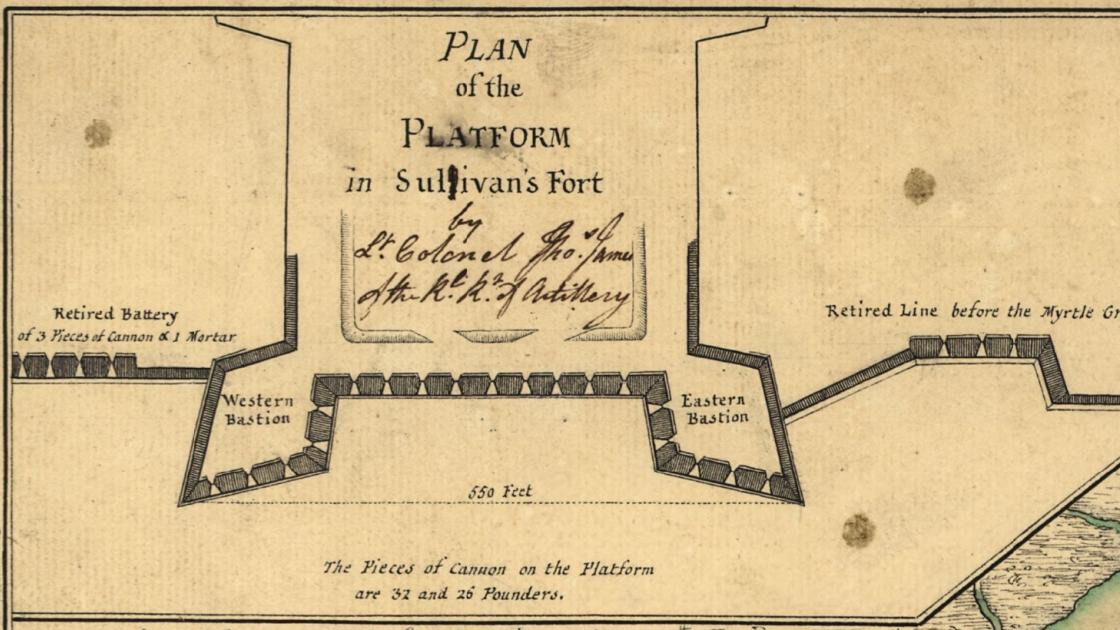
Before the Revolutionary War, this island was a wilderness covered with live oak, myrtle, and palmetto trees. With the British threatening Charleston in 1776, however, the city’s Council of Safety decided to build defenses on Sullivan’s Island at the mouth of the harbor. Through the winter and spring of 1776, South Carolinian laborers and enslaved Africans cleared the land and erected Fort Sullivan with the local materials available to them at the time — palmetto logs and sand. The fort was square in shape with a bastion (a projection allowing for firing in all directions) at each angle. The walls, made of palmetto logs bolted together, were 20 feet high. Patriot Captain Peter Horry described the structure, sufficient for 1,000 men, as "an immense pen 500 feet long, and 16 feet wide, filled with sand to stop the shot."
Only the southeastern and southwestern walls of the fort were finished when the British fleet arrived at Charleston Harbor in June 1776. The northern walls were still under construction. The fort was armed with 31 guns, ranging from nine pounders to 26-pounders. Narrow banquettes, or steps, were built along the walls, allowing soldiers to reach loopholes through which they could aim their muskets and rifles at the enemy.
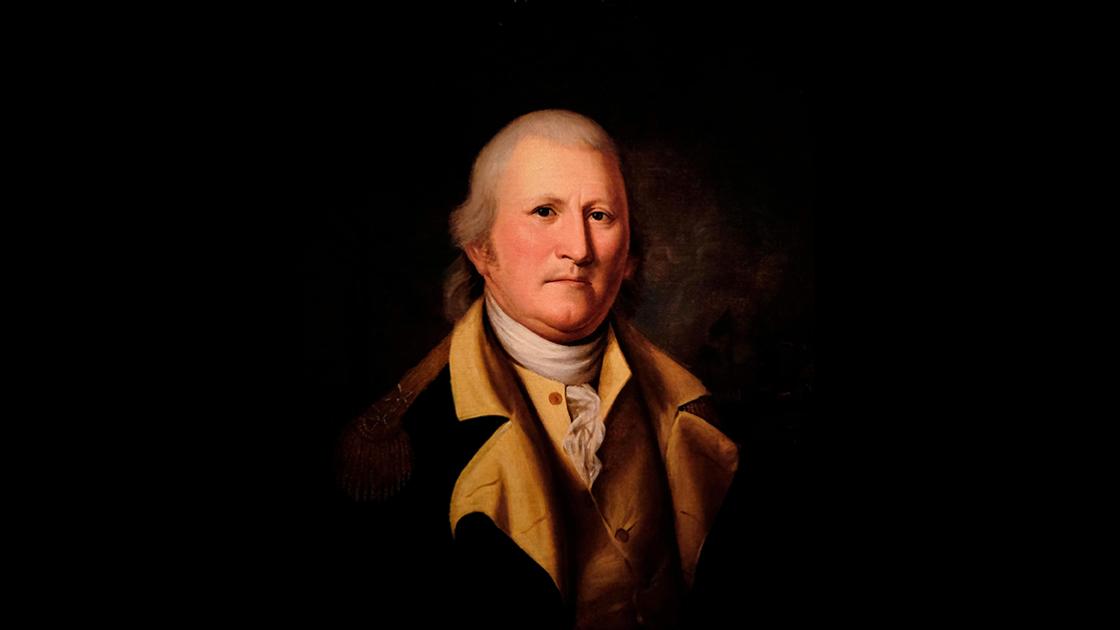
Despite its unfinished state, the fort was garrisoned by about 435 men from the 2nd South Carolina and 4th South Carolina Artillery under the command of Colonel William Moultrie. Moultrie was a southern planter and veteran of the Cherokee War. He held the fort on the southern side of the island, while Colonel William “Old Danger” Thomson, also a Cherokee War veteran, dug in with 800 troops, 30 Catawba warriors, and two cannon on the north side.
Defending the Harbor
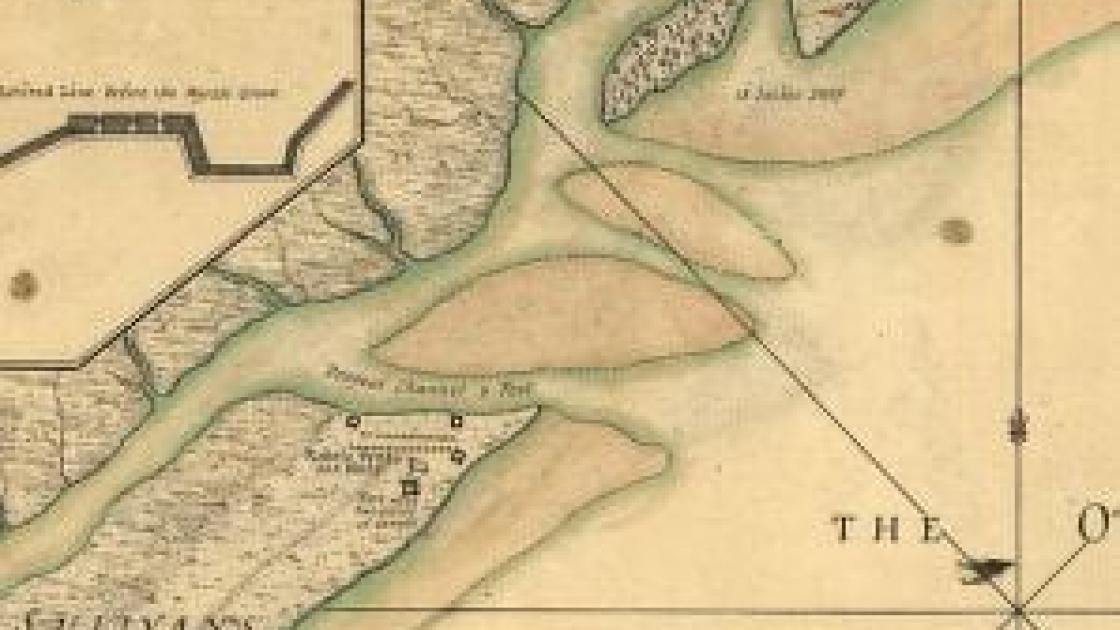
Because of its strategic location, Fort Sullivan could direct its heavy guns to fire at nearby ships with deadly effect. All ships entering the harbor had to proceed northward from Five Fathom Hole, an anchorage inside the sand bar protecting the entrance to the harbor, and between Morris Island and Sullivan’s Island. To make the turn westward into the harbor, ships followed a U-shaped course between Sullivan's Island and a treacherous shoal called the Middle Ground. The guns Moultrie had at Fort Sullivan could fire smoothbore, flat trajectory cannonball fire at the waterline of the passing wooden ships, causing them to sink. In addition, chain shot — two cannonballs connected by a chain — could be fired from a single cannon at the sails and rigging, impairing a ship’s mobility. The most effective artillery fire against personnel was from grapeshot, which were composed of several small iron or lead balls clustered around a wooden core. When fired, these balls would break loose in a wide shotgun-like swath.
Despite his advantageous position, Moultrie was poorly prepared to meet the enemy. He was outgunned by the British warships, undermanned, and extremely short on powder and cannon balls. The Royal Navy had approximately 300 cannon, and when their broadsides were facing the Patriot defenses, all that firepower would bear down on the hastily constructed palmetto-log fort. As a British flotilla of about 50 vessels neared Charleston on May 31, Moultrie grew concerned about his lack of powder and personnel but stoically accepted the challenge ahead. He wrote to South Carolina President John Rutledge: “I must make the best defence I can with what I have got. . . .”
Lee v. Rutledge
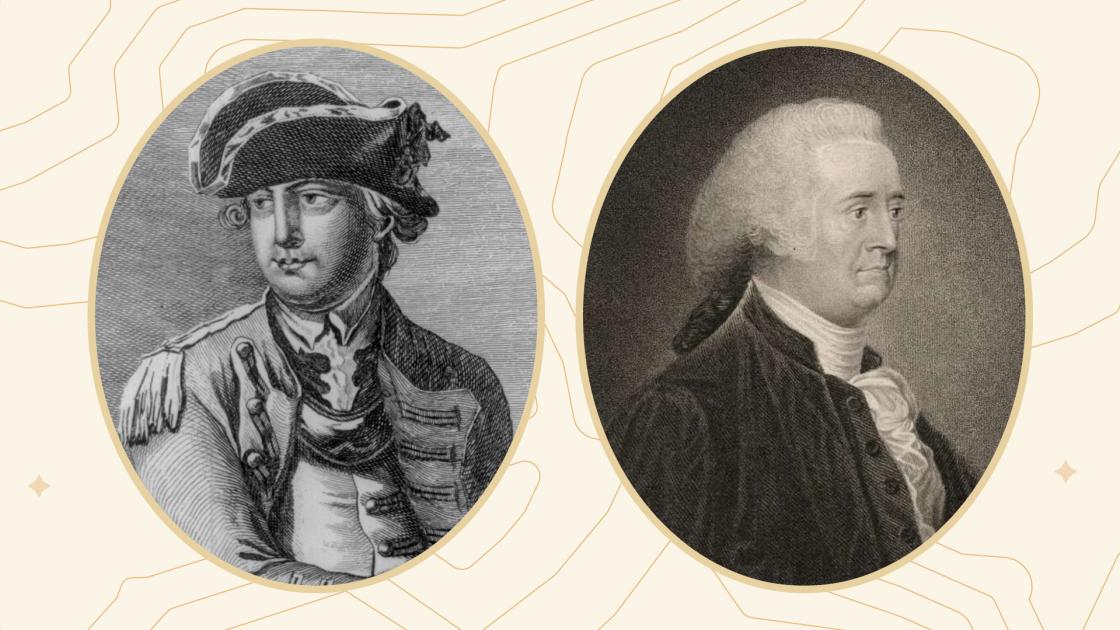
On June 8, as British warships rounded the bar, Patriot Major General Charles Lee arrived with about 2,000 Continental soldiers from Virginia and North Carolina to assume command of the defense of Charleston. Once there, he had about 6,500 men at his disposal. Characterized by George Washington as “fickle and violent,” the eccentric Lee was the superior of Colonels Moultrie and Thomson. When he surveyed their unfinished defenses, he proclaimed Fort Sullivan a “slaughter pen.” He insisted that a floating bridge be erected across the inlet that separated the island from the mainland to ensure an escape route for the troops, and he warned Moultrie, “Sir, when those ships come to lay alongside your fort, they will knock it down in half an hour.” Lee also questioned Moultrie’s ability as an officer: “everybody is well persuaded of your spirit and zeal,” he told the veteran colonel, “but they accuse you of being too easy in command.”
Lee’s attitude did not sit well with John Rutledge. Rutledge, a lawyer, politician, and one of the drafters of the state constitution, had just been elected president of South Carolina in March 1776. He privately told Moultrie, “General Lee wishes you to evacuate the fort [if attacked]. You will not without an order from me. I would sooner cut off my hand than write one.” Meanwhile Lee, believing the enemy would easily sail past the islands and into the harbor, used most of his resources to defend the mainland. This left Moultrie with few men and little ammunition as he faced the British Royal Navy on June 28, 1776.
A Foiled Plan
Commodore Sir Peter Parker was the son of a rear admiral and practically grew up in the navy. The approach to Charleston Harbor, however, was challenging even for the most experienced sailor. From the south, a series of narrow channels skirted northward with shallow sandbars surrounding either side. A ship that entered the mouth of the harbor would have to sail close to the southern tip of Sullivan’s Island or face the disastrous possibility of running aground. The British used Black seamen — primarily men who had escaped from slavery and knew the local waters well — to pilot their heavy vessels.
Parker’s fleet endured delays due to weather, wind, and tides. Conditions were finally favorable for an attack on June 28. While Parker struggled to position the fleet for the bombardment of the fort, Sir Henry Clinton landed his British regulars on Long Island (Isle of Palms today). The intention was to have the troops wade through Breach Inlet at low tide, land on Sullivan’s Island, and attack Fort Sullivan on the north side where the defenses were most vulnerable. Clinton, however, had faulty intelligence about the hazards of the narrow waterway separating the two islands. Breach Inlet, another Liberty Trail site only a few minutes’ drive from here, was seven feet deep, not 18 inches as he was told — too deep for men and too shallow for ships. The tides were treacherous. His only option was to try to use flat-bottomed assault boats to transport troops to Sullivan’s Island over the racing current. There were few of those vessels available, however, so the men had to be ferried over in small groups. Their attempted crossing immediately drew deadly fire from “Old Danger” Thomson’s snipers on the north side of Sullivan’s Island and drove the British back. At that point, Clinton had to abandon his original strategy of attacking Fort Sullivan in a combined assault — by land and sea. It was now up to Parker’s fleet to defeat the Patriots.
Parker Proceeds
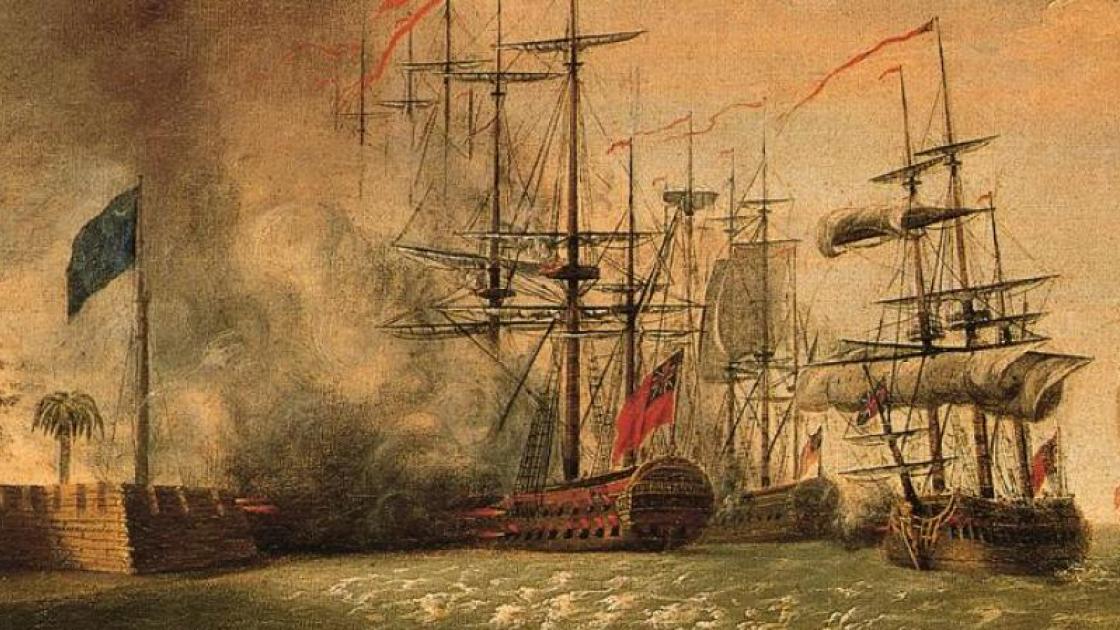
Even without Clinton’s support, Parker was determined to see the battle through. The attacking British fleet composed of nine man-of-war ships with a total of nearly 300 guns was poised to attack. As Moultrie was inspecting Thomson’s entrenchments at Breach Inlet on the morning of June 28, a lookout warned that Parker’s fleet was sailing toward the fort. Moultrie rushed back to the garrison. At 11:30 a.m., the Thunder, a warship with mounted mortars, anchored a mile and a half from the fort and began to lob its shells. Moultrie later remembered the scene in his memoirs: “Most them fell in within the fort, but we had a morass in the middle, that swallowed them up instantly, and those that fell in the sand in and about the fort, were immediately buried, so that very few of the burst amongst us.” Parker’s other ships were soon brought up against the fort and dropped anchor. They started bombarding the Patriot defenses, striking with 7,000 rounds of cannon and mortar fire.
Due to limited supplies of powder, Moultrie’s men fired back judiciously, making each shot count. Despite being only a few hundred yards off the coastline, the clouds of gunsmoke from the British ships were so thick that the Americans temporarily lost sight of them. Moultrie noted in his memoirs: “At one time, 3 or 4 of the men-of-war's broadsides struck the fort at the same instant, which gave the merlons [parts of the parapet] such a tremor, that I was apprehensive that a few more such would tumble them down.” Amazingly, the British were not doing any real harm to the fort. The spongy palmetto logs absorbed the cannon balls, and many of the ships were either anchored too far from the Patriot defenses or in the wrong position for their cannon to do any significant damage.
Calm in the Storm
Throughout the ordeal on that sweltering June day, Moultrie stayed calm, and his men rallied. He was an experienced officer, having initially fought in the Anglo-Cherokee War in 1761. He was appointed the first commanding officer of the South Carolina 2nd Regiment when it was organized in June 1775. Serving with and supporting Moultrie at Fort Sullivan were talented officers Lieutenant Colonel Isaac Motte and Major Francis Marion, both French and Indian War veterans.
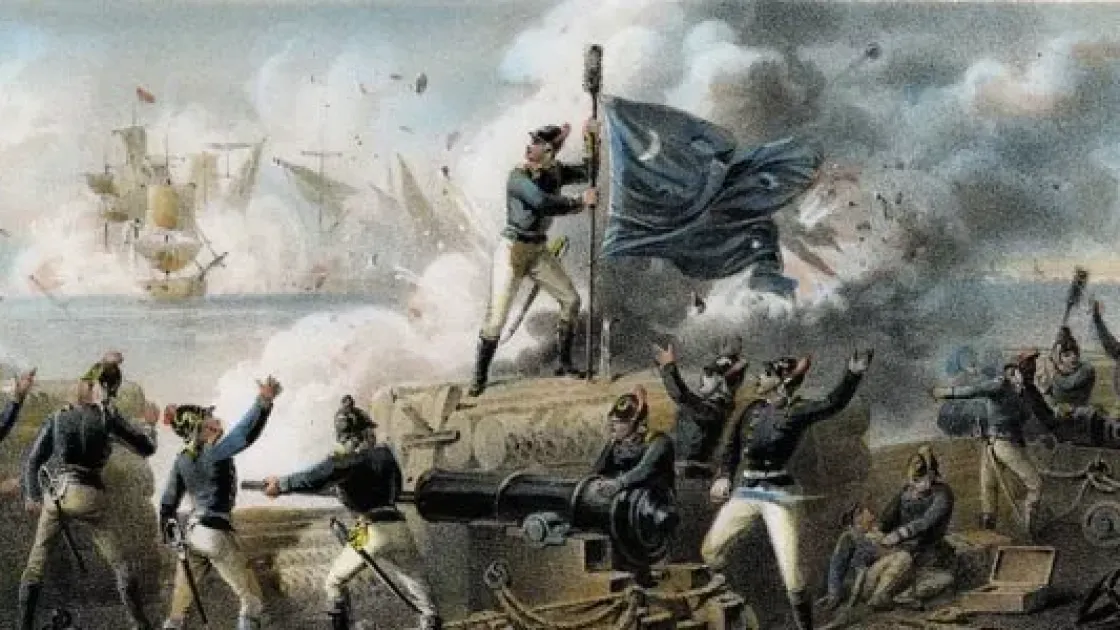
When the fort’s flagstaff was cut down by British fire during the battle, William Jasper, a valiant sergeant, jumped up on the ramparts and vaulted over the walls to retrieve the colors, despite the rain of shot and shell around him. Jasper then climbed back up on the ramparts and planted the raised flag on the sand in plain view. He was later awarded a sword for valor by President Rutledge. Major General Lee arrived to inspect the premises in the late afternoon. Moultrie later wrote that Lee remarked, “‘Colonel, I see you are doing very well here, you have no occasion for me, I will go up to town again,’ and then he left us.” Soon after, 700 pounds of extra powder were sent to Moultrie with an accompanying note from Rutledge: “Do not make too free with your cannon. Cool, and do mischief.”
The fort’s sturdy walls took the British by surprise. Their continuous fire proved ineffective at toppling the fortification. The British vessels Sphinx, Syren, and Actaeon attempted to take up a position from which they could attack the fort on its weak side, but soon ran aground over the sandbar of the middle-ground, near where Fort Sumter stands today. Parker’s fleet was now truly between a rock and a hard place. The American cannon were proving too much for his fleet, and he could not effectively maneuver his ships to counter. The British ships and their crews were literally being ripped apart by Patriot fire. Parker himself was wounded when splinter shot ripped his breeches off, penetrating his knee and buttocks. By nightfall, the battle began to subside. Parker withdrew his forces at 9:30 p.m. In the early hours of June 29, British troops set fire to the Actaeon, still grounded off Sullivan’s Island, and abandoned it. The Royal fleet retreated to Five Fathom Hole.
Humiliation & Elation
In the aftermath of the ten-hour battle a Royal Navy sailor wrote: “We never had such a drubbing in our lives.” A British naval surgeon predicted: “This will not be believed when it is first reported in England.” Indeed, word of the Royal Navy’s defeat shocked those in Britain and deeply humiliated the Crown. Both Parker and Clinton hurriedly sent dispatches to London in an attempt at damage control, but the English reaction was scathing. Miscalculation and misjudgment derailed the expedition from conception to conclusion, beginning with Parker’s insistence on attacking Charleston and Clinton’s reluctant agreement to go along with his plan. Lee later wrote to General George Washington, that “the dilatoriness and stupidity of the enemy saved us.”
The unsuccessful British attack on Fort Sullivan cost the British 93 lives and about 130 wounded. The Patriots suffered 12 killed and 26 wounded in the successful defense of Charleston. When the smoke cleared, citizens on the mainland were still unaware of the outcome. Moultrie sent the good news by boat and the streets erupted in cheers and elation. On June 29, Lee sent some rum over to reward Moultrie’s brave men. Days later, the South Carolina General Assembly renamed the palmetto-log defenses Fort Moultrie in honor of Fort Sullivan’s spirited commander. On July 20, the Continental Congress in Philadelphia resolved that:
the thanks of the United States ' of America, be given to Maj. Gen. Lee, Col. William Moultrie, Col. William Thompson, and the officers and soldiers under their commands; who, on the 28th of June last, repulsed, with so much valor, the attack which was made on the State of South-Carolina, by the fleet and army of his Britannic majesty.
Charleston would remain in Patriot hands until May 1780, when the British returned and successfully laid siege to the city, but the victory at Sullivan’s Island proved that those favoring rebellion had the determination and resilience to stand up to a greater force and win.