-
The BlogBiographies
-
Videos

July 26, 1780
Constructed during the Cherokee Wars (1759 - 1761) as a defense post for colonists, Fort Thicketty was utilized by those Loyal to the Crown to launch raids on nearby Patriot sympathizers and their families. Extremely defensible and one of the last Loyalist outposts in the South Carolina backcountry, it was a prime target to uproot the British from the Carolinas.
Before You Go
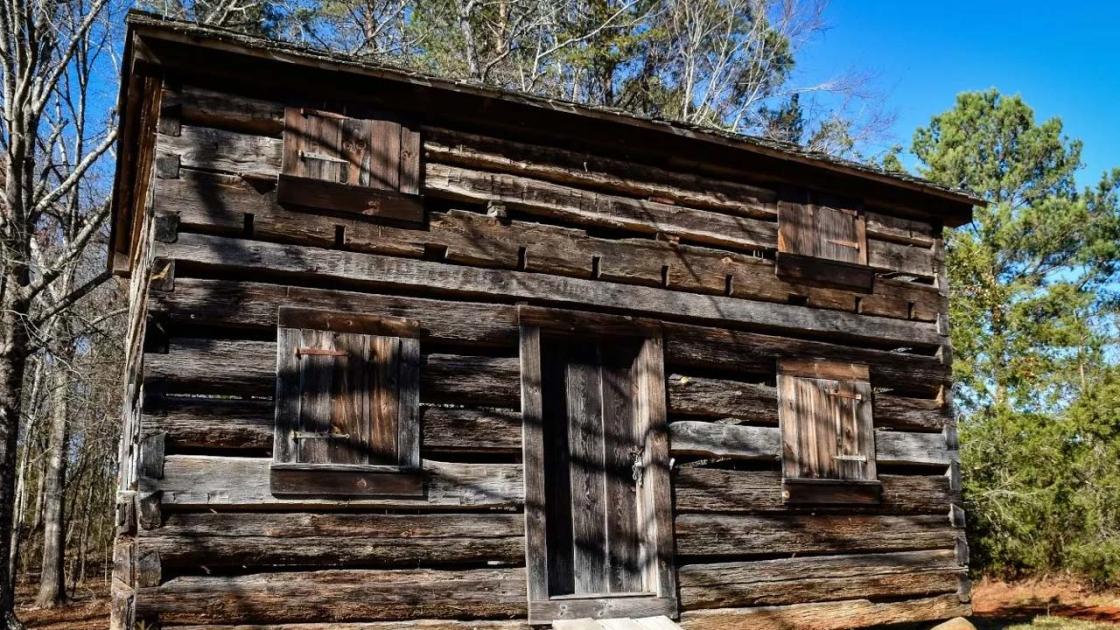
The structure that stands before you has undergone restoration for the past several years. Likely a structure made from the timbers of Fort Thicketty, it still resembles the fortification and the type of structures that were erected to protect backcountry colonists.
A Refuge for Settlers
You are standing on the site of the original Fort Thicketty, but the barn-like structure at the end of this trail is most likely a reconstructed block house or farm building from the Revolutionary War period. It is made partially of wood dating to that time.
Fort Thicketty was officially named Fort Anderson but was called “thicketty” after the nearby creek. It was built around the start of the First Cherokee War (1759-1761), sparked in part by the Cherokees’ long-held resentment against mistreatment by English colonists. Before the European settlement of the Americas, the Cherokee were one of the largest Native American tribes in North America. They had relatively peaceful interactions with early European settlers and became their trading partners in the late 17th century. Their economic partnership eventually evolved into a military alliance, with the Cherokee aiding British forces in 1712 in battle against the Tuscarora people over land rights. At the outbreak of the French and Indian War in 1754, the Cherokee again fought alongside the British. However, just a few years later, they would become enemies. The conflict began in Virginia in late 1758, when settlers killed several Cherokee warriors returning from battles against the French. The Cherokees retaliated in North Carolina in spring 1759, and the violence spread to South Carolina.
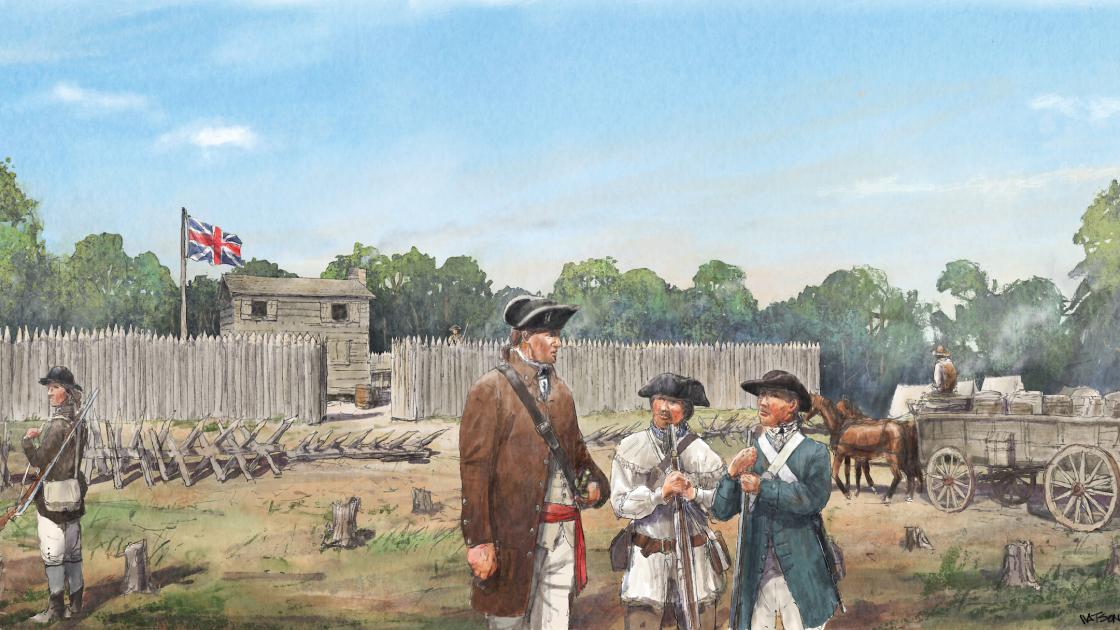
Built by the members of the Grindal Shoals community, the first European settlers in the area, to serve as a refuge for Backcountry residents fleeing from Cherokee and Creek attacks, Fort Thicketty later became a base from which Loyalists would launch raids on local farms during the American Revolution. The looting parties would rob rural families of food, clothing, and essential supplies, then return to their well-fortified outpost. In those years, the fort was surrounded by an abatis (sharpened stakes) and a stockade.
A Bloodless Surrender
When Charleston fell to the British in May of 1780, Fort Thicketty was quickly occupied by Loyalists in the Upcountry. By July of that year, 93 Loyalist troops were garrisoned here under the command of Captain Patrick Moore, an unusually tall, dashing, and brash officer, who lived nearby with his wife and children and was known for his bravery in battles against the Cherokee. The fort was considered strong and able to withstand an attack from a large opposing force. The Patriots believed that British Lieutenant Colonel Patrick Ferguson was commanding around 1,500-1,800 Loyalists in the area near the fort, a misleading number since Ferguson was commanding around 1,000 at the time.
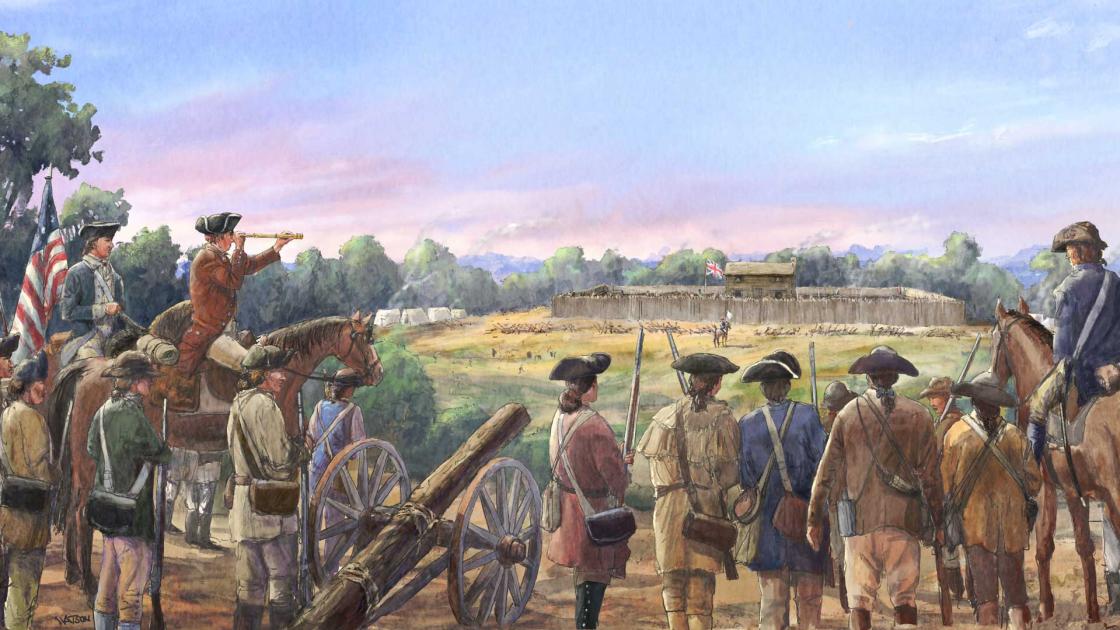
Patriot Colonel Charles McDowell moved to seize Fort Thicketty from Moore so it could be used as a base to harass Ferguson’s troops. Reinforcements arrived daily to support McDowell, including Patriot Colonel Isaac Shelby and 600 overmountain men, as well as the Culbertson and McBee companies of the SC 1st Spartan Regiment of Militia. The Spartan men lived in the area, knew the terrain, and served as local guides.
Acting on orders from Colonel McDowell, the Patriots descended on Fort Thicketty at daybreak on July 26, 1780, to force Moore and his Loyalists out. When the frontiersmen approached the fort, Shelby demanded Moore’s surrender, but Moore declared he would “defend the fort to the last extremity.” Undeterred, Shelby had his men encircle the fort and then issued another request for surrender. This time, Moore capitulated, with the provision that his men be paroled if they pledged to never rejoin the conflict.
In addition to taking the fort, and the Loyalists within it, without firing a shot, the Patriots collected valuable spoils of war. According to one historian, these included “two hundred and fifty stands of arms, all loaded with ball and buck-shot, and so arranged at the port-holes, with their abundant supplies, that they could, . . . have resisted double the number of their assailants.”
A Prelude to Kings Mountain
After the surrender, British Lieutenant Colonel Patrick Ferguson wrote to his commander, British General Charles, Lord Cornwallis, about Captain Moore’s actions at Fort Thicketty:
[The fort] had an upper line of loop-holes, and was surrounded by a very strong abatis, with only asmall wicket to enter by. It had been put in thorough repair at the request of the garrison, . . . and each man was of opinion that it was impossible [for the Rebels to take it]. The officer next in command, and all the others, gave their opinion for defending it, and agree in their account that Patrick Moore, after proposing a surrender, acquiesced in their opinion, and offered to go and signify as much to the Rebels, but returned with some Rebel officers, whom he put in possession of the gate and place, who were instantly followed by their men, and the fort full of Rebels, to the surprise of the garrison. He plead cowardice, I understand…”
But Ferguson was wrong in his assessment of Moore. The Loyalist captain’s actions were likely due to fears for his nearby family’s safety and the possibility of retribution by the Patriots. Moore’s actions ultimately had negative consequences for the British. The Patriots’ easy success at Fort Thicketty interrupted Ferguson’s plans to trap the Patriots in the Backcountry and set him on a path toward Kings Mountain. The Patriot victory in that battle on October 7, 1780, turned the tide of the war in favor of those fighting for independence and started an ill-fated chain of events that led to Cornwallis's surrender at Yorktown in October 1781.