-
The BlogBiographies
-
Videos

August 20, 1780
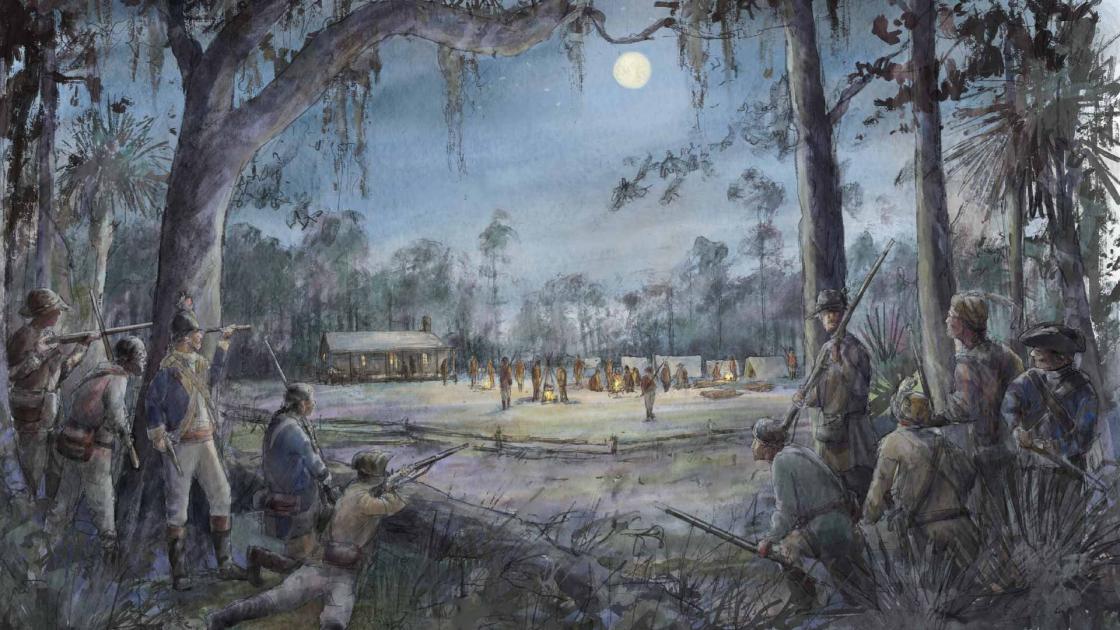
Today’s quiet trails at the Santee Wildlife Refuge belie the tension and urgency that filled this landscape in the summer of 1780. As Patriot forces reeled from the catastrophe at Camden, Francis Marion — newly thrust into a larger role and enraged by British actions close to home — launched one of his earliest and boldest strikes. What unfolded along the Santee River marked a defining moment in Marion’s rise as the “Swamp Fox” and revealed both the desperation and determination shaping the war in South Carolina.
Before You Go
National wildlife refuges offer us all a chance to unplug from the stresses of daily life and reconnect with our natural surroundings. Santee NWR offers both outdoor recreation pursuits and opportunities to learn about our cultural history. Make Santee NWR your destination to see wildlife, hike and bike, hunt, fish and enjoy boating. Visit the historic Santee Indian mound which was used as a British Garrison during the Revolutionary War.
Seasonal opportunities for hunting White-tailed deer are available at the Bluff, Cuddo, and Pine Island Units of the refuge. Hunters from all over the state come out to the woods of Santee in the hopes of harvesting a deer or feral hog. No alligator hunting or waterfowl hunting permitted within refuge boundaries. Be sure of your location and the refuge boundary when hunting on the waters of Lake Marion.
Both hunting and fishing are permitted, subject to state, federal and refuge regulations. Fishing and hunting regulations and permits are available at the refuge office and from our website at no cost to visitors. The permit must be signed and in you possession while conducting these activities on the refuge.
Plan to bring insect repellent during warm months and wear layered clothing during cool weather.
Visit the Santee National Wildlife(opens in a new window) Refuge to learn more.
The Santee Wildlife Refuge has many scenic trails, and if you wander along the dirt paths in the Pine Island Unit you will likely be covering the same ground that Patriot Brigadier General Francis Marion crossed in late August 1780. In anticipation of the Battle of Camden, Patriot Major General Horatio Gates tasked Marion with destroying boats along the Santee River to block a British escape to Charleston. Marion and his local militia were successfully carrying out their mission when Marion learned of the devastating Patriot defeat at Camden. Fearing that his men would mutiny and disperse, he kept the demoralizing news to himself.
Marion received two other pieces of information that stirred his anger toward the enemy. He heard from a deserter that the British had just burned his home, Pond Bluff, below Nelson’s Ferry, and he was also informed that Captain Jonathan Roberts’s detachment of the 63rd Regiment of Foot was holding 150 Continental prisoners from Camden at Patriot commander Thomas Sumter's abandoned plantation, Great Savannah, near Nelson’s Ferry. After dark on August 20 or 25 — the historical record is unclear about the date — Marion initiated a surprise attack to release those prisoners. Startling a British sentry, who fired a warning shot, Marion’s men rushed Sumter’s home and, after a brief skirmish, liberated the Continentals. The Patriots killed or captured 22 British Regulars and two Loyalists. One of the prisoners was wounded. Ironically, of the freed Continentals, 85 refused to be liberated. They decided to accept whatever fate awaited them rather than be bound to Marion’s ragtag militia. Although the remainder of the freed men followed Marion, all but three had deserted him by the time he reached his camp in the Snow’s Island swamps. Their loss had little effect on Marion’s band of warriors, who remained devoted to their commander and his effective guerilla tactics.