
Introduction
“The battle was long, obstinate, and bloody. The enemy purchased their victory at a price ruinous to their future prospects.” Patriot Cavalry Commander Henry “Lighthorse Harry” Lee
If you look up “pyrrhic victory” in a dictionary, you’ll see a painting of British General Charles Cornwallis at the Battle of Guilford Courthouse. Well, not really. But here’s what Webster’s says about it, and General Cornwallis would likely agree: “a victory that is not worth winning because so much is lost to achieve it.” While the outcome of March 15,1781 was technically a British victory, Cornwallis didn’t just lose a quarter of his army. He also lost his foothold in the Carolinas and, forced to move north into Virginia, the Battle of Guilford Courthouse directly contributed to the unthinkable—Cornwallis’s surrender at Yorktown seven months later.
This tour will help you understand the Battle of Guilford Courthouse, but the 28 nineteenth and twentieth-century monuments that dot the landscape here help us understand how Americans connected with their Revolutionary past in an era not long after the American Civil War. The private venture Guilford Battleground Company incorporated in 1887 and led the preservation efforts here. In 1917, when Guilford Courthouse National Military Park was created, it became the first Revolutionary War battlefield to be preserved by the federal government. Many of the monuments and markers you’ll visit on your tour date from the era of the Guilford Battleground Company. Some of these monuments mark strategic locations in the order of battle, but many are also gravesites, marking the final resting places of patriots who made the ultimate sacrifice in the pursuit of American independence.
So what happened here on this picturesque landscape that caused the Americans to fight like demons, and the British to risk it all for a victory that wasn’t worth the cost? Start your tour at the Visitor’s Center to find out. You’re about to explore the Battle of Guilford Courthouse, and you’re on The Liberty Trail.
Visitors Center
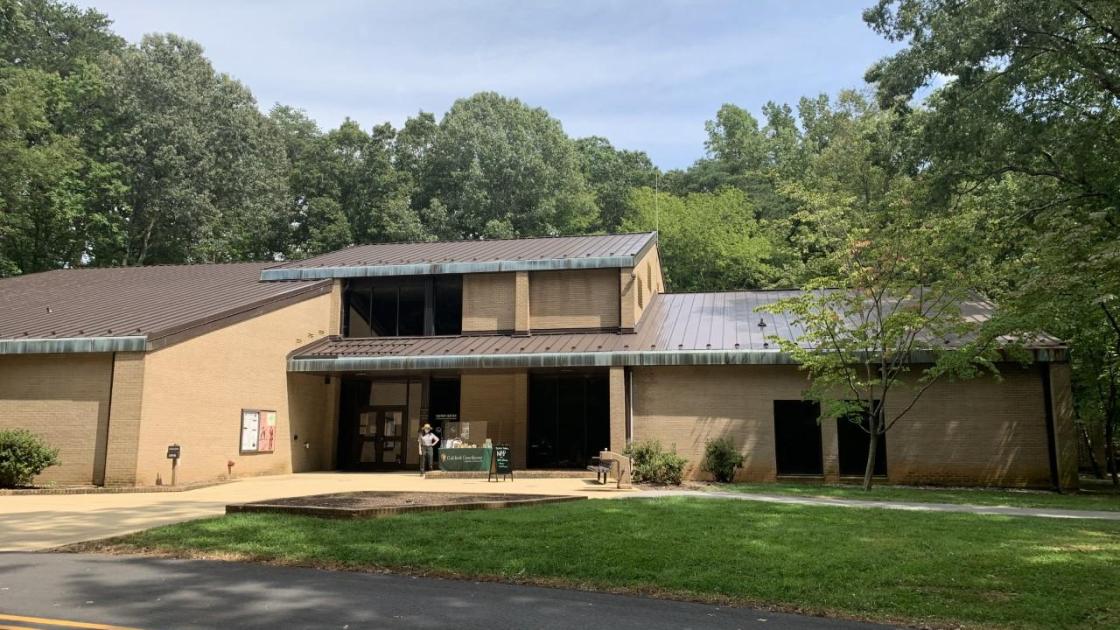
Visitor Center
Standing here on this peaceful land it may be hard to imagine the fierce battle that took place on March 15, 1781, when British and American soldiers clashed in the Battle of Guilford Courthouse. The 90-minute battle ended with the British in control of the field, but at a heavy cost. The battle was a turning point in the Revolutionary War. After Guilford Courthouse, the British under General Cornwallis began their invasion of Virginia, which would end with their defeat at Yorktown.
Parts of the battlefield were purchased and preserved in the 1880s by David Schenck, who turned the land over to the federal government in 1917 when Congress created the National Military Park.
The Visitor Center contains exhibits about the battle, the Southern Campaign of the American Revolutionary War, an illustrated Battle Map and a short film covering the events of the battle.
Nathanael Greene Monument
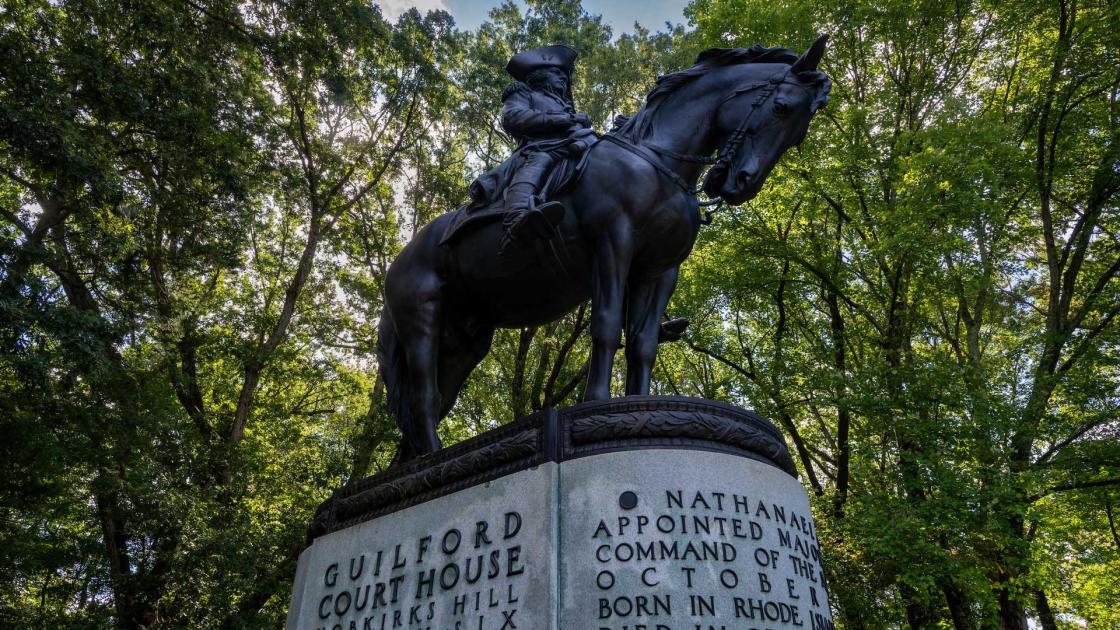
Nathanael Greene Monument
Rising above you 27 feet in the air is none other than patriot General Nathanael Greene. Standing guard near him is Athena, Greek goddess of strategic warfare. Though Greene did not technically win the battle here, his strategy weakened the British forces severely. Athena would have been proud.
Born in Rhode Island in 1742, we remember Greene as the “Fighting Quaker,” though he drifted away from the faith and its pacifist beliefs prior to the American Revolutionary War. General George Washington looked to Greene as one of his most trusted subordinates. In October 1780, Washington sent Greene to take command of the American war effort in the southern colonies.
Greene conducted a skillful campaign across North and South Carolina that prevented the British under General Cornwallis from securing control of the South. At the Battle of Guilford Courthouse, Greene’s strategy inflicted heavy casualties on the British army.
From here, look for the statue of a man who looks like he has something important to say. You can almost hear this monument, can’t you? Walk over and pay your respects—it commemorates North Carolina’s three signers of the Declaration of Independence and two of them, William Hooper and John Penn, are buried here. The men had no connection to the battle, but take a moment to reflect on the courage it took to sign their names on a document that amounted to treason. The independence of a new nation was what the fighting here at Guilford Courthouse was all about.
Second American Line
Second American Line
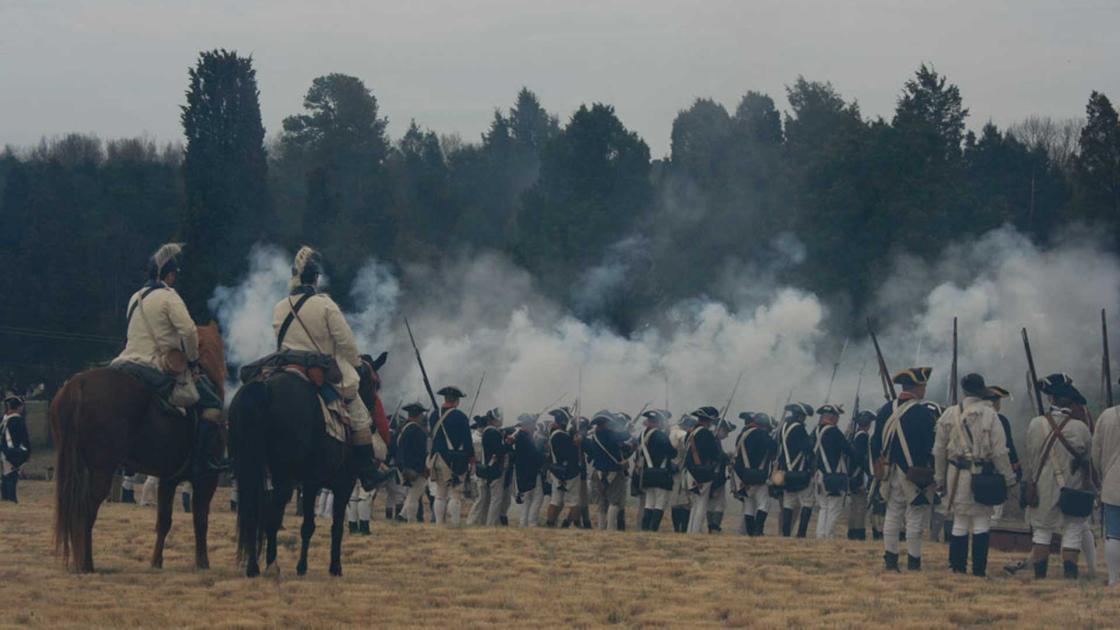
Standing at this spot on the New Garden Road, you’re in the center of the second of three patriot lines that General Nathanael Greene arranged to attack the British.
North Carolina militia and Continental Army rifleman made up the first line. Virginia militia filled out the second line standing where you are here, and Greene’s veteran Continental troops made up the third. Daniel Morgan used his layered troop tactic to great effect at the Battle of Cowpens earlier in January. Would the British be smart enough to recognize it a second time?
The Virginia militia included some men who had seen combat before, and some of their officers had previously held ranks in the Continental Army. When the British pushed through the first line and launched their attack on the second, the Virginians put up a hard fight before withdrawing in good order. Greene wrote after the battle that “The Virginia militia behaved nobly, and annoyed the enemy greatly.” That annoyance went a long way, but the British continued forward towards the third line where the battle would be decided.
Delaware & Maryland Monuments
Delaware & Maryland Monuments
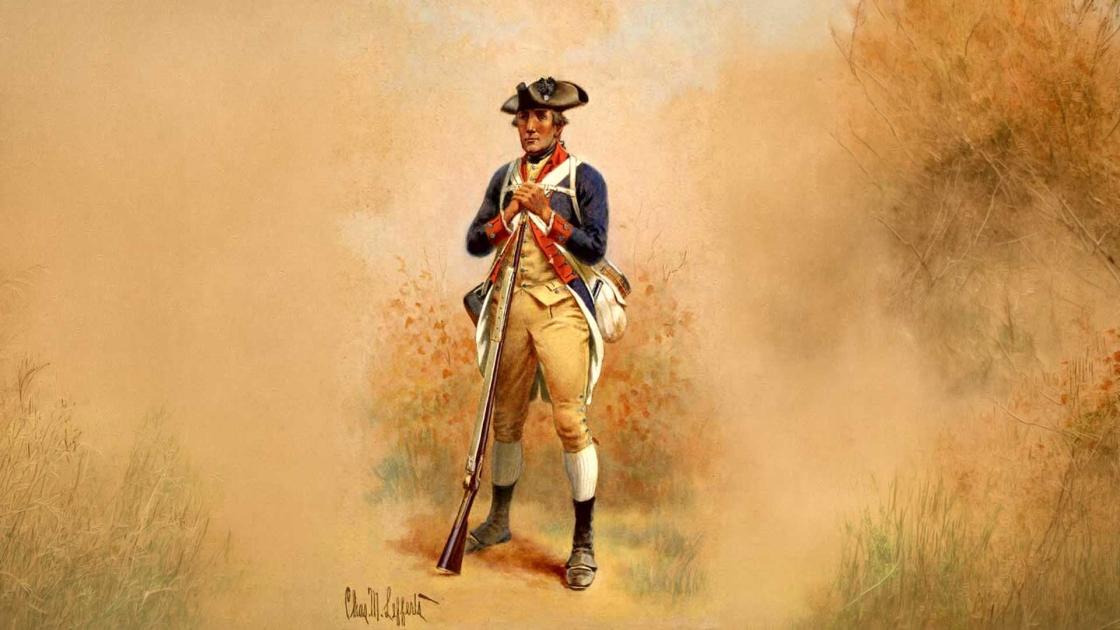
Some of the monuments on this battlefield are also gravesites. The Delaware Monument you see here marks the final resting place of three men believed to be soldiers in Captain Robert Kirkwood’s Delaware Company who were killed in the battle. Their remains were found about a half mile north of here, identified as members of the Continental Army by their buttons and location on the battlefield.
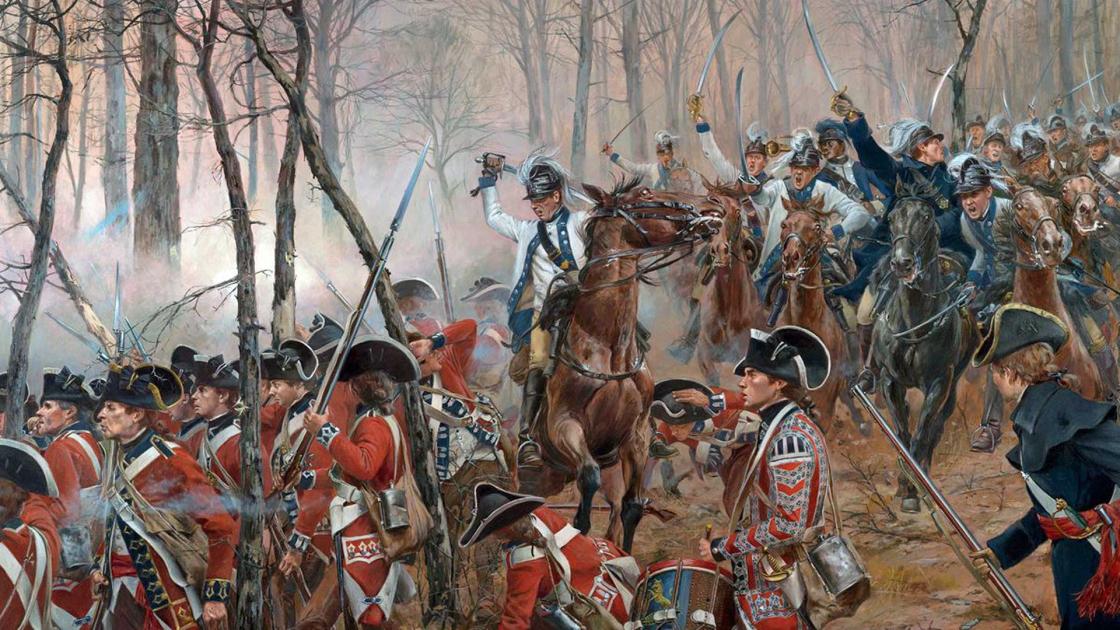
The soldiers from Delaware and Maryland were among the most battle-hardened troops in General Nathanael Greene’s army at Guilford Courthouse. During the final phase of the battle, Maryland troops launched a bayonet charge against British soldiers from the elite Brigade of Guards, halting their advance and giving Greene the chance to withdraw his army from the battlefield.
James Stuart Monument
James Stuart Monument
The British Army won the battle here, but this monument is the only memorial on the battlefield dedicated to a British soldier, Lieutenant Colonel James Stuart. He commanded the Second Battalion of the Brigade of Guards. During the battle, the 2nd Guards forced the 2nd Maryland Regiment to retreat, but were themselves thrown back by a combined attack from the 1st Maryland Regiment and American dragoons. Lieutenant Colonel Stuart was killed in the fighting.
The monument was placed here in 1895 supposedly because Stuart’s sword was found at this spot in 1866. That sword is now missing. At the time, this was believed to be where the last phase of the battle took place, but more recent research indicates that the key moments of the battle took place further away, at the site marked by the two cannons—it’s coming up on your tour.
Richland Creek
Richland Creek
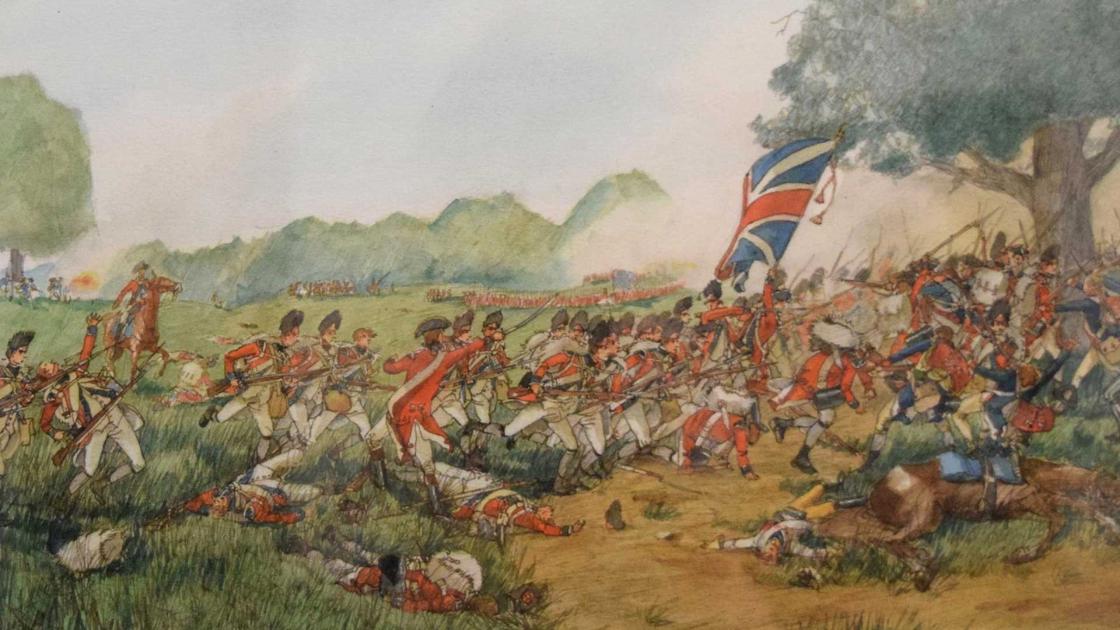
General Cornwallis’s British troops fought their way through the first two lines of patriot soldiers and militia, taking heavy casualties and losing cohesion. Instead of a single, coordinated attack, the British assault launched in two waves, moving through this area before coming into contact with the patriot’s third line, containing General Greene’s most experienced Continental troops—exactly how Greene planned it.
First to attack was the 33rd Regiment of Foot, which was commanded by Cornwallis before the war and was considered the model regiment for the entire British army. But the Maryland and Virginia troops repulsed the 33rd whose commander, Lieutenant Colonel James Webster, was mortally wounded.
The 2nd Battalion of the Brigade of Guards led the second attack on the patriots here, turning back a portion of the 2nd Maryland Regiment—remember that action at the next stop on your tour.
American Six Pounders
American Six Pounders
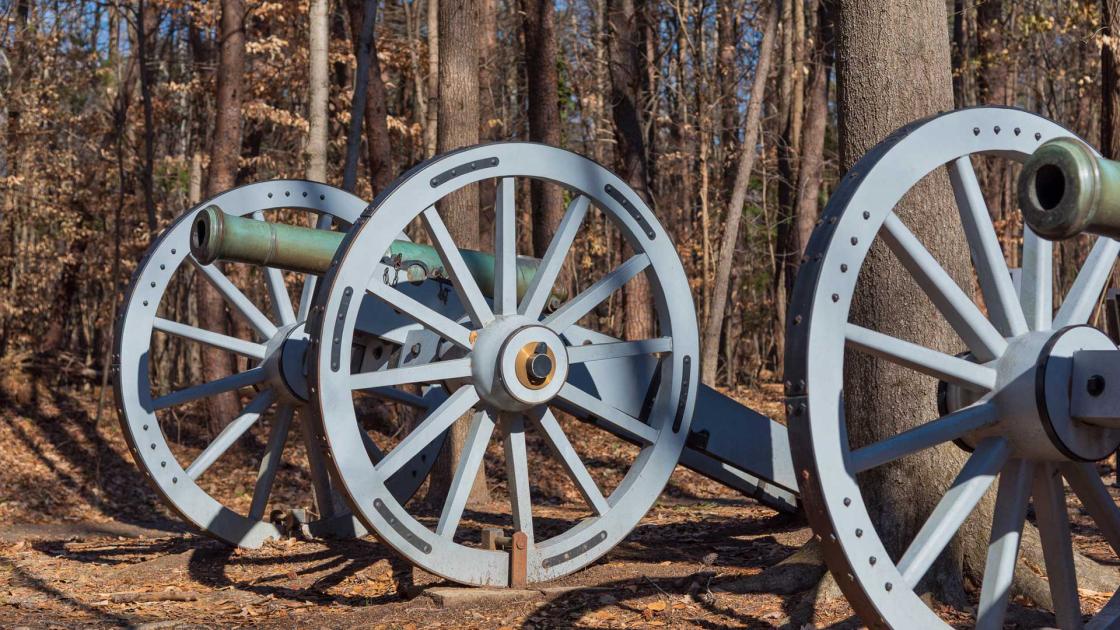
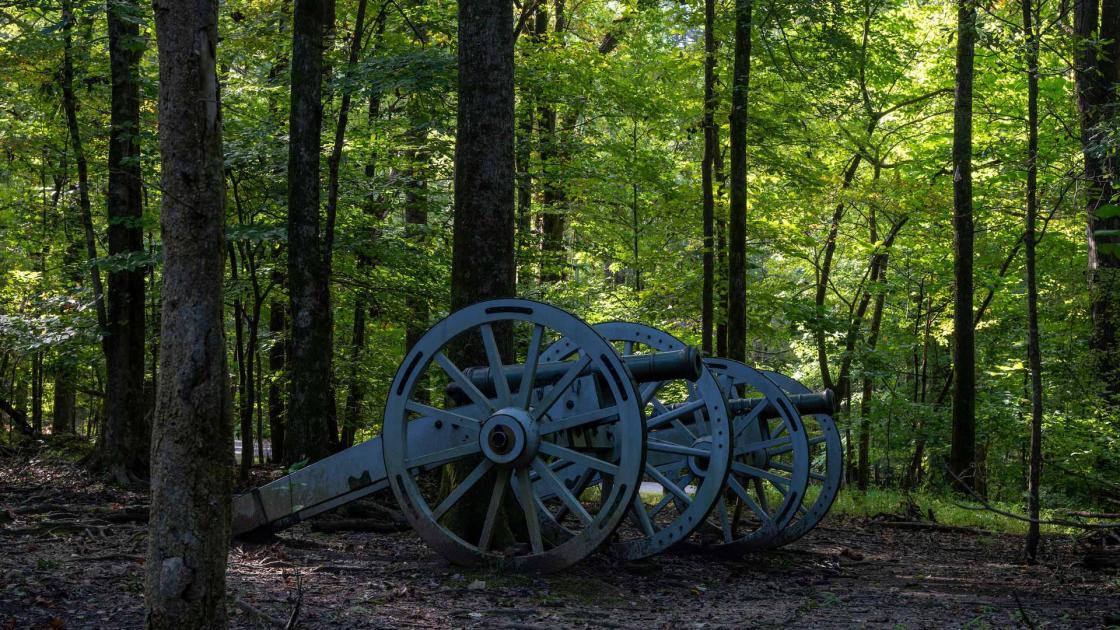
The two cannons you see here are replicas of the sort of artillery piece that would have been here during the battle. They are called “six pounders” because they fired a solid iron cannon ball that weighed six pounds.
Captain Anthony Singleton commanded the two six pounder cannons here, but initially placed them in the first line. But after the British infantry began their advance, he withdrew them to this point, anchoring the left flank of the American third line. When the British Guards attacked and routed the 2nd Maryland, they captured these cannons.
Lieutenant Colonel William Washington, a cousin of General George Washington, led the American dragoons in a counterattack, along with the 1st Maryland Regiment, which halted the British advance. The fighting raged around this spot until the Americans finally withdrew.
Cavalry Monument
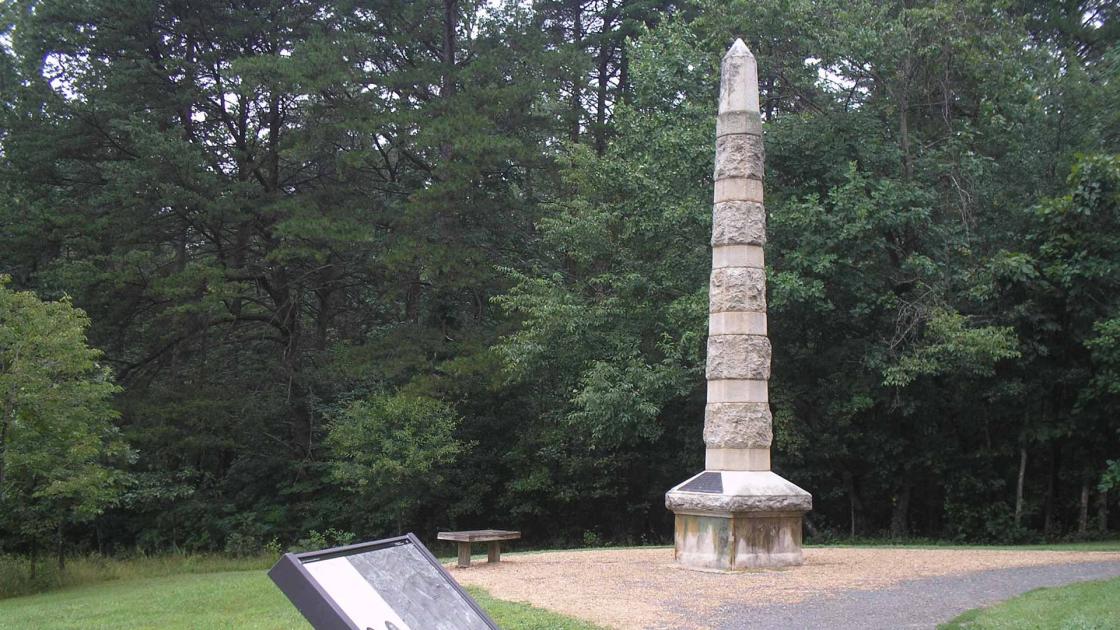
Cavalry Monument
This monument is another example of how our understanding of this battle has changed over time. In 1909, historians thought this spot marked a significant action toward the close of the Battle of Guilford Courthouse: the American cavalry charge.
Lieutenant Colonel William Washington and French officer Charles-Francois Sevelinges led the forces comprised of Virginia and North Carolina dragoons. Together they halted the British advance and bought time for the American third line of Continental troops to reform and counterattack.
Historians now believe that action took place east of here, where General Nathanael Greene placed his third line of American troops, battle-hardened Continentals—closer to the historic site of the 18th century courthouse itself.
Even though it’s slightly out of place, this monument still has many important stories to tell, including one about a man almost as tall as this monument itself: Peter Francisco—the Incredible Hulk of the Continental Army! That might be stretching it a bit, but read the plaque’s notes about the hefty Virginia soldier who fought here with the Continental Army. Peter’s legacy in the Revolution looms large, from his own mysterious arrival on the docks of Virginia to his fabled toting of a 350-pound cannon. Imagine the Incredible Hulk confronting the British army!
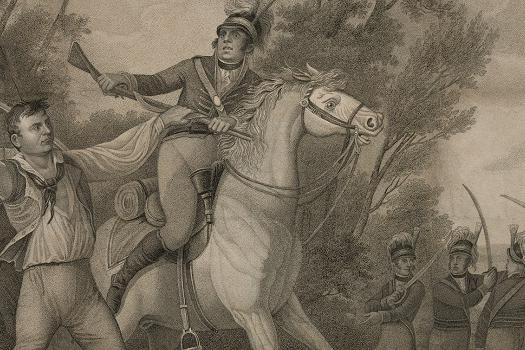
Regulars Monument
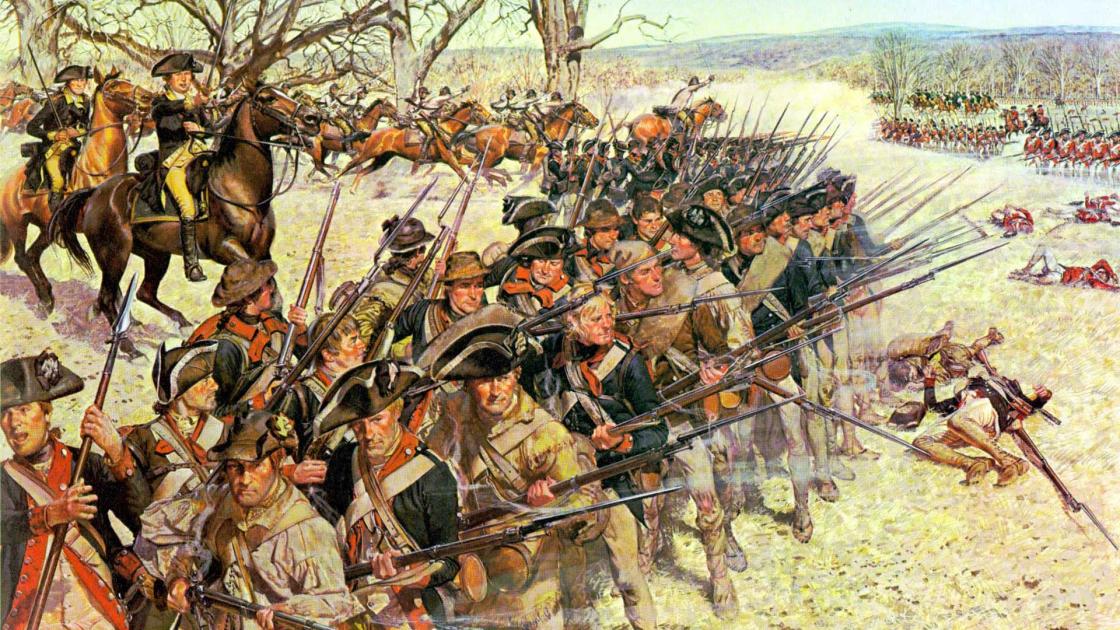
Regulars Monument
Sometimes new research changes what we know about battlefields. In 1910, historians of the Battle of Guilford Courthouse erected this monument to mark the place where they thought a pretty important moment took place: the final clash between the Continental Army and the advancing British troops that finally ended the action here at Guilford.
Remember, General Nathanael Greene had placed three lines of patriot troops to assault the British. The first and second lines had done their thing—firing into the British before falling back. The third line, the one that historians thought formed right here, comprised of Continental Army troops from Virginia and Maryland. As the North Carolina and Virginia militia fell back, the advancing British troops engaged the American Continentals in fierce back-and-forth fighting, which ended with the British in control of the ground but at high cost.
Generations of historians have re-evaluated the battle and battlefield, and determined that the American third line was actually located some distance away, closer to the historic site of the actual Guilford Courthouse. This monument remains in its original location, showing how our understanding of the past can evolve over time.
Doctor David Caldwell Monument
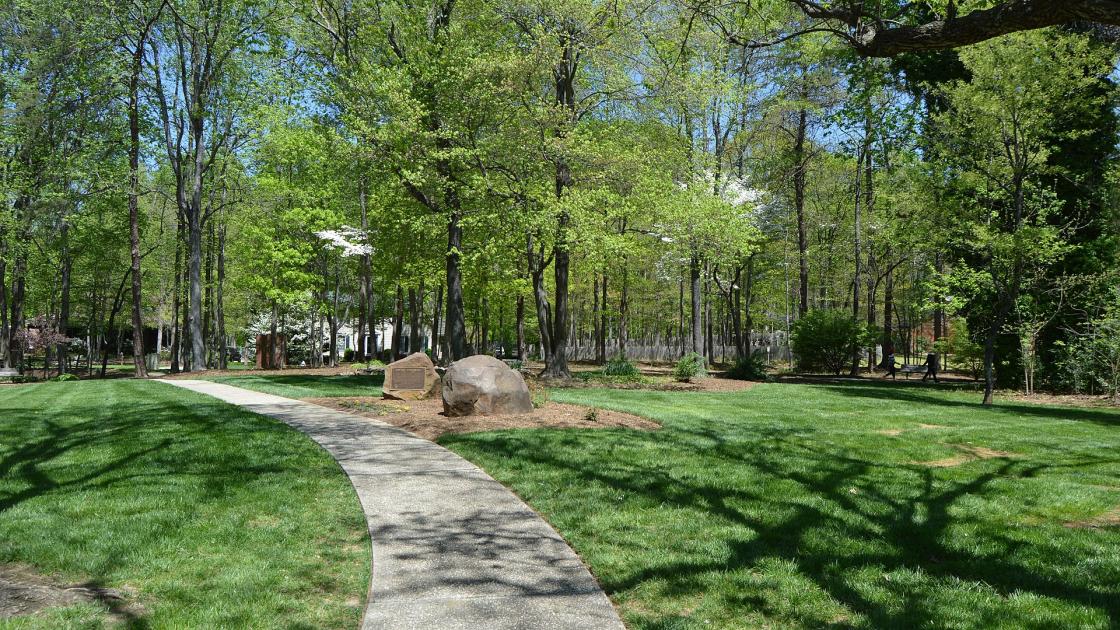
Doctor David Caldwell Monument
David Caldwell was a patriot. He didn’t fight here at the Battle of Guilford Courthouse, but he was so important to the community and the patriot cause that he is forever remembered here on the battlefield. A Pennsylvanian by birth, after completing his studies at Princeton University he took up the pulpit at Buffalo Presbyterian Church in Greensboro.
Caldwell was a supporter of the rebellion against British authority and was supposedly so persuasive from the pulpit that his entire congregation enlisted in the American cause. One surviving sermon urged his subjects on the matter of patriotism:
“…if we stand up manfully and unitedly in defense of our rights, appalled by no dangers and shrinking from no toils or privations, we shall do valiantly. Our foes are powerful and determined on conquest; but our cause is good; and, in the strength of the Lord, who is mightier than all, we shall prevail.”
Strong words, right? British General Charles Cornwallis even seized and burnt his home. After the Battle of Guilford Courthouse, Caldwell traveled to the battlefield to help care for the wounded men from both armies.
After the war ended, Caldwell continued as an ardent patriot for his new country, and served in a number of political positions, including as a member of the state convention that debated whether or not to ratify the Constitution. He is buried at Buffalo Presbyterian Church, not far from here.
George Reynolds Monument
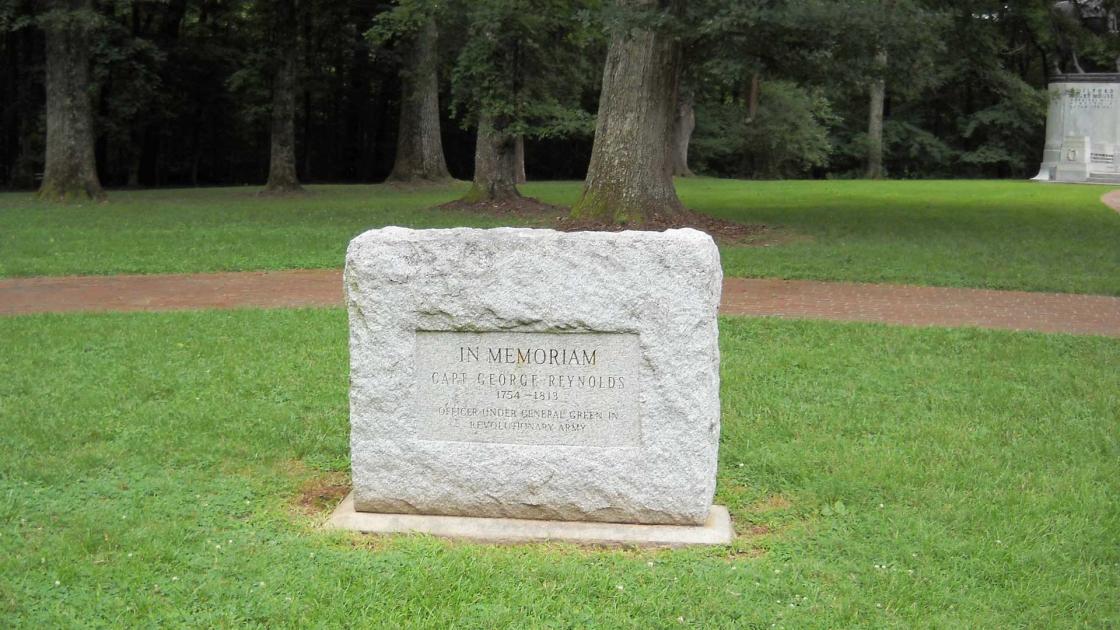
George Reynolds Monument
There are nearly 30 monuments here at Guilford Courthouse. Some of them honor the military contributions of specific individuals that historians know fought here. Others mark the final resting place of soldiers who gave the ultimate sacrifice for the cause of American independence. Sometimes the descendants of those individuals paid to have monuments erected in their honor. Some tell stories of heroism passed down through generations.
This monument is dedicated to George Reynolds who may have been a captain in the patriot ranks here at Guilford Courthouse. The Reynolds family, along with the Reynolds Chapter of the Daughters of the American Revolution, unveiled the monument in 1928, but nothing else is known about the man it honors.
While you’re looking at this monument, think about the thousands of soldiers of the American Revolution, whose names we don’t know. Think about the lives they lived before, during, and after American independence. We will never know all their names, we can be thankful for their service at places like Guilford Courthouse.
Hal Dixon Monument
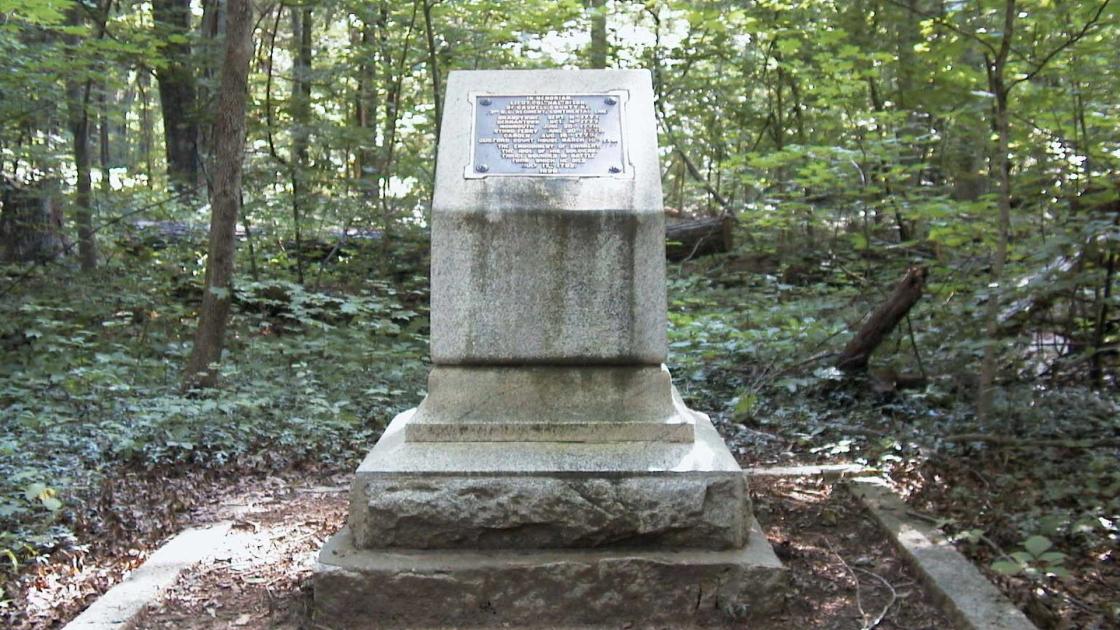
Hal Dixon Monument
By March 1781, the American Revolution was in its sixth year. Some of the men fighting here were inexperienced militia, but some of the soldiers had seen considerable service and were already battle-hardened. At there might be no better example of a veteran soldier than Henry “Hal” Dixon.
Dixon served as lieutenant colonel in the Continental Army. He commanded North Carolina troops in the battles at Brandywine, Germantown, Monmouth, and Stono Ferry. He was wounded at Stono Ferry in 1779 and returned to North Carolina, where he was appointed as Inspector General of Militia. Dixon fought at Camden and Guilford Courthouse, and then at the Battle of Eutaw Springs later in 1781, where he was wounded again. He died of his wounds in 1782, and unfortunately, his final resting place is unknown. This monument honors his service to the cause of American independence.
This monument is notable for several errors in the dates of the listed battles: it dates the Battle of Monmouth to June 20 when it was actually fought on June 28, and it gives the year for the Battle of Camden as 1779 when it was actually fought in 1780.
Edward Stevens Monument
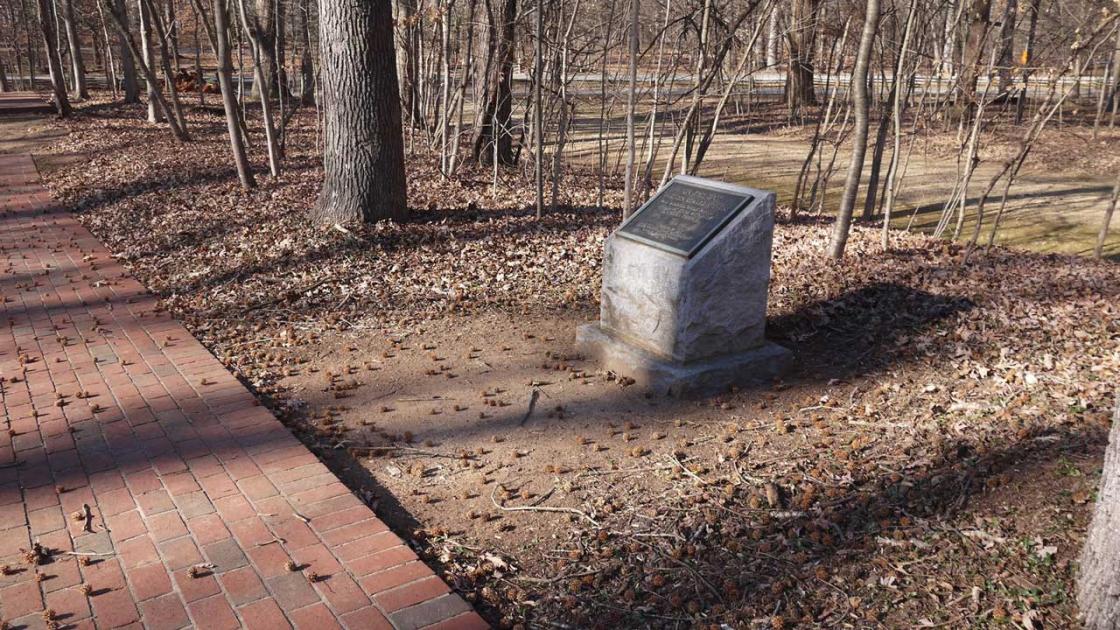
Edward Stevens Monument
You’re in the vicinity of the second of three lines of patriot troops that met the British advance here at Guilford. The commander of the left wing of this line was Brigadier General Edward Stevens, who had been fighting in the Revolutionary War from the beginning. He led Virginia militia during the Battle of Great Bridge in December 1775. He then became an officer in the Continental Army, leading Virginia troops in the battles at Brandywine and Germantown in 1777. Stevens resigned his commission and returned to Virginia, where he was appointed a brigadier general of militia.
Stevens led Virginia militia in the Battle of Camden in 1780, where the Americans were routed by the British. At Guilford Courthouse, Stevens wasn’t about to let his men run away from the enemy. He positioned riflemen behind his line with orders to shoot soldiers who retreated without orders.
This monument might actually mark the spot where a musketball tore through Stevens’s thigh during the battle. Seeing their leader carried off the field, some of his line began a hasty retreat. Stevens recovered sufficiently to lead Virginia militia again at the Siege of Yorktown, truly seeing the beginning and the end of the war in Virginia.
No North-No South Monument
No North-No South Monument
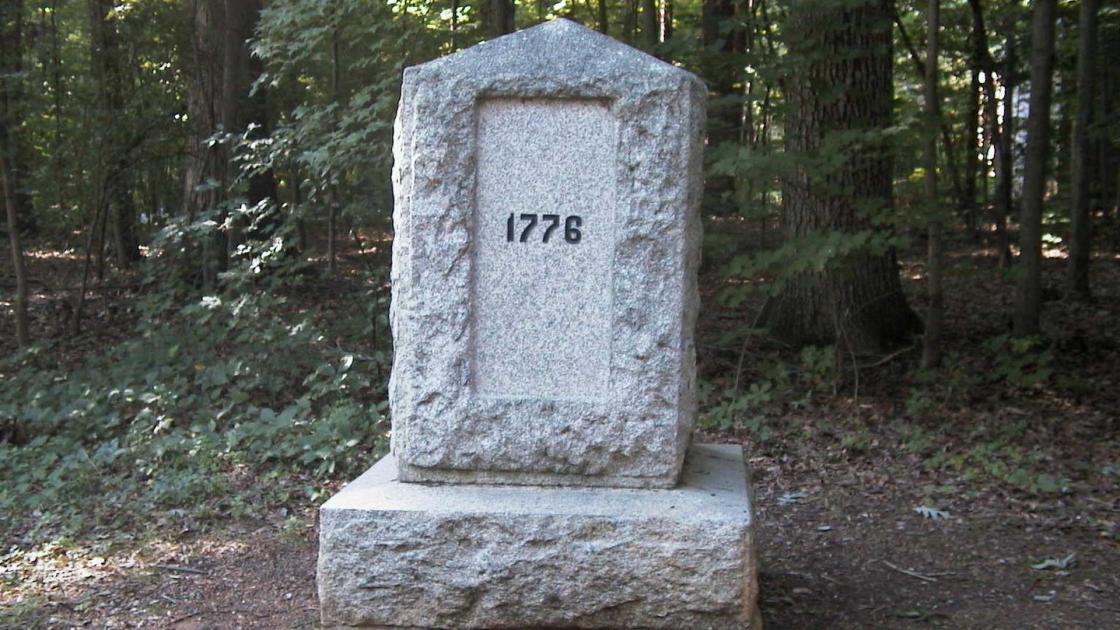
Unlike other monuments here at Guilford Courthouse, this one isn’t specific to a soldier or even the battle itself. Its important message isn’t about war at all. It’s about unity.
The Guilford Battle Ground Company erected this monument in 1903, as the country continued to grapple with the devastation and disunion of the Civil War. Look at the names inscribed on the base, two famous American generals: General George Washington, commander-in-chief of the Continental Army, who was from Virginia but led soldiers from northern states; and General Nathanael Greene, who was from Rhode Island but led mostly troops from southern states at the Battle of Guilford Courthouse.
The date “1776” harkens to the unifying spirit of the American Revolution, when thirteen desperate colonies came together in common cause. If a struggling new national could do it then, subsequent generations could find the same national unity.
Kerenhappuch Norman Turner Statue
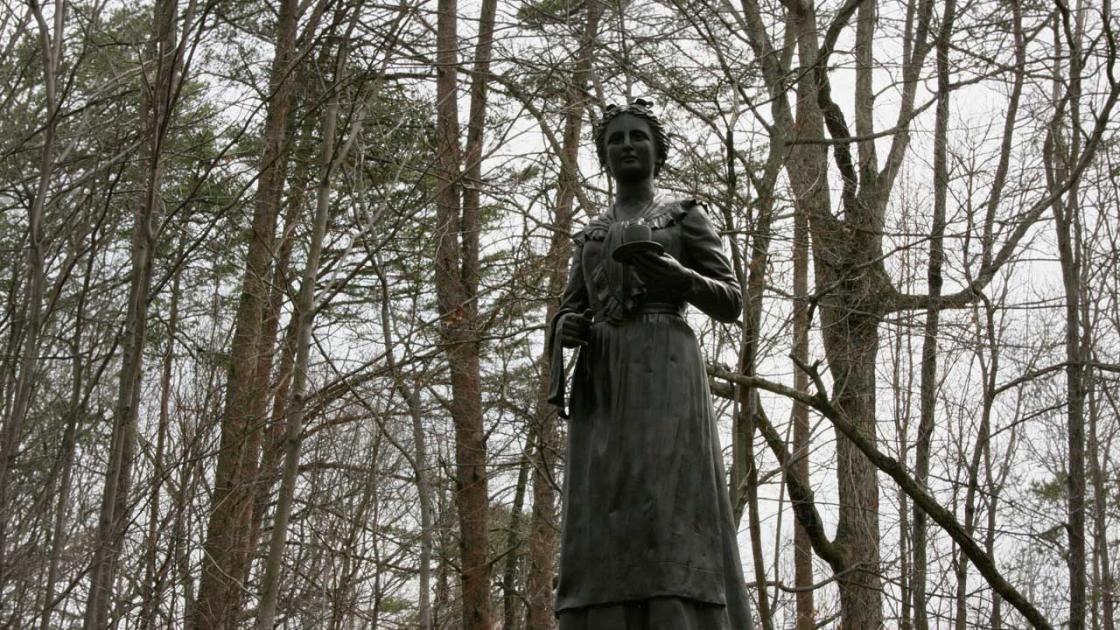
Kerenhappuch Norman Turner Statue
The monument in front of you is one of two monuments dedicated to the women of Guilford Courthouse, and may be the very first monument ever in the United States dedicated to a single Revolutionary War heroine. Her name was Kerenhappuch Norman Turner, and the plaque here tells her story.
Kerenhappuch’s son, James Turner Jr., fought here in the Battle of Guilford Courthouse as part of the Virginia militia contingent. The story goes that James was badly wounded in the leg during the battle and, according to the family’s oral tradition, Kerenhappuch rode from the family home in Virginia to the battlefield to tend to her wounded son. She rejected the doctor’s suggestion to amputate his leg and instead nursed him back to health. The cup and towel in her hands illustrate the story of aiding her son by cleansing his leg repeatedly with drips of water.
Kerenhappuch Norman Turner was an ancestor of Joseph Morehead, the second President of the Guilford Battleground Company, a driving force in ensuring her story was told here at the battlefield.
James Morehead Monument
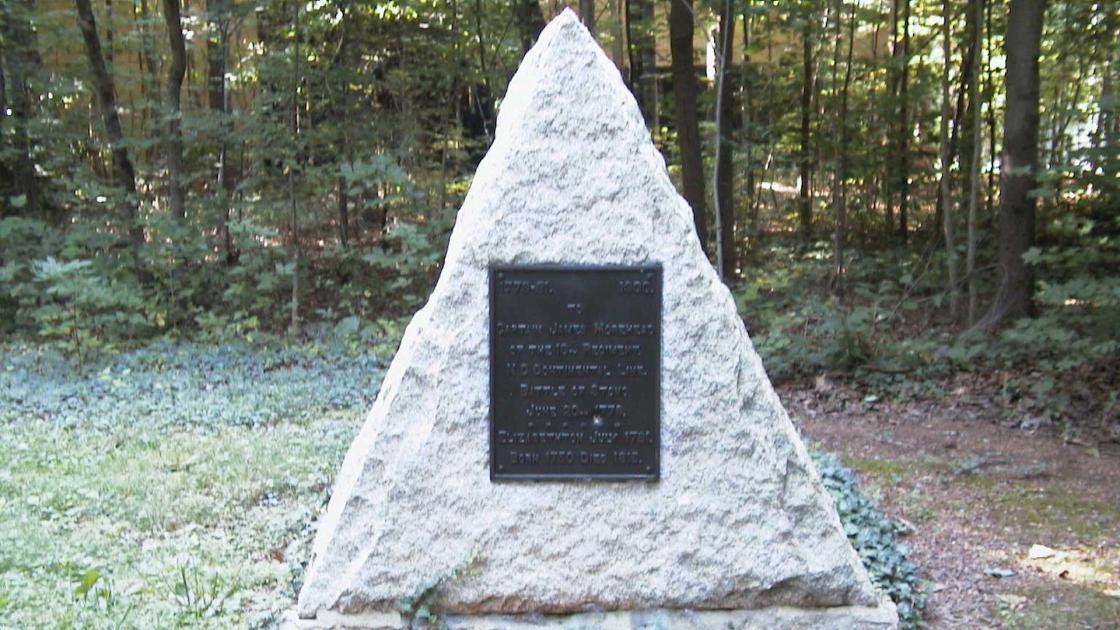
James Morehead Monument
This monument is a little different than the rest you’ve visited on the battlefield. That’s because Captain James Morehead never fought here at the Battle of Guilford Courthouse. He served in the Continental Army, but not here. In fact, the monument lists other important battles of the Southern Campaign where Morehead did fight.
So why is this monument here? The reason goes back to the Guilford Battleground Company, which preserved the land here in the 19th century. James Morehead was the Revolutionary War ancestor of Joseph Morehead, who was the second president of the Guilford Battleground Company.
This monument is a also a little different because of its shape. What does it look like it could represent? If you said a tent, you’re right. This monument imitates the shape of the tents used by Continental Army troops during the war. A typical tent would house six soldiers.
James Tate Monument
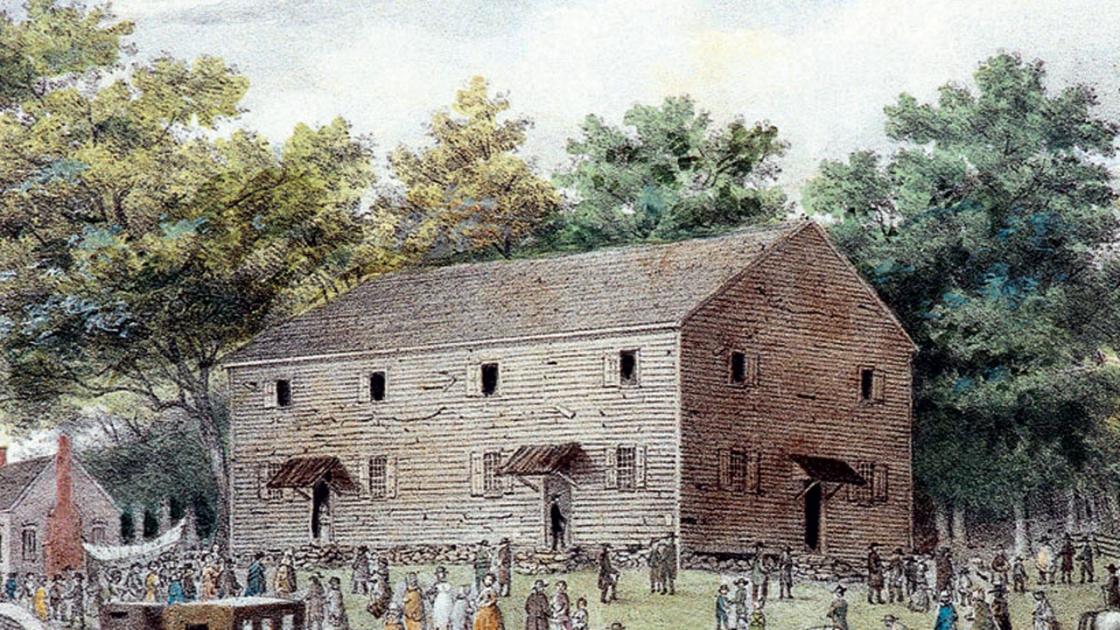
James Tate Monument
This monument marks the final resting place of Virginia militiaman Captain James Tate, who was killed in the fighting around New Garden Meetinghouse hours before the main action at Guilford Courthouse. In 1891 his remains were moved to this site, and the monument was dedicated to mark his grave.
When the British approached Guilford Courthouse, their advance forces under Banastre Tarleton encountered an American picket force under Lieutenant Colonel Henry Lee consisting of cavalry, riflemen, and Virginia militia. The resulting skirmishing around the New Garden Friends Meetinghouse served as prelude to the battle, inflicting casualties on the British and further fatiguing men who were already exhausted from a hard march.
The 3-hour skirmish on and around the Meetinghouse grounds resulted in significant casualties for both the patriots and the British, including Captain Tate. General Greene looked to the Quakers to lend support to the wounded. Though they had suffered, too, the Quakers of the New Garden Meeting pledged to “do all that lies in [their] power” to provide aid and support to the men who needed it.
Crown Forces Monument
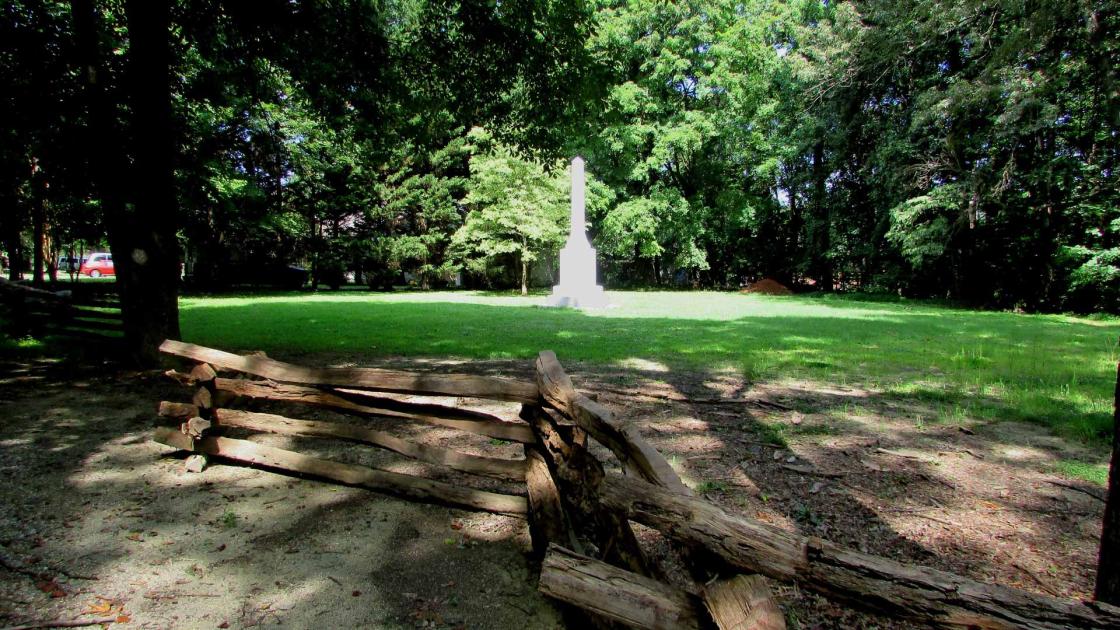
Crown Forces Monument
This monument might look a little different than the ones you’ve seen on the battlefield so far. A little newer, right? That’s because this monument was dedicated in 2016, making it the newest monument on the battlefield. It is dedicated to the soldiers and officers who fought for the British at Guilford Courthouse.
This monument itself is full of significance. It’s dedication came in the centennial year of the National Park Service—and this was the first national battlefield park created to honor the American Revolution, remember? And it’s a rare example of a monument dedicated to, well, “the enemy.” But importantly, this monument names the opposing forces that also risked it all here at Guilford Courthouse—the multinational force of the British army.
Read the units listed on the base of the monument in front of you. General Charles Cornwallis commanded soldiers from the elite Brigade of Guards, two veteran regiments of regulars, and a regiment of Scottish Highlanders. The American Loyalists of Banastre Tarleton’s British Legion fought at Guilford Courthouse, as did German soldiers from several German principalities who had been sent to fight under British command by their monarchs—just to name a few.
Maybe the patriot soldiers fighting here in 1781 could never have imagined It, but soldiers in the British army were also fighting for a cause. This monument honors those sacrifices, as well as the special friendship between the United States and Great Britain today.
Watch More
Crown Forces Monument at Guilford Courthouse
Captain Arthur Forbis Monument
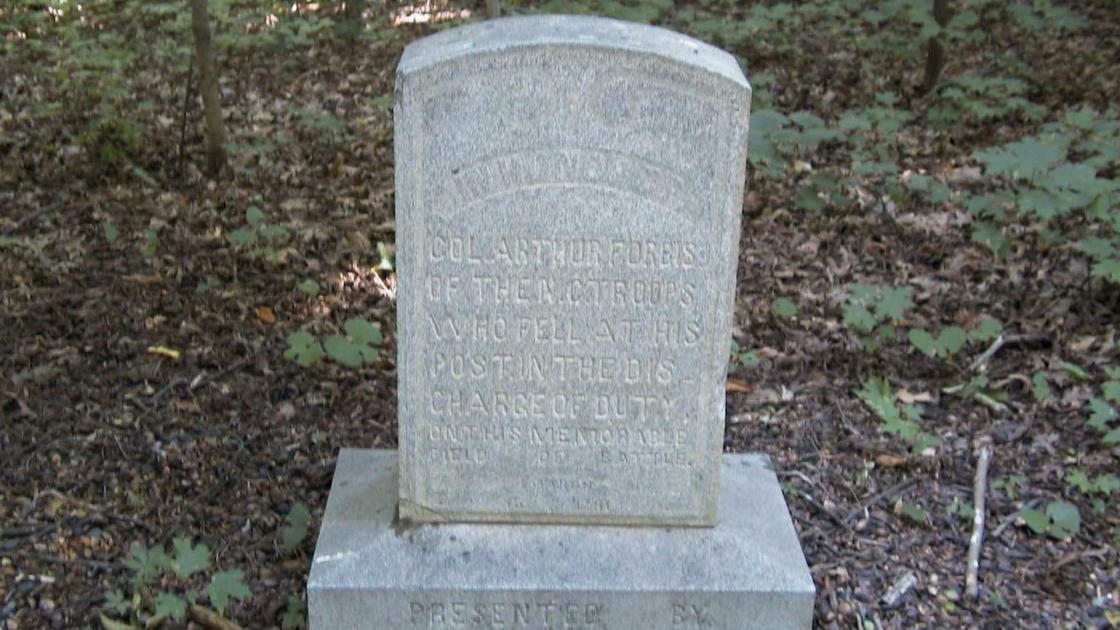
Captain Arthur Forbis Monument
If you’ve been wondering who fired the first shots of the Battle of Guilford Courthouse, the answer might be Captain Arthur Forbis. Serving in the North Carolina militia, Forbis called Guilford County home. The battle here at Guilford Courthouse was on his home turf.
Captain Forbis stood on the left center of the first of three American lines. According to family lore, as the patriot commanding officer spied the British advancing toward them, he pointed to a British officer and asked Forbis whether he could “bring him down.” Forbis reckoned he could. He took his shot. Soon after, his fellow militiamen fired one or two shots into the British and fled the scene. But Forbis? Legend has it that his company stayed behind in the face of the enemy advance, eventually engaging in hand-to-hand combat that left Forbis mortally wounded on the field.
Captain Arthur Forbis fired the first shot—and this monument was the first to be erected here at the battlefield, on July 4, 1887.