-
The BlogBiographies
-
Videos

Gwynn's Island/Crickett Hill: Attack of the Artillery (and Smallpox)
“We have taken possession of this Island which is about three or four Miles in length and one in breadth. Seperated from the Main ½ a mile, except on one place (which is that where Lord Dunmore has his Camp) this is not above the reach of [enemy] Musquet Shot, However this part is defended by the Guns from the Ships.”
- Captain Andrew Hamond, British Marine aboard the HMS Roebuck
Summer, 1776. Lord Dunmore has spent a year wreaking havoc on Virginia and its patriots. He fled the capital at Williamsburg. A patriot barrage forced him to abandon his fort at Great Bridge. Norfolk is still smoldering from a joint patriot and British campaign to lay waste to the city. Dunmore has little left but his loyal followers, including members of his Ethiopian Regiment. They’ve been floating off Norfolk for months. The soldiers and loyalists with him are growing sick, hungry, and they need fresh water. They also need safe harbor, and, for a while, they find it at Gwynn’s Island. But not only will they see a short battle from the patriots firing from this spot; they will be plagued by a force even more deadly than their patriot foes.
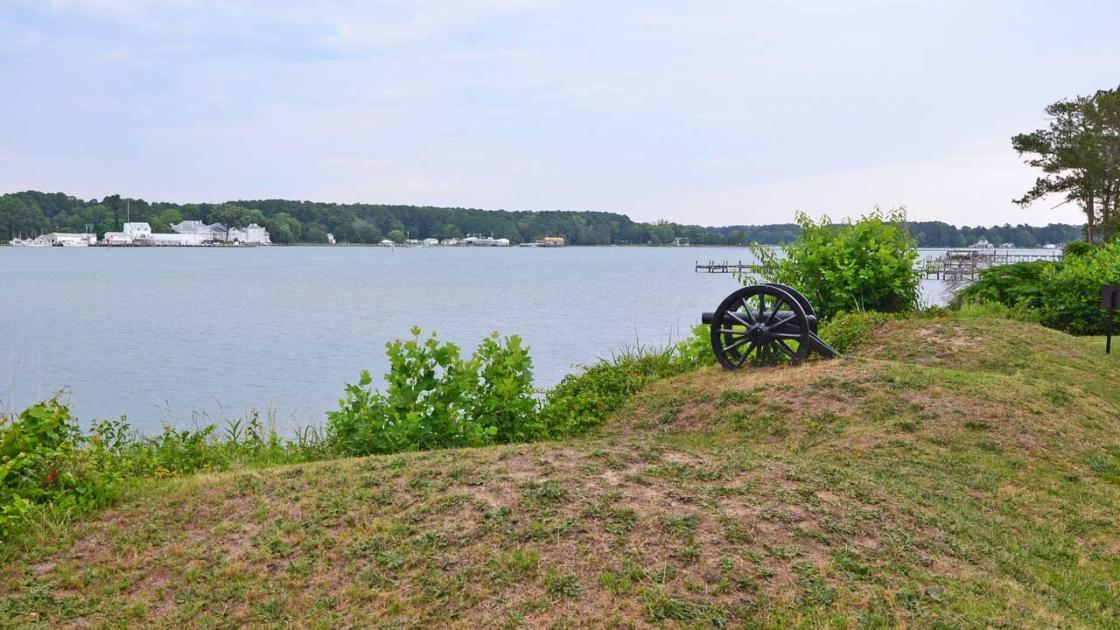
Gwynn's Island | Fort Cricket Hill
May 27, 1776: Lord Dunmore and his war fleet land across the water from you here—a small island known as Gwynn’s Island. It’s a smart position, just off the Virginia mainland with just one, narrow channel to defend from enemy encroachment. Dunmore thought he was in a good position to make camp, get healthy, and sit tight to await British reinforcements. But no sooner had they landed than troops from the 7th Virginia Regiment began to assemble here at Cricket Hill--directly opposite Dunmore’s position on the island. Patriots soon became aware that disease had ravaged through Dunmore’s followers--most drastically among the African Americans in his Ethiopian Regiment. Dunmore would later report that not a day went by that he lost followers to disease. Smallpox and other illnesses proved deadlier than patriot fire.
But Dunmore’s weary forces soon clashed with the arriving Virginians. Luckily for Dunmore, his cannon fire makes up for the forces he lacks at first. But as Dunmore’s numbers dwindled, patriot forces grew larger. By July 9, a fresh supply of troops and artillery arrived under General Andrew Lewis. Lewis set up two 18-pounders at point-blank range to fire directly onto Dunmore’s own flagship, and pointed another fleet of 9-pounders at the British’s main camp, Fort Hamond. Patriot Captain Thomas Posey recalled that after just two hours of cannon bombardment, Dunmore was forced to admit defeat. And it was good timing too—one of the most tragic casualties of the battle here was the young artillery captain Dohickey Arundel, who died instantly when his experimental wooden mortar exploded with him at the helm.
That night Dunmore and his forces quickly packed up and began sailing away with Virginia behind them. Patriots took a few pot shots at the retreating vessels. On July 10, they found Dunmore’s camp on Gwynn’s Island evacuated—but not completely. Making his rounds through camp, Captain Posey described the scene:
“By one o’clock the whole of the enemy had evacuated and embarked … I cannot help observing, that I never saw more distress in my life, than what I found among some of the poor deluded Negroes which they could not take time, or did not chuse to cary off with them, they being sick. Those that I saw, some were dying, and many calling out for help; and throughout the whole Island we found them strew’d about, many of them torn to pieces by wild beasts – great numbers of the bodies having never been buried.”
After the Battle at Gwynn’s Island, Lord Dunmore officially bid Virginia "adieu.” British authority had officially left Virginia. And though it would be some years until Virginia again saw battle in the American Revolution, it would return with a vengeance.