-
The BlogBiographies
-
Videos

January 22, 1776
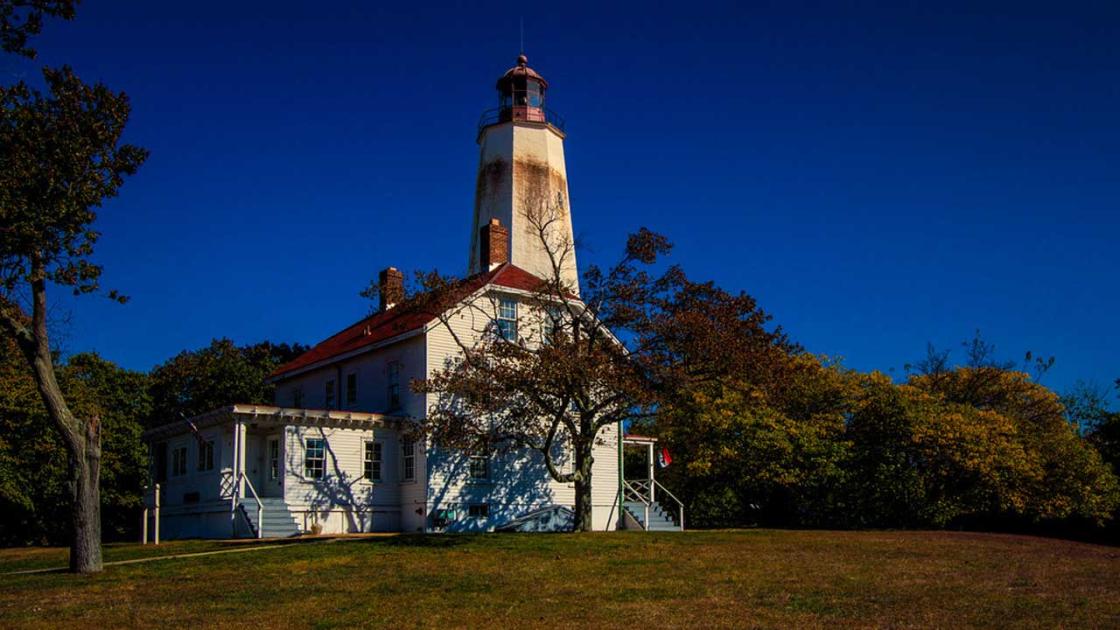
Standing watch over New York Harbor since 1764, the Sandy Hook Lighthouse has witnessed more than two and a half centuries of drama—but few episodes were as bold as what unfolded here in January 1776. From this vantage point, the nation’s oldest operating lighthouse looked on as Patriot General William Alexander—better known as Lord Stirling—pulled off a remarkable feat: the capture of a British supply ship without firing a single shot.
If walls could talk, this lighthouse would really spill the tea. It is, after all, the oldest continually operating lighthouse in the country. Built in 1764, it’s actually older than the country itself. And from its strategic location here in the harbor, it’s seen some stuff—including some important moments in New Jersey’s Revolutionary history. On January 24, 1776 Patriot General William Alexander (stylized Lord Stirling) wrote to Continental Congress President John Hancock that he had pulled off an extraordinary coup—the capture of British supply ship HMS Blue Mountain Valley, just east of where you’re standing now at Sandy Hook. He had done it all without firing a single shot—and this lighthouse saw it all go down.
Here's how it happened.
Way back in October 1775, Blue Mountain Valley left England as part of a supply fleet headed to aid British soldiers in Boston. Here’s what she looked like on a good day:
“She is a ship of between three and four hundred tons, a galley-built ship, without a head; has yellow sides, blue quarter-boards, with the trophies of war painted on the quarter-boards; has six three-pounders on the quarter-deck.”
But the trans-Atlantic journey did not go, say, swimmingly. Thirteen weeks later, Blue Mountain and crew arrived outside New York Harbor, in Captain Hamilton Dempster’s words, “hardly able to keep the ship from sinking.” Blue Mountain was in no condition to continue to Boston. Captain Dempster anchored to refit and regroup, hoping he’d find safe harbor in the protection of other British ships nearby.
But as Dempster anchored within sight of the watchful Sandy Hook Lighthouse, someone else was watching too. A man named William Dobbs spied the 100-foot British ship off the coast and rowed his pilot boat out from Sandy Hook to meet its first mate, Joseph Woolcoombe. And Dobbs? He’s Team Patriot. Instead of helping Woolcoombe rendezvous with other British ships in the harbor, he escorted the first mate directly to a nearby tavern, where Woolcoombe was immediately captured by the Americans. In Patriot hands, the first mate sang like a canary under Patriot inquisition.
When they heard this incredible intelligence the New York Committee of Safety appealed to Lord Stirling to act. Stirling agreed—Blue Mountain Valley must be captured! From here, a case of mistaken identity ensued, and, in the end, it was all pretty anticlimactic as Captain Dempster thought the approaching Patriots were from British ships nearby, allowing Patriots to easily board the ship without either side firing a single shot. But was the ruse worth it? When Lord Stirling reported the ship’s capture in his letter to Hancock, he lamented that the ship had not, as a matter of fact, been laden with valuable “Arms & Ammunition, as I expected.” The bulk of its hull held sauerkraut.
The Sandy Hook Lighthouse saw it all—and remained a steadfast beacon in Revolutionary New Jersey. Now--anyone for sauerkraut?