-
The BlogBiographies
-
Videos

July 12, 1780
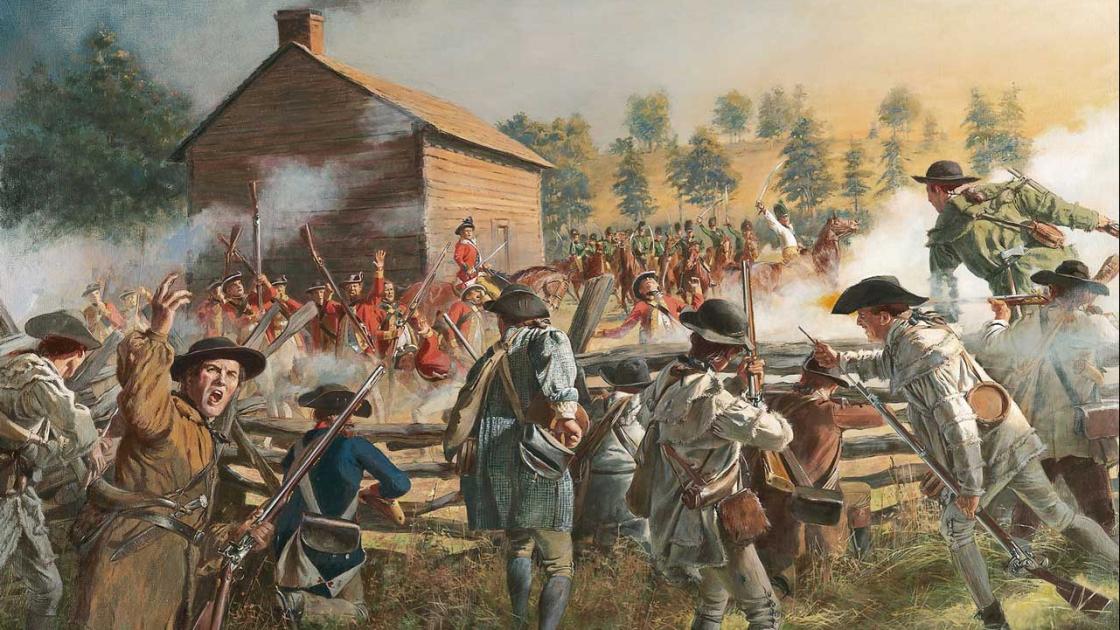
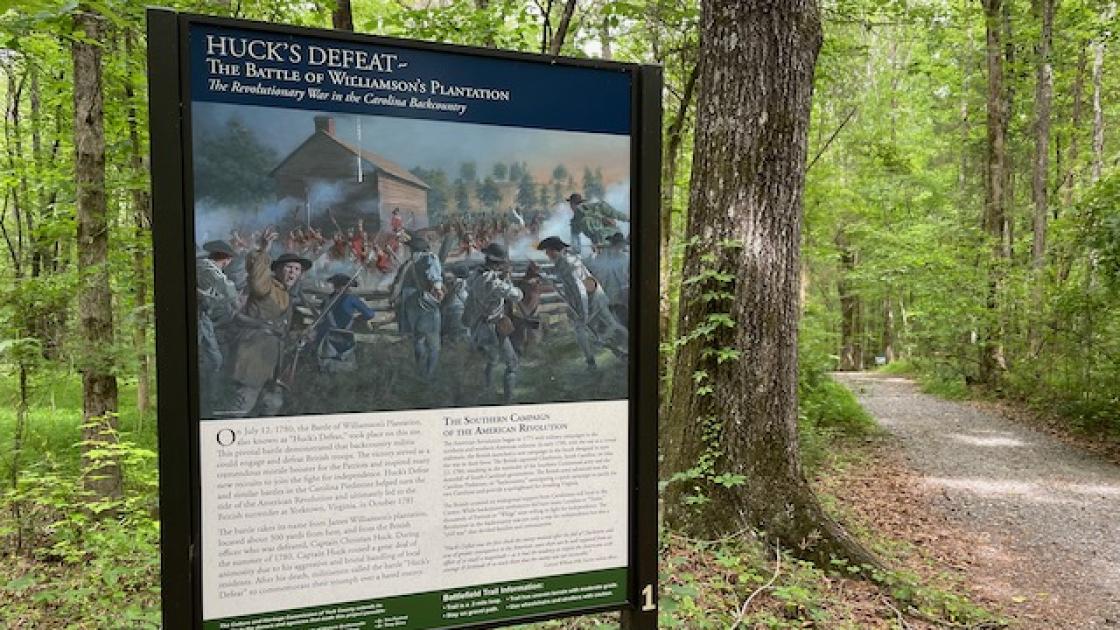
Huck’s Defeat, also known as the Battle of Williamson’s Plantation, occurred on July 12, 1780. The battleground is on the site of Historic Brattonsville, a former colonial plantation. An interpretive trail leads you to the scene of the Patriot victory over the tyrannical Loyalist commander Christian Huck. His demise in this short engagement boosted the morale of those fighting for independence.
Before You Go
Please note that you must check in and pay at the visitor's center upon arrival. The site has ramps to access the buildings, but the approximately 0.3 mile trail for Huck’s Defeat has a gravel path composed of large chunks of stone that may prove difficult to navigate for people using a walker or wheelchair. It should take about an hour to get around everywhere on the battlefield tour. Of course, there is much more to do at this site! There are historical buildings and homes, information pertaining to the battle, and living historians who are occasionally present to help with interpretation.
The house that Colonel William Bratton built in 1776, where British Captain Christian Huck confronted Bratton’s wife Martha Robertson on July 11, 1780, still exists today and is incorporated into Historic Brattonsville. Today, visitors can visit the house and learn more about the battle via interpretative signs near the structure.
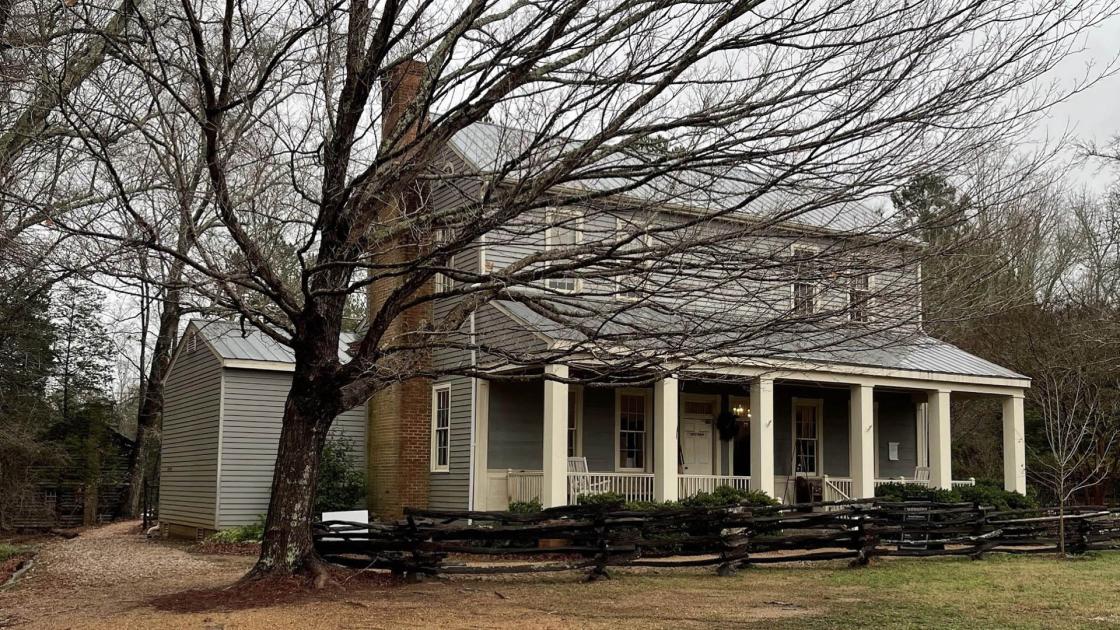
If you have seen the movie The Patriot with Mel Gibson, you have already caught a glimpse of Historic Brattonsville. With its colonial buildings and unspoiled grounds, the site gave the movie an authentic Revolutionary War-era feel. The estate was settled in the mid-eighteenth century by the Bratton family — Scots-Irish Presbyterians, who came to North America in the early eighteenth century. Like many other pioneers in this area, they migrated from the north, taking the Great Wagon Road from Pennsylvania, through Virginia and western North Carolina, and settling in present-day York County in 1766. They were among the first who established homes here prior to the American Revolution, and they took an active part in the struggle for American independence. Three brothers — William, Robert, and Hugh Bratton — all served in the Revolutionary War. William, an officer in the local militia, joined Thomas Sumter’s brigade and fought in many battles, including Huck’s Defeat, which occurred on Williamson’s Plantation, a short distance from Bratton’s land.
Today, as you enter the drive to the 775-acre plantation that was home to three generations of the Bratton family, you get a real sense of what life was like in the Carolina Piedmont centuries ago. Colonial buildings and cabins for enslaved people still dot the landscape, and an interpretive trail leads to a Revolutionary War battlefield, where Huck’s Defeat, also known as the Battle of Williamson’s Plantation, occurred on July 12, 1780. The 15-minute battle was quick but costly for the British. The Patriot victory gave those fighting for independence a much-needed boost after their tragic loss at Waxhaws in late May of that year, and it inspired them to rally again at the Battle of King’s Mountain in October 1780 and at Cowpens in January 1781.
Although it was a brief engagement, Huck’s Defeat had a history that started months earlier, after the Siege of Charleston, when the British victors offered parole to Patriot militia. Even though the militiamen fought against the Crown, they were allowed parole rather than prison, if they returned to their homes and farms and did not take up arms for the Patriot cause. This condition of neutrality suited many Patriots, but angered Loyalists, who felt that the rebels were getting off easy, with no punishment. The British, however, hoped that such leniency would eventually lure former militia to the Loyalist camp. That did not happen. As they moved to occupy the backcountry, the British resorted to imposing unjust policies and initiated a campaign of brutality against local citizens, which had the opposite effect — it galvanized support for the rebellion.
Fueling the discord between Loyalists and Patriots was a British proclamation of June 3, 1780, which changed the terms of parole that were granted to Patriot militia after the Siege of Charleston. The condition of neutrality suddenly no longer applied, and those who had gone home on parole were now forced to fight for the Crown or become an enemy of the state. If they refused to sign an oath of loyalty, they could be imprisoned or hung. Their families could be captured or killed, and their homes and crops burned to the ground. Rather than earn the British the allegiance they sought, the proclamation and violent aftermath stoked the desire for independence and pitted neighbor against neighbor. Many of the paroled no longer trusted the British and their Loyalist supporters and rushed to reenlist in the Patriot cause. Several left their farms and plantations to join Brigadier General Thomas Sumter’s partisan brigade and fought against one of their greatest tormentors — Captain Christian Huck — in the battle of Huck’s Defeat.
The famous—or infamous—“Huck” of Huck’s Defeat was a German-born Pennsylvania lawyer named Captain Christian Huck. Huck, a Loyalist, was stationed at the British outpost of Rocky Mount near the North Carolina border, which was under the command of Lieutenant Colonel George Turnbull. While the British held the port city of Charleston in the summer of 1780, Turnbull’s mission was to conquer the backcountry by luring local Patriots to the British side. Captain Huck was the perfect man to help execute the plan. Known for having a violent temper—he was nicknamed “the swearing captain”— he had a particular hatred for the Scottish Presbyterians of the backcountry, who were “Whigs” or Patriot supporters. He was also adept at terrorizing civilians and plundering the property of those who refused to submit to the King.
In early July 1780, Turnbull learned that several prominent Patriot officers — including Captain John McClure and Colonel William Bratton — were returning home to supervise the wheat harvest and recruit troops for Brigadier General Thomas Sumter’s Patriot brigade. Dispatched by Turnbull, the tyrannical Huck set out with 40 British Legion Dragoons, 20 New York Volunteers, and 60 mounted Tory militia to apprehend the men. When he arrived at McClure’s home on July 11, he discovered that the colonel had already left for Sumter’s camp. Frustrated and angered by his absence, Huck captured McClure’s brother and brother-in-law and sentenced them to be hanged for aiding the Patriots. He terrorized McClure’s wife, apprehended her sons, raided her belongings, burned her home, and rode with a vengeance to Colonel Bratton’s house, ten miles to the north, which you can see on these grounds. Once they were gone, Mrs. McClure sent her daughter Mary to Sumter’s camp with news of Huck’s cruelty and whereabouts.
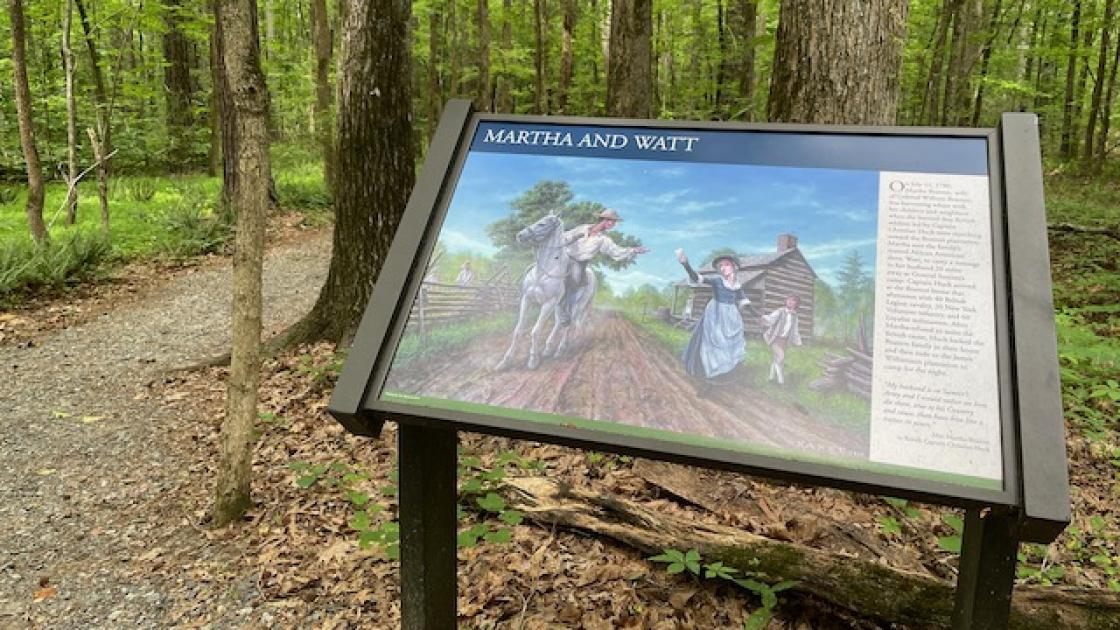
Although word reached Sumter’s camp that Huck was in pursuit of the rebel militia, the Patriots did not realize that the Captain’s destination was Bratton’s farm and headed out instead to ambush the Loyalists on their way back to their camp at Rocky Mount. Meanwhile, residents near Bratton’s farm were able to warn Bratton’s wife, Martha, of Huck’s imminent arrival. According to an oral account passed down through the Bratton family, Martha sent her enslaved man — Watt — out to find her husband. Watt did not ride off to freedom as he might have, but accomplished his important task. When he arrived at Sumter’s camp and found that most of the men had gone, he rode after them. Watt eventually caught up to the militia outside of Rocky Mount on the evening of July 11, and 140 Patriot troops immediately embarked on a night ride to Bratton’s.
With Watt away on his mission, Martha and her children were alone that evening at the Bratton home. Arriving before Huck, the New York Volunteers and Tory militia interrogated Martha about her husband’s whereabouts. When she refused to answer, a Tory threatened her with a reaping hook, but was restrained by one of the Volunteers. Huck showed up and prolonged the abuse. The captain tried in vain to get Martha to persuade her husband to join the Loyalist cause. She was then forced to cook dinner for British officers, locked in the attic with her children, and abandoned there, as Huck went to make camp at the Williamson’s plantation, a quarter mile down the road.
Hidden on the Brattonsville grounds today, in a cemetery for the enslaved people, is a headstone that marks Watt’s grave. The epitaph reads in part: During the War he served his master Col. W. Bratton Faithfully.”
Although women like Mary Gaston McClure and Martha Bratton were not combatants during the Revolutionary War, they faced the British with courage and conviction. Left to manage large families and supervise sizable farms while their husbands were away, they were vulnerable and surely scared as the enemy scoured the countryside looking for traitors and setting houses afire. Mary and Martha, however, not only forcefully defended their husbands under interrogation by Huck but maintained loyalty to the Patriot cause under tremendous pressure. Both women succeeded in frustrating their attackers and both sent warnings to the Patriot militia. Mary dispatched her daughter on a risky evening ride to reach Sumter and Martha sent Watt to find Bratton.
Mary and Martha were not the only victims of British abuse. Huck visited several farms of suspected Patriot supporters as he made his way from Rocky Mount to Williamson’s plantation. Some women were robbed of the grain and livestock needed to feed their families. Others lost what little gold they had, the silver buckles from their shoes, and their treasured family bibles. Their sons were captured and mistreated. Rather than persuade Patriots to support the King, such malicious behavior only strengthened their resolve to resist. Most answered Huck as Martha did, when he persisted in questioning her about her husband’s loyalties. She reportedly told the offensive captain: “It is useless to prolong the interview if that is its purpose. My husband is in Sumter’s Army and I would rather see him die there, true to his Country and cause, than have him live a traitor in yours.”
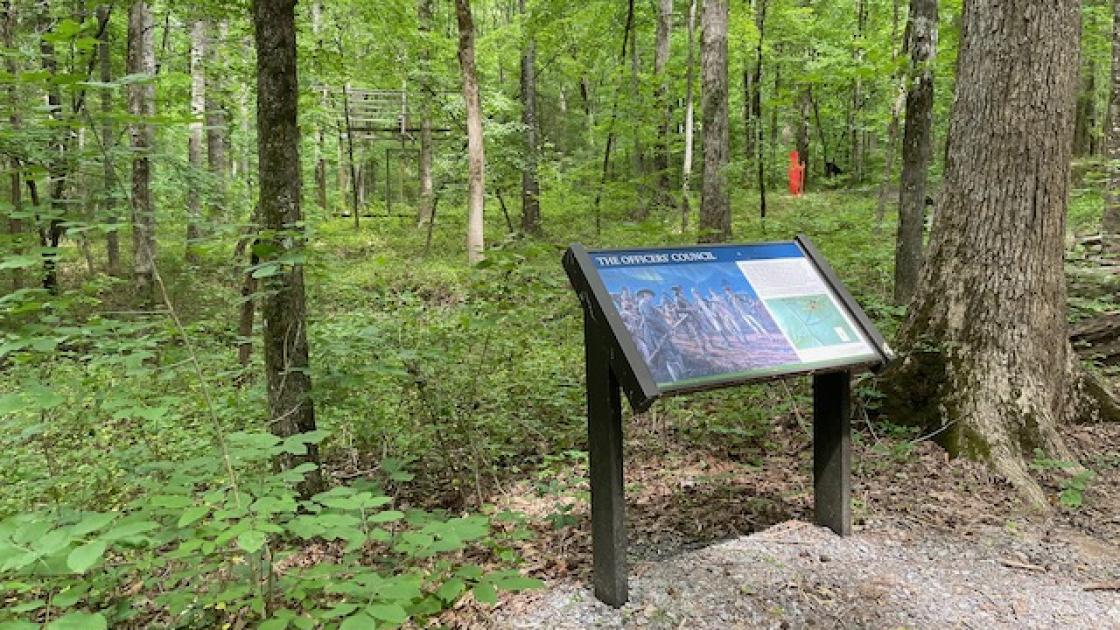
Patriot troops learned from local supporters that the British were camped at James Williamson’s farm and arrived there on July 12 at sunrise before the troops were fully awake. The Tories occupied a field in front of Williamson’s log house and the New York Volunteers were positioned in a fenced lane near the road to Bratton’s house. Huck was asleep inside the Williamson home. Patriot officers decided to split their force into two companies and attack the British from east and west. Williamson’s son Samuel fired the first shot, hitting a Tory guard and then the attack began. Completely taken by surprise, many of the Loyalist soldiers simply fled or surrendered, while Patriot riflemen inflicted casualties on their comrades, many of whom were penned in by the fences in the lane. When one Loyalist militia commander, Colonel James Ferguson, tried to rally his men, he was shot down at point-blank range.
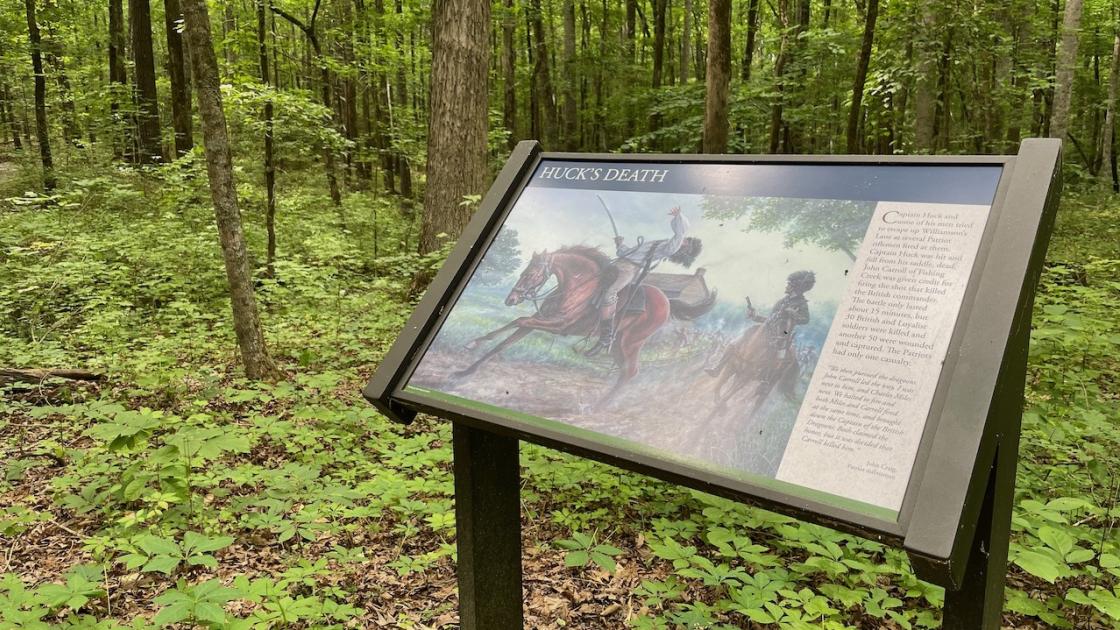
Captain Huck, roused by the sound of gunfire, dashed outside, mounted his horse, and led his men in a saber attack. His charge was halted by Patriot sharpshooters firing from the cover of Williamson’s orchard and fence rails. In a futile effort to escape, Huck headed down the road toward Bratton’s farm, but was shot in the saddle and was dead before he hit the ground. When the smoke cleared after the short engagement, 30 Loyalists were killed, 50 were wounded and many were taken prisoner. The Patriots had one killed and one wounded. The demise of the hated Huck was cause for celebration and boosted Patriot morale. The victorious Patriots capitalized on “Huck’s Defeat,” rallying support in the backcountry. They now realized that the enemy was not invincible, and the British understood that the people of the backcountry could not simply be strong-armed into supporting the King.