-
The BlogBiographies
-
Videos

October 7, 1780
This battle humiliated the King’s army and turned the tide of the war. Coming after the fall of Charleston to the British in May 1780 and the critical British victory at Camden on August 16, 1780, the unexpected Patriot success at Kings Mountain infused those favoring rebellion with new confidence. Only 12 months later, Lieutenant General Cornwallis would surrender his British Army to General Washington at Yorktown and the American Revolution would soon be over.
Before You Go
Please note that battlefield trail is 1.5 miles and includes large changes in elevation that may prove difficult to navigate for people with mobility issues. To accommodate this, the park has paved paths that make it easier to traverse. The path has several monuments dedicated to the battle and the soldiers that fought here close to 250 years ago that one can enjoy in a park secluded from major roadways and cities. Camping amenities are also available for those looking to stay in the South Carolina State Parks section of the area, just outside of the National Park Service's jurisdiction. Reservations must be made in advance through the State Parks' website if one desires to use the camping amenities.
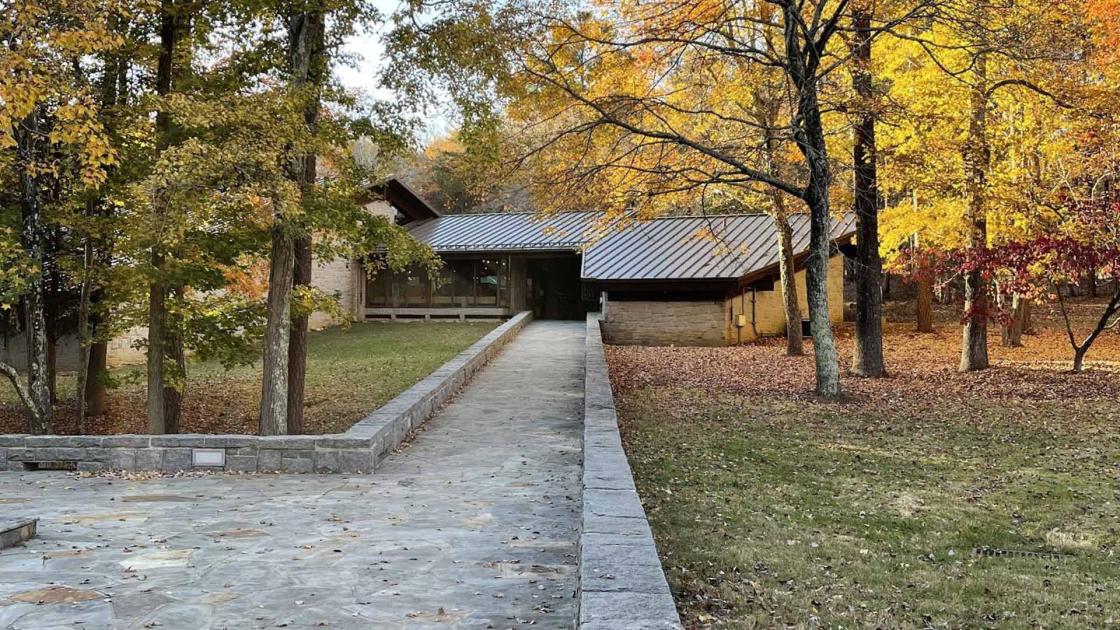
To visitors today who arrive at the Kings Mountain Visitor’s Center by car, the mountain may seem more like a hill, but for the Revolutionary War soldiers who ascended these slopes from the very bottom, whether on horseback or on foot, the climb was a challenge. They were already exhausted from the march to this remote spot while carrying powder horns, firearms, provisions, and bedrolls.
Today, the entrance to the 1 ½-mile battlefield loop is easily accessible through the Visitor’s Center. It guides you through the wooded terrain — which was denser and darker when Patriot attackers hid from unsuspecting British forces — and allows you to hike to the top of the ridge where the battle occurred. The paved path is now dotted with memorials, but on October 7, 1780 it was the forest floor. That day it was covered with wet leaves after a morning rain, which muffled the soldiers’ footsteps as they made their stealthy approach to the British camp.
The men who fought here at Kings Mountain were all born in the American colonies, with the exception of British commander Major Patrick Ferguson, a Scotsman. Ferguson’s men included Provincials, American Loyalists who were uniformed, paid, and drilled as British Regulars, as well as local militia, who wore their own clothes, were not compensated for their service, and were minimally trained. This army faced their own countrymen — Overmountain Men from what is now East Tennessee and militia units from South Carolina, North Carolina, Virginia, and Georgia — in a brutal engagement that lasted just over an hour. Decades later, Thomas Jefferson called the Patriot victory here the “turn of the tide of success which terminated the Revolutionary War.”
British Major Patrick Ferguson had impressed his superiors long before Kings Mountain. He was a good soldier as well as an innovator. His “Ferguson Rifle” — a breech loading gun (loaded from the rear end of the barrel) that could fire off six to eight rounds per minute — was a huge improvement over the commonly used Brown Bess musket, which fired only three rounds per minute. Although a wound at the Battle of Brandywine in 1777 cost Ferguson the use of his right arm, he learned to fight with his left and eventually joined the Southern Campaign in 1780, heading south with his Provincial troops.
After the fall of Charleston in May 1780, Patriot militias continually threatened British outposts across South Carolina, disrupting supply and communication networks. Though small, these militia units — commanded by men like Francis Marion, Thomas Sumter, Isaac Shelby, and Elijah Clarke — were a constant thorn in the side of British commander Lieutenant General Lord Charles Cornwallis. Cornwallis hoped to secure Loyalist support in South Carolina and advance his main army into North Carolina and Virginia. To achieve this goal, British commander Sir Henry Clinton assigned the recruitment and training of Loyalist forces to Patrick Ferguson.
Throughout the summer of 1780, Ferguson enrolled about 5,000 men in Loyalist militia regiments and drilled them in standard British infantry tactics, including lining up in formation, performing volley fire, and practicing bayonet skills. He was good at his job and taught his men to react to commands from a silver whistle he carried, which could be heard above the noise of combat. In August, Cornwallis ordered Ferguson into western North Carolina to recruit more Loyalists, suppress rebellion, and protect his left flank in preparation for the British invasion of North Carolina. Ferguson headed there in September and faced an unexpected challenge.
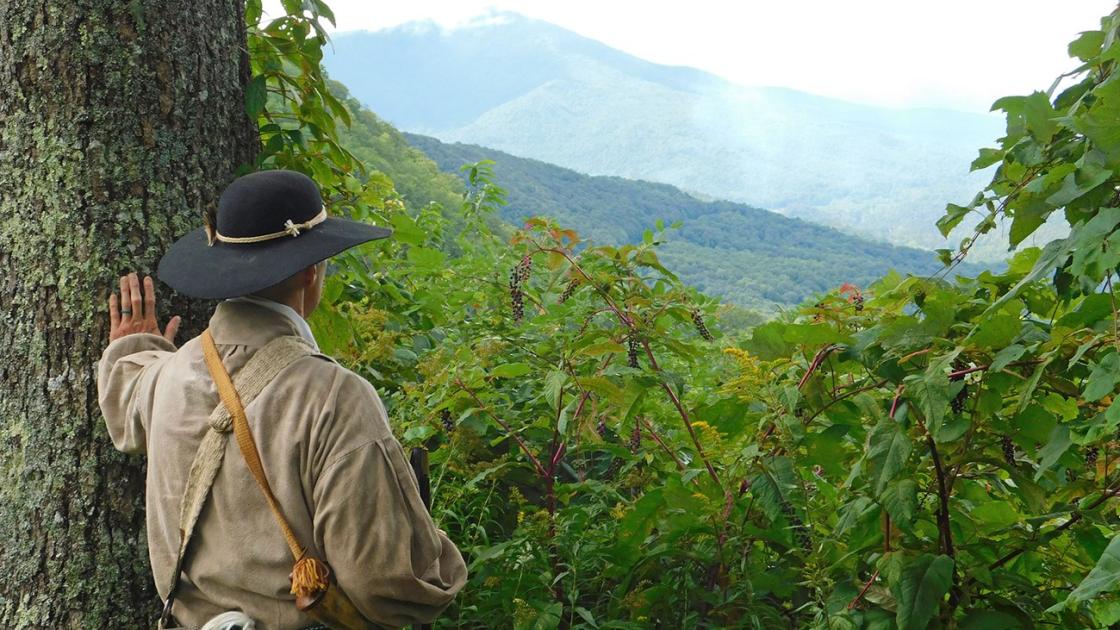
The Overmountain Men were rugged Patriots who lived west of the Appalachians and employed guerilla tactics learned from American Indians on the frontier. Joining with militia units under the command of Colonel Isaac Shelby, Colonel Charles McDowell, and others, they resisted British encroachment into their isolated territory and continually baited Loyalist troops by attacking and retreating into the woods. Ferguson detested these militiamen, whom he considered ruffians and disparagingly called "back water men."
As Ferguson patrolled North Carolina for rebels, he sent a paroled Patriot prisoner to deliver a clear message to the Overmountain Men, threatening: “if they did not desist from their opposition to the British arms, he would march his army over the mountains, hang their leaders, and lay their country to waste with fire and sword.”
Ferguson’s threat might have discouraged resistance in some, but it had the opposite effect on the Overmountain Men and their leaders. Shelby, who had already successfully confronted the British at the Battle of Musgrove Mill just weeks before, quickly organized a mission to pursue and eliminate Ferguson. He rode to nearby Washington County, North Carolina, where he convinced Colonel John Sevier of the need for immediate action. Messengers were dispatched to Colonel William Campbell of Virginia — who was eventually chosen to be overall commander of the group — and Colonel Charles McDowell of Burke County, North Carolina. They called for a militia rendezvous at Sycamore Shoals (near modern Elizabethton, Tennessee, about 120 miles from Kings Mountain) on September 25, 1780, ordering the men to bring their own rifles, gear, and some basic provisions. Fresh gunpowder was made at a nearby mill, while lead for rifle balls was hastily dug from a nearby mountain cove. A small herd of cows was gathered to supply fresh meat for the men during the approach march. Clad in their typical attire — linen hunting shirts, buckskin breeches and moccasins, and broad-brimmed wool hats — these Patriot detachments prepared to confront a formidable enemy.
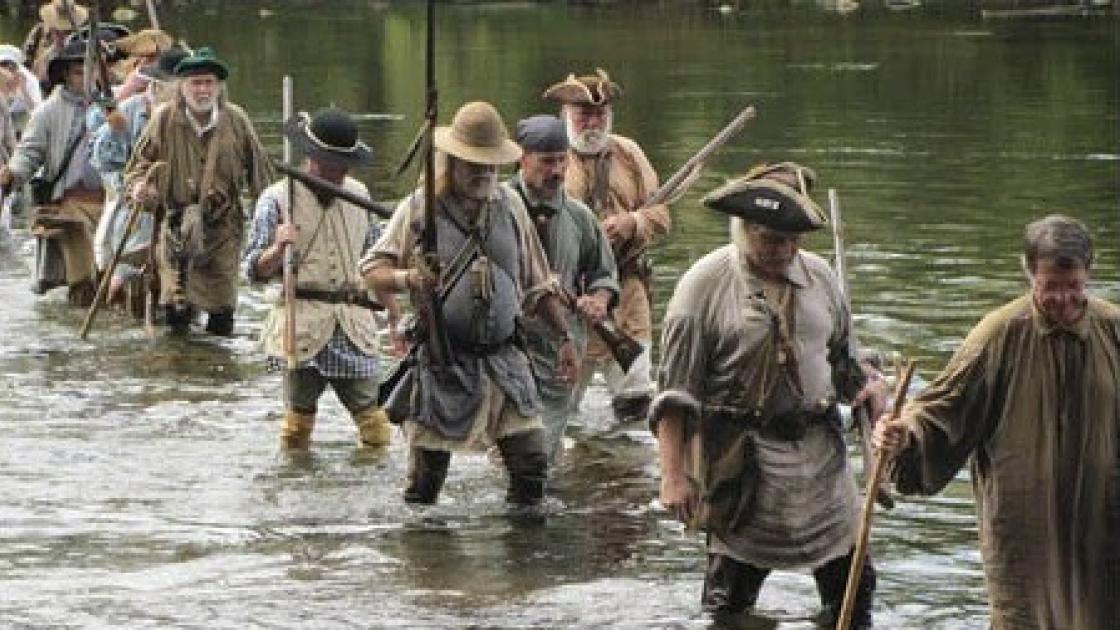
Time and secrecy were critical for the militia leaders if they were to catch Ferguson. Shelby, Sevier, and Campbell were met enroute by Colonel Charles McDowell and Colonel Benjamin Cleveland and together they marched toward Gilbert Town, where they knew Ferguson had stopped with his troops — but when they arrived, he was already gone. Patriot deserters and Loyalist spies had tipped off the Loyalist commander. With the rebels closing in on him and many of his men home on furlough, Ferguson sent out a desperate plea for their return and appealedto British command for reinforcements so he could confront Patriot forces, which were rumored to be 1,500 strong. He received no immediate reply.
At that point, Ferguson could have fled toward the safety of Cornwallis’s base in nearby Charlotte, but he actually slowed his pace. He stopped along the road, crossed Cherokee Ford, and arrived at Kings Mountain on October 6, where his troops set up camp. Situated on a high plateau and not far from fresh water, the camp provided a good defensible position in case of an attack. Ferguson did little to reinforce the ridge. There were no abatis (barriers of sharpened logs) or other obstacles in place. He seemed confident that he could make a stand against the enemy, whom he termed “a set of mongrels.”
That same day Colonel James Williams and Colonel Edward Lacey, both South Carolina militia officers, joined with Shelby and the other commanders at Cowpens. Now 900 strong, the Patriots set out toward Cherokee Ford to find Ferguson. They marched through the night under a steady rain and wrapped their firearms in bags, blankets, or cloth scabbards to keep them dry.
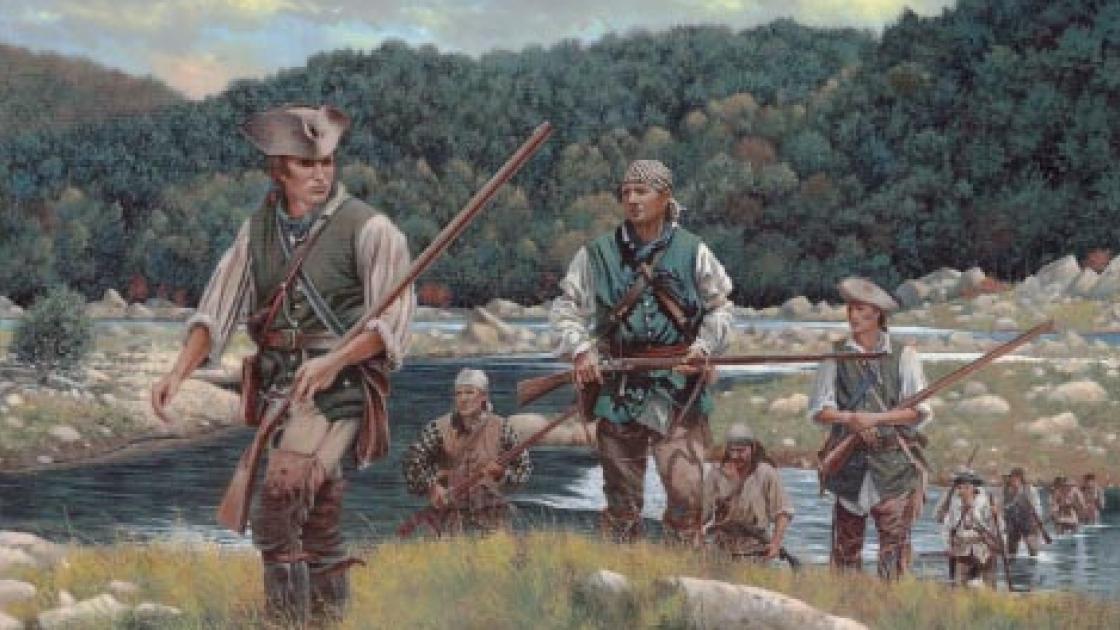
Without access to any of the communication devices soldiers use today, Revolutionary War armies relied on a flawed system of passing information through couriers, deserters, and spies. Hand-carried messages were often intercepted by the enemy or simply went astray, and took days to reach their destination. Aware of the growing threat by the Overmountain Men, Ferguson wrote to Cornwallis asking for reinforcements on both September 29 and September 30, but Cornwallis did not receive the letters until October 5. Ferguson wrote to Cornwallis again on October 5 to say he was heading east toward Cornwallis’s position. Cornwallis responded with directives on October 8, not yet knowing that Ferguson had fallen at Kings Mountain.
Both armies depended on luck as well as critical knowledge and observations provided by townspeople or country residents. Some locals willingly complied with demands for information because they supported the Patriots or Loyalists, but others were coerced. As they continued their search for Ferguson on October 7, the Patriots were aided by several colonists who gave them priceless intelligence. At one Loyalist home, they questioned the owners about where Ferguson could be found, only learning that he was “not far away.” Reportedly, a girl then followed the interrogators out of the house and said, “He is on that mountain,” gesturing toward Kings Mountain just three miles away.
A woman corroborated this information. She had visited the camp to deliver chickens and described the exact location of the Loyalist campsite on a spur of Kings Mountain. The most helpful informant, however, was John Ponder, a 14-year-old carrying a message from Ferguson’s camp to Cornwallis. The captured boy handed the Patriots a note that revealed Ferguson’s troop strength and included a request for reinforcements. Under interrogation, the young Loyalist also divulged a vital detail about Ferguson’s appearance: he wore a red and white checked shirt. This vivid description later made Ferguson an easy mark for Patriot riflemen. The Patriots were now only a mile from the British camp.
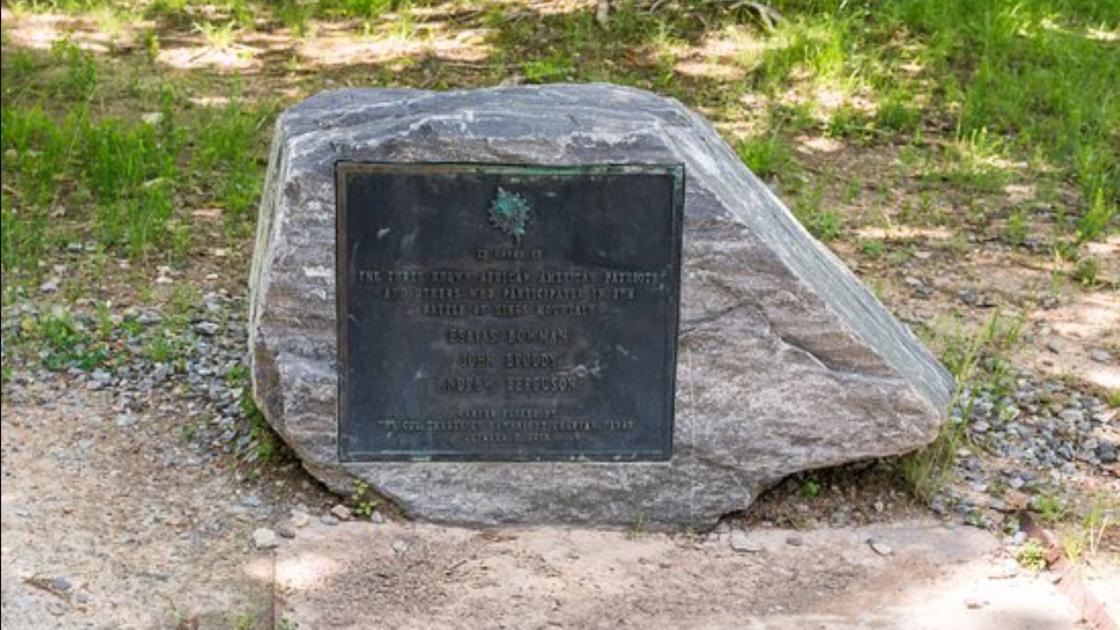
As you make your way down the trail, be sure to look for the Black Patriots Memorial, which commemorates the contributions of Essius Bowman, Andrew Ferguson, and John Broddy at Kings Mountain. Before the Revolutionary War was even a distant memory, most Americans had already forgotten the extensive role Black people played on both sides during the War for Independence. Many were active participants, and they fought in integrated units. However, after the last battles of the Southern Campaign, Black soldiers in the United States were relegated to segregated military units for the next 170 years, until the Korean War.
Essius (Esaius) Bowman was a free man who served in Captain Joel Lewis’s company from North Carolina. He is said to have been one of the men who shot Patrick Ferguson. John Broddy was an enslaved man and servant of Colonel William Campbell of Virginia. Although he did not bear arms, he was near enough to the battle to observe the action and while mounted on horseback was shot at by Loyalists mistaking him for Colonel Campbell. Andrew Ferguson, a free man of Virginia, was drafted in January 1780. Only 16 years of age at the time of Kings Mountain, he saw action in many engagements, including Musgrove Mill, Cowpens, and Guilford Courthouse.
Not mentioned on the monument are Primes and Ishmael Titus. Primes (also called Primus), a free man, was taken prisoner at Charleston but paroled. He later rejoined the Patriot army, was wounded at Camden, and fought at Kings Mountain. Ishmael Titus was enslaved at birth. He took the place of his enslaver during the war and was promised (and granted) his freedom in return. He served here under Captain John Cleveland, survived the war, and lived to be 110 years old.
The Patriots approached Kings Mountain in two columns at about 3:00 p.m. on October 7. Militiaman John Spelts later recalled the pep talk by the commanders: “When we encounter the enemy, don’t wait for the word of command. Let each of you be your own officer, and do the very best you can, . . .”
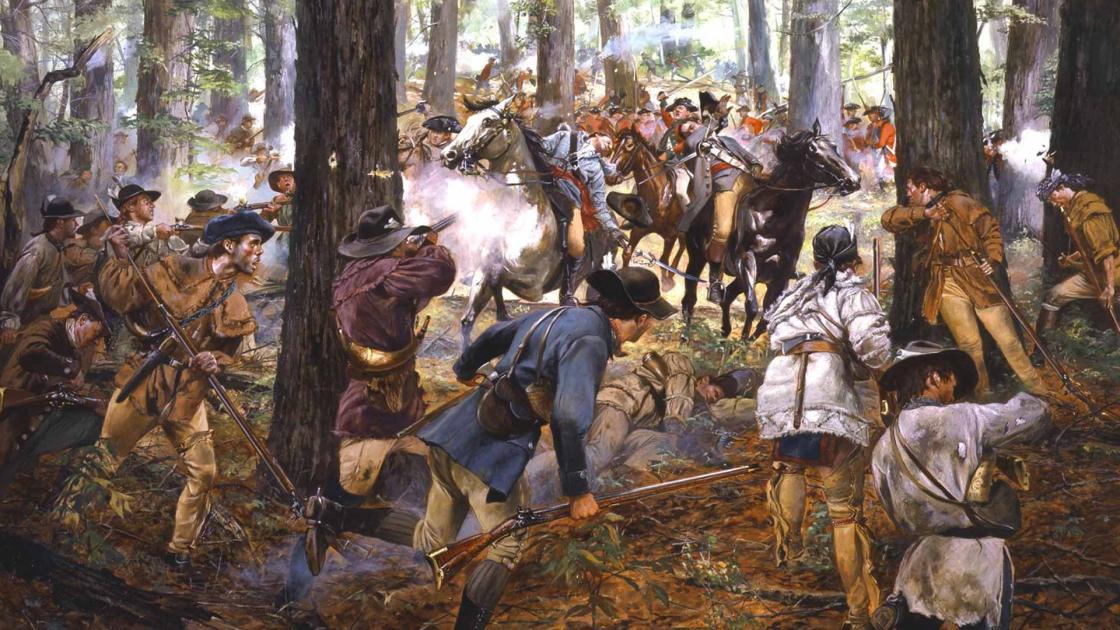
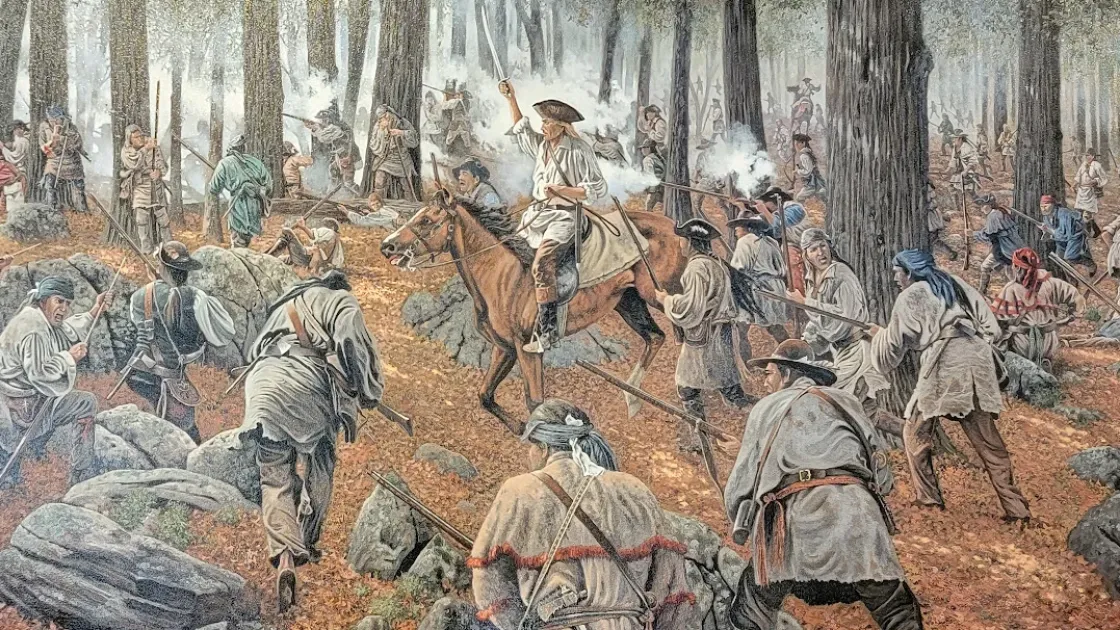
At the foot of the ridge, the right and left columns separated and filed to either side, surrounding the mountain. Colonels Campbell and Sevier commanded the right column while Shelby and Cleveland led the left. Within ten minutes, all the regiments were in position. At the first sound of fire, Indian yells from the attacking frontiersmen reverberated throughout the woods. In the melee, it was difficult to distinguish Ferguson’s Loyalists from the Overmountain men. All wore the same type of hunting frocks, but to distinguish between them in battle, the Loyalists placed sprigs of pine or boxwood in their hats while the Patriots placed pieces of white paper in theirs. The long hunting rifles used by the American militia were more accurate and fatal than the Loyalist muskets.
Mounted on a white horse, Ferguson snapped into action, ordering his approximately 1,125 troops into formation. He rushed along his lines, brandishing a sword in his left hand and blowing his silver whistle. As they moved ahead the Patriots took advantage of the trees and boulders on the mountain's slopes to fire from cover. On the narrower, southwestern part of the ridge, the Loyalists repulsed their attackers with two or three bayonet charges. Each time the bayonet charges drove the riflemen down the hill, Patriot officers rallied their men, who then picked off Loyalists as they returned up the steep hill. Soon, the Patriots gained the crest of the ridge on the southeast and began to drive the Loyalists into a small area around their tents. Seventeen-year-old James Collins later recalled: “the enemy was completely hemmed in on all sides, and no chance of escaping. . . . the groans of the wounded were heard in every direction. I could not help turning away from the scene before me, with horror, and though exulting in victory, could not refrain from shedding tears.”
The Centennial Monument now marks the spot where the most intense fighting occurred. The larger U.S. Monument sits on top of the hill.
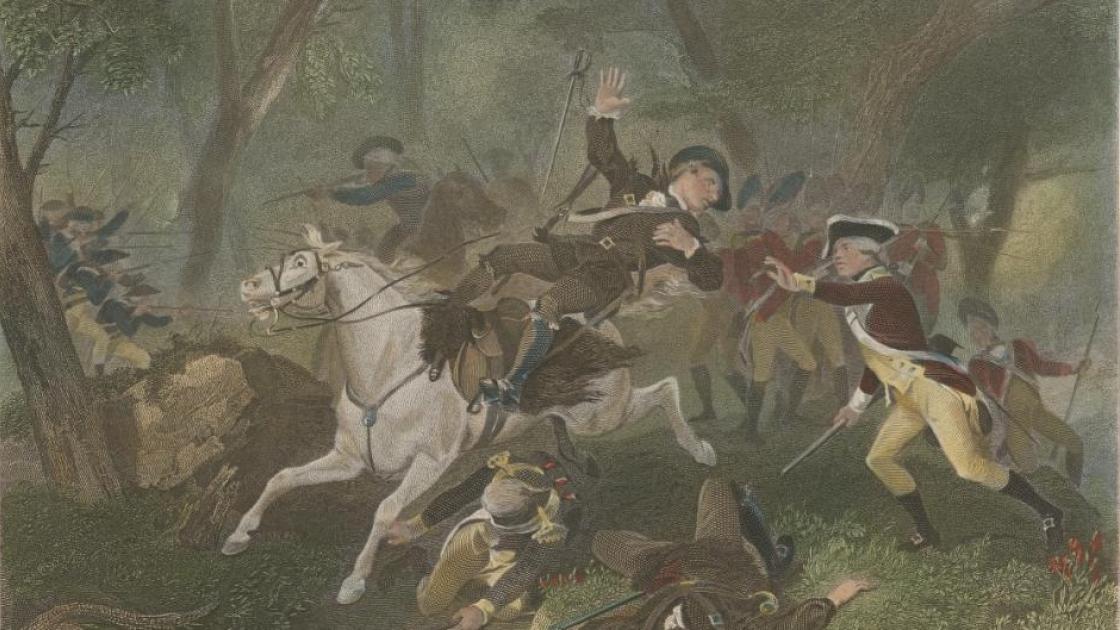
After about 45 minutes of fighting, the Loyalists ran out of ammunition and the hilltop camp became a bloodbath. Still, Ferguson was not about to surrender to men he contemptuously referred to as “mongrels.” As he rode out in his distinctive shirt to break through the lines on the southeastern slope of the ridge, the Partisan riflemen recognized their target. They fired, and Ferguson was mortally wounded. Patriot militiaman James Collins saw the fallen Major and reported, “. . . seven rifle balls had passed through his body, . . . his hat and clothing were literally shot to pieces.”
Upon Ferguson’s death, command passed to Captain Abraham DePeyster, who raised a white flag. Some Partisans, remembering British commander Banastre Tarleton’s cruelty toward surrendering Patriots in the Battle of Waxhaws, continued killing deliberately, shouting “give them Tarleton’s quarter!” Finally, Shelby rode toward the Loyalist lines and shouted, “Damn you, if you want quarter, throw down your arms!” The Loyalists complied and all hostilities ceased — until a lone shot was fired, killing Patriot General James Williams. Fearful that the Loyalist prisoners were trying to escape, some Patriots began to shoot them. Before the firing finally ended 100 men had fallen. Loyalists lost 156 men, with 163 seriously wounded, and more than 600 taken prisoner. Patriot losses were 28 killed and 62 wounded.
As you continue to walk, look for the grave of Major Ferguson at the bottom of the steep hill. Nearby, there is a marker on the spot where he died. Toward the end of the battlefield trail you will find a granite monument dedicated to Ferguson’s memory. It was placed there on October 7, 1930, to symbolize the bonds of friendship and peace between the United States and Great Britain.
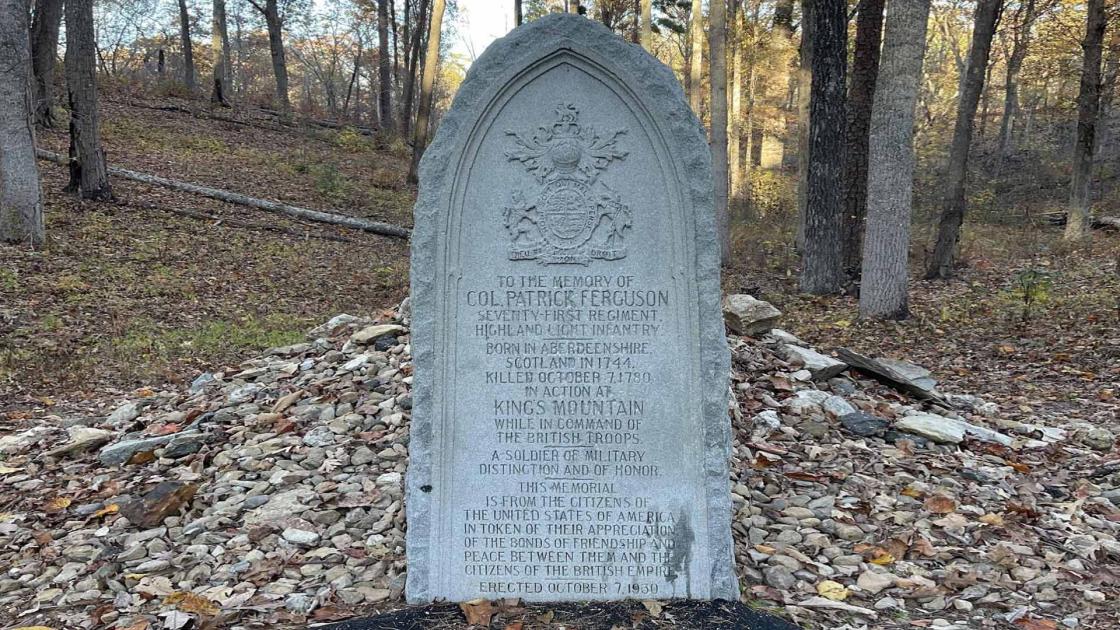
In his pension application in 1854, Revolutionary War veteran John McQueen recounted his experience at Kings Mountain and included an interesting detail about Major Patrick Ferguson:
“That there was a woman who Ferguson had been keeping who had left the British army and had come with news to Capt. Lewis and she told him that Ferguson could be known by him using his sword in his left hand as he had been wounded previously in the right and Capt. Lewis communicated this to Col Cleveland and after the battle commenced.”
While McQueen’s account of Ferguson’s mistress is hard to verify, there is certainly enough anecdotal evidence to suggest that Ferguson had not one, but two women with him in camp at Kings Mountain — and both were named Virginia. In his 1881 book about the battle, Lyman Draper includes recollections from several people who knew of or heard lore about the “two Virginias” — Virginia Sal and Virginia Paul. Most accounts suggest that Ferguson was intimately involved with the two women, but the Virginias might have accompanied him as personal servants or performed the tasks of many women camp followers, such as cooking, washing, collecting firewood, and tending to the wounded. Some sources highlight the story of Ferguson’s mistresses to question the Loyalist commander’s moral character, but certainly he was not the only soldier in camp to have female “companions.”
At some point in the fighting on October 7, 1780, Virginia Sal was killed. Her remains are buried with Ferguson’s at Kings Mountain. Virginia Paul’s fate is unknown.
The harsh treatment of the Kings Mountain prisoners reveals the cruelty of the civil war that tore apart the Carolinas during the American Revolution. When the battle ended, the victors left the seriously wounded Loyalists on the battlefield overnight without blankets or provisions. On the morning of October 8, the dead were quickly buried, and the Loyalists’ wagons were burned. Fearing that Cornwallis would pursue them, the Patriots began their retreat north and west toward Gilbert Town and the mountains. Still, they continued to mistreat and even kill some prisoners on the march. The hatred for their fellow countrymen who supported the Loyalist cause ran deep. On the night October 14, while the army was encamped at Bickerstaff’s Plantation, outside Gilbert Town, the Patriots tried and sentenced 36 prisoners to death. Nine were hanged.
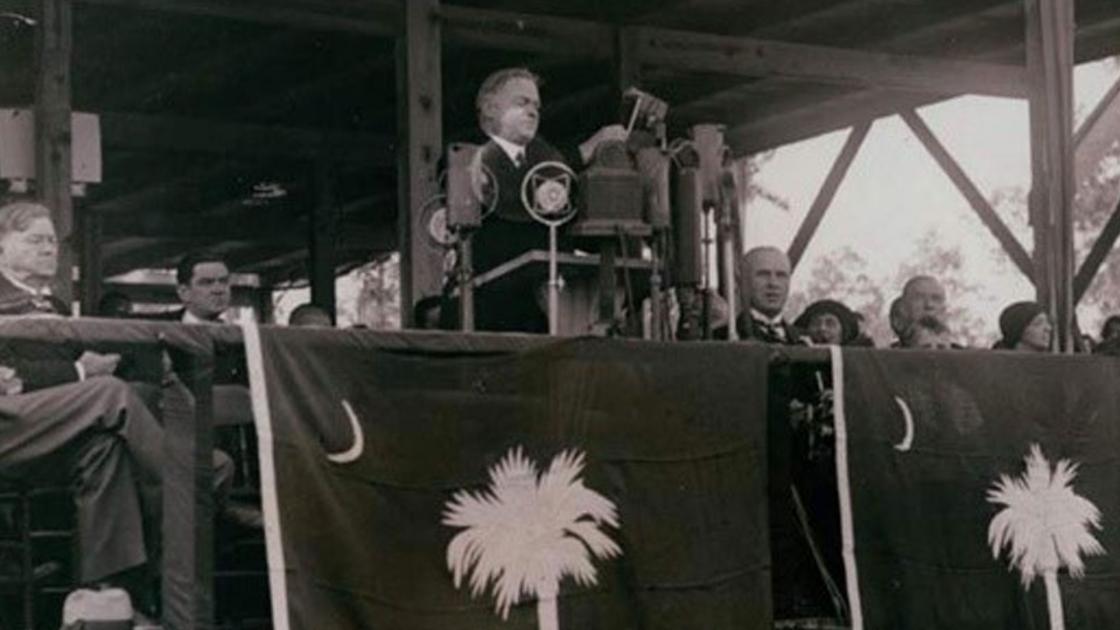
The Battle of Kings Mountain was a disaster for Cornwallis. It ruined his chance of advancing farther into North Carolina and forced his army to retreat to Winnsboro, South Carolina, not far from the British outposts of Ninety-Six and Camden. For the Patriots, the decisive victory over Ferguson boosted morale, not only throughout the South but throughout the colonies. The Loyalist support for Cornwallis never materialized after the battle. The Patriot triumph here directly contributed to the American success in the Revolutionary War, and it continued to inspire Americans generations later. United States President Herbert Hoover stood here on the 150th anniversary of the battle and declared:
“It was a little army and a little battle, but it was of mighty portent. History has done scant justice to its significance, which rightly should place it beside Lexington and Bunker Hill, Trenton and Yorktown, as one of the crucial engagements in our long struggle for independence.”