-
The BlogBiographies
-
Videos

“And now was coming on the famous Kipp's Bay affair, which has been criticized so much by the Historians of the Revolution. I was there, and will give a true statement of all that I saw during that day…every man that I saw was endeavoring by all sober means to escape from death or captivity, which at that period of the war was almost certain death…”
- Patriot Militiaman Joseph Plumb Martin
Overnight on August 29, 1776, just days after the British victory at the Battle of Brooklyn, General George Washington ordered a foggy retreat across the East River to Manhattan. The British had managed to wrestle control of Long Island out of Patriot hands, but now they set their sights on the real prize—control of modern-day Manhattan. The Battle at Kip’s Bay, sometimes called the Landing at Kip’s Bay, set the next phase of the New York Campaign after the Patriot defeat at Brooklyn. By late summer 1776, Patriot General George Washington’s troops were guarding lower Manhattan. But by September 15, 1776, the British were coming. This one-stop tour is going to require a bit of imagination because Manhattan is a lot different today than it was during the American Revolution. Today, you are choosing to remember that, under the hustle and bustle of the modern city that never sleeps, you’re on hallowed ground.
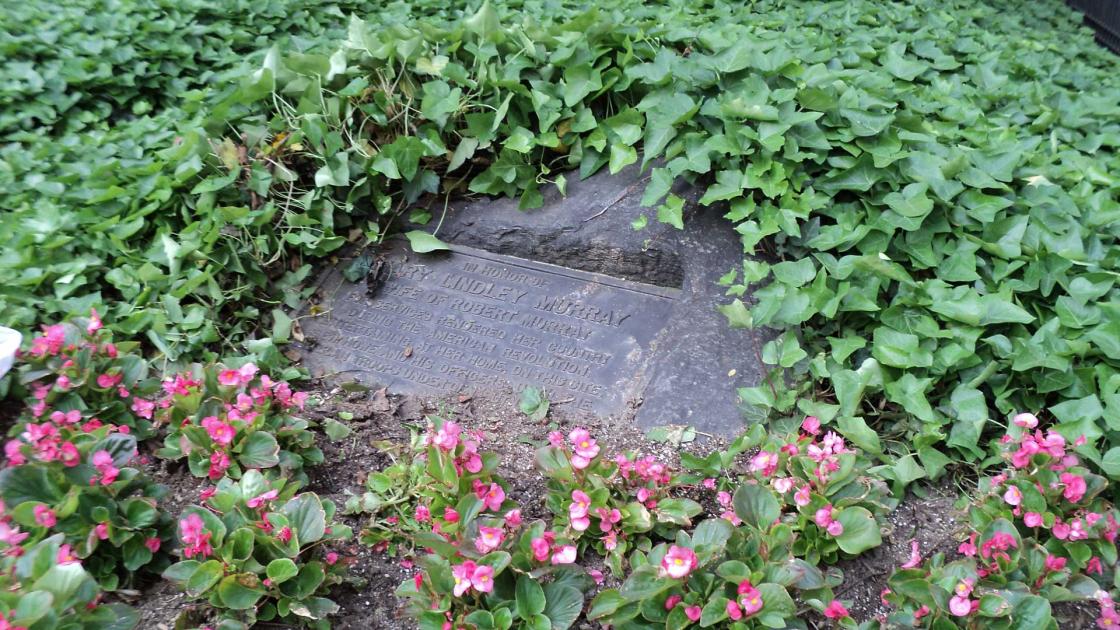
This stop is located in a median at the intersection of 37th Street and Park Avenue. To reach this location, you may find it easiest to take the subway, but street parking and parking garages are nearby. When you arrive, you’re looking for a plaque attached to a boulder in the southern median of Park Avenue. If you’re feeling more adventurous, walk towards the East River on 34th Street (40°44'37.5"N 73°58'16.9"W) to see the general area where the British landed. In the opposite direction at the intersection of 42nd Street and 5th Avenue (40°45'12.3"N 73°58'52.0"W), you can see the location where Washington confronted his retreating troops.
You are standing in an area of midtown Manhattan known as Murray Hill. Try for a moment to silence the modern noise around you, because during the American Revolution this was rural farmland with only a few homes, some dating from the region’s original Dutch settlement. In 1776, the home of Mary Lindley Murray stood on this spot. With the British in control of Brooklyn, General Washington placed about 500 Connecticut Militia around this location to guard lower Manhattan, while the rest of Washington’s forces were entrenched on Harlem Heights to the north.
On September 15, five British warships approached Kip’s Bay to your east, unleashing a heavy bombardment and smoke along the shoreline.
Joseph Plumb Martin, a young member of the Connecticut Militia, later recalled that “all of a sudden, there came such a peal of thunder from the British shipping that I thought my head would go with the sound.” The smoke and cannonade concealed a force of 4,000 British soldiers making their way to the beach. As the British disembarked and made their approach across the island, the line of Connecticut Militia broke and fled immediately. General Washington unsuccessfully attempted to rally the troops, reportedly shouting in disappointment “Are these the men I am to defend America with?”
British General William Howe made an easy advance from shore to the Murray house here. So easy, in fact, that Howe reportedly stopped for lunch, provided by Mary Lindley Murray. The plaque here honors Mary, and apocryphally suggests that she entertained General Howe here long enough for American forces to make a full retreat to Harlem Heights. The Patriots did make it to Harlem, but Howe had already planned to stop here to view the British advance. Mary likely had nothing to do with the successful Patriot retreat. By day’s end, the British suffered just 12 causalities in their landing and advance while the Patriots lost 50 killed and 320 captured. For now, the British had control.
Some veterans of Kip’s Bay, like Patriot General William Heath, later defended the militia’s retreat, recalling heartbreaking fear and confusion.
Listen to General Heath describe it in his own words. No matter where you’re standing here in Manhattan, you tread the same ground as Patriots who faced incredible odds and many who made the ultimate sacrifice.
This stop is located in a median at the intersection of 37th Street and Park Avenue. To reach this location, you may find it easiest to take the subway, but street parking and parking garages are nearby. When you arrive, you’re looking for a plaque attached to a boulder in the southern median of Park Avenue. If you’re feeling more adventurous, walk towards the East River on 34th Street (40°44'37.5"N 73°58'16.9"W) to see the general area where the British landed. In the opposite direction at the intersection of 42nd Street and 5th Avenue (40°45'12.3"N 73°58'52.0"W), you can see the location where Washington confronted his retreating troops.
You are standing in an area of midtown Manhattan known as Murray Hill. Try for a moment to silence the modern noise around you, because during the American Revolution this was rural farmland with only a few homes, some dating from the region’s original Dutch settlement. In 1776, the home of Mary Lindley Murray stood on this spot. With the British in control of Brooklyn, General Washington placed about 500 Connecticut Militia around this location to guard lower Manhattan, while the rest of Washington’s forces were entrenched on Harlem Heights to the north.
On September 15, five British warships approached Kip’s Bay to your east, unleashing a heavy bombardment and smoke along the shoreline.
Joseph Plumb Martin, a young member of the Connecticut Militia, later recalled that “all of a sudden, there came such a peal of thunder from the British shipping that I thought my head would go with the sound.” The smoke and cannonade concealed a force of 4,000 British soldiers making their way to the beach. As the British disembarked and made their approach across the island, the line of Connecticut Militia broke and fled immediately. General Washington unsuccessfully attempted to rally the troops, reportedly shouting in disappointment “Are these the men I am to defend America with?”
British General William Howe made an easy advance from shore to the Murray house here. So easy, in fact, that Howe reportedly stopped for lunch, provided by Mary Lindley Murray. The plaque here honors Mary, and apocryphally suggests that she entertained General Howe here long enough for American forces to make a full retreat to Harlem Heights. The Patriots did make it to Harlem, but Howe had already planned to stop here to view the British advance. Mary likely had nothing to do with the successful Patriot retreat. By day’s end, the British suffered just 12 causalities in their landing and advance while the Patriots lost 50 killed and 320 captured. For now, the British had control.
Some veterans of Kip’s Bay, like Patriot General William Heath, later defended the militia’s retreat, recalling heartbreaking fear and confusion.