-
The BlogBiographies
-
Videos

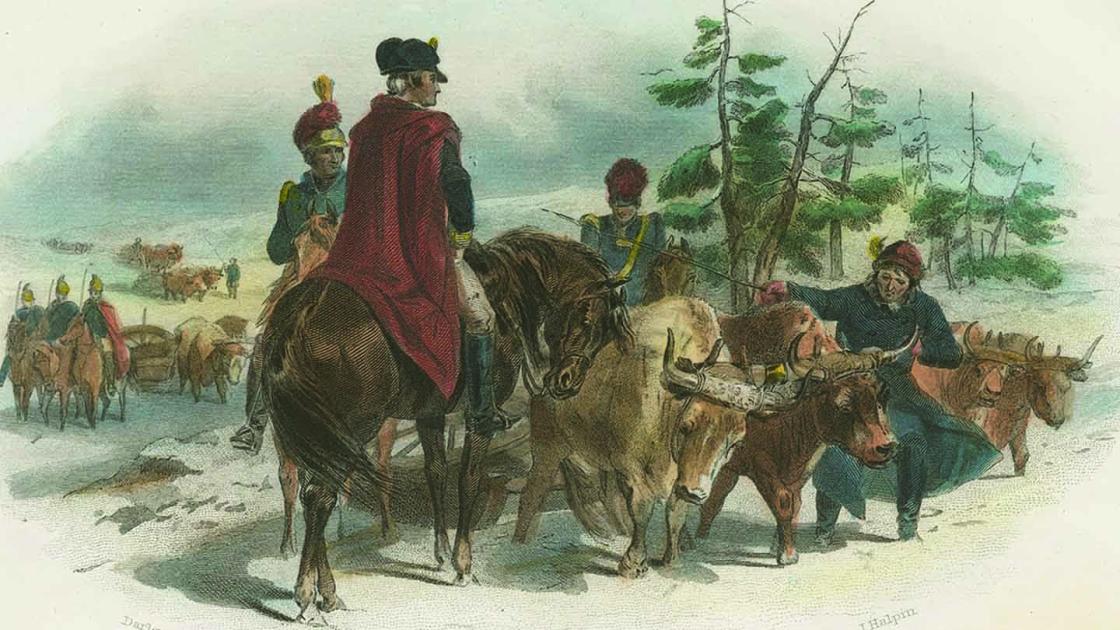
“Keep up your spirits, my dear Girl… & don’t be alarm’d when I tell you that the General has ordered me to go to the West Ward as far as Ticonderoga, about a three weeks journey. Don’t be afraid, there is no fighting in the Case. I am going upon business only.”
- Henry Knox to Lucy Flucker Knox, November 16, 1775
Fifty-nine cannon. Three hundred miles. Fifty-six days. And one 25-year old man to lead what was perhaps the most remarkable logistical operation of the American Revolution. Only the firepower of cannon could potentially break a stalemate and shake the British out of Boston.
You’re about to follow Henry Knox’s Noble Train of Artillery from Crown Point, New York to Cambridge, Massachusetts. Hopefully your conveyance is more modern than Knox’s sleds and flatboats—you have a lot of ground to cover.
The primary stops on this tour are part of the Henry Knox Cannon Trail, a series of markers placed in 1926-27 to honor the 150th anniversary of Knox’s Noble Train of Artillery through New York and Massachusetts. This itinerary takes you through some of the highlights across the 50+ markers that are along the trail and suggests additional stops to help you explore the region’s rich Revolution history, as well as local eats and brews!
What took Henry Knox and his men 56 grueling days, we’ve broken down into less than a week by car. Safe travels!
Please note that this tour takes a few days of travel to complete
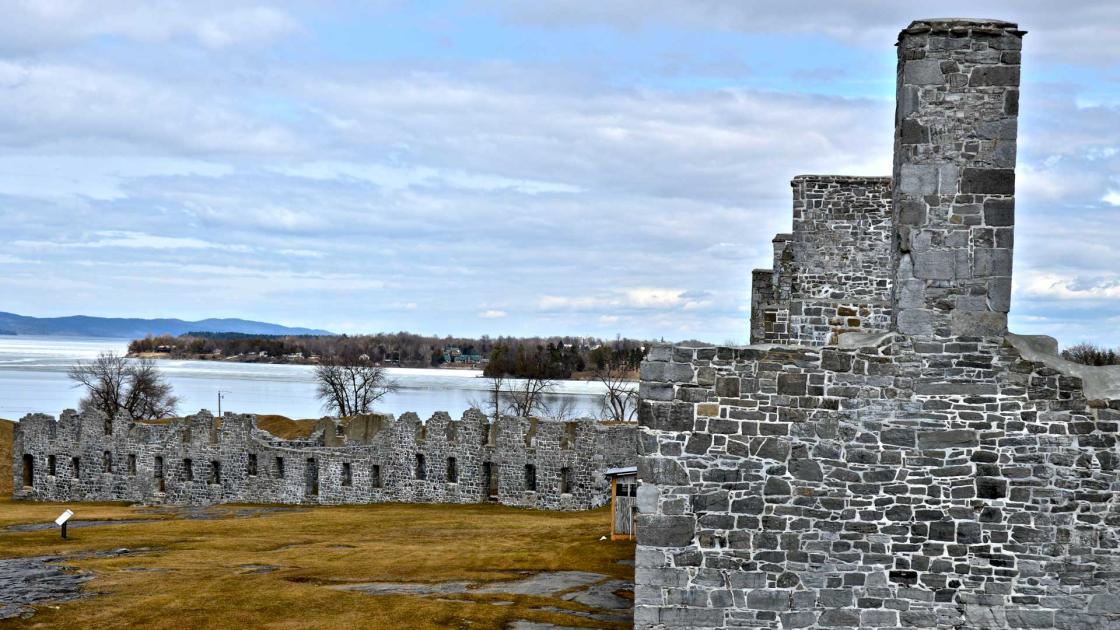
Crown Point State Historic Site
Don’t let these ruins fool you. At one time, Crown Point was the largest earthen fortification in the colonies, and an important outpost in the French and Indian War as well as the American Revolution.
On November 17, 1775, with orders from General George Washington, Henry Knox set out from Cambridge, Massachusetts to collect cannon for the Continental Army. In a letter to Knox the day before, Washington wrote “You are immediately to examine into the state of artillery of this army and take an account of the cannon, mortars, shells, lead, and ammunition that are wanting; when you have done that, you are to proceed in the most expeditious manner to New York…” Knox was to acquire artillery from here, at Crown Point, as well as Fort Ticonderoga, and fight both the brutal winter elements as well as an unforgiving terrain to get the whole lot back to Washington.
Previously a British outpost, a Patriot detachment of the Green Mountain Boys captured this fort on May 11—without firing a shot. And the fort here was full of artillery. Twenty-nine of the 59 cannon that would eventually make up Henry Knox’s “Noble Train of Artillery” were collected from this fort.
29 out of the eventual 59 cannon that Knox dragged to Massachusetts came from here, at Crown Point.
What to do: Knox Marker #0 (NY) is in front of the museum at Crown Point State Historic Site. Explore the State Historic Site’s museum and the stone ruins of both the British-built fort at Crown Point (c.1759) and French-built Fort St. Frederic (c.1734-1737). Check ahead for seasonal hours, fees, tour options, and other visitor information.
Need a break before your next stop? War Cannon Spirits draws inspiration from the region’s history to craft spirits, sodas, and food within a newly restored c.1820 sawmill.
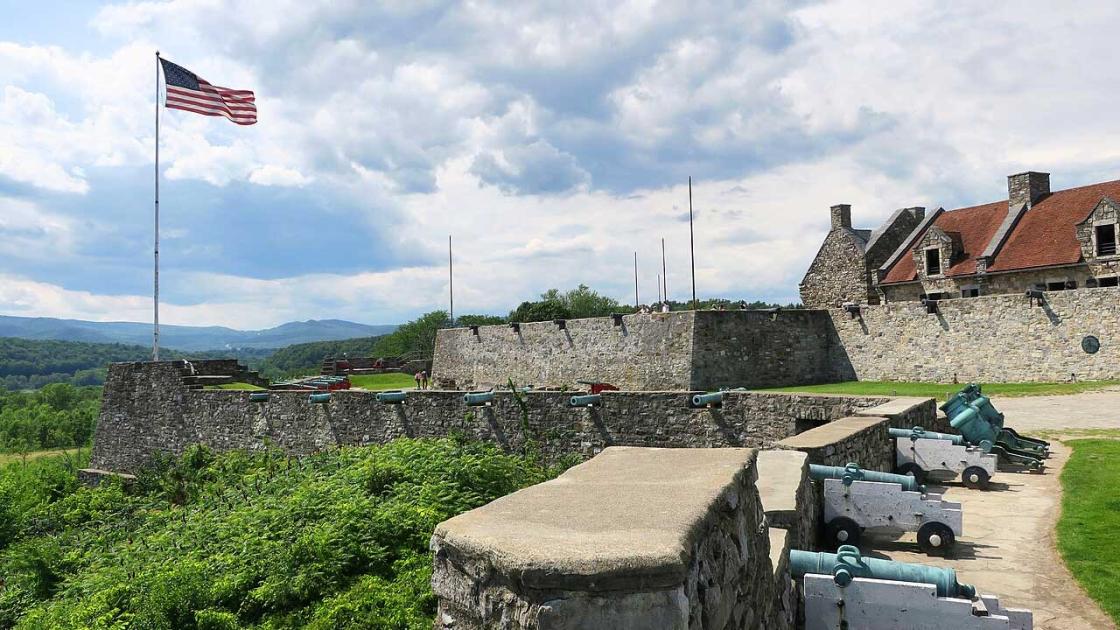
Fort Ticonderoga
On December 5, 1775 Henry Knox reached Fort Ticonderoga. Patriots captured the British fort here on May 10, securing not only an important northern outpost but the cache of artillery inside. Knox selected 30 cannon from the artillery stores here. Adding these to the 29 already selected from Crown Point, Knox needed to figure out how to bring 59 cannon to the landing at Lake George and ultimately to the Continental Army at Cambridge, Massachusetts.
While here, Knox penned an inventory of “Stores to be Conveyed to Camp…from Ticonderoga,” including 12 “18-pounders” -- iron cannon capable of firing balls weighing 18 pounds, boxes of lead and flints, and the largest cannon that would make the journey. This brass 24-pounder, nicknamed “Old Sow,” weighed more than 5,000 pounds by itself.
Now at Fort Ticonderoga with artillery in hand, Knox now faced the most critical and intense part of his mission: getting 120,000 pounds of brass and iron over Lake George, the Hudson River, and the Berkshire Mountains, in the dead of winter. Knox wrote to Washington, “the conveyance from hence will depend entirely on the sledding—if that is good they shall immediately move forward—without sledding the roads are so much gullied that it will be impossible to move a Step.” Knox needed sleds, oxen and horses, and just the right amount of snow to pull off the most daring logistical fete of the American Revolution.
What to do: Knox Markers #1 (NY) is on the parade ground, near the south parapet wall. Knox Marker #2 (NY) is on Fort Ticonderoga Entrance Road. Explore the 2,000-acre Fort Ticonderoga campus, which includes a museum, garden, living history demonstrations, and a 1.7-mile hiking trail of the 1758 Carillon Battlefield. Check ahead for seasonal hours, fees, tour options, and other visitor information.
On the way to the next stop:
Knox Marker #3 (NY): Bicentennial Park, Ticonderoga, NY
Mossy Point
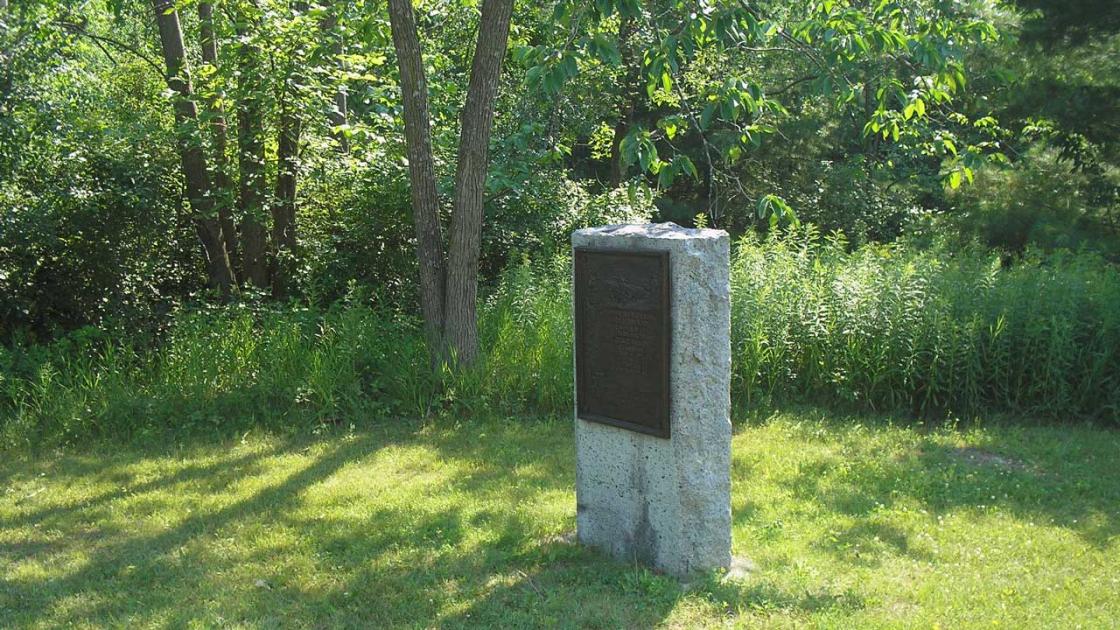
Modern visitors to Mossy Point launch boats here in the summer for a fun day on the water. But 250 years ago in 1775, Henry Knox was here in the snow, the cold, and the ice probably not having any fun and wondering what he’d gotten himself into. Days earlier, teams of oxen had dragged 60 tons of artillery from Fort Ticonderoga to this landing at Lake George. Getting them here, to the banks of the north end of Lake George, was one thing. Getting them across was going to be another. On December 9, Knox supervised while his men loaded the cannon onto three boats that would make the journey across the lake. One of the vessels, a flat-bottomed boat called a “scow,” carried some of the heaviest cannon and sank under the weight of its cargo. Luckily, soldiers saved both the boat and cannon from the chilly waters.
What to do: Knox Marker #4 (NY) is located at the entrance to the Mossy Point Boat Launch Site. Enjoy the water - hopefully more than Knox did! For those lucky enough to have access to a boat or boat rental, this site is now a boat launch for the north end of Lake George. If you prefer a land-based way to imagine Knox’s ice-filled journey across the water, visit the nearby Black Point Beach.
The next Knox marker, #5 (NY), is located at Sabbath Day Point on private land and not publicly accessible.
Have more time? Head over to Whitehall (Skenesborough) about 30 miles away to see where General Benedict Arnold built a fleet for the Patriot cause in 1776, inspiring a local claim to being the birthplace of the U.S. Navy.
Bolton's Landing
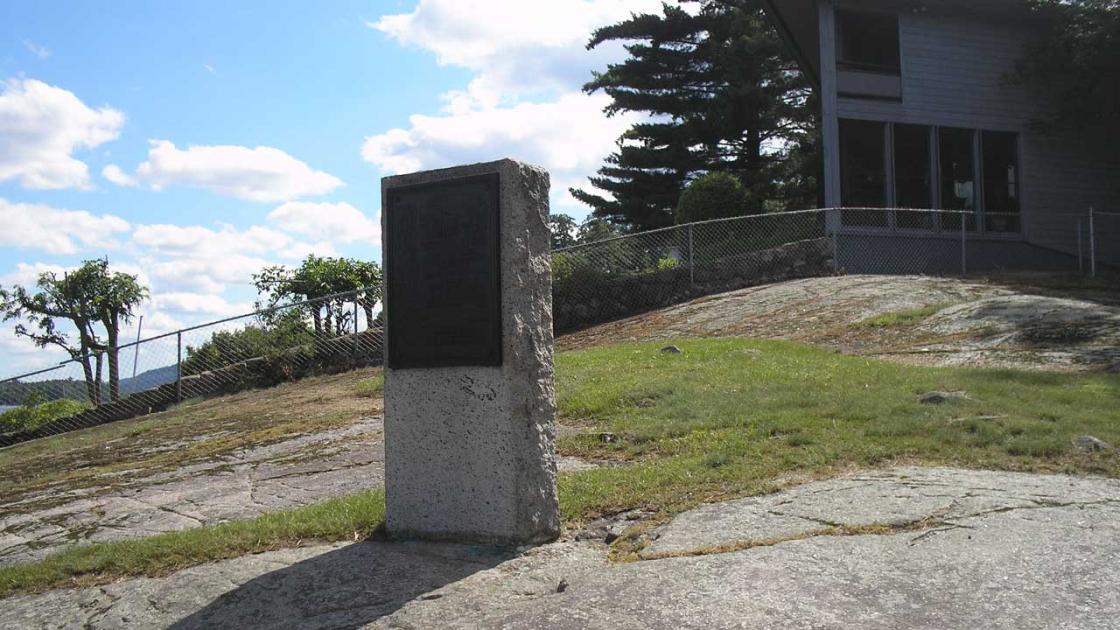
On the night of December 10, 1775, Henry Knox and his men were tired and wind-blown from the start of their journey on Lake George. They had floated their train of 59 artillery pieces on this leg of its journey from Fort Ticonderoga to the Continental Army waiting outside Boston. But sometimes the spirit is willing, and the body—and wind—have other intentions. After making good headway along the water days before, Knox halted the whole affair here on December 10, so to give the men a rest from the wind working against them. In his diary, Knox noted that though his men had tried their best to “row exceedingly hard above four hours” fighting the bitter wind, Knox knew them to be “exceedingly weary.” On the banks of the lake here, Knox and his men “took a comfortable nap, laying with our feet to the fire” before resuming their voyage the next day. The whole journey across Lake George would be, according to Knox, about 36 miles. Writing to his wife Lucy, Henry looked with anticipation at the next land-based leg of his journey with the artillery, assuring Lucy that once the Lake George journey was behind them, “all the danger and principal difficulty” would pass. “We shall cut no small figure in going through the county,” he wrote, “with our cannon, mortars, etc., drawn by eighty yoke oxen.”
What to do: Knox Marker #6 (NY) is located near the waterfront in Rogers Memorial Park. Explore the beach-front park and, like Knox and his men, take a well-deserved rest.
Lake George Battlefield State Park
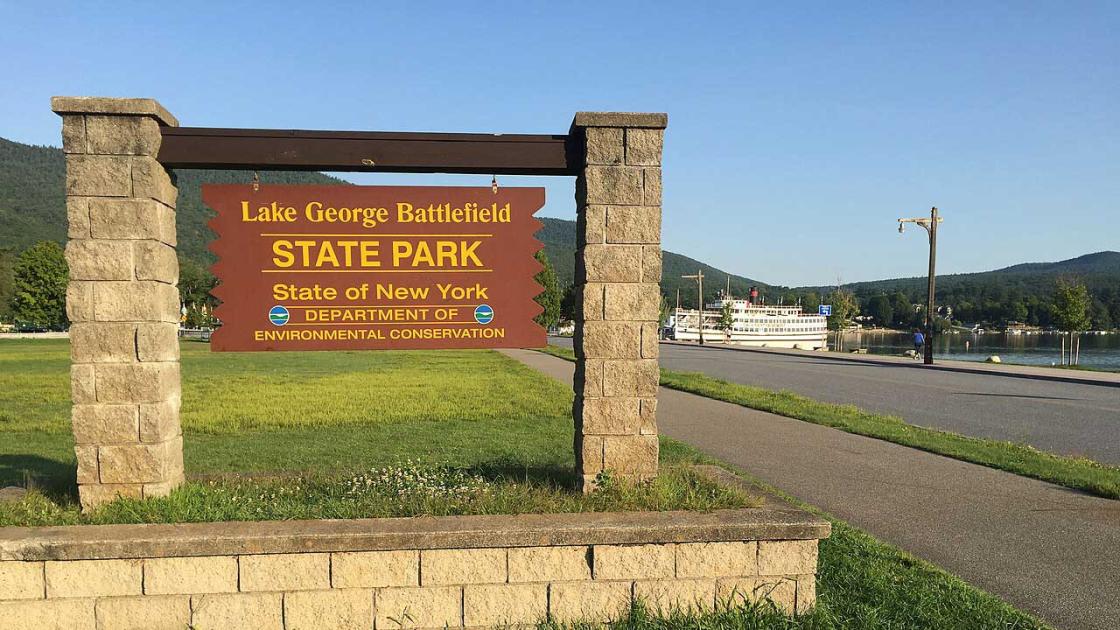
By December 16, Henry Knox, his three boats, and all 59 pieces of artillery had completed their voyage down Lake George. Though one of the boats foundered along the way, every piece of cannon made it across the lake and were now all safely awaiting the next leg of their journey in route to meet General George Washington’s Continental Army outside of Boston. Knox now had to turn his attention to a land-leg of his artillery train. For this, Knox began assembling an entourage of 42 wooden sleds and draft animals, including eighty yoke of oxen, to drag the 60-ton hoard of artillery over land.
While here at Fort George, Knox wrote to Washington:
“It is not easy to conceive the difficulties we have had in getting them (the artillery) over the lake owning to the advanced season of the year and contrary winds—three days ago it was very uncertain whether we could have gotten them over until next spring, but now please God they shall go.”
Undeterred by the winter weather and hardships he had already faced, Knox was optimistic that if the right conditions persisted, “I hope in 16 or 17 days,” he wrote to Washington, that he should “be able to present to your Excellency a Noble train of Artillery.”
What to do: Knox Marker #7 (NY) is in Lake George Battlefield State Park along Fort George Road. Explore the 35-acre park which preserves the remains of Fort George and consider that – while Knox was making American history – he was also treading upon it. The British built both Fort George and Fort William Henry (reconstructed next to the park) during the French and Indian War, on land home to Indigenous peoples for millennia. If you have time, visit the Fort William Henry Museum to see a reconstruction of the eighteenth-century fort William Henry and learn more about Lake George’s role during the French and Indian War and American Revolution.
Need a break? Check out nearby Adirondack Pub & Brewery for local food and flair.
Have more time? If you look towards the lake, you might see quite a busy waterfront. Lake George is well known for its sightseeing boat cruises Consider taking a narrated tour, which can be day or night, one hour or several hours!
On the way to the next stop:
Knox Marker #8 (NY) is located along the side of State Route 9 and might not be safely accessible
Knox Marker #9 (NY): Crandall Park, Glens Falls, NY
Knox Marker #10 (NY): Hudson Falls Public Library, Hudson Falls, NY
Knox Marker #11a (NY): Fort Edward High School, Fort Edward, NY
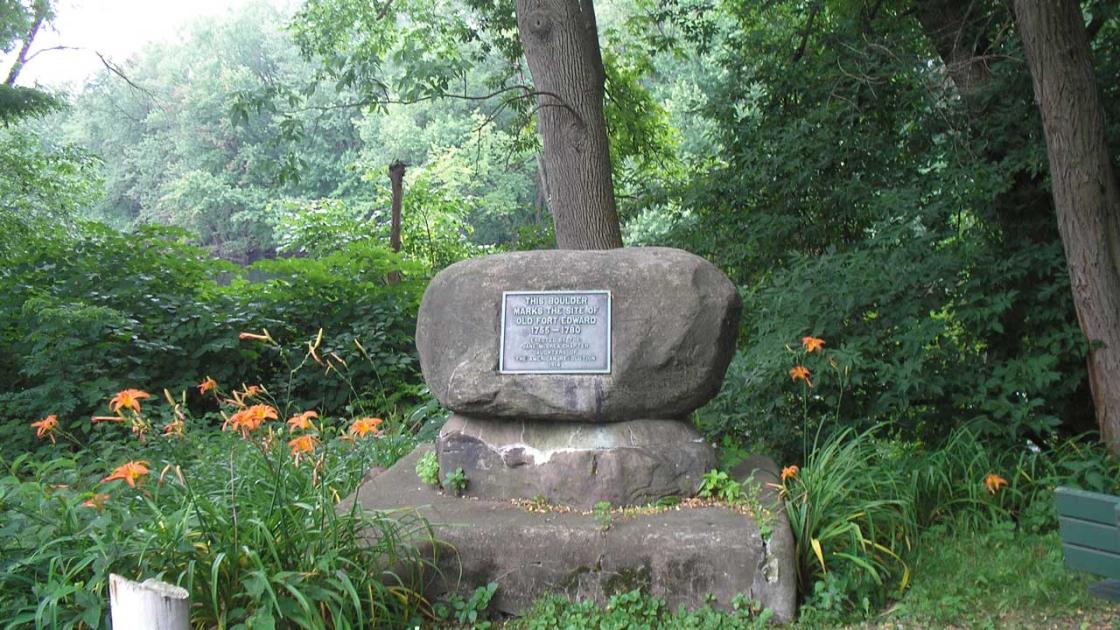
What to do: While there is no Knox Marker here, a commemorative boulder along Old Fort Street marks the location of the original Fort Edward which the British built during the French and Indian War in an area Indigenous peoples knew as “The Great Carrying Place” (Wahcoloosencoochaleva). Though dismantled and in disrepair by the time of the American Revolution, Fort Edward continued to be a strategic point during the war and British General John Burgoyne occupied the area during the Saratoga Campaign in 1777.
Have more time? Visit the Old Fort House Museum to learn more about the fort and the region’s history. This living history complex includes a c. 1772 house built with timbers from the original fort that operated as a boarding house.
Judge Duer House
How do you like to spend your Christmas vacations? Henry Knox spent his convoying 59 pieces of artillery—60 tons worth—from Fort Ticonderoga to outside Boston, Massachusetts. He had planned an array of sleds and draft animals to be ready to begin the next leg of the journey overland. On Christmas Eve of 1775, Knox wasn’t cozy with eggnog by a fire with his pregnant wife, Lucy. No, on December 24 Knox had left Fort George and was beginning an icy, snowy trek towards Albany—much of it fighting the winter weather.
Knox was on his way to Albany because the sleds and draft animals he had previously arranged to receive hadn’t yet shown up. He was on his way to Albany to seek assistance from General Philip Schuyler to negotiate a new contract for the help he required. Knox may have been a big guy, but he couldn’t pull all that cannon to Massachusetts himself.
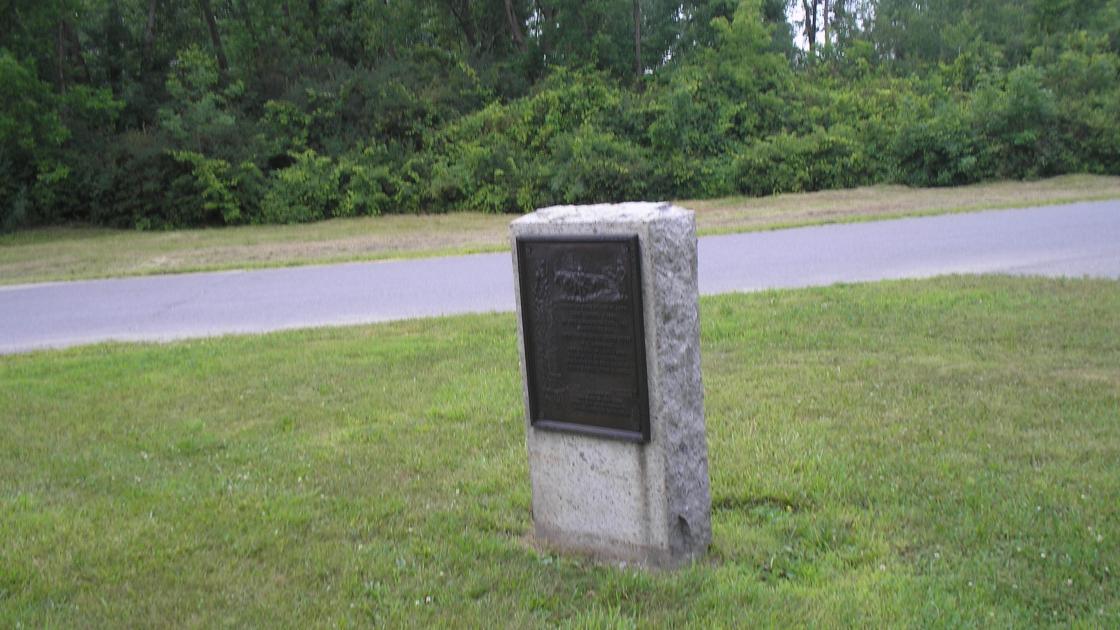
Near this spot, Knox stopped at the home of Judge William Duer, a patriot, who procured for him a sled to complete his journey in the bitter New England winter. A welcome Christmas present, indeed.
What to do: Knox Marker #11b (NY) is located within a small triangle of land next to a church. After you see the Knox Marker, you can visit the small state marker at the original site of the Duer House (43° 9.793′ N, 73° 34.688′ W) nearby if it is safe to do so. Please note there are no sidewalks.
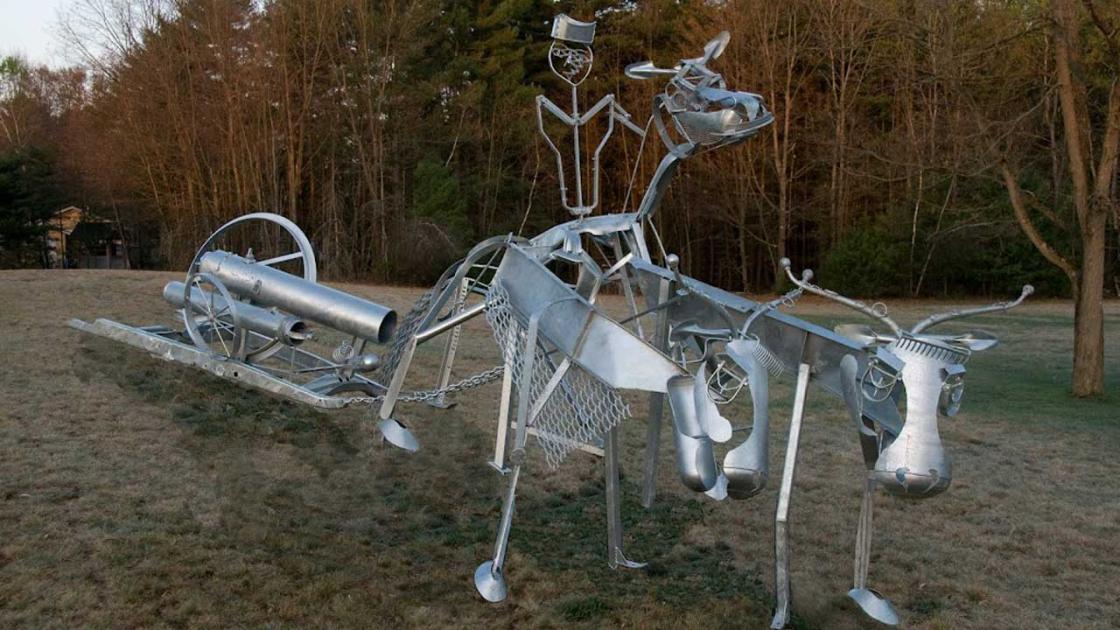
Knox Trail Pocket Park
You might be wondering what you’re looking at. This is a modern sculpture and, yes, that oxen does look like he’s staring right at you.
Artist miChele Vera created this sculpture using materials found right here during clean up events at Hudson Crossing Park. It might look strange on this landscape, but it calls to attention the importance of this landscape in the early years of the American Revolution.
What to do: Knox Marker #12 (NY) is in a small pocket park near a modern sculpture. Once you admire the Knox marker and sculpture, drop by the Champlain Region Gateway Visitors Center 1.5 miles down the road to grab some brochures on the region’s history. During the 250th commemorations, the Center will also serve as Saratoga250’s headquarters and offer interactive exhibits on the 1777 Saratoga Campaign.
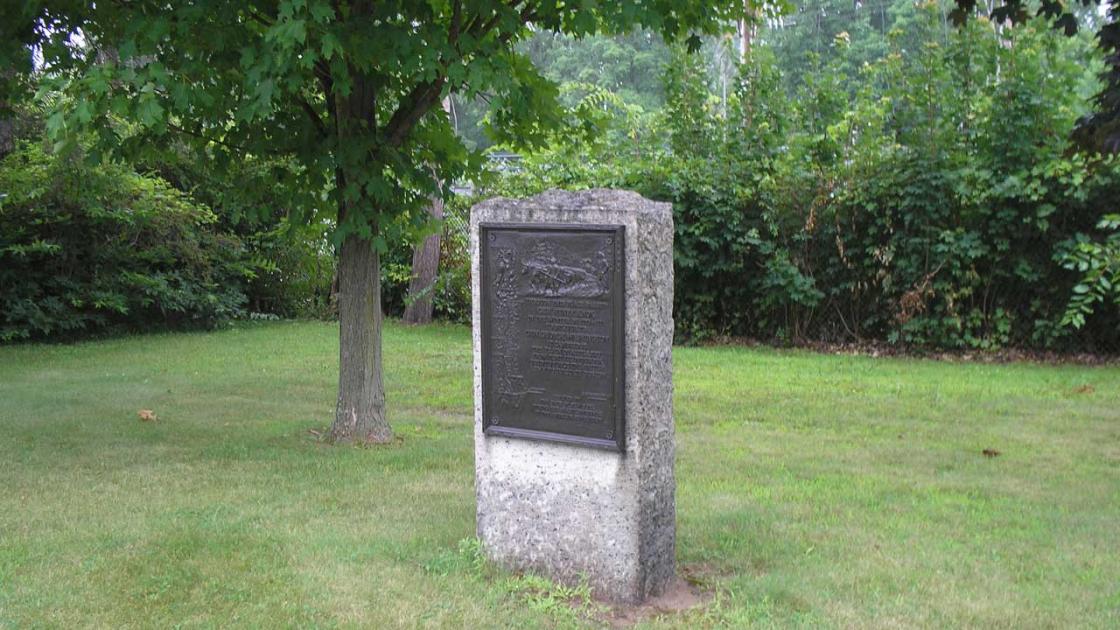
Veterans Park
On December 24, 1775, Henry Knox left Fort George and battled fierce winter conditions--some of it on foot—to finally arrive at Schuylerville on his way to Albany. Knox spent his Christmas Eve at a tavern 8 miles outside of town here, called Ensign’s Tavern. He later wrote his wife Lucy of the snow, that on Christmas Eve “there was a plentiful Fall with some exceeding cold weather after it as I ever knew.” He awoke at Ensign’s Tavern to find a white Christmas, “the snow being nearly two feet deep.” Nevertheless, he continued his journey to Albany.
What to do: Knox Marker #13 (NY) is in Veterans Memorial Park at the intersection of Broadway and Burgoyne Street. After you locate the recently restored Knox Marker, take a moment of time to reflect in this small park dedicated to veterans.
Knox Marker #14 (NY) is reported as missing.
Have more time? Visit the Schuyler Estate just 0.5 miles down the road. This was General Philip Schuyler’s home during the American Revolution until the British burned the original during their retreat after the Battle of Saratoga in 1777. Schuyler had the home rebuilt shortly thereafter, and the house is now fully restored and open to the public by the National Park Service as part of Saratoga National Historical Park. Check ahead for seasonal hours, tour options, and other visitor information.
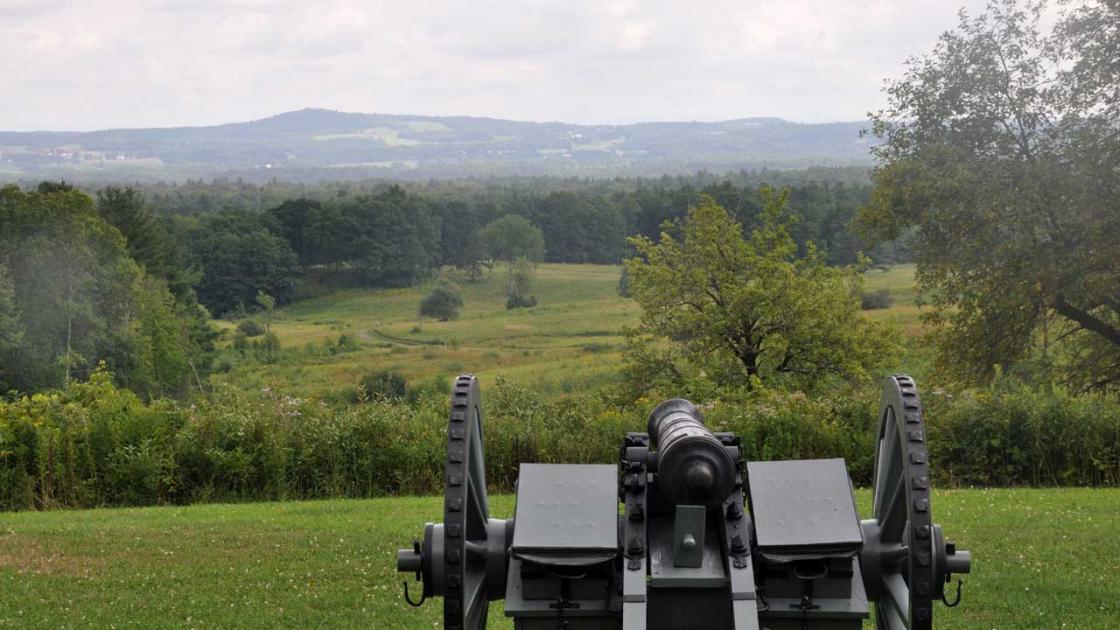
Saratoga National Historical Park | Bemis Heights
Take a look around you. This spot is a great place to contemplate how landscapes are often layered, trodden upon over and over by various historical actors through different periods of time. This is especially true during periods of heavy and long warfare like the American Revolution.
Henry Knox passed through this spot on his way to Albany and later, the rest of the artillery train followed. Knox couldn’t have known it yet, but you do, because you’re just outside Saratoga National Historical Park—in the fall of 1777 the second clash of what would become known as the Battle of Saratoga would be fought near this same ground. Knox was completing this artillery mission for General George Washington and a new Continental Army that had yet to claim to a major victory over the British army. But such a victory would take place near here on October 17, 1777. But all of that was still to come. For now, Knox had to get artillery to Washington outside of Boston. He journeyed on.
What to do: Knox Marker #15 (NY) is at Bemis Heights just south of Saratoga National Historical Park, at the intersection of U.S. 4 and New York State Route 32. After locating the Knox marker, visit nearby Saratoga National Historical Park. Though the battles took place two years after Knox moved through the area they were – like Knox’s train of artillery – a critical turning point for the American cause during the war. If you are pressed for time, this massive park can be enjoyed by car. The National Park Service offers several free audio tours to choose from for a self-guided experience. Check ahead for seasonal hours, road closures, and other visitor information.
On the way to the next stop:
Knox Marker #16: Cannon Park, Stillwater, NY 12170
Knox Marker #17: Mechanicville Community Services Center, Mechanicsville, NY 12118
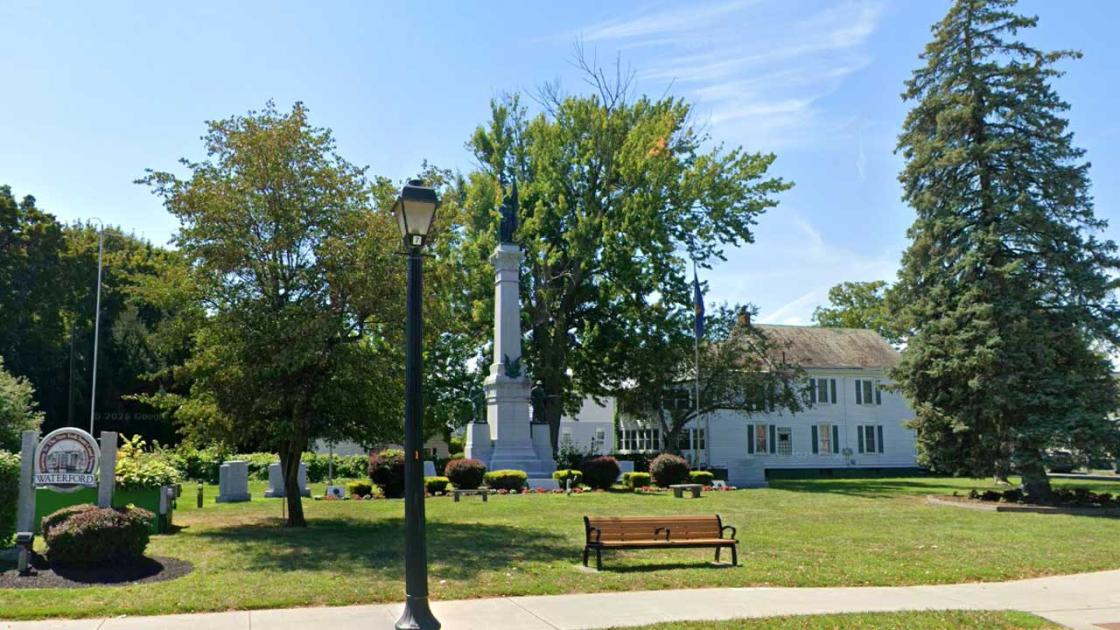
Soldiers and Sailors Monument
Nearing the end of his journey to Albany, Henry Knox made one of his Hudson River crossings near this location. Knox must have been fatigued with his journey and the weather. On December 26, Knox wrote in his diary that while he had finally gotten a sleigh to carry him the rest of the way to Albany, “I had almost perished with the cold.” Knox finally reached Albany at about 2:00, and immediately sought the council of General Philip Schuyler to help get his noble train of artillery back on track. He also, presumably, took time to thaw out.
What to do: Knox Marker #18 (NY) is in the Soldiers & Sailors Memorial Park. Explore the waterside park and take a look at the river that Knox crossed 250 years ago. The park includes an early twentieth-century Soldiers and Sailors Monument for Civil War veterans.
On the way to the next stop:
Knox Marker #19 (NY) is located on the west side of State Route 9 at 42.801350, -73.733617. It may not be safe to stop.
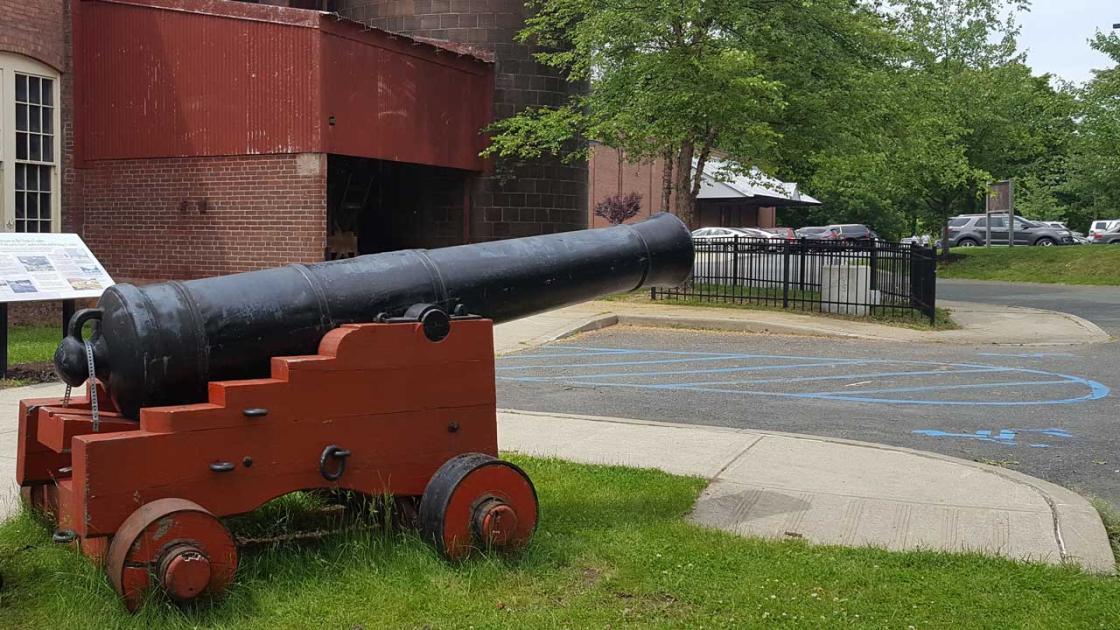
Peebles Island State Park
What to do: While there is no Knox Marker here, this state park includes earthwork fortifications designed by Polish engineer Thadeus Kosciuszko when the Continental Army camped here in 1777. This state park includes several trails. Check ahead for seasonal hours, road closures, and other visitor information.
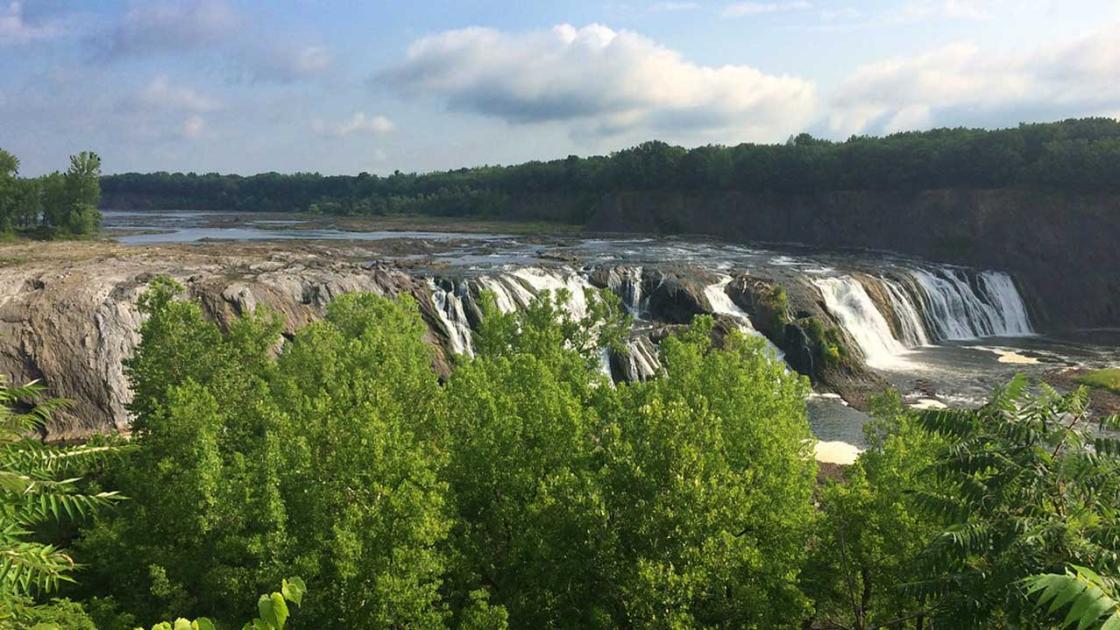
Cohoes Falls View Park
Upon his gazing at the “Cahoes Falls” on the Mohawk River on January 5, 1776, young Knox had a moment to reflect on himself. He wrote in this diary "those stupendous falls, inferior to none save the Grand one of Niagara....it is the most superb & affecting sight I ever saw...vast icicles of twenty feet long and three or four feet thick hanging from the neighboring rocks...i was told that in the summer time a perpetual rainbow was to be seen here after having gaz'd & wonder'd for a long time I returned to Albany about 12 miles from the admiring the stupendous works of nature & not a little humbled by thoughts of my own insignificancy."
What to do: Take in the view of the beautiful falls like Knox did 250 years ago, though perhaps less impressive after the river was dammed in 1831 for the Erie Canal. His comparison to Niagara, though, isn’t totally off base. This is the second largest waterfall in New York state and reaches comparable width and heights as the American Falls. If you have time, you can also take a quick walk around downtown Cohoes aka “The Spindle City.” The falls’ waterpower brought the Industrial Revolution to Cohoes, fueling a thriving textile industry that left a permanent mark on the landscape. Spindle City Historic Society provides self-guided walking tours of the Erie Canal and the Harmony Mills District (recently seen as a stand-in for Pittsburgh in HBO’s Gilded Age television series).
On the way to the next stop:
Knox Marker #20 (NY): Latham Masonic Temple, Latham, NY 12110
Knox Marker #21 (NY): Site of Claus’s Ferry, Albany, NY 12204
Have more time? Take a detour to Troy, known locally as the home to “Uncle Sam.” Local meat packer Samuel Wilson may have provided the real-life inspiration for the national symbol during the War of 1812. He is buried at Oakwood Cemetery, which is open to the public. Check ahead for hours, tour opportunities, and other visitor information.
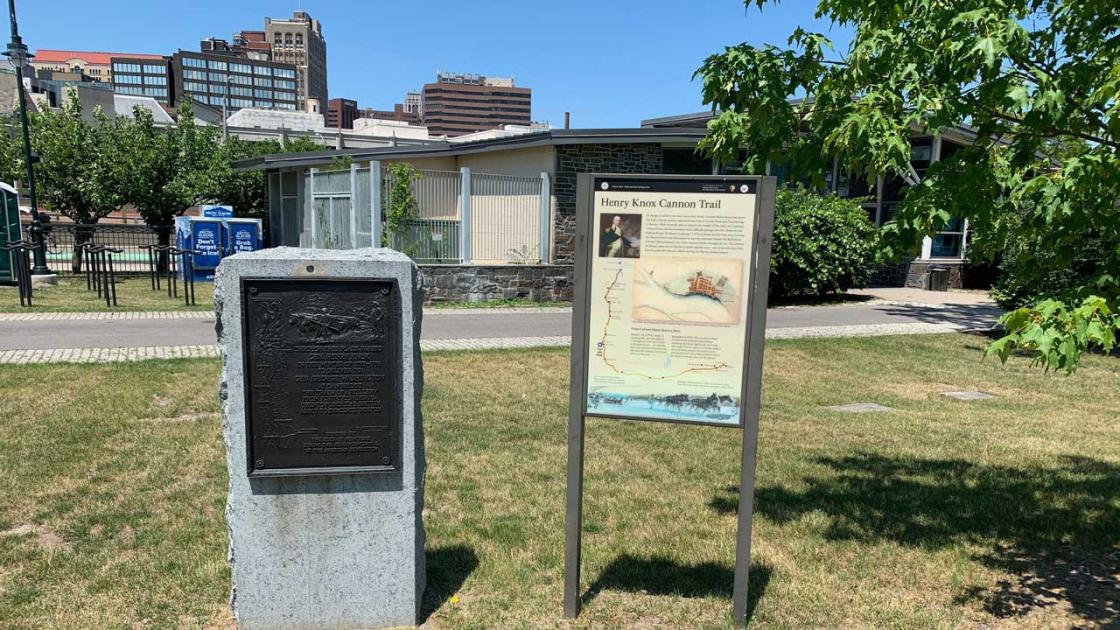
Corning Preserve Park
Henry Knox’s Noble Train of Artillery had to endure four separate crossings of the Hudson River. Henry Knox and his team guided what remained of the artillery train across the Hudson River, on January 7, 1776. Knox’s heart fell out of his chest upon learning that a cannon had fallen through the ice. This particular cannon had handled the previous river crossing just fine, but this time, plummeted into the ice spectacularly and, according to Knox’s diary, “in its fall broke all the ice for 14 feet around it.” Knox ordered the remaining 10 artillery-laden sleds to complete the crossing, which got over just fine, before turning his attention to the lost cannon.
The next morning, Knox recorded that the lost cannon had been retrieved from the slushy Hudson. Townspeople turned out to help Knox in the icy fete—Knox called them “the good people of the city of Albany.” In return for their help rescuing the cannon, Knox christened it “The Albany.”
The Hudson River crossings continued.
What to do: Knox Marker #22 is in Corning Preserve Park, behind the Jennings Landing Amphitheater.
Need a break? Check out Nine Pin Cider, which makes cider entirely from apples sourced from New York. The game of nine-pins plays a role in Washington Irving’s famous “Rip Van Winkle” tale about a colonial American who falls asleep for 20 years only to wake up in a post- Revolution New York society
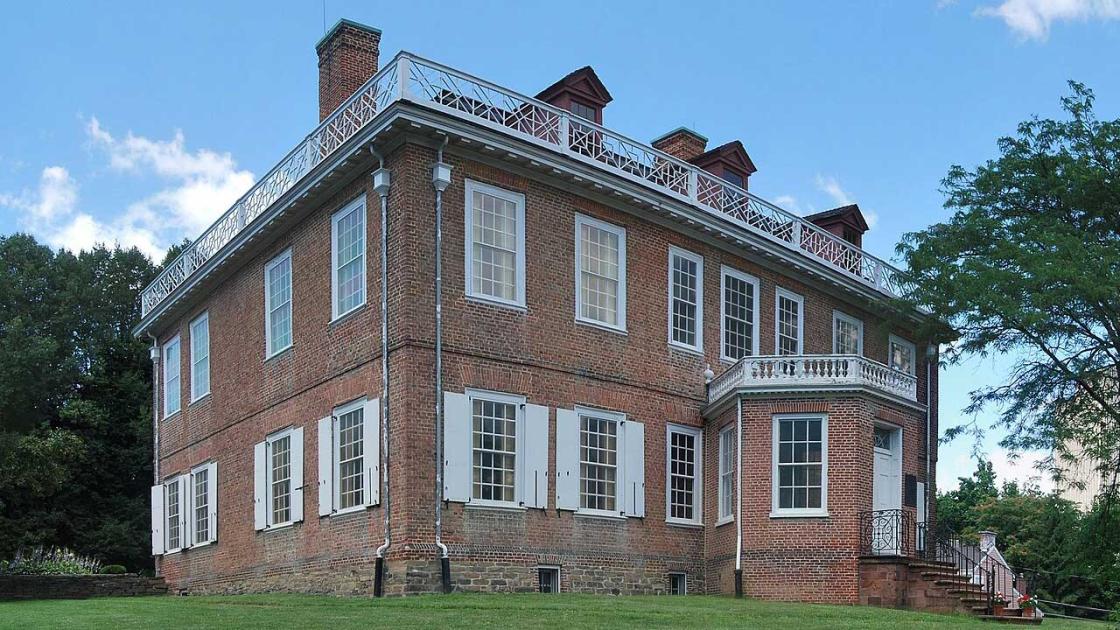
Schuyler Mansion State Historic Site
It had been some time since Henry Knox left his noble train of artillery at Fort George to meet with General Philip Schuyler to procure an entourage of draft animals and sleds to bring 60 tons of cannon through the winter wonderlands of New York and Massachusetts. The end of December saw Schuyler pulling all his weight to send out wagon masters, horses, and sleds to meet the artillery train, which began moving out of Fort George on January 2, 1776, on their way to cross the icy Hudson River.
But there were fears that the ice wasn’t strong enough to withstand the weight of the cannon that needed to make its way across—complete with teamsters, horses, and sleds. Though steps had been taken to strengthen the ice in preparation for the crossing, while the artillery was crossing over the river at this point, one of the heavier cannon fell through the ice. Knox wrote in his diary that he was “alarmed at hearing that one of the heaviest cannon had fallen into the river,” which he learned just as he was sitting down to dinner—the poor man never got a break!
General Philip Schuyler updated General Washington on Knox’s progress with the artillery. He wrote, “The first of the cannon arrived here on Wednesday and the whole is on its way, but detained by the weakness of the ice in Hudsons River, occasioned by the uncommon mildness of the weather…one frosty night if not deferred too long will however put every thing in order, and I hope you will soon have the pleasure of seeing all at Cambridge.”
What to do: Knox stayed at this mansion as he figured out next steps in his journey from Albany, with General Philip Schuyler as his host and capable partner in organizing logistics. Many other famed men and women of the Revolution lived and passed through this mansion, and Alexander Hamilton and Eliza Schuyler married here in 1780. Today, it is a state historic site open to the public. Check ahead for seasonal hours, tour opportunities, and other visitor information.
Have more time? Check out the New York State Museum to see some of the state’s historic and natural treasures, including Revolutionary War-era discoveries made at the World Trade Center site.
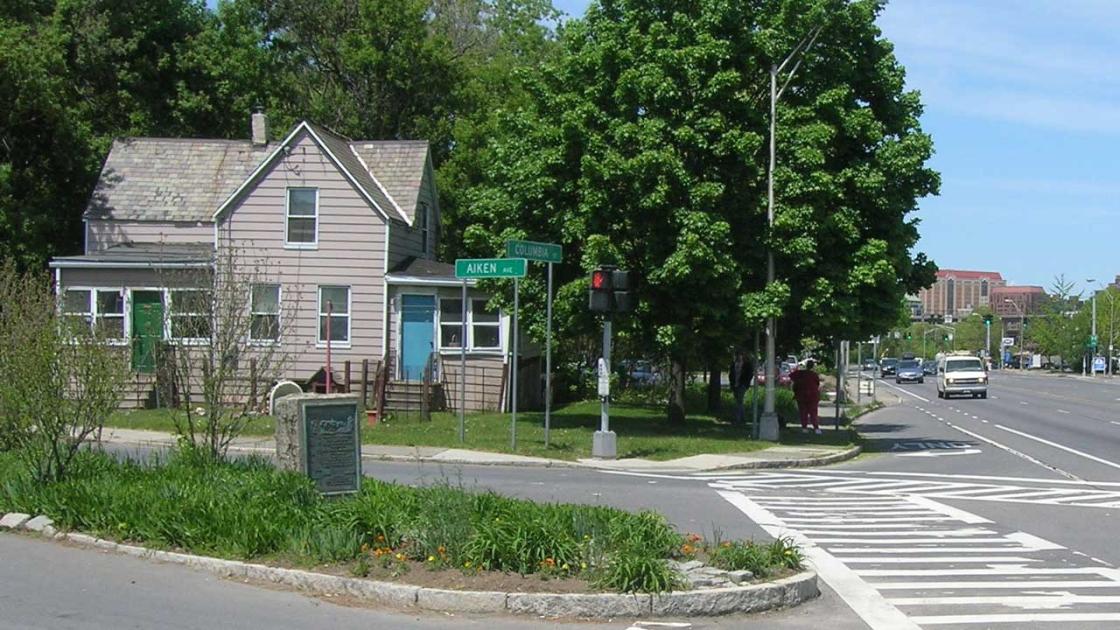
Rensselaer
What’s that in the distance? Is that….a light at the end of the tunnel? Henry Knox may have felt that way when he reached this spot, well over a month after beginning his noble train of artillery expedition from Fort Ticonderoga.
By January 9, the noble train of artillery had successfully completed their four separate Hudson River crossings to this spot. From here, Knox and crew began the next leg of their journey towards Boston. Now they were headed over the Berkshires, where Knox would write “we might almost have seen all the Kingdoms of Earth.” Imagine pulling 60 tons of artillery up and down the frozen Berkshires in the middle of January! But that’s exactly what Knox set out to do. The Revolution depended on it.
What to do: Knox Marker #23 (NY) is in a median garden along Aiken Avenue. Please use caution when visiting this marker.
On the way to the next stop:
Knox Marker #24 (NY): Greenbush Reformed Church, Rensselaer, NY
Knox Marker #25 (NY) is at the intersection of New York State Route 9 and U.S. 20 and indicates a road junction (42.546944, -73.657500)
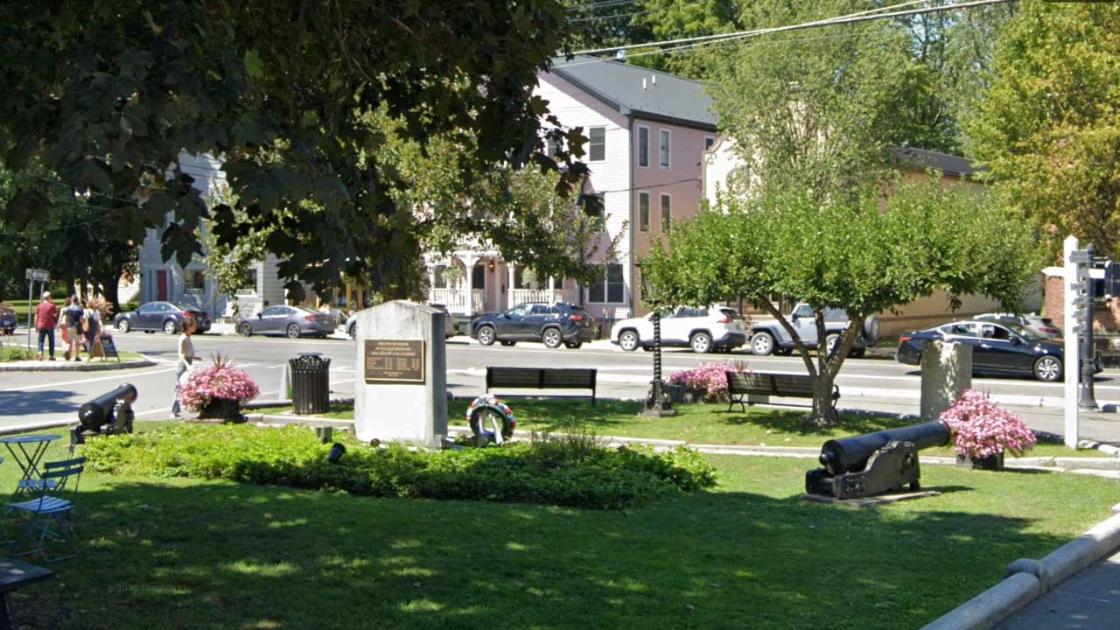
Kinderhook Village Green
What to do: Knox Marker #26 (NY) is located in the Village Green at the intersection of Hudson Street and New York State Route 9. Explore the scenic village green and stroll around Kinderhook. Knox wasn’t the only famous figure to spend time in Kinderhook during the American Revolution. Then-still Patriot General Benedict Arnold and British General John Burgoyne may have both spent time here in even less ordeal circumstances. A 10-minute walk down Broad Street will take you to where the defeated Burgoyne supposedly spent a brief time a prisoner of war following his loss to the Patriots at Saratoga (24 Broad Street) and to the house (28 Broad Street) where the victorious Arnold may have recuperated after he was wounded in battle at Saratoga.
Have more time? Martin Van Buren, the first US President to be born a US citizen, was born in Kinderhook in 1782. He bought a house here during his presidency in 1839, which is now managed by the National Park Service as the Martin Van Buren National Historic Site. The Van Ness family originally purchased the property during the American Revolution and built the home in 1797. One of the Van Ness heirs, William P. Van Ness, was a friend of Van Buren’s and gained ill-fame when he served as the second for Aaron Burr during his duel with Alexander Hamilton. Check ahead for seasonal hours, tour opportunities, and other visitor information.
On the way to the next stop:
Knox Marker #27 (NY) is located on private land and may not be accessible.
Knox Marker #28 (NY) is located at the intersection of Harlemville Road and Taconic State Parkway (42.282200, -73.599433)
Knox Marker #29 (NY) is situated on a triangle of land east of the intersection of New York Routes 22 and 71 (42.262350, -73.475133)
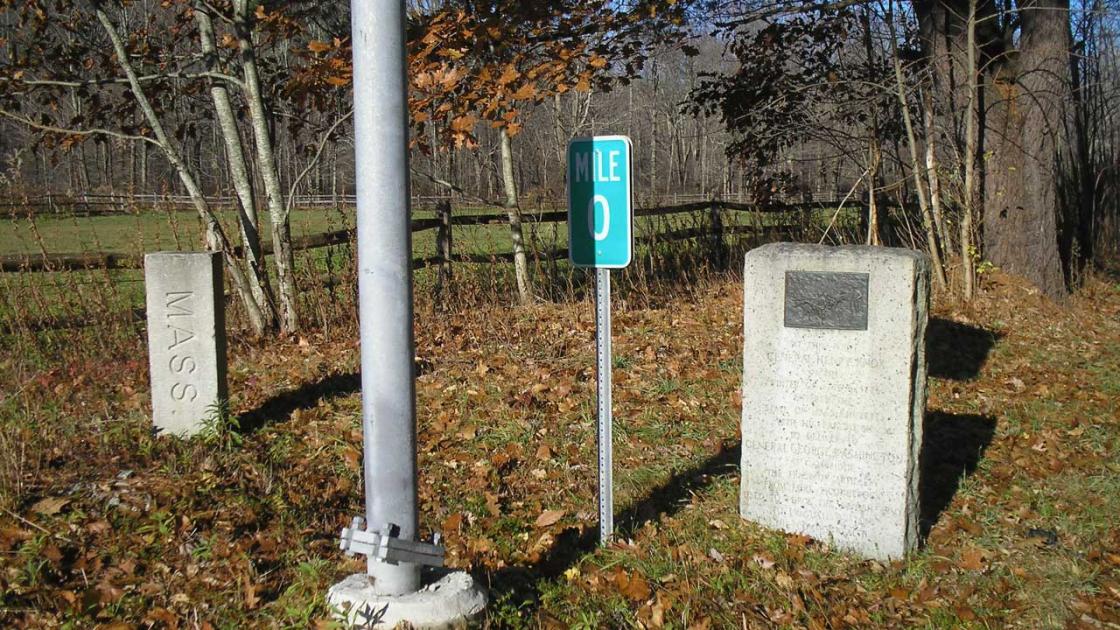
State Line
It might be the dividing line between New York and Massachusetts, but for Henry Knox this was roughly the geographic halfway point of one of the most dramatic sagas of the early Revolution—Henry Knox and his noble conveyance of 58 artillery from Fort Ticonderoga, New York to the outskirts of Boston, Massachusetts.
Knox and his artillery train likely passed through this point sometime in the second week of January. Going ahead of the artillery, Knox met with General George Washington at his headquarters in Cambridge on January 18. The cannon continued on to Framingham to prepare for their service in Washington’s Continental Army.
What to do: Knox Marker #30 (NY); Knox Marker #1 (MA) is located next to the state border marker. Use the small pull-off to stop and take a look at the marker.
On the way to the next stop:
Knox Marker #2 (MA) is located at the intersection of Egremont Plain Road and Prospect Lake Road (42.198167, -73.438250)
Knox Marker #3 (MA) is located in a small park at the intersection of Massachusetts Route 23 and U.S. 7, on the left when traveling east on Massachusetts Route 23 (42.201383, -73.348567)
Have time for a detour after Marker #3 (MA)? Many influential nineteenth-century American writers, artists, and activists inspired and impacted by the American Revolution’s legacy called Western Massachusetts home. Check ahead for hours, tour opportunities, and other visitor information.
W.E.B. DuBois Boyhood Homesite (3 miles away): Where W. E. B. DuBois’ boyhood home was located, though it is no longer standing. Du Bois, who was descendent from a formerly enslaved man who fought in the Revolution, was a prominent historian, civil rights activist, and founder of the National Association for the Advancement of Colored People. Housatonic Heritage has self-guided walking tour of W. E. B. Du Bois in Great Barrington.
Chesterwood (8 miles away): Where artist Daniel Chester French had a summer home and studio. French might be best known for his statue of President Abraham Lincoln at the Lincoln Memorial in Washington, D.C., but you may unknowingly be as familiar with his other most famous work: the “Minute Man” statue that still watches over the Lexington Green where the first shots of the Revolution were fired in Massachusetts.
Arrowhead (20 miles away): Where author Herman Melville, whose grandfather fought in the Revolutionary War, wrote his famous novel Moby Dick.
Susan B. Anthony Birthplace Museum (36 miles away): Where women’s rights activist Susan B. Anthony was born decades after the war for independence. Still, she drew upon the principle of “taxation without representation” from the Revolution to fight for women’s suffrage. The name of the journal of the American Equal Rights Association, which she co-founded, was aptly called The Revolution.
Knox Marker #4 (MA) is located on Massachusetts Route 23 (42.178867, -73.210617)
Knox Marker #5 (MA) is located at the intersection of Otis Stage Road and N Blandford Road (42.180467, -72.929333)
Knox Marker #6 (MA) is located at the intersection of General Knox Road and South Quarter Road (42.150700, -72.852533)
Knox Marker #7 (MA) is at the intersection of Main Street (U.S. 20) and U.S. 202 (42.120850, -72.748217)
Knox Marker #8 (MA) is at the intersection of Park Avenue (Massachusetts Route 20) and Main Street (42.106900, -72.617283)
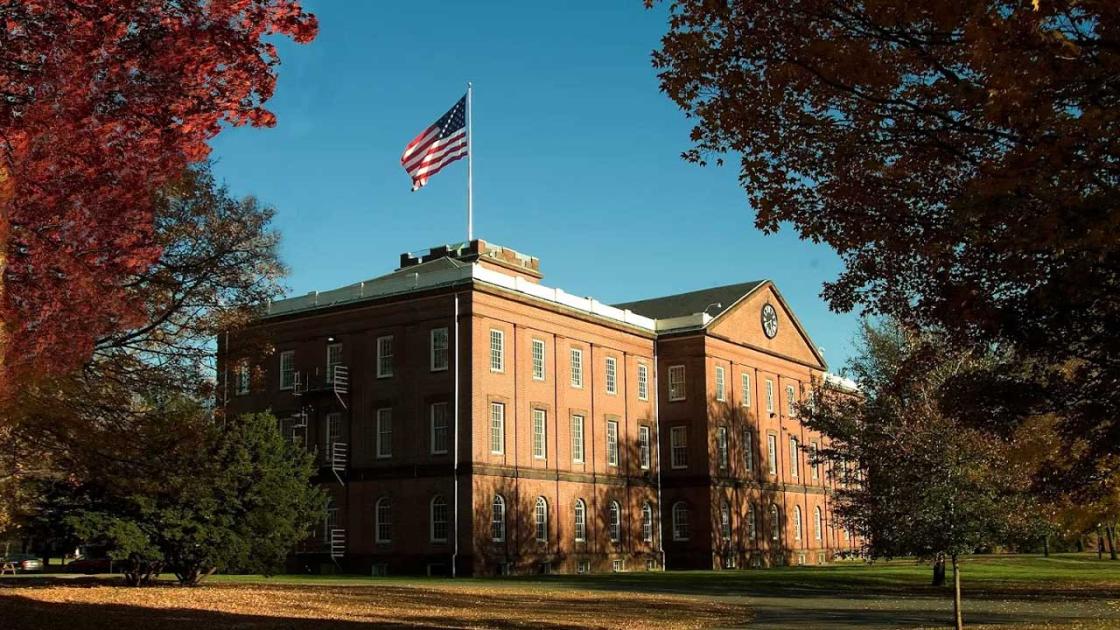
Springfield Armory National Historic Site
Do your best to block out the traffic of the noisy intersection here, and imagine this terrain in all of its 1776 glory. Replace the noise of modern cars with the rhythmic creaking of wooden wagon wheels and the clip-clopping of horses’ hooves. Turn off the radio and listen closely for echoes of colonial goings on from news carriers and colonists spilling the tea along the route here. Because you’re actually traveling along a historic road. Running through Springfield, today’s State Street was part of the Upper Boston Post Road, a route that connected Boston all the way to New York.
If you’re feeling relief that the end of your Noble Train tour is nigh, imagine how Henry Knox and his men felt to finally have the mountainous terrain of the Berkshires in their rear-view mirror. Dragging the 60 tons of artillery through here was smooth sailing now, and the whole entourage picked up steam on this final leg of the journey.
After Knox’s Noble Train of Artillery passed through here in January 1776, Springfield exploded with military importance—not least of which because of its important location along the Post Road.
What to do: Knox Marker #9 (MA) is located on State Street. Once you have located the monument, head over to the Springfield Armory National Historic Site. Knox and General George Washington later chose this site for the nation’s first arsenal in 1777. Perhaps he remembered this strategic location from when he passed by in 1775? After the war, this arsenal gained fame – or infamy – as the site of Shays Rebellion. The site also became a site of invention and innovation in small arms (ever heard of a Springfield Rifle?) over the next 150 years. Today, the site has a visitor center and museum to learn about the history of the Armory, managed by the National Park Service. Check ahead for seasonal hours, tour opportunities, and other visitor information.
Looking for a break from the American Revolution? Springfield is also home to the Basketball Hall of Fame, as the town where Dr. James Naismith is credited with inventing the game in 1891. Check ahead for hours, tour opportunities, and other visitor information.
On the way to the next stop:
Knox Marker #10 (MA) is located on Boston Road near Main Street (42.151817, -72.425550)
Knox Marker #11 (MA) is located at the intersection of Wilbraham Street and Main Street (42.163300, -72.343617)
Knox Marker #12 (MA) is located at the intersection of Boston Post Road and Washington Street (42.217300, -72.180133)
Knox Marker #13 (MA) is located at the intersection of W. Main Street and River Street (42.216333, -72.102850)
Knox Marker #14 (MA) is located on Main Street, between Pleasant Street and Mechanic Street (42.243983, -71.994333)
Knox Marker #15 (MA): Leicester Public Library, Leicester, MA 01524
Knox Marker #16 (MA): Worcester Court House, Worcester, MA 01609
Knox Marker #17 (MA): Shrewsbury Town Common, Shrewsbury, MA 01545
Knox Marker #18 (MA): Northborough Town Office, Northborough, MA 01532
Knox Marker #19 (MA) is located at the intersection of Main Street and Prospect Street (42.346683, -71.551333)
Knox Marker #20 (MA): Southborough Community House, Southborough, MA 01772
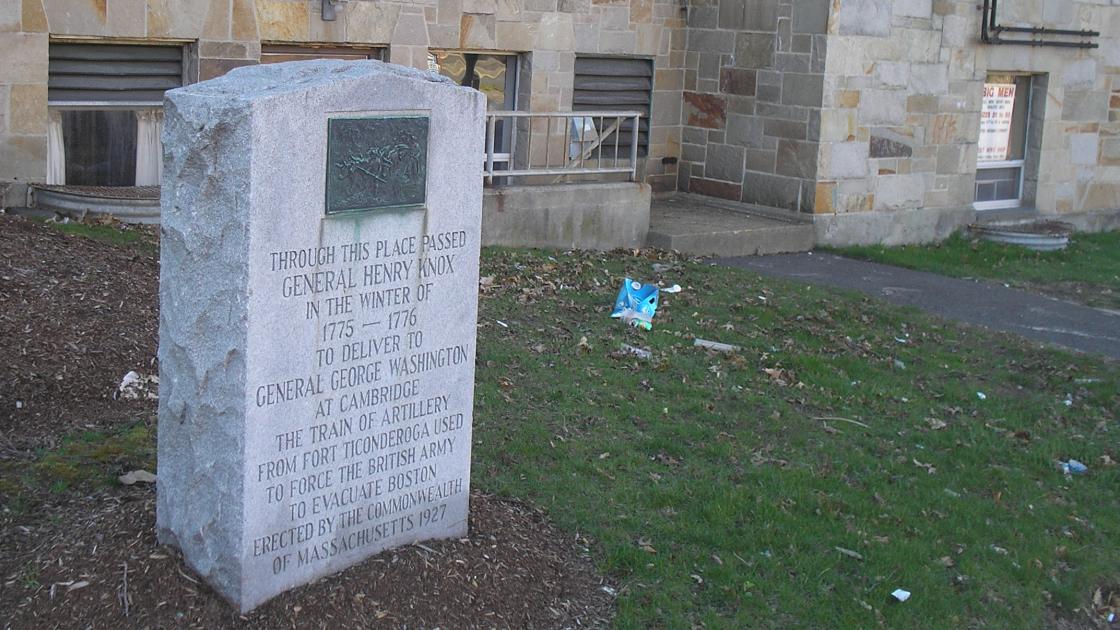
Framingham
In his diary entry for January 25, 1776, John Adams wrote that he and fellow member of the Continental Congress Elbridge Gerry stopped in the town of Framingham and dined with Colonel Joseph Buckminster. After the meal, the two members of Congress were shown “the Train of Artillery brought down from Ticonderoga.”
The fifty-eight pieces of artillery that Adams noted in his diary had been collected from the forts at Crown Point and Ticonderoga in upstate New York and transported down to bolster the firepower of the Continental Army outside Boston. The leader of this expedition was Colonel Henry Knox, who would soon become the Continental Army’s Chief of Artillery and one of General George Washington’s most trusted subordinates.
After arriving in Framingham, the artillery pieces remained in or around the town for about a month while they were mounted on new carriages and prepared for use in the Siege of Boston.
What to do: Knox Marker #21 (MA) is located at the intersection of Edgell Road and Worcester Road. Explore the monument, and take a moment to congratulate both Knox and yourself – you are almost to Boston!
On the way to the next stop:
Knox Marker #22 is a small stone marker that differs from other Trail markers. It is located along Stonebridge Road in Wayland (42.339150, -71.395300)
Knox Marker #23 is located on Old Connecticut Path in Wayland (42.348250, -71.359183)
Knox Marker #24 is located at the intersection of Boston Post Road and Church Street (42.368100, -71.297700)
Knox Marker #25 is located at the intersection of Main Street and Weston Street (42.376050, -71.249533)
Knox Marker #26 is located at the intersection of Mt. Auburn Street and Winsor Avenue (42.370800, -71.163900)
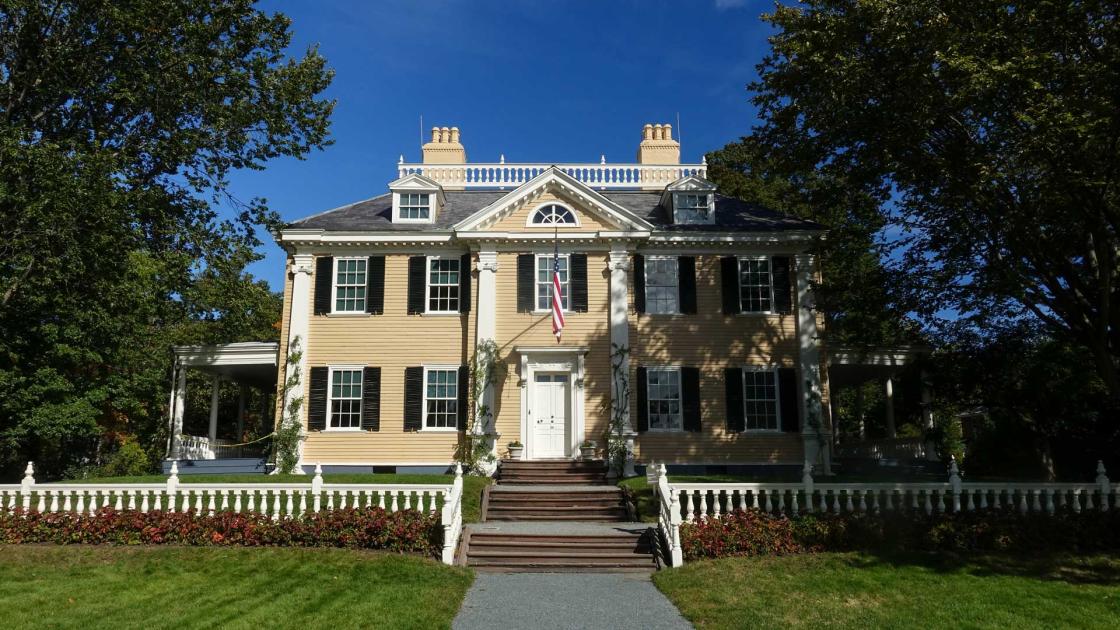
Washington Headquarters National Historic Site
What’s the first thing you do when you finally get home after a long road trip?
After two months of dragging over 60 tons of cannon through ice and snow, Henry Knox arrived in the Continental Army camp on January 18, 1776—two months after setting out on his quest to deliver much-needed artillery to General George Washington’s Continental Army.
It’s likely that when Knox’s Noble Train finally rolled into town, Knox came directly here. That’s because in 1775 and 1776, this house was Washington’s Headquarters. It’s easy to imagine that Knox would have plenty to say to the very man who sent him on his grueling journey two months before.
Adding to this house’s historical ambiance, poet Henry Wadsworth Longfellow moved in in 1837. Now would be a good time for a dramatic reading of his most famous work, “Paul Revere’s Ride,” as you contemplate the heroic deeds of our Revolutionary forebears! And maybe contemplate writing your own ode to Henry Knox, if you’re feeling inspired.
What to do: Knox Marker #27a (MA) is located at Cambridge Common. Walk down Brattle Street to Mason Street to Cambridge Common to see the Knox Marker (approx. 10-minute walk). After checking out the marker, return to the National Historic Site now managed by the National Park Service. Check ahead for hours, tour opportunities, and other visitor information.
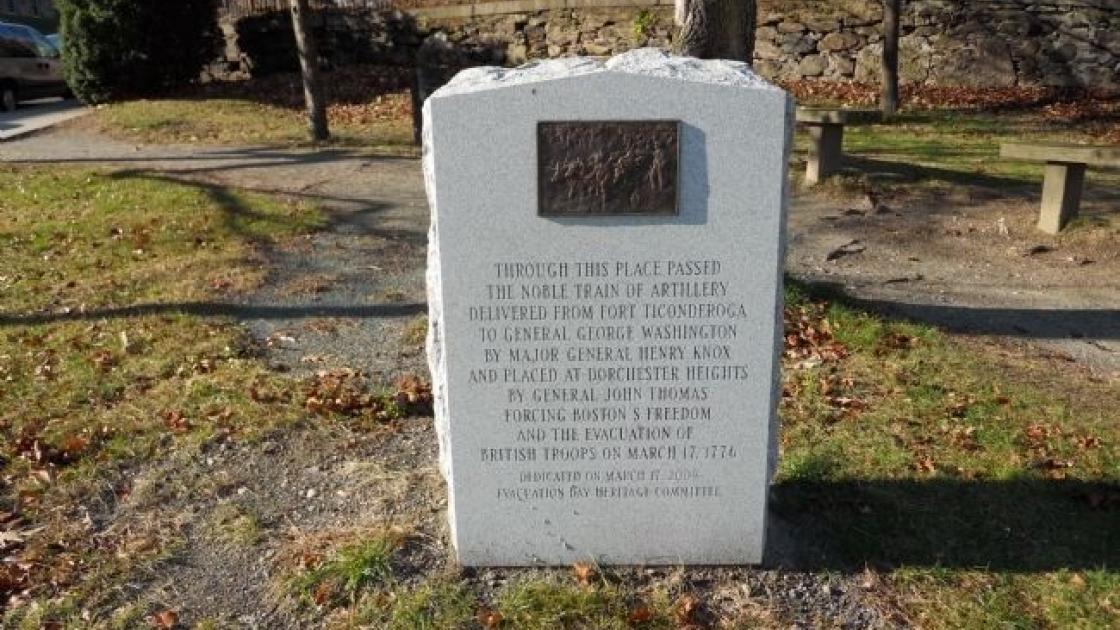
Dillaway-Thomas House
So why did Henry Knox bring 60 tons of artillery all the way to Massachusetts? Because General George Washington needed it if he had any hope of dislodging the British from Boston.
After Henry Knox arrived with the artillery from Fort Ticonderoga, Washington faced the question of how best to employ them in driving the British troops from Boston. He considered a direct attack on the city, but that was too risky. Instead, Washington decided to place artillery on Dorchester Heights, which overlooked the city and the harbor. This would threaten not only the British forces in the city, but also the ships which brought them supplies. Faced with such a danger, the British would have to either risk a repeat of the costly Battle of Bunker Hill and attack entrenched Americans again---or evacuate Boston.
In 1775, this house became the headquarters of General John Thomas, the seniormost brigadier general in the newly formed Continental Army, whose job it was to command the operation to fortify Dorchester Heights, which he carried out skillfully over the course of just a single night.
The marker placed near the house is one of fifty-seven placed along the route of the Noble Train from Fort Ticonderoga to Boston. It was placed in 2009, more than eighty years after the original fifty-six markers were placed, to commemorate the role General Thomas played in the fortification of Dorchester Heights.
What to do: Knox Marker #27b (MA) is located in Roxbury Heritage State Park at Malcolm X Boulevard and Roxbury Street. After locating the monument, visit the historic c.1750 Dillaway-Thomas House which is now a museum operated by the Roxbury Historical Society. Check ahead for hours, tour opportunities, and other visitor information.
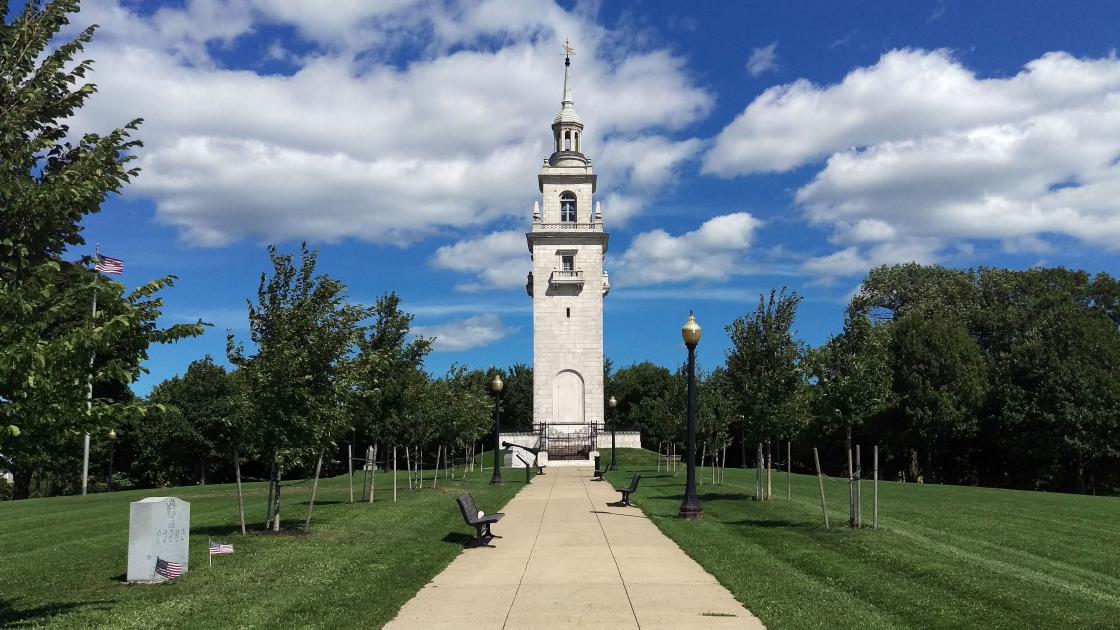
Dorchester Heights
On the night of March 4, 1776, the guns that Henry Knox dragged across icy rivers and snowy terrain finally met their purpose. Cloaked in darkness and a shielded by the thunder of artillery from American siege lines around Boston, American General John Thomas and his troops moved onto Dorchester Heights. They carried all the materials to quickly erect fortifications and artillery positions. As daylight broke over Boston, British General William Howe couldn’t believe what he saw: “The rebels have done more in one night than my whole army would have done in a month.”
The looming artillery from Knox’s Noble Train positioned on the Heights threatened the British Army on both land and sea. Before Howe could do much about it, bad weather thwarted any plan of a British assault. Instead, on March 17, the British evacuated Boston, taking with them over one thousand loyal colonists.
The fortification here at Dorchester Heights and liberating Boston of British occupation were General George Washington’s first major accomplishments as commander-in-chief of the Continental Army. Neither was possible without the gumption and tenacity of local bookseller Henry Knox. Look up in awe at the 115-foot-tall tower which commemorates the historic events that took place here in 1776.
What to do: Knox Marker #28 (MA) is in this small park. Congratulations, you have made it to Dorchester Heights! After you locate the marker, explore the marble monument commissioned in 1898 to commemorate the evacuation of the British from Boston in 1776 – a victory that was not possible without Knox’s incredible feat. Check ahead for hours, tour opportunities, and other visitor information.
Have more time? Welcome to Boston, the city at the heart of the American Revolution! Check out how to make the most of one day in Boston with this interactive itinerary.