-
The BlogBiographies
-
Videos

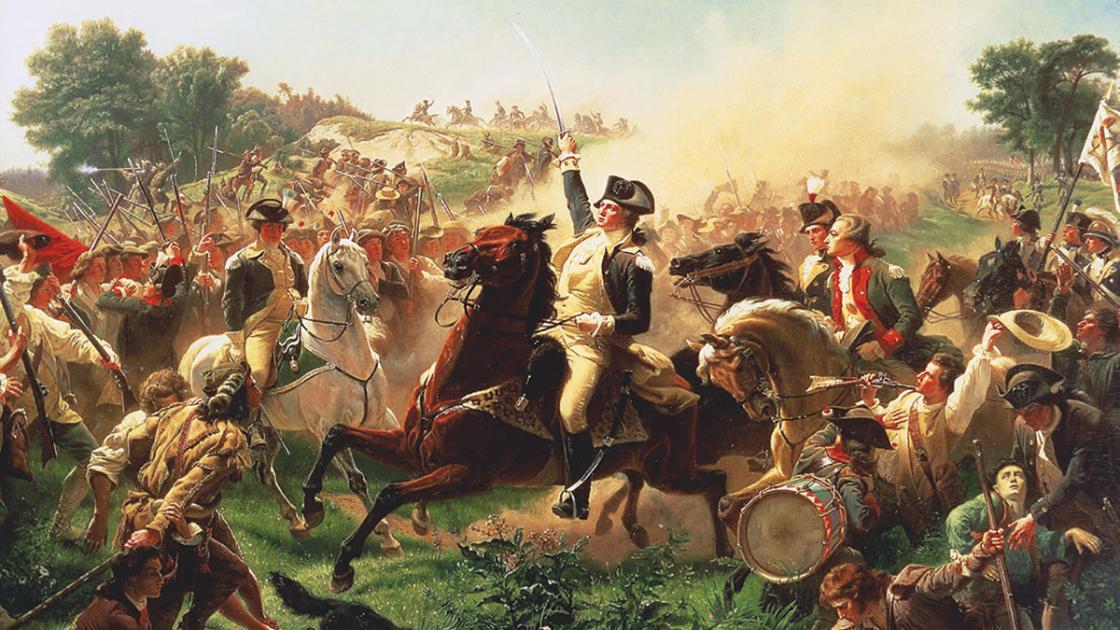
“If we suffer the enemy to pass through the Jerseys without attempting anything upon them, I think we shall ever regret it… People expect something from us & our strength demands it.”
– Major General Nathanael Greene to George Washington, Commander in Chief of the Continental Army, 1778
June 1778—the third year of the American Revolution.
General George Washington and his Continental Army are ready to emerge from a harsh winter at Valley Forge. They’re stronger than ever thanks to rigorous training conducted there by Prussian army veteran Baron Friedrich Wilhelm von Steuben. As Washington’s army trained through the harsh winter of 1777-78, the French officially gave their support to the new United States--and their troops, money, and guns. The British also made a choice—abandon their occupation of Philadelphia, regroup in New York City, and prepare to win the war in the south.
Washington saw an opportunity to test his troops’ new discipline by intercepting the British Army in its retreat out of Philadelphia on their way to New York City. When the two armies finally met in Monmouth, New Jersey on June 28, 1778, the gloves were off. Though the results of the battle were inconclusive, it was here at the Battle of Monmouth that the patriots exchanged their harsh winter for the suffocating heat of battle. Everyone now began to wonder: have the British finally met their match?
The answer to that question began formulating well before the long, hot summer of 1778. For Washington’s Continental Army, the road to Monmouth began the winter before, at Valley Forge—where intelligence came across Washington’s desk that set the entire campaign in motion. From December 1777 through June 1778, the weary Continental Army—over 10,000 soldiers—survived not only the harsh winter but illness, malnourishment, and the strict training of Baron von Steuben. At Valley Forge, soldiers drilled in ragged uniforms with frozen feet, retraining in lock step. 17-year old Joseph Plumb Martin was among them, spending the winter, in his words, “in such a weak, starved and naked condition.” But the hardships and hard work paid off. The Continental Army emerged transformed and battle-ready.
From his headquarters at Valley Forge, Washington received intelligence through his spy network that British Lieutenant General Henry Clinton was about to evacuate the British Army out of Philadelphia—just under 30 miles away—to regroup at New York City. On June 18, 1778 American Major General Charles Lee and an advance group of patriot forces set out from Valley Forge to the Delaware River.
Washington’s orders: catch Clinton’s force in route to New York City.
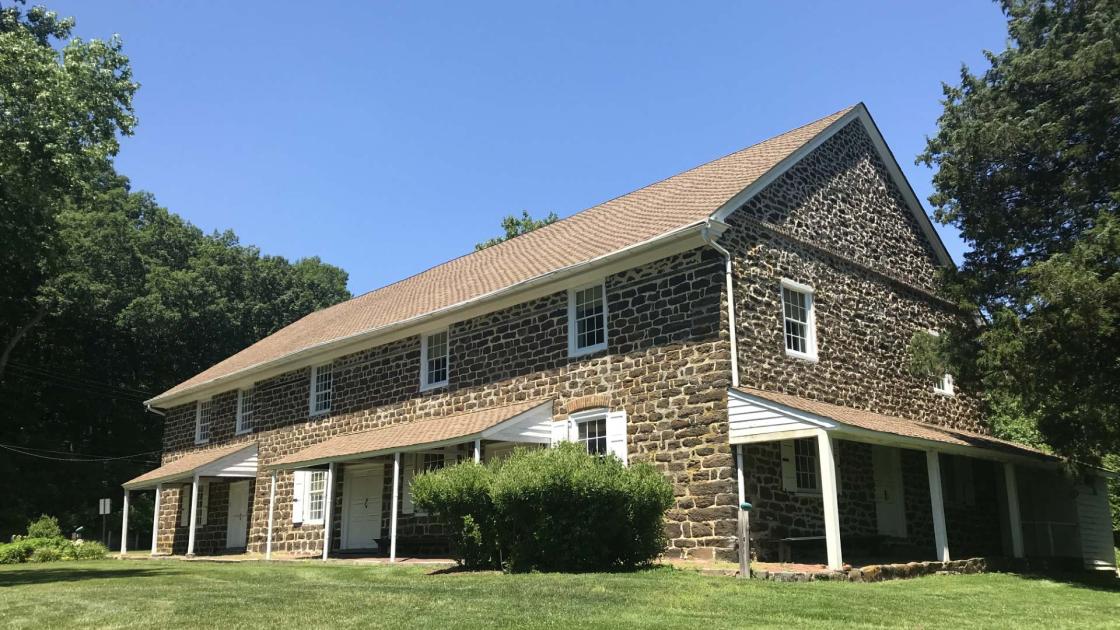
Evesham Friends Meeting House
This Quaker meeting house became the site of an army encampment as the British made their way to New York City from Philadelphia.
Though Pacifists, the American Revolution brought war to many Quakers’ doorsteps, like here at the Evesham Friends Meeting House, where on June 18 British General Charles Cornwallis’s vanguard, Brigadier General Alexander Leslie’s brigade, made camp. The rest of Cornwallis’ division arrived the next day as another division led by Brigadier General Wilhelm von Knyphausen went on to Moorestown. The army left here and advanced toward Mount Holly on June 20. Washington’s army, too, had begun its advance from Valley Forge.
Quakers made up a considerable part of New Jersey’s population by the time of the American Revolution and many, like Margaret Morris, were anxious about the impact of war. In 1776, Margaret wrote, “What sad havoc will this dreadful war make in our land!” Built in 1760, the British encampment here left this meeting house unscathed, which was expanded in 1798.
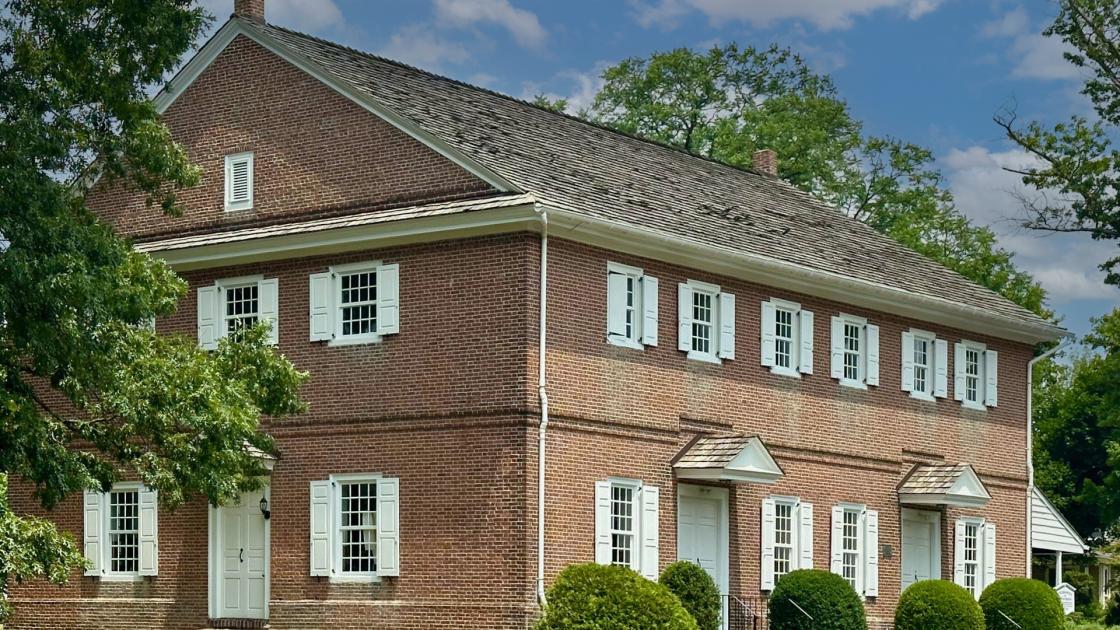
A Spirited Skirmish
Look closely, and you can see the Crosswicks Friends Meeting House still bears the scars of the skirmish that waged near here on June 23, when three cannonballs struck the meeting house. Look up at the North façade near the second story, between the first and second windows on the right, and you’ll spy a cannonball mortared into the wall. It serves as testament to the day when this meeting house stood in the crosshairs of revolution.
After Evesham, the British continued their advance to New York City by passing through Mount Holly, Slabtown, Blackhorse (Columbus), and Bordentown. On the morning of June 23, General Cornwallis’s division, with the 16th Light Dragoons and Queen’s Rangers, advanced toward Crosswicks. A hot firefight ensued when this column clashed with the New Jersey militia, driving them toward Crosswicks Creek. The militia advanced across the bridge, dismantling it as they joined Brigadier General William Maxwell’s New Jersey brigade on the opposite bank. British Lieutenant General Henry Clinton led the Queen’s Rangers in attacking Maxwell’s forces, secured the bridge, and chased Maxwell for two miles between returning here to Crosswicks.
In a letter to Washington, one Continental Army officer described how the New Jersey patriots fought the British here “with spirit until they brought up some cannon.”
Ultimately, the British cannonade ended the skirmish here—leaving its scars on the building in front of you (though it’s not known whether this is a British or an American cannonball!).
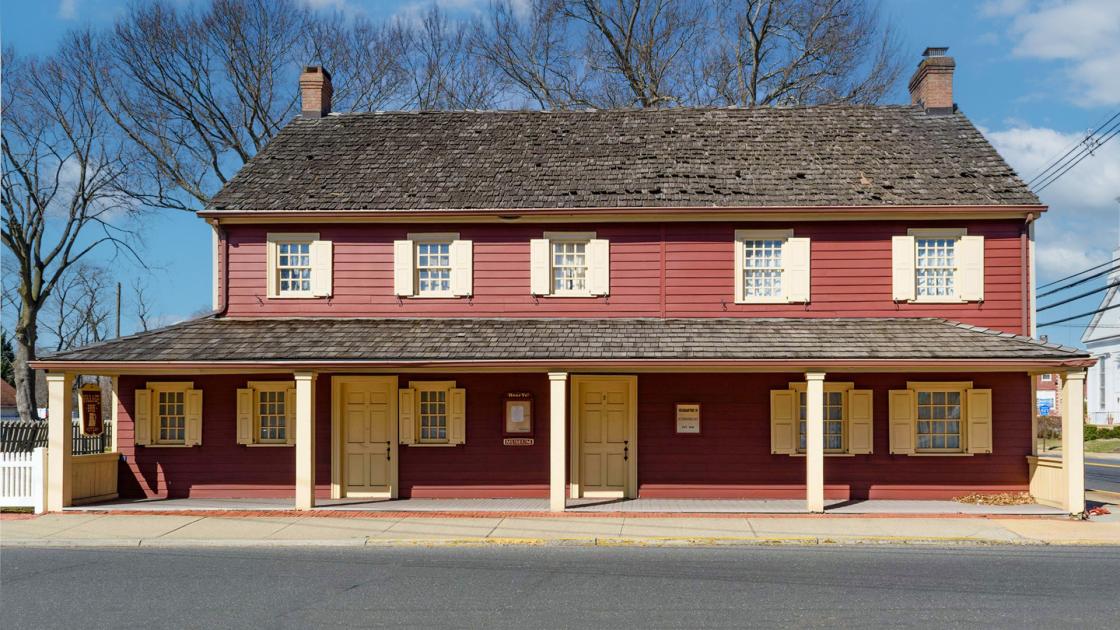
Washington Gives the Order
Imagine the anxious energy of 5,000 Continental troops awaiting orders to meet the enemy after days of marching from Valley Forge in excruciating heat. Here in Englishtown on June 27, General George Washington gave to Major General Charles Lee the order they had been waiting for: attack the British tomorrow. The two men likely had this conversation where you are standing, here in the Village Inn.
One week before, Lee’s vanguard crossed the Delaware River. Militia and Continentals under Colonel Daniel Morgan and Brigadier General William Maxwell were dispatched to harass the British (Maxwell’s men saw action at Crosswicks). Advancing, the army followed a route to the north and parallel to Lieutenant General Clinton’s British forces.
On the eve of the Battle of Monmouth, Lee’s vanguard of the Continental Army encamped on the heights surrounding Englishtown. It is possible that Lee used this Inn as his headquarters, where he personally met with Washington on June 27. Pursuant to Washington’s order to “attack the enemy as soon as possible,” on the morning of June 28 Lee set off from here, marching his troops five miles to meet the British Army at Monmouth Courthouse. Lee’s orders: to pin Lieutenant General Clinton’s rearguard in place until the rest of the American army could arrive. That morning, Washington wrote to Congress: “We have a select and strong detachment…under the general command of Major General Lee, with orders to attack (the British) rear if possible.”
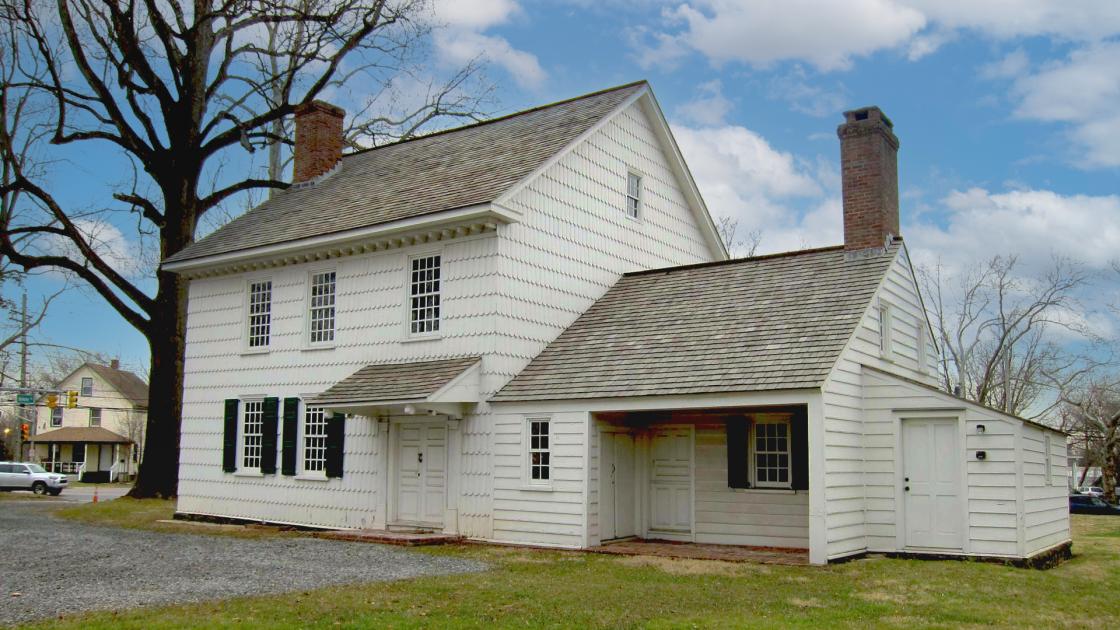
William & Elizabeth Covenhoven House
Imagine looking out the window and witnessing the spectacle of thousands of British and Hessian troops marching past your house—and suddenly, knock, knock. What would you do if the British army knocked on your door?
That’s exactly what happened to the elderly Elizabeth Covenhoven on June 26, 1778 when British Lieutenant General Henry Clinton made his headquarters here, in what was the most exquisite home in the vicinity, during the British army’s march to Monmouth Court House. Elizabeth must have been well aware of the severe damage that the army would inflict upon her home, but Clinton “promised on his honour” that her possessions would remain intact during the army’s occupation. Maybe Clinton didn’t make this promise clear to his troops—Elizabeth watched in horror as soldiers drove away her horses, cattle and milk cows. Under loud protest Elizabeth saw her possessions plundered, leaving “only a bible and some books, with a few trifles” scattered to the ground here. Elizabeth testified to the Monmouth County Justice of Peace that she lost everything “in trusting to the personal honour of Sir Henry Clinton.”
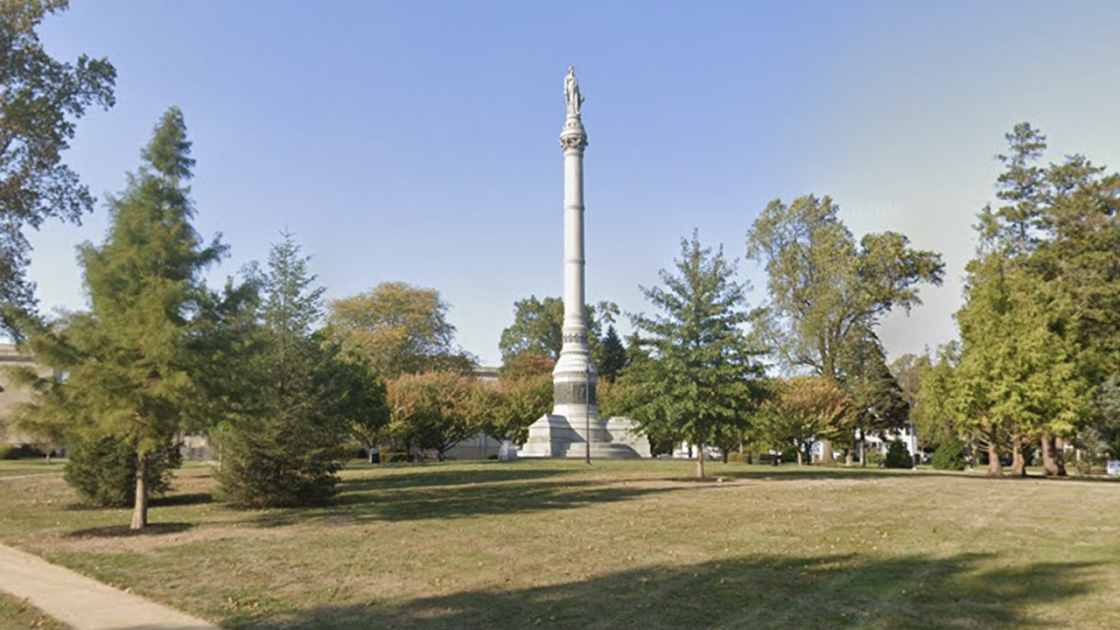
The First Shots
If you were standing here on the morning of June 28, 1778 you would be amongst the first shots of the Battle of Monmouth, as the opening phase of the battle began here.
Major General Charles Lee had arrived with his troops from Englishtown. British Lieutenant General Henry Clinton had started Major General Wilhelm von Knyphausen and Major General Charles Cornwallis’ divisions on the road to Middletown, leaving behind a rearguard of around 1,000 men. When Lee struck the British, Clinton decided to turn Cornwallis around and return to the scene of the fighting. As Cornwallis deployed on Lee’s left, his sudden and overwhelming appearance shocked the Continentals. By about noon, Lee led a retreat in the face of the British rearguard—a decision that would later lead to his court-martial. Washington course-corrected Lee’s retreat.
From here the fighting shifted west, as the battle raged all day in a summer heat so oppressive that Private Joseph Plumb Martin later wrote “The sun shining full upon the field, the soil of which was sandy, the mouth of a heated oven seemed to me to be but a trifle hotter than this ploughed field; it was almost impossible to breathe.”
Today, this 94-foot-tall monument commemorates the fighting that took place here.

Battle on the Home Front
It's easy to think of battlefields as landscapes dotted with signage, monuments, and visitor centers. Sometimes we forget that the American Revolution turned ordinary homes and farms into the battlefields that we visit today. You can see this across the battlefield, where three 18th-century farmhouses that survived the war stand to this day.
You’re standing at the farmhouse of John and Ann Craig, who lived here with their family and two enslaved people during the war. As Ann learned the British were approaching her home, she attempted to hide her most valuable household possessions in a well, packed up the rest of her belongings, and fled her home in advance of the battle.
American Major General Charles Lee hoped to establish a defensive position on this farm, to counter British Lieutenant General Henry Clinton’s advance on the farm until his line collapsed. Brigadier General Charles Scott’s Continental detachment retreated passed the Craig Farm with the British 42nd Regiment of Foot, also known as the “Black Watch” in hot pursuit. A brief fight ensued on the farm as Scott withdrew. The 2nd Battalion of the Black Watch, joined by the recently arrived 44th Regiment of Foot kept up the chase until they were stopped short by American artillery fire in front of Perrine Ridge to the west.
After the battle, Ann returned to home, to find her hidden valuables found, and stolen. Built between 1746 and 1770, the Craig house has been restored to its Revolutionary-era appearance and is open for tours.
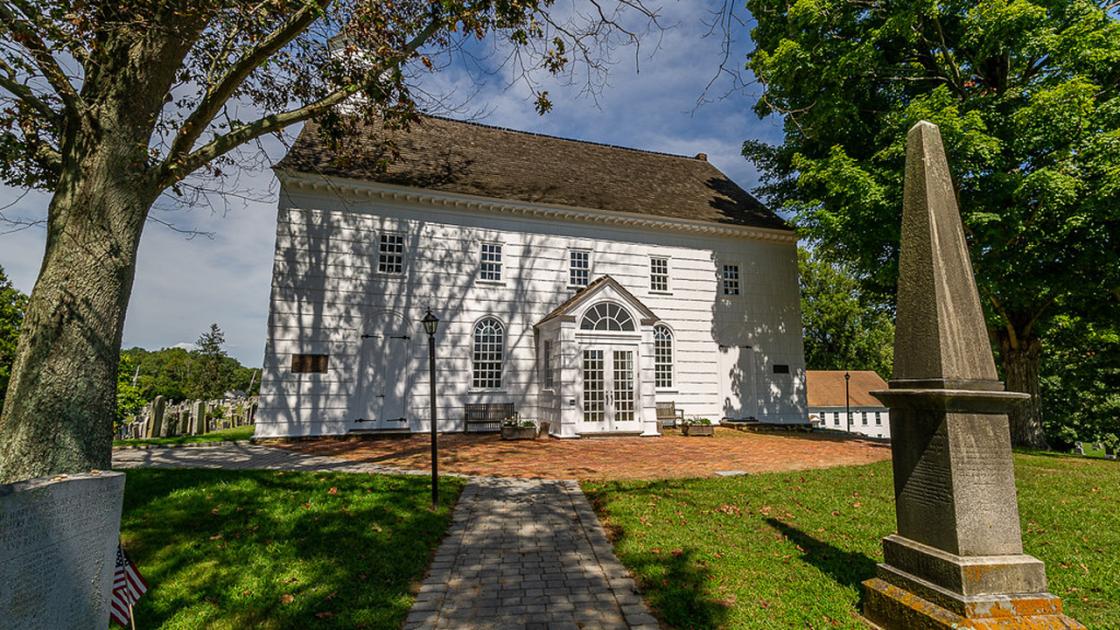
The Cost of Liberty
On any other Sunday, the grounds here at the Old Tennent Presbyterian Church would be abuzz with parishioners socializing and enjoying their fellowship. But on Sunday, June 28, 1778 the grounds and meeting house here served another purpose—a field hospital—as the heated battle waged just 500 yards east of here.
Located just behind the main Continental defensive line atop Perrine Ridge, from this spot you would hear and feel “The Great Cannonade” that was the Battle of Monmouth—the largest artillery engagement in the war. Major General Nathanel Greene described the artillery fire as “shot and shells flying as thick as hail.” Local tradition holds that one patriot soldier, who stopped in the cemetery near here to rest in the heat, was struck by a cannon ball.
An unknown number of fallen patriots lie in a common grave within the burial ground here, along with over 70 other Revolutionary War veterans. Among them is Captain Henry Fauntleroy of the 5th Virginia Regiment (sometimes identified as the soldier killed while resting here). He was killed here on his 22nd birthday. Also buried here are many people who endured the war on the home front, including Ann and John Craig. Echoing the words of one veteran who survived the battle—but died 53 years later of a wound sustained here—“reader, pause, recollect what it cost to gain your liberty.”
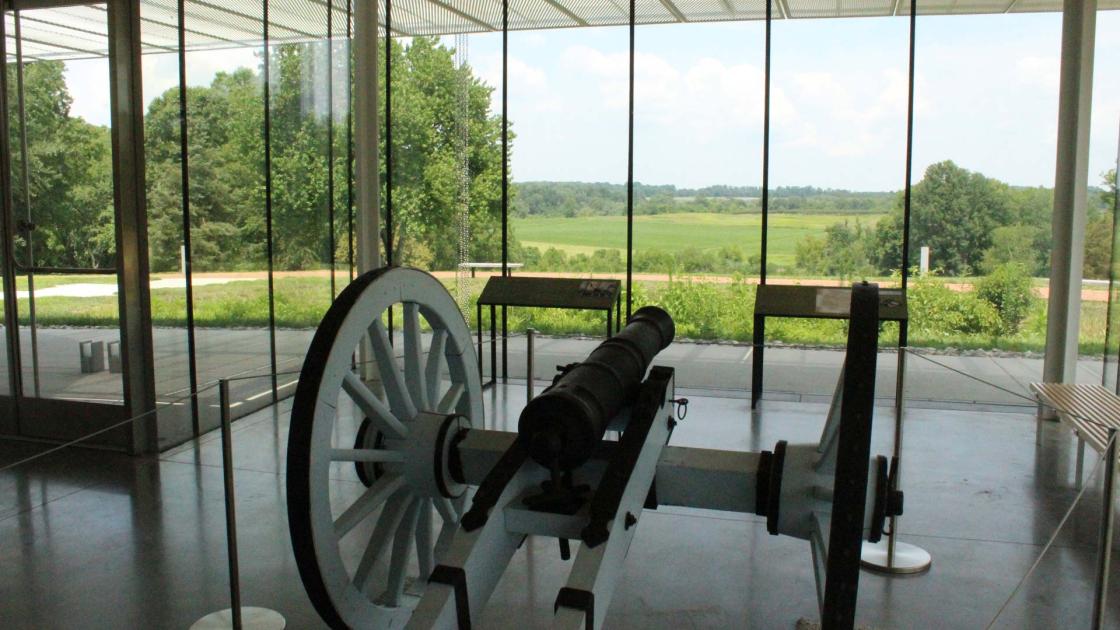
Glorious...to America
“The action of the 28th instant was a glorious one to America, the flower of the British army was taught to fly & leave their wounded on the field…” Colonel Matthias Ogden of the 1st New Jersey Regiment wrote shortly after battle here.
The Battle of Monmouth tested the Continental Army’s newfound training and resolve, forged over the difficult winter of 1777-78. By day’s end, General George Washington’s army had faced a grueling march, an hours-long cannonade, and fierce hand-to-hand combat. And Washington couldn’t be more pleased with their tenacity. He wrote, “The behavior of the troops... gave me the highest satisfaction. They stood the fire with a firmness never before displayed, and in the hottest weather imaginable.”
Situated here atop Combs Hill, itself a strategic position during the battle, the Monmouth Battlefield State Park Visitor Center stands at the ready to orient your further exploration of the battlefield. Inside, find displays with maps and artifacts, animations depicting the engagements here and, something that soldiers didn’t have on June 28, 1778—air conditioning.
The Final Retreat
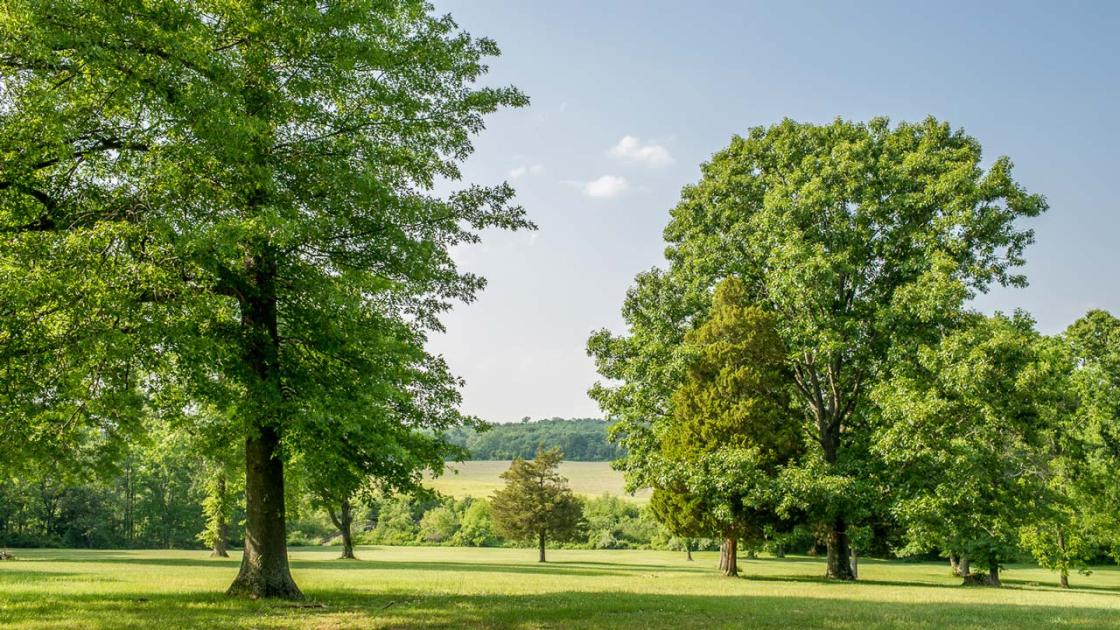
Look around at the sweeping view of the landscape here, provided by this elevated position. It’s easy to see why Lieutenant Colonel David Rhea of the 2nd New Jersey Regiment recommended that General George Washington occupy this high ground.
As Washington formed his main line on Perrine Ridge, he sent Rhea with orders to Major General Nathanael Greene to occupy this position, part of a 260-acre farm owned by Thomas and Martha Combs. Greene deployed his artillery under Lieutenant Colonel Thomas Antoine, chevalier de Maduiet de Plessis and shelled the British left flank. This harassment continued as British Lieutenant General Henry Clinton began pulling his command back from all parts of the field to a position behind the Hedgerow. As the British withdrew, Wayne, along with Colonel Oliver Spencer’s regiment and another unit led by Lieutenant Colonel Aaron Burr pushed forward in pursuit. The Continentals ran up against the 1st Grenadier Battalion east of the Hedgerow. The grenadiers were soon joined by the 33rd Regiment of Foot and this added weight forced Wayne back to the Hedgerow. The Continentals made a brief stand only to be driven from their position. Fortunately for Wayne, Greene’s artillery raked the British flank and forced them to retreat.
Amidst the darkness, the British withdrew and continued their march to New York City, leaving the Americans in possession of the field. It was the last major engagement of the war’s Northern Theater.
The Hedgerow
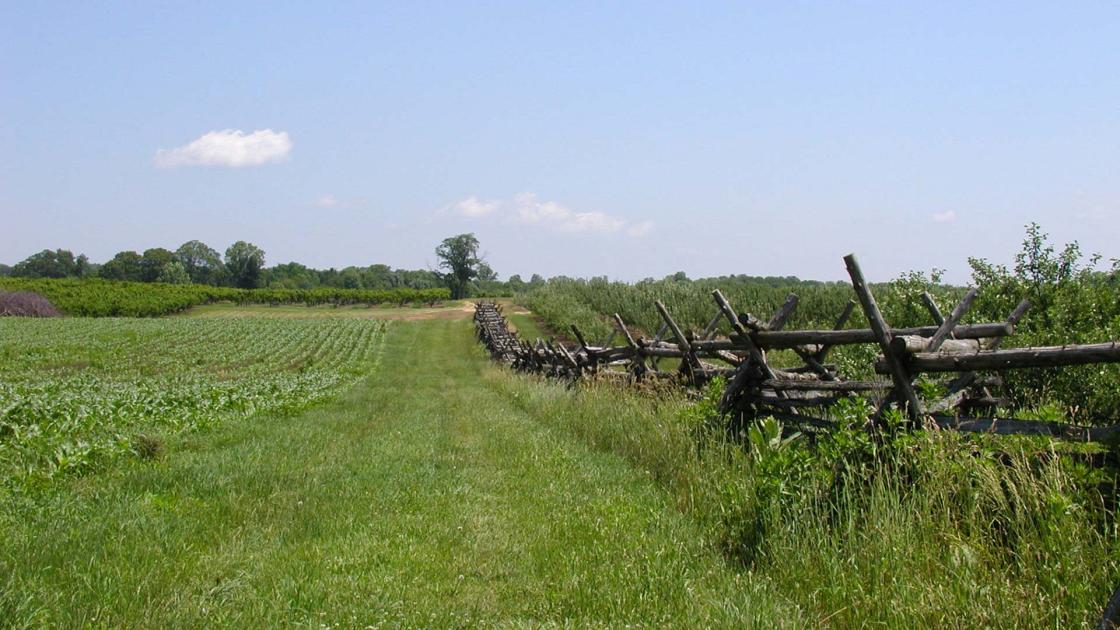
Standing here at the Hedgerow, you’re on the very ground where one of the fiercest moments of June 28 erupted, after which one eyewitness reported that the ground was “littered with red-coat bodies.”
Following the collapse of Lee’s line at Monmouth Courthouse, General George Washington rallied a delaying force here along a fence line known as the Hedgerow, and in a wooded lot to the east known as the Point of Woods. Washington charged Major General Charles Lee and Brigadier General Anthony Wayne to hold their positions and delay the British advance.
Sensing an opportunity to engage, British Lieutenant General Henry Clinton responded by sending in elite units—the 1st and 2nd Grenadier Battalions, the Brigade of Foot Guards, and the 16th Light Dragoons—to harass Lee and Wayne’s positions. Clinton reportedly galloped ahead, shouting to his men “Charge, Grenadiers, never heed forming!” British troops surged ahead toward the patriots, but encountered fierce resistance, including artillery fire from Lieutenant Colonel Eleazar Oswald and musket fire from troops under Lieutenant Colonel Jeremiah Olney and Colonel Henry Livingston. Soon, hand-to-hand, point-blank fighting ensued for 3-5 minutes here at the Hedgerow. The patriots inflicted devastating casualties, including the death of Lieutenant Colonel Henry Monckton, commander of the 2nd Grenadiers who, with sword drawn, “fell in the moment of victory.” Even so, the patriots were forced to retreat, but the action here allowed Washington to form a defensive position on Perrine Ridge.

Dueling Cannonade
You’re standing atop the main American defensive position of the Battle of Monmouth—where on the afternoon of June 28 you would be amidst the thunderous, bone-rattling, pounding barrage of nearly two dozen dueling cannon vying for victory in the largest artillery battle of the entire war. Here, American General Henry Knox’s dozen artillery pieces met British Lieutenant General Henry Clinton’s ten. One American officer described the soundscape of the dueling cannon: “if anything can be called musical where there is so much danger, I think that was the finest music I ever heard.”
The intense heat of the day magnified the demanding work of manning the artillery. Captain Alexander Hamilton witnessed soldiers “falling beside their pieces, overcome not by wounds, but by the burning air and labor.” One of them was William Hays, an artillerist in Captain Francis Proctor’s 4th Continental Artillery. When William fell, his wife Mary Ludwig Hays stepped in to take his place. Her valor here gave rise to the legend of “Molly Pitcher.”
After nearly two hours of bombarding each other in the heavy heat, Clinton disengaged to follow Brigadier General Wilhelm von Knyphausen’s division toward Middletown. Sensing an opportunity, General Washington decided to launch an attack, ordering two battalions off the ridge to engage the British “Black Watch” 42nd Regiment of Foot, which retreated. The patriots hot in pursuit, two British artillery pieces brought them to a halt.