-
The BlogBiographies
-
Videos

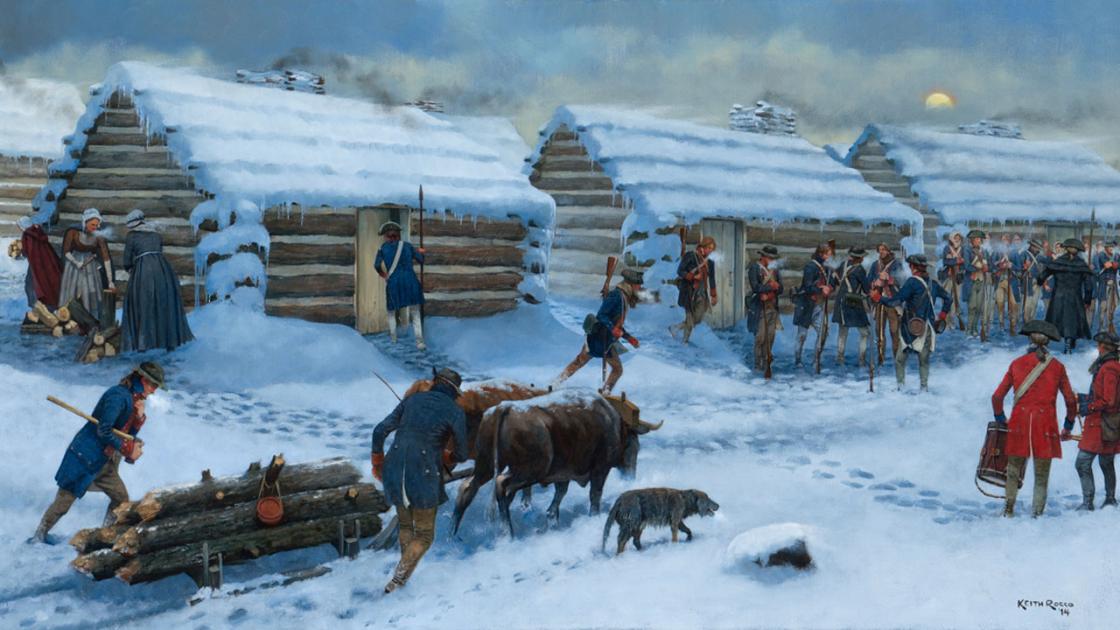
THE FIRST ENCAMPMENT at MORRISTOWN: A STORY OF SURVIVAL
“The severity of the season has made our troops, especially the militia, extremely impatient, and has reduced the number very considerably. Every day more or less leave us. Their complaints, and the great fatigue they have undergone, induced me to come to this place, as the best calculated, of any in this quarter, to accommodate and refresh them.” --General George Washington to the President of Congress, Morristown, January 7, 1777
On January 6, 1777, the Continental Army arrived here at Morristown to establish a winter encampment in the aftermath of the actions of the Ten Crucial Days.
From December 24, 1776, to January 3, 1777—known today as the Ten Crucial Days—General George Washington led his troops in a daring winter campaign resulting in morale-boosting victories at Trenton and Princeton. Washington was well aware of his men’s fatigue and sacrifice. He knew the beleaguered Continental Army needed to rest and regroup for the uncertainties ahead.
From January 6 to May 28, 1777, this modest town hosted thousands of Washington’s Continental troops. Notice the topography around you—the Watchung Mountains acted like giant earthworks—a natural barrier protecting the Continentals from the British encamped 30 miles east in New York City. Today this area is a National Park, but in 1777, the little town gave the army a place to resupply and recharge and, importantly, keep a close eye on British General William Howe’s activities.
Explore these tour stops to learn how Morristown’s private homes, public buildings, and open spaces witnessed the drama of deserting troops, revelry, sickness and, ultimately, survival.
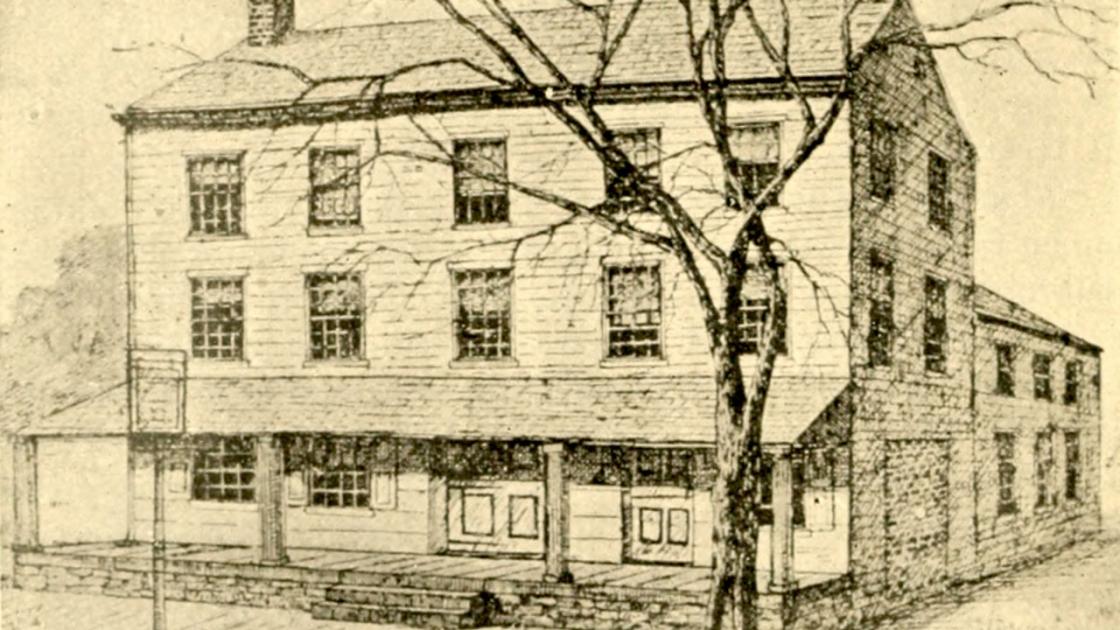
A Crucial Nerve Center
Arnold’s Tavern, originally built by Samuel Arnold in the mid-18th century, formerly stood here on what was Morristown Green. General Washington used this once imposing, three-story structure as his headquarters during the army’s encampment at Morristown from January through May 1777.
Yes, “Washington slept here!” (on the second floor) but importantly, for five months in 1777 Arnold’s Tavern served as the nerve center for his Continental Army. From here, Washington may have looked out over Morristown Green—where you’re standing now—while he anxiously wrote letters to the Continental Congress and other patriots, informing them of the present state of the troops: “our army is daily diminishing…vigorous exertions must be made to recruit and clothe the troops.” Washington wrote countless letters urging for the continued support of his dwindling army, attempted to procure clothing and supplies, and pressing Congress to help bolster his falling numbers.
As disease, desertion, and fatigue rapidly diminished his troops, Washington urged vigilance, support, and readiness. From his rooms here at Arnold Tavern, Washington planned for the next season of war, writing “the enemy will not remain inactive…We must be prepared to meet them with firmness and resolution.”
Imagine approaching the three-story high tavern, climbing the winding stairwell to the second floor, and meeting General Washington in his office.
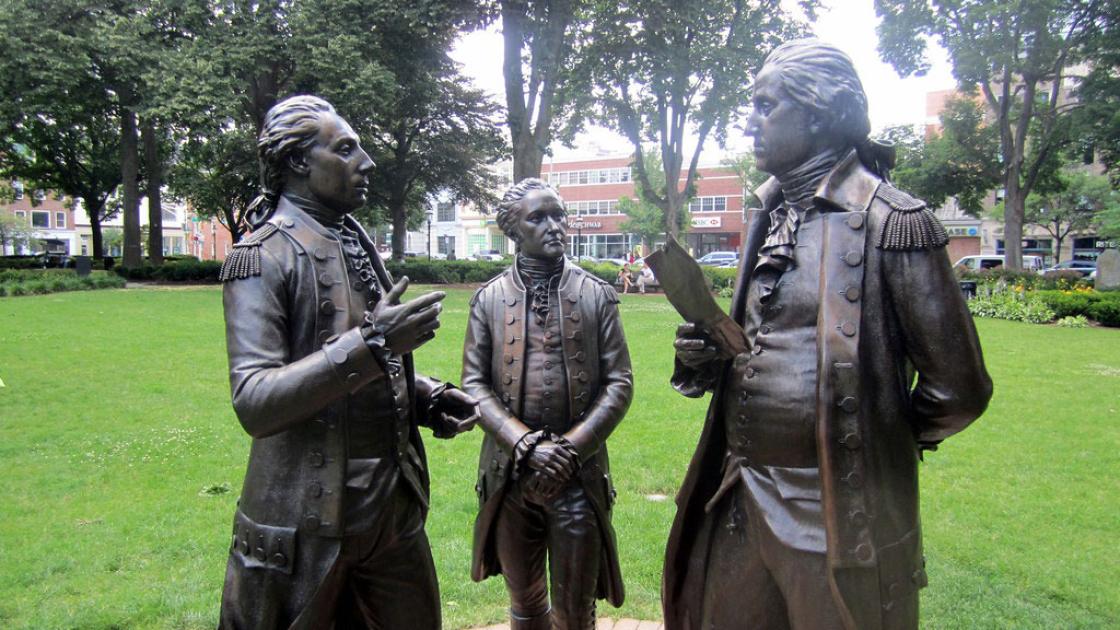
Morristown Green
If you traversed across Morristown Green in early 1777, you’d risk getting in the way of General George Washington’s Continental Army drilling and parading here. You’d be better off taking in the imposing view from one of the 18th-century homes and public buildings that once dotted the 2 ½-acre Green, maybe even Arnold’s Tavern which Washington used as his Headquarters. In the Revolutionary era, the Green was central to community life. Today, surviving historic structures, statues, and historical monuments and markers tell the stories of its layered past. While you’re here, take a selfie or two with the statues of George Washington, Alexander Hamilton, and the Marquis de Lafayette. They’re shown in discussion about France officially supporting the American cause—a real conversation that happened near here on May 10, 1780.
Want more statues?
Meet Thomas Paine. This British-born patriot wrote some of the most evocative words of the Revolutionary era: “These are the times that try men’s souls.” The Continental soldiers overwintering at Morristown undoubtably felt the truth of these words. Some sources suggest that Washington may have read Paine’s work to inspire his beleaguered troops before crossing the icy Delaware River.
Explore this monument dedicated to Paine. On the left, read the quotes praising his contributions to American independence, and on the right, read his own thoughts on freedom. Now, imagine that you’re a tired, cold, and hungry patriot soldier, stepping into a small boat to meet an uncertain future. How might these words make you feel?
The statue is located in Burnham Park.
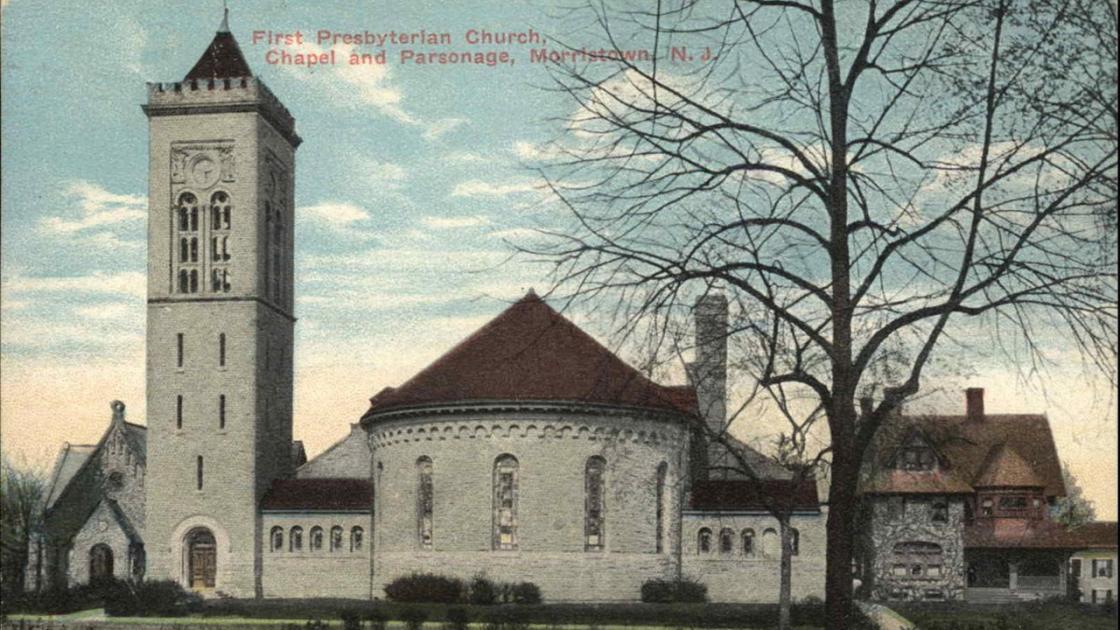
Morristown First Presbyterian Church
“The smallpox has made such a head in every quarter, that I find it impossible to keep it from spreading through the whole army…I have therefore determined…to inoculate all the troops now here…” General George Washington, Morristown, February 5, 1777
Today you’re looking at the third church built on this site, but the original Presbyterian Church and existing cemetery were here during the army’s encampment in the winter of 1777. The Burial Ground you see is a stark reminder of the cost of war. Over 130 of these burials are known to be casualties or veterans of the American Revolution. But the church that stood here 250 years ago also played a vital role in the Continental Army’s survival.
From his headquarters at Arnold's Tavern across the Green, on February 6, 1777 General George Washington wrote Dr. William Shippen, Jr., the Director General of Hospitals for the Continental Army, issuing what was effectively the first national public health directive: the Continental Army would be inoculated against smallpox. Here’s how it worked: doctors made small incisions into the skin of healthy recipients, and inserted pus or scabs from a smallpox patient. Exposure to the disease would cause a mild version of smallpox but ultimately (in theory) led to future immunity.
The original church served as a hospital and quarantine site for soldiers and townspeople receiving and recovering from the smallpox inoculation. Records of the Presbyterian Church indicate that 68 of the parishioners here succumbed to the disease in 1777
Still, Washington viewed his bold directive as an “amazing success,” and the church grounds here are witness not just to sacrifice, but to the survival, of the army.
The burial ground is open for respectful visitation.
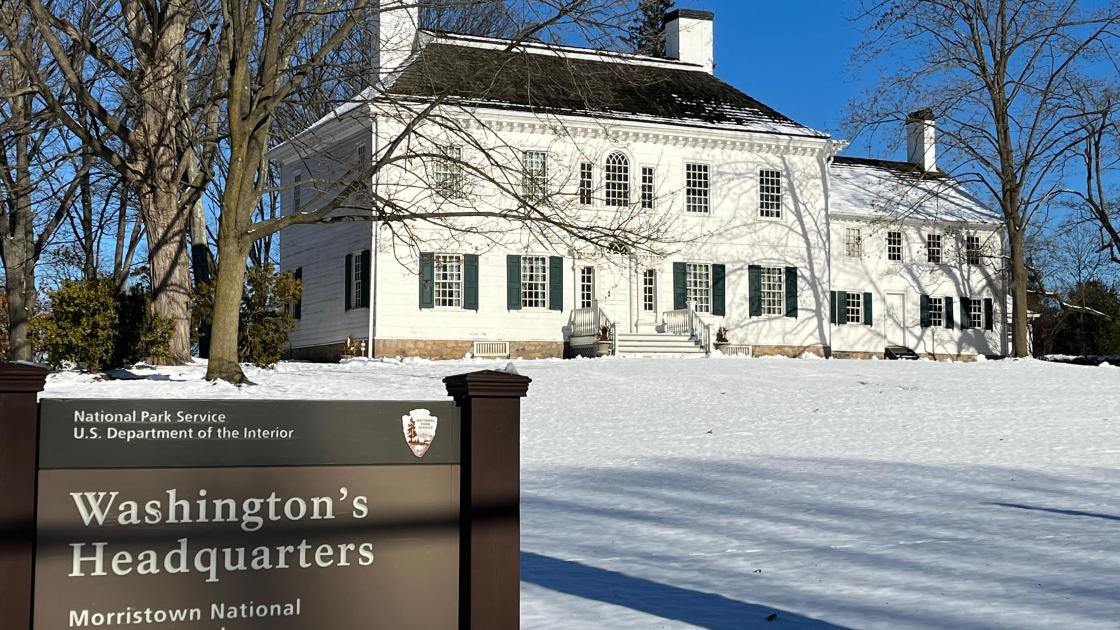
The Ford Mansion was the headquarters for General George Washington during the "Hard Winter" of 1779-1780
Ford Mansion
“Our whole Light Infantry are quartered in a very large house belonging to Col. Ford having 4 rooms on a floor and two stories high.” Captain Thomas Rodney, Delaware Light Infantry
Delaware troops called this impressive mansion home for a short time in early 1777. According to one eyewitness, while these soldiers “...were sons of some of the leading men of that state – gentlemen by birth” they were ”rowdies in practice” who “injured the room very much by their nightly carousals.”
The owner Jacob Ford, Jr. was himself a patriot colonel in the Morris Militia. Shortly after the victory at Princeton while Ford was leading his troops towards Chatham, Ford was “struck all at once with a Pleurisy and delirium,” causing him to be immediately carried to his home here. As General George Washington’s army arrived in Morristown and prepared to overwinter in its private homes, over 40 soldiers promptly moved into the first floor while the gravely ill Ford languished upstairs. Ford died here on January 10, 1777. Soldiers, fifes and drums, and Washington himself attended the full military funeral, and Ford’s burial at the nearby Presbyterian Church.
Ford’s former home would be at the center of the war yet again when Washington chose it as his headquarters in December 1779.
Ford Mansion is open for guided tours offered by the National Park Service.
Feeling Adventurous?
Drive 30 minutes south from Ford Mansion and you will be atop the very mountains that safeguarded the Continental Army in the valley below, in the early months of 1777 at Washington Rock State Park.
Look around at the panoramic vista here and imagine the valley below as clear-cut farmland. You’ll immediately understand why General George Washington valued this thirty-mile panorama—including a view of British General William Howe’s position in New Brunswick. In June 1777, Howe hoped to entice the Continentals out of their refuge and strike. But Washington, who had kept a watchful eye on the British movements from this very spot, knew Howe was setting a trap. He didn’t take the bait.
Washington Rock State Park is open to the public daily from sunrise to sunset.