-
The BlogBiographies
-
Videos

May 22, 1781 – June 19, 1781
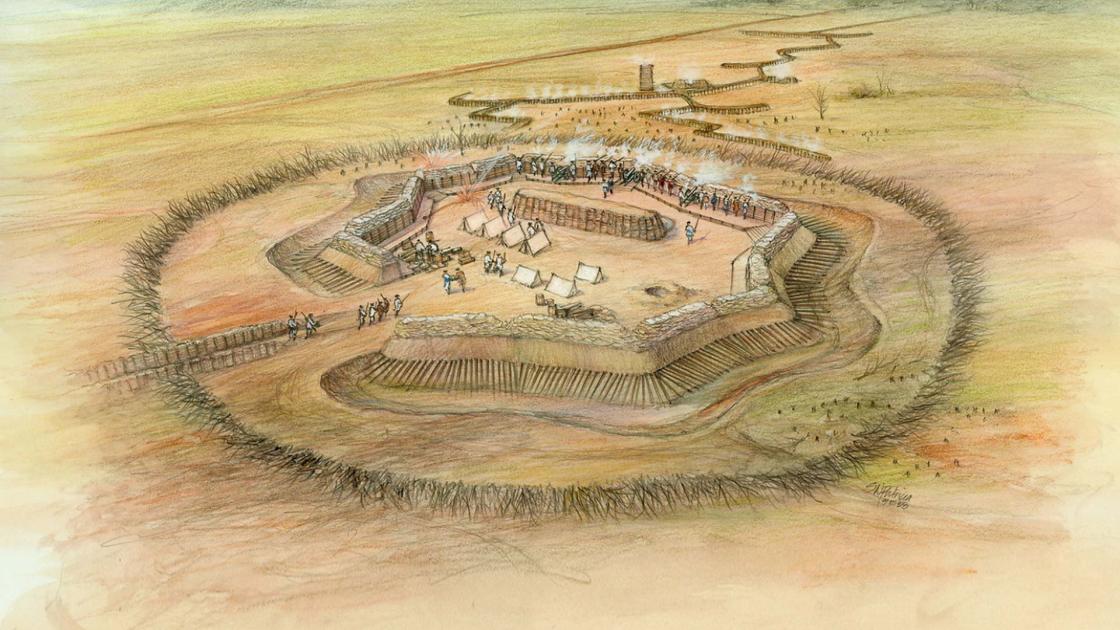
The site of a 1775 battle and a critical outpost for the British after they captured Charleston in 1780, the colonial town of Ninety Six was also the setting of a 28-day siege in 1781. Here, Nathanael Greene’s Patriots attacked the heart of Loyalist commander John Cruger’s defenses — the Star Fort. Explore the reconstructed siegeworks and visit the original and spectacular earthen fortress.
A Place Called "Ninety Six"
Home to hunter-gatherers, the Cherokee, European traders, British colonists, and a battleground between Patriots and Loyalists during the Revolutionary War — this town with an intriguing name is a microcosm of early American history. The first documented reference to Ninety Six appears on a map created in 1730 by George Hunter, Surveyor General of South Carolina, but there is no definitive explanation of what the numerical designation in the name means. Historians have theorized and debated, with many accepting the most plausible explanation — that it was 96 miles from the Cherokee village of Keowee, near the town of Clemson today. However, recent studies note that the mileage between those points was actually much less, and so the mystery remains unsolved.
An important crossroads that linked Cherokee territory to Charleston on the coast, Ninety Six was the site of ongoing clashes between white settlers and American Indians. A fort erected here survived two Cherokee attacks in the 1760s. That garrison eventually grew into an influential backcountry settlement, with fertile farms replacing dense woods, and a courthouse and jail dominating a thriving town. Having achieved a relatively peaceful existence despite the fragile nature of life in a remote location, the residents of Ninety Six were shaken by the outbreak of the Revolutionary War, which pitted neighbor against neighbor. This was the site of the first southern land battle of the Revolutionary War, fought in 1775. By 1780, British Loyalists established an outpost here, and in 1781, the Patriots laid siege to Ninety Six’s formidable defenses — the Star Fort, stockaded town, and Holmes’ Fort — all of which you can explore today.
From Trading Post to Colonial Town
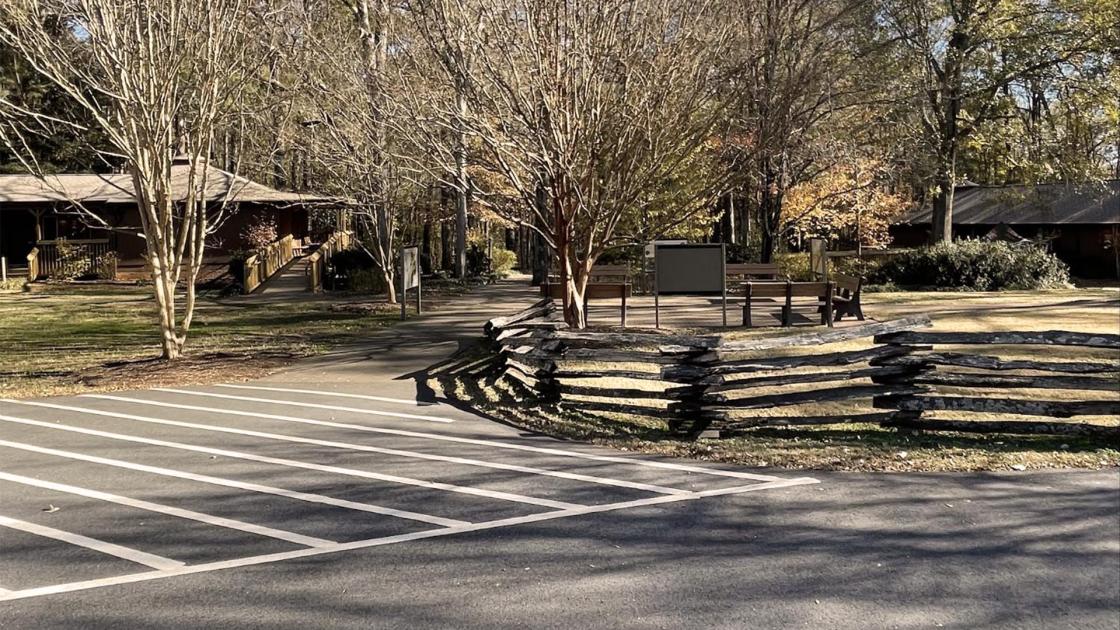
Situated between the Saluda and Savannah rivers and at the convergence of several major roads connecting the backcountry to the coast, Ninety Six, was described by Patriot Lieutenant Colonel Henry Lee in his memoirs as “salubrious,” and “fertile.” In the early 1750s, Indian trader Robert Gouedy became the first permanent white settler in this area. Soon other European colonists were drawn to the rich land of the backcountry, and in time, the relationship between the newcomers and the Cherokee deteriorated. In 1759, during the French and Indian War, a stockade fort was built around one of Gouedy’s barns to offer protection from Indian attacks. During 1760, this fort survived two Cherokee raids on February 3 and March 3. When you hike the Gouedy Trail at the Ninety Six National Historic Site, you will see a meadow where Gouedy’s Trading Post once stood.
By the 1770s, the town of Ninety Six included homes for families and enslaved workers as well as a courthouse and jail. Woods of oak, black walnut, and hickory trees were cleared to make room for corn, flax, cotton, and indigo. Ninety Six was also the center of the Regulator Movement — a vigilante system established to keep law and order on the frontier. Regulators often took the law into their own hands, mandating unequal punishments to offenders, which included everyone from homeless people and bandits to “loose women.” The system created mistrust and unrest among inhabitants, which rose to the surface when the Provisional Congress in South Carolina voted to cut ties with Britain in 1775. With war looming, the residents split between Patriots favoring rebellion and Loyalists supporting the King, and the tenuous peace they had achieved quickly unraveled.
Battle of Williamson's Fort, 1775
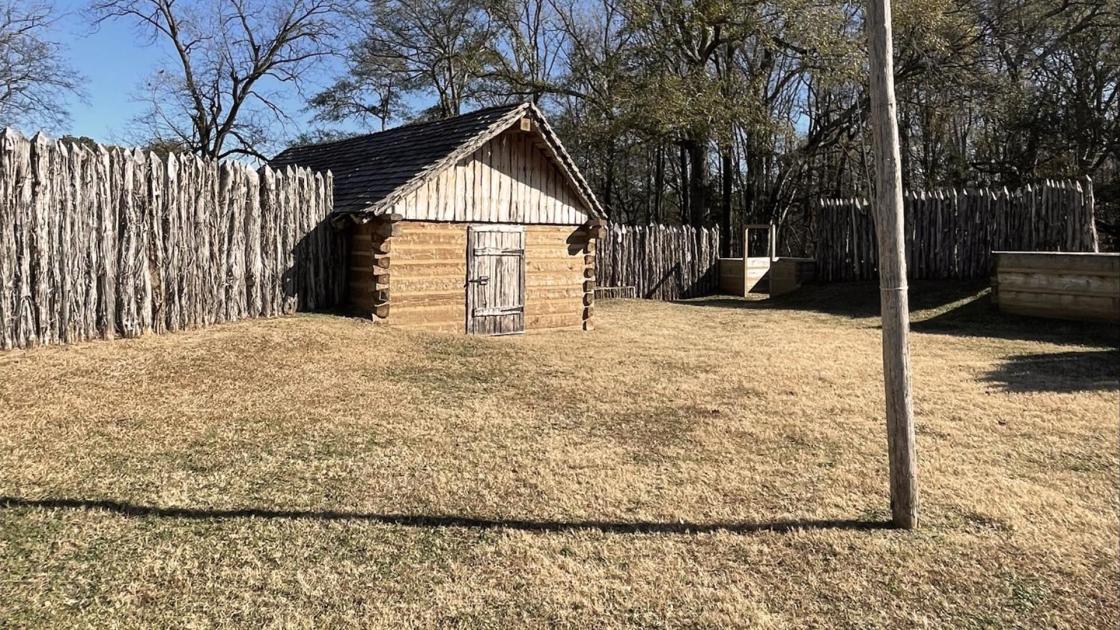
The first major southern land battle of the Revolutionary War was fought on this site between Loyalists and Patriots — all American men. Two forts stood at this same location: one in 1775 known as Williamson's Fort and the other in 1781 called the Stockade (Holmes') Fort, reconstructed here today. Near the fort is a monument to James Birmingham, the first Patriot killed in the South in the American Revolution.
In October 1775, Loyalists precipitated the battle by seizing a shipment of gunpowder intended as a gift of friendship from the Patriot-supported Committee of Safety in Charleston to the Cherokee. In response to this hostile act, Patriot Major Andrew Williamson mustered 500 troops at Ninety Six, where his men built a makeshift fort on the high ground, just west of the jail. The simple square structure was made of fence rails, baled hay, and beef hides and enclosed a barn and outbuildings. The Patriots holding the fort had enough food and gunpowder to last several days, but no water.
On November 19, Loyalist commanders Captain Patrick Cunningham and Major Joseph Robinson arrived at Ninety Six with about 2,000 men. Though greatly outnumbered, the Patriots in the fort would not surrender. Fighting followed, leaving several wounded on both sides. The Patriots, dropping from thirst, tried unsuccessfully to dig a well inside the fort. The closest spring was 100 yards away and in the line of Loyalist fire. Two days later, a truce was arranged, much to the relief of Williamson’s parched men. This, would not be the last time that access to fresh water played a critical role in the events at Ninety Six.
Peace was fleeting. While the Patriots remained in power, they threatened and harassed local Loyalists in the region, many of whom fled to other colonies. When the tide favored the British later in the war, the Loyalists who had stayed retaliated against their neighbors with a vengeance. The hatred between the parties was palpable.
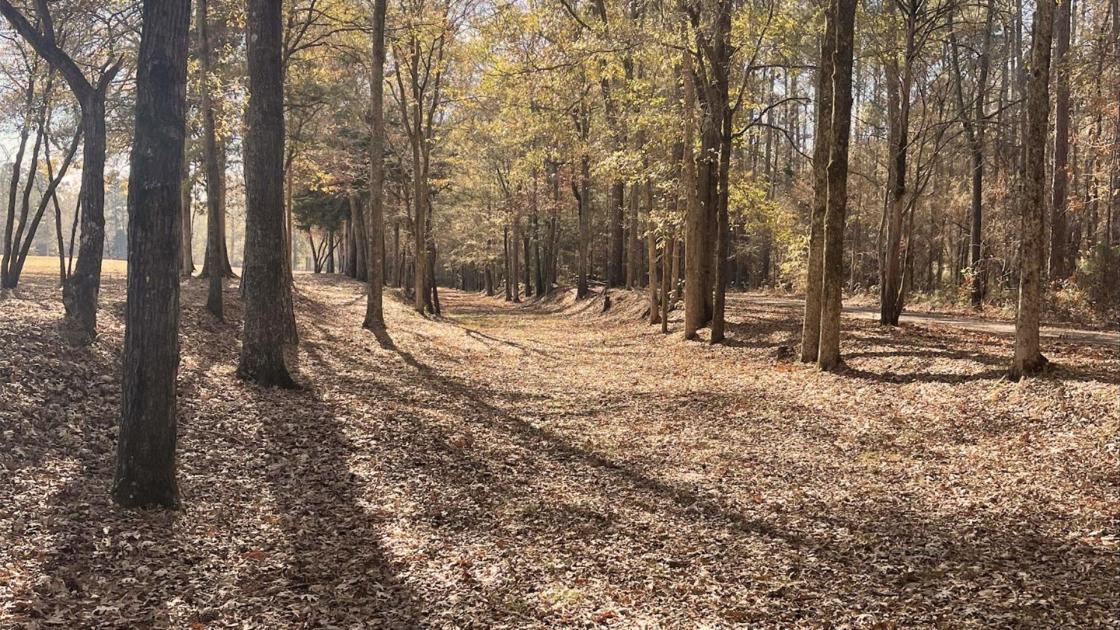
The Patriots March into Ninety Six
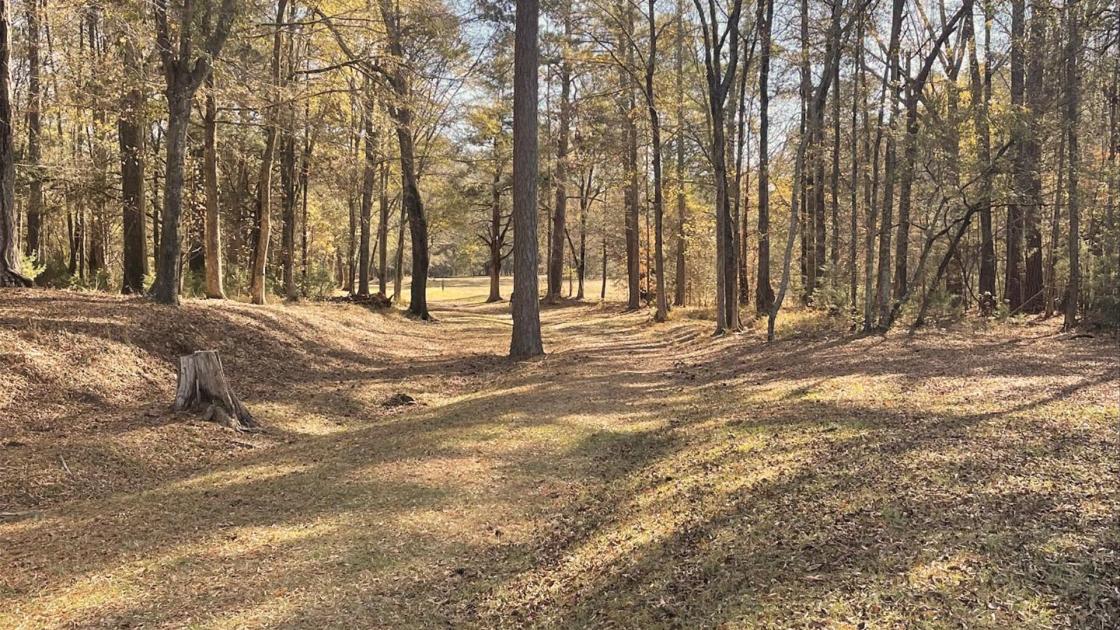
In colonial times this historic roadbed — the Island Ford Road — served as a commercial thoroughfare between Ninety Six and Charleston. By 1775, travelers and merchants arriving from Charleston boarded a ferry to cross the Saluda River and took this route into town. Heavy wagons, precariously loaded with goods, could take up to two weeks to make the trip, an excursion that can now be made in a matter of hours. Today the surface is sunken with time and years of use.
Revolutionary War troops used this route to access the backcountry as well. On May 22, 1781, Greene’s Patriots marched from their camp at Friday’s Ferry, near what is now Columbia, into Ninety Six on this road, which was mired in mud from a spring shower. Soaked through their uniforms, and burdened with supplies, tools, and artillery, about 1,200 troops immediately sealed off the Loyalists’ access to food, water, and reinforcements and prepared to initiate a siege against Loyalist Lieutenant Colonel John Harris Cruger’s defenses. Cruger’s garrison included Provincial regulars and South Carolina Loyalist militia totaling about 600. Approximately 100 Loyalist families had come into Ninety Six as refugees, and a labor battalion of enslaved people maintained the impressive fortifications. When Greene laid eyes on Cruger’s defenses at Ninety Six, he wrote, “the fortifications are so strong and the garrison so large and so well furnished that our success is very doubtful.”
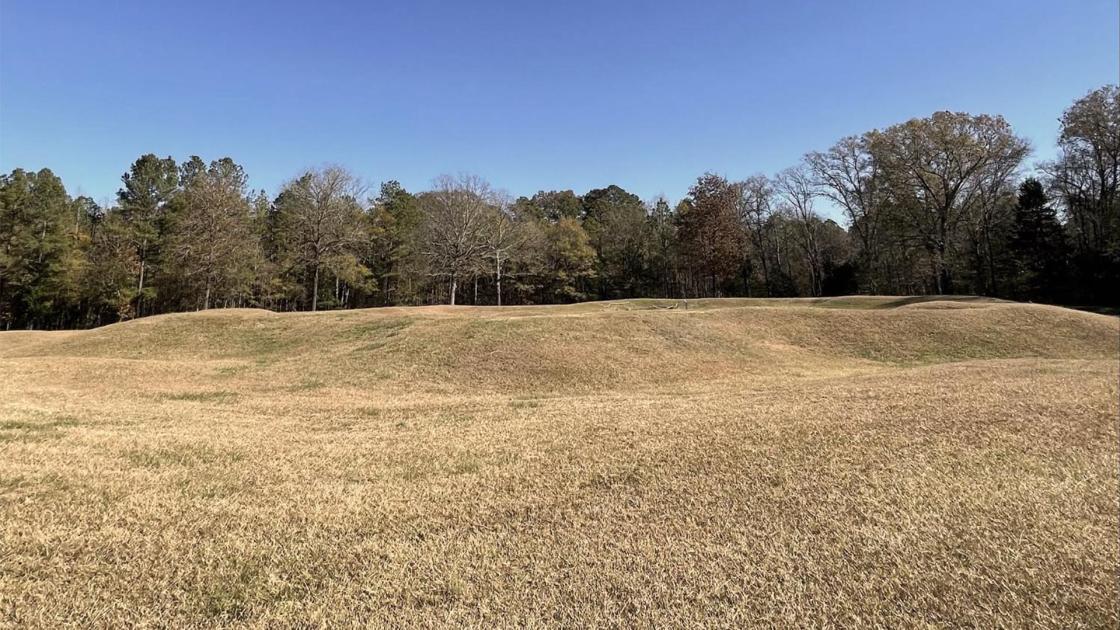
The Star Fort
The Star Fort before you is one of the best-preserved original Revolutionary War earthworks in the nation.
Upon assuming command of Ninety Six in August 1780, Cruger fortified the town from attack by building a stockade as well as an eight-foot ditch with earthen parapets. He knew, however, that these measures were not enough and requested the services of an engineer. Lieutenant Henry Haldane was sent to advise Cruger, and he decided on a star shape for the defenses. This classic fort was designed with eight points. It was protected by a dry ditch and menacing abatis, or wood obstructions to impede the enemy. A stout wooden platform permitting cannon to be fired directly over the parapet was constructed to cover the angle where the defenders expected the main attack.
The star shape was not very popular because it was difficult to build and could not accommodate many troops, but it allowed soldiers to aim their muskets in all directions, catching attackers in the crossfire. Construction of the redoubt started in December 1780 and was finished before Greene’s army arrived in early 1781. It was built by Loyalist soldiers and enslaved laborers from nearby farms and plantations.
The earthen walls you see today have weathered a bit with time. They were originally about 14 feet high, and during the siege Cruger ordered sandbags piled around the top, making them rise to about 17 feet. You can detect the location of the gun battery in the center of the front wall facing the Patriot trenches. The traverse — the low mound of dirt inside the walls — was built during the siege to serve as a second line of defense in case the Patriots breached the Star Fort’s outer walls and as additional protection against an artillery bombardment. It seems incredible that several hundred men, crammed in with provisions, arms, and ammunition, survived almost a month here in the sweltering June heat.
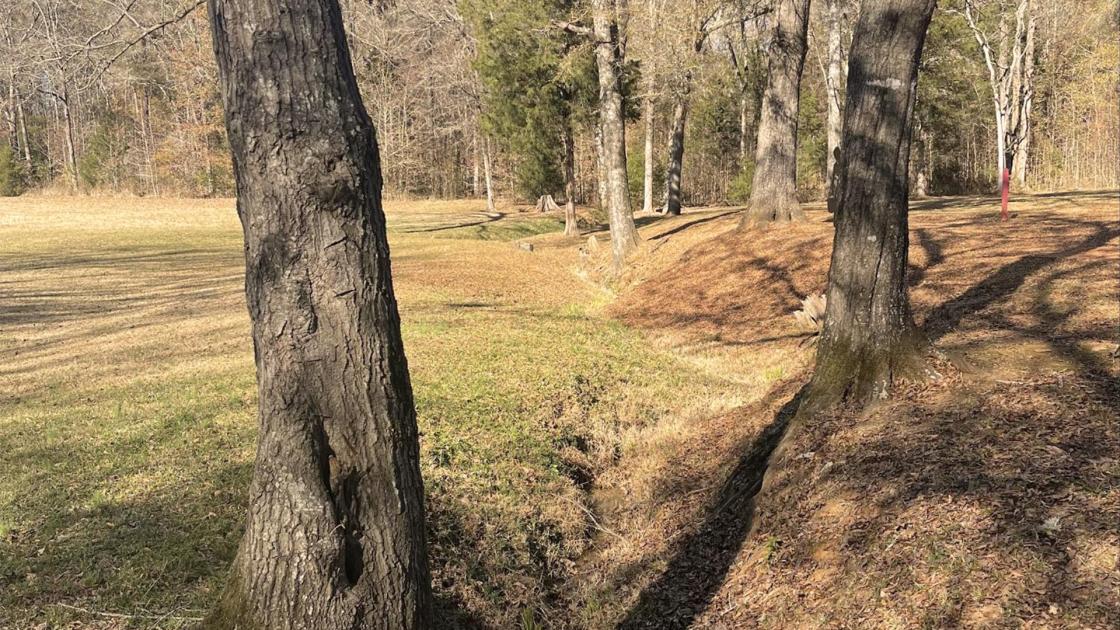
The Battle for Water
For an army under siege, survival depends on having adequate food and water. Cruger hoped he had stockpiled enough supplies at the Star Fort to last until reinforcements came. Greene hoped the Loyalists would run out of resources and Cruger would surrender. There was only one source of fresh water in the town — Spring Branch. It lay well outside the fort walls and was difficult to access safely.
As the siege wore on, Cruger’s water supplies were running dangerously low. His troops tried to remedy the crisis by digging a well inside the Star Fort. At 25 feet, no water was found. Then they came up with another plan. A communication trench called “the covered way” ran from the Star Fort to the stockaded town and then from the jail to the Stockade (Holmes) Fort. It was not actually covered, but was used for cover, or protection. Throughout the siege, couriers, Loyalist relief troops, and laborers scurried along this narrow earthen corridor, often as Patriot fire rained down on them. The Loyalists inside the Star Fort decided to use the veil of night to send dark-skinned enslaved workers through this passage. Stripped naked, the camouflaged men set out to retrieve buckets of water from Spring Branch. They had to crouch well below the three-foot walls to avoid being killed but succeeded in their vital and dangerous mission.
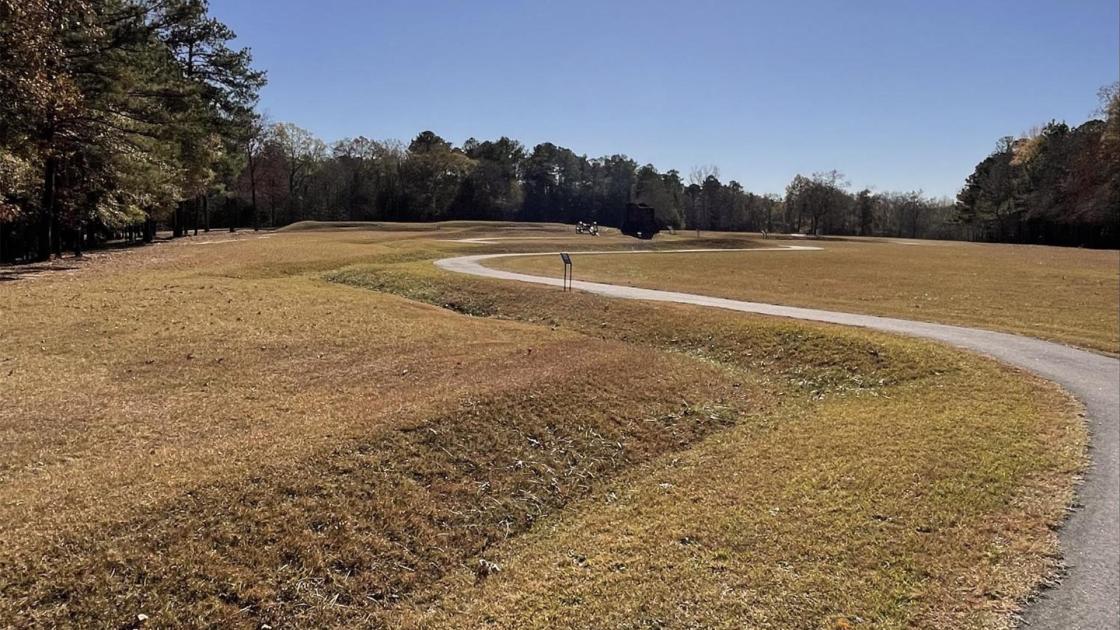
Kosciuszko Conducts the Siege
The elaborate Patriot siege works you see before you — approach trenches, a rifle tower, and a mine (which is underground and not visible) — were designed by Polish expatriate and Paris-trained military strategist Tadesusz Kościuszko. Inspired by America’s struggle for liberty, Kościuszko left his native land to offer his services to the Continental Army and became the chief engineer of the Southern Department at age 35. Upon his arrival at Ninety Six, Kościuszko assessed the enemy position and advised Greene to lay siege to the heart of the British defenses, the Star Fort.
During the 28-day engagement, three parallel trenches — which you can still see leading up to the Star Fort — were constructed, each advancing the Patriots closer to the enemy garrisoned inside the earthen walls. Angled approach trenches, called saps, connected these parallels, forming a “Z” pattern. They were originally 4 to 7 feet wide and 2 to 3 feet deep. Progress was incredibly slow because the sappers (diggers) and enslaved workers shoveling in the insufferable June heat were hampered by the red clay soil, which Kościuszko likened to "soft stone.” The Patriots used gabions (baskets filled with dirt) and fascines (long branches tied in bundles) to make the saps higher and safer, allowing the Patriots to stand up and pass supplies along the trenches without taking enemy fire.
The Maham Tower and Mine
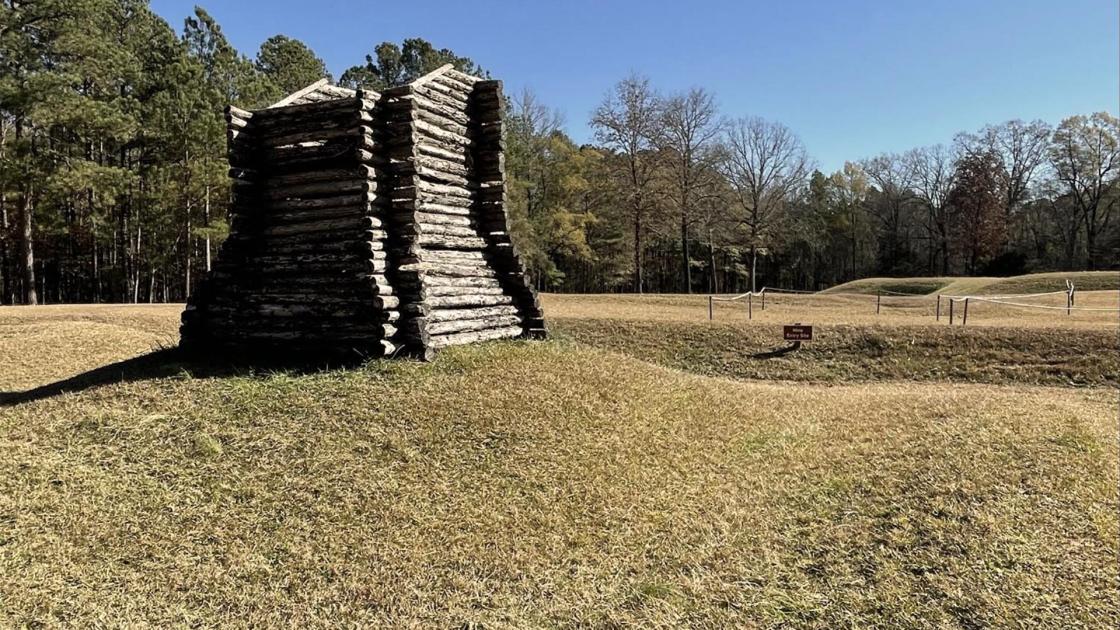
The wooden structure you see rising above the battlefield is a Maham Tower, named for its inventor, Patriot Lieutenant Colonel Hezekiah Maham. Maham towers were used in other Revolutionary War battles, including the one at Fort Watson, another site on the Liberty Trail. This replica is only 10 feet tall, but the original rose to 30 feet and was erected in a single night. It allowed sharpshooters to fire directly into the Star Fort. The Loyalists tried to burn the tower down, but the green wood would not ignite. This forced Cruger to put up sandbags on the fort wall, leaving loopholes between them through which the Loyalists could return fire.
The underground mine was Kościuszko’s brainchild. The engineer planned to dig a tunnel that would extend to the fort’s outer wall and pack it with explosives. When detonated, Greene’s army would rush into the breach from the approach trenches and attack the garrison. However, Greene called off the siege before the mine could be used and it was left unfinished. There is a sign indicating the location of the mine, and while the structure is unstable and visitors are not permitted to enter it, 3D mapping scans of the cone-shaped tunnel reveal its ingenious double-shafted construction. Two branches that forked from the main mine shaft would each have held chambers packed with explosives. When their fuses were lit, the powder would have exploded both upward and outward. Despite having no beams or supports, the mine is still intact and extends for 125 feet. It is the only surviving mine from the Revolutionary War.
Black Patriots at Ninety Six
There were possibly dozens of enlisted Black soldiers fighting for the Patriot cause at Ninety Six. However, Patriot muster rolls did not indicate race, so we know about the exploits of only a few individuals, some cited here, whose inspiring stories have come to us primarily through pension records.
Agrippa Hull, a free Black man from Massachusetts, served as orderly to Polish military engineer Tadeusz Kościuszko during construction of the siegeworks you see before you. He had already survived the Battle of Saratoga and a grueling winter at Valley Forge before joining up with Kościuszko at West Point. He followed the engineer into the Southern Theater, where he fought at Cowpens, Guilford Courthouse, Eutaw Springs, and here at Ninety Six. After the war, Hull turned down an offer to follow Kościuszko back to Poland and became the largest Black landowner in Stockbridge, Massachusetts.
Like Hull, Thomas Carney was also a free Black man. He served here in the Maryland Continental Line. A native of Maryland’s Eastern Shore, he fought at Germantown before following the army south. Reputed to be a fierce fighter, Carney was particularly heroic at Ninety Six, where he rescued his wounded company commander from the field of battle and saved his life. For his military service, he received a land grant of 100 acres and took up farming after the war.
As a private with the 1st Spartan Regiment of the South Carolina militia, Andrew Ferguson, also a free Black man, fought in many significant Revolutionary War battles, including Ninety Six. At age 15 he was forced into service for the British but escaped and joined the Patriot militia. Ferguson received a head injury at the Battle of Guilford Courthouse, which a surgeon reportedly treated by inserting a plate made of hammered silver coins into his skull. Amazingly, he lived to be 95.
Women and War
The wife of Loyalist commander John Harris Cruger joined him here at this remote outpost. Ann DeLancey Cruger had already survived a frightening wartime encounter when she sailed from New York to meet her husband in Georgia and was captured en route by Patriot Admiral Charles Henri Hector, Comte d'Estaing. Upon her release, she reunited with her husband and remained with him through the rest of the Southern Campaign. During the siege of Ninety Six, Ann lived in a house outside the fort. It is said that Nathanael Greene placed a guard there to protect her from being harmed by members of his army.
Ann was not the only wife in camp. Many colonial women followed their husbands to war, some with children in tow, deciding it better to keep their families together at any cost. Their days were filled with long and exhausting marches on foot, filthy conditions, inclement weather, and of course, danger. So-called “camp women” often earned their keep by washing clothes, cooking, selling cider and rum to troops, and nursing the wounded. They were given half rations and occasionally paid for their work.
Some women aided the war effort far from the front lines and in less conventional ways. Patriots Grace and Nancy Martin, sisters-in-law whose husbands were away at war, dressed in their spouses’ clothes, armed themselves, and ambushed British messengers on a dark road. Totally taken off guard, the riders submitted to their captors. The women seized the enemies’ dispatches and sent them to Patriot commander Greene at Ninety Six. The next day, the same enemy riders sought shelter at the Martin’s home and recounted their frightening adventure. They never suspected the true identities of their harmless-looking hostesses.
Lee's Legion Arrives
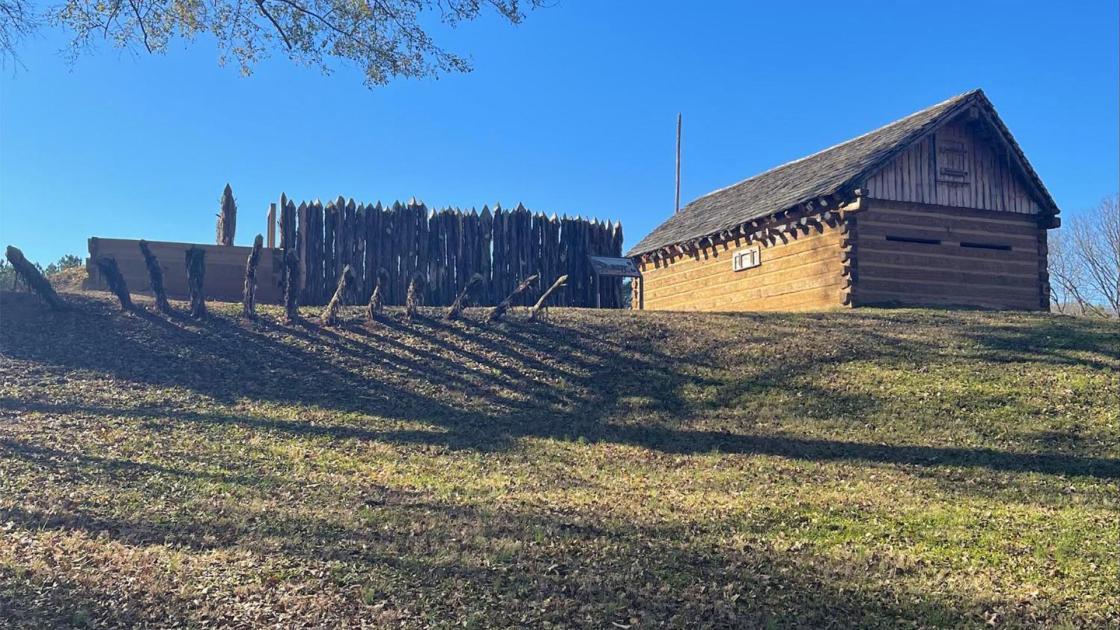
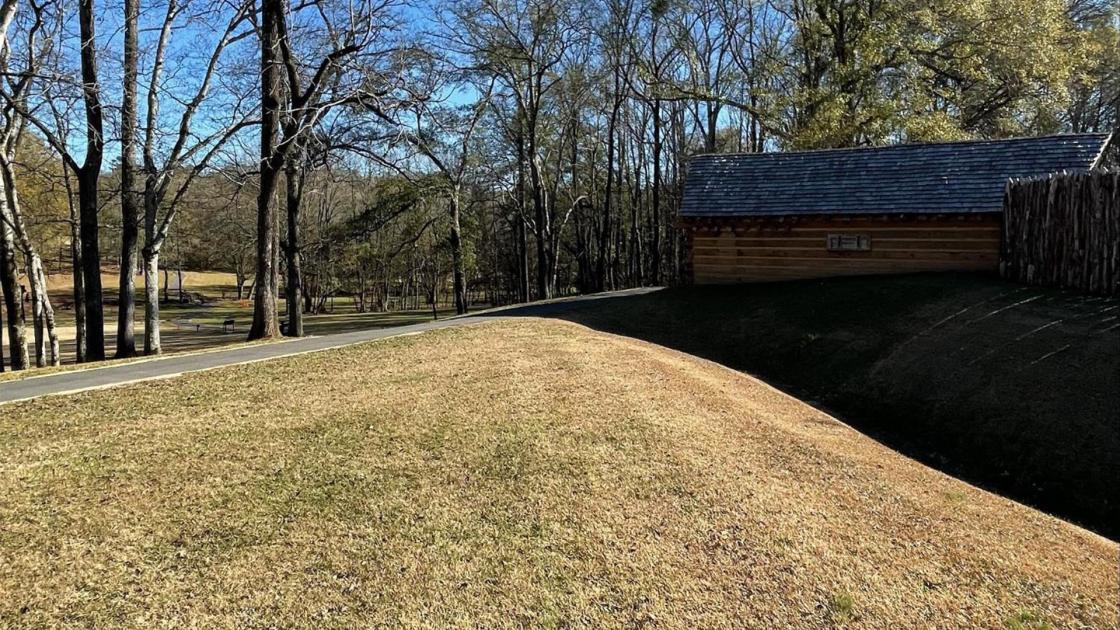
The Stockade Fort, also known as Holmes' Fort, guarded the western approach to Ninety Six and access to the Spring Branch, the area's main water source. If you step up to the banquette, or firing platform, and peer through the posts, you will have the same view as the Loyalist soldiers stationed here in 1781.
While Greene's troops laid siege to the Star Fort on the north side of town, Patriot Lieutenant Colonel Henry "Light Horse Harry" Lee's Legion arrived here on June 8 with about 400 troops, after having successfully besieged and captured a similar base at Augusta with the assistance of Colonel Andrew Pickens. Pickens, with about 500 men, showed up at Ninety Six on June 11 to support Lee. Lee's men dug trenches, conducted attacks, and were assaulted by the enemy during their mission to capture this stronghold.
On June 18, 1781, during the final assault on the Star Fort, Lee attempted to take the Stockade Fort again. This time, his men easily breached the walls, but their success was short-lived. Greene's failure to take the Star Fort forced all Patriot troops to make a swift exit from Ninety Six before British reinforcements arrived. Later, Lee faulted Greene for putting his faith in engineer Kosciuszko’s plan: “General Greene had exerted himself, with unremitting industry, to complete the works against the star redoubt; to which single object Colonel Kościuszko devoted all his efforts. The enemy’s left had been entirely neglected, although in that quarter was procured the whole supply of water.”
The Forlorn Hope
Although Greene called for Cruger’s surrender earlier in the siege, Cruger declined to capitulate. He was expecting Lord Rawdon to appear at any time with reinforcements. By June 17, having exhausted all methods to take the fort and knowing that Rawdon was quickly approaching Ninety Six, Greene was at last ready to accept defeat and end the siege. He had no chance against the superior British force.
Greene’s men protested. Having invested so much in the siege, they pleaded with the general for one more chance to capture the British stronghold. At noon on June 18, the Forlorn Hope — a group of 50 brave men who volunteered to make a daring sacrifice — swarmed toward the Star Fort with loaded muskets, axes to cut through the sharp abatis, and hooks to tear down the sandbags bolstering the British defenses. These unlucky men were pinned in the ditch before the earthwork by Loyalist bayonets and spears and showered by fire from the marksmen positioned at the angles of the parapets. As Greene reported to Congress on June 20:
“. . . never was greater bravery exhibited. . . but they were not so successful. They entered the Enemys Ditch and made every exertion to get down the sand Bags, which from the depth of the Ditch, height of the parapet, and under a galling fire, was rendered very difficult. Finding the Enemy defended their Works with great obstinacy and seeing but little prospect of succeeding with a heavy loss, and the issue doubtful, I ordered the attack to be pushed no further.”
The final assault ended an hour after it began. The losses were devastating — 30 Patriots were dead.
The End of an Outpost
Greene’s siege ended in failure and retreat. American casualties were 58 killed, 76 wounded, and 20 missing. The British lost 27 and had 58 wounded. Knowing that his Regulars were inferior in number to Rawdon’s larger, fast approaching column, the general called off the operation on the evening of June 18. The Patriot army marched away across the Saluda River in the late afternoon on June 19. The commander was truly disappointed, writing to Congress, “It is mortifying to be obliged to leave a Garrison so near reduced, and I have nothing to console me but a consciousness that nothing was left unattempted that could facilitate its reduction.”
Cruger weathered the siege, and after a hot and grueling 14-day march, Rawdon’s army of more than 1,800 men and 150 horses finally arrived at Ninety Six on the afternoon of June 21. The British did not stay long. Soon after the Patriot defeat here, Cruger was commanded to evacuate the town as the outpost was thought to be too deep into hostile territory. The local Loyalist population, fearful of Patriot vengeance, chose to abandon the well-fortified site with the rest of the military garrison, traveling 185 miles to the safety of the British enclave around Charleston. As they left, British troops burned the village to the ground to prevent its further use by the enemy. The old town, near the Star Fort, never rebounded. After the war, the town was relocated to lots nearby and renamed Cambridge. Situated off the main railroad line and far from the judicial seat in Abbeville, it eventually declined, and all trace of the community was gone by 1850. The modern town of Ninety Six was then established near a depot of the Greenville & Columbia train line, where it thrives to this day.