-
The BlogBiographies
-
Videos

November 8, 1780
In the swamps and waterways of the Pee Dee, control of river crossings often meant control of the campaign. Port’s Ferry, a vital passage on the Pee Dee River, became one of Francis Marion’s most important footholds in the fall of 1780—a place where his fledgling command first tasted success and where the foundations of his guerrilla war in the region were firmly established.
Port's Ferry
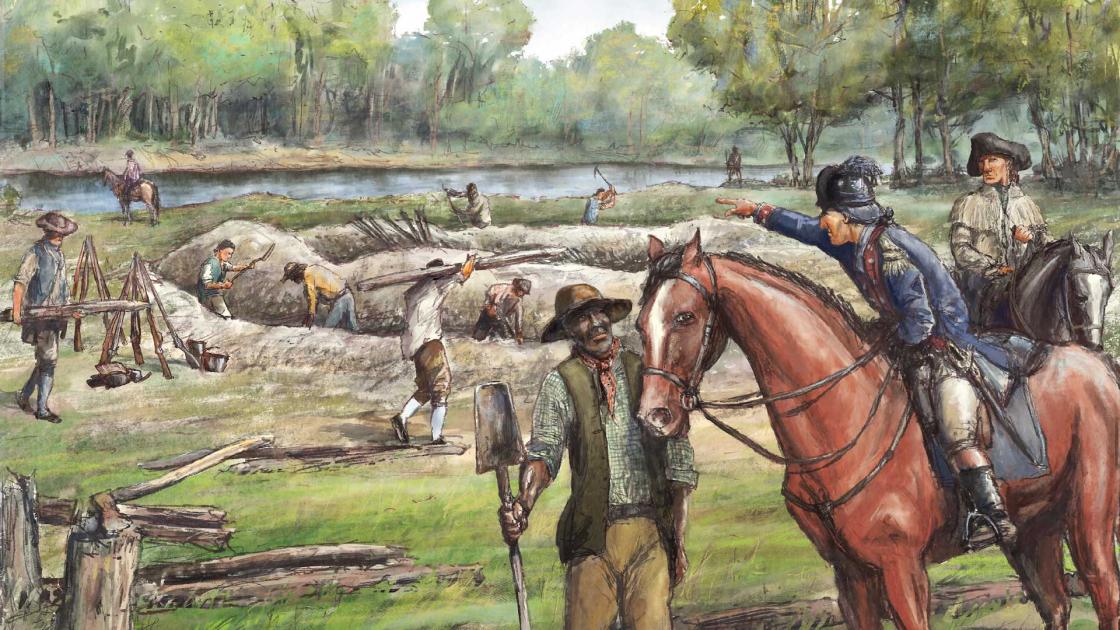
Port's Ferry, on the Pee Dee River, was owned and operated by Frances Port (c. 1725-1812). She was the widow of Thomas Port, who was a member of the Provincial Congress from Prince Frederick's Parish, which encompassed much of today’s Pee Dee region. It was a strategic crossing for Francis Marion, who fortified it and used it frequently in his fall 1780 campaign against the British and Loyalists.
Not long after he arrived to take command of the militia here in August 1780, Marion saw action at Port’s Ferry. According to soldier William Dobein James: “On the second or third day after his arrival, General Marion ordered his men to mount white cockades [some used feathers], to distinguish themselves from the tories, and crossed the Pedee, at Port's ferry, to disperse a large body of tories, under Major Ganey, stationed on Britton's neck, between great and little Pedee. He surprised them at dawn in the morning, killed one of their captains and several privates, and had two men wounded.”
William Dobein James confused his dates. The battle actually occurred on September 4 at Blue Savannah, about 20 miles north of Port’s Ferry. Marion with 53 men routed over 200 Loyalists, and that success broke the spirit of the local Tories in the Pee Dee region. His victory also encouraged 60 more volunteers to join his band, doubling the total number of men under his command.
In October 1780 Marion again used Port’s Ferry as a camping and muster ground for his forces. During Marion’s winter camp period at Snow’s Island, he may have moved up to Port’s Ferry. Port’s Ferry was also used as an important crossing point by other American troops, including those of Lieutenant Colonel Henry Lee, and probably served the British in this area, as well.