-
The BlogBiographies
-
Videos

January 3, 1777
In the frigid dawn of January 3, 1777, the quiet fields around Princeton suddenly became the stage for one of George Washington’s most brilliant battlefield victories. Coming on the heels of the triumph at Trenton, this daring strike against British regulars not only revitalized the Patriot cause but also helped secure Washington’s reputation as a bold and adaptive commander.
This walking tour includes the sites at Princeton Battlefield Park. Free parking is available. The Thomas Clarke House is open to visitors and public restrooms are located in an outbuilding. The Stony Brook Meeting House is a few minutes’ walk from the parking lot.
Thomas Clarke House/Saw Mill Road
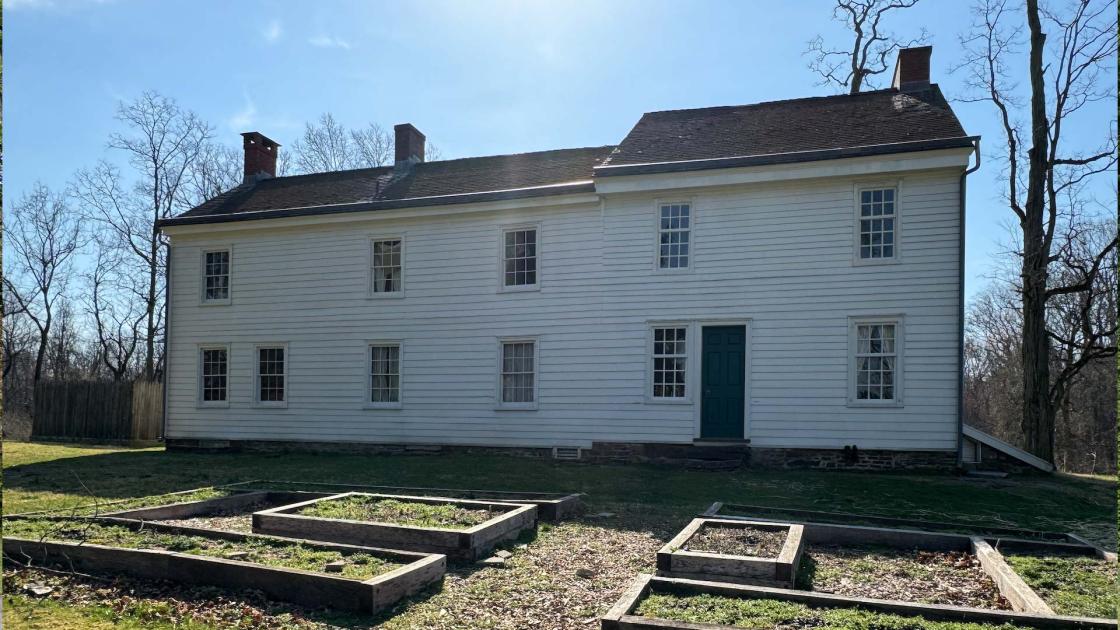
At about 7:30 a.m. on January 3, 1777, the Continental Army arrived at the intersection where the Quaker Road met Saw Mill Road, which you can see faint traces of today. Brigadier General Thomas Mifflin continued toward Worth’s Mill while Major General John Sullivan turned right on Saw Mill Road to approach the town from the rear. Sullivan’s men soon reached Thomas Clarke’s farm, in front of where you now stand. This historic white farmhouse is central to the Battle of Princeton and the only surviving structure within the park from the time of the engagement. In colonial times, the open fields and pastures on the property were divided by fences and woods.
Thomas Clarke and his brother, William, whose own farm was adjacent to an orchard just a few hundred yards away, were grandsons of Benjamin Clarke, a native of Scotland and one of the first settlers of Princeton. Their sister, Sarah, lived here with Thomas as did one enslaved laborer, a Black woman named Susannah. While Quakers like the Clarkes generally advocated for the abolition of slavery, many continued the practice until the end of the 18th century. The Clarkes granted Susannah her freedom in 1779. The Quakers also believed in non-violence and the Clarkes did not take up arms in the struggle for independence, nor did they favor either side in the war. When the battle came to their door, they took cover in the cellar and later turned their home into a hospital, treating both Patriot and British wounded.
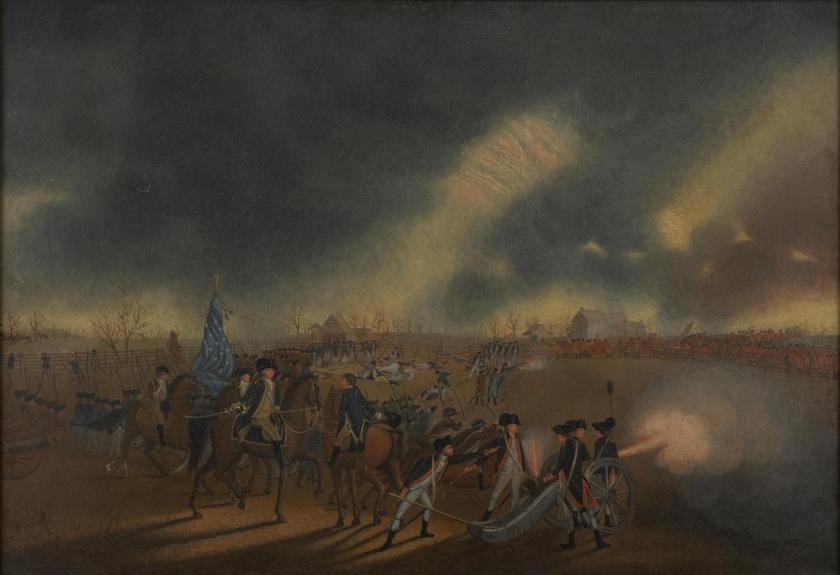
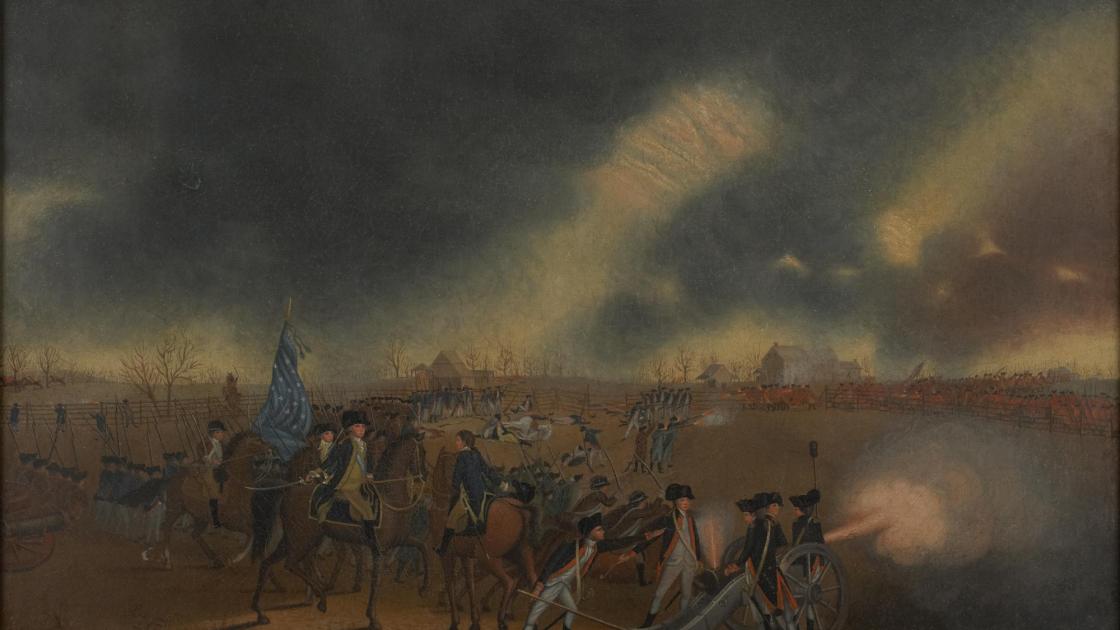
The Thomas Clarke House is shown on the horizon behind the British Redcoats in this detail from James Peale's The Battle of Princeton (1782).
On that frosty January morning nearly 250 years ago, British Lieutenant Colonel Charles Mawhood mustered his men early to join General Charles Lord Cornwallis in Trenton. He marched his brigade along the Trenton-Princeton Road, just north of Sullivan’s position. Shortly after reaching Cochran’s Hill, British dragoons caught sight of Sullivan’s column and reported the news to Mawhood. Mawhood made a split-second decision to turn his brigade around and defend Princeton. Meanwhile General George Washington, who was accompanying Sullivan’s division, spotted the British and sent Brigadier General Hugh Mercer to investigate.
As Mercer’s men advanced through Thomas Clarke’s open fields, Mawhood moved to meet them. The two forces collided in the orchard of William Clarke’s farm.
Hugh Mercer Monument
On the hill ahead of you, Brigadier General Hugh Mercer’s ranks – made up of both Continental Regulars and militia from Virginia, Maryland, and Pennsylvania – - faced Mawhood’s infantry and cavalry. The British pushed forward with bayonets. In the tumult of the British charge, Mercer had his horse shot out from under him. Surrounded, he got to his feet only to be knocked to the ground by a British soldier, while another called out, “Call for quarter you damned rebel!” “I am no rebel,” Mercer retorted defiantly as he lunged with his sword in vain. He was bayoneted seven times by the surrounding British troops and left for dead. Without their commander, the American ranks broke.
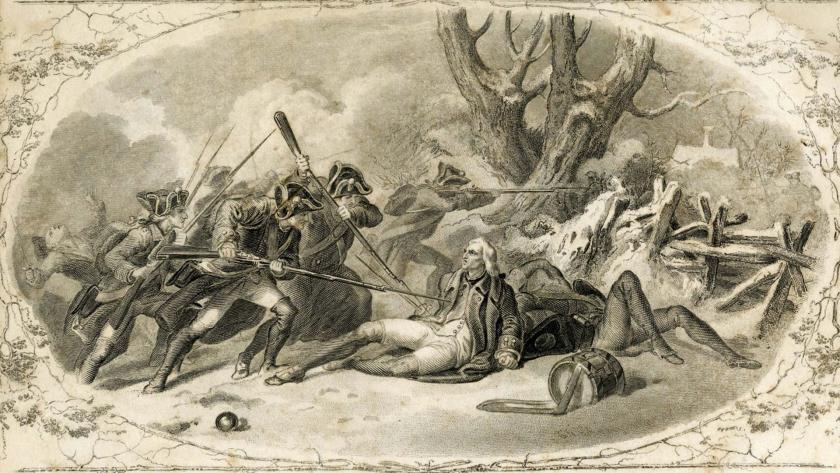
An engraving depicting Hugh Mercer, mortally wounded at the Battle of Princeton.
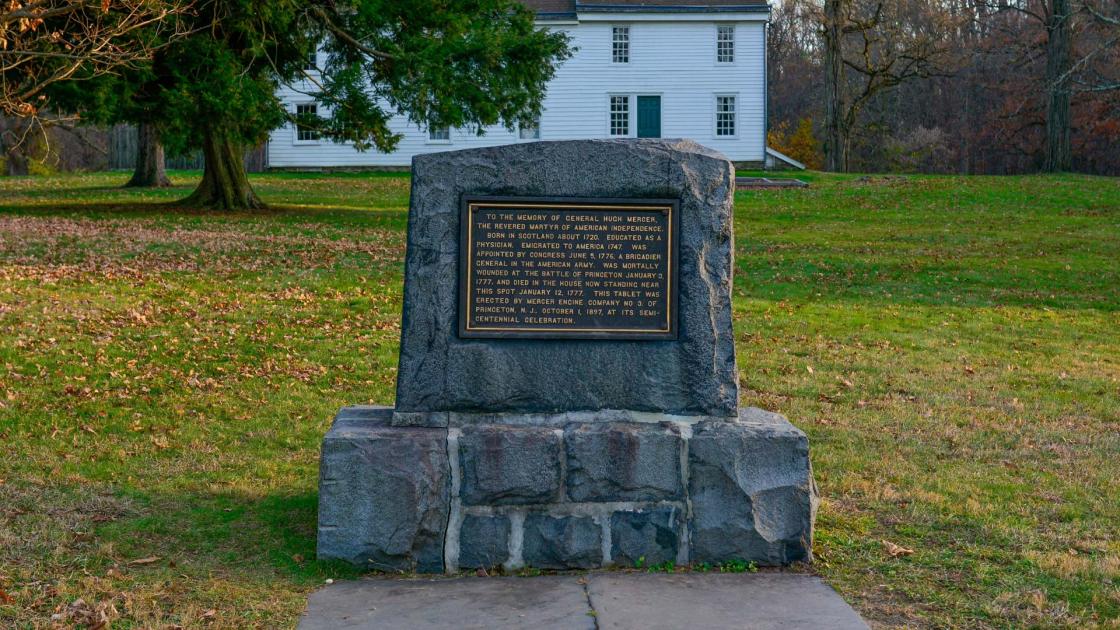
This marker on the battlefield is just a short distance from where Mercer fell mortally wounded during the Battle of Princeton and in view of the Thomas Clarke House, where he died nine days later. Installed by local Engine Company No. 3 at its 50th anniversary commemoration in 1897, this marker records his sacrifice for American independence.
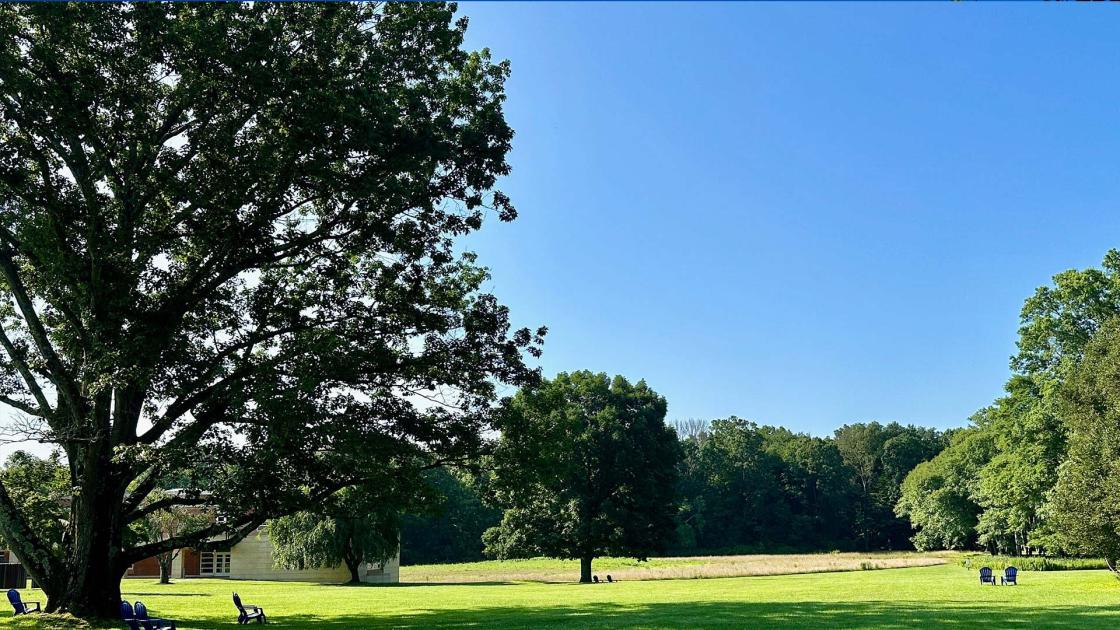
Institute Woods
The land known as Institute Woods was once part of Thomas and William Clarke’s farms. A section of the old Saw Mill Road that was used by the Patriots on January 3, 1777 ran through it. On the morning of the battle, Major General John Sullivan’s division, along with elements of Major General Nathanael Greene’s division, which included Brigadier General Hugh Mercer’s brigade, marched through here. After the initial collapse of Mercer’s ranks on the William Clarke Farm, Mercer’s and Colonel John Cadwalader’s troops regrouped on the northwest edge of this property.
Owned by the Institute for Advanced Study, a research organization founded in 1930, the 584 acres of the Institute Woods helps preserve the natural landscape around the Princeton Battlefield and is open to the public. It is a sanctuary for migrating, nesting, and wintering birds. This forest also displays remarkable diversity of tree species and soil types. The members of the Friends community first settled this land in the 1680s.
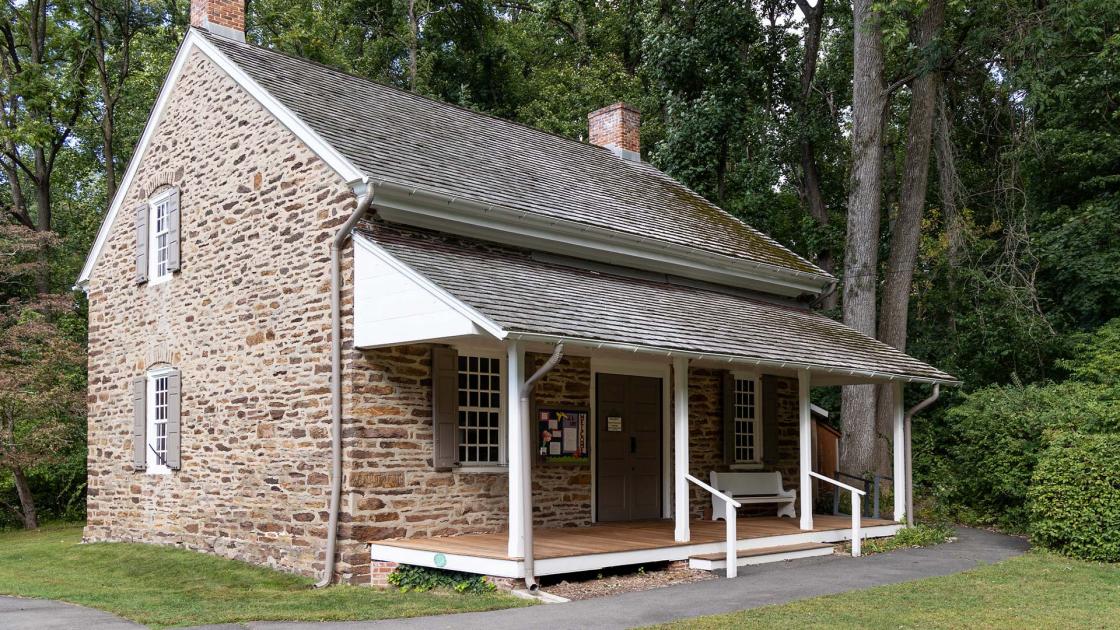
Stony Brook Meeting House
Long before Europeans came to Princeton, the Lenni Lenape called these woods and glens home. Stony Brook, named for the prominent stream that traverses the surrounding landscape, was settled by Europeans in the 1680s. Settlers of the Quaker faith made up a large contingent of the early population. One member, Benjamin Clarke, donated more than nine acres of his land in 1709 to establish a burial ground and a location for a Meeting House. The Quakers completed construction of the Meeting House in 1726, the same year the town adopted the name Princeton. The Meeting House, one of the oldest in the country, is still used by Princeton Friends for Quaker worship. Among those buried in the adjacent Quaker cemetery are members of the Clarke family as well as Richard Stockton, signer of the Declaration of Independence and owner of the Morven estate.
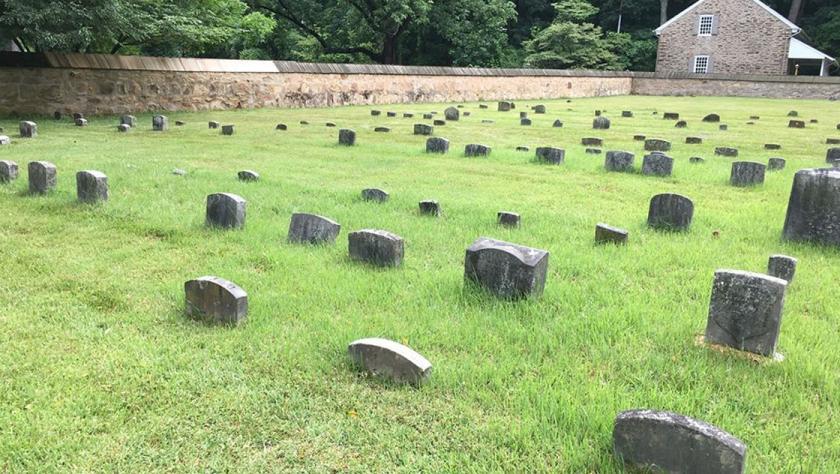
Stony Brook Quaker Meeting House Burial Ground, Princeton, N.J.
Although it conflicted with their faith, some Quakers were enslavers. However, as early as 1688 Quakers began protesting against the enslavement of others and by 1787 they banned their membership from being enslavers. As pacifists, the Quakers tried to remain neutral as events spiraled toward a conflict with Great Britain. But despite their belief in peaceful solutions to conflict, the community could not escape the foraging and pillaging by British soldiers and suffered during the British occupation of Princeton in December 1776. Some residents experienced personal abuse as well. Ann Clarke, the wife of William Clarke, had a miscarriage after being threatened by a British officer who demanded to be quartered on their farm. While many Quakers lost everything at the hands of the British, they remained true to their beliefs, and opened their homes to care for wounded of both armies after the battle here on January 3, 1777.
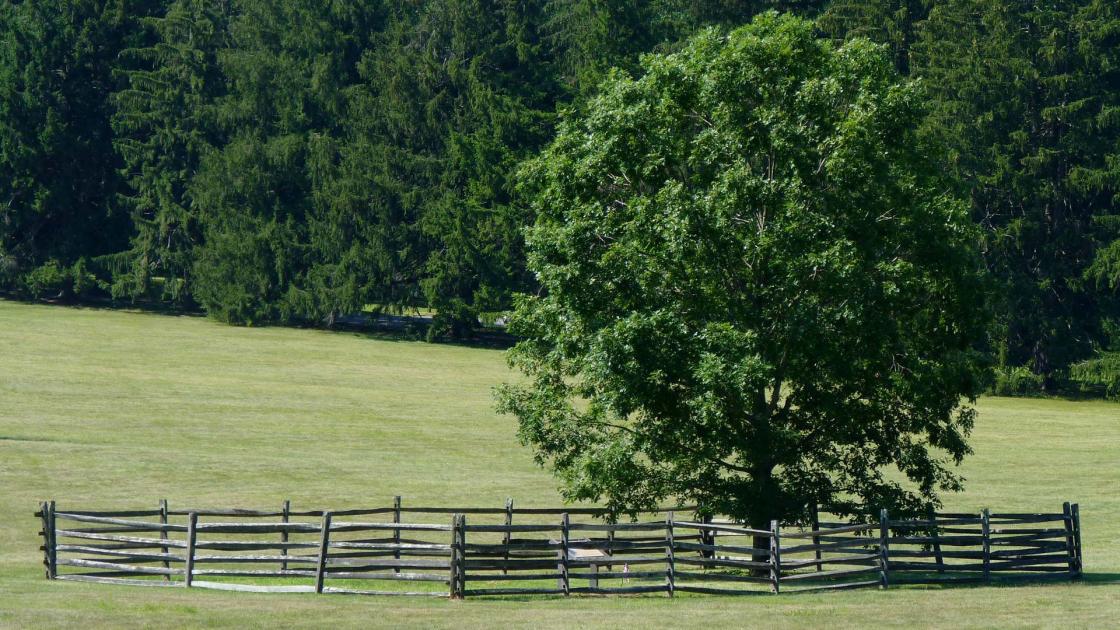
Mercer Oak
According to local folklore, Brigadier General Hugh Mercer was moved to an oak tree after he was wounded in battle. This tree, now encircled by a protective fence, is said to be a descendent of that original white oak, which succumbed to old age in 2000. The original tree is depicted in the painting, The Death of General Mercer at the Battle of Princeton, January 3, 1777 by artist John Trumbull. After he was injured, Mercer was taken to Thomas Clarke’s home for care. He suffered for nine days before succumbing to his wounds. Initially interred in the Christ Church Burial Ground in Philadelphia, Mercer was reinterred in 1840 in Philadelphia’s Laurel Hill Cemetery.
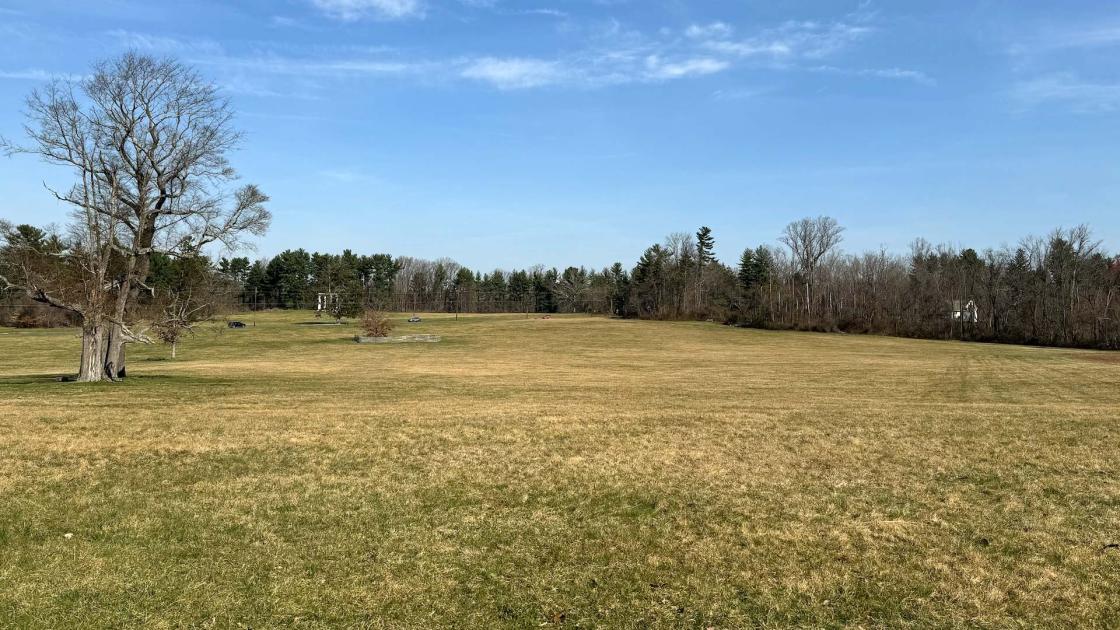
Captain Moulder's Battery
With Brigadier General Hugh Mercer wounded, Colonel John Haslet of the 1st Delaware Regiment assumed command. But he was shot in the head as he attempted to rally Mercer’s brigade and died instantly. Haslet may have fallen on the knoll to your right, near the site of William Clarke’s property, where a bench is located today.
The losses of Mercer and Haslet were too much for the shattered Continentals to bear, and they streamed toward the Thomas Clarke House. There they met Colonel John Cadwalader’s Pennsylvanians. Without their officers, Mercer’s men threatened to spread panic and split the American force. Weathering the confusion, Cadwalader advanced against British Lieutenant Charles Mawhood.
Cadwalader’s brigade included two battalions of Marines. Serving among them was Captain William Shippen, a Philadelphia merchant and former privateer. Shippen joined the army during the retreat across New Jersey. As Shippen led his company forward he was struck by a musket ball and killed, becoming one of the first United States Marine officers to fall on a battlefield.
“I carried my platoon to the top of the hill and fired…and then retreated, loading” remembered artist Charles Willson Peale, a lieutenant under Cadwalader. “We returned to the charge and fired a second time, and retreated as before.” But Mawhood’s momentum was too great, and the Continentals began to fall back toward Thomas Clarke’s home. On this knoll where you stand, Captain Joseph Moulder’s company of Philadelphia artillery arrived. Moulder quickly positioned two four-pound guns and opened fire. The deafening salvos caught the British by surprise and brought them to a brief halt. Still, the outcome of the battle hung in the balance.
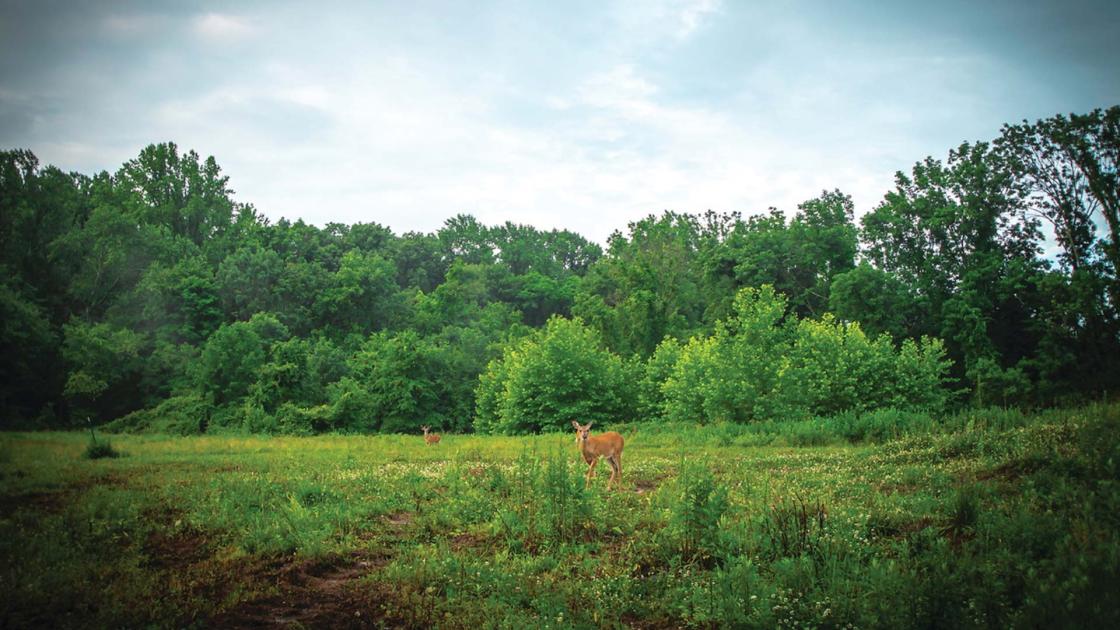
Maxwell's Field
In the spring of 2018, the American Battlefield Trust, working in partnership with the Princeton Battlefield Society and the Institute for Advanced Study, acquired 14 acres adjacent to the Princeton Battlefield State Park. This parcel, known as Maxwell’s Field, is the site of General George Washington’s critical charge, which turned the tide of the Battle of Princeton.
Hearing the sounds of Brigadier General Hugh Mercer’s fight at the Clarke farm, Washington suddenly appeared through the maelstrom. The commander-in-chief detached Colonel Edward Hand’s Pennsylvania riflemen along with Major Israel Angell’s Rhode Islanders from Sullivan’s column and led them at an angle across Maxwell’s Field.
Riding to the front Washington called out, “Parade with us, my brave fellows, there is but a handful of the enemy, and we will have them directly.” He helped reform Colonel John Cadwalader and Mercer’s battered ranks, and then personally led the counterattack. The Continentals collided with the British and the two sides exchanged volleys. Miraculously, Washington emerged unscathed. “When I saw…his [Washington’s] important life hanging as it were by a single hair with a thousand deaths flying around,” recalled Pennsylvanian James Read, “I thought not of myself. He is surely America’s better Genius and Heaven’s peculiar care.”
As Cadwalader's troops, now accompanied by the reformed men of Mercer's shattered command, engaged the British front, Angell and Hand struck their left flank. Coming to the aid of their comrades from the other end of the field were Brigadier General Thomas Mifflin’s Pennsylvanians, who slammed into the British right. Washington ordered a bayonet charge, and the Continentals presented a wall of steel as they advanced, threatening to swallow up their enemy. Exhausted, the British broke and retreated.
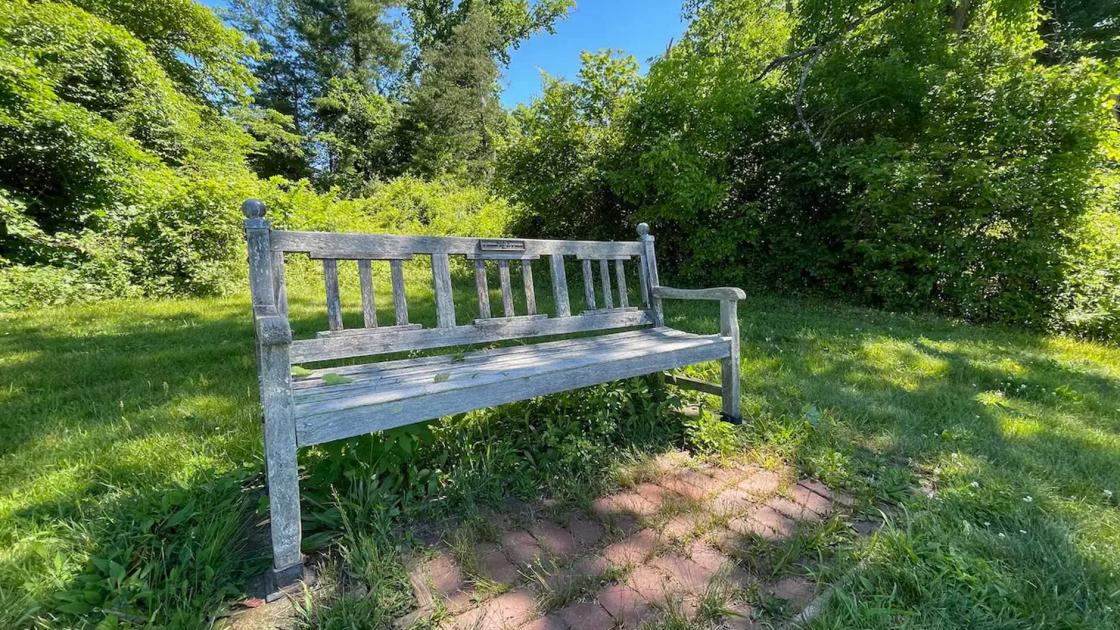
William Clarke House Site
Behind the wooden bench and brush where you are now standing was William Clarke’s farm, which was the center of the battle for a time on January 3, 1777. William Clarke married his first cousin, Ann Clarke, a few years before the beginning of the American Revolution and the family remained in their home during the British occupation of Princeton. But on January 3, for the second time that morning, war visited the farm of these non-violent Quakers as the 17th Regiment of Foot streamed past, followed by the jubilant Continentals. “It’s a fine fox chase my boys!” General George Washington yelled to his men. British Lieutenant Charles Mawhood watched aghast as his men fled. With few options left, he directed his mounted dragoons to cover the retreat and headed off toward Maidenhead, following Lieutenant General Charles, Lord Cornwallis southwest of Princeton on the road to Trenton.
Like his brother Thomas’s nearby farm, William’s home also became a hospital after the battle. When Cornwallis later arrived from Trenton, British soldiers went through the house searching for Continentals, stabbing at mattresses with their bayonets and threatening the life of Ann Clarke.
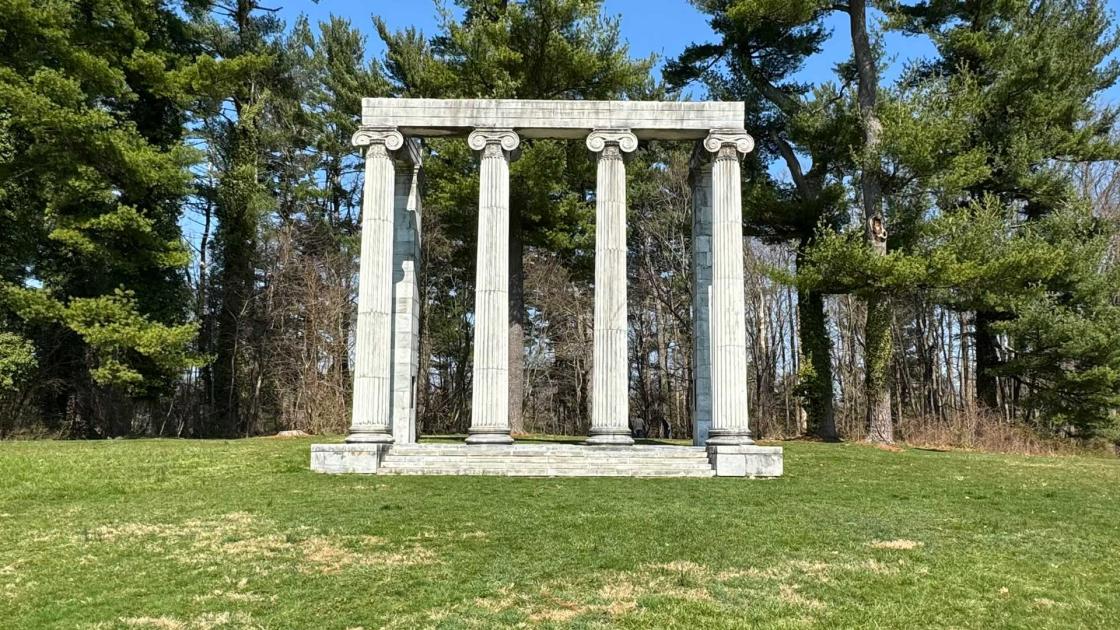
Colonnade & Gravesite
Across the road from where William Clarke’s house once stood, a classical colonnade looms over the battlefield park. Originally part of the Philadelphia mansion of merchant Matthew Newkirk, the house was designed by Thomas Ustick Walter, the fourth architect of the U.S. Capitol. Around 1900, Newkirk’s home was razed, and the columns were brought to Princeton to be incorporated into the design of Mercer Manor, which was adjacent to the battlefield. That stately home burned down in 1957, and the portico was donated to the State of New Jersey. It was declared a national monument in 1962.
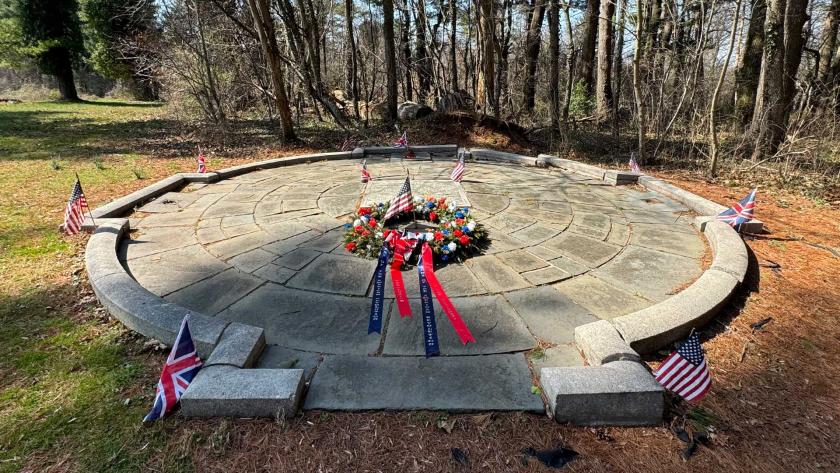
A combined mass grave of Patriot and British soldiers lies beyond the colonnade.
Just behind the Colonnade, on the site of a colonial quarry, is a mass grave thought to contain the bodies of 21 British and 15 American soldiers who fell at Princeton. A project is currently underway using LIDAR technology—Light Detection and Ranging—to generate information about what is below ground in the hopes of identifying the exact location of the remains. Along with the preservation of Maxwell Field, this effort is part of a long history to protect the battlefield. In 1899, local philanthropist Moses T. Pyne blocked the construction of a trolley line that would have destroyed much of the battlefield. Several years later, Pyne stepped in again to purchase more land slated for development. The Oregon State Society of the Sons of the American Revolution placed interpretive plaques at key locations on the battlefield in 1921. A year after the end of World War II, in 1946, Princeton landowner Robert Maxwell and Pyne’s granddaughter, Agnes Hudson, donated their properties to New Jersey for the creation of Princeton Battlefield State Park.