-
The BlogBiographies
-
Videos

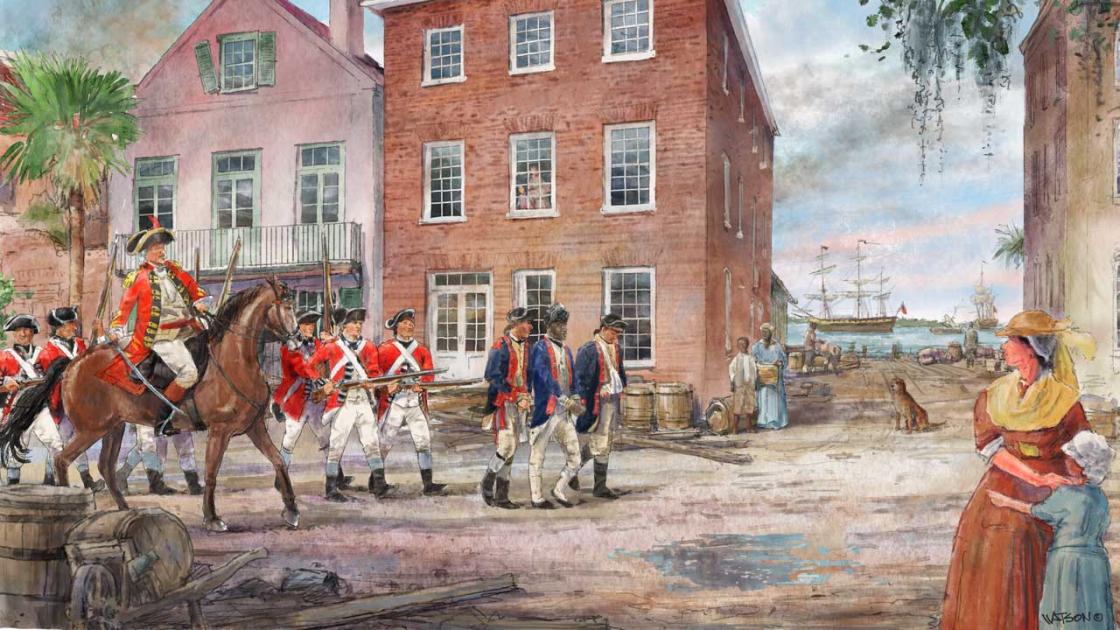
March 29, 1780 – May 12, 1780
As part of their Southern Campaign, the British set their sights on taking the vital port of Charleston. In early 1780, they laid siege to the massive Patriot Horn Work that once stood on today’s Marion Square. After weeks of intense fighting, the battered Patriots finally surrendered. The British victors quickly occupied the city and established a network of outposts throughout South Carolina.
Before You Go
Please be aware that street parking is limited. Garages are available within the immediate vicinity at the Marion Square Garage (399 King Street) and the St. Philip Street Garage (89 St. Philip Street). The tour should take a couple of hours to complete and extends beyond that of Marion Square.
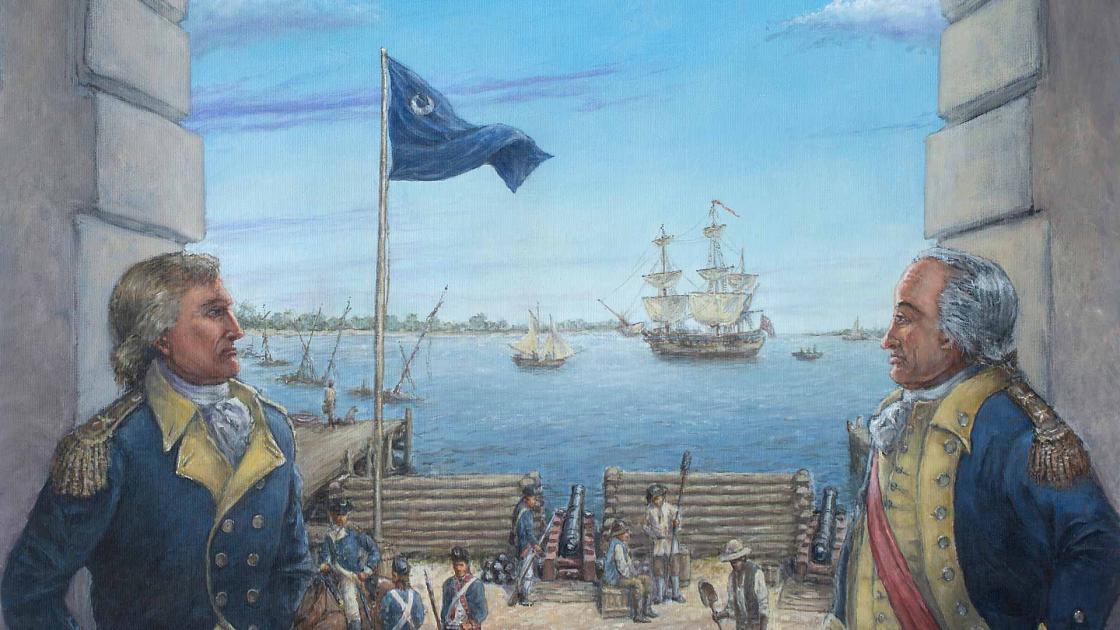
By the mid-1700s, Charleston was the richest city in America and an important intellectual and literary center. South Carolina planters exported the best rice in the world from Charleston Harbor. With the outbreak of the Revolutionary War, the city’s prominence and strategic location made it a critical battleground, as both British Loyalists and defiant Patriots vied for its control. Britain failed in its first attempt to capture Charleston in 1776, and the focus of the war then shifted to the northern states. By 1778, however, with the war at a stalemate, British command believed that it was time to launch a Southern Campaign. They were convinced that loyal southern citizens would support their efforts to subdue rebellion and restore the Crown. They set their sights on taking Charleston in 1779, but failed. They were successful on their second attempt in 1780.
The 1780 Siege of Charleston started with the British landing at Simmons Island (present-day Seabrook Island) on February 11. British troops were firmly established for a landside attack north of Charleston by March 29, and by May 12 victory was theirs. Not only did they take the city, but they also captured more than 5,000 Patriot soldiers, thousands of muskets and rounds of ammunition, and stores of rice, rum, and flour. The blow could not have been more catastrophic to the Patriots. They surrendered the defensive Horn Work — a massive fortress that stood here at Marion Square — and saw their Continental troops carted off as prisoners of war. Following the capture of Charleston, the British quickly established a network of outposts throughout the state. Within a year and a half, however, their fortunes would change. Loyalist support,so essential to British success in the South, never materialized. Instead, Patriot forces in rural South Carolina gained strength and chased the British from their prized position on the South Carolina coast.
On the side of Marion Square closest to King Street, an irregular-shaped gray rock is enclosed by low fencing. This curious relic is the only visible evidence of Charleston’s main defenses during the British siege of 1780. Charleston’s imposing fortress, called the “Horn Work,” straddled the “Broad Path” (now King Street) just north of Charleston’s Boundary (now Calhoun) Street. The generic term “Horn Work” was used to describe a large fortification with a central gateway, built to control the flow of traffic into and out of a town. The shape of the fortress resembled the horns of a bull.
The original fortification that stood here was built to defend the city during the French and Indian War and covered approximately eight to 10 acres. It was designed in 1757 by Lieutenant Emanuel Hess, a Swiss engineer serving with a British regiment stationed in Charleston. Because it was planned by Royal forces and initially funded through the Royal government of South Carolina, the fortification was often referred to as the “Royal Works.” Local funding for the project was eventually canceled in early 1759, after British victories in Canada dispelled the threat of further French offensive actions, and work on the fortress ceased in April of that year.
With no immediate need for military defenses in Charleston, the Horn Work suffered more than a decade of neglect,until rebellion threatened the colonies in 1775. Then, South Carolina Patriot forces readied the massive fortress for service. When Patriot Major General Benjamin Lincoln took command of the city in December 1778, the Horn Work and other fortifications on the landward side of the city were in desperate need of repair. Relying on local labor, including that of enslaved workers, Lincoln worked diligently to prepare Charleston for battle.
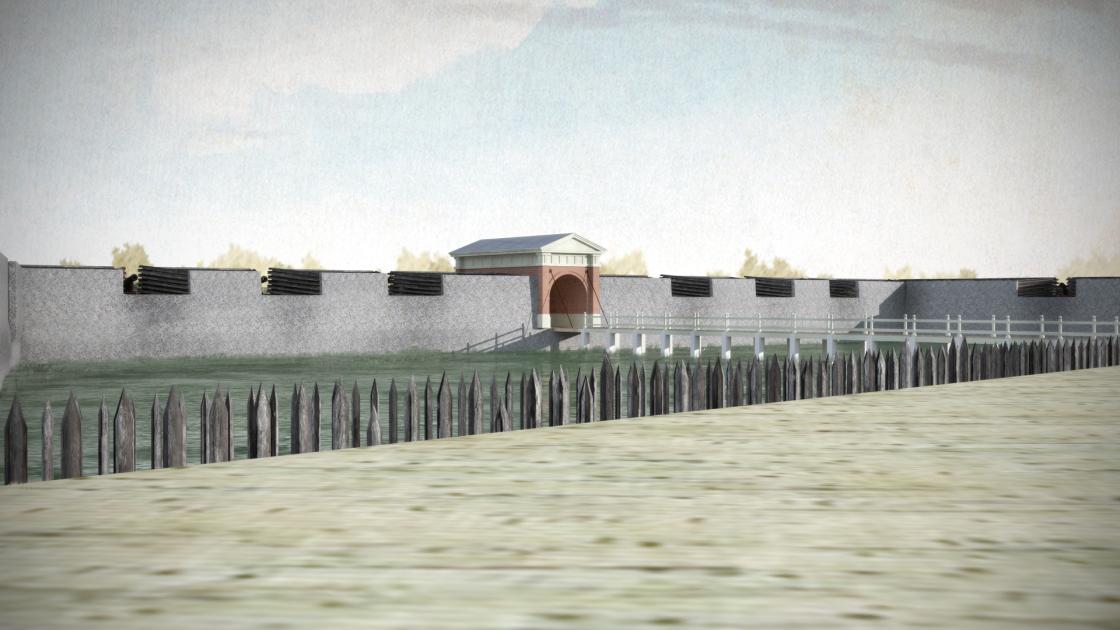
Charleston’s Horn Work was a standard military construction, based on a design found in John Muller’s A Treatise Containing the Elementary Part of Fortification, published in London in 1746.While not unique in terms of form, it was special in composition. Instead of traditional masonry, it was made of tabby — a compound of sand, lime, oyster shells, and water with the consistency of concrete. The mixture was poured into wooden forms to set. Tabby was considered a novel medium when construction of the Charleston Horn Work began in 1758. During the initial months of construction, two British regiments provided the workforce. Following their departure in the spring of 1758, labor on the Horn Work continued for another year using local enslaved men.
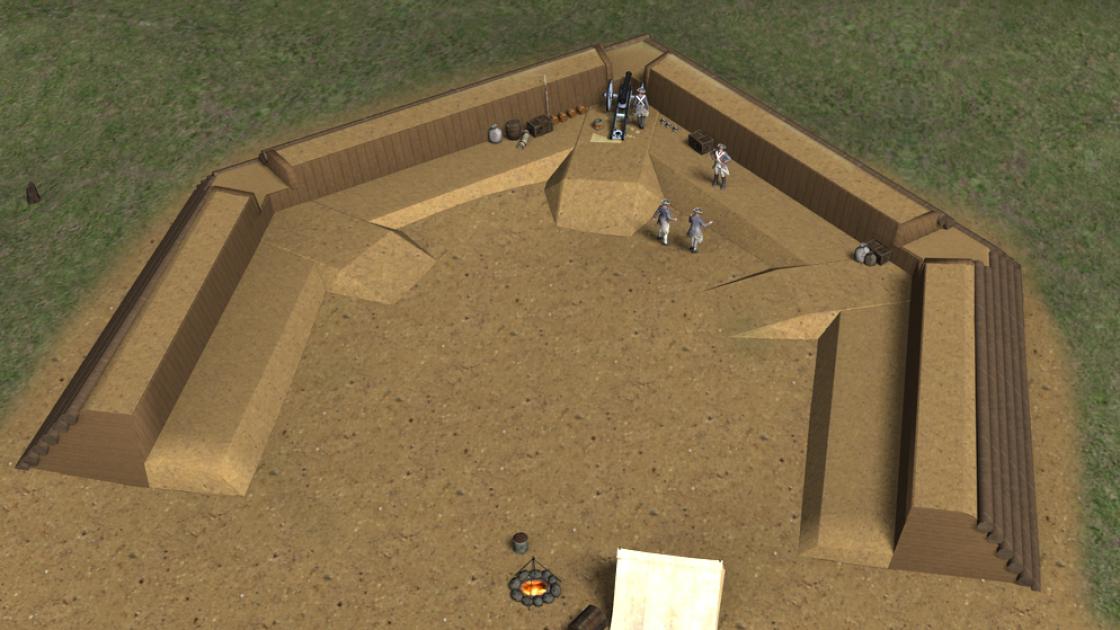
If you visited Charleston during the Revolutionary War, you could not have missed the imposing fortress. The tabby walls of the Horn Work extended to the east and west of King Street. The elevation of the front (north) wall measured 30 feet high from the ditch placed in front of the Horn Work. A city gate was located in the center. With half bastions, or angled projections, on either side, the entire frontage of the citadel was about 700 feet from end to end. A lunette (a half-moon shaped fortification consisting of two faces and two flanks) built in front of the gate served as a defensive work, with a point toward the enemy and two angled sides. This shape forced attacking troops to the left and right, into the weapons firing from the half bastions on either side. The fort was supported by other defensive structures — redoubts, redans, and artillery batteries — in front of and adjacent to the Horn Work itself. Equipped with 18 heavy guns, this fortification was large and secure enough to hold thousands of Patriot troops and withstand a barrage of British artillery during the siege of 1780.
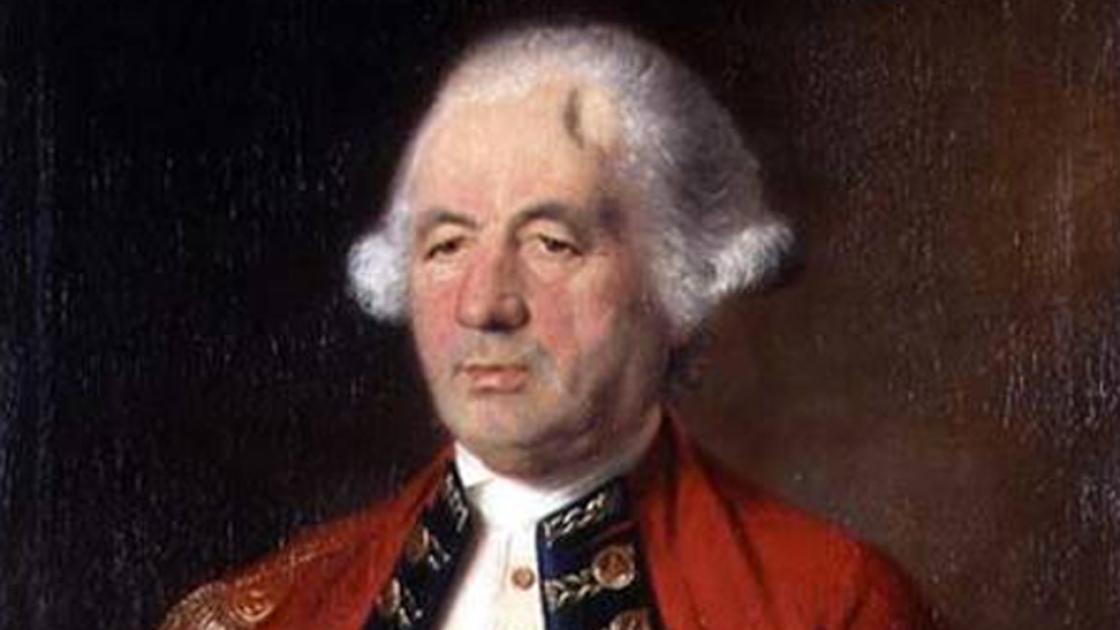
The first true test of the Horn Work came in May 1779, when the British army of General Augustine Prevost threatened Charleston. The land approach by the enemy army shocked the city, but the Patriots sprang into action, digging defensive lines and erecting abatis (obstructions such as felled trees or branches) to impede the path of the advancing troops. Patriot Brigadier General William Moultrie, stationed with his Continentals and militia inside the city, had 3,200 troops on hand. He also had the Horn Work, which protected the entryway to the city, but was not fully enclosed, leaving it exposed to the enemy from the rear.
Prevost was short on troops — he had fewer than 4,000 men — and had no artillery to launch an attack on such forbidding fortifications. The British commander was also running out of time. Continental troops and militia commanded by Major General Benjamin Lincoln were marching from Georgia to reinforce Moultrie in Charleston. Despite these shortcomings, and in keeping with the rules of warfare at the time, Prevost issued a formal demand of surrender. As South Carolina Governor John Rutledge engaged in surrender negotiations, Moultrie and his men worked into the night, readying the Horn Work for imminent attack. However, when Charleston’s residents awoke on the morning of May 12, the British were gone.
Prevost surely realized he had little hope of taking the city by a direct assault. With no heavy guns, inadequate troops, and scant time before Lincoln’s arrival, his only real chance for success would have been to launch a surprise attack, and that opportunity was lost. The massive Horn Work also likely dissuaded the British from attempting further action. To conquer such imposing defenses would have required large cannon, support from the sea, and a much greater land force. A year later, in 1780, all those assets would be available to British commander Sir Henry Clinton as he laid siege to Charleston.
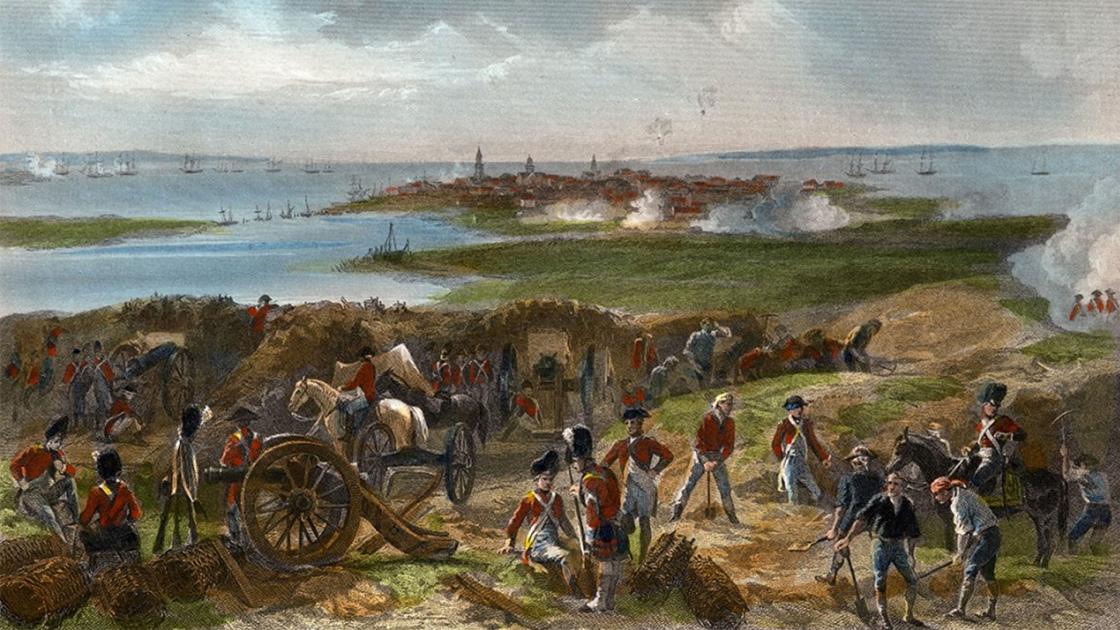
In December 1779, Clinton headed south from New York with a fleet of warships and approximately 13,500 soldiers.
After docking in Savannah in early 1780, he advanced toward Charleston. Under the cover of fog, his army crossed the Ashley River into Charleston Neck — the tongue of land between the Ashley and Cooper rivers — on March 29. On April 2, British soldiers began to dig parallels, or trenches, 800 yards from the American fortifications and lay siege to the city. As they labored, British warships maneuvered past scuttled Patriot ships in the Cooper River. By April 8, the fleet had successfully sailed past the defenses on Sullivan’s Island and into the harbor. Lincoln, who commanded Charleston’s massive defensive Horn Work with about 6,000 men, was suddenly trapped.
Clinton built fortifications to protect his troops from Patriot fire and stationed forces at outposts along the Cooper River to cut off Lincoln’s communication network. Lincoln eventually offered to surrender with honor on April 21, but Clinton refused his terms, and the exchange of heavy artillery continued. On April 29, the British started destroying a dam and draining a canal critical to the city’s defenses. By May 8, only a few yards separated the armies. Clinton then demanded that Lincoln surrender unconditionally. When the Patriot commander refused, the British commander bombarded the city with heated shot, causing panic among the residents, who begged Lincoln to capitulate. As Charleston burned, Lincoln finally accepted the inevitable. The Siege of Charleston — the longest siege of the Revolutionary War — ended with his surrender on May 12, 1780.
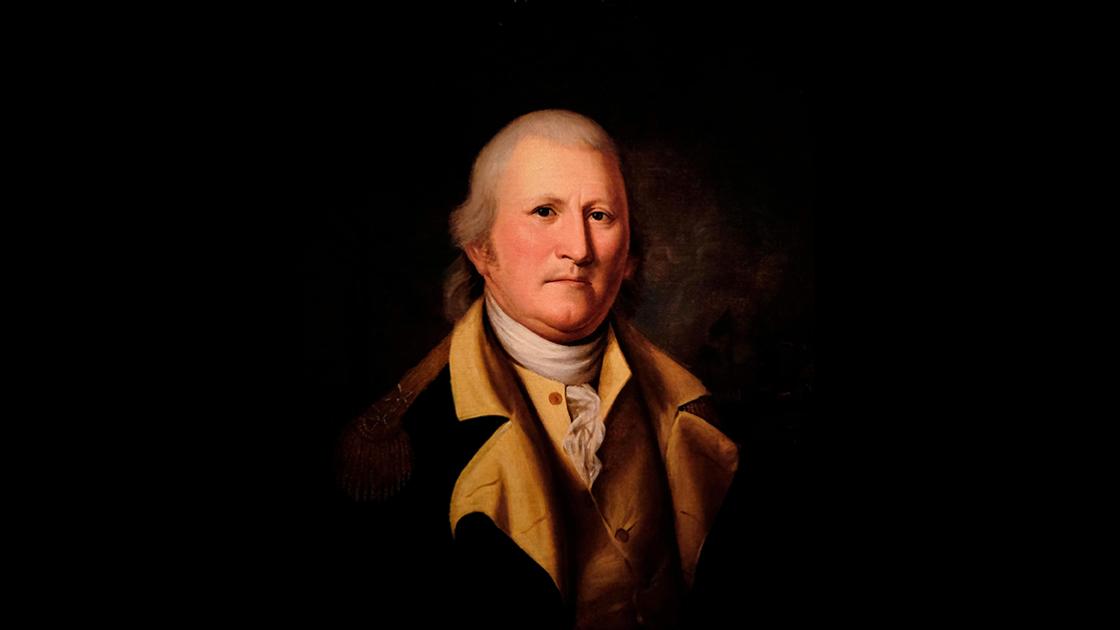
The largest surrender of the Revolutionary War, and perhaps the most deflating for the Patriots, was the capitulation at Charleston. In his memoirs, Brigadier General William Moultrie described the Patriots’ valiant but futile efforts to defend the city:
We fired the first gun, and immediately followed a tremendous cannonade ….and the mortars from both sides threw out an immense number of shells; it was a glorious sight, to see them like meteors crossing each other, and bursting in the air; it appeared as if the stars were tumbling down. The fire was incessant almost the whole night; cannon-balls whizzing and shells hissing continually amongst us; ammunition chests and temporary magazines blowing up; great guns bursting and wounded men groaning along the lines; . . .
At 10:00 a.m. on May 12, the Continentals formed into ranks and marched out the gate of the Horn Work, delivering all their ordnance, firearms, and ammunition to the enemy. One British company and one Hessian company of grenadiers, commanded by Major General Alexander Leslie, entered the tabby fortress and raised the Union Jack over the ramparts. The terms of the surrender were harsh. Major General Lincoln was refused the customary honors of war, and his Patriots — more than 5,000 men — were taken prisoner. The militias were paroled and allowed to go home if they pledged not to take up arms against Britain, but 2,500 Continental soldiers were held under deplorable conditions, and many would not survive their captivity.
At 10 a.m. on May 12, the Continentals formed into ranks and marched out the gate of the Horn Work, delivering all their ordnance, firearms, and ammunition to the enemy. One British company and one Hessian company of grenadiers, commanded by Major General Alexander Leslie, entered the tabby fortress and raised the Union Jack over the ramparts. The terms of the surrender were harsh. Major General Lincoln was refused the customary honors of war, and his Patriots—more than 5,000—were taken prisoner. The militias were paroled and allowed to go home if they pledged not to take up arms against Britain, but 2,500 Continental soldiers were held under deplorable conditions, and many would not survive their captivity.
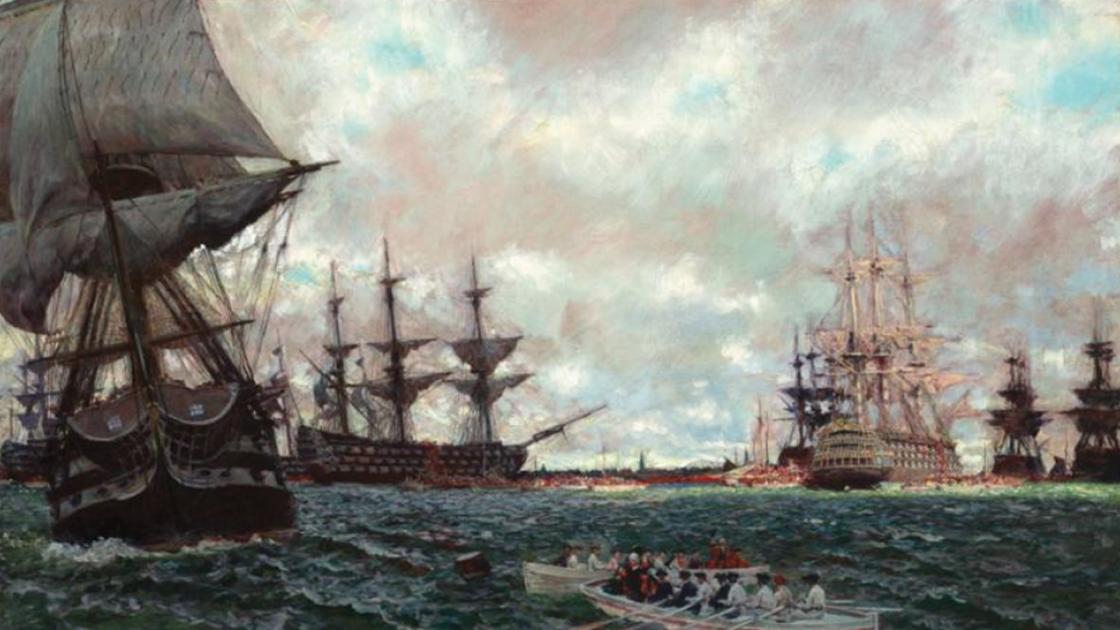
The Horn Work remained a part of the Charleston defenses until the British evacuated the city in December 1782. By the fall of that year, the British knew all was lost. General Alexander Leslie agreed not to destroy the city if the Patriots would allow his troops to depart safely. Greene wrote to Elias Boudinot, President of the Continental Congress, “I have the honor to communicate to your Excellency the agreeable information of the evacuation of Charles Town, and beg leave to congratulate you upon the event.”
From December 12-14, 1782, the British Army, along with about 3,800 Loyalists and 5,000 enslaved people, boarded Royal Navy ships anchored in Charleston Harbor and sailed away. The majority of the enslaved men remained the property of Loyalists and were forced to continue a life of bondage. Some, however, were granted freedom for having served the British during the war, and with assistance from the Crown, they headed to Nova Scotia, the Caribbean, and, later, Sierra Leone. (One of the descendants of the free Blacks who settled in Canada after the American Revolution was Willie O’Ree of the Boston Bruins, who on January 18, 1958, became the first Black player in the National Hockey League.)
The Patriots returned here to the city’s defensive Horn Work. A 400-man detachment of the Continental Army slowly advanced into the city as the British rear guard departed, ensuring an orderly transition of power. Major General Anthony Wayne led a force of 300 light infantry, 80 of “Light Horse Harry” Lee’s cavalry, and 20 gunners with two 6-pounders. At 3:00 p.m. Patriot commander Nathanael Greene escorted South Carolina Governor John Mathews into the city. After 30 months of relentless bloodshed and brutal occupation, South Carolinians were finally freed from British rule.
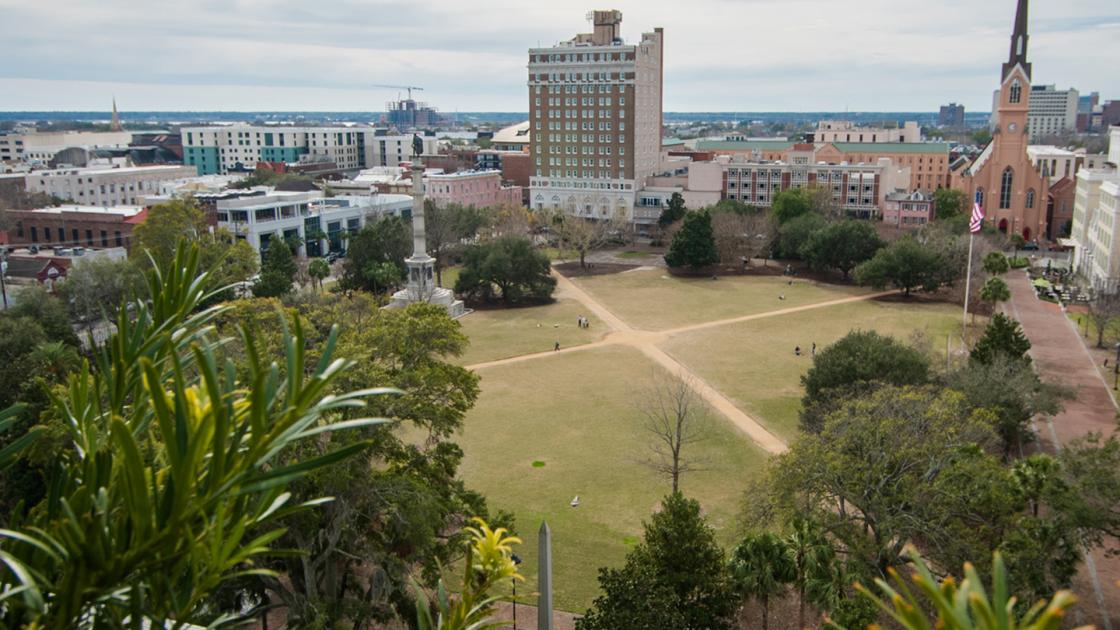
When you look out on Marion Square today, there is no visible footprint of the vast Horn Work that stood here centuries ago. At the conclusion of the war in 1783, the Horn Work and other urban fortifications were incorporated into the city. In 1784 the state legislature authorized demolition and sale of the fortifications that were built on public lands. The city paid laborers to raze the strong tabby walls. Of the imposing structure, only the “draw gates” remained in place until 1795, when they were removed, and the ditch was filled. Some portions of the Horn Work’s northeastern curtain line, including the slab now standing in Marion Square, escaped destruction by serving as partition walls between subdivided residential lots on the east side of King Street.
In 1833, these grounds were conveyed by the city to the 4th Brigade of the South Carolina Militia, and in 1843, the South Carolina Military Academy — The Citadel — established its campus where the nearby Embassy Suites Hotel is today. Known as “Citadel Square,” it was used for military training. Today, although only two units of the 4th Brigade survive — Washington Light Infantry, founded in 1807, and the Sumter Guards, founded in 1819 — they remain the owners of Marion Square. The Square is still used for military events, and The Citadel holds their Recognition Day ceremony during Corps Day weekend here each April.
Citadel Square was renamed to honor Revolutionary War hero Francis Marion in 1882, and in 1883, the sole reminder of the Horn Work was enclosed within a protective iron fence. Archaeological exploration here in 1998 confirmed that the extensive foundations of the Horn Work lie approximately one foot below the current surface of Marion Square. A follow-up archaeological survey in 2020 established the actual footprint of the grand fortress that stood here. So when you walk this ground today, you are literally treading on the hidden remains of Charleston’s historic defenses.
Please continue your tour by visiting the stops outside of Marion Square.
Today, King Street is alive with shops and restaurants. There were thriving businesses here in colonial times, too, with stores located at street level and living quarters for shopkeepers and their families on the second and third floors above. Many of the proprietors were members of Charleston’s Jewish population. They had suffered religious intolerance in Europe, settled in this port city, and successfully practiced their trades. When war came to the colonies in 1775, those men overwhelmingly resisted Crown rule and embraced the cause for independence.
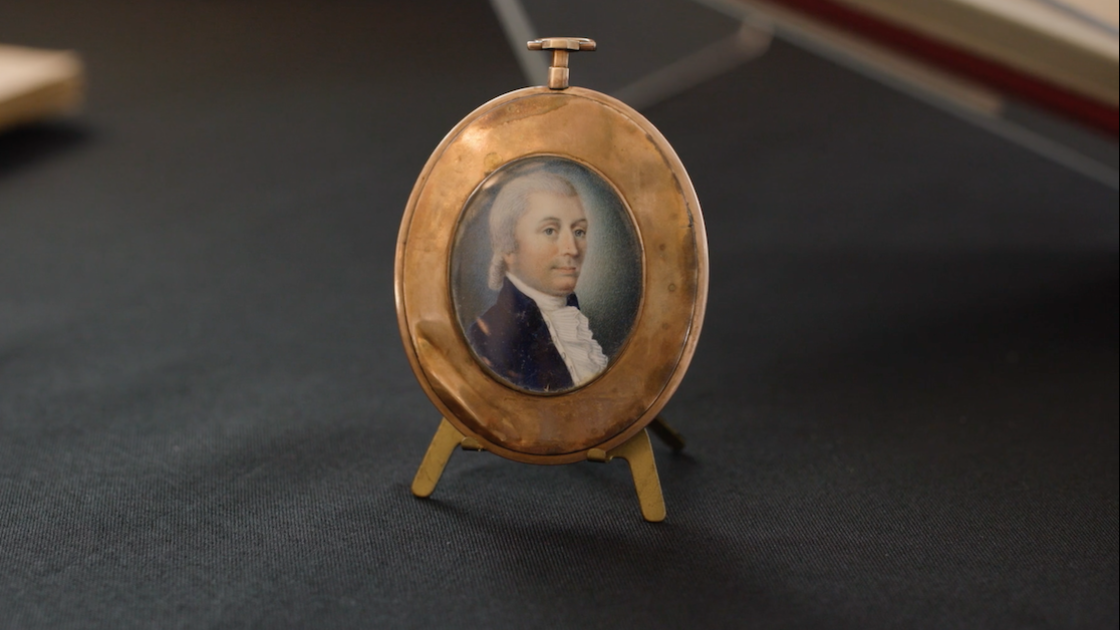
In 1778, Captain Richard Lushington, a Jewish Patriot, assumed command of a newly organized company of men on King Street, in the area occupied by Jewish shops. Nearly all the Jews from Charleston who fought in the war served in Lushington’s company, and it came to be known as the “Jew Company” or the “Company of Free Citizens,” although not all of its members were Jewish. The Company fought in several battles, including Port Royal Island, the Siege of Savannah, and the Siege of Charleston. One “Free Citizen,” Jacob I. Cohen, an immigrant from Oberdorf, Bavaria, saw combat at Port Royal Island and, according to Lushington, “in every respect conducted himself as a good soldier and a man of courage.”
When Charleston fell on May 12, 1780, the Company of Free Citizens was captured. Continental soldiers were held as POWs, but militia, like Lushington’s men, were released on parole. The freed Jewish merchants hoped to re-establish their businesses on King Street but were obliged by the British to sign an oath of allegiance to the Crown. Rather than betray their loyalties, some of them fled to Philadelphia or Baltimore until the end of the war. Jacob Cohen moved to Richmond, Virginia, where he became a wealthy entrepreneur and civic leader.
After the war, Lushington returned to Charleston and became a member of the Charleston Library Society, located here on King Street. Visit the Society to see recently rediscovered miniature portraits of him and his wife on display.
Many Charleston citizens fled in fear before the British attack here in March 1780, but for those trapped in the city, daily life was harrowing. Lincoln imposed strict curfews, and people in violation risked arrest. Homes were subject to search by Continental forces looking for deserters. Residents took shelter in their cellars during the thunderous cannonades, and as many as 20 citizens died in the bombardment, which destroyed about 30 homes. With supply routes to the city blocked, food became scarce for citizens and soldiers alike. Patriot troops broke into private homes and plundered any provisions or items of value they could find. Once they secured the city, the British did the same. John Pebbles, a 40-year-old British captain with the 42nd Regiment of Foot (Royal Highlanders), Grenadier Company, wrote of being shocked by the punitive behavior of some fellow British commanders toward ordinary residents.
Eliza Yonge Wilkinson was a Charleston widow in her early twenties when the war arrived at her doorstep in the spring of 1780. A Patriot supporter, she fled to her parents’ plantation at Yonge’s Island and then to her sister’s nearby estate for safety, but she could not escape the violence of the occupying army:
. . . I heard the horses of the inhuman Britons coming in such a furious manner that they seem’d to tear up the Earth,. . . . They were up to the house — enter’d it with drawn swords and Pistols in their hands. They then began to plunder the house of everything they thought valuable or worth taking. Our trunks were split to pieces, . . . They took my Sister’s earrings from her ears, hers and Miss Samuells’s buckle. They demanded her ring from her finger; she pleaded for it, told them it was her wedding ring and beg’d they’d let her keep it; but they still demanded it and, presenting a Pistol at her, swore if she did not deliver it immediately, they’d fire. . . . .
All Charlestonians endured hardship during the Siege. While some feared a British occupation and others welcomed it, many felt it in their best interest to get along with the new regime. After the Patriot surrender, about 200 residents sent a congratulatory letter to Sir Henry Clinton.
Enter the Charleston Museum to discover more about the city’s diverse population and the historic siege that changed their lives.
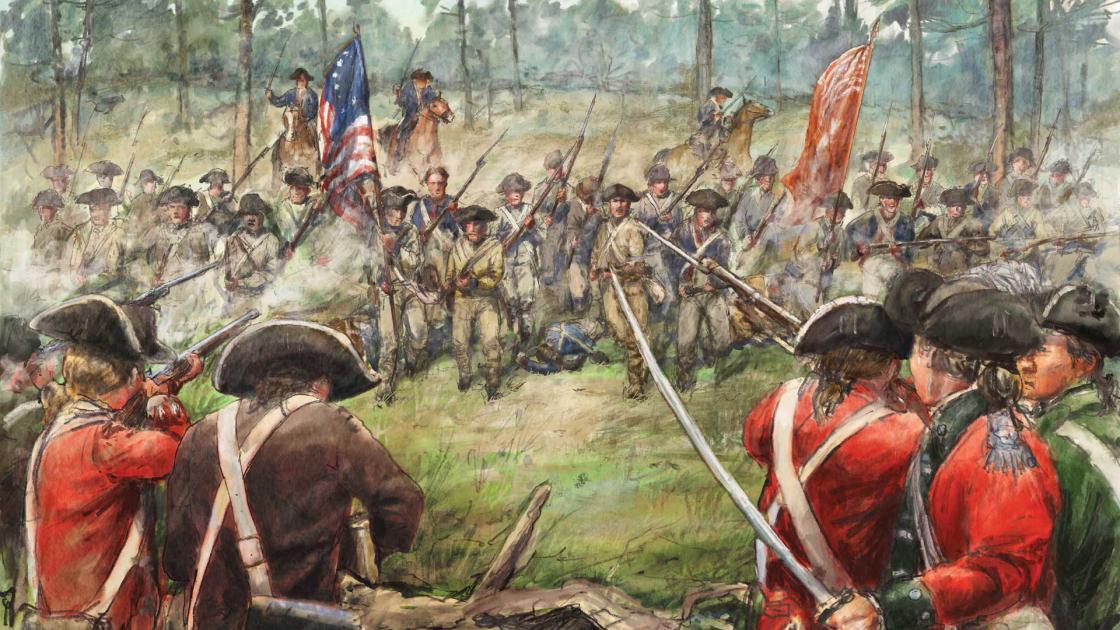
With Charleston in his hands in May 1780, Clinton dispatched British units to occupy outposts at Ninety Six and Camden — which you can explore today on the Liberty Trail — and then left South Carolina for New York, placing Lord Charles Cornwallis in command. Cornwallis ordered his men to “take the most vigorous measures to extinguish the rebellion”— and they did — terrorizing citizens and burning property. Rather than cowing the populace, however, this cruelty inspired a fierce resistance by partisans throughout South Carolina.
After the Battle of Guilford Courthouse in March 1781, Cornwallis moved his army to Wilmington, on the North Carolina coast. Instead of pursuing Cornwallis, Patriot Major General Nathanael Greene moved to South Carolina to attack the many British outposts scattered throughout the state. Francis Marion and “Light Horse Harry” Lee joined forces to attack Fort Watson in April 1781 and Fort Motte the following month, forcing the British surrender of both outposts.
Greene led Patriot troops in the Battle of Hobkirk’s Hill on April 25 and in the Siege of Ninety Six from May 22-June 19. Though the British were victorious in both engagements, they withdrew from both Camden and Ninety Six. At the September 8 Battle of Eutaw Springs — the bloodiest battle of the Southern Campaign — both sides claimed victory, but Greene forced the British back to Moncks Corner and eventually Charleston. In addition to the battles, local Patriot militias led by Francis Marion, Andrew Pickens, and Thomas Sumter raided enemy outposts and interrupted British supply routes. The Patriots eventually succeeded in their tireless campaign to wear down and starve out the enemy, but the citizens of Charleston remained under British occupation until December 1782.
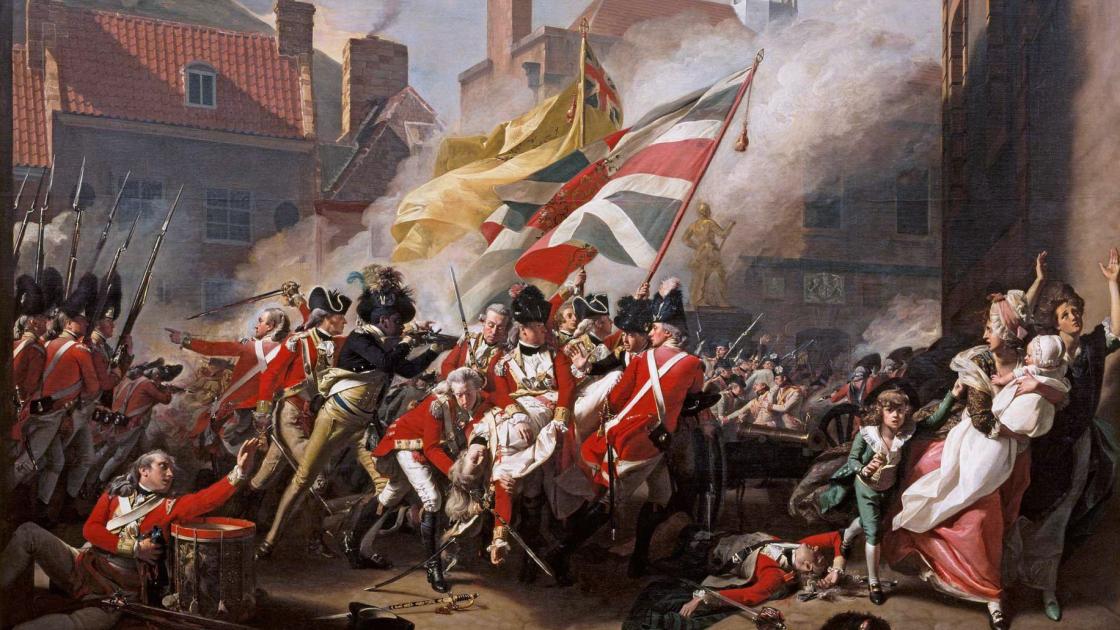
Early in the war, the British offered freedom to enslaved people who would flee captivity to fight for the Crown. Harry Washington, a stable hand on George Washington’s Mount Vernon plantation, did just that. He ran away to join a British unit of formerly enslaved men and later served as a corporal in the Black Pioneers, a British Army artillery unit active here in Charleston in 1780. During the siege, he helped construct defensive earthworks for Clinton’s army.
Washington’s story is representative of many Black Loyalists who served in the Revolutionary War. At the war’s end, he was rewarded for his service to the Crown. He was among the several thousand “loyal blacks” evacuated from the city to British Nova Scotia, where he married and acquired land. In time, however, he discovered that the harsh weather, untillable soil, and poor pay were barely a release from servitude. He and fellow settlers petitioned the British government and were eventually relocated to Sierra Leone. It was no better. There, high taxes and discrimination drove him to join fellow Black settlers in protest. In 1800, the Black British Loyalist who had faithfully helped lay siege to Charleston was tried by the British government for inciting rebellion and banished.
After Charleston fell, enslaved Blacks seeking their freedom flooded into British lines, which left local plantations with a greatly diminished workforce. Clinton agreed to return all enslaved workers toLoyalistowners under the condition that they would not be punished for running away. However, those enslaved by Patriots would not be returned. British soldiers could claim them, and if the laborers remained loyal, they would earn their freedom at the end of the war. For many, it turned out to be a hollow promise.
Learn more about Black people in the Revolutionary War at the Avery Research Center for African American History and Culture.
Black soldiers committed to the cause for independence fought among the Patriot troops at Charleston, many building and repairing fortifications and assisting with heavy artillery. A review of the muster rolls of the 3rd South Carolina Regiment of Continental Artillery indicates that 53 percent of this unit were men of color. John Chavis was among them.
In 1823, Chavis filed a pension application declaring that in 1780 he “enlisted in Captain Mattock’s [David Mattock’s] Company and that he served in said Company…until near the close of the war when he was discharged on account of the many wounds he received….” A witness to his application testified that “[Chavis] was in the regular Service in the old revolutionary war under the command of Colonel Tomson [William Thomson of SC] and then General Linchorn [Benjamin Lincoln].” However, it seems that Chavis was never compensated for his service. After living in poverty for years, he was “killed by the fall of a tree” before his pension was granted.
Drury Harris, a free man of color, also served under William Thomson of the 3rd South Carolina Regiment. Private John Davis, a soldier with Harris during the Siege of Savannah declared, “I saw no man, officer nor private, more Activer nor braver, than Drury Harris was.” Harris is thought to have been with his regiment when it surrendered to the British at Charleston on May 12, 1780, and he was likely taken prisoner with the rest of his unit, remaining on Sullivan’s Island before being released in a prisoner exchange. Harris petitioned the South Carolina legislature for a pension based on his Revolutionary War service in 1817. His application was supported by several officers, and he was awarded $60 a year for the rest of his life.
The accomplishments of these men are only two examples of Black patriotism during the Siege of Charleston. The stories of many others who served were largely undocumented, and Black veterans often struggled to verify their participation in battle and collect pension benefits. Sadly, their contributions are lost to time.
The International African American Museum tells the story of Blacks who labored in the Lowcountry and shaped the history of the nation.