-
The BlogBiographies
-
Videos

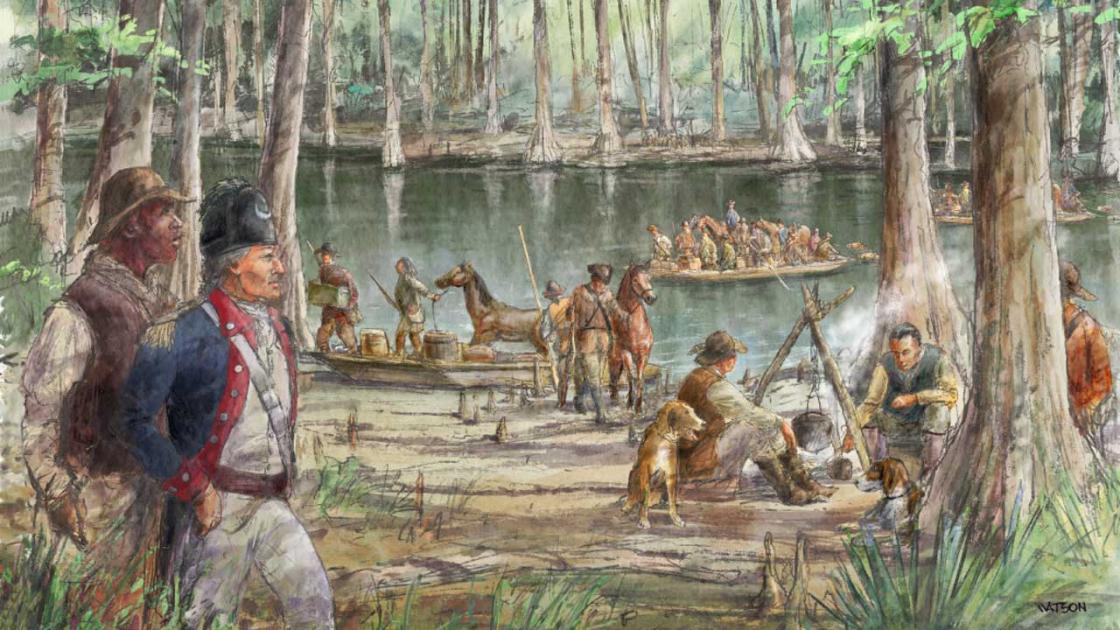
Winter 1780 - 1781
In or located near Snow's Island, Francis Marion established his secluded encampment in which he planned upcoming attacks on British outposts and supply lines throughout South Carolina. Nestled deep in the swamps of the PeeDee, the infamous encampment aided Marion and his men in their evasion from the British as they plotted their strategic strikes that helped with the Revolution. One of many encampments throughout the state, it is renowned as one of the most well-known to have hosted Marion and his brigade.
The Swamp Fox's Secret Refuge
The Swamp Fox’s favorite refuge was in or near Snow’s Island, created in the marshland where the Pee Dee River, Lynches Creek, and Clark’s Creek all meet in the southeast corner of Florence County. Marion or perhaps his commander Colonel Hugh Giles, established this base where Marion’s brigade could rest, train, and regroup in between missions. Marion occupied Snow’s Island from late December 1780 through January 1781. After that date, he used the island mainly as a supply depot. The island hideaway was difficult to access, making it safe from a surprise attack by the British. The Swamp Fox did not actually live in the swamplands, which were breeding grounds for insects and disease. Instead, the camp was situated on dry, higher ground and protected by tall canebrakes, briars, and vines. Marion’s men felled trees and broke down bridges across creeks to guard against invasion.
The Snow’s Island community was dominated by Whigs, or Patriots who supported independence. They furnished Marion’s partisans with food and supplies to support the rebellion against Britain. Although many of the men were off fighting, women and enslaved workers kept nearby farms and plantations running and provided necessities to Marion’s brigade. One of Marion’s commanders, Peter Horry, described the Whig neighbors as “generous stewards and faithful spies, so that, while there, we lived at once in safety and plenty.” For their cooperation, the locals earned Marion’s protection. He did not plunder their farms but took only what he required for his men’s subsistence. The Tories, or Loyalists who opposed Marion, did not fare as well. Marion’s men routinely foraged on their lands and raided their reserves.

The British Assault on Snow's Island
In March 1781, British Lieutenant Colonel Welbore Ellis Doyle with the Volunteers of Ireland was sent out from Camden by Lieutenant Colonel Francis, Lord Rawdon as part of his plan to catch Brigadier General Francis Marion. Sometime near the end of the month Doyle made it through the menacing swamps and attacked Brigadier General Marion's base at Snow's Island, which is believed to have been at William Goddard’s plantation on the northern part of the island. The island's defenders, commanded by Colonel Hugh Ervin, managed to destroy all the carefully hoarded supplies and ammunition before Doyle could capture them. Of the partisan force at camp, seven were killed and fifteen were wounded. While the campsite was being destroyed, Marion’s main forces were away near Kingstree, about 30 miles southwest of Snow’s Island, fighting another British force under the command of Lieutenant Colonel John Watson.
Doyle successfully destroyed the camp and remaining supplies. He liberated some British prisoners held there but did not linger in case Marion and his force returned. As soon as his men set fire to Goddard's house and barn, he retreated over Clark's Creek. That afternoon, he recrossed Lynches Creek and encamped on the north side of Witherspoon's Ferry.
Marion did not rebuild the camp. It is thought that it was just one of several hideaways used by the Swamp Fox in the Pee Dee region.
Preservation Efforts at Snow's Island
From this critical headquarters, the “Swamp Fox” and his militia launched numerous raids on British outposts and a major assault on the Georgetown garrison, downriver on the Pee Dee.
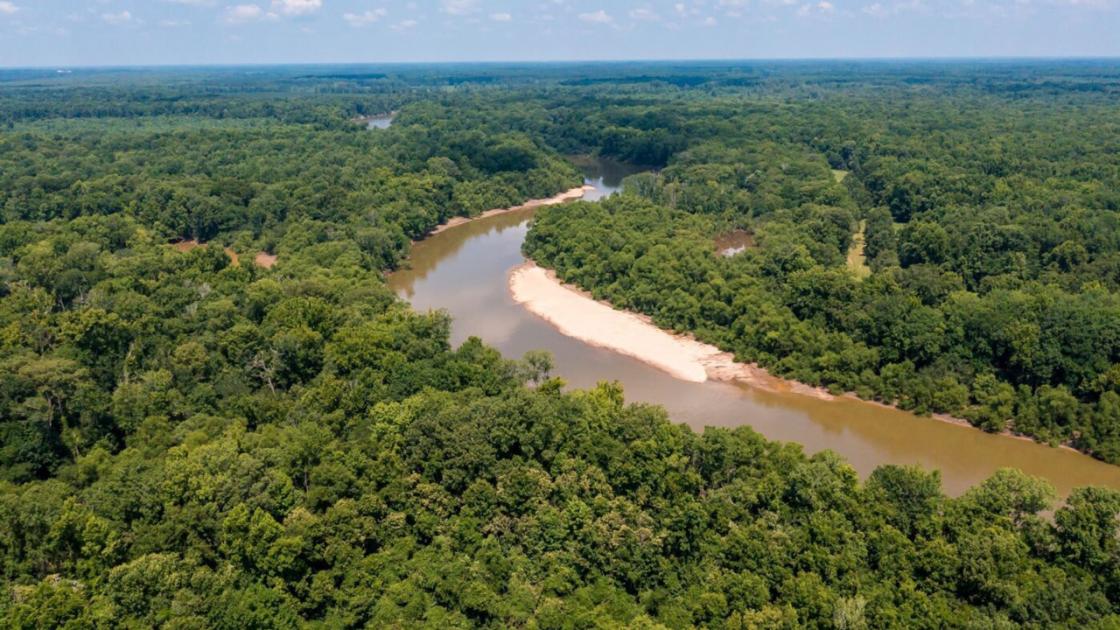
The vast 5,000-acre inland island, which is primarily composed of forested wetlands and is listed on the National Register of Historic Places, sits at the confluence of the scenic Lynches and Great Pee Dee Rivers. It is home to Swamp Tupelo, Bald Cypress, and wildlife species such as the Swallow-tailed Kite and Spotted Turtle. Much of the island abuts the 66-mile Revolutionary Rivers Trail, a federally recognized water route along the Lynches and Pee Dee rivers that honors the Southern Campaign of the American Revolution.
In December 2024, a coalition of groups announced the purchase of Snow's Island and an adjacent property in Florence County, South Carolina, for conservation. The property will become a South Carolina Department of Natural Resources Heritage Preserve and Wildlife Management Area. The 7,600-acre land purchase is the largest conservation project in Florence County's history. Francis Marion University is also a partner in the project and hopes to use the property as a research and instructional site for its archeology, history, and forestry programs.