-
The BlogBiographies
-
Videos

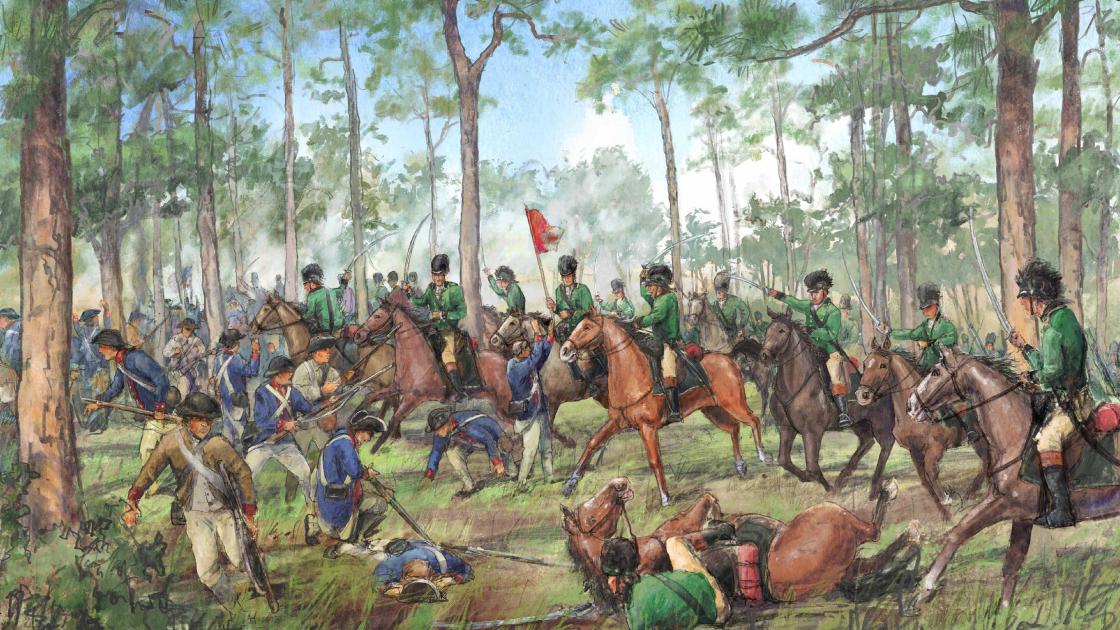
May 29, 1780
British forces, led by Lieutenant Colonel Banastre Tarleton, attacked Continental troops, commanded by Colonel Abraham Buford, who were retreating through Waxhaws toward North Carolina. The encounter soon turned into a bloodbath, with Tarleton’s men offering no “quarter,” or mercy, to the defeated American troops. Known afterward as “Buford’s Massacre,” the engagement inspired Patriot defiance and “Remember Waxhaws!” became a rallying cry.
Before You Go
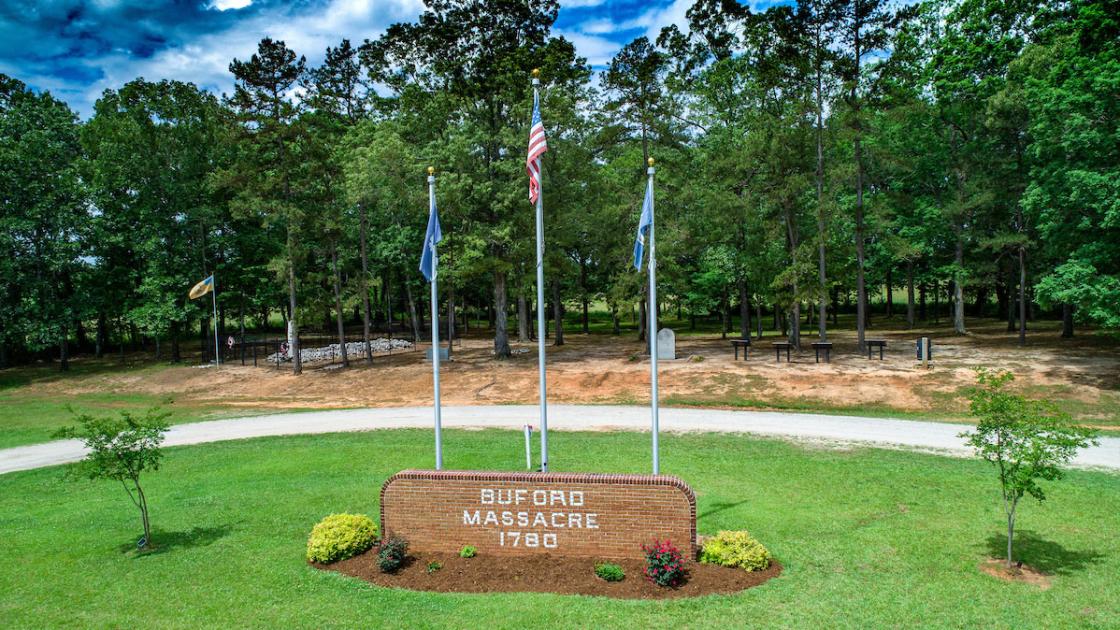
The Buford Battle Ground Monument, 9 miles east of Lancaster, South Carolina, identifies the location of the 1780 massacre of over 113 Continental soldiers by British-led Loyalist cavalry. A small park with some interpretive waysides and two monuments marks the mass graves of the men who were killed there.
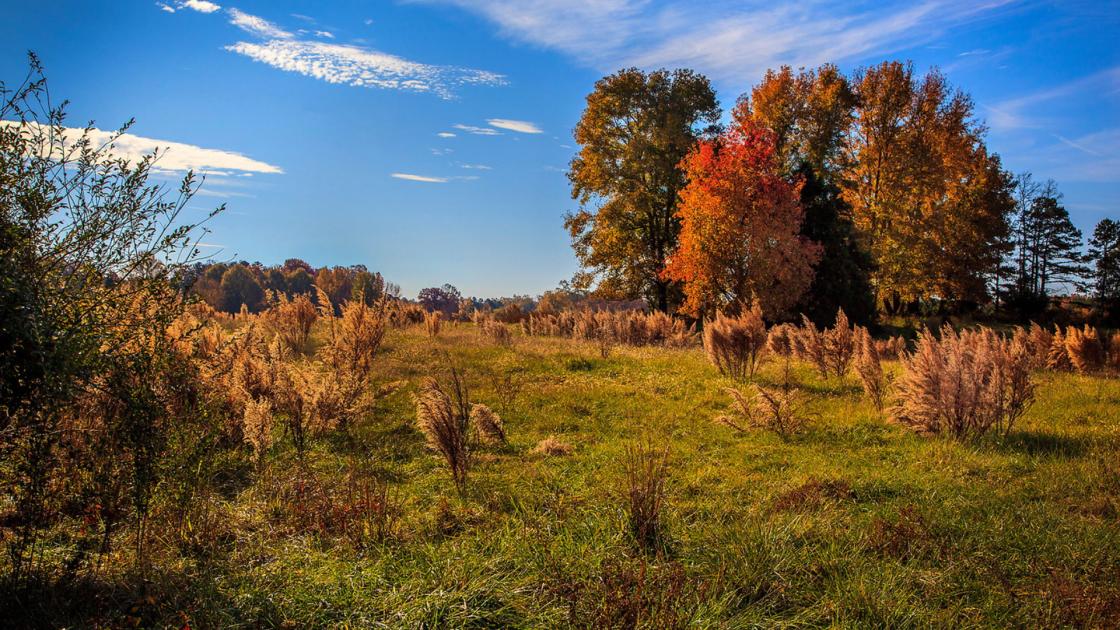
The Road to Waxhaws
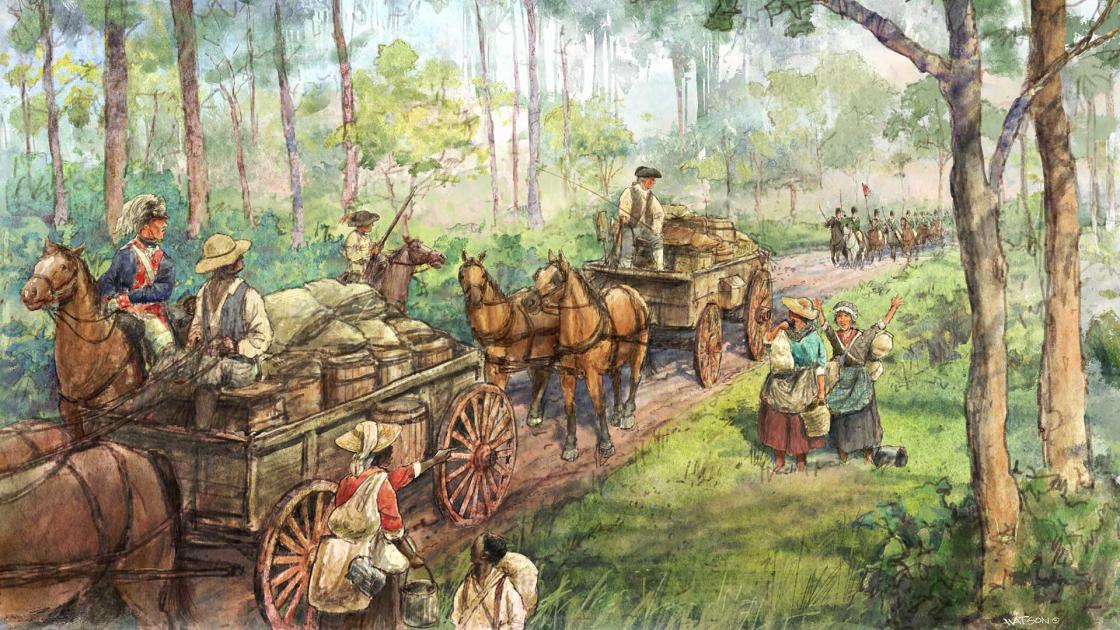
The Great Waxhaw Road ran almost parallel to what is now South Carolina Highway 522. As you explore the battlefield, look for traces of the colonial road bed running alongside the modern route. Revolutionary War troops and supply wagons traveled this route from Camden to North Carolina. On May 29, 1780, the British Army attacked a Patriot detachment retreating this way. The subsequent bloody engagement and defeat of American forces here was staggering and became known as “Buford’s Massacre.”
In 1778, with the war in the North at a stalemate, Britain decided to shift its focus to the South. The royal government assumed that support from Loyalists would allow the British to dominate the region. By February 1780, British Commander-in-Chief for North America, Sir Henry Clinton, his second in command, Lieutenant General Charles Lord Cornwallis, and Vice-Admiral Mariot Arbuthnot of the British Navy commanded a combined force of approximately 14,000 troops who laid siege to the city of Charleston.
To thwart the attack, the Patriot-led governments of North Carolina and Virginia rushed to recruit and muster troops who would back up the besieged forces defending Charleston. In response to the call, three Continental regiments were formed by Virginia. The 3rd Detachment, commanded by Colonel Abraham Buford, initially had difficulty meeting its recruitment and supply objectives, but eventually enlisted 350 men and made a delayed departure from Petersburg, Virginia, for the 400-mile journey south. Some traveled on horseback but others made the long trek on foot. As Buford’s troops arrived, however, Charleston fell to the British on May 12. Buford and his Virginia Continentals were ordered to retreat back to North Carolina.
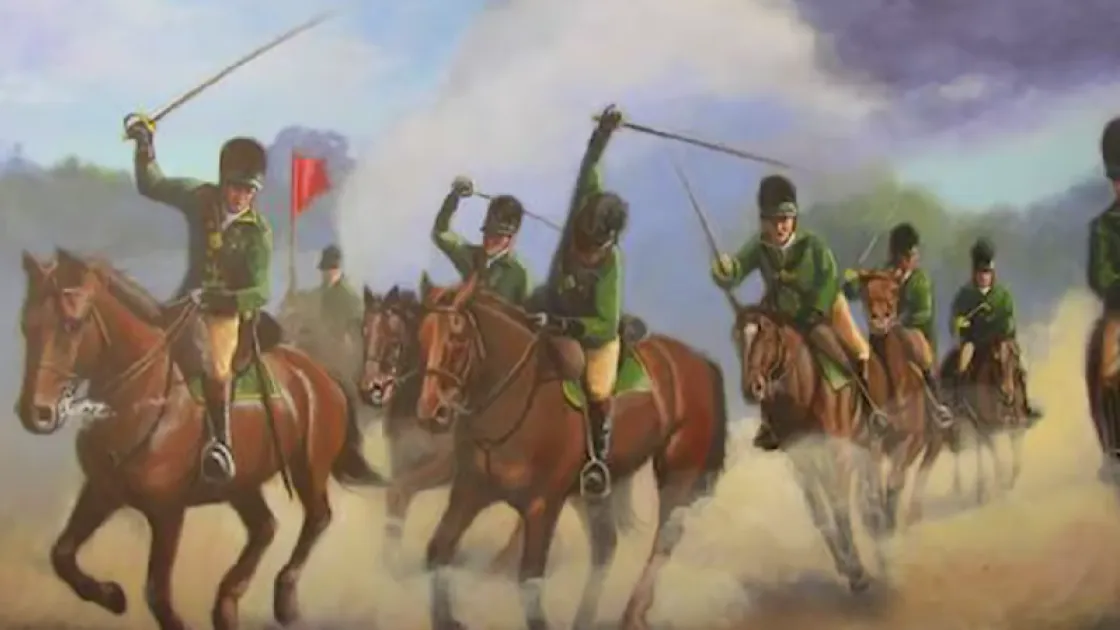
Tarleton in Pursuit
With Charleston in British hands, Cornwallis set out in mid-May to establish outposts throughout the South Carolina backcountry to serve as supply depots, communication conduits, and to suppress local rebels. He ordered Tarleton to join up with him at Nelson’s Ferry, nearly 50 miles up the Santee River Road from Charleston toward Camden. Along the way, Cornwallis learned that South Carolina’s governor, John Rutledge, used the same route as he fled Charleston during the siege, and that Rutledge was under the escort of Colonel Buford. Determined to capture the Patriot governor and crush the remaining Continental troops in the South, Cornwallis ordered Tarleton after them.
Meanwhile, Colonel Buford and Brigadier General William Caswell with his North Carolina militia, also retreating from the Lowcountry, both reached Camden by May 26. There, General Huger, aware that British forces were pursuing and believing it best to preserve the army by separating it, directed the North Carolinians to retreat to Cross Creek (present day Fayetteville) and ordered Buford’s Virginia troops to continue toward Salisbury, North Carolina, up the Great Waxhaw Road. Buford’s column, including dozens of unwieldy freight wagons, struggled over the muddy thoroughfare, now South Carolina Highway 522 before you, in oppressive heat.
On May 27, Tarleton rode out from Nelson's Ferry with 270 men. They quickly covered 60 miles and arrived in Camden the following day. Early on May 29, Tarleton set out again and, despite poor travel conditions, reached Loyalist Henry Rugeley's plantation on the Great Waxhaw Road, 13 miles north of Camden, by mid-morning. Upon learning that Governor Rutledge stopped there the previous evening and that Buford’s Continentals were now only 20 miles ahead, Tarleton kept riding — and quickened his pace.
A Call for Surrender
Tarleton’s exhausting chase caused several horses to die from fatigue but narrowed the gap to the Americans significantly. With the Patriots so close, he ordered an officer to go forward and present a demand of surrender to Buford, which, as Tarleton later wrote, “. . . by magnifying the number of the British, might intimidate him into submission, or at least delay him whilst he deliberated on an answer.” The summons read, in part:
Sir,
Resistance being vain, to prevent the effusion of human blood, I make offers which can never be repeated: – You are now almost encompassed by a corps of seven hundred light troops on horseback; half of that number are infantry with cannon, the rest cavalry: Earl Cornwallis is likewise within a short march with nine British battalions.
I warn you of the temerity of further inimical proceedings, and I hold out the conditions, which are nearly the same as were accepted by Charles town: But if any persons attempt to fly after the flag is received, rest assured, that their rank shall not protect them, if taken, from rigorous treatment. . . .
What happened next is unclear. After the battle, Colonel Buford reported that he “gave a verbal answer and continued [his] march,” sharing his decision with his officers and asking for their input. Tarleton, however, reported that Buford responded by writing, “Sir, I reject your proposals, and shall defend myself to the last extremity.” In any event, British dragoons soon appeared, and with Colonel Buford watching from a distance, his rearguard was overrun and captured. The Virginians had no choice but to deploy for battle.
An Uneven Match
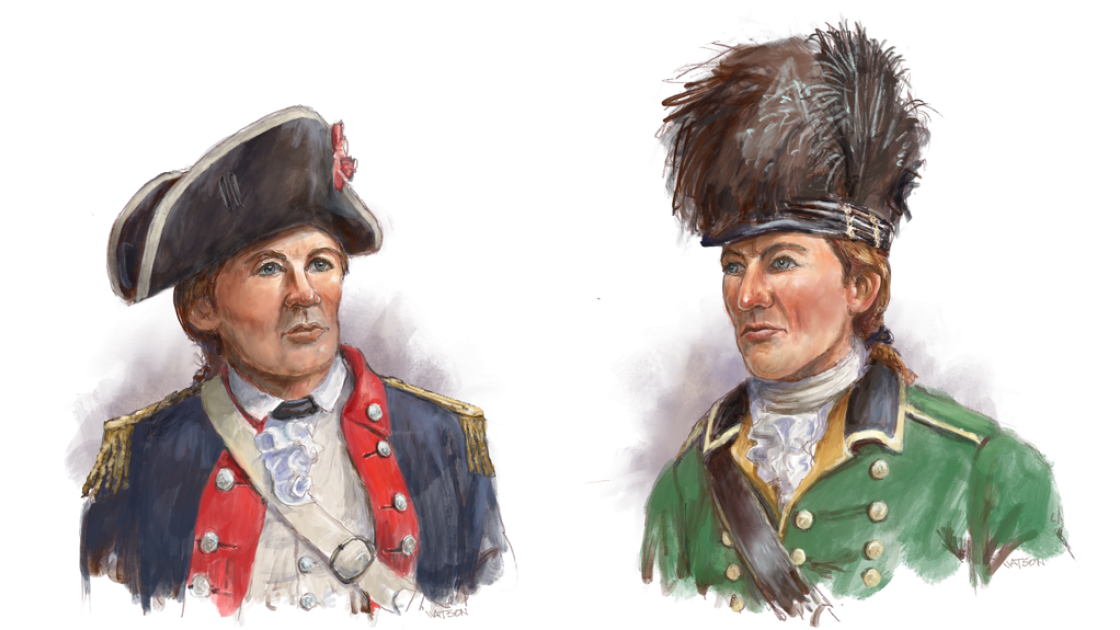
The commanders who met here were mismatched both on and off the battlefield. The son of a planter and slave trader who also served as the mayor of Liverpool, Tarleton was a mediocre student. He attended University College at Oxford before his mother purchased him a commission in the King’s Dragoon Guards in 1775. Ambitious and eager for action, Tarleton volunteered to serve in America and journeyed initially to Charleston as part of the British effort to capture the city in June 1776 when was only 21 years old. Afterward, he was assigned to a dragoon unit that served in New Jersey and New York, where he was repeatedly promoted, eventually rising to lieutenant colonel of the newly formed British Legion. Tarleton’s unit was part of Clinton’s expedition to Charleston in 1779. Accompanied by his elite British Legion, who were strengthened by one troop of the 17th Light Dragoons, a regular British cavalry regiment, Tarleton achieved many early victories against Patriot forces during the Siege of Charleston.
Five years older than Tarleton, Buford grew up in Culpeper, Virginia, and was one of six brothers who served as officers in the American War for Independence. He raised a militia company in 1775, eventually becoming a major in the 14th Virginia Regiment and lieutenant colonel with the 5th Virginia Regiment. He served in the Philadelphia Campaign, at Valley Forge, and in the Battle of Monmouth. Buford was elevated to colonel and accepted command of the 11th Virginia Regiment in September 1779, returning to his home state for purposes of recruiting and training regiments to serve further south. Unlike Tarleton’s men, his 3rd Virginia Detachment at Waxhaws had never fought together, although several were veteran soldiers.
Buford's Massacre
About a mile from here, south along the road, in open woods, Buford formed his infantry in one line, placed his colors in the center, and ordered his wagons to continue their march. Tarleton sent Major Charles Cochrane’s infantry and cavalry to the right flank, Captain Erasmus Corbett with the 17th Light Dragoons and Captain David Kinlock with part of the Legion to charge the center, and positioned himself with a small number of Legion on his left flank.
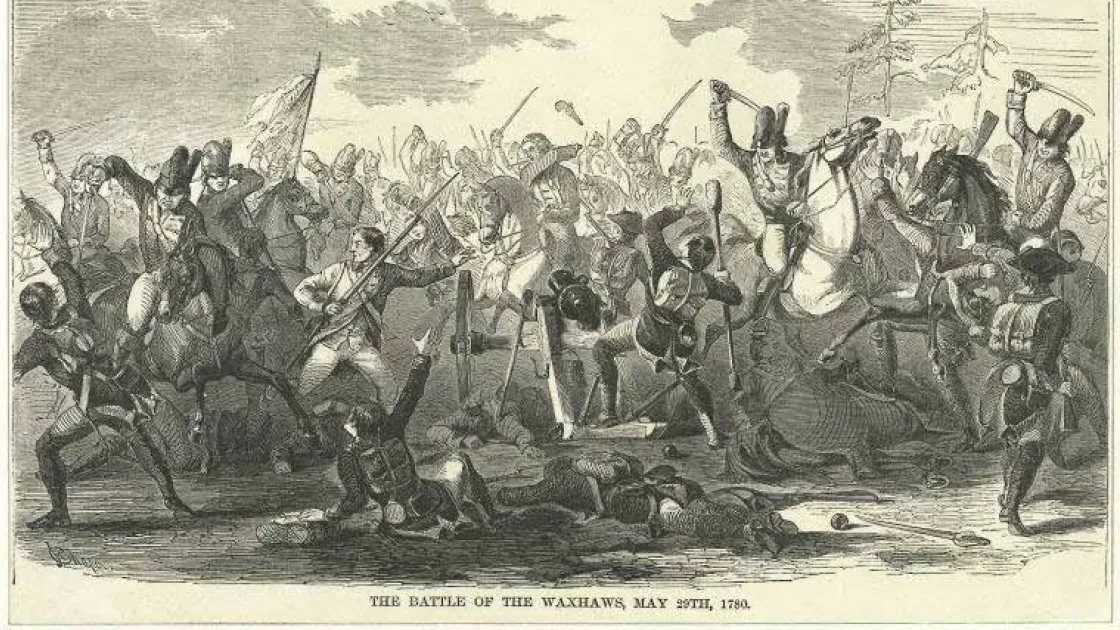
Separated from Buford’s infantry by 300 yards, Tarleton’s troops advanced. The dragoons and light infantry immediately charged. American forces were directed to hold their fire until the British were within ten yards of their single line. With the cavalry galloping, their swords raised, and the light infantry advancing with fixed bayonets, Tarleton’s three wings bore down on the Continentals. Buford’s men waited as instructed and fired one volley at close range, but it was too little, too late. As shying horses stumbled through clouds of musket smoke, Tarleton’s men crashed into Buford’s Patriots.
Tarleton’s horse was hit by fire in the confusion. Although he was able to mount another, the British cavalrymen assumed their commander had perished, which, as Tarleton later explained, “stimulated the soldiers to a vindictive asperity not easily restrained.” By some accounts, the Americans, seeing the hopelessness of their circumstances, sent forward a flag of surrender. Colonel Buford wrote that the symbol of truce “…was refused in a very rude manner….” The British, however, continued their brutal and repeated strikes against the Continentals, many of whom were begging for “quarter,” or mercy. Buford’s Adjutant Henry Bowyer wrote, “The overwhelming force of the British then prevailed, and a dreadful massacre of the detachment then followed.” “Tarleton’s Quarter” and “Remember Waxhaws” later became rallying cries for Carolina backcountry settlers opposed to the Crown.
When the Dust Settled
Tarleton reported casualties for both American and British forces, with the Americans losing 113 troops killed, 150 wounded, and 53 taken prisoner. The British counted only five men killed and 14 wounded. As the fighting here abated, the British commander sent his men after the American troops who continued north with valuable supplies and artillery. They were captured and their wagons were seized.
Some of the wounded were taken to nearby homes, which served as makeshift hospitals, but others were transported to Waxhaw Presbyterian Meeting House, approximately 25 miles from here. Many of them perished and were buried in the churchyard. Young Andrew Jackson, who later became the seventh President of the United States, observed severely maimed Continental troops at the meeting house. As an older man, he recalled that, “None of the men had less than three or four, and some as many as thirteen gashes on them.” Years after the battle, Colonel Richard Winn, an officer of both Continental and militia units during the Revolution, referred to Buford’s men as having been “cut to pieces.”
Right off South Carolina Highway 522, where Buford and Tarleton met in battle, you will see a mass grave for 84 Virginians who perished here. After the carnage ended, local citizens buried most of the dead adjacent to the battlefield and interred another 25 soldiers about 300 yards away. At the head of the mass grave stands a 15-foot marble obelisk, which was designed by prominent Charleston sculptor William T. White and erected in 1860. The stone is now weather-worn and illegible, but this somber tribute to the fallen Virginians remains poignant.
Tarleton's Quarter
What happened at Waxhaws? While bloodshed and death are part of war, the scale and gruesome nature of the casualties suffered on this battlefield trouble people to this day. Perhaps in revenge for their fallen commander, British troops were undisciplined and ruthless, but clearly Buford made a series of tactical errors that resulted in his crushing defeat. Tarleton believed Buford erred, “. . . in ordering the infantry to retain their fire till the British dragoons were quite close; which when given, had little effect either upon the minds or bodies of the assailants, . . .” American officers similarly questioned Buford’s judgment. General Moultrie summed up the battle in his Memoirs, “This victory of Tarleton's gained him the highest esteem and confidence of Lord Cornwallis, . . . The destruction of Buford's detachment left South Carolina and Georgia without a single continental soldier but what were prisoners of war…” Although Buford survived the battle and served as a Continental Army officer until the end of the war, he never participated in another engagement.
While devastating to the Patriot cause, Buford’s defeat had an unexpected consequence — it incited defiance among Carolinians. The horrific engagement became a symbol of British brutality and roused people to support the rebellion. Some debate whether the battle was technically a massacre — a purposeful and indiscriminate killing in the face of surrender or requests for “quarter” by defeated troops. To wartime residents of the Carolina backcountry, arguments about terminology did not matter. “Remember Tarleton’s Quarter” — which was no quarter at all — became not only a war cry among American troops but also motivation to flout the “rules of war” and retaliate in kind.