-
The BlogBiographies
-
Videos

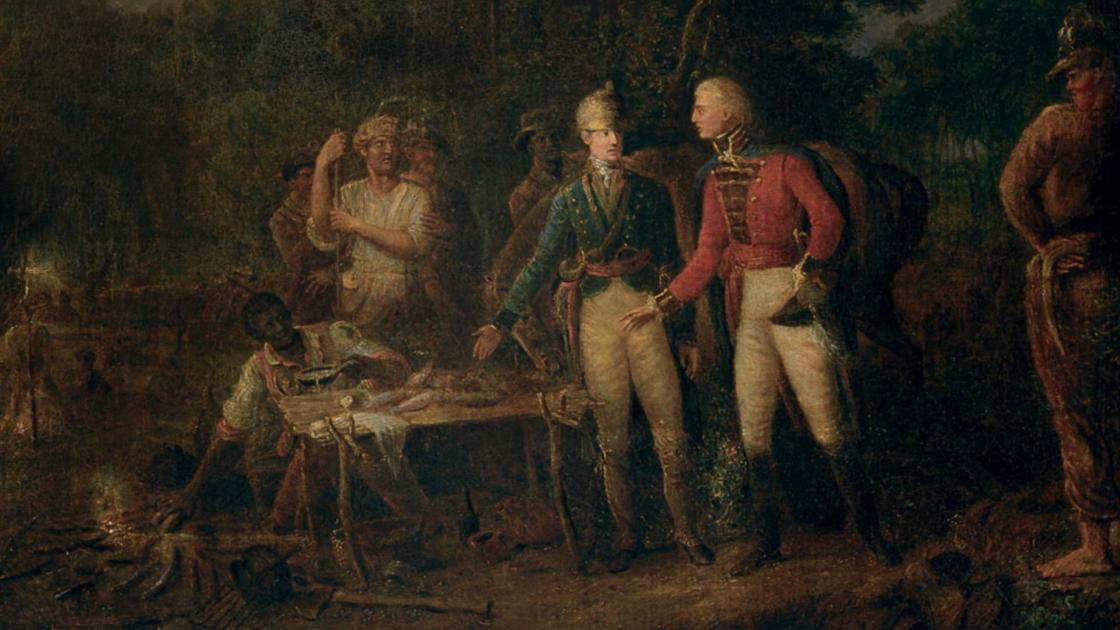
Summer 1780
In the swamps of South Carolina's Pee Dee region, Francis Marion made his foray into the Revolution as an expert in guerilla warfare. With his ingenius tactics and knowledge of the land, Marion thwarted British attempts to control the backcountry of South Carolina, thus instilling stronger faith in the Patriot cause. Today, Marion's impact still reflects on the nomenclature within the region, cementing his legacy as a guerilla fighter and a statesman.
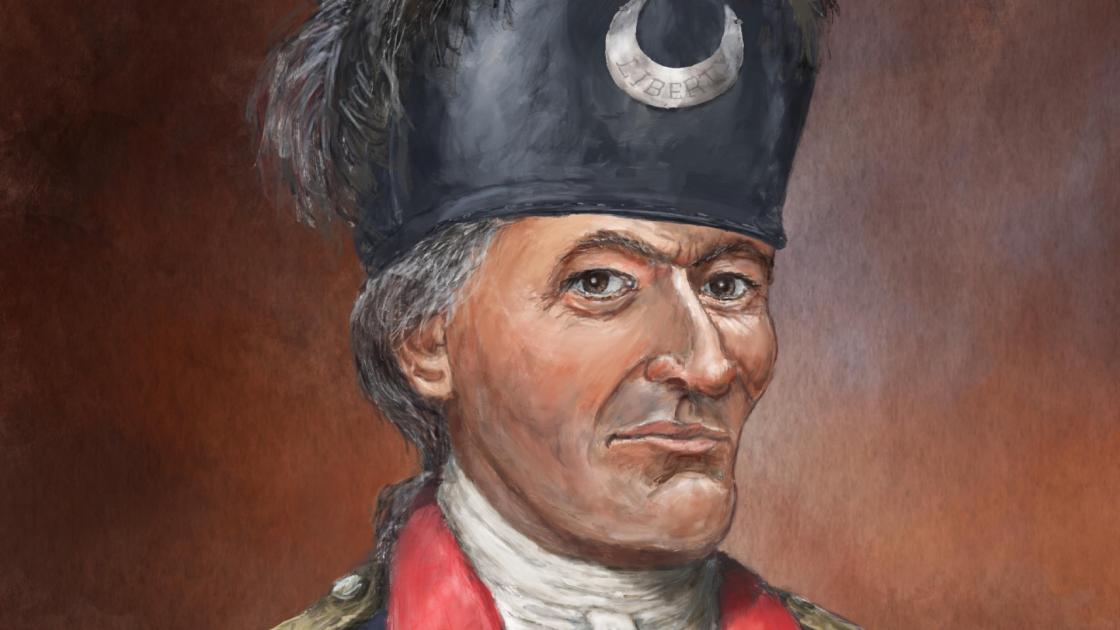
Francis Marion, the Swamp Fox
Francis Marion was a South Carolina militia officer who gained fame for his successful use of guerilla tactics against the British in the area between the Pee Dee and Santee rivers during the American Revolution. He launched surprise attacks against the enemy and then retreated to his remote base at Snow’s Island, about seven miles east of here. His elusiveness and ability to appear to be in many places at once terrorized his opponents. British officer Banastre Tarleton called his sly foe a “damned old fox,” which later inspired Marion’s famous nickname “the Swamp Fox.”
During his service for the British during the French and Indian War (1754-63), Marion received formal training as a soldier and was very likely drilled in Major Robert Rogers’s 28 Rules of Ranging, a manual of innovative military techniques that advised capturing the enemy’s supply and control centers rather than attacking their defenses. He was also exposed to an unconventional style of combat in that conflict and during the First Cherokee War (1759-61). He observed how Native warriors used the landscape to their advantage. They concealed themselves in the Carolina backwoods and foothills to mount ambushes and hit and run raids on the British forces and militia operating against them. Decades later, Marion employed similar maneuvers against British troops during the Revolutionary War.
Fighting in the Pee Dee
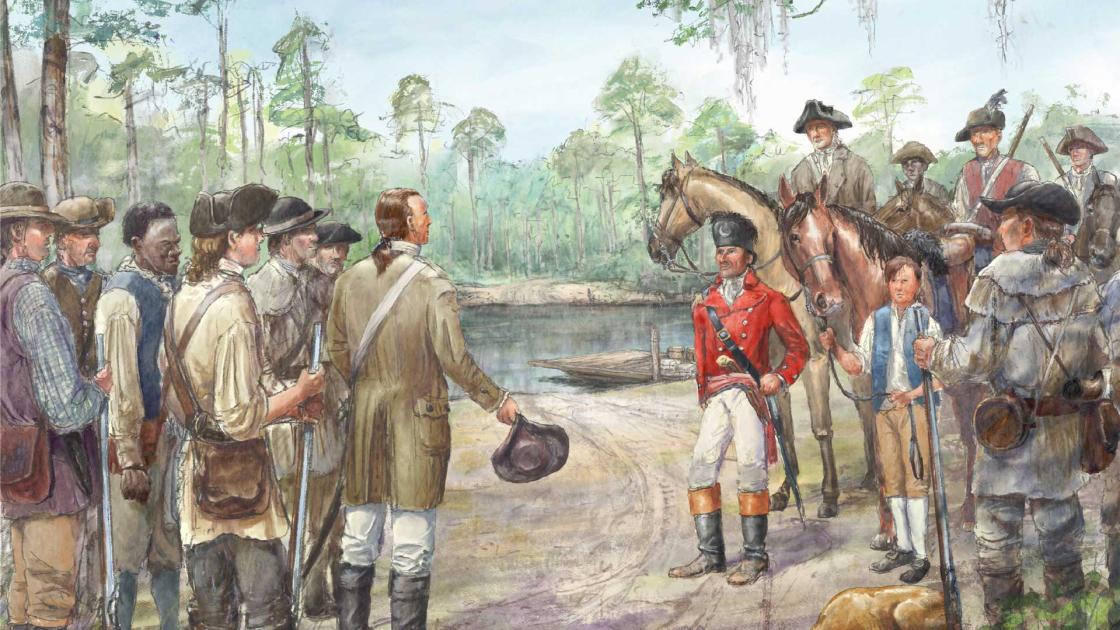
The day before Major General Horatio Gates was defeated at the Battle of Camden on August 16, 1780, Francis Marion was sent to command the local Williamsburg Militia at Witherspoon’s Ferry (now called Venter’s Landing), located on this site. From that time on, Marion operated as a partisan leader in the Pee Dee region and took refuge with his brigade in the areas around Port’s Ferry, Snow’s Island, Britton’s Neck, Dunham’s Bluff, and other camps nearby. His men moved often for security.
In this landscape of dense brush and barely navigable swamps, Marion took on militia recruits and received supplies from the local Whig (Patriot) supporters, whose nearby farms provided beef, hogs, and corn to feed the hungry troops. They also furnished Marion’s brigade with intelligence, warning them of approaching danger and enemy movements, so they could initiate ambushes. Marion, in turn, helped protect those citizens from mistreatment by local Loyalists who conspired with the British.
With so many rivers crisscrossing this terrain, ferries were essential forms of transportation to both Patriot and Loyalist troops. There were four primary ferries accessible from Marion’s camp on Snow Island: Witherspoon’s Ferry, Port’s Ferry, Potato Bed, and Britton’s Ferry. Burch’s Ferry, 14 miles from Snow’s Island, was also used. This remote region challenged the British, but it was the perfect sanctuary for an elusive partisan fighter who used surprise to his advantage. By late 1780, Lieutenant General Charles, Lord Cornwallis was so incensed by Marion’s raids on British outposts that he assigned his brashest and most relentless officer, Lieutenant Colonel Banastre Tarleton, to destroy the man responsible for the attacks. Tarleton failed.
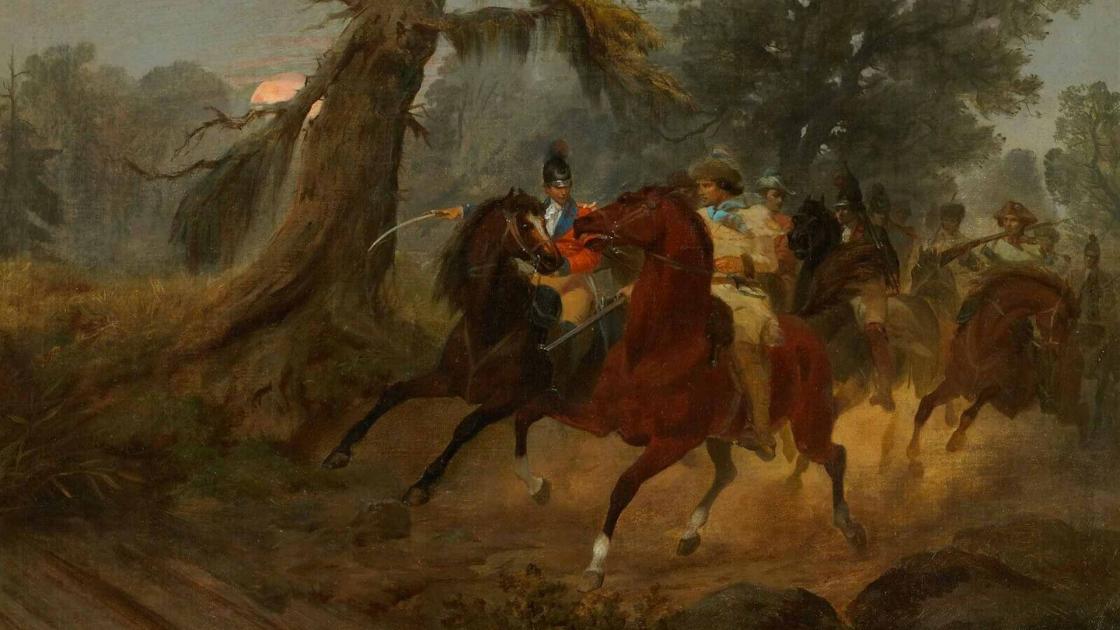
Witherspoon's Ferry
In August 1780, the Williamsburg militia sent a request to Patriot Major General Horatio Gates, asking for an officer to command them. Gates sent Francis Marion, who was without a command of his own, along with Marion’s small escort of 20 or so men and boys. The Williamsburg militia was encamped here at Witherspoon’s Ferry. Many of the soldiers were veterans of previous battles and had been granted parole by the British if they promised not to take up arms on behalf of the rebellion again. Most disobeyed the order and continued to fight for independence.
Marion arrived at Witherspoon’s Ferry on or about August 17, 1780. Among the militia welcoming him were some who already knew him as an able leader. Others were skeptical of this new officer whom fifteen-year-old militiaman William Dobein James described as “. . . below the middle stature of men. His body was well set, but his knees and ankles were badly formed; and he still limped upon one leg. . .. “
Because access to the region’s waterways was essential for the British supply and communications network, Gates ordered Marion to destroy all the boats they could find along the Santee River to keep them from the enemy who would need them should they retreat from Camden. Marion assigned his new forces to put Gates’s order into play. Marion’s cavalry was commanded by Colonel Peter Horry. Lieutenant Colonel Hugh Horry (Peter's brother) commanded the infantry. Companies were headed by Major John James, Colonel Hugh Giles, and Captains John James and James Witherspoon. Captain William McCottry was assigned command of an independent rifle company. Over time, the composition of Marion’s brigade changed frequently. An estimated 2,500 men served in the partisan group at one time or another. Witherspoon’s Ferry was also the site where Marion’s men gathered before the Battle of Black Mingo in September 1780, and the site of a skirmish between British forces under Lieutenant Colonel Welbore Ellis Doyle and Marion’s forces, including Captain William McCottry’s riflemen.