About

Our Valued Partners in North Carolina

The Liberty Trail preserves and interprets North Carolina’s historic battlefields, keeping their stories alive. To protect these unspoiled sites, the American Battlefield Trust partners with numerous valued partners at the federal, state and local levels.

Explore North Carolina's Revolutionary History

Many historians consider the Revolutionary War to have been decided in the swamps, fields, woods and mountains of the South, won by the resilience and determination of Continental soldiers and Patriot militia. Although the full story of the Southern Campaigns is not widely known, the events of 1775-1782 in the Carolinas and Georgia directly led to an American victory in the war. 

The Liberty Trail is a unified path of preservation and interpretation across North Carolina designed to tell this remarkable story. These important battlefields, still largely unspoiled, deserve to be preserved and remembered. 

Each stop along the driving tour features unique on-site interpretation that connects visitors to the extraordinary events that came to pass nearly 250 years ago.

Our Valued Partners

Pope Foundation Logo

Lead Sponsor

The Liberty Trail North Carolina would not be possible without the generosity of the John William Pope Foundation. The Foundation makes grants to improve the well-being of North Carolinians by advancing the ideas of limited government, individual freedom, personal responsibility, and strong communities. We are grateful for their generosity.

Additional Thanks

The Liberty Trail North Carolina would also not be possible without numerous valued partners at the state and local levels.

  • Moores Creek National Battlefield, National Park Service
  • North Carolina Department of Natural and Cultural Resources
  • America 250 NC
  • State of North Carolina

Exploring History

We invite you to visit the preserved locations along the Liberty Trail and to immerse yourself in the extraordinary events that determined the fate of a nation.
Battlefield |
Freehold, NJ

A 94-foot monument now marks the spot that where the Battle of Monmouth commenced on June 28, 1778. A series of bronze plaques line the monument that depict famous scenes from the engagement.

Battlefield | State/County Park
Elmira, NY

At the Battle of Newtown, American forces under John Sullivan crushed Loyalist and Haudenosaunee Confederacy resistance in a decisive campaign of destruction. The victory shattered organized opposition in the region, paving the way for the systematic devastation of Indigenous towns that reshaped the frontier during the war.

Historic Site | National Park
Highlands, NJ

A strategic location for the defense of New York's harbor, the Continentals failed to reinforce this peninsula, leading to the city's capture in August of 1776. A lighthouse dating to 1764 still operates there today, once serving as a Loyalist fortification.

State/County Park | Historic House
Basking Ridge, NJ

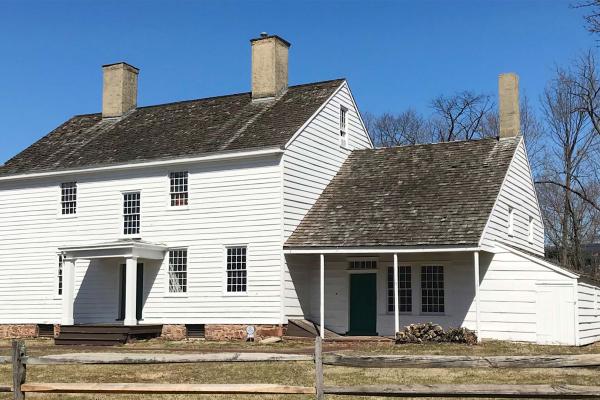
Once a sprawling manor complex in the New Jersey countryside belonging to Major General William Alexander, all that remains are two extant structures and the cellar of the original home.

Battlefield | National Park
Blacksburg, SC

On August 16, 1780, the unexpected Patriot success at Kings Mountain infused those favoring rebellion with new confidence.

Battlefield
Manning, SC

Now under the man-made Lake Marion, British Lieutenant Colonel John Watson and Patriot Brigadier General Francis Marion, the “Swamp Fox,” skirmished in Wyboo Swamp near Santee Road.

Battlefield
Summerton, SC

Located within the Santee Wildlife Refuge, this was the last major battle of the war in South Carolina.

Battlefield
Turbeville, SC

A surprise Patriot attack on Loyalist recruits is a blow to the British

National Park | Historic House
Quincy, MA

This home, now known as the "John Quincy Adams Birthplace," was John and Abigail Adams' residence during the Revolutionary War. While John served as a delegate to the Second Continental Congress in Philadelphia, Abigail managed this home and served as an advisor to her husband in his public role.

Battlefield |
Burlington, NC

Patriot forces under Andrew Pickens and "Light Horse Harry" successfully rout British forces in Alamance County following Cornwallis' failed attempt to catch Nathanael Greene during the "Race to the Dan"

Historic Site
Charleston, SC

Francis Salvador, the first Jewish person to die in the Revolutionary War, was a London-born pioneer who moved to South Carolina in 1773. A vocal supporter of independence, he became the first Jewish person to hold political office in the state. Known as the "Southern Paul Revere," Salvador warned of attacks during the war but tragically died in an ambush in 1776 at just 29 years old, leaving behind a legacy of courage and commitment to freedom.

Historic Site | Historic House
Lynchburg, VA

During the Revolutionary War in 1781, Virginia Governor Thomas Jefferson fled to Poplar Forest from Monticello to evade capture from British forces under Lieutenant Colonel Banastre Tarleton.