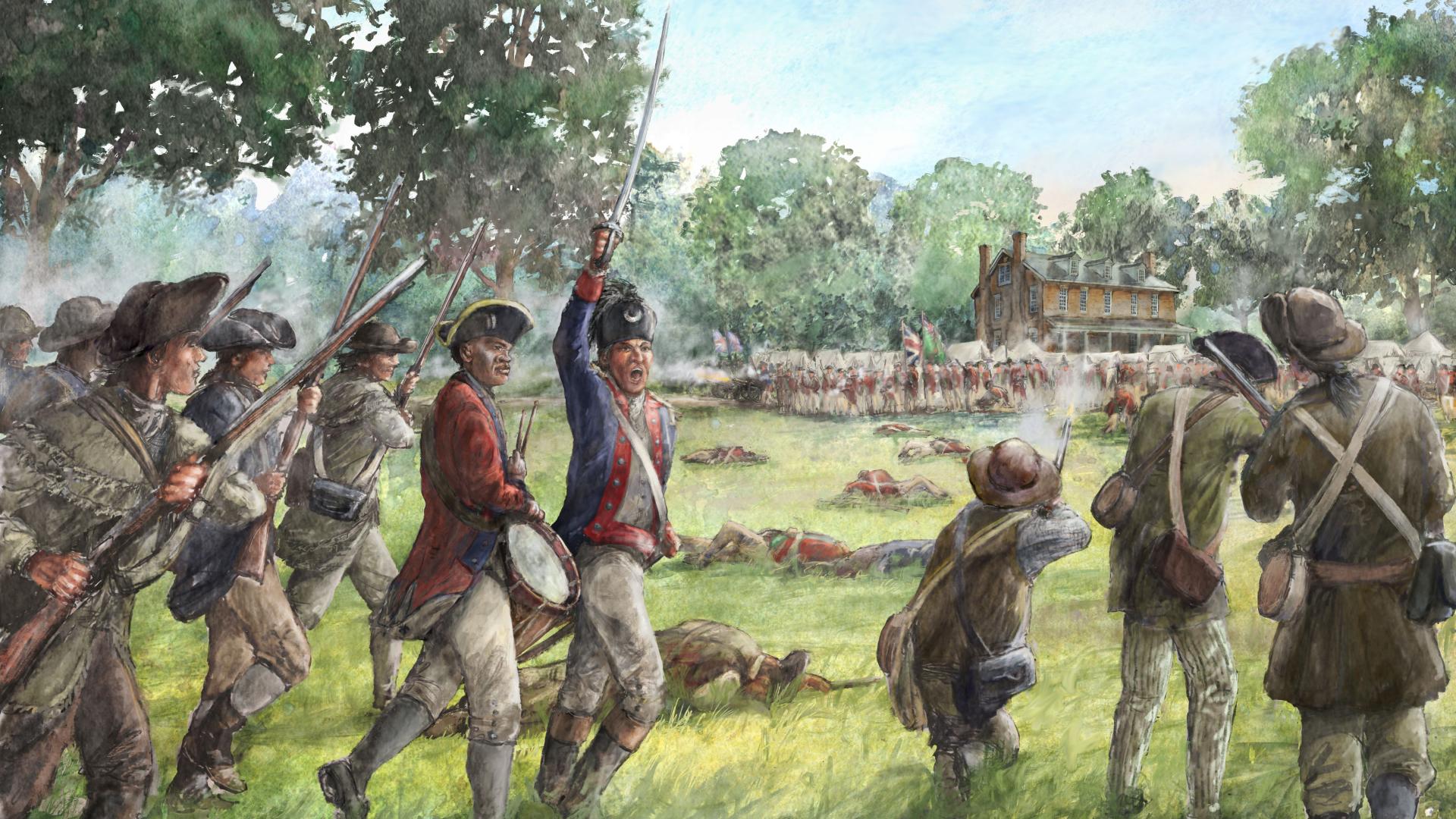
Jim Capers Eutaw Springs
History Along The Trail

Videos Along The Liberty Trail

The American Revolution was decisively influenced by The Liberty Trail’s diverse terrain, spanning swamps, fields, woods, and mountains. Delve into the narrative of American Independence with captivating videos showcased on The Liberty Trail.

States of Interest:
Video/Audio
Reposted from battlefields.org In the Revolutionary War, equipping an army required huge amounts of iron, for everything from bayonets and cannonballs to cooking pots. That made the Colonial iron...
Video/Audio
Reposted from battlefields.org The first person to die in the American Revolution, Crispus Attucks became a symbol of resistance against British rule. Why did he put himself into the line of fire?...
Video/Audio
Reposted from battlefields.org Away from specific battles, Sir William Howe vs George Washington proved to be one of the defining clashes of the Revolutionary War. Howe was a British commander...
Video/Audio
Reposted from battlefields.org When General John Burgoyne took command of the British Army in Canada in 1777, he was confident of success. He had the command experience and the plan to end the war. So...
Video/Audio
Reposted from battlefields.org Phillis Wheatley, a young enslaved woman, became one of the most celebrated poets in the American colonies. Her writings on faith, slavery and freedom were published...
Video/Audio
Reposted from battlefields.org Did you know that during the Revolutionary War, not all colonists wanted to become independent? Those who chose to remain loyal to the British crown included...
Exploring History
We invite you to visit the preserved locations along the Liberty Trail and to immerse yourself in the extraordinary events that determined the fate of a nation.
Historic Site | Battlefield
Whitehall, NY
President James Monroe invited the Marquis de Lafayette to visit the United States, his adopted country. Lafayette’s tour of all 24 states in 1824 and 1825 drew large crowds and sparked a renewal of...
Historic Site |
Rumson, NJ

In September 1780, Loyalist Colonel Tye captured Patriot captain Joshua Huddy after a fierce struggle. A Patriot ambush capsized their boat, allowing Huddy to escape while Tye suffered a wound that would prove fatal.

Historic Site |
East Greenbush, NY
The Henry Knox Trail, also known as the Knox Cannon Trail, is a network of roads and paths that traces the route of Colonel Henry Knox's "noble train of artillery" from Crown Point, New York, to the...
Historic Site | Battlefield
Spartanburg, SC

When Jane Black Thomas overheard Loyalists plotting a surprise attack on her son's militia camp, she rode nearly 60 miles through dangerous territory to warn him. Her daring ride gave Colonel John Thomas Jr. and his Spartan Regiment time to prepare an ambush that repelled the attackers — fueling Patriot momentum toward the war-changing Battle of King's Mountain just three months later.

Battlefield | National Park
Greensboro, NC

One of the final battles of the Southern Campaign, the Battle of Guilford Courthouse cemented the British path to final defeat at the Battle of Yorktown.

Historic Site |
Utica, NY
General Herkimer Marker (August 5) at Utica, New York. This marker, replaced in 2008 by Oneida Chapter Daughters of the American Revolution, is one of a series of markers along the 40-mile route taken...
Historic Site | Gardens & Grounds
Charleston, SC

The plantation & gardens bears witness to 350 years of American history. Learn about the Europeans who colonized South Carolina, and the enslaved people who worked in the rice fields and gardens.

Historic Site | Historic House
Clemson, SC

Built in 1716 for Paul de St. Julien in Berkeley County. The house was later dismantled and moved to Clemson University and functions as a house museum.

Historic Site |
Albany, NY
The Henry Knox Trail, also known as the Knox Cannon Trail, is a network of roads and paths that traces the route of Colonel Henry Knox's "noble train of artillery" from Crown Point, New York, to the...
Battlefield | Historic Site
Moncks Corner, SC

Eighteenth-century Moncks Corner was a crossroads settlement of stores and taverns at the intersection of the Cherokee Path (the Indian traders’ path) and the road from Charleston to Santee. A powder magazine was established in 1760 and the village was occupied as a store depot by the British during the Revolutionary War.

Battlefield
Moncks Corner, SC

The Patriots Take Provisions and Prisoners in a Surprise Attack on a British Supply Depot.

State/County Park | Historic House
McClellanville, SC

This 18th-century plantation home, on the grounds of the Hampton Plantation State Historic Site, served as a place of refuge for Francis Marion who hid here from when British troops.