-
The BlogBiographies
-
Videos

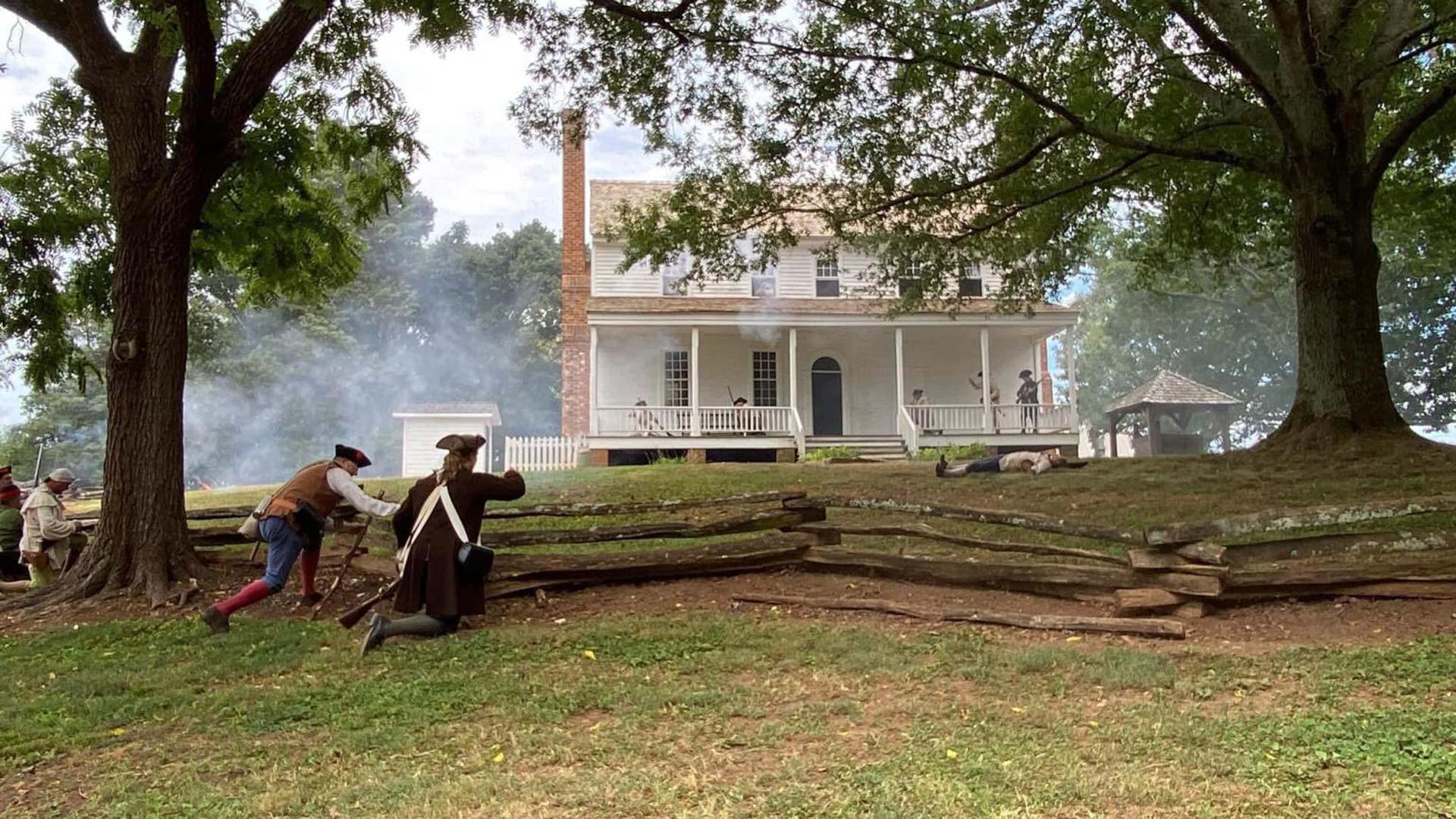
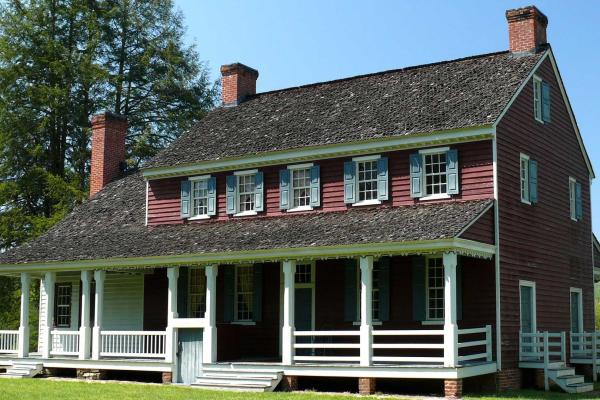
Also known as the Alston House, the House in the Horseshoe served as a Patriot outpost where a four hour skirmish took place on July 29, 1781.

Built around 1772 on a hill overlooking a sweeping bend of the Deep River, the House in the Horseshoe stands as one of the earliest grand homes of North Carolina’s upland frontier. Known originally as the Alston House, it was the residence of Whig colonel Philip Alston during the American Revolution, when irregular warfare between Patriot Whigs and Loyalist Tories defined the backcountry. On July 29, 1781, the house became the center of a fierce four-hour skirmish after Alston’s men were attacked by a larger Tory force led by the notorious David Fanning. The attackers attempted to burn the house by rolling a cart of flaming straw against it, and after sustaining casualties on both sides, Alston ultimately surrendered. The house was left scarred by the fight, its bullet holes still visible today.
In 1798 the property entered a new chapter when it was purchased by Benjamin Williams, a four-term governor of North Carolina, who renamed it “Retreat.” Williams expanded the house with additional wings and transformed the surrounding land into a large cotton plantation, worked by enslaved laborers and valued at $30,000 by the early nineteenth century. After Williams’s death in 1814, his family remained in the house for decades before it passed through multiple owners. Restored in the mid-twentieth century and later acquired by the state, the House in the Horseshoe endures as an architectural gem, its coastal lowland design, fine interior woodwork, and period furnishings preserving the layered history of frontier life, revolution, and plantation society.