-
The BlogBiographies
-
Videos

Walk through a landscape where the opening years of the American Revolution reshaped the lives of everyone who called it home. On the grounds of present-day Clemson University, this tour explores the ancestral homeland of the Cherokee, the Battle of Esseneca, the destruction of the lower Cherokee towns during the Cherokee War of 1776, and the construction of Fort Rutledge. Along the way, discover how conflict between the Cherokee, British Loyalists, and American Patriots transformed this frontier and forever changed the history of the region.
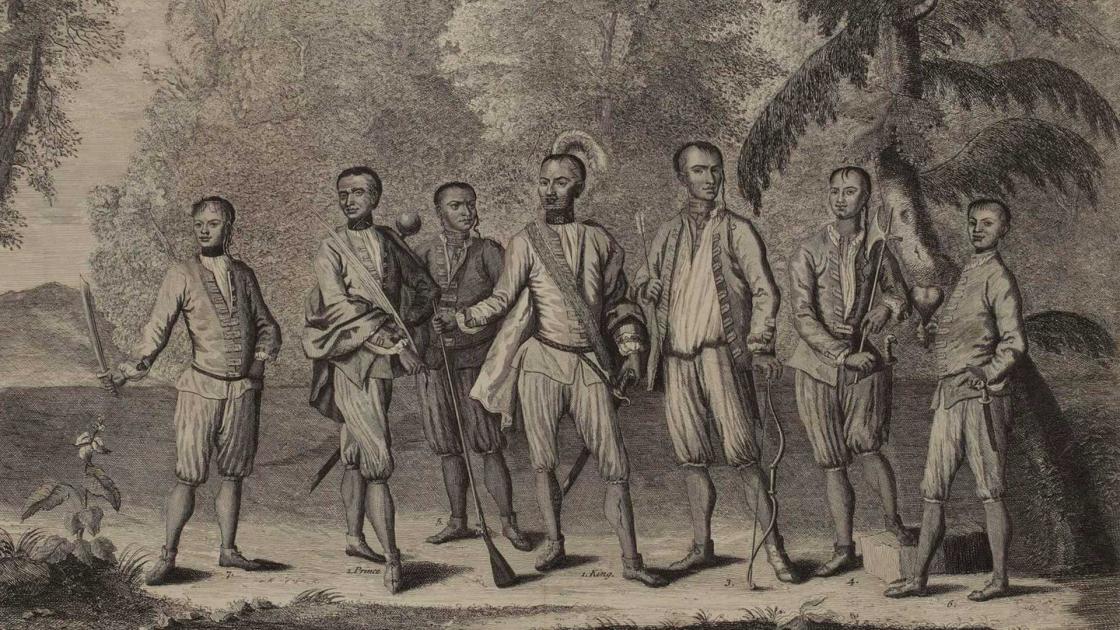
When you tour the Clemson University campus today, you are walking on the ancestral land of the Cherokee people. Once home to trading villages and linked by a network of waterways, this area was known as the “lower towns.” In the summer of 1776, the cultivated fields and shady woods that dotted this landscape became a battleground. The violence was part of the Cherokee War of 1776, a series of Cherokee-Loyalist attacks on the western frontier of the Carolinas that occurred at the beginning of the Revolutionary War. Taking action to protect their territory from encroachment by white settlers, the Cherokee launched raids on colonial communities. They were encouraged and assisted in their efforts by British Loyalists hoping to stifle rebellion against the Crown and extinguish the fight for independence.
Resentment and bloodshed between white settlers and Native people had been growing since the early 1700s. After Britain’s victory in the French and Indian War (also known as the Seven Years War, 1754-1763), white settlers wanted to expand beyond the frontier, and they felt entitled to move into Cherokee territory. In 1763, the British government tried to take control of mounting tensions between the groups by issuing a proclamation that set a boundary running through the Appalachian Mountains. The boundary prohibited English settlers from moving farther west and claiming Native land. But ambitious settlers largely ignored the proclamation. By the time war erupted between Britain and the colonies in 1775, violence between the factions was escalating. The Crown took advantage of this. Britain allied with the Cherokee to fight Patriot communities and suppress the rebellion. The Cherokee allied with the British because they believed the Crown’s powerful government and its army would protect their land.
The Cherokee town of Esseneca is now submerged under the waters of modern-day Lake Hartwell, a man-made reservoir within view from this path. In colonial times, the village flourished along the east side of the Keowee River, near the current town of Seneca, South Carolina. The battle that occurred near there on August 1, 1776, pitted Patriot Major Andrew Williamson against Alexander Cameron, the British deputy superintendent of Indian Affairs.
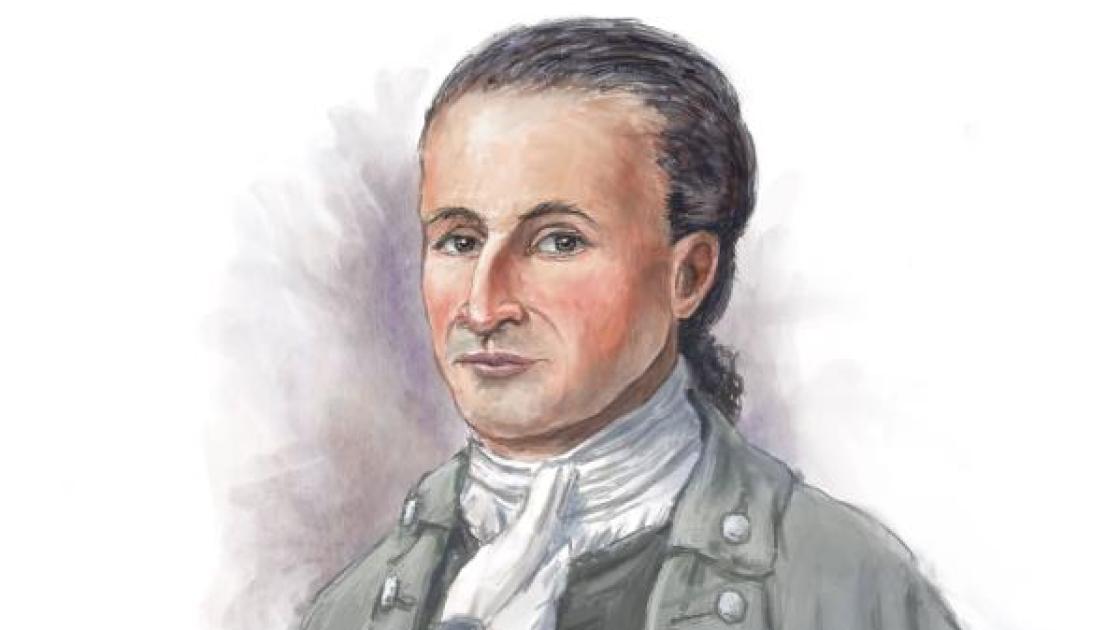
Cameron directed many of the Cherokee-Loyalist assaults against Patriots in the Backcountry and had earned the wrath of South Carolina militia leaders like Williamson. When Patriot scouts confirmed that Cameron, along with a party of Loyalists, was camped out with the Cherokee along the Keowee River, Williamson decided to attack him. Waiting until well after dark on the night of July 31, 1776, Williamson and about 330 militiamen quietly marched along the Keowee Path toward Cameron’s location. But Cameron’s party was ready for them. In the early hours of August 1, as Williamson and his forces approached the town of Esseneca, they were ambushed by Cherokee and British Loyalists.
Cameron’s group, larger than Williamson’s party, unleashed musket fire on the surprised American Patriots. Williamson’s horse was shot out from under him, and Captain Francis Salvador became one of the first casualties of the battle. Salvador, who was mortally wounded and scalped by a Cherokee combatant, was the first Jewish man to die in the Revolutionary War. Saving the militia from total slaughter was Captain Leroy Hammond, whose unit used their sabers to mount a counterattack, successfully scattering the Cherokee and Loyalists. Hammond’s action allowed time for militia commander Andrew Pickens to arrive with reinforcements. With Pickens’ support, Williamson’s men were able to turn the tide of the battle and force a Cherokee retreat. There were 20 confirmed casualties on Williamson’s side.
Although the Battle of Esseneca was over, the savagery did not stop. Returning to the site after the Cherokee and Loyalist factions were gone, the victorious American Patriots burned Esseneca and then advanced to other Cherokee villages, torching the Cherokees’ vital reserves of food for the winter and killing or driving off their livestock. Two weeks later, Williamson was made colonel of the militia and given command of 2,000 South Carolinians in the ongoing Cherokee War. His new force systematically destroyed most of the lower Cherokee towns that summer and fall.
By late 1776, Williamson’s campaign of destruction had come to an end. Despite continued British support, the Cherokee could no longer fight the American Patriots. More than two thousand Cherokee had been killed. On May 20, 1777, American officials met at DeWitt’s Corner, a colonial trading post that is now the town of Ninety-Six, South Carolina. There, the parties signed a treaty that ended the war. The Americans separated South Carolina from Cherokee lands by a boundary that ran along Oconee Mountain. By agreeing to the terms of the treaty, the Cherokee relinquished most of their lands in South Carolina, and the Cherokee War officially came to an end. Still, raids and violence between both sides continued to occur.
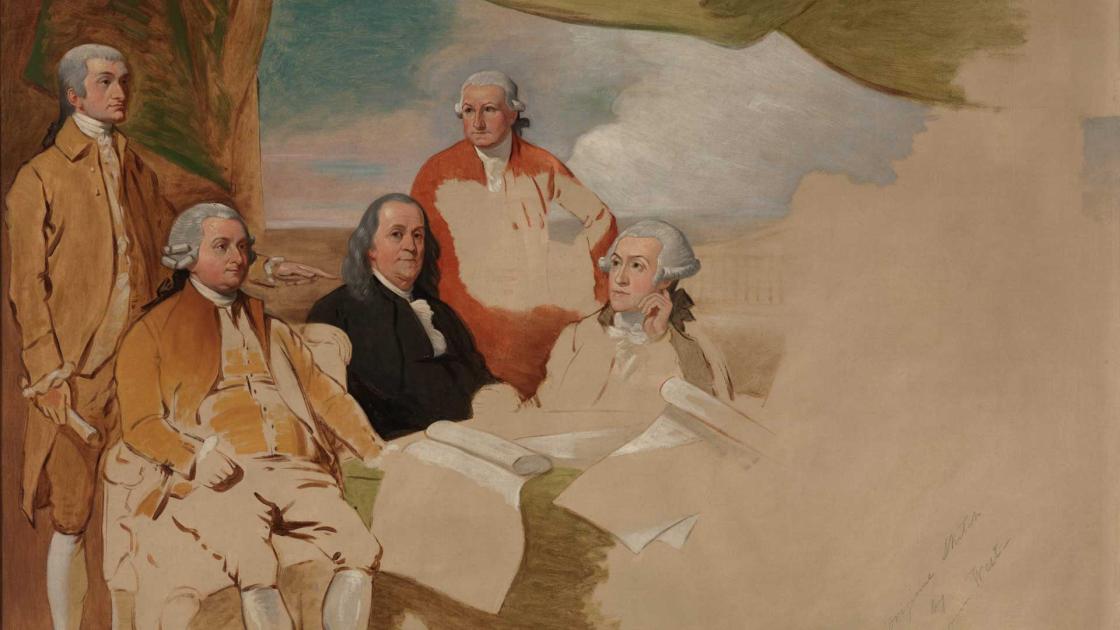
After their defeat in the American Revolution, Great Britain turned their backs on their Native allies. Through the Treaty of Paris, which officially ended the war, they ceded all British territory east of the Mississippi and south of Canada to the new United States, and their land was now open for American migration and settlements. This outcome was exactly what the Cherokee had feared and what they had hoped to avoid when they joined the Crown in their fight against the Patriots.
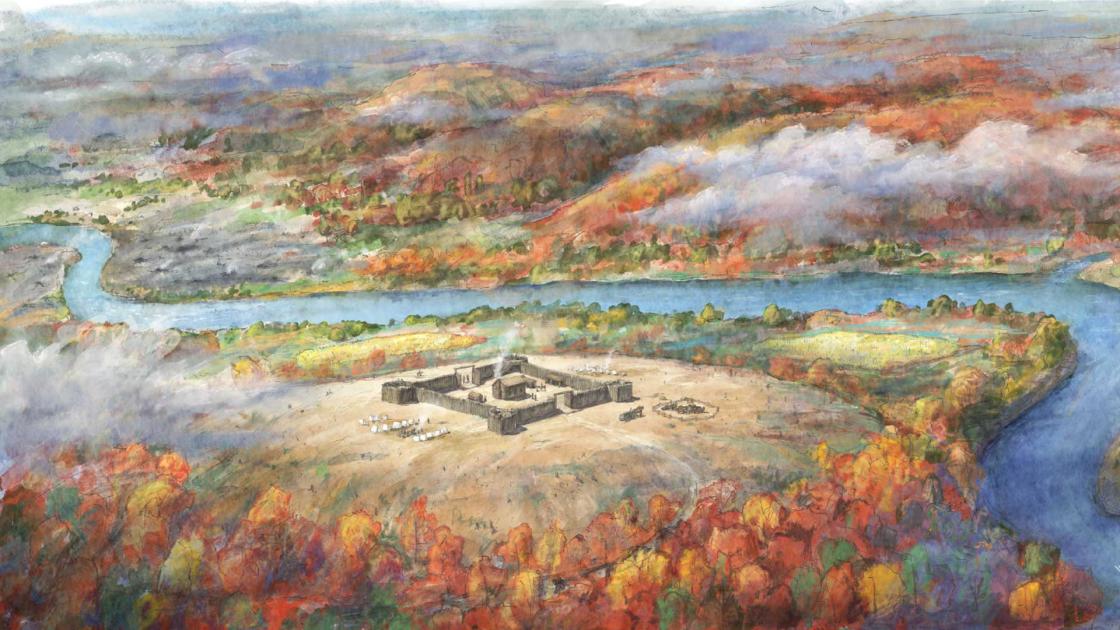
In September 1776, militia commander Andrew Williamson returned to the charred remains of Esseneca with his 2,300 men and erected a fort on the ruins of the town. The structure was made of logs and possibly some bricks. Williamson left 300 men garrisoned at the fort to support his campaign to systematically demoralize and starve the Cherokee. The fortress was named for South Carolina’s colonial President, John Rutledge. Fort Rutledge’s 300 men eventually surrendered the garrison to the Loyalists in 1780, and the fort was destroyed.
More than a century later, in 1908, a crew of convict laborers leased to the university and forced to excavate this area discovered what were thought to be the partial ruins of a historic fort. The five-sided, eight-foot-high stone marker you see here was installed by the Daughters of the American Revolution to commemorate the fort’s existence. Efforts to find more remains were complicated by the construction of Lake Hartwell during the late 1950s to early 1960s and the installation of a water treatment plant, which drastically altered the landscape. Today, Clemson University researchers continue to conduct archaeological and historical investigations to discover the specific footprint of Fort Rutledge. They now believe that the fort was located on high ground, offering an expansive view of the river that was here long before Lake Hartwell’s waters dominated the landscape. From the ramparts, Williamson’s men would most likely have seen the destroyed Cherokee town of Esseneca and its acres of burned cornfields, which probably lined both sides of the river.
While there is no historic plan or drawing of the fort, illustrator Dale Watson was able to create an image of what the structure might have looked like based on recent research and archeological evidence. The walls had five-sided corner bastions, or projections, enabling defenders to fire in multiple directions. Bricks may have been used in construction of the bastions or might have been part of another structure, such as a battery to house artillery.