-
The BlogBiographies
-
Videos

February 27, 2026
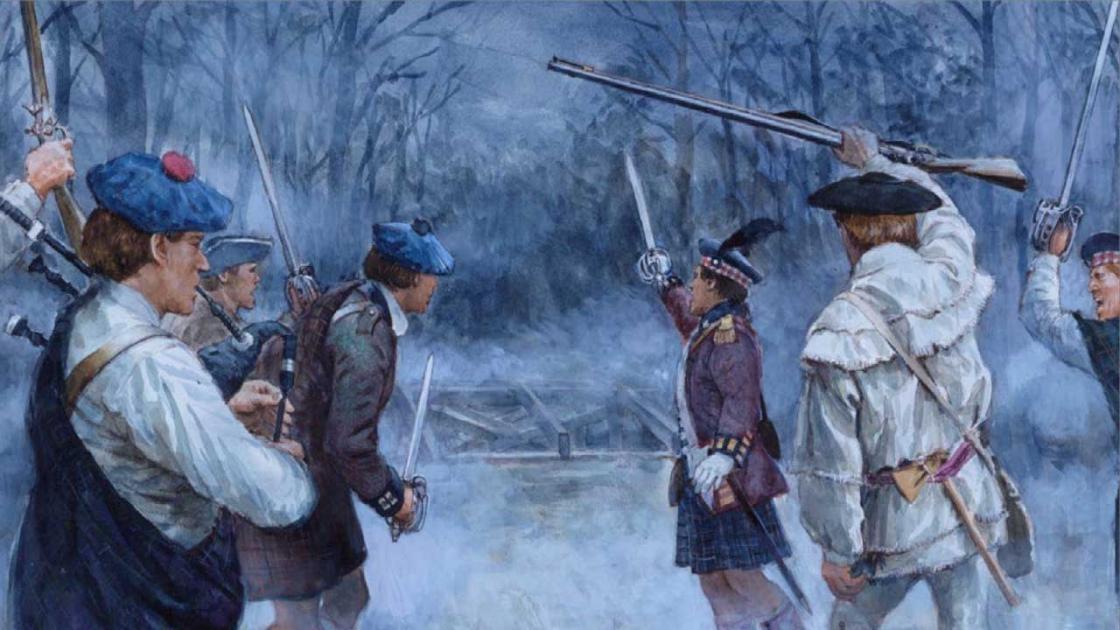
Militiamen lying in wait. A surprise attack. Brother marching against brother. Cannon fire. A midnight ride. A Highland charge! The Battle of Moores Creek Bridge is the most dramatic, made-for-TV Revolutionary battle that you’ve never heard of—but it’s one of the most important.
If you think that everyone was onboard with American independence in 1776, spoiler alert: nothing could be further from the truth. Here in North Carolina, colonists—many of them of Scottish heritage--were fiercely divided. Even members of the same family disagreed on whether the colonies should break from Great Britain or remain loyal to the Crown. North Carolina had a strong patriot population, but Tories—those who remained loyal to Great Britain—had a strong foothold here, too. Some loyal Scots hailed from the Highland Region (think Outlander book and tv series here, if you’re familiar), and it’s easy to imagine whispers and shouts in Gaelic echoing through the swampy Cypress forest you’re about to explore.
In the wee morning hours of February 27, 1776, North Carolina patriot militiamen tested their revolutionary resolve against North Carolina’s loyalist troops. When the two militias clashed at Moores Creek Bridge, patriots outgunned their loyalist foes armed with more swords than flintlocks. And in less than an hour—some historians say less than 20 minutes—the battle was over, and so too was any British hope for a sustained loyalist presence in the colony. In a fitting sequel to the patriot win here, provincial leaders signed the Halifax Resolves just weeks later. These Resolves were the first official action by any colony calling for independence from Great Britain.
So how did a battle that lasted shorter than a TV special propel a colony to become the first in freedom? Start your tour at the Visitors Center, and let’s find out.
The Visitor Center
Take a look around at the artifacts in the Visitor Center. They can help you imagine the militiamen on the battlefield that you’re about to explore. Find the long, shiny sword with the ornate-looking handle. That’s a distinct style of sword Scots carried into battle here. Remember this sword. Swords like this one are going to play a big part in the action outside.
Now, look for the artifact case holding a tiny button about the size of your thumbnail. Do you recognize the faces on the button? We’ll give you a hint: one of them is George. No, not George Washington. This is King George III. This button likely dates to around 1761, when King George and his Queen Charlotte were married and coronated as the crown sovereigns of Great Britain.
Put yourself in the shoes of a member of the loyalist militia, marching from Cross Keys (modern-day Fayetteville) southeast to Wilmington. Your goal is to link up with British regulars there and retake control of the colony for the king. And this button? You wear it proudly on your sleeve, a constant reminder of king and country. You know that a small bridge over a swampy creek is a final obstacle before you reach the coast. But what you don’t know may cost you. This button might not be the only thing you could lose in your advance on Moores Creek.
How’s that for a cliff-hanger? The story continues when you step outside.
Here's your chance to get even more up close and personal with the King George and Queen Charlotte button found near here. Can you imagine this button the sleeve of a loyalist militiaman?
Caswell's Campsite
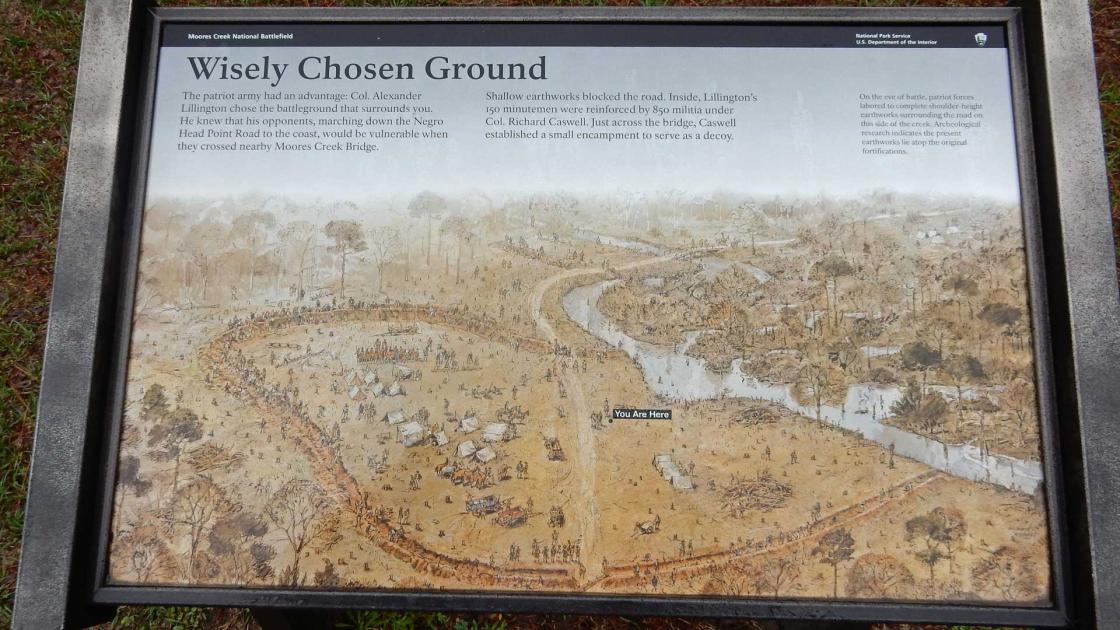
It’s time to meet this story’s leading man, patriot militia Colonel Richard Caswell. He fought alongside Royal Governor William Tryon during the earlier Regulator Movement, but, by 1774, he was a firm patriot. Fresh back from representingNorth Carolina in the Continental Congress, he now had control of the colony’s patriot minutemen. They set up camp here, on the west bank of the creek, to interrupt the loyalist militia’s advance towards Wilmington.
The loyalists weren’t far. From their camp about six miles away, Loyalist General Donald MacLeod sent a courier into this encampment with an ultimatum: lay down your arms, swear allegiance to the crown, or else. The patriots,well, they picked “or else.” The courier returned to MacLeod with the patriots’ answer as well as his observation that the patriot position here was vulnerable to attack. If MacLeod attacked the patriots in this spot, they’d have nowhere to run. MacLeod decided to prepare for an ambush. He readied his troops---possibly as many as 1500 men—for a march through the woods with Caswell in their sights.
But Caswell had a plan up his sleeve, a twist worthy of a summer blockbuster by M. Night Shyamalan. Caswell’s militia - some sources say the force amounted to around 850 - had prepared a trap. Just on the other side of Moores Creek Bridge, patriots prepared freshly dug earthworks complete with two cannon. When the loyalists came back preparing for a fight in the pre-dawn hours of February 27, they’d find nothing here except smoldering campfires—with the patriots safely nestled in the earthworks beyond.
But that’s not all the patriots had been up to. The plot thickens when you head to the reconstructed bridge to find out what else Caswell had in store for his loyalist foes.
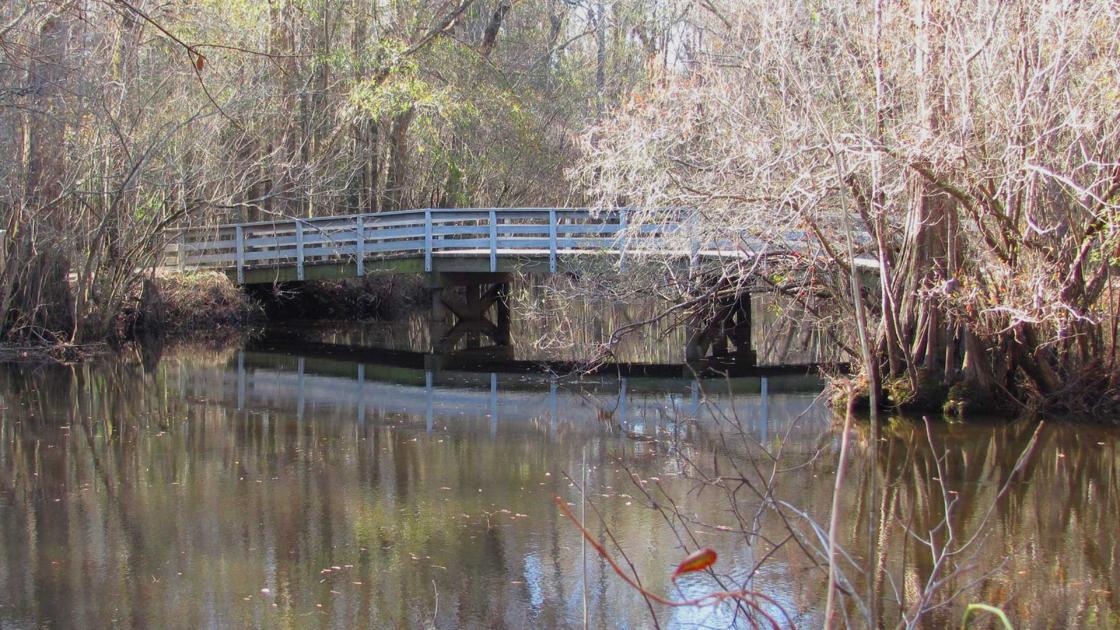
Reconstructed Bridge
Have you ever tried to walk across a balance beam? Imagine walking across a balance beam caked in fat and dripping with soap. Now imagine that balance beam floats just above a frigid swamp, illuminated only by the light of a crescent moon. This is exactly what the loyalist militia faced when they reached this bridge before dawn on February 27. Think you could make it across?
In the middle of the night, Caswell’s patriots left their encampment and crossed this bridge for the safety of their earthworks. And on the way, they pulled up the bridge planks and dumped animal fat and soap on the few girders that remained, creating a slippery mess for any enemy militia attempting to brave the crossing.
Alexander McLean’s advanced patrol of Loyalist militia approached this bridge after finding the patriot encampment abandoned. Seeing no trace of their enemy and assuming the patriots had fled in advance of the Loyalist approach, McLean’s presence alerted the patriot sentries stationed at the end of the bridge. “Who goes there?” asks the patriot. “A friend!” McLean cleverly replies. “…to whom?” the patriot asks. McLean’s reply seals the fate of his loyalists in tow: “to the King!” McLean doesn’t understand that the patriots are waiting to pounce out of the unseen earthworks. He ushered his men forward to attempt a crossing of the deconstructed bridge.
The Highlanders of this advance guard are armed primarily with broadswords—just like the one you saw in the Visitor Center. Slowly making their way across the exposed girders of the bridge by balancing themselves on sword tips, the Highlanders had no idea that their careful crossing was about to turn into a Highland Charge. No sooner had the first Highlanders made it across the creek than “Old Mother Covington,” the patriot cannon, boomed in their direction. Their rallying cry hanging in the cold February air, the Highlanders let loose their fierce and intimidating, sword-wielding barrage. But it was no match for patriot firepower.
Cross the bridge to follow the path towards the patriot earthworks. Don’t forget to practice the Highlander’s rallying cry as you go—“King George and Broadswords!” How’s that for a catchphrase?
Patriot Earthworks
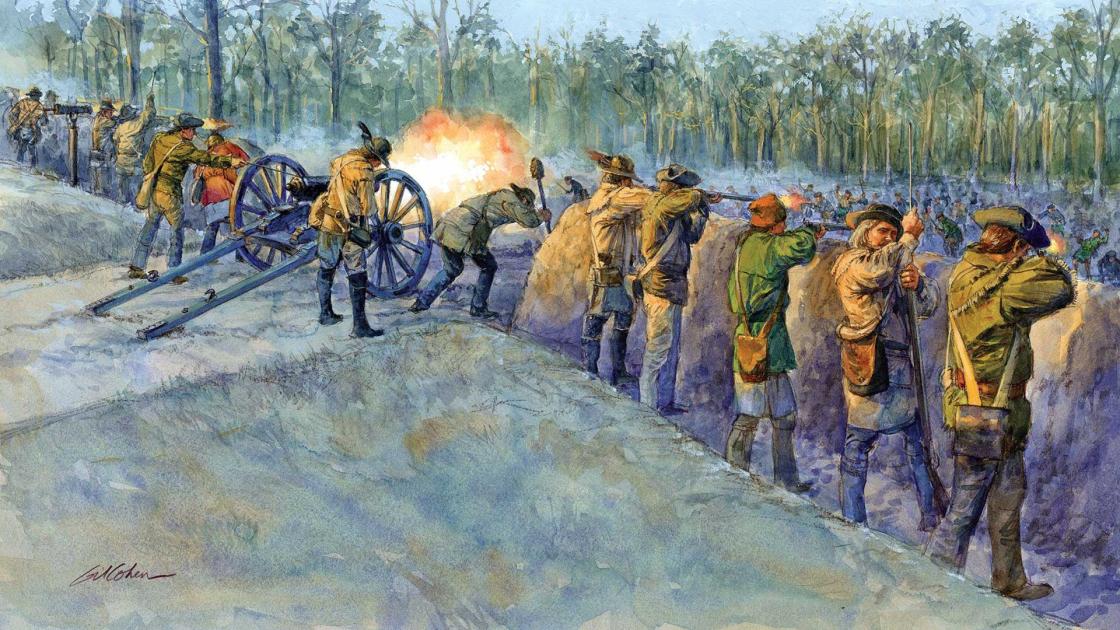
There’s another patriot leading man in this revolutionary drama, Colonel Alexander Lillington. He’s the man behind the construction of the earthworks here. Lillington and his men were the first to arrive and survey the scene here at Moores Creek, and he correctly identified this spot for its strategic location on the east bank. This is a choke point. If the enemy made it across the dismantled bridge, they’d find themselves in a narrow causeway, surrounded by the frigid swamp. It’s the perfect place to lure the loyalist militia, and set a trap. And that’s exactly what the patriots did.
No sooner than the first Highlanders stepped foot off the bridge, the patriots revealed themselves with booms of their cannon and volleys. The Highlanders dropped fast. Some even plummeted into the water as they continued to cross the bridge. As waves of sword-wielding Highlanders crossed the bridge, patriots volleys cut them down. Those loyalists that did have guns had little luck finding their targets. Most men retreated in confusion and fear.
In the blink of an eye, it was over. Some soldiers’ accounts say 3 minutes, others, 20. Loyalists had fallen by the dozens. The patriots, however, suffered only 2 casualties.
The Battle of Moores Creek Bridge not only proved that patriots could stand their ground and win. As loyalists fled the scene, they took with them any real hope that the British could raise a powerful army of Tory support in North Carolina. In the weeks following their victory here, the patriots strengthened their commitment to independence by adopting the Halifax Resolves. The Resolves were the first official call for freedom from Britain. In a step as bold as their daring plot twist at Moores Creek, patriots in North Carolina became the first to formally declare independence--four months before Continental Congress issued the Declaration of Independence.
Women's Monument
Listen my children, and you will hear the midnight ride of…Mary Slocumb.
In the wee hours of February 27, 1776, visions of her husband’s cloak covered in blood in a frightening dream woke Mary from a deep sleep. Immediately she mounted her steed and rode through the night to reach her husband, patriot militiaman Lieutenant Ezekiel Slocumb, at Moores Creek. She reached the patriot camp just after the patriot victory, and inquired about her husband. He was alive and well, she was told, on his own steed in hot pursuit of the fleeing loyalists. Having rode all night to make the journey, Mary stayed on in the aftermath of the battle and helped nurse wounded soldiers.
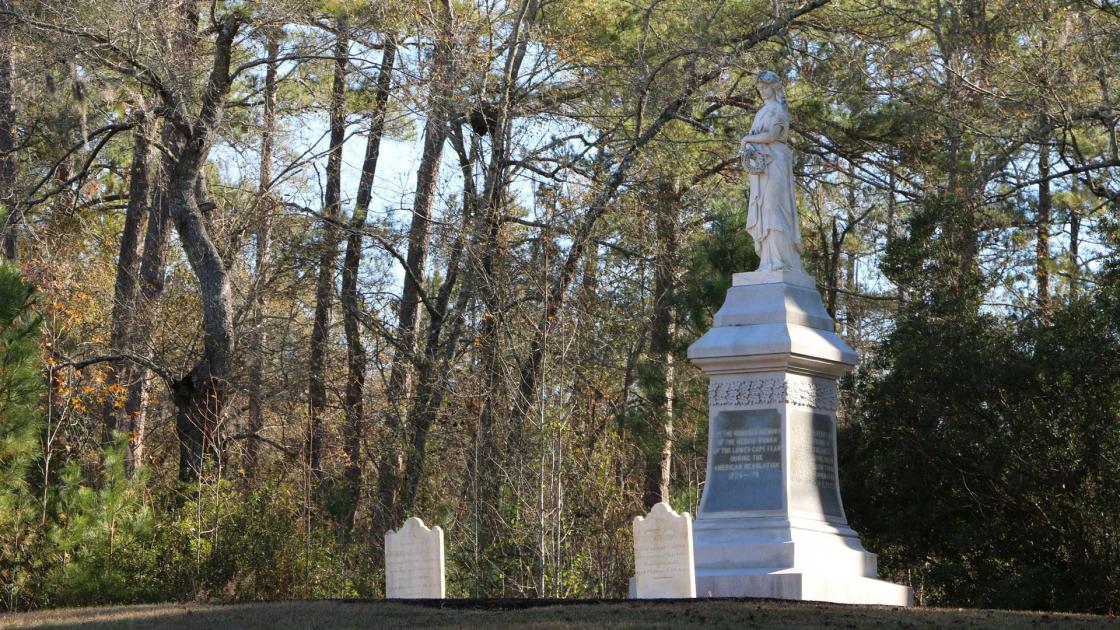
It’s a good story—but it’s probably not true. Myth and memory have inserted Mary as a leading lady in the drama that unfolded here at the Battle of Moores Creek Bridge. But locals so knit her name and her deeds into the action here that both Mary and Ezekiel were buried here at the foot of this monument.
This monument specifically honors the women of the American Revolution, one of only a handful of monuments across the National Park Service to do so. So, while Mary’s story may not be true, countless other stories of women on American battlefields deserve to be remembered and told. The myth of Mary and Ezekiel Slocumb still serves as a reminder of the everyday men---and women---who gave their all in support of American independence.