-
The BlogBiographies
-
Videos

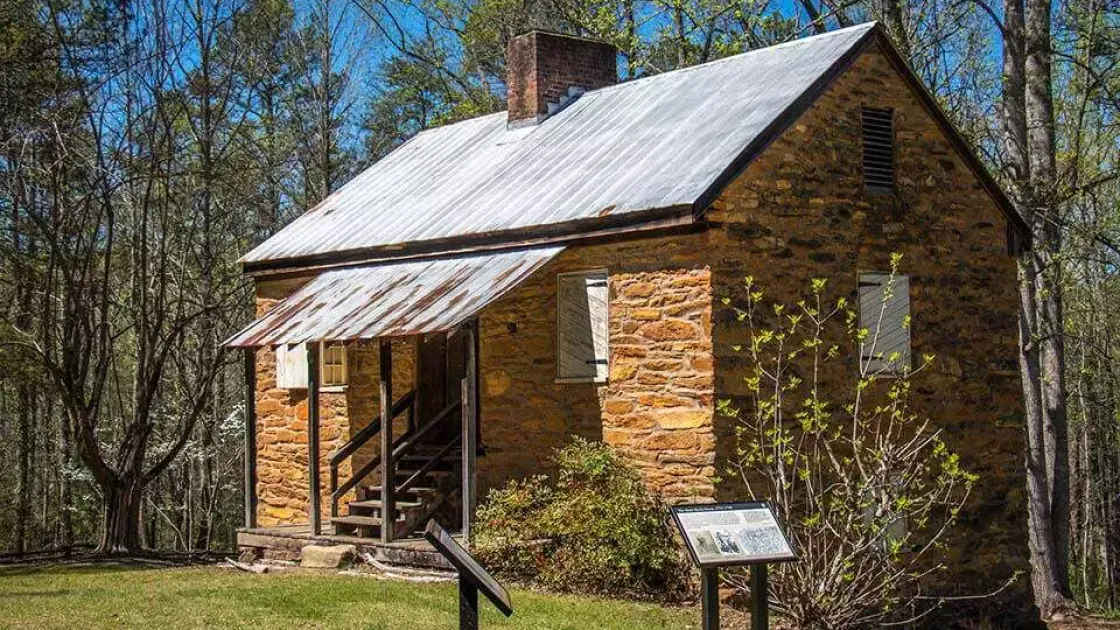
Explore the landscapes of South Carolina's Upcountry where the Cherokee War of 1776 unfolded during the opening months of the American Revolution. This tour follows the story of the Ring Fight at Tamassee, the Cherokee homeland in Oconee County, and the frontier outpost at Oconee Station. Along the way, discover how fierce fighting, military campaigns, and shifting relationships between the Cherokee, British allies, and Patriot militia transformed this region and left a lasting mark on its history.
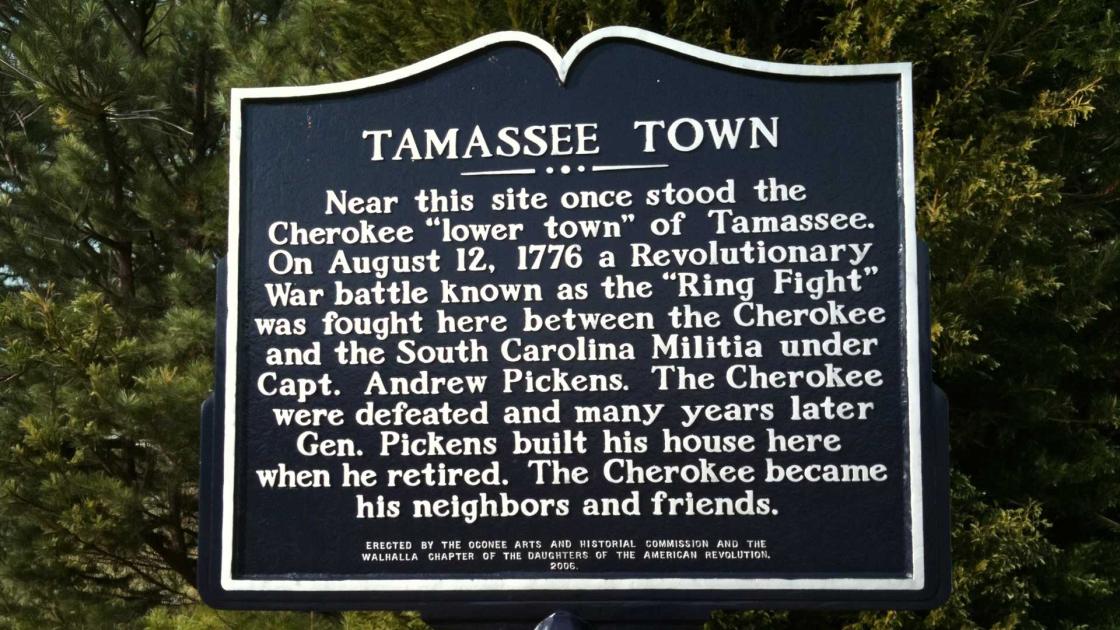
When you pull off the road here, you are facing the site of an ambush that occurred during the Cherokee War of 1776, which was an early episode in the Revolutionary War. The conflict pitted the British-allied Cherokee against the Patriot militia in the South Carolina Backcountry. Patriot militia leader Major Andrew Williamson was tasked with defending white settlements there from Cherokee and Loyalist raids. With the assistance of Captain Andrew Pickens, he began a scorched earth campaign against the Cherokee.
On August 12, 1776, Pickens was leading a 35-man scouting party ahead of Williamson’s main militia. As they passed through a cornfield at Tamassee, in present-day Oconee County, they were suddenly attacked by approximately 185 Cherokee combatants. Thinking quickly, Pickens ordered his vastly outnumbered force to form a ring with the men facing outwards. They would stay low to load their weapons, stand to fire, crouch down in the tall grass to reload, then stand to discharge their weapons again. The Cherokee surrounded Pickens’ men in a circle of their own, and the two groups took shots at each other from close range, then engaged in hand-to-hand combat as the Cherokee attempted to break through the ring. A clever military strategy, the “ring fight” bought enough time for Pickens’ brother, Captain Joseph Pickens, who was leading reinforcements, to determine the location of the gunfire and arrive with a relief party. His appearance forced a Cherokee retreat into the woods.
Although the Ring Fight had no victors, the Cherokee suffered greater losses. Of the 185 warriors, 65 were killed or perished and 14 were wounded. Sixteen of Pickens’ 35 men were wounded and one was killed. Three of the wounded later died. Pickens set Tamassee on fire to keep supplies from falling into enemy hands. After this battle, the Cherokee allegedly called Pickens Sgiyegvsda, which has been roughly translated as “Wizard Owl.” But there is some confusion about the name. The term Sgiyegvsda (pronounced ski-yay-guh-shda) was used historically to refer to headmen or chiefs, particularly those who were distinguished in war. Today, the word is most commonly used to refer to congressmen, council officers, and military officers. The translation “Wizard Owl” may have originated with white people confusing Sgiyegvsda with the word Tsgili, which means screech owl and is pronounced with an “Shh” sound at the beginning (rhyming with Skilli or Skilly).
When you drive through Oconee County today, you might think about what this landscape looked like to Patriot militia commander Andrew Pickens and the men he led during the Cherokee War of 1776. They surely would have passed over wooded trails and through cultivated fields on their way to nearby Tamassee, where they were ambushed in the Ring Fight. Oconee County was home to the Cherokee people until the Revolutionary War, when they were driven from all except the northernmost section. Oconee (or Ugwani) was a historic Cherokee Settlement on Seneca Creek near Walhalla, South Carolina.
Oconee Station was built in 1792 as a small military station, or fort. It contained a stone blockhouse, which you can visit today, as well as additional buildings. The blockhouse was erected to defend against attacks from the Cherokee and Creek Nations. The other buildings that formed this outpost no longer survive. Twenty to 30 soldiers were stationed here from 1792 until 1799. Beginning in 1795 this station also served as a trading post with valuable furs exchanged for a wide range of goods, from guns to cattle. The trading post was owned and operated by Irish immigrant William Richards, who earned enough to build a stately two-story brick house next to the blockhouse in 1805. He lived there until 1809. His home and the blockhouse are now part of Oconee Station State Park. After you explore the past at this historic site, you might want to go farther afield and hike the wooded trail to Station Cove Falls, where you can enjoy the natural world that was home of the Cherokee.